
Bar Architecture
Explore Bar Architecture: Stari Bar & More
Bar architecture is centered on Stari Bar, a fortified inland old town with medieval walls, gates, church ruins, mosques, Ottoman-era structures, civic buildings, and an aqueduct. The newer city of Bar adds modern religious buildings and public architecture closer to the coast.
Stari Bar is on UNESCO’s tentative list, which means it has been proposed for possible future World Heritage consideration but is not currently an inscribed UNESCO World Heritage Site. This guide focuses on the fortress, religious buildings, civic structures, and nearby sites that help explain Bar’s architectural history.
We spent a month in Bar researching Stari Bar, the newer city, and the surrounding historic sites. Use this guide to understand what to look for inside the fortress walls and how the old town connects with the modern city below.
This page contains affiliate links. We may earn a small commission at no extra cost to you.
Attractions in Stari Bar Fortress
Stari Bar Fortress is the main architecture site in Bar. Inside the walls, visitors can see gates, ramparts, towers, church ruins, palaces, military buildings, an aqueduct, and Ottoman-era structures. Many sites survive as ruins, so the value is in reading the layout, masonry, defensive position, and relationship between buildings rather than expecting fully intact interiors.
For an official overview of the site’s history and main monuments, UNESCO’s Old Town of Bar tentative World Heritage listing summarizes the fortress, churches, and surrounding landscape.
Fortress and Walls
Main Gate
- Style: Medieval (Late Gothic–Renaissance orientally influenced)
- Built: 14th–16th century
Gate from the 14th to 16th century with the winged lion, symbol of the Venetians.
Tatarovica Citadel
- Style: Fortified medieval–Ottoman
- Built: 10th–19th century
Citadel from the 10th to 19th century with a military chapel.
Tower
- Style: Defensive medieval structure
- Built: Part of the fortress development
- Location: Western part of the ramparts, Stari Bar
The tower helps show how the fortress controlled the edge of the old town. Use it with the ramparts to understand the defensive perimeter rather than treating it as a separate monument.
Ramparts
- Style: Defensive walls with medieval and later additions
- Built: Developed across several periods
- Location: Around Stari Bar Fortress
The ramparts are one of the most important parts of Stari Bar. They show the old town’s defensive outline, the slope of the site, and the relationship between gates, towers, interior ruins, and the surrounding landscape.
Churches
Church of Saint Catherine
Црква Свете Катарине
- Architect: Unknown
- Style: Orthodox medieval
- Built: 14th century
- Address: 34VP+25M, Podgrad‑gornja ulica, Stari Bar, Montenegro
Saint Catherine’s Church from the 14th century.
Saint John's Church
St. John's Church (Svete Jovan)
- Style: 20th-century build with older complex context
- Built: 1927
Church dating from 1927, associated with a 15th-century palace.
Saint Nicola's Church
- Style: Medieval
- Built: 13th century
Saint Nicola’s Church from the 13th-century.
Saint Veneranda Church
Црква Свете Венеранде
- Style: Medieval Orthodox
- Built: 14th century
- Address: 34VP+F55, Stari Bar, Montenegro
Saint Veneranda Church from the 14th century.
Saint George's Cathedral
- Style: Medieval church ruins
- Built: Developed between the medieval and later periods
Saint George's Cathedral was one of the main religious buildings inside Stari Bar. The surviving ruins help show the scale and religious importance of the medieval town.
Palaces and Buildings
Prince Palace
- Style: Renaissance–Baroque period palace
- Built: 15th–16th century
Palace from the 15th–16th century.
Bishop's Palace
- Style: Renaissance–Baroque
- Built: 15th–16th century
Palace from the 15th–16th century.
Customs House
- Style: Renaissance (Venetian influence)
- Built: 15th century
One of Montenegro’s rare Renaissance-era buildings.
Gun Powder Storage
- Style: Military–utilitarian
- Built: 18th century
Gun powder storage building from the 18th century.
Medieval House
- Style: Secular medieval architecture
- Built: Unknown
Multi-story house with a coat of arms.
Other Attractions in the Fortress
Summer Stage
- Style: Amphitheater ruins or open-air hall
- Built: Unknown
Listed among significant structures in Old Town.
Clock Tower
- Architect: Yahya Ibrahim Osman Agha (builder)
- Style: Ottoman influence
- Built: 1752–53; reconstructed 1984
- Address: Near southern gate of fortress
Clock Tower with clocks on all sides; current form restored in 1984.
Turkish Powder Mill
- Style: Ottoman-era utilitarian
- Built: 18th century
Turkish powder mill from the 18th century.
Aqueduct
aka Akvadukt aka Aqueduct at Tatarovica
- Style: Ottoman imperial engineering
- Built: 16th–17th century; destroyed 1979; renovated later
- Address: Northern side of Stari Bar
Sixteen-arched stone aqueduct supplying water from Mount Rumija.
You can find more detail on its construction, damage in the 1979 earthquake, and later restoration in this overview of the Bar Aqueduct.
Turkish Bath
aka Turkish Hammam (Турски хамам)
- Style: Ottoman
- Built: 18th century
Reconstructed and functional Turkish bath.
Religious Buildings in Stari Bar
Religious buildings in Stari Bar trace the town’s shifts between Byzantine, Venetian, and Ottoman rule, often within a few hundred meters of each other. Within and just outside the fortress you’ll find medieval Orthodox churches, later Catholic structures, and several Ottoman mosques and mausoleums, each marking a different political and confessional phase.
Podgradska Mosque
Dervish-Hasanova
- Architect: Unknown
- Style: Ottoman
- Built: 1900s (replaced original after 1881 Barutana explosion, minaret added 1971, refurbished 1991)
- Address: 34RP+FFF, Stari Bar 85354, Montenegro
The Podgradska Mosque was constructed by several prominent citizens, including Dervish Hasan Said. In 1881, during the Barutana explosion, the mosque was destroyed. A new mosque was built in the 1900s, the minaret was added in 1971, and it was refurbished in 1991.
Church of St. John the Baptist
Црква Светог Јована Крститеља
- Architect: Unknown
- Style: Orthodox
- Built: Unknown
- Address: 34VP+875, StaroBarska Čarsija, Stari Bar, Montenegro
Cathedral of the Immaculate Conception of the Blessed Virgin Mary
Катедрала Безгрешног Зачећа Блажене Дјевице Марије
- Architect: Unknown
- Style: Roman Catholic
- Built: Unknown
- Address: 34VJ+Q7X, Bar, Montenegro
Modern Catholic cathedral in Old Town area.
Omerbasha Mosque
aka Dzamija Omerbasica
- Architect: Unknown
- Style: Ottoman
- Built: 1662 (constructed by Omer Baša and sons; renovated 1971; repaired after 1979 earthquake in 1986)
- Address: 34VM+RP2, Stari Bar, Montenegro
The Omerbasha Mosque is just a few steps from the Main Gate and dates back to the 17th century. Next to it, visitors will find the Dervish-Hasan mausoleum and a public fountain. It's a charming location.
A broader look at the complex is available in this virtual tour of the Ottoman cultural heritage of Omerbašić mosque.
Skanjevica Mosque
Škanjevića Džamija i Nakšibendijska Tekija
- Architect: Unknown
- Style: Ottoman with Naksibendi Sufi features
- Built: 1819 (reconstructed 2009)
- Address: Unknown
The Skanjevica Mosque stands across from the Omerbasha Mosque and is named after the wealthy nobleman from Bar, Ahmed-beg Skanjevic. This mosque features a distinctive 22-meter-high stone minaret, built in 1819 and fully reconstructed in 2009. Adjacent to the mosque, visitors can admire a Sufi shrine of the Naksibendi order.
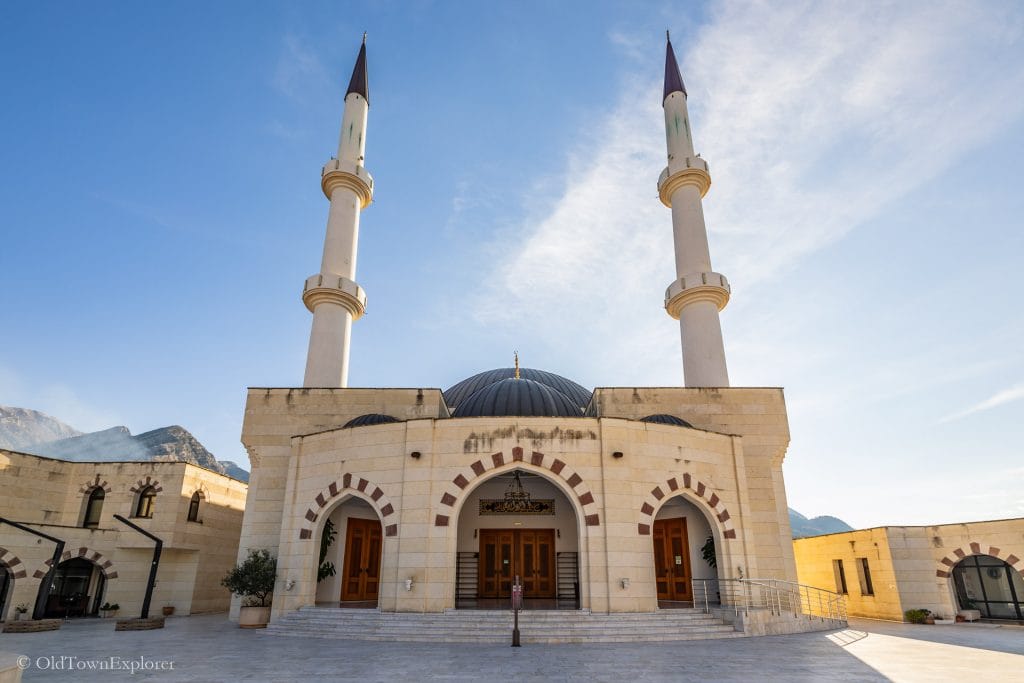
Selimiye Mosque
aka Dzamija Selimija
- Architect: Unknown
- Style: Contemporary Islamic cultural architecture
- Built: Modern (20th–21st century)
- Address: b.b Stari Bar, Bar 85000, Montenegro
The Selimiye Mosque is a newly constructed, large mosque that also serves as an Islamic cultural center, guesthouse, restaurant, kindergarten, and library.
Ali-Aga Hasećija’s Minaret
- Architect: Unknown
- Style: Ottoman
- Built: 1819; restored 2005 after fire (1912) and earthquakes
- Address: Unknown
Built in 1819, this structure suffered damage from a fire in 1912 and experienced several earthquakes. Standing at 22 meters tall, it is constructed of finely hewn stone and underwent a thorough restoration in 2005. The minaret is one of the most significant monuments of oriental architecture in Montenegro.
St. Nikola’s Church
Crkva Svetog Nikole
- Architect: Unknown
- Style: Medieval Orthodox
- Built: From early archbishopric (1089 origin)
- Address: Unknown
St. Nikola Church represents the Archbishopric of the City of Bar. In 1089, this archbishopric was founded and confirmed by Pope Clement III when he sent the palij (mantle) to the Archbishop of Duklja. The archbishop was given the title Primas Serbiae.
Roman Catholic Church of Saint Nicholas
Римокатоличка црква Светог Николе
- Architect: Unknown
- Style: Catholic
- Built: Unknown
- Address: 34V7+6CP, Bar, Montenegro
Other Attractions in Stari Bar
Outside the fortress walls, Stari Bar’s setting adds another layer to the architectural story, from early bridges and civic monuments to working olive groves. Here you’ll find the Vruca Rijeka Bridge, the ancient Old Olive Tree, contemporary civic buildings like the House of Olives, and memorials linked to Bar’s more recent history.
Vruca Rijeka Bridge
- Architect: Unknown
- Style: Unknown
- Built: Unknown
- Address: 34RQ+942, put za maslinjake, Stari Bar, Montenegro
The Old Olive Tree
ala Stara Maslina
- Architect: Natural monument
- Style: Natural heritage
- Built: ~2,000 years ago
- Address: Somewhere in vicinity of Stari Bar
The olive tree is over 2,000 years old and it is considered to be the oldest tree in Europe and one of the oldest trees in the world.
The House of Olives
aka Kuća Maslina
- Architect: ARHINGinženjering (Principal architect Rifat Alihodžić, design year 2018, completed 2021)
- Style: Contemporary civic architecture with limestone façade
- Built: Completed in 2021
- Address: Okretnica, Stari Bar, Montenegro
The House of Olives serves as the administrative center of the Association of Olive Growers of Montenegro.
Monument to the Liberators of Bar in 1881
Споменик Ослободиоцима Бара 1881
- Architect: Unknown
- Style: Monumental sculpture
- Built: Unknown
- Address: 34VM+25C, Stari Bar, Montenegro
Religious Buildings in the New City of Bar
Religious buildings in the new city of Bar are more dispersed than in Stari Bar, but they continue the story of the town’s shifting religious landscape. Here you’ll see the large, recently built Church of Saint John Vladimir, early Christian remains like the Triconch Church at Topolica, and modern Catholic churches integrated into newer neighborhoods.
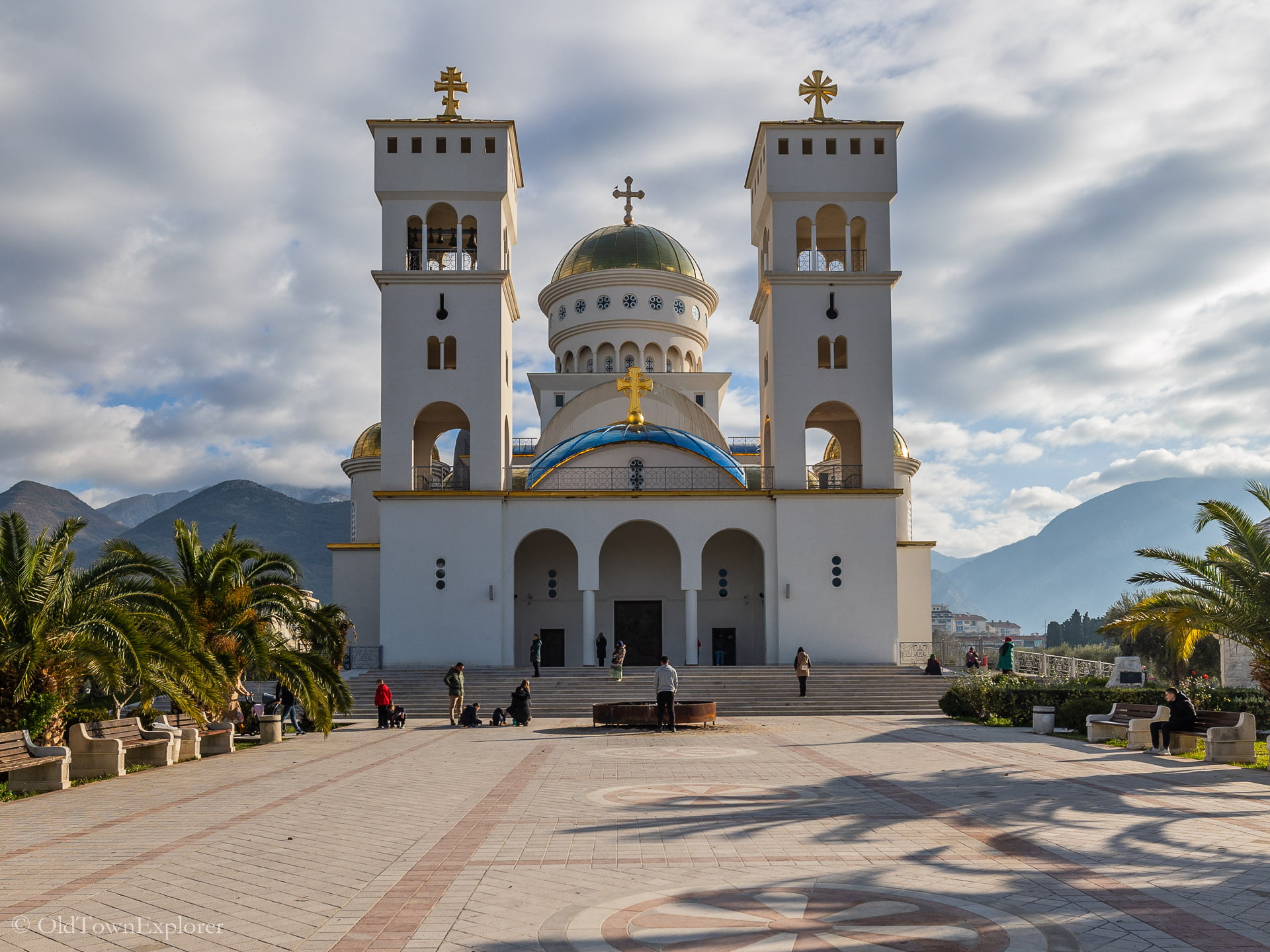
The Church of Saint John Vladimir
aka Church of St. Jovan Vladimir
- Architect: Unknown
- Style: Modern Orthodox
- Built: 2006–2016 (unfinished)
- Address: 38 Ulica Jovana Tomasevica, Bar, Montenegro
Dedicated to Saint John Vladimir of Montenegro, the Church of Bar is the largest Orthodox church in the country. Its construction occurred between 2006 and 2016, and although it remains unfinished, the vibrant and ornate interior is truly a sight to behold.
Ruins of Triconch Church – Topolica
Barski trikonhos
- Architect: Unknown
- Style: Early Christian
- Built: 6th century AD (Justinian era)
- Address: 33WW+643, Bar, Montenegro
The remains of the Bar Triconch' church lie in the center of Bar. It is the oldest Christian religious building in Montenegro, dating to the 6th century AD. It was built during Justinian's reign.
Cathedral of St. Peter the Apostle
Konkatedrala St. Petra Apostola
Things to Know About Bar Architecture
Stari Bar Is the Main Architecture Site
The most important architecture in Bar is concentrated in Stari Bar, the inland fortified old town. The site includes walls, gates, church ruins, mosques, palaces, civic buildings, and defensive infrastructure.
Stari Bar Is on the UNESCO Tentative List
Stari Bar is listed on UNESCO’s tentative list, not the inscribed World Heritage List. This distinction matters because it means the site has recognized potential value but has not received full World Heritage inscription.
Expect Ruins Rather Than Complete Buildings
Many structures inside Stari Bar survive as ruins or partial remains. The best way to read the site is by looking at wall lines, stonework, gates, building footprints, and the relationship between religious, military, and civic spaces.
Old Bar and New Bar Feel Different
Stari Bar is the historic inland settlement, while the newer city of Bar sits closer to the coast and port. Seeing both helps explain how the town shifted from fortified inland settlement to modern coastal city.
Where Is the Best Place To Stay In Bar?
Hotels in Bar
For the best experience, we recommend staying near Stari Bar (the castle marker on the map below is a great square inside the Old Town).
Below is an interactive map with hotel and apartment options that can be filtered to meet your needs. Select your travel dates to get specific availability and prices.
FAQs About Bar Architecture
What is Bar, Montenegro known for architecturally?
Bar is known for Stari Bar Fortress, its medieval walls, church ruins, mosques, Ottoman-era structures, aqueduct, and the contrast between the old inland town and the newer coastal city.
Is Stari Bar a UNESCO World Heritage Site?
No. Stari Bar is on UNESCO’s tentative list, but it is not currently an inscribed UNESCO World Heritage Site.
How old is Stari Bar?
Stari Bar is first mentioned in medieval sources, and the site contains structures and ruins from several periods. Its architecture reflects Byzantine, Venetian, Ottoman, and later phases.
Is Stari Bar worth visiting for architecture?
Yes. It is one of the best places in Montenegro to study a ruined fortified town, especially if you are interested in walls, gates, religious buildings, military structures, and stone construction.
How much time do you need for Stari Bar?
Plan at least one to two hours for the fortress area. Add more time if you want to walk slowly, read site signs, visit nearby religious buildings, or continue to the Old Olive Tree and House of Olives.