
Mostar
Food | Wine | ArchitectureExplore Mostar: Food, Wine & Architecture
Mostar sits on the Neretva River in the Herzegovina region of Bosnia and Herzegovina. The Old Town spreads across both sides of the river around Stari Most, with steep cobbled lanes, stone houses, mosques, market stalls, and river viewpoints concentrated within a compact walking area.
Meals in Mostar commonly pair grilled meat, fresh bread, peppers, tomatoes, onions, and dairy-based sides. Tepa Market is a convenient place to look at seasonal produce before choosing what to order in the Old Town.
Mostar is also a practical base for tasting Herzegovina wine. Žilavka and Blatina appear on local wine lists, while many of the region’s vineyards and wineries lie south and west of the city around Čitluk, Međugorje, and Ljubuški.
We first visited Mostar in 2012 and returned more than a decade later for the full month of May. During that stay, we explored the historic neighborhoods, food markets, and nearby vineyards. Most travelers can see the Old Town in one full day, but two or three nights leave time for museums, quieter mornings around Stari Most, and a trip beyond the city. For the trade-offs of a longer stay, read our pros and cons of living in Mostar.
This page contains affiliate links. We may earn a small commission at no extra cost to you.
Mostar at a Glance
Mostar works best for travelers who want a compact historic center, a strong river setting, Bosnian food, and easy access to the vineyards and small towns of Herzegovina.
- Best for: Ottoman bridges and mosques, riverside views, Bosnian meals, Herzegovina wine, and a compact Old Town.
- Best starting area: Stari Most and the lanes on both banks of the Neretva River.
- Suggested stay: One full day for the main Old Town sights; two or three nights for museums, early-morning walks, and a nearby day trip.
- Best timing: April, May, late September, or October for milder walking weather than midsummer.
- Main trade-off: The streets around Stari Most become crowded during the busiest daytime hours, while summer heat can make the exposed stone lanes tiring.
Choose an overnight stay rather than a brief midday stop when you want to see Stari Most before the largest day-trip groups arrive and after they leave.
Mostar Food
Mostar is a good place to begin with grilled meats, burek and other filled pastries, fresh bread, seasonal vegetables, and dairy-based sides. Start with a walk through Tepa Market, then compare those ingredients with the dishes listed in the Old Town restaurants.
Our Mostar Food guide explains the local dishes, markets, dining areas, and restaurant choices in more detail.

Mostar Wine
Mostar lies just north of Herzegovina’s main vineyard area. Look for Žilavka when you want a regional white and Blatina when you want a regional red, then consider a winery trip toward Čitluk, Međugorje, or Ljubuški.
Our Mostar Wine guide covers wine bars, shops, local grapes, and ways to visit wineries outside the city.

Mostar Architecture
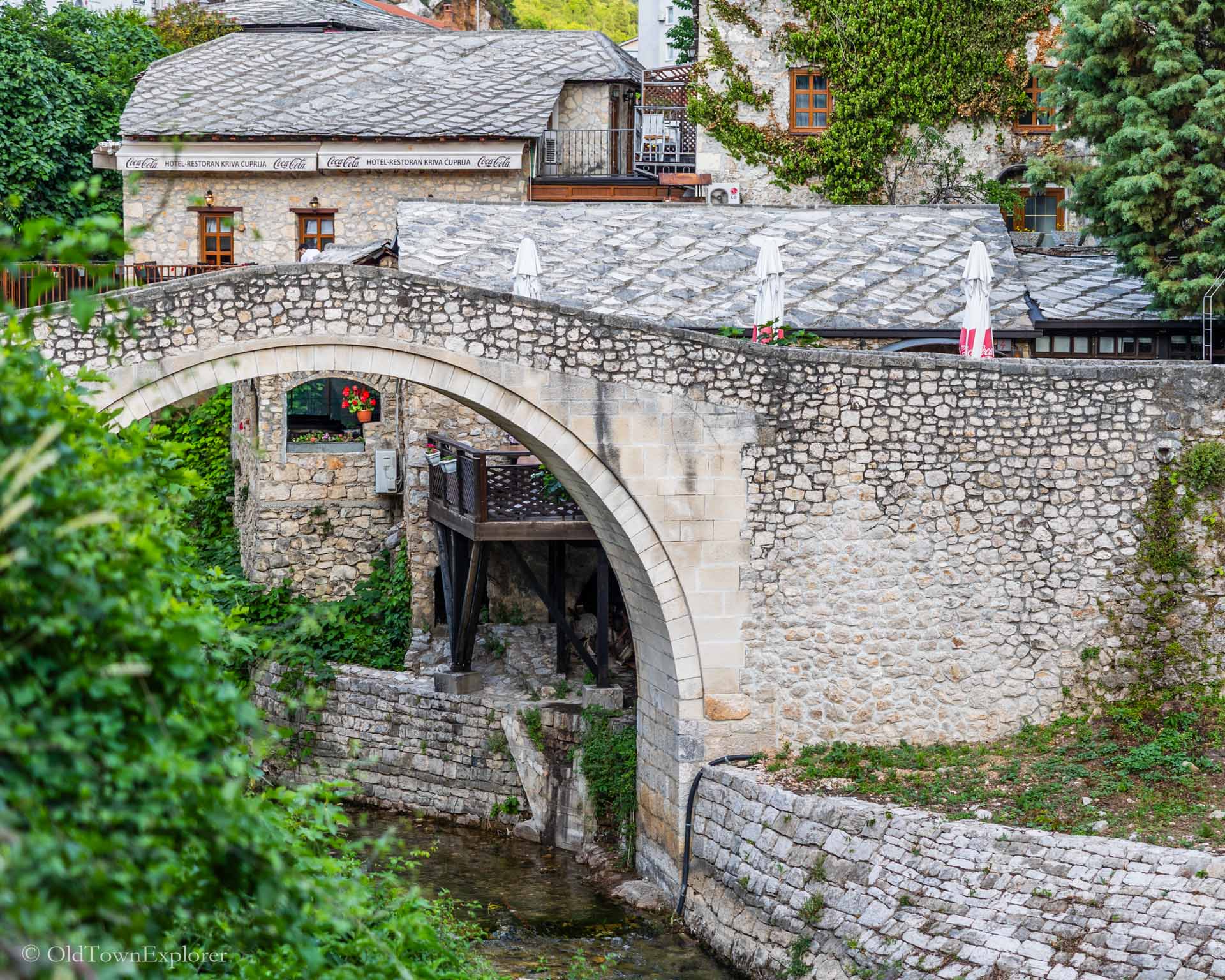
Mostar’s most recognizable view pairs the rebuilt Stari Most with the Neretva River and the stone buildings of the Old Town. Nearby streets add Ottoman mosques and houses, while wider parts of the city contain Austro-Hungarian façades, modern buildings, and visible wartime damage. The Old Bridge Area of the Old City of Mostar is a UNESCO World Heritage Site.
Our Mostar Architecture guide identifies the bridges, mosques, streets, and buildings to prioritize.

Where Is Mostar Located?
Mostar is in southern Bosnia and Herzegovina, in the Herzegovina region. The city stands on the Neretva River between Sarajevo and the Croatian Adriatic coast.
Sarajevo is the most useful connection within Bosnia and Herzegovina, with road and rail options between the two cities. Dubrovnik and Split are common starting points for travelers arriving from Croatia, but each route involves an international border crossing. Compare the total flight, transfer, and border time rather than choosing an airport from driving distance alone.
When Is The Best Time To Visit Mostar?
Choose spring or autumn when you want more comfortable walking weather. Choose summer for long daylight and the widest seasonal visitor services, but expect strong heat on the stone streets and larger daytime crowds around Stari Most. Winter is quieter, though colder weather and shorter days reduce the appeal of long outdoor walks.
Weather
Mostar has hot summers and cooler, wetter winters. July and August can be uncomfortable for long walks through the exposed Old Town, especially in the afternoon. Spring and autumn are usually easier for climbing cobbled lanes and spending time at open river viewpoints.
The chart below compares Mostar’s average monthly high and low temperatures. Use it to choose between summer heat, milder spring and autumn days, and quieter winter conditions.

Shoulder Season
April, May, late September, and October offer a useful balance of milder temperatures and fewer visitors than the summer peak. We spent the full month of May in Mostar. Some afternoons felt hot, but the crowds remained manageable during our stay.
Best Value
Check accommodation for November through March when low room rates matter more than warm evenings or long sightseeing days. Compare refundable prices before booking because winter transport, restaurant schedules, and weather can change the value of a low nightly rate.
Best Places to Stay in Mostar
Choose your accommodation based on how close you want to be to Stari Most, whether you are arriving by car, and how much daytime noise you are comfortable with. Mostar’s main sights are compact, but steep cobbled streets, steps, and limited parking can make two nearby properties feel very different.
Hotels and Apartments in Mostar
Stay near Stari Most when you want the shortest walk to the Old Town’s bridges, mosques, market lanes, restaurants, and river viewpoints. This is the most convenient area for a first visit, but rooms beside the busiest pedestrian streets may receive daytime noise.
Choose a hotel or apartment several streets outside the Old Town when you want easier road access, quieter evenings, or parking. Check the exact walking route before booking because a short distance may include steep cobbles, steps, or slopes that are awkward with wheeled luggage.
The map below shows hotels and apartments on both sides of the Neretva River. Enter your dates, then compare the walking route to Stari Most, parking arrangements, air conditioning, and recent guest comments about noise.
Other Things to Know About Mostar
Airport
Mostar International Airport (OMO) is the closest airport, but its routes and operating days change by season. Check the airport’s current flight information before deciding that it is the most practical entry point.
Sarajevo Airport (SJJ), Dubrovnik Airport (DBV), and Split Airport (SPU) provide additional choices. Sarajevo avoids an international land border on the trip to Mostar. Dubrovnik and Split can work well as part of a Croatia and Bosnia itinerary, but allow extra time for border checks and confirm that any rental car may be taken into Bosnia and Herzegovina.
Train Station
Mostar Railway Station is north of the Old Town near the main bus stations. Trains connect Mostar with Sarajevo through the Neretva valley, while seasonal cross-border service may continue toward Ploče in Croatia.
Check the ŽFBH timetable shortly before travel because departure times and seasonal services can change. From the station, the walk to Stari Most takes you south through the newer city before reaching the historic center.
Time Zone
Mostar uses Central European Time: CET (UTC+1) in winter and CEST (UTC+2) during daylight-saving time.
Currency
Bosnia and Herzegovina uses the convertible mark, abbreviated BAM and often shown locally as KM. Carry some cash for market stalls, small cafés, and minor purchases, even when your hotel and larger restaurants accept cards.
Language
Bosnian, Croatian, and Serbian are used in Bosnia and Herzegovina. English is common in hotels, tour businesses, and many restaurants around Mostar’s Old Town, but learning a greeting and the words for “please” and “thank you” is useful outside the busiest visitor streets.
Visa
Entry rules depend on your nationality, passport, trip length, and travel route. U.S. citizens may currently visit Bosnia and Herzegovina without a visa for stays of up to 90 days, but passport and entry requirements can change. Before departure, check the Bosnia and Herzegovina Ministry of Foreign Affairs visa information. U.S. travelers should also review the U.S. Department of State country information.
For more information on visa-free travel in Bosnia and Herzegovina, check out our article on traveling visa-free.
Electricity
Bosnia and Herzegovina uses a 230-volt, 50-hertz electricity supply and the two-round-pin plugs common across much of continental Europe. Travelers whose devices use a different plug need an adapter. Check the voltage printed on chargers and appliances before connecting them.
SIM Card
Choose a local prepaid SIM when you need a larger data allowance or expect to remain in Bosnia and Herzegovina for an extended stay. Choose an eSIM when your phone supports one and you want mobile data ready shortly after arrival.
Compare coverage, data limits, validity periods, hotspot restrictions, and activation requirements before buying. Keep access to offline maps and your accommodation address until the new service is working.
We use eSIMs exclusively because they can be purchased through an app prior to arrival in a new country and activated when you hit a cell tower in the country. We use Airalo eSIMs. They work great, and we recommend them if you plan to use less than 5 GB of data during your stay or if you need internet immediately on arrival.
Car Rental
You do not need a car for Mostar’s Old Town. A rental car becomes useful for vineyards, waterfalls, monasteries, and smaller Herzegovina towns that take longer to reach by public transport.
When renting in Dubrovnik or Split, tell the rental company that you plan to enter Bosnia and Herzegovina. Confirm cross-border permission, insurance, roadside coverage, required documents, and any extra fee in writing. Allow flexible time at the border because queues vary by date and time.
Parking is easier outside the pedestrian lanes around Stari Most. Confirm whether your accommodation provides a reserved space or directs guests to a public car park.
For a comparison of rental car offers from large, international brands and smaller regional brands, we recommend Discover Cars.
FAQs About Mostar
Is Mostar, Bosnia Worth Visiting?
Mostar is worth visiting for Stari Most, the Neretva River setting, Ottoman-era streets and mosques, Bosnian food, and access to the vineyards and smaller destinations of Herzegovina. It is a strong choice for one or two nights between Sarajevo and the Croatian coast. Read our article titled Is Mostar Worth Visiting? for a closer look at the city’s advantages and trade-offs.
Is Mostar Pretty?
Mostar’s best-known view combines Stari Most, the blue-green Neretva River, stone houses, mosque minarets, and steep cobbled lanes. The Old Town is compact and visually striking, but the wider city also includes busy roads, modern development, and buildings with visible wartime damage.
What Is Mostar Famous For?
Mostar is best known for Stari Most, the arched stone bridge over the Neretva River. The 16th-century Ottoman bridge was destroyed in 1993, rebuilt, and reopened in 2004. The bridge and surrounding Old Town form the UNESCO-listed Old Bridge Area of the Old City of Mostar. Mostar is also known for its bridge-diving tradition, but visitors should never attempt a jump without the local training and supervision required for the cold, fast-moving river.
How Many Days Should I Spend in Mostar?
Spend one full day in Mostar when your priority is Stari Most, the Old Town lanes, a mosque viewpoint, and a Bosnian meal. Stay two or three nights when you want early and late walks without the busiest day-trip crowds, more museums, or an excursion elsewhere in Herzegovina. Our best things to see in Mostar guide helps organize the main sights.
Is one day enough in Mostar?
One day is enough for the main Old Town sights when you arrive early and remain into the evening. An overnight stay is better when you want quieter views of Stari Most, time inside museums and mosques, or a slower meal rather than a tightly timed stop between Sarajevo and Croatia.
Can you drink alcohol in Mostar?
Beer, wine, and spirits are served in many Mostar restaurants, cafés, and bars, although not every business sells alcohol. Herzegovina wines such as Žilavka and Blatina are the most relevant local choices. Our Mostar Wine guide explains what to order and where wine fits into a visit.
Is Mostar Expensive?
Mostar can cost less than Dubrovnik or Split for accommodation and restaurant meals, but prices rise around the busiest Old Town streets and during popular travel periods. Compare lodging by exact dates and check menus before sitting down. Staying a few streets from Stari Most can reduce costs without requiring a long walk.
Is Mostar a good place to live?
Mostar offers a walkable center, markets, cafés, historic streets, and lower everyday costs than many cities on the nearby Croatian coast. Long summer heat, seasonal crowds, winter conditions, transport choices, and residence rules matter more during a longer stay. Read our pros and cons of living in Mostar for the practical trade-offs we found during a month in the city.
What Region Is Mostar In?
Mostar is in Herzegovina, the southern historical and geographic region of Bosnia and Herzegovina. It is also the administrative center of Herzegovina-Neretva Canton. Travelers often combine Mostar with Sarajevo, the Croatian coast, or other Herzegovina stops such as Blagaj and the wine-producing area around Čitluk.
How to Get to Mostar?
Reach Mostar by train or bus from Sarajevo, by bus or car from cities in Bosnia and Herzegovina and Croatia, or by flying to Mostar International Airport when its seasonal schedule fits your trip. Sarajevo is the simplest major-airport choice when you want to remain inside Bosnia and Herzegovina. Dubrovnik and Split work well for a combined Croatia and Bosnia route, but both require an international border crossing.
Check current railway, airline, bus, border, and rental-car information shortly before departure rather than relying on a fixed journey time.
Mostar Blog Posts

21 Pros and Cons of Living in Mostar, Bosnia
Discover the pros and cons of living in Mostar, Bosnia. Learn about daily life in this historic riverside city.
Is Mostar Worth Visiting?
Discover what makes Mostar a unique travel destination. Learn about its architecture, history, and what to consider before planning your visit.

8 Best Things to See in Mostar, Bosnia
Discover the best things to see in Mostar. Learn about historic bridges, mosques, and sites you can explore in under an hour.
Archives
Photos from our May 2012 visit to Mostar...
