
Dubrovnik
Food | Wine | ArchitectureExplore Dubrovnik: Food, Wine & Architecture
Dubrovnik sits on the southern Adriatic coast of Croatia, with its walled Old City facing the sea below Mount Srđ. The historic core is compact and pedestrian-only, while later districts, beaches, the ferry port, and many apartments spread outside the walls along steep streets and coastal roads.
Dubrovnik food is shaped by the Adriatic, Dalmatian cooking, nearby Pelješac, Ston oysters, seafood, olive oil, pršut, pasta, and coastal market ingredients. The city works best as a place to understand southern Dalmatian food through seafood restaurants, market produce, oyster routes, and regional dishes rather than one isolated local cuisine.
Dubrovnik is not a major wine-production city, but it is one of the strongest urban bases for southern Dalmatian wine. Pelješac, Ston, Konavle, Plavac Mali, Dingač, Postup, Pošip, and Malvasija Dubrovačka all appear in the city’s wine lists, shops, restaurants, and day-trip routes.
We first visited Dubrovnik in spring 2012 and returned for the full month of June more than a decade later. Start with the Old City, then decide how many days to stay, which side of the walls to sleep on, whether swimming season matters, and whether you need a car for Ston, Pelješac, or Konavle.
This page contains affiliate links. We may earn a small commission at no extra cost to you.
Dubrovnik at a Glance
Dubrovnik is best understood as a compact walled Old City surrounded by steep residential areas, coastal districts, harbor zones, islands, and southern Dalmatian day-trip routes. The main planning choice is whether to stay close to the walls for walking access or farther out for more space, easier road access, or a quieter base.
Key planning points:
- Best for: Walled-city architecture, Adriatic views, seafood, southern Dalmatian wine, and boat or road day trips.
- Best starting area: Old City, Pile, Ploče, or lower areas close to the walls keep Stradun, the gates, harbor, restaurants, wine bars, and main sights within easier walking distance.
- Suggested stay: Two or three days is enough for the Old City, walls, harbor, Lokrum, food, and wine; four or more days works better for Ston, Pelješac, Konavle, the Elafiti Islands, or cross-border trips.
- Best timing: Spring and autumn are usually stronger for walking, architecture, food, wine, and day trips than peak summer.
- Main trade-off: Staying near the walls gives the easiest first visit, while staying farther out can mean more space, quieter evenings, or easier road access.
The strongest Dubrovnik trips balance the Old City with at least one coastal, island, or food-and-wine route outside the walls.
Dubrovnik Food
Dubrovnik food reflects its position on the southern Dalmatian coast, with seafood, oysters from nearby Ston, olive oil, pasta, pršut, and regional dishes shaping many meals. Italian, Balkan, and Adriatic influences all appear in the city’s restaurants, markets, and coastal cooking.
Our Dubrovnik Food page introduces the dishes to recognize, where to eat inside and outside the Old City, which markets to visit, and what to order first.

Dubrovnik Wine
Dubrovnik sits in southern Dalmatia and works as a strong base for tasting regional Croatian wine. Pelješac, Ston, Konavle, Plavac Mali, Dingač, Postup, Pošip, and Malvasija Dubrovačka are the main names to recognize on local wine lists and nearby routes.
Our Dubrovnik Wine page introduces local wine bars and shops, first-glass choices, and tasting routes from Dubrovnik to Pelješac and Konavle.

Dubrovnik Architecture
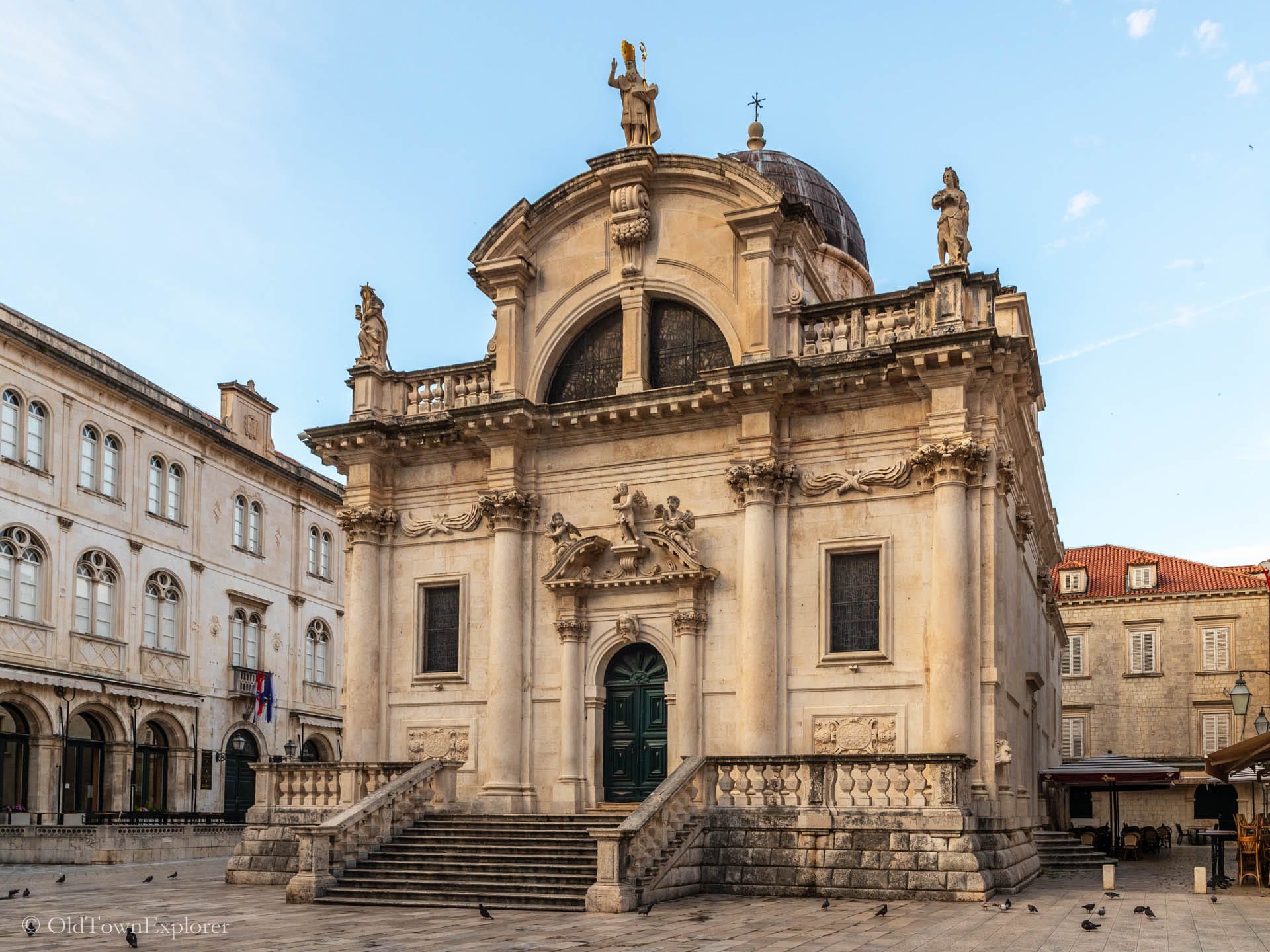
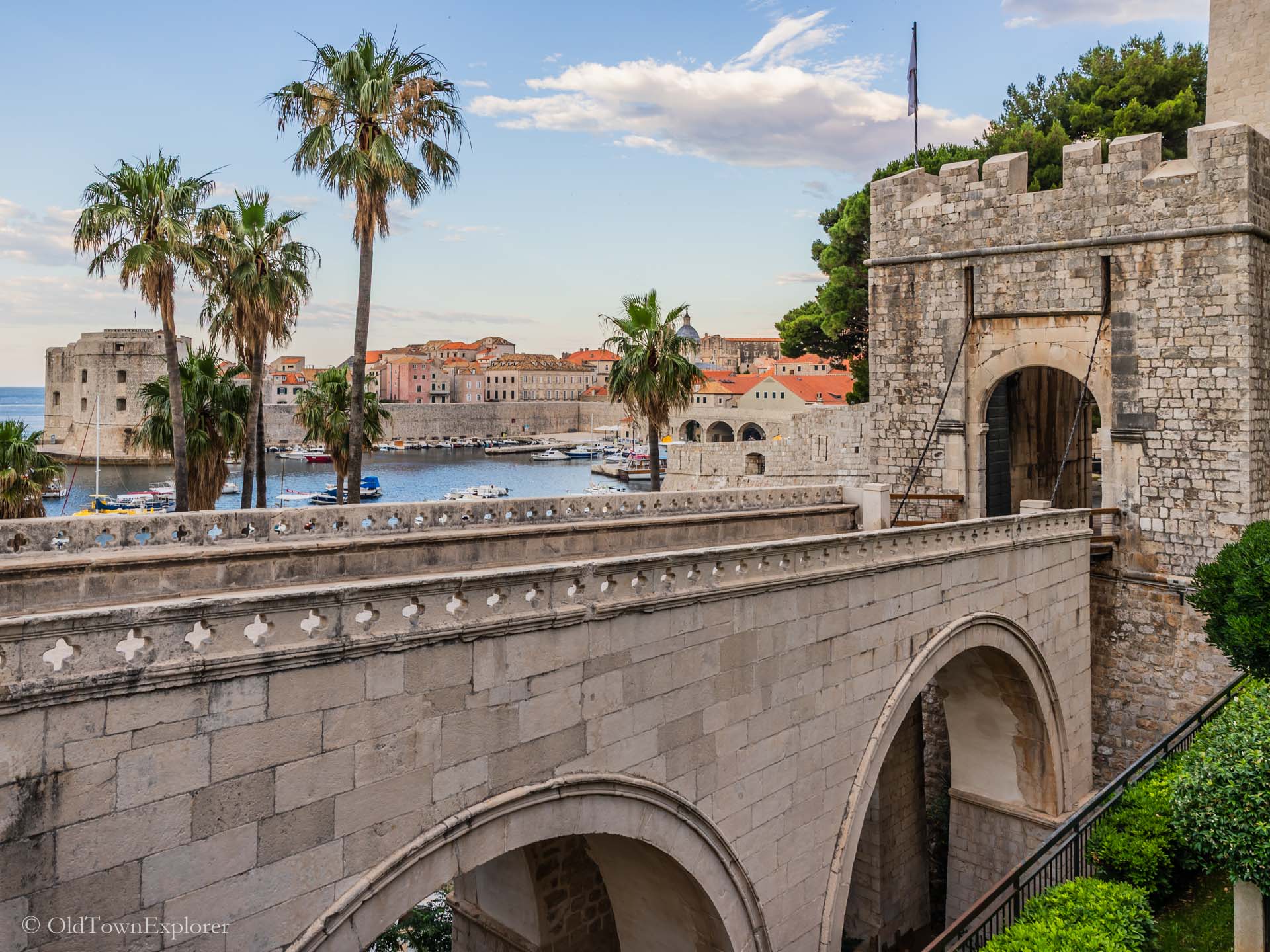
Dubrovnik’s architecture is centered on the Old City of Dubrovnik, Stradun, the harbor, gates, churches, monasteries, palaces, fountains, and sea-facing fortifications. The city’s strongest architectural experience comes from seeing how the walls, streets, civic buildings, and Adriatic setting fit together.
Our Dubrovnik Architecture page explains what to notice on Stradun and along the walls, gates, palaces, churches, monasteries, and fortifications, with enough detail to plan an architecture-first walk.

Location of Dubrovnik
Dubrovnik sits on Croatia’s far southern Adriatic coast, with the walled Old City between the sea and Mount Srđ. The Old City is the historic core; Pile and Ploče sit beside its western and eastern gates, while Gruž and Lapad form larger harbor, residential, and hotel areas farther northwest.
Dubrovnik Ruđer Bošković Airport is near Čilipi, and the main intercity bus and ferry terminals are in Gruž. Dubrovnik has no passenger train station, so most travelers arrive by air, bus, ferry, transfer, or road; add extra nights if you also want Lokrum, the Elaphiti Islands, Ston, Pelješac, or Konavle.
Best Time to Visit Dubrovnik
Choose April, May, late September, or October if your priority is walking the Old City, climbing the walls, and eating outdoors without peak-summer heat. Choose June through September if swimming and boat trips matter more, but plan the walls, Mount Srđ approaches, and steep streets for the cooler parts of the day.
Weather
Average temperatures rise from 14.5°C (58°F) in April to 18.7°C (66°F) in May, making spring comfortable for long days on foot. June averages 22.7°C (73°F), while July and August are close to 25°C (78°F) and bring about 11 and 13 days, respectively, with highs of at least 30°C (86°F). September remains warm at 21.9°C (71°F), but October drops to 18°C (64°F) and is considerably wetter.
The chart below shows average highs, lows, and precipitation days by month.

Shoulder Season
April and May suit long walks and architecture, while late September and October keep daytime temperatures moderate but bring more rain than midsummer. Ferry schedules vary by route and season, so check your exact dates before building the trip around the Elaphiti Islands, Mljet, Korčula, or another boat connection.
We spent the full month of June in Dubrovnik. The first three weeks were pleasant for walking and swimming, but the final week became noticeably hotter and busier; in June, plan the walls and steep climbs early, then save swimming, lunch, or shaded interiors for the afternoon.
Best Value
Do not assume one month will always be cheapest. Search the same hotel or apartment for weekday dates in April or May, late September or October, and your preferred summer dates, then repeat the comparison in the Old City, near Pile or Ploče, and in Gruž or Lapad. Compare the total price with cancellation terms, luggage access, stairs, and bus time to the Old City before booking.
Best Places to Stay in Dubrovnik
Choose your base by how often you want to enter the Old City, how much luggage you have, and whether you prefer sea views, easier road access, or fewer stairs. The best first choice is usually inside the walls or near Pile or Ploče, while Gruž and Lapad work better for ferry departures, beaches, or a longer stay.
Hotels and Apartments in Dubrovnik
Stay inside the Old City for early mornings on Stradun, late dinners without a return journey, and the shortest walks to the main sights. Before booking, check the exact route from Pile or Ploče Gate, the number of stairs, lift access, luggage instructions, and evening noise; vehicles cannot reach most doors inside the walls.
Pile gives the simplest access to the western gate and major bus stops. Ploče puts you close to the eastern gate and often gives wider sea or Old City views, but many properties sit uphill, so inspect the map and elevation rather than judging distance alone.
Choose Gruž for the bus station and ferry port, or Lapad for beaches and a waterfront promenade. Both areas require a bus, taxi, or longer walk to the Old City, but they can make arrivals, departures, and day trips easier.
Use the interactive map below to compare hotels and apartments by their actual position relative to the city walls, gates, port, beaches, hills, and bus routes.
Other Things to Know About Dubrovnik
Airport
Dubrovnik Ruđer Bošković Airport (DBV) is near Čilipi, about 22 kilometers (14 miles) southeast of Dubrovnik. Check the current flight schedule and ground transport before booking, then confirm the nearest vehicle drop-off if your accommodation is inside the Old City.
Train Station
Dubrovnik has no passenger train station. If your Croatia itinerary uses rail, compare a train-plus-bus or train-plus-transfer journey with a direct bus or flight before booking because the final leg to Dubrovnik must be completed by road or sea.
Time Zone
Dubrovnik uses Central European Time (CET; UTC+1) in winter and Central European Summer Time (CEST; UTC+2) during daylight-saving time.
Currency
Croatia uses the euro (€). Cards are widely accepted, but carry some cash for small purchases, markets, tips, or places where the card terminal is unavailable.
Language
Croatian is the official language. English is common in hotels, restaurants, attractions, and other visitor settings, while a few Croatian words such as dobar dan for “good day,” molim for “please,” and hvala for “thank you” are easy to use.
Visa
Croatia is part of the Schengen Area, so time spent in Croatia counts toward your total Schengen stay. Check the Croatian Ministry of Foreign and European Affairs visa guidance for your nationality and passport rather than assuming Croatia has a separate allowance.
Electricity
Croatia uses Type C and Type F sockets with 230-volt, 50-hertz electricity. Travelers whose devices use another plug need an adapter, and devices that are not dual-voltage may also need a voltage converter.
SIM Card
Prepaid SIM cards and eSIMs are available from Croatian mobile operators. Compare the data allowance, validity period, hotspot rules, activation requirements, and coverage for any trip beyond Dubrovnik; EU and EEA visitors should also check whether their existing plan includes Croatian roaming.
Car Rental
You do not need a car for the Old City, and parking near the walls can add cost and inconvenience. Rent one only for places such as Ston, Pelješac, Konavle, or an onward road trip, and check cross-border permission, one-way fees, ferry rules, insurance, and overnight parking before confirming the booking.
FAQs About Dubrovnik
What is Dubrovnik known for?
Dubrovnik is famous for its stone city walls, red-tiled Old City, Stradun, fortified gates, civic palaces, churches, monasteries, and Adriatic setting. Its history as the Republic of Ragusa and its use as a Game of Thrones filming location add context, but the walls and historic street plan remain the main reasons to visit.
How many days do you need in Dubrovnik?
One full day can cover Stradun, the main squares, several exterior sights, and either the city walls or a few interiors. Two or three days gives you time for Fort Lovrijenac, food, wine, swimming, Lokrum, and quieter morning or evening hours; use our best things to see in Dubrovnik guide to choose your priorities.
Is Dubrovnik better as a day trip or an overnight stay?
Dubrovnik is better as an overnight stay. A day trip can cover Stradun, the harbor, and part of the Old City, but sleeping nearby gives you early morning and evening hours after many cruise and excursion visitors have left.
Is Dubrovnik walkable?
The Old City is compact, pedestrian-only, and easy to cross on foot. The harder walking begins on the city walls and outside the gates, where apartments, viewpoints, and surrounding neighborhoods can involve long staircases and steep streets.
Do you need a car in Dubrovnik?
You do not need a car for the Old City, Pile, Ploče, Gruž, or Lapad. Rent one only for a day trip or onward journey to places such as Ston, Pelješac, Konavle, Bosnia and Herzegovina, or Montenegro.
Is Dubrovnik expensive?
Dubrovnik can be expensive, especially for accommodation, restaurants, and paid attractions near the walls on busy dates. Compare the complete cost of staying in the Old City with Pile, Ploče, Gruž, and Lapad rather than choosing a lower room rate that adds daily taxis or difficult luggage transfers.
When is the best time to visit Dubrovnik?
April, May, late September, and October are strong choices for walking, architecture, food, and wine without peak-summer heat. June suits travelers who also want swimming, while July and August bring the hottest weather and the greatest need to plan around busy streets and midday sun.
Is Dubrovnik good for food?
Dubrovnik is a strong food destination for Adriatic seafood, black risotto, mussels, octopus, Ston oysters, seasonal produce, and Dalmatian olive oil. Use our Dubrovnik Food page to choose dishes, markets, dining areas, and restaurants.
Is Dubrovnik good for wine?
Dubrovnik is a good urban base for southern Dalmatian wine, with Pelješac to the northwest and Konavle to the southeast. Our Dubrovnik Wine page explains which grapes and bottles to recognize, where to drink or buy them, and how to plan a tasting trip outside the city.
Is Dubrovnik good for architecture?
Dubrovnik is one of Croatia’s strongest architecture destinations because the walls, gates, limestone streets, palaces, fountains, churches, and monasteries form one compact historic center. Use our Dubrovnik Architecture page to decide which buildings and architectural features deserve more time.
Is Dubrovnik worth visiting?
Dubrovnik is worth visiting for a dramatic walled-city setting, Adriatic views, strong architecture, seafood, Croatian wine, swimming, and boat trips. Read Is Dubrovnik Worth Visiting? before booking if crowds, high prices, stairs, summer heat, or the lack of train access could change your decision.
Is Dubrovnik better than Split?
Choose Dubrovnik for a smaller, more complete walled-city experience with dramatic fortifications and sea views. Choose Split for a larger working city, a Roman palace at its historic core, and easier rail and ferry connections for a wider Croatia itinerary.
Dubrovnik Blog Posts
18 Pros and Cons of Living in Dubrovnik, Croatia
Discover the pros and cons of living in Dubrovnik, Croatia. Learn about daily life, local culture, and what to expect in this historic coastal city.
Is Dubrovnik Worth Visiting?
Discover if Dubrovnik is worth visiting. Learn about its Old Town, sea views, and what makes this Croatian city a must-see destination.

19 Best Things to See in Dubrovnik, Croatia
Discover the best things to see in Dubrovnik, Croatia. Learn about top landmarks, historic churches, and how to explore them all on foot.
Albums
Lights Go Out On Stradun


Archives
We also visited Dubrovnik in May 2012...


