
Rovinj
Food | Wine | ArchitectureExplore Rovinj: Food, Wine & Architecture
Rovinj sits on the west coast of Istria in northwestern Croatia, with its Old Town packed onto a steep peninsula beneath the Church of St. Euphemia. Narrow stone lanes climb from the harbor, while the central squares and Carera Street form a flatter approach to the historic center. South of town, the waterfront continues toward marinas, beaches, Lone Bay, and Golden Cape Forest Park.
Rovinj introduces both the coastal food and regional wine of Istria. Fish, shellfish, squid, olive oil, and Adriatic cooking sit beside handmade pasta, truffles, pršut, Boškarin beef, and other products from inland Istria. The city is also a comfortable place to try Malvazija Istarska and Teran before visiting vineyards and wineries elsewhere on the peninsula.
We first visited Rovinj in 2012 and later spent the whole month of August in the city. That longer stay showed us how well the center works on foot and how sharply heat, crowds, and accommodation costs can change the experience in peak summer. Combined with further research, that stay shaped the practical comparisons on this page: how long to stay, where to sleep, when to visit, and how food, wine, beaches, and the Old Town fit a short stop or a longer Istrian trip.
This page contains affiliate links. We may earn a small commission at no extra cost to you.
Rovinj at a Glance
Rovinj combines a compact historic center with an Adriatic waterfront, swimming areas, Istrian restaurants, and access to the peninsula’s inland wine and food country.
These points will help you decide how Rovinj fits your trip:
- Best for: Historic streets, waterfront walks, seafood, Istrian wine, swimming, sunsets, and a slower coastal stay.
- Best starting area: Begin at the harbor and Marshal Tito Square, then walk through Balbi’s Arch and climb toward Grisia Street and the Church of St. Euphemia.
- Suggested stay: Allow two or three nights for the Old Town, waterfront, and beaches. Stay longer if Rovinj will be your starting point for inland Istria.
- Best timing: Late May, June, and September balance warm weather with easier walking. July and August suit beach-focused trips but bring the strongest heat and accommodation demand.
- Main trade-off: The Old Town has the most atmosphere, but its steep cobbles, steps, pedestrian lanes, and limited vehicle access can complicate luggage and parking.
Choose Rovinj when you want more than a quick old-town walk. Two or three nights leave time for the peninsula, an unhurried meal, the waterfront, and at least one swim without turning the visit into a checklist.
Rovinj Food
Rovinj introduces the coastal side of Istrian food. Fish, shellfish, squid, buzara-style dishes, grilled seafood, and olive oil lead many menus, while fuži, pljukanci, truffles, pršut, cheese, and Boškarin beef connect the city with farms, forests, and hill towns farther inland.
Our Rovinj Food page introduces the city’s dishes, restaurants, market, and practical choices for eating in and around the Old Town.
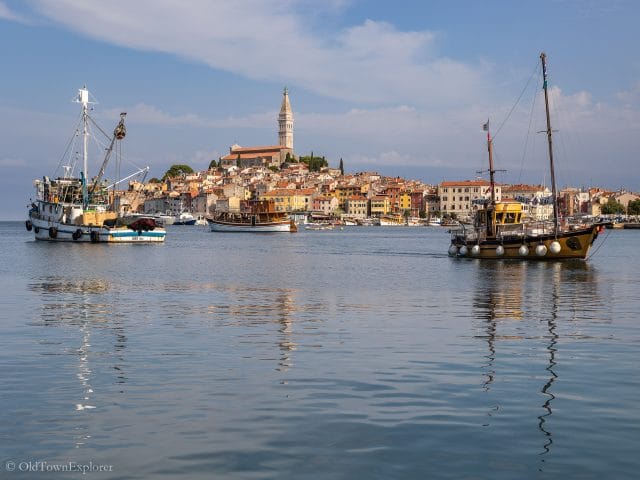
Rovinj Wine
Rovinj is best understood as a coastal tasting base within the Istria wine region, rather than as a town built around vineyards. Start with Malvazija Istarska, the region’s main white grape, then compare it with Teran, Istria’s distinctive red. Restaurant lists, wine bars, and shops make the regional wines easy to try before deciding whether to add a winery drive.
Our Rovinj Wine page introduces the wines, wine bars, shops, nearby producers, and practical choices for drinking and tasting wine in the city.

Rovinj Architecture
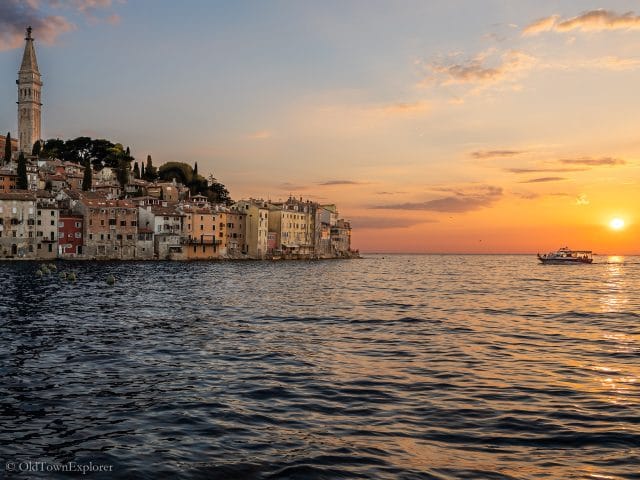
Rovinj’s architecture is centered on the Old Town peninsula. The historic settlement once stood on an island, and the channel separating it from the mainland was filled in during the 18th century. Limited building space produced tall narrow houses, close-set lanes, small squares, stairways, and buildings that meet the water along parts of the shore.
Our Rovinj Architecture page introduces the harbor, Balbi’s Arch, Grisia Street, Church of St. Euphemia, historic houses, squares, and practical information for exploring the Old Town.
Location of Rovinj
Rovinj lies on the west coast of the Istrian peninsula in northwestern Croatia. The Old Town faces the Adriatic from a compact peninsula, while beaches, wooded shoreline, marinas, hotels, and residential areas extend north and south of the historic center.
Rovinj works well as the coastal part of an Istrian trip. Pair it with Motovun or another inland hill town when you want to compare Adriatic seafood and waterfront streets with truffles, vineyards, forests, and wine-country landscapes. A car makes those inland trips easier, but it is unnecessary while exploring central Rovinj.
The map below shows Rovinj’s position on Istria’s west coast and the relationship between the Old Town and the surrounding peninsula.
Best Time to Visit Rovinj
Late May, June, and September give the best general balance of warm weather, swimming, daylight, and comfortable old-town walking. July and August suit travelers who place beach weather first, but those months bring the strongest heat and the greatest pressure on central accommodation.
Weather
Rovinj has warm summers and cool, wetter winters. Official climate data for Rovinj records average daytime highs of 21.7°C (71°F) in May, 25.4°C (78°F) in June, 28.5°C (83°F) in July, 28.7°C (84°F) in August, and 24.6°C (76°F) in September.
July is usually drier than September, October, or November, but early autumn can still bring warm days between periods of rain. Use these long-term averages to compare seasons rather than as a forecast for specific travel dates.
Below is a chart showing the average high and low temperatures for each month so you can decide what is best for you.

Shoulder Season
Late May, June, and September are the strongest shoulder-season choices when you want time for both the Old Town and the water. During our month in Rovinj in August, we found the weather very hot, accommodation expensive, and the Old Town packed. Moving the same trip outside the midsummer peak makes steep streets, waterfront walks, restaurant reservations, and regional drives easier to manage.
Best Value
Accommodation prices change too much by property, event, room type, and booking date to name one dependable cheapest month. Compare the same hotel or apartment for late May, June, and September against July and August, using the same cancellation terms and room category. Then weigh any saving against the weather, daylight, swimming conditions, and seasonal transport you need.
Best Places to Stay in Rovinj
The best area depends on whether you value old-town atmosphere, easy luggage access, or quick walks to beaches. Central Rovinj is compact, but steep lanes and pedestrian restrictions make a difference when choosing an apartment or hotel.
Hotels in Rovinj
For the best experience, we recommend staying near or in Rovinj Old Town. The castle marker in the map below is the top of the Old Town.
For 5-star beach experiences, check out Grand Park Hotel Rovinj and Hotel Monte Mulini. Both have multiple pools, beach access, and stunning views within a 10-minute walk of the Old Town. Whether you’re a budget or luxury traveler, Rovinj has accommodation options to fit everyone’s needs.
Here’s an interactive map with hotel and apartment options that can be filtered to meet your needs. Select your travel dates to get specific availability and prices.
Other Things To Know About Rovinj
Airport
Check Pula Airport first when flying to Rovinj. It is the airport within Istria and normally creates the simplest ground journey when its seasonal routes match your dates. Compare the full trip rather than the airfare alone when considering Trieste, Venice, Zagreb, or another airport farther away.
Train Station
Rovinj does not have a passenger railway station. The Istria Tourist Board describes regional rail service as limited and lists Kanfanar among the stations on the peninsula, but reaching Rovinj still requires a road transfer. Check current rail and replacement-bus details through the official Istria train information before building a rail-based route.
Time Zone
Rovinj uses Central European Time (CET; UTC+1) in winter and Central European Summer Time (CEST; UTC+2) during daylight-saving time, the same time system used elsewhere in Croatia.
Currency
Croatia uses the euro (€). Croatia joined the euro area in 2023, as confirmed by the European Union’s Croatia profile.
Language
Croatian is the national language, while Italian is also widely used in Rovinj. You will often see the bilingual name Rovinj-Rovigno on signs and public information. English is common in hotels, restaurants, and other visitor-facing businesses.
Visa
Croatia is part of the Schengen Area. Visa and entry requirements depend on your nationality, passport, and the total time you will spend across Schengen countries. Check your circumstances through the Croatian Ministry of Foreign and European Affairs’ official visa requirements page before traveling.
Electricity
Croatia uses Type C and Type F sockets with a 230V, 50Hz electricity supply. Travelers whose plugs do not fit will need an adapter. A plug adapter does not change voltage, so check the input label on chargers, hair tools, and other appliances before connecting them.
SIM Card
A local SIM or eSIM can cover maps, restaurant reservations, transport checks, and communication during the trip. Compare current data limits, activation rules, roaming conditions, and hotspot use before buying. Download accommodation details and an offline map before arrival in case the connection is not active immediately.
We use eSIMs exclusively because they can be purchased through an app prior to arrival in a new country and activated when you hit a cell tower in the country. We use Airalo eSIMs. They work great, and I recommend them if you plan to use less than 5 GB of data during your stay or if you need internet immediately on arrival.
Car Rental
A rental car can be helpful for reaching Rovinj and exploring inland Istria, but you will not use it inside the pedestrian Old Town. If your accommodation is on the peninsula, plan to park outside the historic center and walk in with your luggage. Ask the property where to park and whether it can help with arrival before you book.
Keep the car if you want to visit hill towns, wineries, olive-oil producers, or quieter stretches of the Istrian coast. For a stay focused on the Old Town, harbor, restaurants, and nearby waterfront walks, leave it parked once you arrive.
The large car rental companies in Rovinj are Enterprise and Sixt. For a comparison of rental car offers from large, international brands and smaller regional brands, we recommend Discover Cars.
FAQs About Rovinj
What is Rovinj known for?
Rovinj is known for its steep Old Town peninsula, colorful waterfront houses, fishing harbor, Church of St. Euphemia, narrow stone streets, and Adriatic views. It also works as a coastal starting point for Istrian seafood, Malvazija Istarska, Teran, beaches, and inland wine-country trips.
Is Rovinj worth visiting?
Yes, Rovinj is worth visiting when you want a compact historic town with waterfront walks, swimming, strong Istrian food, and easy evenings without a car. The main drawbacks are midsummer heat, crowds, and central accommodation prices. Our Is Rovinj Worth Visiting? article compares the decision in more detail.
Is Rovinj walkable?
Central Rovinj is highly walkable, and a car is more hindrance than help inside the historic center. The main challenge is the climb through the Old Town, where polished cobbles, steep lanes, and steps may be difficult with luggage, strollers, or limited mobility.
How many days do you need in Rovinj?
Allow two or three nights for the Old Town, harbor, an unhurried meal, and time by the water. One day is enough for the central sights, but it leaves little room for beaches or a slower evening. Our Best Things to See in Rovinj article helps organize the main sights on foot.
Where should you stay in Rovinj for a first visit?
Stay between the bus station, Carera Street, and the harbor when you want easy arrival and a short walk to the Old Town. Stay on the peninsula for the strongest historic atmosphere, but expect stairs, cobbles, and limited luggage access. Choose Lone Bay or the Golden Cape side when beaches and park walks matter more than sleeping in the center.
When is the best time to visit Rovinj?
Late May, June, and September give the strongest balance of warm weather, swimming, and easier old-town walking. July and August are better for travelers who put hot beach weather first and do not mind stronger crowds or accommodation demand.
Is Rovinj expensive?
Rovinj can be expensive in midsummer, especially for accommodation close to the Old Town. During our August stay, we found rooms costly and the historic center packed. Compare shoulder-season dates and central areas outside the peninsula before deciding that Rovinj is beyond your budget; our Pros and Cons of Living in Rovinj article adds longer-stay context.
What food should you try in Rovinj?
Start with fish, shellfish, squid, buzara-style seafood, and grilled catches, then look for fuži, pljukanci, truffles, pršut, olive oil, and Boškarin beef. Our Rovinj Food page explains the dishes, restaurants, market, and practical dining choices.
Is Rovinj a good base for wine tasting?
Rovinj is a good coastal starting point for Istrian wine because restaurants, bars, and shops make Malvazija Istarska and Teran easy to try. A car or arranged transport gives you more freedom when visiting producers outside town. Our Rovinj Wine page explains where the city fits into the wider wine region.
What architecture should you prioritize in Rovinj?
Prioritize the Old Town as a complete streetscape rather than treating it as a list of isolated buildings. Walk from the harbor through Balbi’s Arch and Grisia Street to the Church of St. Euphemia, noticing the tall houses, small squares, passages, steps, and sea-facing walls along the way. Our Rovinj Architecture page gives the building and street-level detail.
Does Rovinj have a train station?
No, Rovinj does not have a passenger railway station. Most travelers arrive by car, intercity bus, airport transfer, or seasonal sea service. Rail-based trips require a transfer from another Istrian station, so check the complete timetable before choosing train travel.
Rovinj Blog Posts
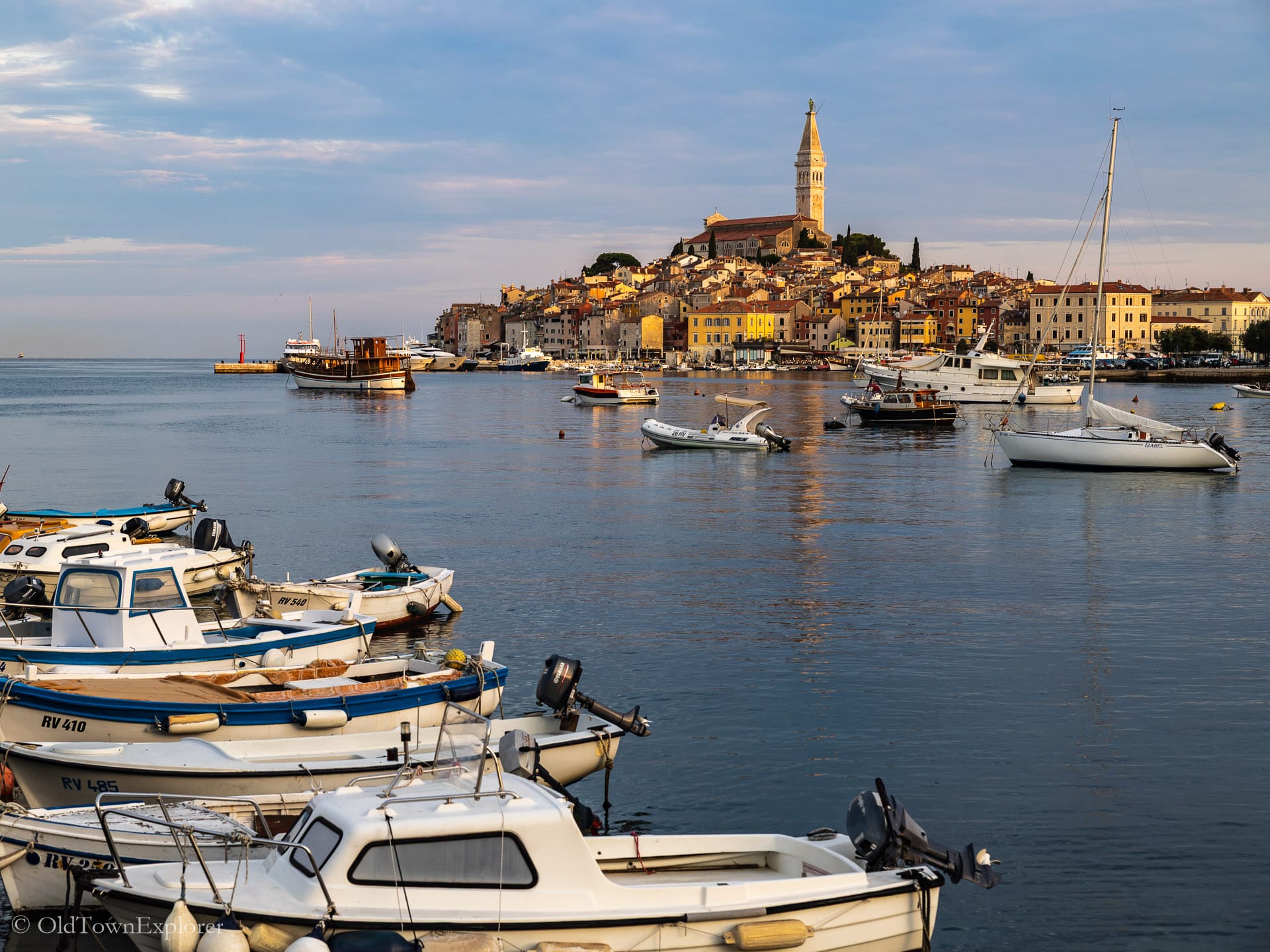
21 Pros and Cons of Living in Rovinj, Croatia
Discover the pros and cons of living in Rovinj, Croatia. Learn about life in this coastal Istrian town, from its scenic charm to everyday challenges.
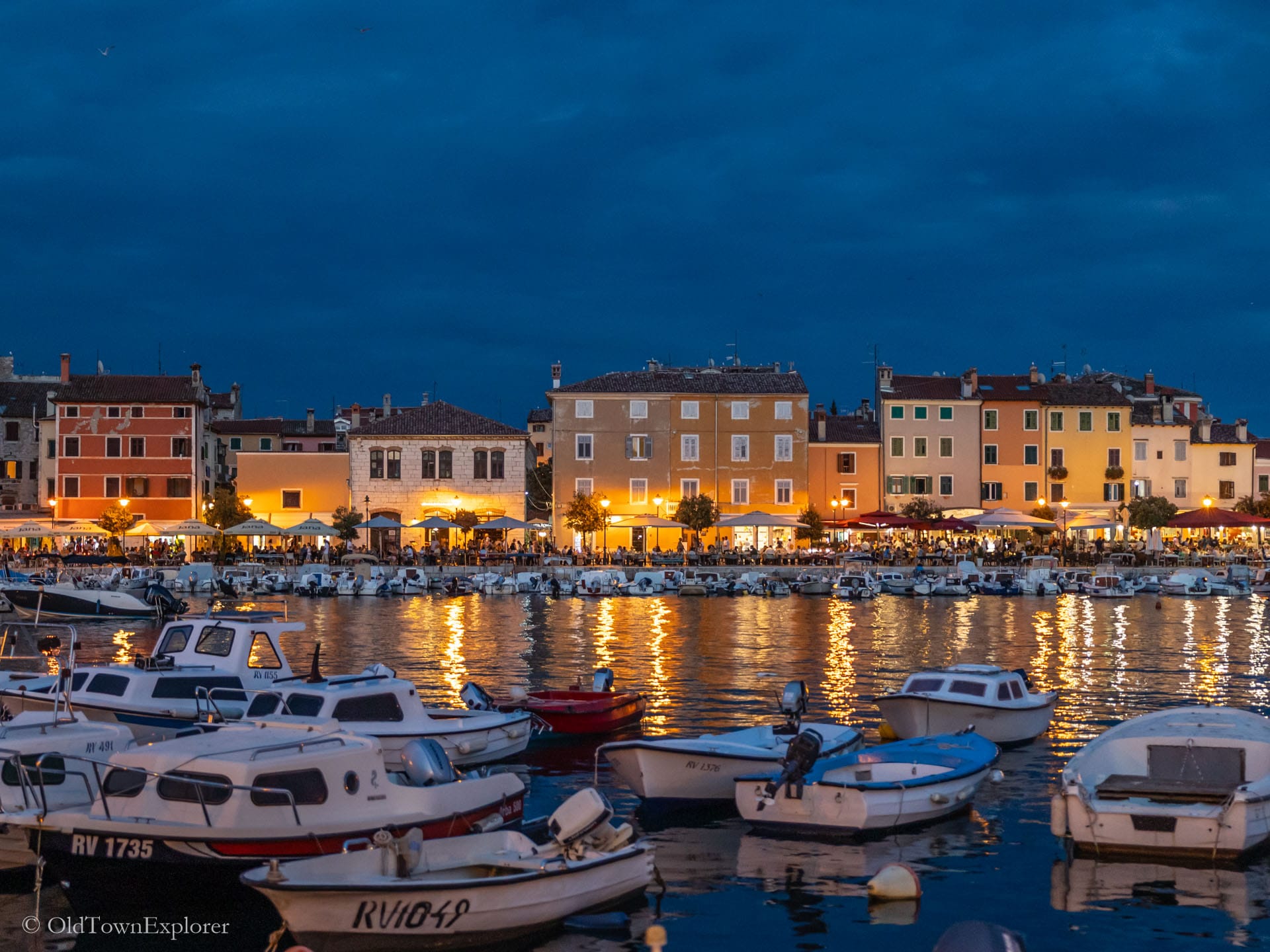
Is Rovinj Worth Visiting?
Discover if Rovinj is worth visiting. Learn about its seaside charm, scenic views, and why this Croatian town should be on your travel list.

7 Best Things to See in Rovinj, Croatia
Discover the best things to see in Rovinj, Croatia. Learn about its top landmarks, scenic streets, and how to explore this coastal town on foot.
Archives
We also visited Rovinj in May 2012...
