
Plovdiv
Food | Wine | ArchitectureExplore Plovdiv: Food, Wine & Architecture
Plovdiv sits in south-central Bulgaria, with the Maritsa River running through the city north of the historic center. The Old Town climbs over cobbled hills lined with Bulgarian Revival houses, while Kapana, Dzhumaya Square, the Roman Stadium, and the main pedestrian streets sit below.
Central Plovdiv is a good place to start with Bulgarian food because traditional restaurants, bakeries, grills, cafés, and newer dining rooms are concentrated within a relatively small walking area. Shopska salad, banitsa, kebapche, kyufte, yogurt, and white brined cheese are common names to recognize, while Kapana gives you far more choice than the quieter streets higher in the Old Town.
Plovdiv also sits in the Thracian Lowland, so Bulgarian wine is much easier to make part of a city stay here than in many other historic towns. Mavrud is the first local grape to recognize, and the city works better as a place to taste regional bottles than as a vineyard destination itself.
We spent the entire month of July in Plovdiv. That gave us time to walk the Old Town and Kapana repeatedly, visit the museums that were open, eat and drink around the center, leave by train for Veliko Tarnovo, and make day trips to Asen’s Fortress and Bachkovo Monastery. For a first visit, the main choices are how much time to give the Roman and Revival-era sights, whether to stay in lively Kapana or quieter Old Town, and whether to add a wine or monastery day outside the center.
This page contains affiliate links. We may earn a small commission at no extra cost to you.
Plovdiv at a Glance
Plovdiv works best when you give the historic center enough time for both the Roman sites below the hills and the Revival houses above them rather than treating the city as a quick stop between Sofia and the coast.
Key planning points:
- Best for: Roman archaeology, Bulgarian Revival houses, museums, Bulgarian food, and Thracian Lowland wine.
- Best starting area: Dzhumaya Square and the Roman Stadium, with Kapana, the main pedestrian streets, and the climb into the Old Town close by.
- Suggested stay: Two full days for central Plovdiv; add another day for more museums, wine, Asen’s Fortress, or Bachkovo Monastery.
- Best timing: Spring and early autumn for easier walking; July and August bring more difficult midday heat.
- Main trade-off: Kapana puts restaurants and evening activity outside your door but can be noisy, while the Old Town is quieter but hillier and has fewer places to eat and drink.
Two full days suit a first Plovdiv trip focused on the city itself. Add time rather than compressing the center if museums, regional wine, Asen’s Fortress, or Bachkovo Monastery are important to you.
Plovdiv Food
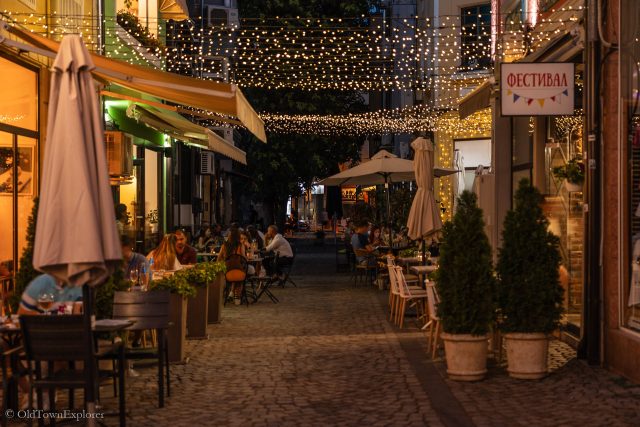
Plovdiv is a good city for trying Bulgarian staples without traveling far between meals. Kapana and the central pedestrian streets have the widest choice of restaurants, bakeries, grills, and cafés, while the Old Town becomes quieter and more limited as you climb away from the center.
For specific dishes, restaurants, markets, street food, and places to eat, start with our Plovdiv Food page.
Plovdiv Wine
Plovdiv is an urban tasting base inside the Thracian Lowland rather than a vineyard town. Look for Bulgarian bottles in restaurants, wine bars, and shops in the center, with Mavrud the most important regional grape name to recognize before deciding whether to add a winery trip outside the city.
Our Plovdiv Wine page covers regional bottles, wine bars, shops, nearby wineries, and the practical choices for drinking Bulgarian wine during a stay in the city.

Plovdiv Architecture
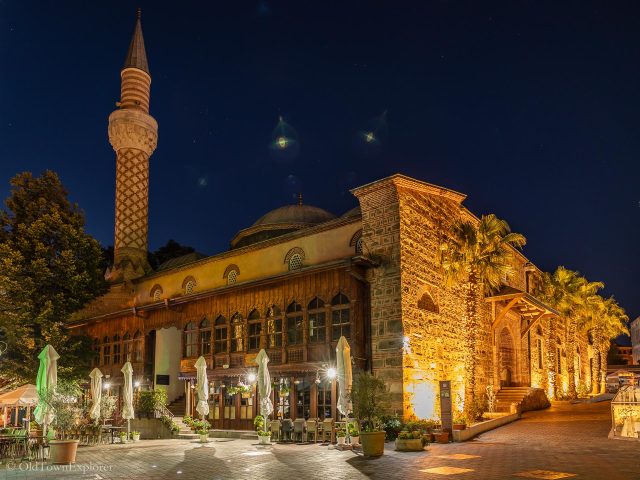
Plovdiv’s central architecture moves from Roman remains around the Stadium, Forum, and Ancient Theatre to cobbled Old Town streets lined with Bulgarian Revival houses. Orthodox churches and Dzhumaya Mosque add later religious buildings between those layers, so several major periods sit within the same central walk.
Ancient Plovdiv is on the UNESCO Tentative List; it is not currently an inscribed UNESCO World Heritage Site. For the buildings, streets, archaeological sites, churches, mosque, and Revival houses to prioritize, see our Plovdiv Architecture page.
Location of Plovdiv
Plovdiv is in south-central Bulgaria on the Maritsa River, roughly 145 km southeast of Sofia. The historic center sits south of the river, with Kapana and the main pedestrian streets below the hills of the Old Town.
Plovdiv also sits on Bulgaria’s main Sofia–Plovdiv rail corridor, which makes the city straightforward to combine with Sofia before continuing elsewhere in the country. Check current trains with BDZ rather than planning around an old timetable.
Best Time To Visit Plovdiv
Spring and early autumn are the easiest periods for long walks through the Old Town, Roman sites, and central streets. Summer gives you long days and active evenings, but the hills, stone streets, and exposed archaeological sites can make midday sightseeing uncomfortable.
Weather
Plovdiv has hot summers and much cooler winters. We spent the entire month of July in the city and found the heat strong enough that early mornings, late afternoons, and evenings were much more comfortable for walking than the middle of the day.
The weather chart below is most helpful for comparing summer heat with the cooler conditions available in spring and autumn.

Shoulder Season
April and May or September and October are better choices when you want to spend hours walking the Old Town hills, Roman sites, Kapana, and the pedestrian center without planning the day around peak summer heat. Cooler evenings are the main trade-off, especially later in autumn.
We spent the entire month of July in Plovdiv. The weather was pretty hot most of the time we were there - but, to be fair, there was a historic heat wave across Europe at the time. Plovdiv is a popular tourist destination but doesn't get too overcrowded - even in the summer. Even so, you will find fewer crowds in the shoulder season.
Best Value
For a lower-cost trip, compare spring and late-autumn dates before committing to peak summer weekends. Hotel rates still move with events and day of the week, so compare the same stay areas—Kapana, Old Town, and the central pedestrian district—across several dates rather than assuming one month will always be cheapest.
Best Places To Stay In Plovdiv
For a first visit, the main stay decision is between Kapana, the Old Town, and the central pedestrian area between them. All three keep the main Roman and historic sights within walking distance, but they feel very different after dinner.
Hotels in Plovdiv
Choose Kapana when restaurants, cafés, wine bars, and evening activity matter most. During our month in Plovdiv, we found the district noisy at night, so light sleepers should look carefully at the exact street rather than booking anywhere in Kapana simply for the location.
The Old Town was much quieter in our experience and puts the Revival houses, museums, and Ancient Theatre close by, but cobbled hills make luggage and repeated walks less convenient. The pedestrian center below the Old Town is a good middle ground when you want flatter access while staying close to both Kapana and the historic sights.
Use the map below to compare hotels and apartments in Kapana, the Old Town, and the central pedestrian area, then choose the location that fits your plans for evening noise, hills, luggage, restaurants, and sightseeing.
Other Things to Know About Plovdiv
Most central sightseeing in Plovdiv can be handled on foot, but airport choice, trains, currency, entry rules, and whether to rent a car can change how the city fits into a longer Bulgaria trip.
Airport
Plovdiv Airport (PDV) is outside the city near Krumovo. Flight schedules and destinations can change, so check current service before building a trip around PDV rather than assuming Plovdiv has a direct flight from your departure city.
Train Station
Plovdiv’s main railway station is south of the historic center. BDZ publishes current Bulgarian train schedules and ticket information; we left Plovdiv by train when continuing our trip to Veliko Tarnovo.
Time Zone
Plovdiv uses Eastern European Time, EET (UTC+2), and Eastern European Summer Time, EEST (UTC+3), during daylight-saving time.
Currency
Bulgaria adopted the euro (€) on January 1, 2026.
Language
Bulgarian is the official language and uses the Cyrillic alphabet. Saving your hotel, station, and other important addresses on your phone can make them easier to show when a Latin-alphabet place name is not immediately recognized.
Visa
Citizens from the United States, United Kingdom, Canada, and Australia don’t need a visa to visit Bulgaria if they stay 90 days or less. For more information on visa-free travel in Bulgaria, check out our article on traveling visa-free.
Electricity
Bulgaria uses 230-volt, 50-hertz electricity with Type C and Type F plugs. Travelers using other plug types need an adapter, and appliances should also support 230 volts.
SIM Card
Travelers will want a SIM card for Bulgaria. You can get either a local SIM card or an eSIM card.
To get a local SIM card, you must find a local cellular service provider, often stand in line for assistance, show your passport, and complete some paperwork. The SIM cards work great, but purchasing them is somewhat inconvenient. This option is best if you need more than 5GB of data.
We use eSIMs exclusively because they can be purchased before arrival in a new country and activated when you hit a cell tower in the country. We use Airalo eSIMs. They work great, and I recommend them if you plan to use less than 5 GB of data during your stay or if you need internet immediately on arrival.
Car Rental
The train system in Bulgaria makes rental cars unnecessary for most destinations. However, rental cars are needed to reach smaller towns and explore the countryside. In addition to the major car rental companies found in the United States, Sixt and Europcar are common throughout Europe. For a comparison of rental car offers from large international brands and smaller regional brands, we recommend Discover Cars.
FAQs About Plovdiv
What is Plovdiv known for?
Plovdiv is best known for Roman sites such as the Ancient Theatre and Roman Stadium, the Bulgarian Revival houses of the Old Town, Kapana, museums, and its position in the Thracian Lowland wine area. Those sights are concentrated closely enough that the city works particularly well on foot.
Is Plovdiv worth visiting?
Yes, especially if Roman archaeology, historic houses, Bulgarian food, and wine interest you more than big-capital sightseeing. We spent an entire month here; our Is Plovdiv Worth Visiting? post looks more closely at the trade-offs we found during that stay.
Is Plovdiv walkable?
Central Plovdiv is very walkable, with Kapana, the Roman Stadium, pedestrian center, Ancient Theatre, and Old Town close together. The main difficulty is the Old Town itself, where steep cobbled streets require better shoes and more effort than the flatter center below.
How many days do you need in Plovdiv?
Two full days are a good starting point for the historic center, Roman sites, Old Town, Kapana, and several museums. Add a third day if you want a slower museum schedule, more wine time, or an excursion outside the city.
What food should I try in Plovdiv?
Start with Bulgarian staples such as banitsa, Shopska salad, kebapche, kyufte, yogurt, and white brined cheese rather than searching for a single dish unique to Plovdiv. Plovdiv Food goes deeper into dishes, restaurants, markets, and practical meal choices.
Is Plovdiv a good base for Bulgarian wine?
Yes. Plovdiv sits in the Thracian Lowland and works well for tasting Bulgarian bottles in the city before deciding whether a winery trip is worth adding. Plovdiv Wine covers the city’s wine bars, shops, regional grapes, and nearby winery choices.
What architecture should I prioritize in Plovdiv?
Start with the Roman Stadium and Ancient Theatre, then climb into the Old Town for Bulgarian Revival houses and historic religious buildings. Plovdiv Architecture gives the building-level detail and viewing priorities.
Is Plovdiv a UNESCO World Heritage Site?
No. Ancient Plovdiv is on the UNESCO Tentative List, which means Bulgaria may consider it for nomination; it is not currently inscribed on the World Heritage List.
Where should I stay in Plovdiv for a first visit?
Choose Kapana for the easiest access to restaurants, cafés, wine bars, and late evenings. Choose the Old Town for quieter nights among the historic houses, or stay around the central pedestrian streets when you want a flatter compromise between the two.
When is the best time to visit Plovdiv?
Spring and early autumn are the easiest periods for long days of walking. July and August work for summer evenings and long daylight, but our July stay confirmed that midday heat can make the Old Town hills and exposed Roman sites tiring.
Does Plovdiv have a train station?
Yes. The main railway station sits south of the historic center, and BDZ publishes current Bulgarian train schedules and ticket information. Check the timetable for your actual travel date rather than relying on a fixed journey time.
Can you visit Asen’s Fortress and Bachkovo Monastery from Plovdiv?
Yes. Both work naturally as additions to a Plovdiv stay when you have a day beyond the central city. Our separate guides cover Asen’s Fortress and Bachkovo Monastery.
Plovdiv Blog Posts

Is Plovdiv Worth Visiting?
Discover if Plovdiv is worth visiting. Learn about its history, culture, and why Bulgaria’s oldest city might be your next travel destination.

Explore Bachkovo Monastery
Discover Bachkovo Monastery near Plovdiv, Bulgaria. Learn about its 11th-century history, stunning architecture, and tips for visiting this Eastern Orthodox site.
31 Best Things to See in Plovdiv, Bulgaria
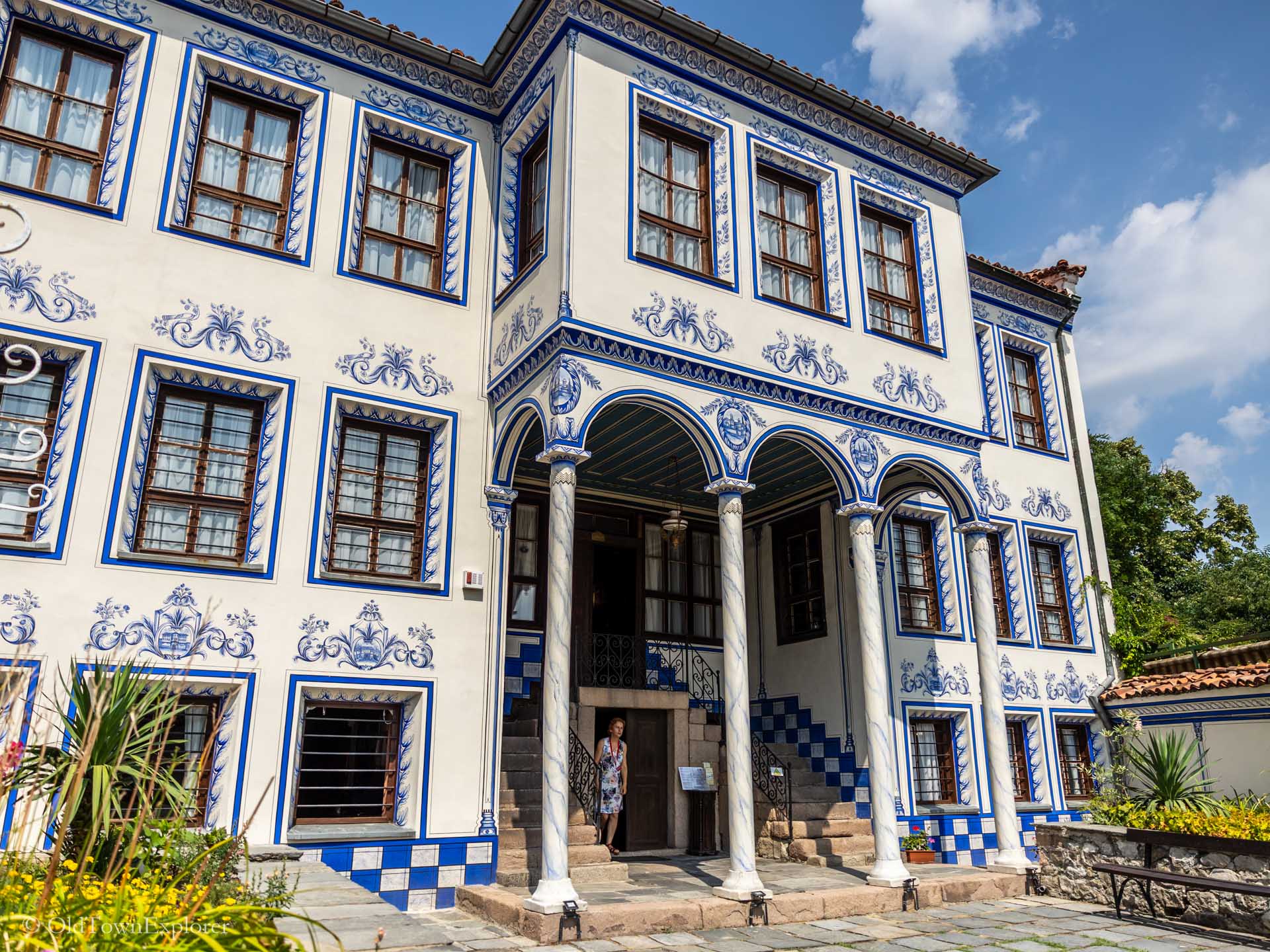
Discover the best things to see in Plovdiv, Bulgaria. Learn about ancient ruins, historic houses, and how to explore them all in a day.

Explore Asen’s Fortress
Discover Asen’s Fortress near Plovdiv, Bulgaria. Learn about its medieval history, striking architecture, and tips for visiting this mountaintop site.

25 Pros and Cons of Living in Plovdiv, Bulgaria
Discover the pros and cons of living in Plovdiv, Bulgaria. Learn about daily life, local culture, and what to expect in Bulgaria’s second-largest city.

Explore Plovdiv Museums
Discover Plovdiv museums in Bulgaria. Learn about top exhibits, from Roman theaters to Revival houses, and plan your cultural visit.