
Austria
Explore Austria: Food, Wine & Architecture
Austria is particularly rewarding when a trip combines historic cities with nearby wine regions and distinct regional food traditions. Vienna pairs Habsburg palaces, Secession architecture, coffeehouses, heuriger taverns, and vineyards within the city; Graz brings Renaissance courtyards, Styrian markets, pumpkin seed oil, and the wine roads south of the city.
Vienna, Graz, and Salzburg support three different kinds of stays. Choose Vienna for imperial architecture, major museums, coffeehouse culture, and Austrian wine; Graz for a smaller historic center, Styrian food, Renaissance buildings, and nearby wineries; or Salzburg for Baroque streets, church architecture, cafés, beer halls, and regional dishes.
We spent extended time in Austria, including month-long stays in Vienna and Graz. Drawing on that time and further research, this page compares Austria’s main destinations, regional food and wine, architecture, seasons, and transport choices to help you decide where to stay, what to combine, and how to plan your route.
Austria at a Glance
Austria is easiest to plan by choosing one main city base, one regional addition, and a pace that leaves time for cafés, museums, markets, wine villages, or mountain travel. Vienna and Graz make the simplest first rail pairing. Salzburg, Wachau, Salzkammergut, Styria, and the western Alps add different landscapes, wines, and small-town stops.
- Best for: Historic cities, coffeehouses, wine regions, Baroque churches and palaces, Secession design, Alpine landscapes, and compact rail routes.
- Top bases: Vienna for museums, architecture, cafés, and city vineyards; Graz for Styrian food, markets, wine country, and a walkable old town; Salzburg for Baroque streets and Alpine access.
- Key food themes: Wiener Schnitzel, Tafelspitz, dumplings, pastries, cured meats, Alpine cheeses, apples, pumpkin seed oil, horseradish, and market cooking.
- Key wine themes: Grüner Veltliner, Riesling, Wiener Gemischter Satz, Blaufränkisch, Zweigelt, Sauvignon Blanc, Schilcher, and sweet wines from Burgenland.
- Architecture highlights: Gothic churches, Baroque palaces, Historicist boulevards, Secession design, Renaissance courtyards, railway engineering, and UNESCO-listed historic centers.
- Good first route: Vienna and Graz by train, with Wachau from Vienna, Styria from Graz, or Salzburg and Salzkammergut added when lakes and mountains matter.
Choose Vienna first when museum time and major architecture matter most. Add Graz when food, wine, markets, and a smaller old-town base would make the trip less capital-heavy. Add Salzburg when Baroque architecture and Alpine landscapes should be part of the first trip.
Austria Destinations
Austria’s main destinations fall into clear trip choices. Vienna is the first base for imperial architecture, museums, coffeehouses, and urban wine. Graz is the smaller southern base for Styrian food, markets, courtyards, and wine roads. Salzburg brings Baroque streets, fortress views, church interiors, music sites, and lake-and-mountain day trips. Wachau brings Danube towns, abbeys, vineyards, and apricots. Salzkammergut and the western Alps shift the trip toward lakes, mountain towns, hiking, and winter travel.
Vienna and Graz are the strongest city bases already on OldTownExplorer for an Austria food, wine, and architecture trip. Salzburg deserves early consideration when the trip needs a Baroque city with easy access to lakes and mountains.
Vienna
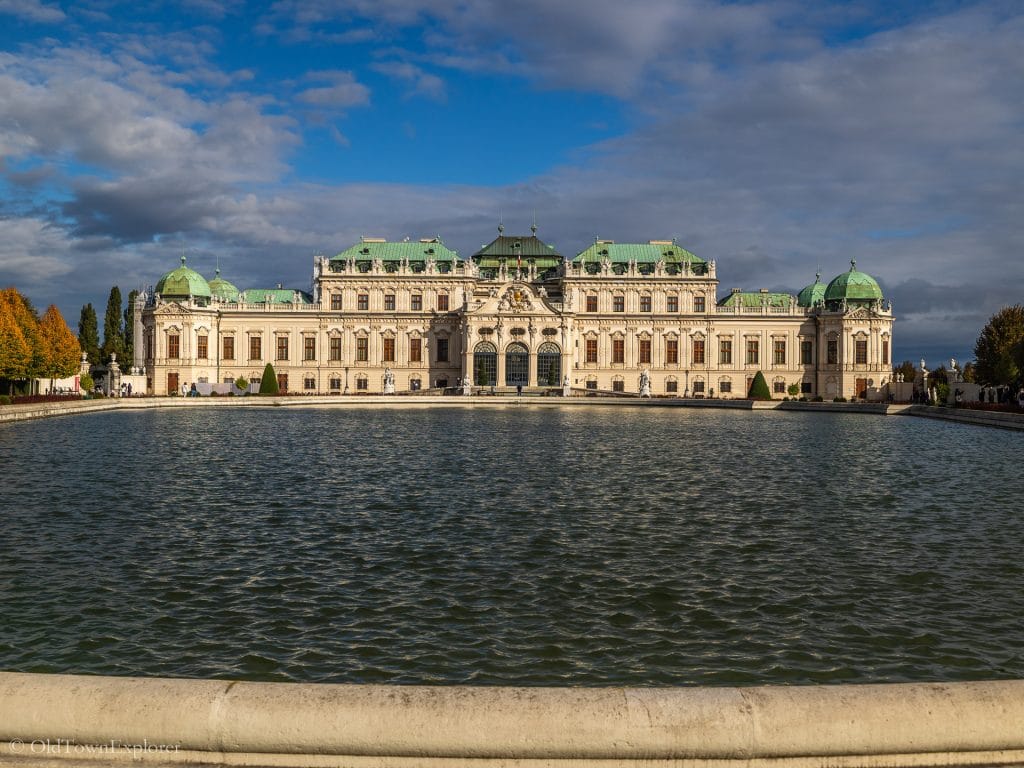
Vienna is the strongest first base for Austria’s imperial, museum, coffeehouse, and urban wine side. The historic center, Ringstrasse, Hofburg, Belvedere, Schönbrunn, Secession Building, and city vineyards give a broad first look at Austria’s buildings, cafés, and wine.
Choose Vienna when major museums, formal architecture, coffeehouses, wine taverns, and a deeper city itinerary matter more than a compact old-town routine. Vienna also works well as the rail hub for a first Austria route.
Graz
Graz is the better base for Styrian food, market habits, nearby wine country, and a historic center that is easy to understand on foot. The old town and Schloss Eggenberg bring medieval lanes, Renaissance courtyards, Baroque façades, Schlossberg views, and later architectural contrasts into a smaller city stay.
Choose Graz when food, wine, markets, and a compact city base matter more than a long museum list. Graz pairs naturally with Styria’s wine roads and southern Austrian food traditions.

Salzburg
Salzburg brings a Baroque city center, fortress views, church architecture, music history, and easier access to mountain and lake landscapes west of Vienna. Add it when the route needs a second major historic city without another capital-style stay.
Choose Salzburg when Baroque streetscapes, music-linked sites, and Alpine day trips matter more than wine roads or market-based food travel.
Austria Food
Austria food includes Central European cooking, Alpine ingredients, imperial Viennese dishes, regional cheeses and cured meats, dumplings, soups, pastries, apples, horseradish, pumpkin seed oil, and market cooking tied to specific regions. Vienna is the clearest base for classic urban dishes and coffeehouse culture. Graz and Styria are better for regional products, markets, wine-country food, and seasonal ingredients.
Our Austria Food page compares the national dishes, regional products, and food traditions that matter on a trip. Vienna Food helps with coffeehouses, pastries, schnitzel, Tafelspitz, and markets. Graz Food is more practical for Styrian dishes, markets, and local dining routines.

Food Regions
Austria’s food regions are easiest to understand through Vienna, Styria, Alpine Austria, Lower Austria, and Burgenland.
- Vienna: Vienna is the main city base for Wiener Schnitzel, Tafelspitz, goulash, pastries, coffeehouses, market halls, and dishes from the former Habsburg lands.
- Styria: Styria Food is the best next read for pumpkin seed oil, runner beans, horseradish, apples, Backhendl, cheeses, Graz markets, and southern Austrian food habits.
- Alpine Austria: Tyrol, Vorarlberg, Salzburg, Carinthia, and Upper Austria bring mountain cooking, cheese, dumplings, pork dishes, lake fish, and hut-style meals into the trip.
- Lower Austria and Burgenland: The Danube and eastern regions are strong for wine taverns, Wachau apricots, field crops, lake fish, paprika, poultry, pork, beans, and Central European borderland dishes.
For a first food-focused trip, Vienna gives the classic urban dishes and Graz gives the clearest Styrian market-and-wine-country addition.
Food Products
These products and ingredients help explain what appears on Austrian menus, market stalls, and regional dishes.
- Pumpkin seed oil: Styrian pumpkin seed oil appears with salads, soups, spreads, potatoes, and cold dishes.
- Horseradish: Horseradish is common with beef dishes, cold meats, and Styrian food.
- Apples and stone fruit: Apples, apricots, plums, and cherries appear in pastries, compotes, dumplings, and regional desserts.
- Alpine cheeses: Alpine cheeses are more visible in western and mountain regions, especially in dumplings, spreads, and simple tavern meals.
- Cured meats and sausages: Cured meats and sausages appear in markets, taverns, mountain huts, and casual plates.
- Dumpling ingredients: Bread, potato, cheese, bacon, and fruit appear in both savory and sweet dumplings.
- Pastry ingredients: Apples, poppy seeds, nuts, curd cheese, apricots, and chocolate appear often in cafés and bakeries.
These ingredients make Austrian menus easier to read, especially when dishes appear under German or regional names rather than broad English descriptions.
Traditional Dishes
These dishes are the clearest starting vocabulary for Austrian food.
- Wiener Schnitzel: Breaded and fried veal cutlet, strongly tied to Vienna and often used as a first Austrian restaurant order.
- Tafelspitz: Boiled beef served with accompaniments such as horseradish, apple, potatoes, or sauces depending on the restaurant.
- Goulash: A Central European stew that appears often in Viennese and Austrian tavern cooking.
- Backhendl: Fried chicken especially associated with Styria and southern Austrian cooking.
- Knödel: Dumplings made with bread, potato, bacon, cheese, or fruit, depending on region and course.
- Käsespätzle or Kasnocken: Cheese noodles or dumpling-style pasta common in Alpine areas.
- Kaiserschmarrn: Torn pancake served as a sweet dish, common in mountain and café settings.
- Apfelstrudel and Sachertorte: Two pastry names to recognize in cafés and bakeries.
Vienna is the strongest base for classic café and restaurant dishes. Graz and Styria are better when regional products, markets, and wine-country food are the priority.
Austria Wine
Austria’s main wine-growing regions are Niederösterreich, Burgenland, Steiermark, and Wien. The country is especially useful for learning Grüner Veltliner, Riesling, Wiener Gemischter Satz, Blaufränkisch, Zweigelt, Sauvignon Blanc, Schilcher, and sweet wines from the east.
Our Austria Wine page compares the main regions, grapes, and styles across the country. Styria Wine fits a Graz-based route, while the Vienna Wine Region covers city vineyards, Heuriger taverns, and Wiener Gemischter Satz.

Wine Regions
These Austria wine regions matter most when choosing a tasting route.
- Niederösterreich: Lower Austria is the main Danube-side wine area for Grüner Veltliner and Riesling, including Wachau, Kamptal, Kremstal, and nearby named areas.
- Wien: Vienna has vineyards inside the city and is closely tied to Wiener Gemischter Satz, Heuriger taverns, and wine drinking during a city stay.
- Burgenland: Burgenland has warmer eastern conditions, Blaufränkisch, Zweigelt, red wines, and sweet wines around Lake Neusiedl.
- Steiermark: Styria is strongest for fresh white wines, Sauvignon Blanc, Welschriesling, Morillon, and Schilcher from Blauer Wildbacher.
Vienna is the easiest starting point for Austrian wine without a car. Graz and Styria make more sense when the trip is built around wine roads, hillside vineyards, and countryside tasting.
Grape Varieties
Austria’s quality-wine grape list gives several label terms worth recognizing before ordering wine or visiting a wine tavern.
- Grüner Veltliner: Austria’s most important white grape and the central name for many Lower Austria wine routes.
- Riesling: Important in Danube regions such as Wachau, Kamptal, and Kremstal.
- Welschriesling: A common white grape in Styria and Burgenland, not the same as Rhine Riesling.
- Sauvignon Blanc: Especially important in Styria.
- Morillon: The Styrian name commonly used for Chardonnay.
- Blaufränkisch: A leading red grape in Burgenland and a key Austrian red-wine term.
- Zweigelt: A widely planted Austrian red grape that appears in casual reds and more structured bottles.
- Blauer Wildbacher: The grape behind Schilcher, the sharp Styrian rosé associated with Weststeiermark.
These grape names are more useful on a first Austria trip than trying to memorize every appellation before arrival.
Wine Styles
Austria wine is easiest to approach through broad styles before moving into individual appellations.
- Danube whites: Grüner Veltliner and Riesling from Wachau, Kamptal, Kremstal, and nearby areas can range from light and crisp to fuller, structured bottles.
- Wiener Gemischter Satz DAC: Vienna’s field-blend white wine is made from different white grape varieties grown together in one vineyard and vinified together.
- Burgenland reds: Blaufränkisch and Zweigelt give eastern Austria its main red-wine vocabulary.
- Burgenland sweet wines: The Lake Neusiedl area is important for sweet wines, including botrytized styles.
- Styrian whites: Sauvignon Blanc, Welschriesling, and Morillon are central to Styria’s hillside wine routes.
- Schilcher: A Styrian rosé from Blauer Wildbacher, especially tied to Weststeiermark.
- Sekt: Austrian sparkling wine appears on restaurant lists and in wine shops, though it is not the main wine theme for most first routes.
For a city-based wine trip, Vienna gives the simplest access to vineyards and taverns. For a countryside wine route, Styria and the Danube areas add wine villages, hillside vineyards, and short regional stops.
Austria Architecture
Austria architecture includes medieval town centers, Gothic churches, Renaissance courtyards, Baroque palaces, monastery complexes, Historicist boulevards, Secession design, railway infrastructure, Alpine building traditions, and cultural landscapes. Vienna gives the broadest timeline, while Graz gives a compact mix of old-town streets, courtyards, Schlossberg views, and Schloss Eggenberg.
Our Austria Architecture page compares the major periods, UNESCO sites, city forms, and regional building patterns across the country. For city-level building priorities, use Vienna Architecture and Graz Architecture.

Architectural Styles
These styles and building patterns are the main ones to notice on an Austria route.
- Gothic: Gothic work is visible in major churches, especially in Vienna and other historic centers.
- Renaissance: Renaissance details are important in Graz courtyards, arcades, and urban façades.
- Baroque: Baroque design is central to palaces, churches, abbeys, Salzburg streetscapes, and Habsburg-era planning.
- Historicist architecture: Historicist buildings are strongest in Vienna’s Ringstrasse and late-19th-century urban planning.
- Secession and Art Nouveau: Secession design is especially important in Vienna, where flat façades, geometric ornament, stylized floral details, and the Secession Building mark the early modern period.
- Railway engineering: Semmering Railway brings stone viaducts, tunnels, stations, and Alpine engineering into an architecture-focused route.
- Alpine building traditions: Timber, stone, steep roof forms, balconies, and compact mountain-town layouts become more visible outside the large cities.
Vienna and Graz are the clearest starting points because each city puts several periods into a manageable walk. Salzburg becomes important when Baroque architecture and Alpine scenery should sit together in the same itinerary.
UNESCO World Heritage Sites
The UNESCO Austria World Heritage list includes historic centers, palace landscapes, railway engineering, Danube and Alpine cultural landscapes, Roman frontier remains, prehistoric pile dwellings, spa towns, and beech forest sites connected to Austria.
- City of Graz – Historic Centre and Schloss Eggenberg: Directly relevant to a Graz-based architecture trip.
- Historic Centre of Vienna: Central to Vienna’s architecture, especially the Baroque and late-19th-century layers.
- Palace and Gardens of Schönbrunn: A core Vienna palace-and-garden site.
- Historic Centre of the City of Salzburg: Important for Baroque streets, churches, squares, and fortress views.
- Wachau Cultural Landscape: Useful for Danube towns, abbeys, vineyards, and river landscapes.
- Semmering Railway: Relevant to railway engineering and mountain infrastructure.
- Hallstatt-Dachstein / Salzkammergut Cultural Landscape: Useful for Alpine settlement, salt history, lake towns, and mountain scenery.
- Fertö / Neusiedlersee Cultural Landscape: A cross-border cultural landscape shared with Hungary.
- Frontiers of the Roman Empire – The Danube Limes: Relevant to Roman frontier history along the Danube.
- Prehistoric Pile Dwellings around the Alps: A transnational prehistoric property with Austrian components.
- The Great Spa Towns of Europe: A transnational spa-town property that includes Baden bei Wien.
- Ancient and Primeval Beech Forests of the Carpathians and Other Regions of Europe: Less central to city architecture, but part of Austria’s wider UNESCO list.
A first Austria architecture trip does not need every UNESCO property. Vienna, Graz, Salzburg, Wachau, and Semmering give the clearest range of city form, palace culture, Baroque planning, Danube landscapes, and railway engineering.
Where Is Austria Located?
Austria is a landlocked country in Central Europe, bordered by Germany, Czechia, Slovakia, Hungary, Slovenia, Italy, Switzerland, and Liechtenstein. The eastern Alps, the Danube corridor, Vienna’s position near Slovakia and Hungary, and Graz’s position toward Slovenia and southern Styria all affect trip planning.
The geography favors rail travel between the main cities and selective car use for Alpine valleys, wine roads, lake areas, and small towns that are less simple by train.
Regional Overview of Austria
Austria has nine federal states, but visitors can plan more easily by grouping them around city bases, rivers, wine regions, lakes, and mountains. Vienna and the east cover the capital, city vineyards, and nearby rail day trips. Lower Austria and the Danube add Wachau, abbeys, Grüner Veltliner, Riesling, and river towns. Styria and the southeast add Graz, pumpkin seed oil, Sauvignon Blanc, Schilcher, and wine roads. Salzburg and Salzkammergut add Baroque streets, lake towns, salt-history landscapes, and Alpine views. Tyrol, Vorarlberg, and the western Alps add mountain towns, winter sports, summer hiking, and longer east-west travel.
Vienna and the East
Vienna is both a city and a federal state, and it is the clearest starting point for a first Austria trip. It gives museums, coffeehouses, imperial architecture, city vineyards, and easy rail access to Lower Austria, Burgenland, Bratislava, and the Danube corridor.
Use Vienna when the trip needs a major base with strong food, wine, architecture, and transport options.
Lower Austria, Wachau, and the Danube
Lower Austria surrounds Vienna and is strongest for Danube towns, abbeys, vineyards, Grüner Veltliner, Riesling, and slower river-linked travel. Wachau is the clearest first addition when the route needs wine, architecture, and landscape without moving far from Vienna.
Use this area as a day trip, short overnight, or wine-focused extension from Vienna.
Styria and the Southeast
Styria is the main southeast region for Graz-based food and wine travel. Graz gives the city base, while Styria Food and Styria Wine help with pumpkin seed oil, markets, Sauvignon Blanc, Schilcher, and wine-road landscapes.
Choose Styria when food, wine, and a smaller historic city base matter more than adding another large museum city.
Salzburg and Salzkammergut
Salzburg and Salzkammergut pair Baroque streets, church interiors, lake towns, salt-history landscapes, and Alpine scenery. This region fits travelers who want Austria’s city architecture to lead into mountains and lakes rather than into wine roads alone.
Salzburg is the easiest urban base. Salzkammergut works better when the itinerary has time for slower transfers and lake-area stays.
Tyrol, Vorarlberg, and the Western Alps
Tyrol and Vorarlberg move the trip toward mountain towns, winter sports, summer hiking, Alpine building traditions, and longer east-west travel. They are less essential for a short Vienna-and-Graz route but become important on a two-week Austria trip or a rail route toward Switzerland, Germany, or northern Italy.
Use the western Alps when mountains are central to the trip, not as a rushed add-on to a city itinerary.
Suggested Austria Itineraries
Austria is easy to combine by rail when the trip is built around Vienna, Graz, and Salzburg. The main choice is whether to focus on Vienna and Styria, pair Vienna with Salzburg and the lake country, or include all three cities on a longer trip. Wachau, Styria’s wine roads, and Salzkammergut fit naturally as regional additions from those bases.
Vienna and Graz
Recommended time: 7–10 days.
Route: Vienna → Graz, with Wachau from Vienna and Styria wine country from Graz. Spend the first part of the trip in Vienna for Habsburg palaces, Ringstrasse architecture, museums, coffeehouses, markets, and city vineyards. Continue to Graz for a smaller historic center, Renaissance courtyards, Styrian markets, pumpkin seed oil, and regional wine. Add Wachau from Vienna when you want Danube vineyards, abbeys, and wine towns, or set aside a day around Graz for the Styrian wine country.
Transport: Direct ÖBB trains connect Vienna and Graz, so a car is unnecessary for the main city route. Wachau can also be reached by public transport from Vienna, while a car or organized wine excursion gives you more freedom among rural wineries and villages in Styria. Styria Wine helps narrow down the wine areas around Graz. Choose this itinerary when food, wine, markets, and architecture are the main reasons for visiting Austria.
Vienna, Salzburg, and Salzkammergut
Recommended time: 8–11 days.
Route: Vienna → Salzburg → Salzkammergut. Begin in Vienna for imperial architecture, museums, coffeehouses, and city wine, then continue west to Salzburg for Baroque streets, churches, fortress views, cafés, and music history. Finish with time in Salzkammergut for lake towns, Alpine scenery, salt-history landscapes, and places such as Bad Ischl, St. Wolfgang, and Hallstatt.
Transport: Direct trains run between Vienna and Salzburg. Trains and regional buses also reach many Salzkammergut towns, and Bad Ischl has connections toward Hallstatt, St. Wolfgang, and other parts of the lake district. A car becomes more attractive when you want to combine several lakes, villages, and viewpoints in one day. Choose this itinerary when Baroque architecture and Alpine landscapes matter more than building the trip around wine regions.
Vienna, Graz, and Salzburg
Recommended time: 10–14 days.
Route: Vienna → Graz → Salzburg. This route brings Austria’s three main city experiences into one trip. Vienna gives the largest concentration of imperial architecture, museums, coffeehouses, and urban wine. Graz shifts the emphasis toward Styrian food, markets, Renaissance courtyards, and nearby wine country. Salzburg finishes with Baroque architecture, fortress views, churches, and easier access to lakes and mountains.
Transport: The route can be done entirely by rail. Direct trains connect Vienna and Graz, and ÖBB now runs direct services between Graz and Salzburg. Vienna and Salzburg are also directly connected if you need to return to Vienna at the end of the trip. Add a car only for regional days in Styria, Salzkammergut, or other rural areas away from the main rail lines. Choose this itinerary when you want the broadest first look at Austria’s historic cities and still have time for at least one regional excursion.
When to Visit Austria
Austria can work in every season, but the best timing depends on whether the trip is built around cities, wine, markets, mountains, or winter travel. Spring and autumn are the easiest seasons for Vienna and Graz. Summer is stronger for lakes and mountains. Winter shifts the trip toward skiing, Christmas markets, concerts, cafés, and indoor museums.
Spring (April–June)
Spring is one of the strongest seasons for city walking, café time, museums, markets, and a Vienna-Graz route. Temperatures are usually more comfortable for long days on foot, and the main historic centers are easier to explore than during peak summer.
Use spring for architecture, food markets, and rail-based city travel. Mountain routes may still feel transitional early in the season.
Summer (July–August)
Summer works better for lakes, Alpine towns, hiking areas, and longer daylight. Vienna and Salzburg can feel busier and warmer in July and August, especially around the most visited central sights.
Use summer when the route includes Salzkammergut, Tyrol, Vorarlberg, or high-country travel. For city-heavy itineraries, plan earlier starts, shade breaks, and more indoor museum time.
Autumn (September–October)
Autumn is one of the strongest seasons for wine regions, city walking, and food travel. Vienna, Graz, Styria, Wachau, and Burgenland work especially well when wine routes, harvest-season menus, and milder city days matter.
Use autumn when Austria wine is a priority. It is also a strong season for combining Vienna and Graz without building the itinerary around winter sports or summer lakes.
Winter (November–March)
Winter changes the trip. Vienna, Graz, and Salzburg still work for museums, cafés, concerts, historic interiors, and seasonal markets, while the Alps become the main focus for skiing and snow-based travel.
Use winter when indoor culture or Alpine snow is the reason for the trip. For a first food, wine, and architecture trip, winter is usually more selective than spring or autumn.
Getting Around Austria
Austria is easy to plan by rail between major bases. Vienna, Graz, Salzburg, Linz, Innsbruck, and other cities work well by train. A car becomes more useful for wine roads, Alpine valleys, lake areas, rural lodging, and routes with several small stops.
Trains
Trains should be the default starting point for a Vienna, Graz, Salzburg, Linz, or Innsbruck route. Use the ÖBB timetable for current train times, connections, and route planning.
Rail works especially well when the trip is built around city bases and day trips. It becomes less complete when the itinerary depends on wine-country stops, mountain villages, or late evening rural returns.
Buses and Local Transit
Buses and local public transit matter most outside the main rail corridors and inside cities. ÖBB Scotty helps with public-transport planning across Austria, including connections beyond intercity rail.
Vienna has the deepest local transit network, while Graz is easier to handle on foot and by tram for most central stays.
Driving
Driving is more practical for Styria wine roads, Alpine valleys, lake areas, rural lodging, and routes with several small stops. Before using motorways or express roads, check Austria’s vignette and toll rules, especially for rental cars and cross-border routes.
A car is usually unnecessary inside Vienna or Graz. Parking, traffic restrictions, and hotel location matter more than distance inside the main cities.
Domestic Flights
Domestic flights are rarely necessary for a first Austria route focused on Vienna, Graz, Salzburg, Wachau, or Styria. Train travel usually gives a simpler city-to-city pattern, especially when hotel changes and airport transfers are counted.
Consider flights only when Austria is part of a wider regional trip or when the itinerary crosses long distances with limited time.
Things to Know Before Visiting Austria
A few practical details are worth checking before an Austria trip, especially language, money, Schengen rules, and electrical plugs.
Language
German is Austria’s official language. Basic German words can help with menus, signs, train information, and smaller towns, even when you can manage much of a city trip in English.
Money
Austria uses the euro (€). Cards are widely accepted, but Austria Tourism recommends keeping some cash for small purchases because card payment is not available everywhere.
Electricity
Austria uses Type C and Type F plugs with a 230V, 50Hz electrical supply. Travelers arriving with U.S., UK, or other incompatible plugs need an adapter. Check the voltage printed on chargers and appliances before connecting them.
Entry and Schengen
Austria is part of the Schengen Area, so days spent here count toward the Schengen short-stay limit. Travelers subject to the standard rule can spend no more than 90 days within any 180-day period across the Schengen Area as a whole.
Visa requirements depend on nationality. U.S. citizens do not need a visa for stays of up to 90 days within a 180-day period. Travelers with other passports should check the Austrian Foreign Ministry visa information before departure.
FAQs About Austria
How many days do you need in Austria?
Allow about seven to ten days for a first trip that combines Vienna with one or two other destinations. Vienna and Graz work well for a shorter food, wine, and architecture trip, while Salzburg, Alpine areas, or additional wine regions need more time rather than being squeezed into the same few days.
Should you visit Vienna or Graz?
Choose Vienna for major museums, imperial palaces, coffeehouses, the Ringstrasse, and vineyards within the city. Choose Graz for a smaller old-town base, Styrian markets, pumpkin seed oil, Renaissance and Baroque architecture, and easier access to southern Styria wine country. Visit both when you want to compare Austria’s capital with a smaller regional city.
Do you need a car to travel around Austria?
No car is necessary for a trip centered on Vienna, Graz, Salzburg, and other major cities connected by rail. A car becomes more useful for Alpine villages, rural lakes, monasteries, and wine-country routes where the places you want to visit are spread beyond the main stations.
Should you include Salzburg on a first Austria trip?
Add Salzburg when Baroque architecture, churches, fortress views, music history, and access to the western Alps are priorities. On a shorter trip focused more heavily on food and wine, Vienna and Graz make a more concentrated pair and keep Styria within easy reach.
What Austrian food should you try first?
Start with Wiener Schnitzel, Tafelspitz, dumplings, sausages, Apfelstrudel, and one regional specialty from wherever you are staying. In Styria, look for pumpkin seed oil, runner beans, Backhendl, horseradish, apples, and cured meats. Austria Food compares the country’s main food regions, products, and dishes.
What Austrian wine should you try first?
Start with Grüner Veltliner or Riesling when drinking wine from Lower Austria, Wiener Gemischter Satz in Vienna, and Sauvignon Blanc, Welschriesling, or Morillon in Styria. Red-wine drinkers should look for Zweigelt and Blaufränkisch. Austria Wine compares the main wine regions, grapes, and styles.