
France
Explore France: Food, Wine & Architecture
France is one of Europe’s strongest destinations for a trip built around regional food, wine, and historic architecture. The character changes sharply from Alsace’s half-timbered towns and aromatic white wines to Burgundy’s vineyard villages and Romanesque heritage, then again in Provence, where Roman and papal sites sit close to markets and Southern Rhône wine.
Those regional differences make the choice of base important. Strasbourg fits an Alsace-focused stay; Dijon and Beaune put Burgundy’s cities and vineyards at the center; Lyon works when food is the main priority; Avignon suits a route through Provence and the Southern Rhône; and Bordeaux pairs a major city with several wine areas. Paris is the strongest choice for museums, monumental architecture, and rail connections, but it cannot stand in for France’s regional food, wine, or historic-town traditions.
We have spent extended time in France, including month-long stays in Strasbourg, Lyon, Dijon, and Avignon, plus additional time in Beaune and elsewhere in the country. Those stays, our wider travels, and further research shaped the comparisons below, so you can choose a base, match food and wine regions to your route, decide when a car helps, and plan how much of France to combine in one trip.
France at a Glance
France is easiest to plan by choosing a regional focus first, then a base that matches the food, wine, architecture, and transport you care about most.
These six points give you the main choices before you start building a route:
- Best for: Regional food and wine, historic cities, cathedral and château architecture, market towns, vineyard routes, and trips that combine a city base with smaller towns or countryside.
- Top city and town bases: Paris for museums and major monuments; Strasbourg for Alsace; Lyon for food; Dijon and Beaune for Burgundy; Avignon for Provence and the Southern Rhône; and Bordeaux for the Bordeaux wine region.
- Key food areas: Alsace, Burgundy, Lyon, Provence, Bordeaux and the Southwest, Normandy, Brittany, the Loire Valley, and the mountain regions of eastern and central France.
- Key wine regions: Bordeaux, Burgundy, the Rhône Valley, Loire Valley, Alsace, Champagne, Beaujolais, Provence, Languedoc-Roussillon, Jura, Savoie, Southwest France, and Corsica.
- Architecture highlights: Roman monuments in southern France, Romanesque churches and abbeys, Gothic cathedrals, medieval old towns, Loire châteaux, eighteenth- and nineteenth-century city planning, Art Nouveau, and major modern buildings.
- Suggested routes: Paris and the Loire Valley; Alsace and Burgundy; Burgundy, Lyon, and Avignon; or Bordeaux and Saint-Émilion
For a first regional trip outside Paris, Strasbourg, Dijon, and Beaune make a strong eastern route when wine and historic towns lead the plan. Lyon and Avignon fit better when food, Roman sites, Provence, and the Rhône matter more.
France Destinations
France does not have one city that represents the whole country. Paris works best for museums, monuments, restaurant choice, and rail connections, while the regional bases below put you closer to the food, wine, townscapes, and landscapes that change across France.
Paris
Choose Paris when museums, Gothic churches, royal and civic architecture, nineteenth-century boulevards, markets, and a broad restaurant scene matter most. It is also the easiest rail starting point for trips toward Champagne, the Loire Valley, Normandy, Burgundy, and other parts of northern and central France.
Paris can fill a complete first trip on its own. If you combine it with another region, give the second base enough time to work as a destination rather than treating it as a quick side trip.
Strasbourg
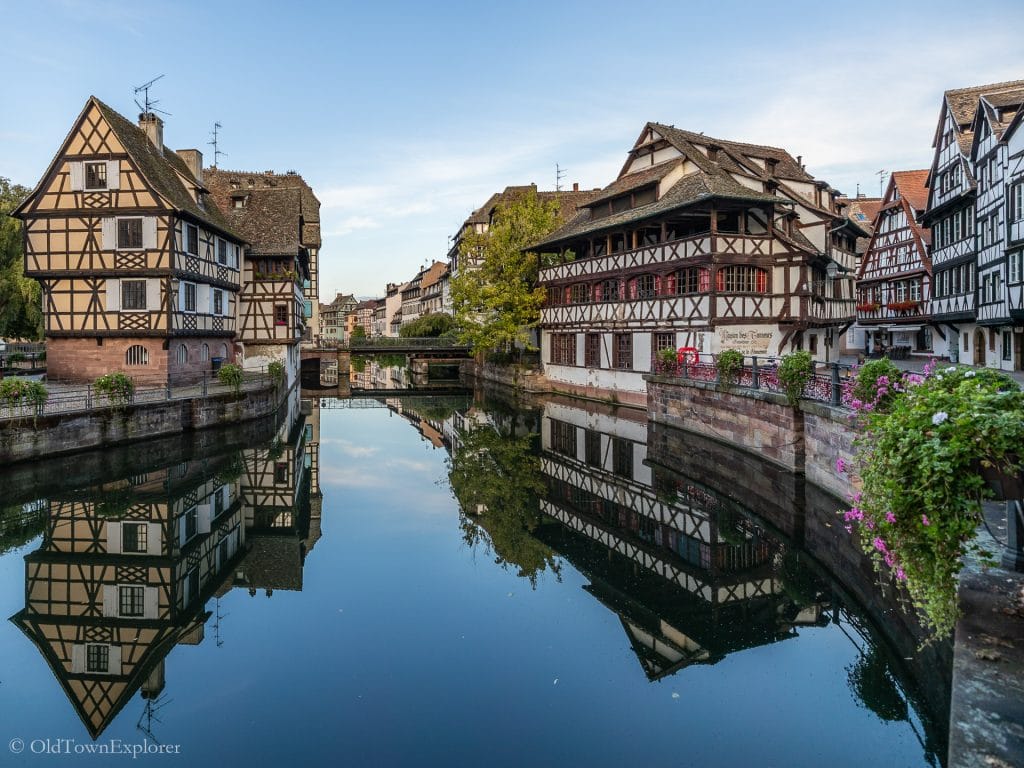
Strasbourg combines its Gothic cathedral, canals, half-timbered streets, Grande-Île, and Neustadt with one of France’s clearest regional food cultures. It is also the easiest OldTownExplorer base for pairing a historic city with the villages and vineyards of Alsace.
Choose Strasbourg for Riesling and Gewürztraminer, tarte flambée and choucroute, Franco-German border culture, and easy day trips toward Colmar and the Alsace wine villages.
Lyon
Lyon brings together Roman theaters, Vieux Lyon, Renaissance streets, traboules, riverside neighborhoods, markets, and the bouchon tradition. Beaujolais lies to the north and the Northern Rhône vineyards begin south of the city.
Choose Lyon when food is the main reason for the trip and you still want strong architecture and nearby wine. Dijon and Beaune are better fits when Burgundy labels, vineyard villages, and wine-town stays matter more.

Dijon
Dijon is Burgundy’s stronger choice for a full city stay, with ducal architecture, churches, medieval streets, museums, a covered market, restaurants, and good rail connections. The Côte de Nuits vineyards begin just south of the city.
Choose Dijon when you want Burgundy wine without giving up the museums, markets, and evening choices of a larger city. Pair it with Beaune if you have time for both sides of Burgundy’s main wine corridor.

Beaune
Beaune is smaller and more wine-focused than Dijon. The Hôtel-Dieu, historic cellars, compact walled center, and nearby Côte de Beaune vineyards make it a natural base when wine is the main priority.
Stay in Beaune if you want a smaller town with vineyard access and wine activity close to the center. Pair it with Dijon when you also want a larger historic city, broader restaurant choice, and museums.

Avignon
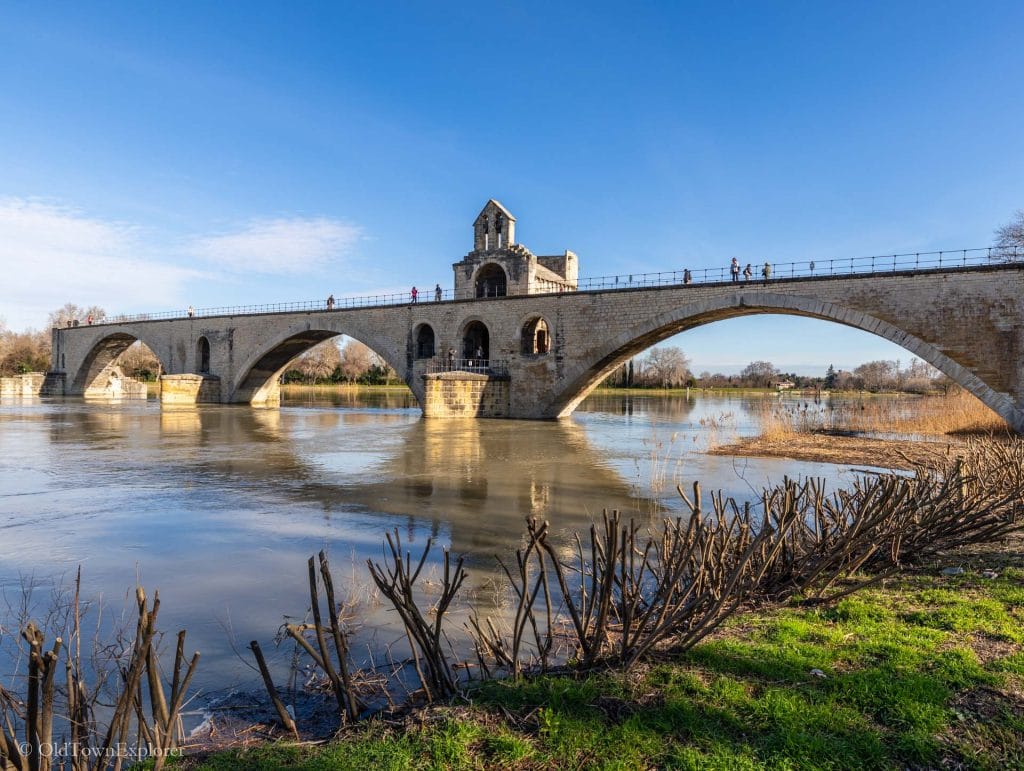
Avignon combines the Palais des Papes, medieval walls, Rhône river setting, Provençal food, and access to the Southern Rhône wine region. Orange, the Pont du Gard, Arles, Nîmes, and the Luberon can all form part of a wider southern route.
Choose Avignon for papal and Roman history, Provençal markets, and Grenache-led Rhône wines. Rail works well for several major towns, but a car becomes more valuable when the trip shifts toward vineyard villages, hill towns, and rural Provence.
Bordeaux
Bordeaux pairs an extensive eighteenth-century river city with markets, wine bars, strong rail connections, and several major vineyard areas. Médoc, Graves and Pessac-Léognan, Sauternes, Saint-Émilion, and Pomerol lead to different wine days outside the city.
Choose Bordeaux when wine and grand urban architecture are both central to the trip. The city itself works well without a car, but vineyard days need more transport planning than an afternoon spent tasting in Bordeaux.

France Food
French food changes with the route. Alsace leans toward pork, cabbage, onions, cream, and borderland dishes; Burgundy toward wine sauces, mustard, cheese, and charcuterie; Lyon toward bouchon cooking; Provence toward olive oil, vegetables, herbs, and Mediterranean ingredients; and the Southwest toward duck, beans, peppers, walnuts, and Atlantic products.
Read France Food for the deeper national guide. The regional summary below is enough to decide where food should lead the rest of a France trip.
Food Regions
Start with the region rather than a national list of famous dishes because many of France’s strongest food traditions make more sense where they developed.
- Alsace: Strasbourg, Colmar, and the wine villages are the place for tarte flambée, choucroute garnie, baeckeoffe, kougelhopf, Munster, Riesling, and Gewürztraminer. See Strasbourg Food for city-level choices.
- Burgundy: Dijon and Beaune put mustard, gougères, jambon persillé, Époisses, eggs in meurette, snails, and wine-based cooking close to the vineyards. See Dijon Food and Beaune Food.
- Lyon and the Rhône corridor: Salads, quenelles, sausages, charcuterie, offal dishes, cheeses, and bouchon cooking make Lyon the clearest food-first city in the current France cluster. See Lyon Food.
- Provence and the Mediterranean: Avignon, Marseille, Nice, and surrounding towns bring olive oil, tomatoes, garlic, herbs, olives, ratatouille, fish soups, tapenade, and produce-led market cooking into the route. See Avignon Food.
- Bordeaux and the Southwest: Duck, foie gras, confit, beans, mushrooms, walnuts, prunes, cannelés, Bayonne ham, Espelette pepper, and Atlantic oysters appear across a broad southwest food area. See Bordeaux Food for the city-level choices.
- Normandy and Brittany: Butter, cream, apples, cider, Camembert, shellfish, crêpes, galettes, and salted caramel make the northwest a better fit for dairy, seafood, apples, and cider than for a wine-led trip.
- Loire Valley: Goat cheeses, rillettes, river fish, orchard fruit, and several wine traditions fit naturally with a route through châteaux and market towns.
- Alps, Jura, and Auvergne: Mountain cheeses, cured meats, potatoes, freshwater fish, fondue, raclette, tartiflette, and aligot become more relevant on an eastern or central mountain route.
Choose one or two food regions that match the rest of the route. Strasbourg, Burgundy, Lyon, Provence, and Bordeaux give the clearest food comparisons within the destinations OldTownExplorer already covers in depth.
Food Products
Look for regional names on cheese counters, market stalls, menus, and packaging. France uses AOP/AOC and IGP systems for many products whose names are linked to a defined place or production area.
- Munster: Washed-rind cheese associated with Alsace and the Vosges.
- Époisses: Strongly aromatic washed-rind cheese from Burgundy.
- Comté: Firm cheese from the Jura mountain area.
- Camembert de Normandie: Soft cow’s-milk cheese tied to Normandy.
- Roquefort: Blue sheep’s-milk cheese from southern France.
- Ossau-Iraty: Sheep’s-milk cheese from the western Pyrenees.
- Jambon de Bayonne: Cured ham associated with the Southwest.
- Piment d’Espelette: Basque pepper sold whole, powdered, and in prepared products.
- Moutarde de Dijon: The mustard style to recognize in Burgundy, even when the mustard seed itself was grown elsewhere.
- Lentille verte du Puy: Green lentils from the volcanic uplands around Le Puy-en-Velay.
- Olives and olive oil: Everyday ingredients in Provençal and Mediterranean markets and cooking.
- Butter, cream, and cider: Products that become especially important across Normandy and parts of Brittany.
A cheese shop or covered market gives you a clearer regional comparison than buying the same national products in every city. Ask what was made nearby and what is in season.

Traditional Dishes
These dishes each point toward a particular region or style of cooking:
- Tarte flambée: Thin Alsatian flatbread topped with cream, onions, and bacon.
- Choucroute garnie: Alsatian sauerkraut served with sausages and other pork cuts.
- Bœuf bourguignon: Burgundy beef stew cooked with red wine.
- Escargots de Bourgogne: Snails baked in their shells with butter, garlic, and parsley, closely associated with Burgundy but found across France.
- Œufs en meurette: Poached eggs served in a red-wine sauce, especially associated with Burgundy.
- Quenelles: Soft dumplings closely associated with Lyon, often made with pike and served with sauce.
- Salade lyonnaise: Salad with bacon, croutons, and a poached egg.
- Ratatouille: Provençal vegetable dish built around tomatoes, zucchini, eggplant, peppers, and onions.
- Bouillabaisse: Marseille fish dish traditionally served with fish, broth, bread, and rouille.
- Cassoulet: Slow-cooked white beans with meat, associated with southwestern towns including Castelnaudary, Carcassonne, and Toulouse.
- Confit de canard: Salt-cured duck cooked slowly in its own fat, common in the Southwest.
- Galette bretonne: Savory buckwheat crêpe from Brittany.
- Tarte Tatin: Upside-down caramelized apple tart associated with the Loire area.
Order the dish where it belongs to the route: tarte flambée in Alsace, eggs in meurette in Burgundy, quenelles in Lyon, Provençal vegetables around Avignon, and duck or cannelés around Bordeaux.
France Wine
French wine labels usually lead with place rather than grape. Bordeaux, Burgundy, the Rhône Valley, Loire Valley, Alsace, Champagne, Provence, Jura, Savoie, Corsica, Languedoc-Roussillon, and the Southwest each use different grapes, blends, appellations, and local names.
Read France Wine for the deeper national guide to regions, labels, and tasting choices. For route planning, first choose the wine region that fits the rest of the trip.

Wine Regions
France’s main wine regions differ not only by grape and style but also by the towns, landscapes, and transport choices that shape a visit.
- Alsace: Base in Strasbourg or Colmar for Riesling, Gewürztraminer, Pinot Gris, Crémant d’Alsace, and a route through vineyard villages along the eastern edge of France.
- Burgundy: Use Dijon or Beaune for Pinot Noir, Chardonnay, historic wine towns, and the vineyards of Chablis, the Côte d’Or, Côte Chalonnaise, and Mâconnais.
- Beaujolais: Explore Gamay and the cru villages north of Lyon for fruit-driven reds and an easy wine-country addition to a Lyon or Burgundy route.
- Bordeaux: Stay in Bordeaux for city tasting, then choose among Cabernet- and Merlot-led reds, dry whites, and sweet wines from vineyard areas around the city.
- Northern Rhône: Follow the Rhône south of Lyon for Syrah-led reds and whites made from Viognier, Marsanne, and Roussanne.
- Southern Rhône: Base around Avignon or Orange for Grenache-led blends, rosé, and wine towns associated with appellations including Châteauneuf-du-Pape, Gigondas, Vacqueyras, and Tavel.
- Loire Valley: Compare Muscadet near the Atlantic, Chenin Blanc and Cabernet Franc farther inland, and Sauvignon Blanc in the Central Vineyards while following the Loire’s towns and châteaux.
- Champagne: Use Reims or Épernay for sparkling wine, historic cellars, and vineyard towns east of Paris.
- Provence: Pair rosé and other Mediterranean wines with markets, hill towns, Roman sites, or time near the coast.
- Languedoc-Roussillon: A broad Mediterranean wine area for reds, whites, rosés, sweet wines, and sparkling wines from Limoux, often fitting a route through Occitanie rather than Provence.
- Jura and Savoie: Choose the Jura for local grapes and distinctive traditional wine styles, or Savoie for Alpine vineyards and mountain travel.
- Southwest France: Look beyond Bordeaux for local grapes and appellations across Gascony, Dordogne, areas around Toulouse, and the Pyrenean foothills.
- Corsica: Combine island wines with mountain roads, coastal towns, Mediterranean food, and a separate Corsican itinerary.
Alsace, Burgundy, Bordeaux, the Rhône, Loire, and Champagne give a first-time wine traveler the clearest contrasts between France’s major wine traditions. Beaujolais, Provence, Jura, Savoie, Languedoc-Roussillon, the Southwest, and Corsica make more sense when the wider route already takes you there.
Grape Varieties
These grapes help decode menus and labels even when the bottle itself is named for a place or appellation:
- Pinot Noir: The main red grape of Burgundy and an important grape in Champagne and Alsace.
- Chardonnay: Central to white Burgundy and Champagne, with many regional expressions elsewhere in France.
- Cabernet Sauvignon and Merlot: The main Bordeaux red grapes, commonly blended with Cabernet Franc and other permitted varieties.
- Cabernet Franc: Important in the Loire Valley and in Bordeaux blends.
- Syrah: The defining red grape of the Northern Rhône and an important blending grape farther south.
- Grenache: Central to many Southern Rhône and Mediterranean red and rosé blends.
- Gamay: The red grape most closely associated with Beaujolais and also used in several Loire wine styles.
- Chenin Blanc: Used for dry, sweet, and sparkling wines in the Loire Valley.
- Sauvignon Blanc: Especially important around Sancerre, Pouilly-Fumé, Touraine, Bordeaux, and parts of Southwest France.
- Riesling, Gewürztraminer, and Pinot Gris: Three important Alsace white grapes with very different aromas, weight, and food pairings.
- Viognier, Marsanne, and Roussanne: The main white grapes to recognize in the Rhône Valley.
- Melon de Bourgogne: The grape behind Muscadet near the Atlantic end of the Loire.
Learn place and grape together: Burgundy Pinot Noir, Loire Chenin Blanc, Northern Rhône Syrah, Alsace Riesling, or a Bordeaux Cabernet-Merlot blend tells you more than the grape name alone.
Wine Styles
These broad styles are enough to compare bottles without turning a country trip into an appellation-by-appellation study:
- Pinot Noir and Gamay reds: Burgundy Pinot Noir and Beaujolais Gamay cover a wide range, but they give you a useful contrast with the more structured reds of Bordeaux and the Rhône.
- Bordeaux blends: Cabernet Sauvignon- and Merlot-led reds change with the vineyard area and blend, from the Médoc to Saint-Émilion and Pomerol.
- Syrah and Grenache reds: Northern Rhône Syrah and Grenache-led Southern Rhône blends give two very different reasons to follow the Rhône south from Lyon.
- Dry whites: Chardonnay, Sauvignon Blanc, Chenin Blanc, Riesling, Muscadet, and Rhône white blends cover much of the range you will meet on a regional route.
- Aromatic whites: Gewürztraminer, Pinot Gris, Muscat, Viognier, and some Riesling styles become especially relevant in Alsace and the Rhône.
- Sparkling wines: Champagne is the best-known name, but Crémant d’Alsace, Crémant de Bourgogne, Crémant de Loire, and Limoux give regional alternatives.
- Rosé: Provence is the obvious regional focus, with rosé also important in the Southern Rhône, Loire, and other Mediterranean areas.
- Sweet and distinctive regional wines: Sauternes and Barsac, sweet Loire Chenin Blanc, Alsace late-harvest wines, Jura Vin Jaune and Vin de Paille, and fortified Mediterranean wines add styles that do not fit neatly into the main red-white-sparkling comparison.
For a first comparison, taste across regions rather than collecting famous labels: Burgundy Pinot Noir, Bordeaux red, Loire or Alsace white, Rhône Syrah or Grenache, and Champagne or Crémant show more of France’s range than five bottles from one area.
France Architecture
A France trip can compare Roman engineering, Romanesque churches, Gothic cathedrals, Renaissance châteaux, nineteenth-century boulevards, and modern concrete within the same country. Roman theaters and temples survive in the south; Romanesque abbeys and pilgrimage churches spread across Burgundy, Auvergne, and the Southwest; and Paris, Bordeaux, Lyon, Strasbourg, Nancy, and Le Havre add later layers of city planning and design.
Read France Architecture for the deeper national history and building inventory. For a first architecture trip, choose cities and regions that put several periods within the same route.
Architectural Styles
These are the main periods and building types to recognize as you travel:
- Roman: Theaters, amphitheaters, temples, arches, gates, baths, and aqueducts survive in Nîmes, Arles, Orange, Lyon, and other former Roman centers.
- Romanesque: Thick walls, round arches, sculpted portals, cloisters, and barrel vaults appear at abbeys and pilgrimage churches including Vézelay, Fontenay, Conques, and Saint-Sernin.
- Gothic: Pointed arches, rib vaults, flying buttresses, tall windows, and stained glass define cathedrals including Chartres, Reims, Amiens, Bourges, Strasbourg, and Notre-Dame de Paris.
- Medieval domestic and defensive architecture: Timber-framed houses, walls, fortified gates, castles, and dense street plans remain in Alsace, Brittany, Normandy, Carcassonne, Provins, and many smaller towns.
- Renaissance: Royal and aristocratic châteaux, formal façades, staircases, courtyards, and gardens become especially important in the Loire Valley and in major cities.
- Classical, Baroque, and Rococo: Royal palaces, domes, civic squares, hôtels particuliers, and elaborate interiors appear in Paris, Versailles, Nancy, Bordeaux, and other regional centers.
- Nineteenth-century urbanism: Boulevards, aligned stone apartment blocks, covered passages, stations, markets, and iron-and-glass structures are most famous in Paris but appear across larger French cities.
- Art Nouveau and Art Deco: Decorative façades, ironwork, glass, ceramics, and early modern interiors are especially rewarding in Nancy, Paris, Strasbourg, and other cities.
- Modern and postwar: Reinforced concrete, new housing, civic planning, and reconstruction are important in Le Havre, Marseille, Paris, Lyon, and works associated with Le Corbusier and other modern architects.
Paris gives the broadest architectural sequence in one city, but Lyon, Strasbourg, Avignon, Dijon, Bordeaux, and the Loire Valley make it easier to concentrate on a smaller number of periods while also building food and wine into the trip.

UNESCO World Heritage Sites
The official UNESCO World Heritage list for France includes historic cities, monuments, cultural landscapes, natural properties, and transnational sites. These architecture-focused properties fit especially well with the routes described above:
- Paris, Banks of the Seine: Major monuments and urban ensembles along the river.
- Palace and Park of Versailles: Royal architecture, formal gardens, and large-scale planning west of Paris.
- Chartres Cathedral: One of the clearest stops for a Gothic cathedral route southwest of Paris.
- Amiens Cathedral: A major Gothic cathedral in northern France.
- Bourges Cathedral: A Gothic cathedral that fits a route through central France or the eastern Loire area.
- Cathedral of Notre-Dame, Former Abbey of Saint-Rémi and Palace of Tau, Reims: A group of major religious and royal buildings in the center of Champagne.
- Mont-Saint-Michel and its Bay: A fortified monastic settlement rising above the tidal landscape between Normandy and Brittany.
- Strasbourg, Grande-Île and Neustadt: Medieval, Renaissance, nineteenth-century, and Franco-German urban layers within one city.
- Historic Site of Lyon: Roman remains, Renaissance districts, riverfront urbanism, and later city expansion.
- Historic Centre of Avignon: Papal Palace, Episcopal Ensemble and Avignon Bridge: Papal architecture and medieval urban fabric inside Avignon’s historic core.
- Arles, Roman and Romanesque Monuments: Roman public buildings and later medieval religious architecture in Provence.
- Roman Theatre and its Surroundings and the "Triumphal Arch" of Orange: Two major Roman monuments north of Avignon.
- The Maison Carrée of Nîmes: A remarkably complete Roman temple in the center of Nîmes.
- Pont du Gard (Roman Aqueduct): Roman water engineering in the countryside between Nîmes and Avignon.
- Historic Fortified City of Carcassonne: Walls, towers, gates, and medieval defensive architecture in Occitanie.
- The Loire Valley between Sully-sur-Loire and Chalonnes: Towns, châteaux, gardens, and river landscapes along a long cultural corridor.
- Bordeaux, Port of the Moon: An extensive eighteenth-century and later river city centered on the Garonne.
- The Climats, terroirs of Burgundy: Vineyard parcels, villages, wine buildings, and the historic urban roles of Dijon and Beaune.
- Le Havre, the City Rebuilt by Auguste Perret: A coherent postwar city center built largely in reinforced concrete.
- Royal Capetian Fortresses of Languedoc: A serial group of eight fortified sites, including Carcassonne and seven fortresses on rocky ridges across Languedoc.
Choose the UNESCO properties that strengthen the rest of the route: Strasbourg in Alsace, Dijon and Beaune in Burgundy, Lyon and Avignon along the Rhône, Bordeaux in the Southwest, or a separate Paris-and-Loire architecture trip.
Location of France
Metropolitan France lies in Western Europe, between the Atlantic Ocean, English Channel, Mediterranean Sea, Pyrenees, and Alps. It borders Belgium, Luxembourg, Germany, Switzerland, Italy, Monaco, Spain, and Andorra. This geography helps explain the main travel corridors: Strasbourg sits near the German border, Bordeaux faces the Atlantic side of the country, Lyon and Avignon follow the Rhône corridor toward the Mediterranean, and the Pyrenees separate southwestern France from Spain.
Map of France
France is large enough that the distance between regions matters when planning a trip. Paris sits in north-central France, while Strasbourg is far to the east, Bordeaux to the southwest, and Avignon to the southeast. The map below shows their positions and makes it easier to see why trips focused on Alsace and Burgundy, the Rhône and Provence, or Bordeaux and the Southwest usually work better as separate regional routes.
Regional Overview of France
For travel planning, France makes more sense as a set of regional trips than as a list of administrative regions. The areas below group places that work together by geography, transport, food, wine, architecture, or the kind of trip they suit.
Paris & Île-de-France
Paris concentrates France’s largest collection of museums, monumental architecture, restaurants, and national transport links. Versailles adds royal architecture and gardens outside the center, while the wider region works as a starting point for routes toward Champagne, Normandy, the Loire Valley, or Burgundy rather than as a substitute for those regions.
Normandy
Normandy suits a route built around coast, medieval towns, half-timbered architecture, abbeys, D-Day history, dairy products, apples, and cider. Rouen and Bayeux work well with smaller towns, while Mont-Saint-Michel can connect Normandy with a longer trip into Brittany.
Brittany
Brittany shifts the emphasis toward Atlantic coast, walled towns, granite architecture, megalithic sites around Carnac, seafood, buckwheat galettes, butter, and cider. It works better as a dedicated western route than as a quick addition to eastern or southern France.
Champagne & Northern France
Champagne lies east of Paris, with Reims and Épernay as the main wine bases and major Gothic and wine-related heritage around them. Farther north, Lille, Arras, Amiens, and the former industrial and First World War landscapes create a different trip centered more on cities, architecture, and history than on vineyards.
Alsace & Lorraine
Strasbourg and Colmar anchor the Alsace side of the route, where half-timbered towns, white wine, tarte flambée, choucroute, and the Vosges foothills sit close together. Nancy and Metz shift the emphasis toward Lorraine’s urban architecture, including Nancy’s classical squares and Art Nouveau heritage. See Alsace Wine for the vineyard side of the trip.
Burgundy & Franche-Comté
Dijon and Beaune are the strongest bases for Burgundy’s food, architecture, and Côte d’Or vineyards, with Mâcon extending the route south. Franche-Comté and the Jura shift the landscape toward mountains, Comté cheese, local wines, and smaller towns. Start with Burgundy Wine if vineyards are the main reason for choosing the region.
Loire Valley
The Loire Valley is the clearest choice for a route centered on Renaissance châteaux, gardens, river towns, and a broad range of wines. Tours, Blois, Amboise, and the château areas between them work better as a regional trip than as a single attraction day from Paris. Loire Valley Wine explains the wine geography along the river.
Bordeaux, Dordogne & the Basque Country
Bordeaux anchors the western wine route, with Saint-Émilion, Médoc, Graves, Sauternes, and other vineyard areas requiring different day-trip choices. Farther inland, Dordogne shifts toward medieval towns, castles, river landscapes, and duck-based cooking, while the French Basque Country adds Bayonne, Atlantic coast, Espelette pepper, and Pyrenean foothills. See Bordeaux Wine Region for the vineyard comparison.
Occitanie & the Pyrenees
Occitanie covers a broad southern route that can include Toulouse, Carcassonne, Nîmes, the Canal du Midi, Mediterranean wine country, and the Pyrenees. Roman monuments, medieval fortifications, cassoulet, Languedoc wines, and mountain trips all belong here, but the distances are large enough that most visits need a narrower focus.
Lyon, Beaujolais & the Rhône Valley
Lyon is the strongest city base for a food-first trip, with Beaujolais to the north and the Northern Rhône to the south. Vienne and Valence continue the Rhône corridor with Roman heritage, market towns, and wine-country access before the route reaches Provence.
Provence & the Côte d’Azur
Avignon works for papal architecture, markets, and the Southern Rhône, while Orange adds major Roman monuments. Arles, Provençal hill towns, and the Luberon create an inland route; Nice, Antibes, and the Côte d’Azur shift the trip toward the Mediterranean coast and a different urban and resort tradition.
French Alps & Auvergne
The French Alps and Auvergne are separate mountain areas with different trips. The Alps suit high-mountain scenery, places around Mont Blanc, Alpine lakes, skiing, hiking, and cheeses such as Reblochon and Beaufort; Auvergne centers more on volcanic landscapes, smaller cities and towns, cheeses, and dishes such as aligot. Neither needs to be forced into a wine-and-city itinerary unless mountain travel is one of the main goals.
Corsica
Corsica needs its own island route rather than a quick extension of mainland France. Mountain roads, coastal towns, citadels, Genoese towers, local wines, chestnut products, cured meats, cheeses, and seafood reward a slower itinerary, with transport choices becoming more important once you leave the main towns.
Suggested France Itineraries
France lends itself to routes built around one or two neighboring regions. The four itineraries below keep the main stops geographically connected while giving food, wine, and architecture a different emphasis. Trains work well for the main city-to-city legs, while a car becomes more valuable for vineyard villages, rural châteaux, Provençal hill towns, and days with several countryside stops.
Paris and the Loire Valley
Recommended time: 7–10 days.
Route: Paris → Tours, Blois, or Amboise. Spend the first part of the trip in Paris for museums, Gothic churches, monumental architecture, markets, and restaurants, then choose a Loire Valley base for Renaissance châteaux, gardens, river towns, regional food, and wine. This route puts architecture and historic sites ahead of a wine-focused trip while still leaving room for Loire vineyards and local food.
Transport: Trains between Paris and Tours make it practical to travel between the main bases without a car. Rent one if you want to combine several rural châteaux or wine areas in the same day. Loire Valley Wine explains how the wine regions and grape varieties change along the river. Choose this itinerary when Paris museums and architecture matter as much as châteaux, gardens, and wine-country scenery.
Alsace and Burgundy
Recommended time: 7–10 days.
Route: Strasbourg and Colmar → Dijon and Beaune. Start in Strasbourg for the cathedral, half-timbered streets, winstubs, and Alsatian white wine, then continue to Dijon and Beaune for Burgundy’s markets, ducal and religious architecture, vineyard villages, Pinot Noir, and Chardonnay. Colmar adds another Alsatian old town without changing the regional focus.
Transport: Strasbourg and Dijon are connected by train, and the main towns can anchor a largely rail-based trip. Add a car, bicycle, or organized tour for wine villages away from the stations. Alsace Wine and Burgundy Wine show why the two regions make such a clear wine comparison. Choose this route for half-timbered towns, historic wine cities, vineyard landscapes, and a strong contrast between Alsatian whites and Burgundy Pinot Noir and Chardonnay.
Burgundy, Lyon, and Provence
Recommended time: 10–14 days.
Route: Dijon and Beaune → Lyon → Avignon. Begin with Dijon and Beaune for Burgundy’s food, wine, churches, historic streets, and Côte d’Or vineyards. Continue south to Lyon for bouchon cooking, markets, Roman remains, and Renaissance Vieux Lyon, then finish in Avignon for the Palais des Papes, Provençal food, Roman sites, and Southern Rhône wine.
Transport: The main corridor works well by rail, with trains between Dijon and Lyon and trains between Lyon and Avignon. Rent a car only for the parts of the trip that depend on vineyard villages, Southern Rhône wine towns, the Luberon, or several rural stops in one day. Choose this itinerary when food and wine are central to the trip but you also want a strong sequence of medieval, Renaissance, Roman, and papal architecture.
Bordeaux and Saint-Émilion
Recommended time: 4–6 days. Route: Bordeaux → Saint-Émilion. Base most of the trip in Bordeaux for eighteenth-century architecture, the Garonne riverfront, markets, restaurants, wine bars, and museums, then add Saint-Émilion for a smaller historic town surrounded by vineyards. This is the most concentrated of the four routes and keeps the trip focused on Bordeaux wine rather than adding a distant second region.
Transport: Regional trains connect Bordeaux and Saint-Émilion, so the town can be visited without renting a car. A car or organized wine tour becomes more practical if you want to visit several estates spread through the surrounding vineyard areas. Bordeaux Wine Region compares the major vineyard areas before you decide where to spend your wine-country time. Choose this route when Bordeaux wine and grand urban architecture are the main reasons for the trip.
When to Visit France
France works year-round, but the best season depends on whether the trip is built around cities, vineyards, coast, mountains, markets, or long days outdoors.
Spring (April–June)
Spring works well for city walking, Loire châteaux, gardens, markets, and vineyard landscapes before the busiest part of summer. Paris, Strasbourg, Burgundy, Lyon, Bordeaux, and much of the Loire fit comfortably into a spring route, although weather can still vary sharply between northern, mountain, Atlantic, and Mediterranean areas.
Summer (July–August)
Summer gives you long days for the coast, mountains, countryside, and trips with several outdoor stops. It is also the season when the Riviera, Mont-Saint-Michel, Provence, and other major visitor areas can feel busiest, while heat in southern and inland cities can change how much sightseeing you want to do in the middle of the day.
Autumn (September–October)
Autumn is especially appealing when wine regions are part of the route. Harvest activity changes the atmosphere in Bordeaux, Burgundy, Champagne, Alsace, the Rhône, and other vineyard areas, while cooler days can work well for cities and walking. If winery visits matter, book them separately rather than assuming harvest season means producers will have more time for visitors.
Winter (November–March)
Winter shifts the choice toward Alpine skiing, museums and city trips, Alsace’s Christmas-market season, and foods such as cassoulet, fondue, and raclette. Strasbourg and Colmar are very different trips during the Christmas period, while rural villages and coastal destinations can have fewer open businesses and services outside their main season.
Getting Around France
The main transport decision is not simply train or car. Rail works best when the route links major cities; a car becomes more valuable when the places you want to see are vineyard villages, rural châteaux, mountains, small coastal towns, or several countryside stops in one day.
Flights & Ferries
Domestic flights matter most for Corsica and for some long cross-country journeys where the rail route is indirect. Ferries also connect Corsica with mainland France. For travel between well-connected mainland cities, compare the whole journey—including airport transfers and check-in time—rather than assuming a flight will be faster than the train.
Trains
Train travel is the simplest choice between many of France’s major city bases, including Paris, Strasbourg, Dijon, Lyon, Avignon, and Bordeaux. High-speed and intercity services cover the main corridors, while regional TER trains handle many shorter connections. Beaune, Colmar, and numerous smaller towns are also reachable by rail, but the final trip from a station to vineyards or rural attractions may still need a bus, taxi, bicycle, tour, or car.
Check current routes, schedules, reservations, and tickets on the official SNCF Connect site before fixing the order of a multi-city route.
Driving
Rent a car when the trip depends on Burgundy wine villages, rural Loire châteaux, Provençal hill towns, mountain roads, Corsica, or several small stops that do not line up well with public transport. France’s autoroutes make long drives practical, but many charge tolls, and a car can become more trouble than help once you reach the center of a large city.
A good compromise is to travel between major bases by train and rent a car only for the countryside part of the trip.
Local Transport
Paris, Lyon, Strasbourg, Bordeaux, and other larger cities have extensive local transport, while smaller bases rely more on buses, trams, walking, and regional connections. Local transit can make a city stay easy without a car, but it does not automatically solve a vineyard or countryside day outside the urban network.
Cycling
Cycling fits especially well into the Loire Valley, Alsace, Burgundy, and parts of the Canal du Midi corridor. It works best when the cycling leg is planned as part of the route rather than treated as a last-minute replacement for rural transport, because distances, road conditions, luggage, and the location of accommodation all affect how practical the day will be.
In most cases, public transport is best for budget travelers, while rental cars are ideal for flexibility and comfort.
Things to Know Before Visiting France
A few national basics are worth checking before you book transport or arrive, especially if France is part of a longer European trip.
Language & Alphabet
French is the language of the Republic and is written with the Latin alphabet. The legal basis is Article 2 of the French Constitution, published by Légifrance. Regional languages and dialects remain part of local culture, but French is the language to expect for signs, transport information, menus, and official matters across the country.
Money
France uses the euro (€). For current practical information on currency and payments, check the official French tourism site’s money and practical-conversions guidance.
Entry Requirements
Metropolitan France is in the Schengen Area. Visa requirements depend on your nationality, passport, residence status, and length of stay. If the Schengen short-stay rule applies to you, days spent in France normally count toward the limit of 90 days in any 180-day period across the Schengen Area rather than toward a separate French allowance.
Check the official France-Visas short-stay guidance for your own situation. The European Commission also provides an official Schengen short-stay calculator. Rules for French overseas territories can differ, so check them separately if your trip continues beyond metropolitan France.
Electricity
Household electricity in France uses 230-volt mains power. France also uses 50 Hz electricity and Type E sockets. EDF gives the current French household voltage standard, while France.fr shows the Type E plug used in France.
If your plugs do not fit Type E sockets, bring an adapter. Check the voltage range printed on each charger or appliance before using it; a plug adapter changes the plug shape but does not change the voltage.
FAQs About France
How many days do you need for a first trip to France?
Seven days can work for Paris plus one nearby region, while ten to fourteen days gives you more room for two regional bases outside Paris. Strasbourg and Colmar, Dijon and Beaune, Lyon and Avignon, or Bordeaux and Saint-Émilion fit together more naturally than a rapid circuit linking all of them.
Should I visit Paris or focus on regional France?
Choose Paris for the greatest concentration of museums, major monuments, restaurants, and national transport connections. Choose a regional trip when wine villages, local dishes, smaller historic centers, markets, and slower days matter more. A first trip can combine Paris with one region, but the second base deserves at least two or three full days if you want more than a day-trip impression.
Which French city is the best base for food and wine?
Choose Lyon when food is the main priority and you want Beaujolais and Northern Rhône wines nearby. Choose Dijon for a larger Burgundy city, Beaune for a smaller wine-town stay, Strasbourg for Alsatian food and white wine, Avignon for Provençal food and Southern Rhône wine, or Bordeaux for city tasting and several major vineyard areas.
Can you travel around France without a car?
Yes, when the route centers on Paris, Strasbourg, Lyon, Dijon, Avignon, Bordeaux, and other rail-connected cities. A car becomes more valuable for vineyard villages, rural châteaux, mountain areas, Corsica, parts of the Atlantic coast, and days with several small countryside stops.
Should I combine Strasbourg and Burgundy on one trip?
Combine them when you have about a week outside Paris and want a clear contrast between Alsace and Burgundy. Strasbourg, Colmar, Dijon, and Beaune form a focused eastern France route, although wine-village days still need separate local transport planning.
Is Bordeaux worth adding to a first France trip?
Add Bordeaux when wine, the Garonne riverfront, and eighteenth-century architecture are central to the trip. Leave it for a separate visit when the first route already focuses on Alsace, Burgundy, Lyon, Provence, or the Loire Valley because Bordeaux sits far enough west to create a distinct travel leg.
France works best when the route is built around a few strong regional bases rather than a rushed national checklist. Strasbourg, Lyon, Dijon, Beaune, Avignon, and Bordeaux each connect food, wine, and architecture in different ways, giving travelers a practical framework for choosing where to spend time.