
Destinations
Explore European Destinations Through Food, Wine and Architecture
We began traveling full time in 2022 and typically spend one month in each city we visit. These longer stays give us time to explore old towns, shop in local markets, try regional food and wine, and see how each place works beyond its main sights.
Our early routes were shaped by the Schengen 90-day-in-180-day limit. We often spent spring and fall in Italy; the summers in Bosnia and Herzegovina, Romania, Bulgaria, and Serbia; and the winters in Croatia, Montenegro, and Albania.
Croatia joined Schengen in 2023, followed by Bulgaria and Romania in 2025. With fewer non-Schengen options available, Jen applied for Czech citizenship by descent and received it in 2025. Her Czech citizenship gives us much more freedom to move around the EU without structuring every stay around the Schengen limit.
Choose a country to find our city guides and our pages about traditional food, local wine, and historic architecture. These are places we have explored ourselves, not a complete list of Europe.
Destinations at a Glance
Start with the part of Europe or the kind of trip that interests you most:
- Our largest collections: Italy has the most city and regional guides, followed by France and Croatia.
- Food and wine: Explore Italy, France, Austria, Croatia, and Spain for the broadest mix of city, regional, and wine-area pages.
- Central European old towns: Austria, Czechia, Hungary, Poland, Slovakia, and Slovenia cover Gothic churches, Baroque squares, imperial streets, castles, cafés, beer, and wine.
- Balkan routes: Albania, Bosnia and Herzegovina, Bulgaria, Croatia, Montenegro, Romania, and Serbia bring together Ottoman towns, Roman sites, Adriatic ports, fortresses, and mountain landscapes.
- City guides: Each country section links to every city guide currently available on Old Town Explorer.
Open a country overview for broader travel advice, or go straight to a city, food, wine, or architecture guide.
Albania
Albania works well for a trip that combines Ottoman old towns, archaeological sites, mountains, and the Adriatic and Ionian coasts. Berat has a hillside castle district, while Shkodër, Vlorë, and Sarandë lead to very different parts of the country.
- City guides: Berat, Sarandë, Shkodër, and Vlorë
- Explore Albania: Country overview, food, wine, and architecture
Start with Berat for a compact historic base, or choose a coastal city if beaches and day trips are the priority.

Austria
Austria pairs imperial Vienna with the smaller historic center and Styrian food culture of Graz. The country guides also follow Austrian wine from Vienna's heuriger taverns to the steep vineyards and small producers of Styria.
- City guides: Graz and Vienna
- Explore Austria: Country overview, food, wine, and architecture
Choose Vienna for a larger museum-and-architecture trip, or Graz for a smaller old town with easy access to Styrian wine country.

Bosnia and Herzegovina
Bosnia and Herzegovina brings Ottoman market streets, Austro-Hungarian buildings, stone bridges, river valleys, and generous portions of grilled meat and savory pies into one route. Sarajevo, Mostar, and Banja Luka each tell a different part of the country's story.
- City guides: Banja Luka, Mostar, and Sarajevo
- Explore Bosnia and Herzegovina: Country overview, food, wine, and architecture
Sarajevo and Mostar make the clearest first route, while Banja Luka adds a different view of northern Bosnia and Herzegovina.

Bulgaria
Bulgaria brings together Roman remains, Orthodox churches, Revival-era houses, fortresses, and traditional Balkan food. Plovdiv layers Roman ruins beneath a colorful old town, while Veliko Tarnovo climbs around the Yantra River below Tsarevets Fortress.
- City guides: Plovdiv and Veliko Tarnovo
- Explore Bulgaria: Country overview, food, wine, and architecture
Plovdiv suits a longer stay with museums and restaurants, while Veliko Tarnovo is a strong choice for fortress views and day trips.

Croatia
Croatia's historic towns range from the Roman core of Split and the walls of Dubrovnik to Venetian-influenced Rovinj and tiny hilltop Motovun. Istria and Dalmatia also have distinct food and wine traditions.
- City guides: Dubrovnik, Motovun, Rovinj, Split, Ston, and Trogir
- Explore Croatia: Country overview, food, wine, and architecture
Use the Istrian towns for a food-and-wine route, or combine Split, Trogir, Ston, and Dubrovnik along the Dalmatian coast.

Czechia
Czechia extends far beyond Prague. Český Krumlov and Kutná Hora have compact medieval centers, while Karlovy Vary follows a river lined with colonnades, grand spa buildings, and wooded hills.
- City guides: Český Krumlov, Karlovy Vary, Kutná Hora, and Prague
- Explore Czechia: Country overview, food, wine, and architecture
Prague is the natural hub, and the smaller cities work well as day trips or short additions to a longer Czech itinerary.

France
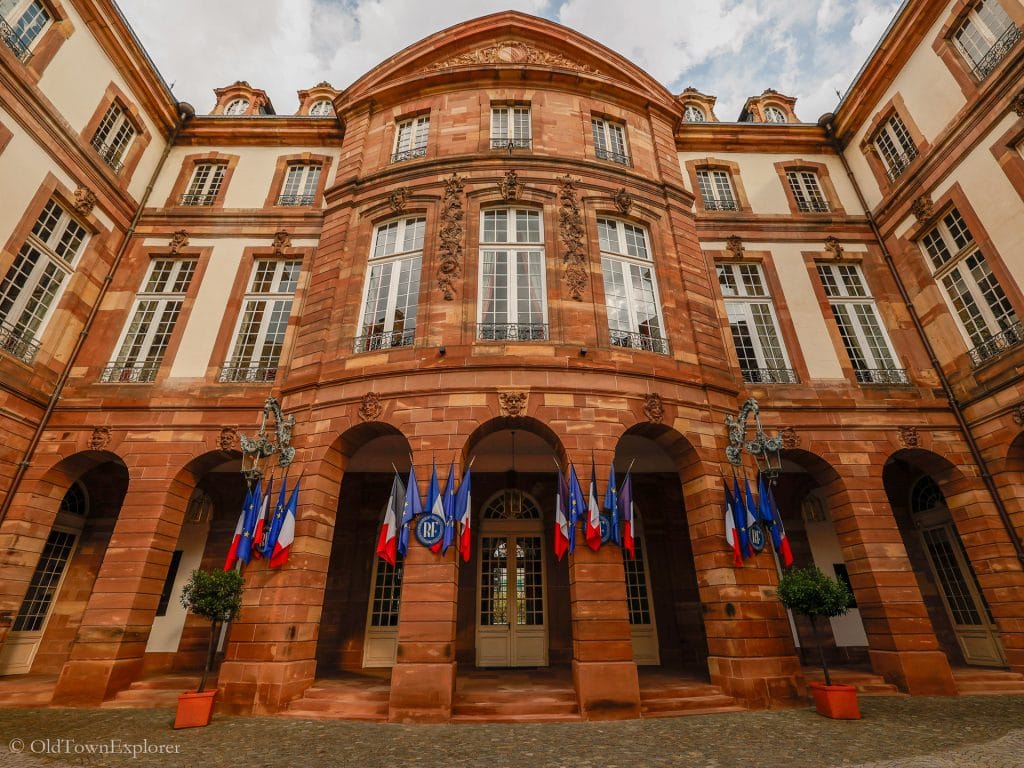
Our France guides concentrate on cities where food, wine, and architecture are closely tied to the surrounding region. Compare papal Avignon, the wine cities of Bordeaux, Beaune, and Dijon, the bouchons of Lyon, and the half-timbered streets of Strasbourg.
- City guides: Avignon, Beaune, Bordeaux, Dijon, Lyon, and Strasbourg
- Explore France: Country overview, food, wine, and architecture
Pick one regional base and pair its city guide with the related food and wine pages before planning nearby day trips.
Germany
In Germany, start with Lübeck and the Mosel. Lübeck's brick Gothic churches, merchant houses, and narrow lanes tell the story of a Hanseatic trading city, while the Mosel pages follow Riesling through its steep river vineyards.
- City guide: Lübeck
- Explore Germany: Country overview, food, wine, and architecture
Choose Lübeck for a northern city break, or start with the wine pages if a Mosel road trip is the main goal.

Hungary
Our Hungary guides begin with Budapest, with its market halls, thermal baths, coffeehouses, broad boulevards, and landmark buildings along both sides of the Danube. The country pages add Hungarian dishes, wine regions, and the Roman, Ottoman, and Habsburg periods behind the capital's streets.
- City guide: Budapest
- Explore Hungary: Country overview, food, wine, and architecture
Begin with the Budapest guide, then use the food and wine pages to plan what to taste in the city and beyond it.

Italy
Italy has our largest collection of destination guides. They range from Rome, Florence, Venice, and Naples to smaller walled cities, hill towns, lakefront Como, port cities such as Genoa and Trieste, and the villages of the Cinque Terre.
- City and town guides: Bologna, Cinque Terre, Como, Florence, Genoa, Lecce, Lucca, Naples, Orvieto, Perugia, Rome, Siena, Trieste, Turin, and Venice
- Explore Italy: Country overview, food, wine, and architecture
Choose one region at a time: many of these cities pair naturally with nearby hill towns, vineyards, or coastal stops.

Montenegro
A historic route through Montenegro can follow the Bay of Kotor, where fortified towns, Venetian stonework, mountain views, and waterfront walks sit close together. Bar, Budva, Herceg Novi, and Kotor each have a different balance of old town, coast, and everyday city life.
- City guides: Bar, Budva, Herceg Novi, and Kotor
- Explore Montenegro: Country overview, food, wine, and architecture
Start with Kotor for the bay's best-known fortified center, then compare it with Herceg Novi, Budva, or Bar.

Poland
Poland's city guides move between very different historic centers: royal Kraków, rebuilt Warsaw, Baltic Gdańsk, and the bridges and islands of Wrocław. Gothic churches, market squares, Baroque interiors, and 20th-century reconstruction appear throughout the route.
- City guides: Gdańsk, Kraków, Warsaw, and Wrocław
- Explore Poland: Country overview, food, wine, and architecture
Choose Kraków or Warsaw for a first visit, then add Gdańsk for the Baltic coast or Wrocław for a smaller western city.

Romania
Our Romania guides concentrate on Transylvania. Brașov sits below the Carpathians with a large old center and easy access to nearby castles and fortified churches, while Sighișoara preserves a compact hilltop citadel of towers, lanes, and Saxon houses.
- City guides: Brașov and Sighișoara
- Explore Romania: Country overview, food, wine, and architecture
Read the Brașov and Sighișoara guides together to compare two different bases in Transylvania.

Serbia
Belgrade and Novi Sad make a natural two-city introduction to Serbia. Belgrade spreads around its fortress and the meeting of the Danube and Sava, while Novi Sad pairs a Habsburg-era center with Petrovaradin Fortress across the river.
- City guides: Belgrade and Novi Sad
- Explore Serbia: Country overview, food, wine, and architecture
Start with the larger capital, Belgrade, then compare it with the smaller center of Novi Sad.

Slovakia
Bratislava is our starting point for Slovakia, with a compact old town between the castle and the Danube. Baroque palaces, church towers, wine from the nearby Little Carpathians, and cafés fit easily into a walk through the center.
- City guide: Bratislava
- Explore Slovakia: Country overview, food, wine, and architecture
Bratislava works well as a short city break or as a stop between Vienna and Budapest.

Slovenia
Our travels in Slovenia start in Ljubljana. Its riverside old town, market, castle hill, Habsburg buildings, and work by Jože Plečnik fit into a compact, mostly pedestrian center.
- City guide: Ljubljana
- Explore Slovenia: Country overview, food, wine, and architecture
Use Ljubljana as a walkable base, then plan day trips after choosing the food, wine, or architecture that interests you most.

Spain
Barcelona, San Sebastián, and Seville offer three very different city trips. Barcelona centers on Catalan food and Modernisme, San Sebastián on pintxos and the Basque coast, and Seville on Andalusian streets, courtyards, tapas, and Islamic and Christian monuments.
- City guides: Barcelona, San Sebastián, and Seville
- Explore Spain: Country overview, food, wine, and architecture
Choose the city that matches your priorities, then use the country pages to connect it with Spain's wider food, wine, and architectural traditions.

If you are interested in slow travel or longer stays in Europe, visit our Full-Time Travel hub. It covers itinerary planning, packing, transportation, costs, visa-free travel, and traveling with a dog.