
Germany
Explore Germany: Food, Wine & Architecture
Germany ranges from Hanseatic cities in the north to Riesling valleys in the west and Baroque towns in the south. Lübeck pairs Brick Gothic churches and merchant houses with marzipan, smoked fish, beer, and the Rotspon wine tradition; the Mosel brings half-timbered towns and steep vineyards; Bavaria and Franconia add beer halls, sausages, Baroque churches, and Main River wine towns.
Lübeck is the clearest northern base for Hanseatic architecture and North German food. Choose Trier or a Mosel town such as Bernkastel-Kues when Riesling, vineyard routes, Roman sites, and half-timbered streets are the priority; Munich for Bavarian food, beer culture, and Baroque architecture; or Berlin for museums and architecture that runs from Prussian monuments through modernism and the divided city.
We spent a month in Lübeck while traveling in Germany. With that firsthand experience and further research, this page compares Germany’s main destinations, regional food, beer and wine, architecture, seasons, and transport choices to help you choose a base, decide which regions to combine, and plan your route.
Germany at a Glance
Germany is best understood through its regional cities, historic towns, wine regions, beer traditions, river valleys, maritime north, Alpine south, and architecture shaped by medieval, Baroque, industrial, modernist, and postwar periods.
- Best for: Historic towns, regional food, beer culture, wine regions, architecture, and UNESCO sites
- Top city base: Lübeck
- Key food themes: Sausages, breads, cheeses, dumplings, pork dishes, cured meats, cakes, pastries, and regional specialties
- Key wine regions: Mosel, Rheingau, Pfalz, Baden, Franconia, Rheinhessen, and Württemberg
- Architecture highlights: Brick Gothic churches, timber-framed towns, Gothic cathedrals, Baroque palaces, Bauhaus buildings, and reconstructed historic centers
- Good first route: Lübeck, with Bamberg, Regensburg, Leipzig, Cologne, Trier, and wine regions as natural additions
Lübeck is the strongest starting point because it connects Germany’s food, architecture, maritime history, and Hanseatic urban identity with a walkable UNESCO-listed old town.
Germany Destinations
Germany offers a wide range of historic cities, Hanseatic ports, medieval towns, wine regions, cathedral cities, university centers, and UNESCO-listed cultural sites. Lübeck is one of the country’s strongest northern historic-city bases, combining brick Gothic architecture, maritime trade history, regional food traditions, and a compact old town shaped by the Trave River.
Our Lübeck page introduces Germany through the country’s Hanseatic identity, with brick Gothic architecture, maritime trade history, regional food traditions, and a compact old town shaped by the Trave River.
Lübeck
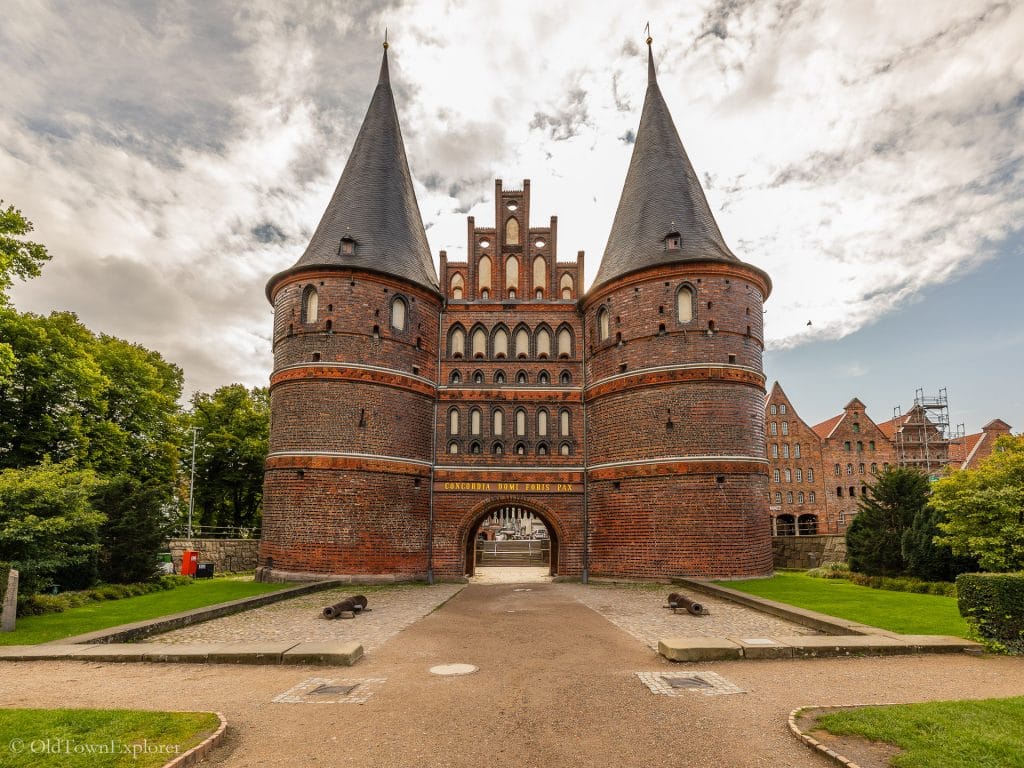
Lübeck is one of northern Germany’s most important historic cities and a strong base for travelers interested in brick Gothic architecture, Hanseatic history, medieval streets, maritime culture, and regional food. The UNESCO-listed Old Town, Holstentor, churches, gabled houses, warehouses, courtyards, and Trave River setting make it one of Germany’s strongest historic urban destinations.
Choose Lübeck when Hanseatic architecture, northern German food, maritime history, and a compact old town matter more than big-city variety or major wine-region access.
Germany Food
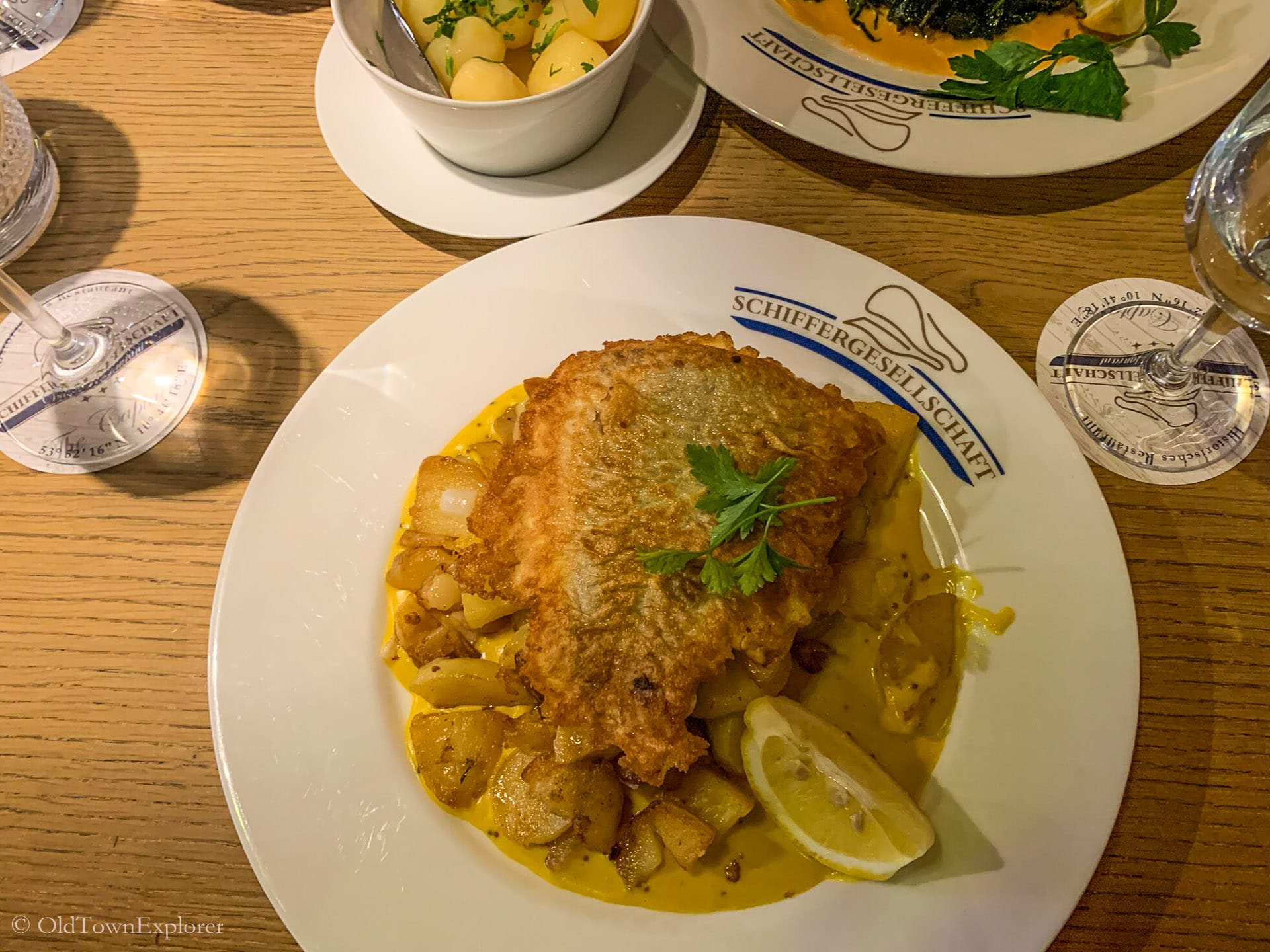
Germany Food reflects strong regional traditions, with sausages, breads, cheeses, pork dishes, dumplings, cured meats, fish, cakes, pastries, and seasonal foods varying significantly from north to south. Northern Germany adds maritime food traditions, while Bavaria, Swabia, Franconia, the Rhineland, and Saxony each contribute distinct regional dishes.
Our Germany Food page is the best starting point for comparing traditional dishes, protected regional products, and the foods that appear across Lübeck, northern Germany, wine regions, historic towns, and other parts of the country.
Local Food Products
Protected Designation of Origin (PDO)
- Allgäuer Bergkäse
- Allgäuer Emmentaler
- Altenburger Ziegenkäse
- Odenwälder Frühstückskäse
Protected Geographical Indication (PGI)
- Hessischer Handkäse
- Holsteiner Tilsiter
- Nieheimer Käse
- Aachener Printen
- Nürnberger Lebkuchen
For official EU recognition of protected German foods, consult the EU Geographical Indications Register.
Traditional Dishes
Appetizers & Starters
- Bavarian cheese spread
- Bavarian sausage salad
- Pretzels
- Sausage & meat boards
Soups
- Potato soup
- Goulash soup
- Lentil soup
- Liver dumpling soup
Main Dishes
- Viennese schnitzel
- German meat patties
- Rouladen
- Linsen mit Spätzle
- Käsespätzle
- Roast pork
Side Dishes
- Potato salad
- Spätzle
- Braised red cabbage
- Onion cake
Desserts
- Bee-sting cake
- Germknödel
- Apple Strudel
- Butter cake
Germany Wine
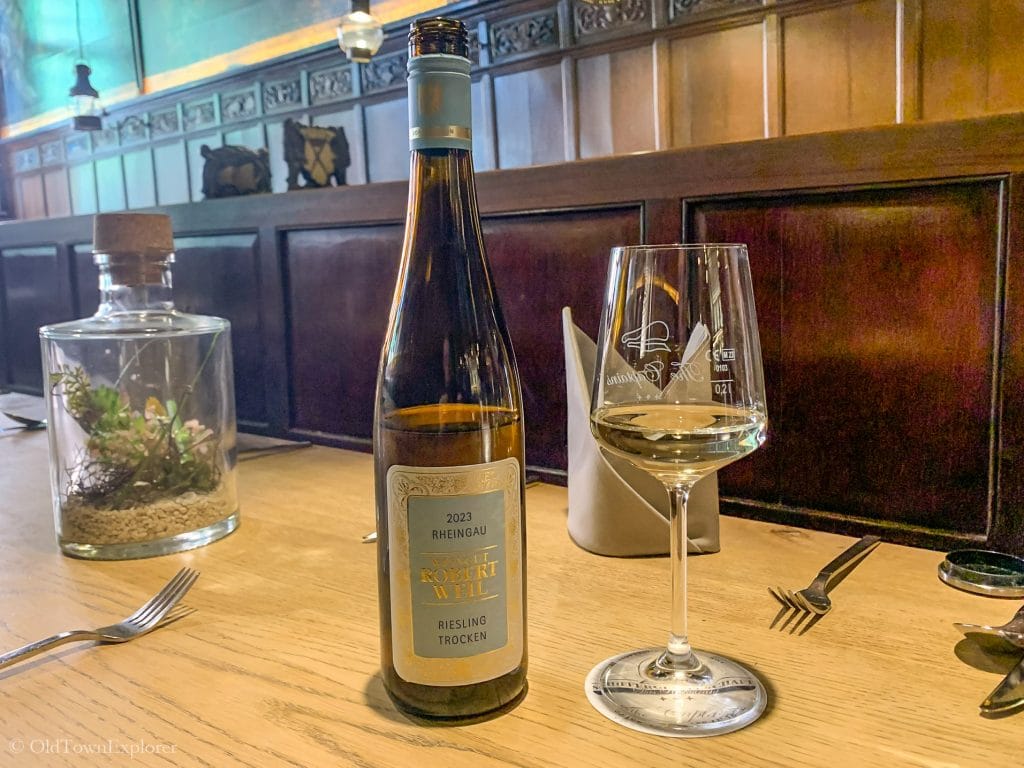
Germany Wine is strongest along river valleys and south-facing vineyard slopes, especially in regions such as the Mosel, Rheingau, Pfalz, Baden, Franconia, Rheinhessen, and Württemberg. Riesling is the country’s signature grape, but Germany also produces important Silvaner, Spätburgunder, Müller-Thurgau, Grauburgunder, and Weissburgunder wines. For deeper detail on wine regions, grape varieties, and vineyard classifications, see the German Wine Institute.
Our Germany Wine page is the best starting point for comparing wine regions, grape varieties, and the places where wine fits naturally into a food, architecture, and historic-town itinerary.
Wine Regions
- Ahr
- Baden
- Franconia
- Hessische Bergstraße
- Mittelrhein
- Mosel
- Nahe
- Palatinate
- Rheingau
- Rheinhessen
- Saale‑Unstrut
- Saxony
- Württemberg
Grape Varieties
White Grapes
- Riesling
- Müller‑Thurgau
- Pinot Blanc
- Pinot Gris
- Silvaner
- Scheurebe
- Other Whites
Black (Red) Grapes
- Pinot Noir
- Dornfelder
- Trollinger
- Blaufränkisch
- Pinot Meunier
- Other Reds
Germany Architecture
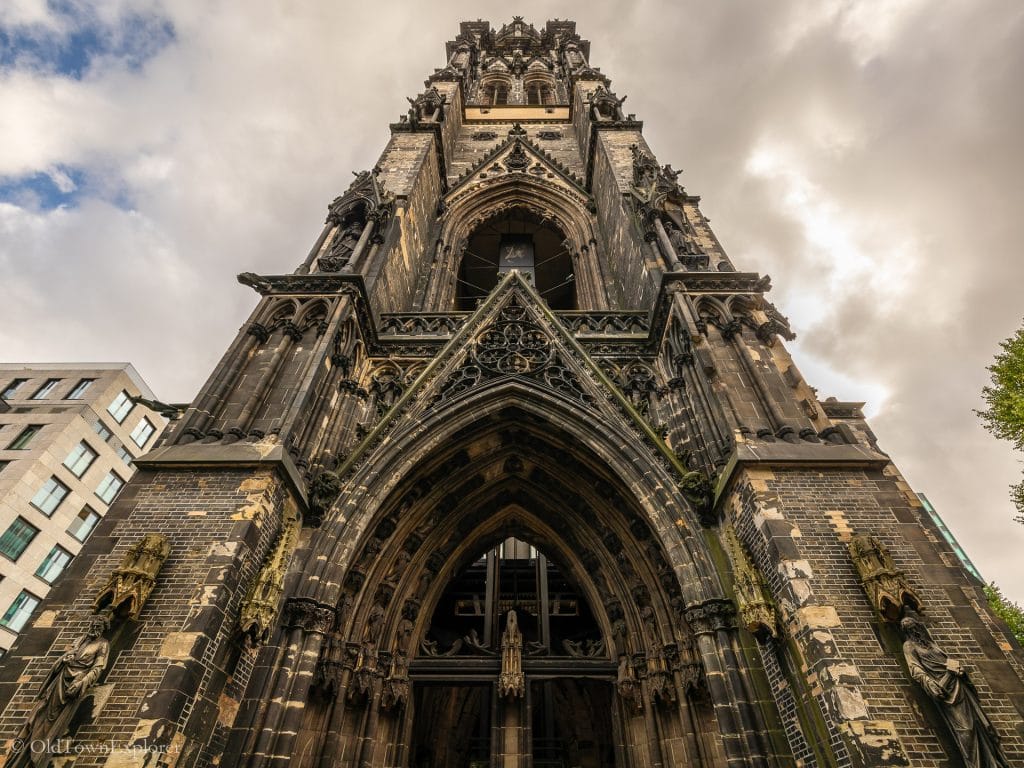
Germany Architecture connects Roman remains, Romanesque churches, Gothic cathedrals, brick Gothic towns, timber-framed houses, Renaissance civic buildings, Baroque palaces, industrial sites, Bauhaus landmarks, postwar reconstruction, and contemporary architecture. Lübeck is especially important for Hanseatic urban form and northern brick Gothic architecture.
Our Germany Architecture page is the best starting point for comparing major styles, UNESCO sites, and the architectural patterns that appear across Germany’s cities, towns, ports, river valleys, and cultural landscapes.
Architectural Styles
- Romanesque
- Gothic
- Sondergotik (Late Gothic)
- Renaissance
- Baroque & Rococo
- Neoclassicism
- Historicism & Rundbogenstil
- Jugendstil
- Bauhaus & Modernism
- Postmodernism & Contemporary
UNESCO World Heritage Sites
- Aachen Cathedral
- Collegiate Church, Castle and Old Town of Quedlinburg
- Cologne Cathedral
- Hanseatic City of Lübeck
- Historic Centres of Stralsund and Wismar
- Jewish‑Medieval Heritage of Erfurt
- Museumsinsel (Museum Island), Berlin
- Old Town of Regensburg with Stadtamhof
- Palaces and Parks of Potsdam and Berlin
- Roman Monuments, Cathedral of St. Peter and Church of Our Lady in Trier
- Speyer Cathedral
- St. Mary’s Cathedral and St. Michael’s Church at Hildesheim
- Palaces of King Ludwig II of Bavaria: Neuschwanstein, Linderhof, Schachen and Herrenchiemsee
- Town of Bamberg
Together, these UNESCO sites show the range of Germany’s architectural and cultural history, from Roman monuments, medieval cathedrals, Hanseatic ports, and timber-framed towns to Baroque palaces, museum districts, Bauhaus modernism, and royal landscapes. A complete list of UNESCO World Heritage Sites in Germany is available through the official UNESCO registry.
Where Is Germany Located?
Germany is located in Central Europe and shares borders with nine countries: Denmark to the north, Poland and Czechia to the east, Austria and Switzerland to the south, and France, Luxembourg, Belgium, and the Netherlands to the west. It stretches from the North Sea and Baltic coastlines to the northern edge of the Alps.
Regional Overview of Germany
Germany’s 16 federal states (Bundesländer) vary widely in landscape, architecture, and cultural traditions. This diversity is reflected in the country’s regional foods, wine styles, and building heritage, making each area distinct for travelers.
Southern Germany: Bavaria and Baden-Württemberg
The southern states are shaped by Alpine geography, Roman Catholic traditions, and strong regional identities. Bavaria is known for Baroque churches, beer culture, and historic towns like Bamberg and Regensburg. Baden-Württemberg offers a mix of Swabian architecture, Black Forest landscapes, and wine-producing regions along the Neckar.
Central Germany: Hesse, Thuringia, Saxony
Central Germany preserves some of the country’s most important cultural legacies. Hesse is home to Frankfurt and timber-framed towns like Marburg; Thuringia and Saxony feature Gothic cathedrals, Reformation-era buildings, and classical music heritage in cities like Weimar and Leipzig.
Northern Germany: Schleswig-Holstein, Lower Saxony, Bremen, Hamburg, Mecklenburg-Vorpommern
The north is defined by flat coastal plains, brick Gothic churches, and maritime trade. Hanseatic cities like Lübeck, Hamburg, and Wismar showcase gabled warehouses, medieval ports, and North Sea cuisine. Fishing villages, lighthouses, and wind-swept islands are central to the region’s identity.
Western Germany: Rhineland-Palatinate, Saarland, North Rhine–Westphalia
This region blends Roman, medieval, and industrial heritage. Cities like Cologne, Trier, and Aachen feature Gothic cathedrals and Roman ruins, while the Rhine and Mosel valleys support historic wine towns. Industrial areas in the Ruhr now house museums and UNESCO-listed sites.
Eastern Germany: Berlin, Brandenburg, Saxony-Anhalt, Saxony, Thuringia
The eastern states reflect Prussian administrative legacy, GDR-era urbanism, and efforts at historic preservation and reuse. Berlin combines imperial monuments with Bauhaus buildings and postwar reconstructions. Dresden and Potsdam offer Baroque and Rococo ensembles, while smaller cities retain medieval street plans.
When to Visit Germany
Germany’s varied climate and cultural calendar make it a destination with something to offer in every season. Travel conditions, festivals, and regional experiences shift with the weather, offering distinct opportunities throughout the year.
Spring (April–June)
Spring is a transitional season marked by mild temperatures, blossoming landscapes, and fewer tourists. It’s an excellent time for city sightseeing, hiking, and visiting gardens or castles before peak summer crowds arrive.
Summer (June–August)
Summer is the high season for travel in Germany. Warm weather and long daylight hours make it ideal for outdoor festivals, river cruises, and wine tours. Tourist sites can be crowded, especially in major cities and along popular routes like the Romantic Road.
Autumn (September–October)
Autumn brings crisp air, fall colors, and regional harvest festivals. This is one of the best times to explore Germany’s wine regions, attend Oktoberfest in Munich, or enjoy scenic drives through forested areas like the Black Forest and Saxon Switzerland.
Winter (November–February)
Winter is cold and dark but offers distinct cultural experiences. Traditional Christmas markets transform town squares with lights, music, and seasonal foods. In alpine regions, ski resorts attract winter sports travelers, while historic towns offer a quieter, festive atmosphere.
Getting Around Germany
Germany offers efficient and reliable transportation options that make it easy to travel between cities and into historic regions.
Trains and Regional Rail
Germany’s national railway system, operated by Deutsche Bahn, includes high-speed ICE trains for long-distance travel and regional trains connecting smaller towns. Routes are frequent and generally punctual, with major hubs like Berlin, Frankfurt, and Munich offering international connections as well.
For current schedules, route planning, and ticket options, visit Deutsche Bahn’s official website.
Urban Transit
Public transportation in German cities is well-organized and includes U-Bahn (subways), S-Bahn (commuter trains), buses, and trams. Tickets are typically integrated across modes and regions, with day passes and contactless payment options available in most areas.
Driving and Car Rental
Renting a car is useful for accessing rural wine regions, historic villages, or scenic routes like the Romantic Road. Roads are well-maintained, though parking can be restricted or costly in city centers. Autobahns have unrestricted speed zones, but local roads often require careful navigation through traffic-calmed areas.
Buses and Budget Travel
Long-distance buses, operated by companies like FlixBus, provide low-cost alternatives to train travel. They serve both major cities and smaller destinations, though travel times are longer. Buses are also a good option for budget-conscious travelers or those planning last-minute trips.
Whether by train, public transit, or car, travelers can access both urban centers and rural areas with minimal difficulty.
FAQs About Germany
Do U.S. citizens need a visa for Germany?
U.S. citizens can generally visit Germany without a visa for short tourist or business stays of up to 90 days within the Schengen Area. Passport-validity and entry rules can change, so check the U.S. Department of State Germany travel information before departure.
What food is Germany known for?
Germany is known for regional dishes such as sausages, schnitzel, sauerbraten, pretzels, spätzle, potato dishes, breads, cakes, pastries, and northern fish dishes. Food varies strongly by region, from Bavarian beer-hall cooking to Swabian noodles, Rhineland specialties, Franconian sausages, and maritime food traditions in the north.
What is the most popular drink in Germany besides beer?
Besides beer, wine is widely consumed—especially Riesling, which is Germany’s signature white wine. Regional wines are often served in traditional Weinstuben (wine taverns) and at seasonal wine festivals.
Which German region is best for wine?
Top wine regions include the Mosel, Rheingau, Pfalz, and Baden, each known for distinctive grape varieties like Riesling, Silvaner, or Spätburgunder (Pinot Noir).
What is traditional German architecture like?
Traditional German architecture includes half-timbered houses (Fachwerkhäuser), Gothic cathedrals, Baroque palaces, and Romanesque churches, with styles varying by region and period.
Where can I see half-timbered houses in Germany?
Well-preserved half-timbered buildings can be found in towns like Quedlinburg, Goslar, Wernigerode, and along the German Timber-Frame Road.
Are any UNESCO sites in Germany known for architecture?
Yes—Germany has many UNESCO sites recognized for their architecture, including Cologne Cathedral, Bauhaus Dessau, Würzburg Residence, and the Palaces of Ludwig II.
What is a traditional German meal?
A typical German meal includes a main dish like meat or sausage, a side such as potatoes, red cabbage, or sauerkraut, and often ends with a dessert like Apfelstrudel.
Is German wine sweet or dry?
German wine comes in both sweet and dry styles. Riesling, for example, can range from bone-dry to lusciously sweet, with labeling terms like “Trocken” (dry) helping guide buyers.