
Croatia
Explore Croatia: Food, Wine & Architecture
Croatia’s historic towns are closely tied to the food and wine around them. In Istria, Rovinj and Motovun pair Venetian and medieval streets with truffles, olive oil, Malvazija Istarska, and Teran. Farther south, Split, Trogir, Dubrovnik, and Ston bring Roman and fortified-city architecture together with seafood, oysters, Plavac Mali, and Pošip.
Split combines Roman architecture, markets, city restaurants, and Dalmatian wine in one base. Dubrovnik suits a more concentrated stay inside a fortified old city, with Ston and Pelješac as natural additions. Choose Rovinj for an Istrian route through Venetian streets, truffles, olive oil, and nearby wine country, or Trogir for a smaller historic town close to Split.
We spent a month in each of Dubrovnik, Rovinj, Split, and Trogir, with additional time in Motovun and Ston. Based on those stays and visits, together with further research, this page compares Croatia’s main destinations, regional food and wine, architecture, seasons, and transport choices to help you choose between Istria and Dalmatia, decide where to stay, and plan your route.
Croatia at a Glance
Croatia is easiest to plan by separating Istria, Dalmatia, the islands, inland wine areas, and the eastern continental regions. The main choice for a first trip is whether to focus on one region in depth or connect Istria and Dalmatia in a longer route.
Key planning points:
- Best for: Historic coastal towns, island routes, food regions, wine regions, Roman ruins, Venetian architecture, and walkable old centers.
- Top bases: Split, Dubrovnik, Rovinj, and Trogir for most first Croatia trips.
- Key food themes: Seafood, olive oil, truffles, oysters, cured meats, cheeses, stews, and seasonal produce.
- Key wine regions: Istria, Dalmatia, Slavonia, the Croatian Danube, and the Croatian Uplands.
- Architecture highlights: Roman palace architecture, Venetian town centers, medieval walls, churches, civic palaces, fortresses, and UNESCO-listed historic sites.
- Good first route: Split, Trogir, and Dubrovnik for Dalmatia, or Rovinj and Motovun for Istria.
- Main trade-off: Coastal Croatia is strongest for ferries and islands in warm months, while food, wine, architecture, and inland routes often work better outside peak summer.
For most travelers, Croatia is easier to plan as a regional route than as a single-country loop.
Croatia Destinations
Croatia’s strongest destinations combine fortified coastal cities, Roman ruins, island routes, wine regions, medieval towns, and UNESCO-listed historic centers. The best starting point depends on whether the trip is built around architecture, food and wine, ferries, beaches, or compact old towns.
Split, Dubrovnik, Rovinj, and Trogir introduce Croatia through different regional identities, from Venetian-influenced Istria to Roman and maritime Dalmatia.
Dubrovnik
Dubrovnik is Croatia’s best-known fortified city and one of the strongest destinations in the country for architecture, maritime history, and dramatic Adriatic scenery. The walled Old City, limestone streets, churches, monasteries, palaces, and harbor setting make it a natural starting point for understanding Croatia’s coastal heritage.
Choose Dubrovnik when medieval walls, historic architecture, sea views, and a compact old town matter more than quiet streets or low prices.

Split
Split is Croatia’s strongest city base for travelers who want Roman history, coastal energy, food markets, wine bars, and easy ferry connections. The historic center grew inside and around Diocletian’s Palace, giving the city one of the most distinctive architectural settings on the Adriatic.
Choose Split when Roman architecture, restaurants, ferry access, and a lively historic center matter more than a fully preserved museum-like old town.

Rovinj
Rovinj is one of Istria’s most attractive historic coastal towns, with a compact old town rising toward the Church of St. Euphemia. Venetian influence, narrow lanes, harbor views, seafood restaurants, wine bars, and access to Istrian olive oil, truffles, and Malvazija make it a strong base for exploring Croatia’s northwest coast.
Choose Rovinj when Istrian food, wine, Venetian streets, and a smaller coastal base matter more than major monuments or big-city variety.

Trogir
Trogir is a small UNESCO-listed historic town on an island between the mainland and Čiovo. Its compact center includes Romanesque, Gothic, Renaissance, and Venetian architecture, with the Cathedral of St. Lawrence, civic palaces, waterfront, and stone lanes all packed into a very walkable area.
Choose Trogir when you want a smaller historic base near Split with strong architecture, easy walking, and a quieter old-town scale.

Ston
Ston is a small fortified town on the Pelješac Peninsula, known for its long defensive walls, salt pans, oysters, seafood, and access to nearby wine country. It works best as a focused historic and food stop rather than a broad city base.
Choose Ston when walls, oysters, salt history, and Pelješac wine matter more than museums, nightlife, or a large old town.

Motovun
Motovun is a hill town in inland Istria, surrounded by vineyards, forests, and truffle country. Its medieval walls, hilltop views, stone streets, and proximity to Istrian food and wine producers make it one of Croatia’s strongest inland historic-town stops.
Choose Motovun when hill-town scenery, truffles, wine, and a quiet inland setting matter more than coastal access or a large number of attractions.

Croatia Food
Croatian food changes noticeably between the Adriatic coast and the interior. Seafood, olive oil, oysters, grilled fish, and Mediterranean ingredients are common along the coast, while inland cooking brings more cured meat, freshwater fish, stews, pastries, and Central European influences. Our Croatia Food page goes deeper into the dishes and products you are likely to encounter around the country.
Food Regions
Istria and Dalmatia give a first coastal trip its clearest food comparison. Istria is the place to look for truffles, fuži pasta, olive oil, pršut, seafood, and cooking that draws from both the peninsula's coast and its inland hill towns. Dalmatia shifts toward grilled fish, shellfish, olive oil, lamb, peka, brudet, black risotto, and island ingredients.
Inland Croatia is different again. Slavonia and Baranja bring paprika, pork, cured meats, freshwater fish, and stews, while Zagreb and Zagorje are better places to look for štrukli, pastries, poultry, mlinci, and other Central European influences. Explore Istria Food when Rovinj or Motovun is on the route and Dalmatia Food for Dubrovnik, Split, Trogir, Ston, and the surrounding coast.

Food Products
A few products appear often enough that they are worth recognizing before you arrive.
- Olive oil: Look for local olive oil throughout Istria, Dalmatia, and the islands, both on restaurant tables and in food shops.
- Truffles: Truffles are most closely tied to inland Istria, especially the forests and hill towns around the Mirna Valley.
- Oysters: Ston and Mali Ston are the main stops on the current route when oysters are a priority.
- Seafood: Fish, squid, octopus, mussels, and other seafood appear throughout the Adriatic coast and islands.
- Cheese: Sheep, cow, and goat cheeses vary by region and are easy to find at markets, food shops, and restaurant starter plates.
- Cured meats: Pršut is common along the coast, while eastern Croatia has its own stronger cured-meat traditions.
- Honey: Local honey appears at markets and small food shops, with varieties changing according to region and season.
- Seasonal produce: Tomatoes, figs, grapes, cherries, citrus, mushrooms, and other produce change with the season and part of the country.
On an Adriatic trip, olive oil, seafood, shellfish, pršut, cheese, and seasonal produce are the easiest starting points. Truffles become much more prominent once the route moves inland through Istria.
Traditional Dishes
Learn a few dish names before you arrive rather than trying to memorize the whole national cuisine.
- Crni rižot: Black risotto colored with cuttlefish or squid ink and most closely associated with the Adriatic coast.
- Pašticada: Slow-cooked beef in a rich sweet-and-savory sauce, especially associated with Dalmatia.
- Peka: Meat, seafood, or vegetables slow-cooked under a heavy bell-shaped lid covered with hot coals.
- Brudet: A fish or seafood stew found in different forms along the Croatian coast.
- Istarski fuži: Istrian pasta that may appear with meat sauces, mushrooms, or truffles.
- Štrukli: Pastry dough filled with fresh cheese, particularly associated with Zagreb and northern Croatia.
- Sarma: Cabbage leaves wrapped around a meat-and-rice filling and cooked slowly.
- Punjene paprike: Peppers stuffed with meat and rice, usually cooked in a tomato-based sauce.
In Dalmatia, start with black risotto, brudet, peka, or pašticada. In Istria, fuži and truffles make a better regional introduction, while štrukli points toward the cooking of Zagreb and northern Croatia.
Croatia Wine
Croatian wine changes from the Mediterranean vineyards of Istria and Dalmatia to the cooler continental vineyards of northern and eastern Croatia. Our Croatia Wine page goes deeper into the regions, grapes, and styles, while the regional pages make it easier to choose wine that fits an Istrian or Dalmatian route.

Wine Regions
Croatia has four main wine regions: Croatian Istria and Kvarner, Dalmatia, Slavonia and the Croatian Danube, and the Croatian Uplands. The first two fit naturally into coastal itineraries, while the other two become more important when you travel through Zagreb, northern Croatia, Slavonia, or the Danube area.
Istria Wine is the natural next step when Rovinj or Motovun is on the route, especially for Malvazija Istarska and Teran. Dalmatia Wine fits Dubrovnik, Split, Trogir, Ston, Pelješac, and island travel, with Plavac mali, Pošip, Grk, Babić, and other local grapes.
Grape Varieties
Croatia grows many local and international grapes, but a smaller group of Croatian grape varieties will make restaurant wine lists and bottle labels much easier to read.
- Graševina: The country's most widely planted grape and an important white variety in Slavonia and the Croatian Danube.
- Malvazija Istarska: The key white grape to recognize on an Istrian trip.
- Plavac mali: One of the main red grapes of Dalmatia, especially important on Pelješac and several islands.
- Pošip: A Dalmatian white grape closely associated with the islands and southern coastal wine areas.
- Teran: An important Istrian red grape and a useful contrast with the peninsula's Malvazija Istarska.
- Babić: A red Dalmatian variety associated particularly with vineyards in central Dalmatia.
- Grk: A local white variety strongly associated with the island of Korčula.
- Žlahtina: A white grape associated with Kvarner, particularly the island of Krk.
Match the grape to the place you are visiting: Malvazija Istarska or Teran in Istria, Plavac mali or Pošip in Dalmatia, and Graševina when the route reaches eastern Croatia.

Wine Styles
Ordering by region and style is often easier than learning every Croatian grape before the trip.
- Istrian whites: Malvazija Istarska is the obvious starting point when drinking local wine around Rovinj, Motovun, and the rest of Istria.
- Dalmatian whites: Pošip and Grk are two names to look for when pairing local white wine with seafood along the southern coast and islands.
- Dalmatian reds: Plavac mali is the main name to recognize when you want a fuller red from southern Croatia.
- Istrian reds: Teran gives Istria a red-wine counterpart to the region's better-known Malvazija Istarska.
- Continental whites: Graševina becomes much more important once the trip moves east toward Slavonia and the Croatian Danube.
- Sweet wine: Prošek is a traditional sweet Dalmatian wine, not a grape variety.
A simple first comparison is Malvazija Istarska in Istria against Pošip in Dalmatia, followed by Teran and Plavac mali when you want to compare two very different coastal red wines.
Croatia Architecture
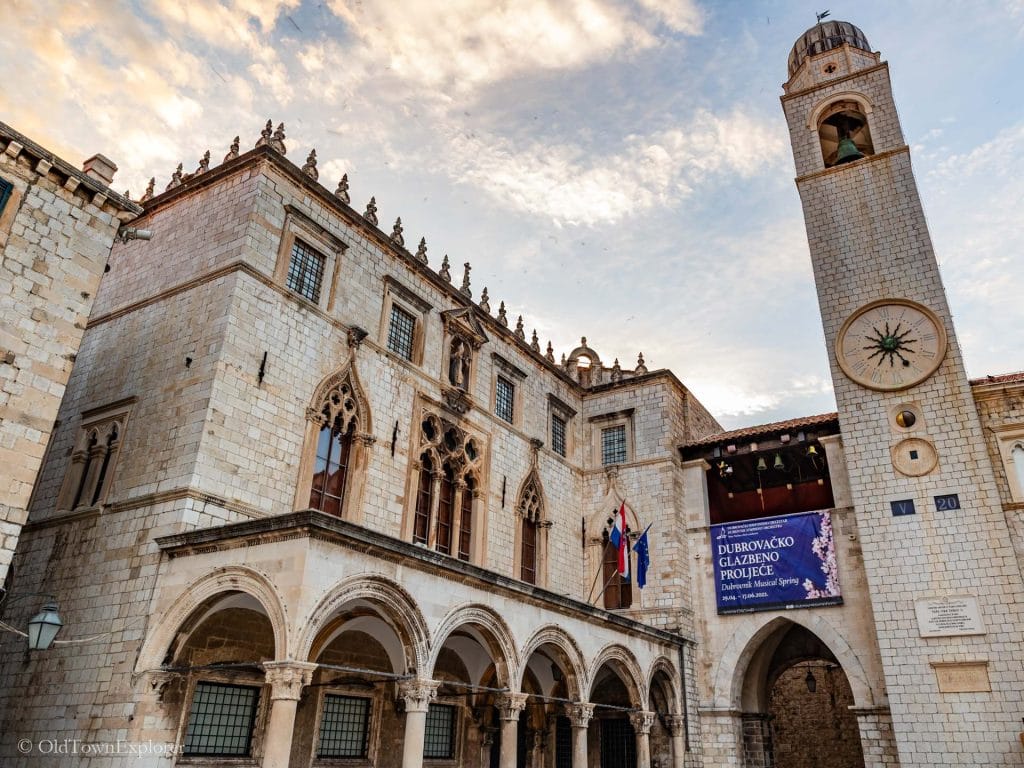
Croatia's historic towns contain Roman remains, early medieval churches, Romanesque cathedrals, Gothic civic buildings, Renaissance palaces, Venetian fortifications, Baroque interiors, and Austro-Hungarian streets. Our Croatia Architecture page looks at these periods across the country, while the Dubrovnik, Split, Rovinj, Trogir, Ston, and Motovun pages show how those layers differ from town to town.
Architectural Styles
You do not need to identify every period to enjoy Croatia's old towns. These are the main architectural layers worth watching for as you walk.
- Roman: Split is the clearest stop for Roman architecture because the historic center grew inside and around Diocletian's Palace.
- Early medieval: Small stone churches and religious buildings survive in several parts of the country.
- Romanesque: Look for heavy stone forms, portals, bell towers, and cathedral sculpture, particularly in medieval coastal towns.
- Gothic: Churches, palaces, and civic buildings add pointed arches, tracery, and later medieval detail to many Adriatic centers.
- Renaissance: Palaces, loggias, churches, and public buildings became especially important in prosperous coastal towns.
- Venetian: Istria and Dalmatia contain town gates, defensive walls, harbors, civic buildings, and façades built during centuries of Venetian influence.
- Baroque: Baroque churches, interiors, façades, and rebuilding appear in both coastal and inland towns.
- Austro-Hungarian: Zagreb, Rijeka, and other northern or inland cities add the larger streets, civic buildings, and urban planning associated with the Habsburg period.
Split, Trogir, Dubrovnik, Rovinj, and Motovun make a particularly clear sequence because the balance between Roman, medieval, Venetian, Renaissance, and later architecture changes at each stop.
UNESCO World Heritage Sites
Croatia's UNESCO World Heritage properties include several cultural sites that fit naturally into trips built around historic towns and architecture.
- Historical Complex of Split with the Palace of Diocletian: Roman palace structures survive throughout central Split, with medieval, Gothic, Renaissance, and Baroque buildings added over centuries.
- Old City of Dubrovnik: The walled city brings fortifications, churches, monasteries, palaces, stone streets, and civic buildings into one compact historic center.
- Historic City of Trogir: Trogir combines Romanesque, Gothic, Renaissance, and Baroque architecture in a small island old town.
- Episcopal Complex of the Euphrasian Basilica in the Historic Centre of Poreč: Poreč adds an important early Christian and Byzantine stop to an Istrian itinerary.
- The Cathedral of St James in Šibenik: Šibenik's cathedral gives a central Dalmatian route one of Croatia's major Renaissance monuments.
- Stari Grad Plain: On Hvar, the protected cultural landscape preserves an ancient system of agricultural land division rather than a monumental old-town complex.
- Stećci Medieval Tombstone Graveyards: Croatia shares this transnational group of medieval carved tombstone sites with Bosnia and Herzegovina, Montenegro, and Serbia.
- Venetian Works of Defence between the 16th and 17th Centuries: Croatian components form part of a wider transnational system of Venetian land and maritime defenses around the Adriatic.
Split, Dubrovnik, and Trogir are the easiest of these cultural sites to combine with the current Croatia city routes. Poreč and Šibenik become natural additions when the trip extends farther through Istria or central Dalmatia.
Location of Croatia
Croatia is located along the eastern Adriatic Sea, where Central Europe, the Mediterranean, and the western Balkans meet. It borders Slovenia and Hungary to the north, Serbia to the east, Bosnia and Herzegovina to the southeast, and Montenegro to the south.
The country’s shape matters for route planning. Istria sits close to Slovenia and northeast Italy, while Split, Trogir, Ston, and Dubrovnik belong to the long Dalmatian coastal route. Inland Croatia and the eastern wine regions require different planning from the ferry-focused Adriatic coast.
Regional Overview of Croatia
Croatia changes considerably as you move from the Istrian peninsula to Dalmatia and then inland toward Zagreb, Slavonia, and the Danube. For a first trip, the most important decision is usually whether to stay on one part of the Adriatic or combine the coast with a separate inland leg.
Istria
Istria works well as a compact coast-and-hill-town trip. Rovinj puts you on the Adriatic in a walkable historic town, while Motovun moves the route inland to a fortified hill town surrounded by vineyards and truffle country. Pula adds major Roman remains to a longer trip around the peninsula.
Choose Istria when truffles, olive oil, Malvazija Istarska, Teran, Venetian-influenced towns, and short drives between the coast and countryside matter more than island hopping. Istria Food and Istria Wine go deeper into what to eat and drink along the route.
Dalmatia
Dalmatia contains Dubrovnik, Split, Trogir, and Ston. Roman Split, medieval Trogir, walled Dubrovnik, the fortifications at Ston, Pelješac wine country, seafood, and island ferries can all fit into a longer trip down the coast.
Choose Dalmatia when historic coastal cities and the Adriatic are the main reasons for the trip. Dalmatia Food goes deeper into seafood, peka, brudet, olive oil, lamb, and other coastal dishes, while Dalmatia Wine covers Plavac mali, Pošip, Grk, Pelješac, and the region's other wine areas.
Kvarner and the Northern Adriatic
Kvarner sits between Istria and northern Dalmatia, with Rijeka, Opatija, Krk, Cres, and Lošinj among its main travel stops. Add it when you want northern Adriatic islands and seaside towns without continuing immediately toward Split or Dubrovnik.
Kvarner also works as a middle leg on a longer coastal journey from Istria toward the rest of Croatia. Krk and the other islands make ferries and island transport more important, while Rijeka and Opatija add larger urban and resort settings that feel quite different from Rovinj or Motovun.
Zagreb and Central Croatia
Zagreb changes the pace of a coast-first trip. The capital brings museums, markets, parks, cafés, and Austro-Hungarian streets rather than another stone Adriatic old town. Zagorje, Samobor, and other parts of central and northwestern Croatia add castles, vineyards, spa towns, pastries, and inland food traditions.
Add Zagreb and central Croatia when you want a substantial inland stop or when Croatia is part of an overland route toward Slovenia, Austria, or Hungary. It also makes more sense than the coast as a starting point for a trip concentrated in northern Croatia.
Slavonia and the Croatian Danube
Eastern Croatia is a separate trip from the Adriatic. Osijek, Vukovar, Đakovo, Ilok, the Danube and Drava rivers, agricultural plains, Baroque town centers, paprika-rich cooking, cured meats, freshwater fish, and Graševina move the focus inland.
Choose Slavonia and the Croatian Danube when continental wine, river landscapes, eastern Croatian towns, and inland food are important enough to justify the extra distance. It works better as its own regional leg than as a quick addition to an Istria or Dalmatia itinerary.
Suggested Croatia Itineraries
Croatia is easier to plan as a regional trip than as one large loop. Dalmatia works well for a longer coastal route through Split and Dubrovnik, while Istria keeps the distances shorter around Rovinj, hill towns, vineyards, and truffle country. With two weeks or more, you can combine both regions and see how different the northern and southern Adriatic feel.
Split, Trogir, Ston, and Dubrovnik
Recommended time: 10–12 days.
Route: Split → Dubrovnik, with Trogir from Split and Ston and Pelješac between the two main bases. Begin in Split for Diocletian’s Palace, markets, restaurants, and Dalmatian wine, then add nearby Trogir for a smaller historic center with Romanesque, Gothic, Renaissance, and Venetian architecture. Continue south through Ston for its walls, salt pans, oysters, and access to Pelješac wine country before finishing in Dubrovnik for the walled Old City, limestone streets, churches, palaces, and southern Dalmatian food.
Transport: Buses work for the main coastal city-to-city transfers, while a rental car adds more value around Ston and Pelješac, where wineries and smaller stops are spread beyond the main cities. Ferries become important if you add an island from Split or elsewhere along the coast, so check the current Jadrolinija schedules before fixing that part of the route. Dalmatia Wine helps compare the wine areas and local grapes along the way. Choose this itinerary when Roman and medieval architecture, seafood, oysters, Dalmatian wine, and historic coastal cities are the main reasons for visiting Croatia.
Rovinj and Motovun
Recommended time: 5–7 days.
Route: Rovinj → Motovun, with Pula or other Istrian towns added according to your interests. Stay in Rovinj for Venetian-influenced streets, the waterfront, seafood, olive oil, and Malvazija Istarska, then move inland to Motovun for a medieval hill town surrounded by vineyards, forests, and truffle country. Pula adds major Roman remains if architecture is more important than spending another day among wineries and hill towns.
Transport: You do not need a car while exploring central Rovinj, but driving becomes much more useful once the trip turns inland. A rental car makes it easier to combine Motovun, vineyards, olive-oil producers, hill towns, and countryside stops without organizing the trip around individual public-transport connections. Istria Wine explains Malvazija Istarska, Teran, and the peninsula’s main wine areas. Choose this itinerary when truffles, olive oil, Istrian wine, Venetian streets, and short drives between the coast and countryside matter more than island hopping or covering a long stretch of the Adriatic.
Istria and Dalmatia
Recommended time: 14–18 days.
Route: Rovinj and Motovun → Split and Trogir → Ston and Pelješac → Dubrovnik. Begin in Istria for Rovinj’s waterfront old town and Motovun’s inland food and wine country, then travel south to Split and Trogir for Roman and medieval architecture. Continue through Ston and Pelješac before finishing in Dubrovnik. The route gives you a direct comparison between Istrian truffles, Malvazija Istarska, Teran, and Venetian-influenced towns in the north and Dalmatian seafood, Plavac Mali, Pošip, Roman remains, and fortified cities farther south.
Transport: The move from Istria to Dalmatia is the longest transfer in this itinerary. A rental car gives you the most freedom for Motovun, wine country, Pelješac, and smaller stops, while buses are more practical when you want to travel mainly between the larger coastal bases. If islands become part of the trip, let current ferry schedules determine the final sequence rather than adding them automatically. Choose this itinerary when you want both of Croatia’s main Adriatic food-and-wine regions and have enough time to give each one a real stay rather than treating Istria as a quick addition to a Dalmatian trip.
Things to Know Before Visiting Croatia
A few country-level facts are worth checking before arrival, especially because Croatia now uses the euro and belongs to the Schengen area.
Language and Alphabet
Croatian is the official language, and it uses the Latin alphabet. You do not need to learn Croatian for a normal tourist trip, but a few words are easy to remember: hvala means “thank you,” while molim is commonly used for “please” or “you're welcome.”
Money
Croatia uses the euro (€). Croatia joined the euro area on January 1, 2023, so older travel information that refers to paying in Croatian kuna is out of date.
Entry Requirements and Schengen
Croatia has been part of the Schengen area since January 1, 2023. Entry requirements depend on your nationality and passport, and for affected non-EU travelers, time spent in Croatia counts with time spent in other Schengen countries toward the usual short-stay limit. Check the Croatian Ministry of Foreign and European Affairs before travel for the requirements that apply to your passport.
Electricity
Croatia uses Type C and Type F plugs with a 230 V, 50 Hz electricity supply. Travelers bringing devices with other plug types will need an adapter. Check the voltage information on the device itself before deciding whether it also needs a voltage converter.
When to Visit Croatia
The best time to visit Croatia depends on whether the trip is built around historic towns, food, wine, ferries, islands, beaches, or lower-season slow travel. Coastal routes are busiest in summer, while Istria, Dalmatia, Pelješac, and the old-town bases often work well in spring and fall.
Spring (April–June)
Spring is one of the best seasons for walking historic centers, visiting markets, planning wine travel, and moving between coastal towns before the busiest summer period. It works especially well for Split, Trogir, Dubrovnik, Rovinj, Motovun, and Ston when the focus is architecture, food, and regional travel rather than swimming.
Summer (July–August)
Summer is the peak period for coastal Croatia, island travel, beaches, ferries, and outdoor dining. It is also the most crowded and expensive season in Dubrovnik, Split, and other heavily visited coastal destinations.
Choose summer when island routes and swimming matter most. Do not rely on summer for quiet old-town streets, easy parking, or lower accommodation prices.
Fall (September–October)
Fall is one of Croatia’s strongest seasons for food and wine travel. It works well for Istria, Dalmatia, Pelješac, Motovun, Rovinj, Ston, Split, Trogir, and Dubrovnik when the route focuses on markets, wine regions, seafood, truffles, and historic towns with fewer peak-season pressures.
Winter (November–March)
Winter is quieter along the coast and can work for slow travel, architecture, and lower-season city stays. It is less useful for island-heavy itineraries, beach plans, or routes that depend on seasonal tourism services.
Before planning a winter coastal trip, check current transport, restaurant, ferry, and attraction schedules because services can be reduced outside the main season.
Getting Around Croatia
Getting around Croatia usually requires a mix of buses, ferries, rental cars, and selective rail planning. Ferries matter along the coast and islands, buses often connect coastal cities, cars help in Istria and wine regions, and trains are more useful for inland routes than for most coastal itineraries.
Driving
A rental car is often the most efficient option for Istria, Motovun, wine regions, inland towns, and food stops that are awkward by public transport. Driving is also useful when the route combines hill towns, wineries, smaller coastal places, and rural landscapes.
The trade-offs are toll roads, narrow streets near historic centers, limited parking in popular coastal towns, and heavier traffic in summer.
Buses
Buses are often the most practical public transport option between major coastal destinations and cities. They are useful when the route stays on the mainland and does not require a rental car for hill towns, wineries, or remote food stops.
Use buses for broad city-to-city movement, then plan walking, ferries, taxis, or a rental car for smaller places.
Ferries
Ferries and catamarans are essential for many island and coastal itineraries. They can shape the route because island connections, sailing frequency, and seasonal timetables vary.
For current ferry routes, sailing schedules, and ticket options, check the official Jadrolinija search and ticket page before planning island or coastal transfers.
Trains
Trains play a smaller role than buses, ferries, and cars for most Croatia coastal itineraries. Rail can still matter for inland routes, Zagreb connections, or travelers entering Croatia from another European country.
For current rail routes, timetables, and tickets, check the official HŽPP timetable before relying on train travel in Croatia.
FAQs About Croatia
How many days do you need in Croatia?
Five to seven days is enough for one focused region, such as Istria or part of the Dalmatian coast. Allow roughly ten days or more when you want to combine several bases such as Split, Trogir, Ston, and Dubrovnik, especially when islands add ferry transfers. Combining Istria with southern Dalmatia deserves more time than treating both as quick stops.
Should I visit Istria or Dalmatia?
Choose Istria for a compact trip built around Rovinj, Motovun, hill towns, truffles, Malvazija Istarska, Teran, and the northern Adriatic. Choose Dalmatia for Dubrovnik, Split, Trogir, Ston, islands, ferries, seafood, Plavac mali, Pošip, and a longer stretch of historic coastline. Both work well for food, wine, and architecture, but they lead to very different trips.
Should I stay in Split or Dubrovnik on a first trip?
Stay in Split when you want Diocletian's Palace, a larger city, Trogir nearby, and easier access to several central Dalmatian routes. Stay in Dubrovnik when the walled Old City and southern Dalmatia are the main priorities. A longer coastal trip can include both rather than treating them as substitutes.
Can you travel around Croatia without a car?
Yes, especially when the trip centers on Dubrovnik, Split, Trogir, and islands reached by passenger ferry. A car becomes much more valuable for Motovun, inland Istria, Pelješac, countryside wine stops, and routes with several smaller towns. Check current ferry schedules before building a car-free island itinerary.
Should I add a Croatian island on my first trip?
Add an island when the Adriatic itself is one of the main reasons for the trip and you have enough nights to make the ferry transfer worthwhile. Skip the island on a shorter first visit if Dubrovnik, Split, Trogir, Ston, or another mainland route already fills the available days. From Split, an island can fit naturally into a longer Dalmatian trip, but current sailing times should determine the final sequence.
What Croatian food should I try first?
Match the first meal to the region. In Dalmatia, start with grilled fish, crni rižot, brudet, peka, or pašticada. In Istria, look for fuži, truffles, olive oil, and pršut. Inland Croatia brings dishes and products such as štrukli, cured meats, paprika-rich stews, and freshwater fish. Croatia Food compares the wider regional differences.
What Croatian wine should I try first?
Start with Malvazija Istarska in Istria, Plavac mali or Pošip in Dalmatia, and Graševina when you reach Slavonia or eastern Croatia. Those choices tie the glass to the part of Croatia you are actually visiting instead of treating Croatian wine as one national style. Croatia Wine goes deeper into the main regions, grapes, and styles.
For deeper planning, start with Croatia Food, Croatia Wine, and Croatia Architecture. These pages explain the national food, wine, and architectural patterns summarized here.
For destination planning, continue to Split, Dubrovnik, Rovinj, Trogir, Motovun, or Ston based on the route, season, food, wine, and architecture priorities that matter most for the trip.