
Seville Food
Explore Seville Food: Restaurants, Street Food & Food Markets
Seville food is shaped by Andalusian pantry staples—olive oil, pork, seasonal vegetables, and Atlantic seafood—served through a daily rhythm of tapas bars, neighborhood restaurants, bakeries, and market counters. Many of the city’s most typical bites are small plates meant to be ordered in rounds, from cold soups like salmorejo to slow-cooked meats, fried fish, and simple montaditos.
We spent a month exploring Seville’s food. This guide covers what to eat in Seville and where to find it, with a focus on traditional dishes, tapas bars, restaurants, street food-style snacks, historic food shops, and local food markets.
This page contains affiliate links. We may earn a small commission at no extra cost to you.
Traditional Food in Seville
Seville food sits within the broader Andalusian tradition of olive-oil cookery, pork and cured meats, vegetable-forward stews, and fried seafood from the Atlantic side of Spain. In practice, much of what visitors eat is ordered as tapas—small portions served in rounds—alongside a few bigger plates meant for sharing. Seasonal produce matters here: tomatoes and peppers dominate summer dishes, while winter menus lean toward legumes, braises, and slow-cooked cuts.
Seville’s everyday cooking also reflects its role as a historic river port on the Guadalquivir. Ingredients that arrived to Spain over centuries—tomatoes, peppers, potatoes, cacao—became standard parts of the local table, and today they show up in everything from cold soups to stews and pastries.
For a broader overview of regional ingredients and dishes across the country, see our Spain Food page.

Spain Food
Spain’s culinary landscape is a mosaic of regional identities—each defined by its own ingredients, cooking methods, and meal rhythms.
Seville food sits within Andalusia, where olive oil, pork, legumes, and Atlantic seafood shape everyday cooking, and tapas culture structures how people eat—from quick counter bites to longer shared meals across multiple plates.
Spanish cuisine as a whole emphasizes seasonal produce, strong regional staples, and practical techniques refined over time—and Seville is one of the clearest places to see how that plays out through daily tapas rounds, market shopping, and dishes built on straightforward, ingredient-led cooking.
Signature Dishes in Seville
Seville food is built around straightforward preparations: cold soups, fried fish, pork-based stews, and tapas designed to pair with beer, sherry, or local wine. These are some of the most common dishes to look for in Seville—served in both traditional tapas bars and neighborhood restaurants.
Salmorejo
A thick, chilled tomato-and-bread soup emulsified with olive oil, typically topped with jamón and chopped hard-boiled egg
Gazpacho
A lighter chilled tomato soup, usually served as a drink or starter during hot weather
Espinacas con garbanzos
Spinach and chickpeas cooked with garlic and warm spices, often associated with Seville’s long-standing legume-and-vegetable cooking traditions
Carrillada
Slow-braised pork or beef cheeks in a reduced sauce, commonly served with fries or potatoes
Pringá
A shredded mixture of meats from a cocido-style stew, often served as a warm filling in a small roll or montadito
Solomillo al whisky
Pork loin medallions in a garlic-forward sauce often made with whisky, a Seville bar-menu staple
Pescaíto frito
Mixed small fried fish and seafood (often including boquerones), served hot with lemon
Boquerones
Fresh anchovies, commonly fried or marinated in vinegar, depending on the bar
Berenjenas fritas con miel
Fried eggplant slices drizzled with honey or cane syrup, a frequent tapas order across Andalusia
Huevos a la flamenca
Baked eggs served with tomato, peppers, and often jamón or chorizo, typically brought to the table in an earthenware dish
Jamón ibérico
Cured Iberian ham served in thin slices, often ordered as a tapa with bread and olive oil
Torrijas
A bread-and-milk sweet similar to French toast, strongly associated with Semana Santa season in Seville
Tapas Bars in Seville
Tapas are the default way to eat in Seville: order a few small plates, move to the next bar, repeat. Many menus offer different portion sizes (tapa, media ración, ración), and it’s normal to order in rounds rather than all at once. In the busiest central areas, expect to eat standing at the bar, especially at peak lunch and dinner hours.
For wine bars, wine shops, and local wines to pair with tapas, see our Seville Wine page.
Casco Antiguo (Old Town)
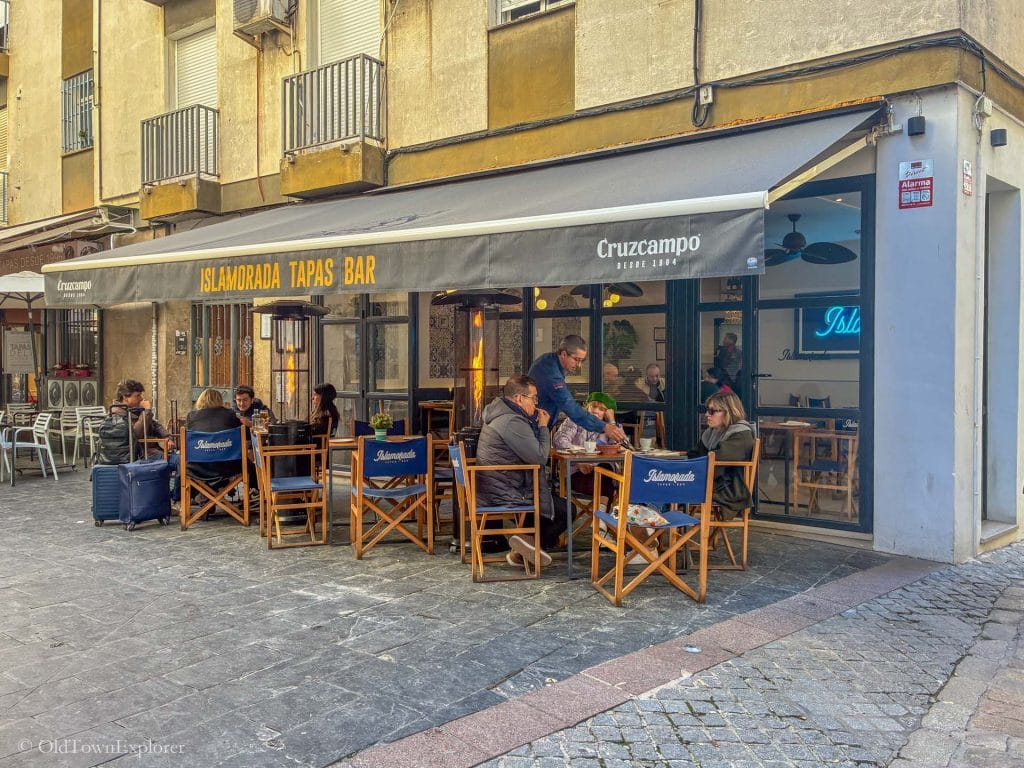
Islamorada - Tapas Restaurant Sevilla
Address: C. Francisco López Bordas, S/N
A high-traffic tapas bar setup with a broad crowd appeal, good for mixing familiar Andalusian tapas with a longer sit-down pace.
ALCÁZAR ANDALUSÍ TAPAS
Address: C. Peris Mencheta, 22
A straightforward tapas bar format focused on classic plates served in a compact menu, well suited to a quick stop and a few rounds.
Abaceria del Postigo
Address: C. Tomás de Ibarra, 4
An abacería-style tapas stop where small plates and shared portions pair naturally with cured meats, cheese, and pantry-focused bites.
Vuela Tapas & Cocktail
Address: C. Tomás de Ibarra, 20
A tapas-and-cocktail venue that leans toward modern plating and a menu designed for ordering multiple small dishes.
Casa Moreno
Address: C. Gamazo, 7
A deli-style storefront with a bar-counter rhythm, useful for simple tapas and quick pours without a long sit-down format.
Salsamento
Address: C. Jerónimo Hernández, 19
A modern, ingredient-led tapas bar where the menu emphasizes clean combinations and smaller plates that work well for sharing.
La Sede
Address: C. Regina, 1
A wine-forward tapas bar where small plates are designed to match by-the-glass pours, good if you want longer pauses between rounds.
Marabunda Sevilla Restaurante tapas Bar
Address: Jesús del Gran Poder, 31
A tapas bar-restaurant hybrid that mixes classic items with updated versions, suited to a longer meal in multiple rounds.
Maestro Marcelino
Address: C. Hernando Colón, 9
A traditional-leaning tapas stop in the historic center, good for familiar Seville staples served in a predictable bar format.
LaSanta, cocina tradicional
Address: C. Regina, 4
A traditional cooking focus with larger portions available, useful if you want tapas that can also function as a full meal.
Alfakeke Tapas & Breakfast
Address: C. San Vicente, 13
A daytime-friendly bar that covers breakfast hours and transitions into tapas later, practical for an early start before the lunch rush.
Petra
Address: C. Alfalfa, 5
A central tapas bar with a more contemporary menu style and a relaxed service pace that supports lingering over multiple plates.
Bar Moraleja
Address: C. Zaragoza, 15
A small tapas bar with a fusion-leaning approach, useful if you want Spanish-format tapas with nontraditional flavor combinations.
Espacio Eslava
Address: C. Eslava, 3
A well-known creative tapas address with a larger menu range than a typical standing-only bar, often treated as a set stop rather than a quick hop.
La Linterna Ciega
Address: C. Regina, 10
An evening-leaning tapas bar where the draw is the room’s energy and a menu built for ordering several plates over time.
El Pasaje Tapas
Address: Pje. de Vila, 8
A central tapas bar known for modern, tightly composed plates, a good pick when you want variety without switching venues.
Bodega Palo Santo
Address: Pl. de la Gavidia, 5
A bodega-style tapas bar format that fits well for classic orders, shared plates, and a steady bar-counter pace.
Bar Alfalfa
Address: C. Candilejo, 1
A long-hours tapas bar in the center that works for casual drop-ins, especially if you’re building a multi-stop route.
Bar Típico
Address: C. Pagés del Corro, 86
A Triana-side tapas bar with a dependable traditional menu approach, useful if you want to eat outside the tightest tourist streets.
Quilombo Tapas
Address: C. Peris Mencheta, 6
A modern tapas bar with wide menu coverage, good for groups who want to sample different styles in one place.
Bar Dos de Mayo
Address: Pl. de la Gavidia, 6
A high-volume local-style bar where the point is steady service and classic tapas in a busy, social room.
La Bartola
Address: C. San José, 24
A creative tapas bar that balances familiar Andalusian anchors with updated plates, suitable for a longer sit-down tapas sequence.
La Brunilda
Address: C. Galera, 5
A compact, menu-driven tapas bar where the kitchen’s output is the focus, better as a planned stop than an accidental drop-in.
El Rinconcillo
Address: C. Gerona, 40
One of Seville’s classic addresses for traditional tapas service in an old-school bar setting, good for anchoring a tapas night with familiar staples.
Duo Tapas Bar
Address: C. Calatrava, 10
A modern tapas bar in the Alameda area with well-structured small plates, useful if you want a contemporary menu without leaving the tapas format.
Triana
Bar Triana
Address: C. Castilla, 73
A Triana neighborhood tapas bar with a traditional bar-counter setup, well suited to ordering a few classic plates in rounds before moving on.
El Sella
Address: C. Pureza, 4
A restaurant-style tapas stop in Triana with a broad menu and a steady sit-down pace, useful when you want variety without doing a multi-bar crawl.
Restaurants in Seville
Seville has a deep bench of restaurants that range from seafood-focused dining rooms and tasting-menu counters to modern Andalusian cooking grounded in market ingredients. The MICHELIN Guide selections below are useful when you want a sit-down meal that goes beyond a quick tapas stop. For other restaurants, use the official MICHELIN Guide Seville restaurant listings.
Yo, Cocina Contemporánea
Address: Bailén 34, Seville, 41001, Spain
A tasting-menu format led by chef Stefano Deidda, presenting a creative, contemporary style with strong Andalusian notes and additional European influence. The Guide describes the experience as built around two tasting menus, with delicate sauces and refined technique.
Ivantxu Espacio Bistronómico
Address: Virgen de la Victoria 5, Seville, 41011, Spain
A contemporary dining room in Los Remedios that emphasizes top-grade ingredients and keeps techniques straightforward. The kitchen blends Andalusian and Basque influences, with a strong lean toward select meats, Galician seafood, and fish sourced from the Conil auction.
Chicarreros
Address: Chicarreros 7, Seville, 41004, Spain
An elegant bistro on a pedestrian lane behind City Hall, serving contemporary European cooking with frequent nods to Spanish produce. One of the signatures called out by the Guide is a matured beef steak tartare finished with marrow.
Tradevo Centro
Address: Cuesta del Rosario 15, Seville, 41004, Spain
A lively, modern restaurant built around market sourcing, with a front display of fresh fish and seafood often priced by weight. The menu sticks to traditional foundations with a contemporary finish, and many dishes are available as half portions.
Basque Eneko
Address: Plaza de la Magdalena 1, Seville, 41001, Spain
Chef Eneko Atxa’s Seville outpost delivers contemporary Basque cooking in the Radisson Collection Hotel (Magdalena Plaza). Expect shareable plates, grilled items, and two tasting menus with optional wine pairing.
Balbuena y Huertas
Address: San Jacinto 89, Seville, 41010, Spain
A Bib Gourmand choice in Triana, operating independently within the Cavalta Boutique Hotel building. The kitchen updates regional dishes using seasonal Andalusian ingredients, with half-plate options and a tasting menu (“Alegría”).
Jaylu
Address: López de Gomara 19, Seville, 41010, Spain
A family-run seafood specialist between Los Remedios and Triana, known for simple preparations that keep the focus on the day’s fish and shellfish. The Guide specifically highlights their salmorejo with shrimp as a strong starter.
La Barra de Cañabota
Address: Orfila 5, Seville, 41003, Spain
A tapas-bar format that mirrors the seafood-first philosophy of its sibling, Cañabota, with a counter setup where you can watch plates being finished. Dishes are intentionally simpler than next door, but built on the same high-quality fish and seafood supply.
Cañabota
Address: Orfila 3, Seville, 41003, Spain
A One Star restaurant that shows how far precise grilling and market buying can go with Atlantic-coast fish and seafood. Expect a fishmonger-style counter at the entrance, an open kitchen, and menus that shift daily based on what’s best at market.
DESACATO
Address: Amor de Dios 7, Seville, 41002, Spain
An informal, industrial-style room in the historic quarter with a “fusion-forward” approach that mixes Andalusian and Basque references. The Guide notes that fish and seafood specials may appear off-menu and change frequently.
Abantal
Address: Alcalde José de la Bandera 7, Seville, 41003, Spain
A One Star restaurant where chef Julio Fernández Quintero translates traditional Andalusian flavors into a modern tasting-menu structure, keeping seasonality and local sourcing central. The Guide describes two tasting menus (with optional wine pairing) in a museum-like dining space.
Leartá
Address: Padre Tarin 6, Seville, 41002, Spain
A tasting-menu-only restaurant near Plaza de la Gavidia, focused on Southern Spanish flavors and locally sourced products (including specific Iberian ham and coastal prawns). The style is contemporary but designed to keep traditional foundations visible through technique, textures, and broths.
Tribeca
Address: Chaves Nogales 3, Seville, 41018, Spain
A long-running Seville dining room near the Buhaira Gardens, built around seasonal produce and day-caught fish—much of it sourced from the Gulf of Cádiz. The Guide notes two reservation-only tasting menus alongside a more traditional à la carte with modern touches.
Az-Zait
Address: Plaza de San Lorenzo 1, Seville, 41002, Spain
A Bib Gourmand restaurant whose name references an Arabic term for “olive juice,” with a technically driven, continually evolving approach. The Guide also points out classic-style dining rooms and service elements like cheese and digestif trolleys.
Lalola de Javi Abascal
Address: Marco Sancho 1, Seville, 41003, Spain
A Bib Gourmand restaurant located within the One Shot Palacio Conde de Torrejón hotel, using a covered patio dining room and a separate entrance. The cooking is traditional at the core with a contemporary edge, including a tasting menu centered on Iberian pork.
El Disparate
Address: Plaza Alameda de Hércules 11, Seville, 41002, Spain
Located in the Corner House hotel opposite Alameda de Hércules, with contemporary dining rooms and a terrace. The seasonal menu is anchored in local and Andalusian ingredients, with occasional global influences (the Guide mentions several).
Sobretablas
Address: Colombia 7, Seville, 41013, Spain
A modern kitchen with regional roots, run by a young team whose background includes time at El Celler de Can Roca. The Guide highlights shareable options, a “Sobretablas Deluxe” tasting menu with optional pairing, and a name drawn from a specific stage in sherry production.
Street Food in Seville
Street food in Seville is less about food trucks and more about takeaway counters, churrerías, freidurías (fried-fish shops), and pastry shops. Many classic Seville snacks are designed to eat quickly—standing at the bar, walking between sights, or picking up a paper-wrapped portion to go.
Bar El Comercio
Address: C. Lineros, 9, 41004 Sevilla, Spain
A long-running central stop for churros con chocolate, served in a café-bar format that works well for a quick breakfast or mid-morning snack.
Confitería La Campana
Address: Calle Sierpes, 1–3, 41004 Sevilla, Spain
A historic pastry shop on one of the city’s main shopping streets, useful for torrijas (seasonal), cakes, and boxed sweets you can carry easily.
Inés Rosales Shop. Seville Centre
Address: Pl. de S. Francisco, 15, Seville
A dedicated shop for tortas de aceite—thin olive-oil pastries associated with the Seville area—packed for takeaway and easy to travel with.
Freiduría La Isla
Address: Calle García de Vinuesa, 13, 41001 Sevilla, Spain
A classic option for pescaíto frito in a fast, informal format, suited to grabbing a mixed fry and moving on rather than settling in for a full meal.
Historic Food Shops in Seville
Seville’s food culture isn’t limited to bars and restaurants. The city also has long-running pastry counters, brand shops for local specialties, and ultramarinos—traditional grocery stores where you can buy cured meats, tinned seafood, legumes, and wine for takeaway.
Confitería La Campana
Address: Calle Sierpes 1–3, Sevilla, Spain
A central pastry institution (founded in 1885) known for artisan cakes and sweets sold from a classic counter setup, with both takeaway boxes and sit-down service.
Inés Rosales Shop - Seville Centre
Address: Pl. de S. Francisco, 15, Seville, Spain
A dedicated shop for the brand’s tortas de aceite (olive-oil pastries), packaged for takeaway and easy to carry as a food souvenir.
Ultramarinos Alonso
Address: Calle San Luis 80, Seville, Spain
A traditional ultramarinos-style grocery focused on pantry staples such as legumes, preserves, and cured meats—useful if you want Seville ingredients that travel well.
Casa Moreno
Address: Calle Gamazo, 7, 41001 Seville, Spain
A grocery-and-bar format where shelves of packaged goods and hanging cured meats frame a small counter at the back—good for combining a quick bite with picking up pantry items.
La Antigua Abacería
Address: Calle Pureza, 12 – F6, 41010 Sevilla, Spain
An abacería that functions as both a gourmet shop and a tapas stop, with a product-led focus on Iberian ham, cheeses, conservas, and wines.
Abacería Negrete
Address: Calle Feria, s/n, Puesto 106, 110, 41003 Sevilla, Spain
A market-based abacería in the Mercado de Feria area where the format centers on cheeses and specialty products you can also buy to take away.
Food Markets in Seville
Seville’s food markets are practical places to see what Andalusian cooking runs on day to day: seasonal vegetables, Atlantic fish, pork cuts, olives, cheese, and spices. Some markets are still primarily plazas de abastos (produce-first), while others now include bar counters where you can stop for a quick plate and a drink.
For additional market details from the city tourism office, see the official Seville market information.
Mercado de Triana
Address: Plaza del Altozano, s/n (main access), Seville, Spain
A covered neighborhood market in Triana with fresh-produce stalls and specialist counters (fish, meat, fruit and vegetables), plus places to eat inside the market footprint.
Mercado de la Calle Feria (Mercado de Feria)
Address: Plaza Calderón de la Barca, s/n, Seville, Spain
A traditional market structure on Calle Feria where locals buy everyday ingredients; it’s a useful stop if you want a working market rather than a dining-only hall.
Mercado de la Encarnación
Address: Plaza de la Encarnación, s/n, Seville, Spain
A central market located within the Metropol Parasol complex, with stalls for fish, meat, fruit, and vegetables and easy access if you’re already in the city center.
Mercado del Arenal
Address: C/ Pastor y Landero, s/n, Seville, Spain
A covered market in the Arenal area that combines ingredient shopping with later opening hours on some days, making it workable for an early evening food stop.
Mercado Lonja del Barranco
Address: Calle Arjona, s/n, Seville, Spain
A food-hall format on the riverfront with multiple counters under one roof, built for grazing across different vendors rather than shopping for raw ingredients.
Food Tours in Seville
Food tours in Seville are a practical way to understand tapas ordering, portion sizes, and local timing—especially if you want context for dishes like salmorejo, pringá, fried fish, and jamón. Most tours combine several short stops (bars and small kitchens) with a walking route through the historic center or Triana, and some include a market visit.
Best Places to Stay In Seville
Hotels in Seville
For easy access to Seville’s tapas bars, markets, and restaurant districts, most visitors do best staying in or near the Casco Antiguo (historic center)—especially if you plan to walk between meals.
Use the interactive map below to compare accommodations by date, budget, and amenities.
FAQs About Seville Food
Is Seville a foodie destination?
Yes. Seville has a dense tapas-bar culture, multiple MICHELIN Guide selections, and everyday cooking built around Andalusian staples like olive oil, pork, legumes, and Atlantic seafood.
What is Seville famous for food-wise?
Typical Seville dishes to look for include salmorejo, espinacas con garbanzos, fried fish (pescaíto frito), and rabo de toro—all commonly found on tapas and restaurant menus.
What are tapas in Seville?
Tapas are small plates ordered in rounds—often shared—where the goal is to try several dishes across one bar or multiple stops.
What’s the difference between a tapa, media ración, and ración?
A tapa is a small portion, media ración is a half-portion, and a ración is a full plate meant for sharing or for making a meal from fewer dishes.
What time do locals eat in Seville?
Lunch commonly starts around 2:00 pm (often running into mid-afternoon), and dinner often starts late, with peak dinner times closer to 9:30–10:30 pm.
Are food tours worth it in Seville?
They can be, especially if you want help with tapas ordering, portion sizes, and timing—or if you want a structured route that mixes bars with context on local ingredients and dishes.
Is there vegetarian food in Seville?
Yes, but menus can be pork-forward. Common vegetarian-friendly orders include salmorejo (ask about jamón topping), espinacas con garbanzos, grilled vegetables, potatoes, and some cheese-based or egg-based tapas, depending on the bar.
Do I need reservations for restaurants in Seville?
For tasting-menu restaurants and small dining rooms, reservations are a good idea—especially on weekends. For most tapas bars, walk-ins are standard, but peak dinner hours can mean waiting.
What neighborhoods are best for eating in Seville?
For bar-hopping and central access, focus on the Casco Antiguo. For a strong local bar-and-market scene, Triana is a practical base.
What’s the easiest way to eat well on a first visit?
Start with 2–3 tapas at one bar, then move. If you find a dish you want more of, upgrade the portion to media ración or a ración rather than ordering many different tapas at once.
Seville food is easiest to understand through repetition: a few tapas ordered in rounds, a market visit to see what’s in season, and at least one sit-down meal that shows what Andalusian ingredients can do with more time and technique. From salmorejo and espinacas con garbanzos to fried fish, jamón, and slow-cooked pork dishes, the city’s everyday cooking is direct, ingredient-led, and tied to local routines. If you base yourself in the Casco Antiguo or Triana and pace meals around local hours, you can cover classic tapas bars, historic shops, and MICHELIN Guide restaurants in the same trip—without needing a complicated plan.