
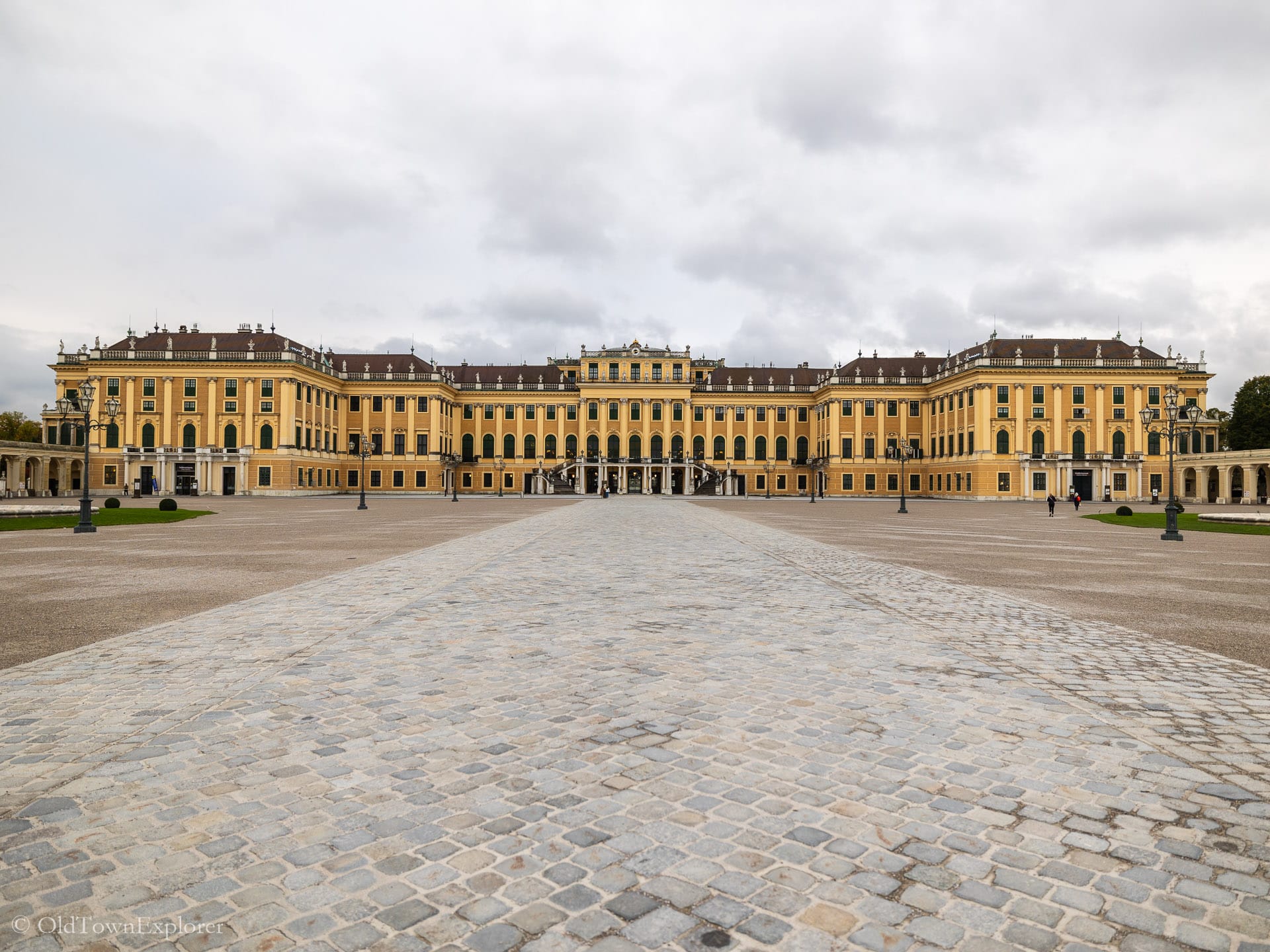
Discover Schönbrunn Palace: History, Architecture & Must-See Attractions
Schönbrunn Palace in Vienna is a Baroque architectural masterpiece that served as the Habsburgs’ summer residence for centuries. Located in the city’s Hietzing district, this UNESCO World Heritage Site combines ornate state rooms, formal gardens, and monumental fountains that reflect imperial grandeur and meticulous planning.
From its origins as a hunting lodge to its transformation into one of Europe’s most significant palaces, Schönbrunn tells the story of Austria’s imperial history through evolving architectural styles and expansive landscape design.
We visited Schönbrunn Palace during our month-long stay in Vienna, Austria. In this post, we explore the history, architectural highlights, and practical tips for visiting Schönbrunn Palace.
This website contains affiliate links that may earn us a small commission at no additional cost to you.
History of Schönbrunn Palace
The history of Schönbrunn Palace spans over 300 years, reflecting the rise and legacy of the Habsburg dynasty. From a royal hunting lodge to a symbol of imperial power, the palace evolved through centuries of political ambition, architectural transformation, and cultural significance.
The Origins (14th–17th Century)
The site of Schönbrunn was originally a hunting ground known as Katterburg, owned by the Habsburgs since 1569 when Emperor Maximilian II purchased the land. According to legend, Emperor Matthias discovered a spring here in 1612 and named it Schöner Brunnen (“beautiful spring”), giving rise to the estate’s current name.
Baroque Beginnings (Late 17th Century)
After the original structure was destroyed during the Second Ottoman Siege of Vienna in 1683, Emperor Leopold I commissioned architect Johann Bernhard Fischer von Erlach to design a new palace. Intended as a rival to Versailles, the ambitious plan was eventually scaled back due to budget limitations, and the first phase of the palace was completed by 1711.
The Maria Theresa Era (1740–1780)
Empress Maria Theresa received Schönbrunn as a wedding gift and led its transformation into a ceremonial summer residence. During her reign, the palace became the center of court life and diplomacy. Architect Nikolaus Pacassi redesigned the palace in the elegant Rococo style, adding key features such as the Great Gallery and the Chinese Cabinets. The palace became the political and cultural heart of the empire during her reign.
19th Century: Diplomacy and Decline
In the 19th century, Schönbrunn continued as a royal residence. Napoleon Bonaparte occupied the palace during his campaigns in Austria, and in 1814–1815, the Congress of Vienna was held nearby, reshaping post-Napoleonic Europe. Emperor Franz Joseph I, who was born at Schönbrunn in 1830, spent much of his life there. His long reign saw the palace preserved rather than remodeled, maintaining its Baroque and Rococo character.
The Republic and Preservation (20th Century–Present)
After the collapse of the Austro-Hungarian Empire in 1918, Schönbrunn became state property and was opened to the public. Despite damage during World War II, the palace was carefully restored. In 1996, it was inscribed as a UNESCO World Heritage Site, celebrated for its historical importance, architecture, and Baroque gardens. Today, Schönbrunn Palace is one of Austria’s most visited cultural attractions, drawing millions of visitors each year.
Architecture of Schönbrunn Palace
The architecture of Schönbrunn Palace reflects the opulence and ambition of the Habsburg monarchy. From its Baroque foundations to later Rococo refinements, the palace showcases evolving styles that mirror the tastes and power of its imperial residents.
Baroque Foundations (Late 17th – Early 18th Century)
The architectural history of Schönbrunn Palace begins after the Second Ottoman Siege of Vienna in 1683, which left the original hunting lodge in ruins. Shortly thereafter, Emperor Leopold I commissioned the renowned architect Johann Bernhard Fischer von Erlach to design a grand imperial residence on the site.
Fischer von Erlach’s design, influenced by Versailles, emphasized axial symmetry, hierarchical layout, and monumental facades characteristic of late 17th-century Baroque architecture. However, due to budget limitations, only a scaled-down version of the original concept was completed by 1711.
This initial structure laid the foundation for the palace’s future expansions and is characterized by a monumental façade, balanced proportions, and a formal layout that established Schönbrunn’s architectural identity.
Maria Theresa’s Rococo Transformation (1740s–1760s)
The most significant architectural transformation took place during the reign of Empress Maria Theresa, who received Schönbrunn as a wedding gift and turned it into the Habsburgs’ summer residence. Between the 1740s and 1760s, her court architect Nikolaus Pacassi redesigned both the exterior and interior of the palace, transitioning from the original Baroque to the lighter, more decorative Rococo style.
Pacassi added lavish ceremonial rooms such as the Great Gallery, with its gilded stucco and ceiling frescoes, and the Millions Room, known for its rare rosewood paneling and Indo-Persian miniature art.
The exteriors were also refreshed, including the introduction of the warm ochre color known as “Maria Theresa Yellow”, which has since become synonymous with Schönbrunn.
This period also saw the palace expand its role from a stately residence to the cultural and political heart of the empire.
Garden and Decorative Additions (Mid–Late 18th Century)
Alongside the palace renovations, the gardens and surrounding structures underwent extensive development to match the grandeur of the interior. Architect and garden designer Johann Ferdinand Hetzendorf von Hohenberg was responsible for many of these landscape enhancements. He introduced monumental features such as the Neptune Fountain, symbolizing imperial power and control over nature, and the Gloriette, a hilltop triumphal arch built in 1775 that offers panoramic views of the grounds and city. The Roman Ruin, constructed in 1778, was designed as a picturesque folly—a popular aesthetic trend intended to evoke the romantic grandeur of antiquity. The vast Orangery, one of the largest in Europe, also took shape in this period, housing exotic plants and serving as a multifunctional space for courtly entertainment. These additions transformed the palace grounds into an integrated theatrical landscape in true Baroque garden tradition.
Preservation in the 19th Century (Franz Joseph Era, 1848–1916)
The 19th century brought minimal architectural change but a strong emphasis on preservation. Emperor Franz Joseph I, who was born at Schönbrunn in 1830 and ruled until his death in 1916, made the palace his primary residence. He favored modesty and tradition, choosing to preserve rather than modernize the palace’s Rococo and Baroque character. The most notable architectural addition during his reign was the Palmenhaus, or Palm House, completed in 1882. Built from iron and glass, it reflected the technological advances of the Industrial Age and housed tropical and subtropical plants from across the empire. Other updates included subtle improvements to gardens, the Privy Garden, and the Maze, but the palace’s historic character remained largely untouched, maintaining its 18th-century aesthetic.
Modern Restoration and UNESCO Recognition (20th Century–Present)
After the fall of the Austro-Hungarian Empire in 1918, Schönbrunn Palace became the property of the Republic of Austria and was opened to the public. Though it suffered minor damage during World War II, careful post-war restorations ensured that the architectural integrity of both the palace and gardens remained intact.
Restoration work since the mid-20th century has prioritized preserving stucco decorations, ceiling frescoes, and the formal symmetry of the Baroque garden design. In 1996, Schönbrunn was designated a UNESCO World Heritage Site, recognized for its exemplary Baroque architecture and harmonious integration of palace and landscape.
Today, it stands as one of Europe’s most visited and best-preserved imperial residences, offering a rare architectural journey through centuries of dynastic ambition, aesthetic refinement, and cultural legacy.
Attractions in the Schönbrunn Palace
Schönbrunn Palace is one of Vienna’s most iconic architectural masterpieces, blending Baroque grandeur with landscaped gardens, ornate fountains, and historic pavilions. Once the summer residence of the Habsburgs, the vast palace complex offers a glimpse into imperial life through its opulent rooms, elegant theaters, and beautifully designed parklands.
Schönbrunn Palace
Schloss Schönbrunn
Architect: Johann Bernhard Fischer von Erlach; later modifications by Nicolaus Pacassi
Architectural Style: Baroque
Year Built: Initial construction began in 1696; major expansion from 1743 under Empress Maria Theresa
Address: Schönbrunner Schloßstraße 47, 1130 Vienna, Austria
Originally commissioned as a hunting lodge, Schönbrunn Palace evolved into a grand imperial summer residence. With 1,441 rooms, it served as the primary residence of the Habsburg rulers and is renowned for its opulent interiors and expansive gardens.
Gloriette
Architect: Johann Ferdinand Hetzendorf von Hohenberg
Architectural Style: Early Classicism
Year Built: 1775
Address: Located atop the hill in Schönbrunn Palace Gardens, 1130 Vienna, Austria
The Gloriette is a colonnaded structure serving as a focal point in the palace gardens. Originally designed as a “temple of renown,” it offers panoramic views of Vienna and symbolizes the Habsburgs’ imperial power.
Imperial Carriage Museum Vienna
Kaiserliche Wagenburg Wien
Architect: Specific architect not documented; housed within former winter riding school
Architectural Style: Baroque
Year Built: Museum established in 1922; the building dates back to the 18th century
Address: Schönbrunner Schloßstraße 47, 1130 Vienna, Austria
This museum showcases a collection of historical carriages, sleighs, and ceremonial vehicles used by the imperial family, offering insights into the opulence of Habsburg court life.
Palm House
Palmenhaus
Architect: Franz Xaver Segenschmid
Architectural Style: Historicist (Art Nouveau influences)
Year Built: 1881–1882
Address: Schönbrunner Schloßstraße 47, 1130 Vienna, Austria
Commissioned by Emperor Franz Joseph I, the Palm House is a large greenhouse featuring over 4,500 plant species. Its iron and glass structure exemplifies 19th-century greenhouse architecture.
Roman Ruin
Römische Ruine
Architect: Johann Ferdinand Hetzendorf von Hohenberg
Architectural Style: Romanticism (Artificial Ruin)
Year Built: 1778
Address: Schönbrunner Schloßstraße 47, 1130 Vienna, Austria
Originally named the “Ruin of Carthage,” this picturesque folly was designed to resemble the remnants of an ancient Roman temple. It reflects the 18th-century fascination with classical antiquity and the Romantic era’s appreciation for the aesthetic of ruins.
Obelisk Fountain
Obeliskbrunnen
Architect: Johann Ferdinand Hetzendorf von Hohenberg
Architectural Style: Baroque with Egyptian Revival elements
Year Built: 1777
Address: Schönbrunner Schloßstraße 47, 1130 Vienna, Austria
This fountain features a towering obelisk adorned with hieroglyph-like symbols (purely decorative) and is flanked by cascading water features. It symbolizes the Habsburgs’ imperial power and their connection to ancient civilizations.
Schönbrunn Palace Theatre
Schlosstheater Schönbrunn
Architect: Nicolò Pacassi
Architectural Style: Baroque
Year Built: 1747
Address: Schönbrunner Schloßstraße 47, 1130 Vienna, Austria
Commissioned by Empress Maria Theresa, this court theatre is one of the oldest surviving theatres in Europe. It hosted performances attended by the imperial family and remains a venue for cultural events today.
Orangery
Orangerie Schönbrunn
Architect: Jean Nicolas Jadot de Ville-Issey
Architectural Style: Baroque
Year Built: Circa 1754
Address: Schönbrunner Schloßstraße 47, 1130 Vienna, Austria
One of the largest Baroque orangeries in Europe, it was used to cultivate citrus trees and exotic plants during the winter months. Today, it serves as a venue for concerts and events.
Great Parterre and Neptune Fountain
Große Parterre und Neptunbrunnen
Architect: Jean Trehet (Parterre); Johann Ferdinand Hetzendorf von Hohenberg (Fountain)
Architectural Style: Baroque
Year Built: Parterre designed in 1695; Fountain completed in 1780
Address: Schönbrunner Schloßstraße 47, 1130 Vienna, Austria
The Great Parterre is a formal garden featuring symmetrical flowerbeds and statues, leading to the Neptune Fountain, which depicts the sea god Neptune surrounded by tritons and nymphs, symbolizing imperial power over the seas.
Landtmann’s Jausen Station
Former Garden Pavilion
Architect: Not specifically documented
Architectural Style: 19th-century Garden Pavilion
Year Built: 19th century
Address: Schönbrunner Schloßstraße 47, 1130 Vienna, Austria
Originally a garden pavilion used by the imperial family, it was converted into a café in 1927 and is now known as Landtmann’s Jausen Station, offering refreshments within the palace grounds.
Columbary
Taubenhaus
Architect: Not specifically documented
Architectural Style: Baroque
Year Built: 18th century
Address: Schönbrunner Schloßstraße 47, 1130 Vienna, Austria
A structure designed to house pigeons, reflecting the Baroque era’s interest in ornamental and functional garden buildings.
Sundial House
Sonnenuhrhaus
Architect: Not specifically documented
Architectural Style: 19th-century Greenhouse
Year Built: 19th century
Address: Schönbrunner Schloßstraße 47, 1130 Vienna, Austria
A greenhouse named after the sundial on its façade, used for cultivating tropical plants and contributing to the botanical diversity of the palace gardens.
Schönbrunn Palace Park
Architect: Initial designs by Jean Trehet; later modifications by Johann Ferdinand Hetzendorf von Hohenberg
Architectural Style: Baroque
Year Built: Developed primarily in the 18th century
Address: Schönbrunner Schloßstraße 47, 1130 Vienna, Austria
The palace park encompasses formal gardens, fountains, sculptures, and architectural features like the Gloriette and Neptune Fountain, exemplifying Baroque landscape design and serving as a symbol of imperial grandeur.
Schönbrunn Maze
Irrgarten Schönbrunn
Architect: Specific architect not documented
Architectural Style: Baroque garden design
Year Built: Circa 1720
Address: Within Schönbrunn Palace Gardens, 1130 Vienna, Austria
Originally laid out with four quadrants and a central pavilion, the maze was designed for leisurely strolls and amusement, reflecting the Baroque era’s emphasis on structured garden layouts.
Schönbrunn Zoo
Tiergarten Schönbrunn
Architect: Jean Nicolas Jadot de Ville-Issey
Architectural Style: Baroque
Year Built: Established in 1752
Address: Maxingstraße 13b, 1130 Vienna, Austria
Recognized as the world’s oldest continuously operating zoo, it was initially designed as a menagerie with a unique radial layout centered around a pavilion, reflecting Enlightenment ideals of order and classification.
How to Get to Schönbrunn Palace
By Public Transport
Metro: U4 line to Schönbrunn station
Tram: Lines 10, 52, 60 to Schloss Schönbrunn
Bus: Line 10A to Schloss Schönbrunn
By Car
Address: Schönbrunner Schlossstraße 47, 1130 Vienna, Austria
Accessible via the A1, A2, or A4 motorways. Follow signs to “Schloss Schönbrunn.” Parking is available nearby.
What to Expect Upon Arrival at Schönbrunn Palace
Before stepping into imperial history, it’s helpful to know what awaits you at Schönbrunn Palace—from ticketing and entry times to navigating the grounds. Here’s what you need to plan a smooth and enjoyable visit.
Opening Times
Schönbrunn Palace is open daily, including public holidays. Operating hours vary by season:
April 1 – June 30: 8:30 AM – 5:30 PM
July 1 – August 31: 8:30 AM – 6:00 PM
September 1 – November 2: 8:30 AM – 5:30 PM
November 3 – March 26, 2026: 8:30 AM – 5:00 PM
Children’s Museum: Daily, 10:00 AM – 5:00 PM (last admission at 4:00 PM)
Palace Park: Opens at 6:30 AM; closing times vary seasonally:
May – July: Closes at 9:00 PM
August – September: Closes at 8:00 PM
October: Closes at 7:00 PM
November – February: Closes at 5:30 PM
Note: Last admission to all attractions is 45 minutes before closing time.
Ticket Office & Entry
Main Ticket Center: Located in the Gardetrakt near the main entrance on Schönbrunner Schlossstraße. The ticket office is wheelchair-accessible, featuring stepless entry and accessible restrooms.
Online Tickets: To avoid queues, it’s recommended to purchase tickets in advance via the official online shop: imperialtickets.com. Online tickets allow you to print your own admission ticket and choose convenient payment options.
Time-Slot Entry: Admission is based on timed entry slots. During peak seasons, especially summer and holidays, it’s advisable to arrive early or book in advance to secure your preferred time.
Entry Fees
Classic Pass (includes Palace, Privy Garden, Orangery Garden, Maze, Gloriette): €38.00 (Adults), €30.00 (Children aged 6–18)
Maze & Labyrinth: €5.50
Gloriette Viewing Terrace: €5.50
Privy Garden: €5.50
Palm House: €9.00
Desert House: €9.00
Note: The Palace Park is free to enter, but specific attractions within the gardens require separate tickets.
Tours
Imperial Tour (approx. 40 minutes): €27.00 (Adults), €19.00 (Children aged 6–18)
Grand Tour (approx. 60 minutes): €32.00 (Adults), €23.00 (Children aged 6–18)
All tours include an audio guide available in multiple languages.
Tips for Visiting Schönbrunn Palace
If you’re planning a visit to Schönbrunn Palace, here are some helpful tips to ensure you make the most of your experience:
Book Tickets in Advance
Schönbrunn is one of Vienna’s most visited attractions, especially in spring and summer. Book your tickets online ahead of time to reserve a timed-entry slot and skip the long lines at the ticket office. Opt for the Grand Tour if you want the full palace experience, or the Classic Pass for both interior and garden highlights.
Arrive Early or Late in the Day
To enjoy a quieter visit and better photo opportunities, plan your arrival early in the morning (doors open at 8:30 AM) or later in the afternoon. Midday tends to be busiest with both group tours and independent visitors.
Wear Comfortable Shoes
The palace and gardens cover an extensive area—expect to walk several kilometers if you plan to visit the Gloriette, Maze, Palm House, and other features. Flat, comfortable walking shoes are essential.
Use the Audio Guide
The included audio guide is informative, easy to follow, and available in many languages. It adds valuable context to the ornate rooms and helps bring the palace’s imperial history to life. Written descriptions are also available if preferred.
Don’t Skip the Gardens
While the palace interiors are impressive, the Baroque gardens are equally worth exploring—and they’re free to enter. Be sure to walk the Great Parterre, visit the Neptune Fountain, and climb to the Gloriette for panoramic views of Vienna.
Take Advantage of Combo Passes
If you plan to visit other imperial sites (like the Hofburg or Imperial Furniture Collection), consider the Sisi Ticket or Vienna Pass, which offer discounts and skip-the-line access to multiple attractions.
Visit Lesser-Known Attractions
Beyond the main palace tour, consider visiting the Children’s Museum, Orangery, Desert House, or Palm House. These spots are less crowded and offer unique perspectives on court life, science, and imperial innovation.
Mind the Time Limits
Timed-entry tickets are valid for a specific window—don’t be late! Once inside, however, you can tour the palace rooms at your own pace. Each visit typically lasts 40 to 60 minutes depending on the tour type.
Bring Water and Snacks
There are cafés on-site, but if you plan a long garden visit or are traveling with children, it’s wise to bring a water bottle and a light snack—especially in warmer months.
Check the Event Calendar
Schönbrunn regularly hosts classical concerts, seasonal markets, and garden events. Check the official website before your visit—you may be able to catch a special performance or festive market.
FAQs About Schönbrunn Palace
Why is the Schönbrunn Palace so famous?
Schönbrunn Palace is famous for being one of the most impressive Baroque palaces in Europe and the former summer residence of the Habsburg emperors. Its rich history, stunning architecture, lavish Rococo interiors, and beautifully landscaped gardens attract millions of visitors each year. The palace is also a UNESCO World Heritage Site, recognized for its cultural significance and well-preserved imperial heritage.
Is it worth going inside Schönbrunn Palace?
Absolutely. Visiting the interior of Schönbrunn Palace offers a fascinating glimpse into the luxurious lifestyle of Austria’s royal family. With beautifully decorated rooms, exquisite frescoes, and historic furnishings, touring the palace allows you to experience the grandeur of the Habsburg dynasty firsthand. Don’t miss highlights like the Great Gallery, the Millions Room, and the private apartments of Emperor Franz Joseph and Empress Elisabeth.
Did Marie Antoinette live at Schönbrunn Palace?
Yes, Marie Antoinette was born and spent part of her childhood at Schönbrunn Palace. As the daughter of Empress Maria Theresa, she lived in the palace before marrying Louis XVI and becoming Queen of France. Schönbrunn remains a significant site linked to her early life and the Habsburg dynasty.
Did Mozart play at Schönbrunn Palace?
Yes, Wolfgang Amadeus Mozart performed at Schönbrunn Palace as a child prodigy. In 1762, when Mozart was just six years old, he gave a concert for Empress Maria Theresa at the palace. This early performance marked one of his many visits to the imperial court and contributed to his lifelong association with Vienna.
How long does a visit to Schönbrunn Palace take?
A typical visit to Schönbrunn Palace’s interior lasts between 40 to 60 minutes, depending on the tour you choose. To fully explore the gardens, Gloriette, Maze, and additional attractions, plan to spend 2 to 4 hours at the site for a relaxed experience.
Can you visit Schönbrunn Palace for free?
While entry to the Palace Park and gardens is free year-round, visiting the palace interiors, Maze, Gloriette viewing platform, and other attractions requires a paid ticket. Booking tickets online in advance is recommended to avoid queues and guarantee admission.
Is Schönbrunn Palace wheelchair accessible?
Yes, Schönbrunn Palace offers wheelchair accessibility for most areas, including step-free entry, accessible restrooms, and wheelchair rental. Some historic rooms have limited access due to architectural constraints, but staff are available to assist visitors with special needs.
What is the best time of year to visit Schönbrunn Palace?
The spring and early autumn months (April to June and September to October) offer the best balance of pleasant weather and fewer crowds. Summer is popular but often crowded, while winter visits provide a magical atmosphere, especially during the Christmas markets.
Are guided tours available at Schönbrunn Palace?
Yes, Schönbrunn Palace offers guided tours in multiple languages. Audio guides are included with most tickets, but for a more immersive experience, you can join live guided tours or book private tours in advance.
Is photography allowed inside Schönbrunn Palace?
Non-flash photography is generally permitted inside the palace’s public rooms, but tripods, selfie sticks, and flash photography are prohibited to protect the delicate interiors. Always follow staff instructions regarding photography.
How do I get from Vienna city center to Schönbrunn Palace?
Schönbrunn Palace is easily accessible via public transport. Take the U4 metro line to the Schönbrunn station, or trams 10, 52, or 60 stop nearby. It takes about 20 minutes from the city center, making it an easy day trip.
