
Vlora Architecture
Explore Vlora Architecture: Religious Buildings & More
Vlora is one of Albania’s oldest cities, originally founded as Aulona in the 6th century BC. Though the Old Town is small, it features restored facades, a few historic landmarks, and one of the most important mosques in the country.
We spent a month in Vlora researching its historic architecture—from Ottoman mosques to modern monuments—and this guide includes everything you need to begin exploring as soon as you arrive.
This page contains affiliate links. We may earn a small commission at no extra cost to you.
Attractions in Vlora Old Town

Justin Godar Museum Street
Rruga Justin Godar Architect:
- Various Style: Traditional Ottoman / Balkan
- Built: 19th–early 20th century
- Address: Rruga Justin Godar, Vlorë, Albania
This small street near the Muradie Mosque features a number of preserved façades that reflect Ottoman-era urban architecture. Several buildings have been renovated as part of the Old Town restoration project.
Patriotic Club Labëria
aka Ethnographic Museum
- Architect: Unknown
- Style: Mid‑19th century city‑mansion, Ottoman influence
- Built: circa 1850
- Address: FFCR+VMW, Rruga Justin Godar, Vlorë, Albania
Patriotic Club Labëria was founded in 1908 in this mid‑19th‑century building and led by Ismail Qemali as honorary chairman. In 1982, it was converted into Vlora’s Ethnographic Museum, now housing around 300 traditional artifacts—including local costumes, metalwork, woodwork, and agricultural tools.
Religious Buildings in Vlora
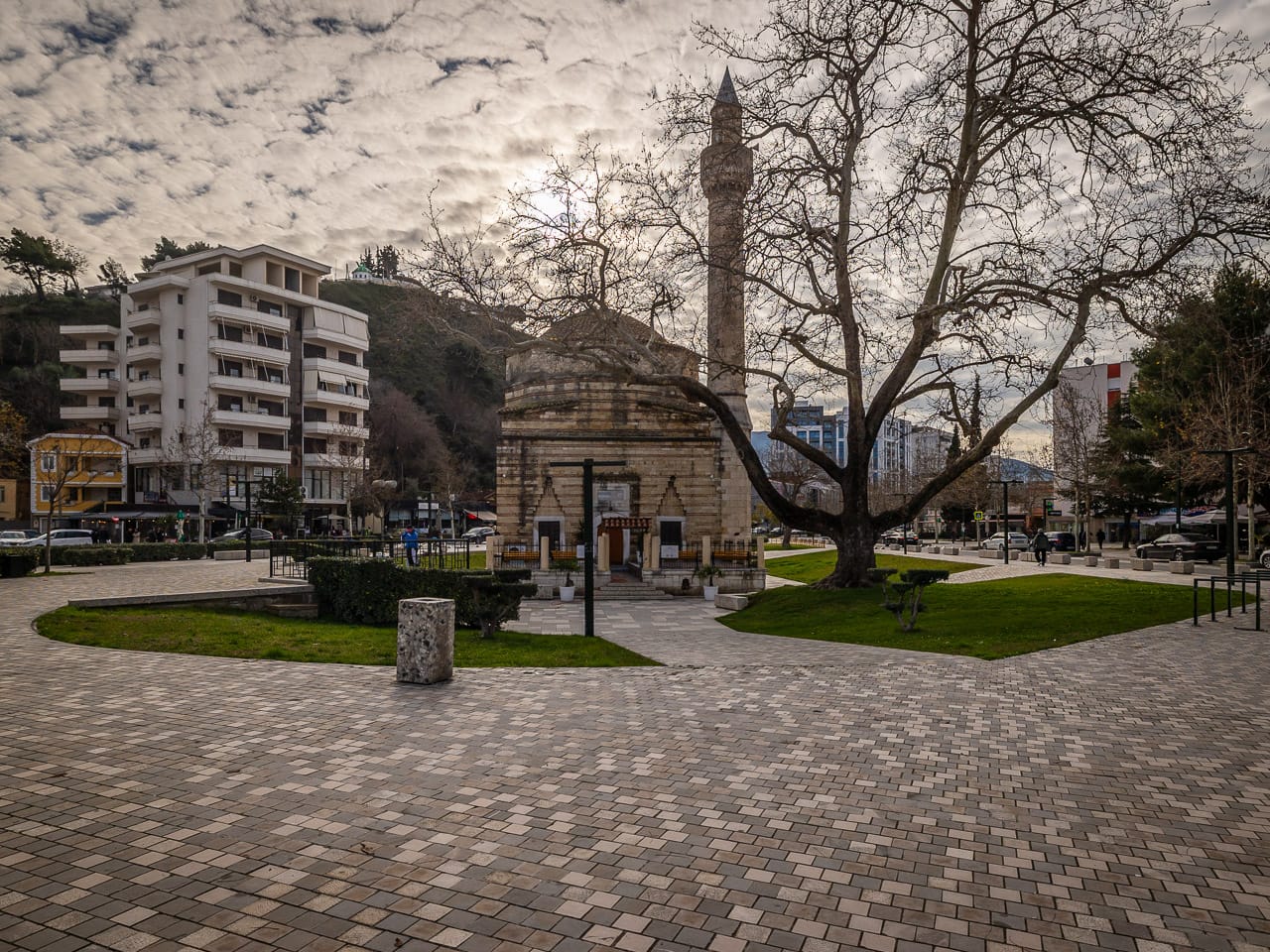
Muradie Mosque
- Architect: Mimar Sinan
- Style: Ottoman
- Built: 1th and 13th century; 1557 (retrofit of the minaret)
- Address: FF9R+J9M, Rruga Justin Godar, Vlora, Albania
The Muradie Mosque is a 16th-century structure considered one of the oldest buildings still standing in Vlore.
For a detailed account of the Muradie Mosque’s architecture, heritage status and visitor information, see the Albania Tourism article “Muradie Mosque: Ottoman Heritage in the Heart of Vlore.”
Xhamia e Neshat Pashait
aka Xhamia e Kuqe
- Architect: Unknown
- Style: Ottoman Revival
- Built: Late 19th century
- Address: FFCV+J4P, Vlorë, Albania
Known as the Red Mosque (Xhamia e Kuqe) due to its distinctive exterior color, this structure blends Ottoman influences with regional features. It remains an active place of worship and an example of late-Ottoman religious architecture in Vlora.
Church of St. Aloysius Gonzaga and St. Mary
- Architect: Unknown
- Style: Italian Neoclassical
- Built: Early 20th century
- Address: Lagjja “28 Nëntori”, 13 Rruga “Kristoforidhi” 9400, Vlorë, Albania
This Roman Catholic church, serving the city’s Italian and Albanian Catholic communities, features a modest neoclassical façade and peaceful interior.
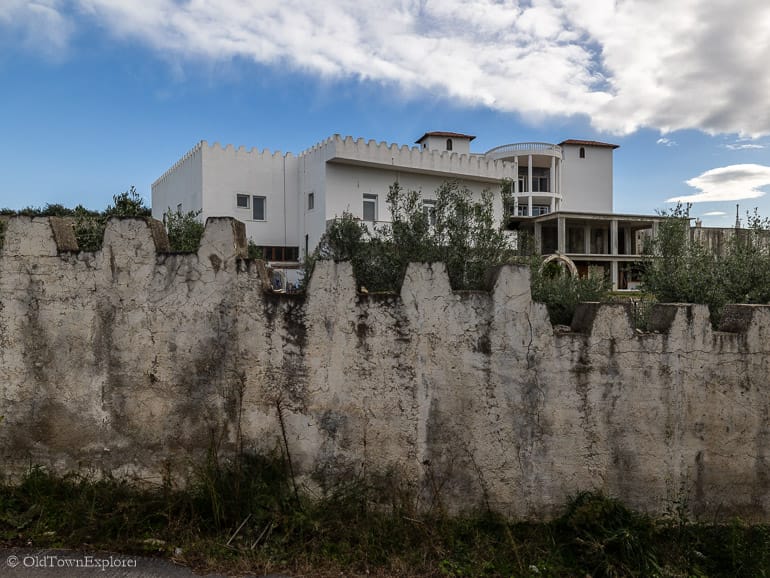
Tempulli Bektashian
- Architect: Unknown
- Style: Bektashi Religious
- Built: Late 19th century (est.)
- Address: FF8V+VVV, Vlorë, Albania
This Bektashi tekke (temple) is a spiritual site for Albania’s Bektashi community, representing the Sufi-influenced religious architecture of southern Albania.
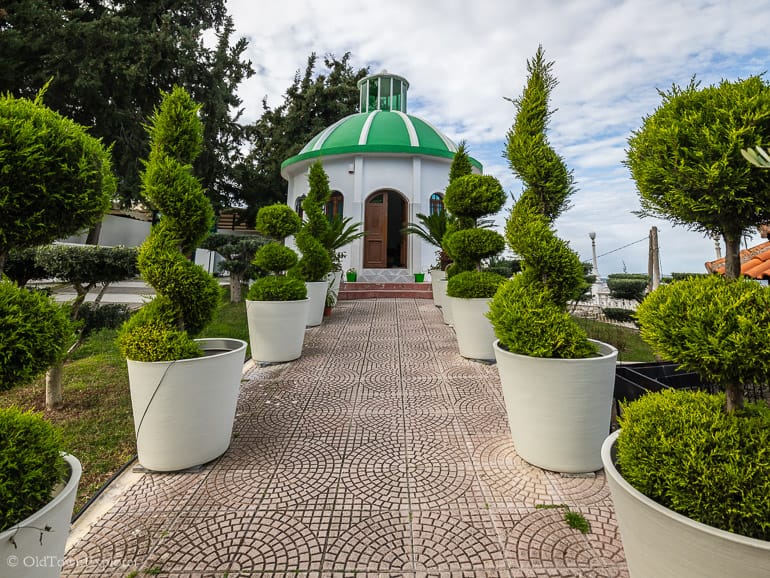
Kuzum Baba
- Architect: Unknown
- Style: Bektashi Hilltop Shrine
- Built: Late 17th–early 18th century
- Address: FF9V+574, Vlorë, Albania
Kuzum Baba sits atop a hill overlooking Vlora and serves as the city’s highest point. It includes a Bektashi shrine and offers panoramic views of the bay. The site is named after a revered Bektashi leader.
Other Attractions in Vlora

Vlora Waterfront Promenade (Lungomare)
- Architect: Atelier 4 (masterplan)
- Style: Contemporary Urban Design
- Built: 2016–2019
- Address: FF2Q+6H8, Vlorë, Albania
A major urban renewal project, the Lungomare revitalized Vlora’s seafront with pedestrian paths, plazas, parks, and an amphitheater. It stretches nearly 4 kilometers from the Old Town to the southern beaches.
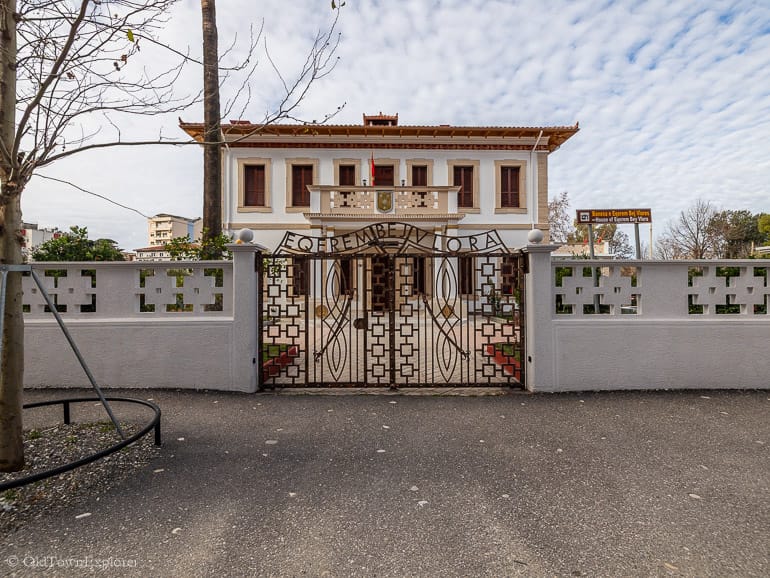
House of Eqerem Bey
- Architect: Unknown
- Style: Ottoman Residential
- Built: Late 19th century
- Address: FF9R+X93, Bulevardi Ismail Qemali, Vlorë, Albania
This two-story house was the residence of Eqerem Bey Vlora, a member of one of Albania’s most prominent landowning families and a key political figure during the country's independence movement. The structure reflects traditional Ottoman residential design with its stone base, wooden upper floor, and interior courtyard. Though not open to the public, it remains a culturally important landmark due to its association with Vlora’s political and literary history.
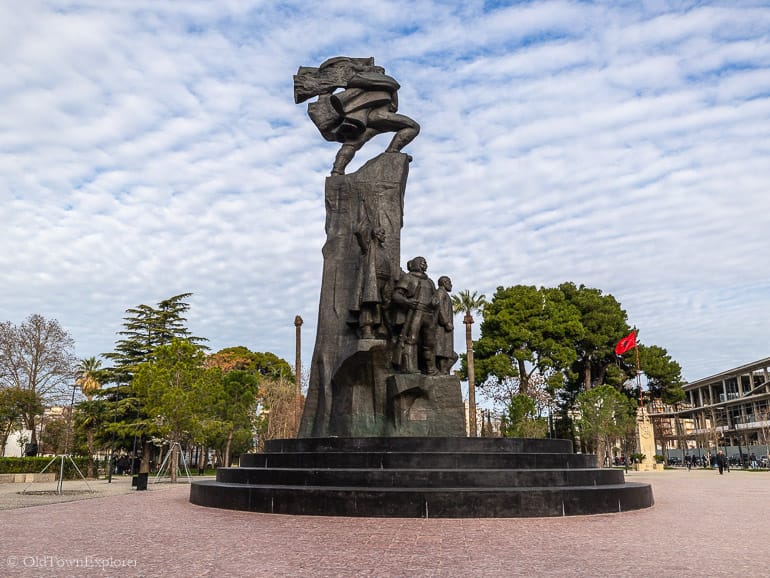
Independence Monument
- Artists: Muntaz Dhrami, Shaban Hadëri
- Built: 1972 (opened)
- Address: Sheshi i Flamurit, Vlora 9401, Albania
The Monument of Independence is dedicated to the Albanian Declaration of Independence. It was created by Albanian sculptors Muntaz Dhrami and Kristaq Rama (the father of Albania’s current prime minister, Edi Rama). The monument is situated in Flag's Plaza, near the building where the first Albanian government operated in 1913.
Ruins of the old city of Aulona (Vlora)
- Architect: Ancient Illyrian and Byzantine builders
- Style: Fortified Roman-Byzantine
- Built: 5th–6th centuries
- Address: FFCR+45W, Vlorë, Albania
These modest ruins are part of Vlora’s original settlement, visible behind Flag Square. The walls date to the Byzantine period and are among the oldest remnants of the city’s long history.
Kanina Castle
- Architect: Ancient Illyrian and Byzantine builders
- Style: Fortified Hilltop Castle
- Built: 3rd century BC; rebuilt by Justinian I (6th century AD)
- Address: CGV9+PXR, Kaninë, Albania
Located just outside Vlora in the village of Kaninë, this castle overlooks the bay and has been fortified and rebuilt across centuries. It served as a key defensive point during Roman, Byzantine, and Ottoman periods.
Things to Know About Vlora Architecture
Historical Evolution of Vlora's Architecture
Over the centuries, Vlora’s architecture absorbed influences from Illyrian, Greek, Roman, Byzantine, Ottoman, and Italian sources. Today, most historic structures are Ottoman or early 20th-century Albanian, while newer development along the coast reflects a mix of modern and Mediterranean resort styles.
Best Places to Stay In Vlora
Hotels in Vlora
There are many great places to stay in Vlora. For the best experience, we recommend staying on the Promenade near Boulevard Ismail Qemali (the castle marker on the map below). The Promenade and the area along Boulevard Ismail Qemali are the most pedestrian-friendly with numerous restaurants and shops.
Here’s a map with hotel and apartment options that can be filtered to meet your needs. Select your travel dates to get specific availability and prices.
FAQs About Vlora Architecture
Is Vlore worth visiting?
If you’re in Albania, Vlorë is worth visiting for the beaches and the long waterfront promenade.
What is the religion in Vlore?
In 2023, 38% of the population identified as Muslim, while 22% identified as believers without a specific denomination. Christianity makes up 19% of the total population, including Orthodox, Evangelical, and Roman Catholic believers.
When was Vlore founded?
Vlorë was established as an ancient Greek colony, called Aulon, in the 6th century BC and has been continuously inhabited since then.
How big is Vlore?
According to the Institute of Statistics of Albania, the population of Vlorë was 146,681 in the 2023 census.