

Explore St. Mary’s Monastery: Byzantine Architecture on Albania’s Zvërnec Island
St. Mary’s Monastery is a Byzantine-era religious site located on Zvërnec Island, within the Narta Lagoon near Vlora, Albania. Believed to have been built between the 11th and 14th centuries, the monastery reflects Albania’s Orthodox Christian heritage through its preserved frescoes, stone walls, and traditional cross-in-square design.
Accessible via a 270-meter wooden footbridge, the monastery offers visitors a blend of architectural history and serene natural surroundings, making it a unique destination on Albania’s southern coast.
We visited St. Mary’s Monastery during our stay in Vlora, Albania. In this post, we explore the history, architectural features, and scenic landscape that define St. Mary’s Monastery.
This website contains affiliate links that may earn us a small commission at no additional cost to you.
History of St. Mary's Monastery
The monastery has undergone various phases of construction and renovation over the centuries, reflecting the evolving architectural styles and religious practices of the time.
Construction Period
The date of the monastery's construction is debated among scholars. Some sources indicate it may have been built in the 13th or 14th century, whereas others suggest an earlier origin, potentially in the 11th century.
Period of Decline
Throughout its history, the monastery has faced periods of neglect, particularly during the communist era in Albania when religious institutions were suppressed. In 1967, the monastery was abandoned, and its library was destroyed by fire. The site was even repurposed as a detention center for political prisoners.
Restoration
Recognizing the monastery's deteriorating condition, restoration efforts began in 1972, focusing on preserving the structural integrity of the church. Additional conservation work was conducted in 2001 to restore and maintain the site's architectural and artistic elements.
Architecture of St. Mary's Monastery
St. Mary's Monastery is a significant example of Byzantine ecclesiastical architecture in the region.

The Monastery Complex
The monastery complex includes:
- A smaller chapel
- Monks’ dormitories
- A workshop and warehouse
- A stable
- A tiny cemetery, which is the final resting place of Marigo Posio, the woman who embroidered the first Albanian flag raised during the country's declaration of independence in 1912
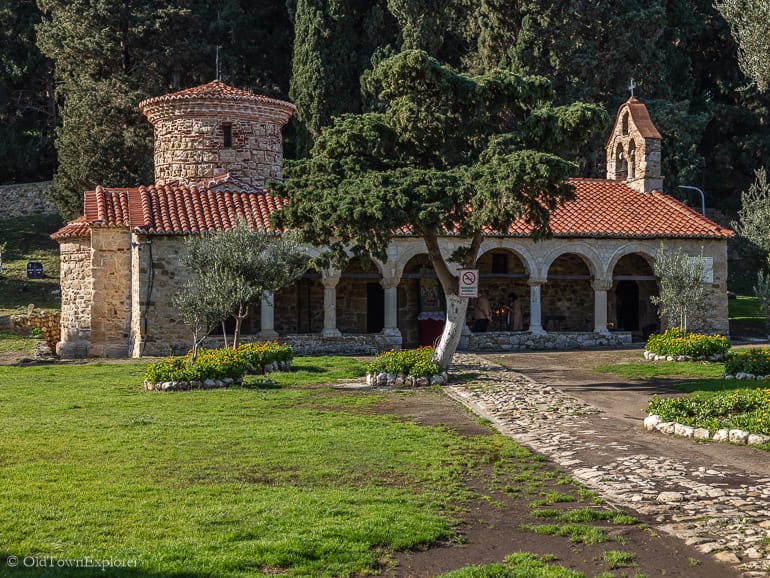
The Chapel
The chapel exemplifies Byzantine architecture, characterized by its free-cross plan with a central dome.
The facade of the portico is adorned with arches supported by six columns, though these have suffered erosion due to the humid and salty air of the Narta Lagoon.
Inside, the monastery houses intricate frescoes and wooden iconostasis, showcasing the artistic heritage of the region.

Icon of St. Mary
One of the monastery's treasured artifacts is an icon of St. Mary created by Tërpo Zografi, a renowned Albanian artist of the 18th century.
How to Get to St. Mary's Monastery
St. Mary's Monastery is situated on Zvërnec Island within the Narta Lagoon, approximately 13 kilometers northwest of Vlorë. The monastery is accessible via a 270-meter wooden footbridge connecting the island to the mainland.
By Car
From Vlorë city center, head northwest on SH8 towards the village of Zvërnec. Follow signs directing you to the monastery. The journey typically takes around 20–30 minutes, depending on traffic conditions.
By Taxi
Taxis are readily available in Vlorë. A one-way trip to the monastery costs approximately 1,500 to 2,500 Albanian Lek ($15-20 USD) and takes about 20 minutes.
By Public Transportation
While public transportation options are limited, you can take a bus from Vlorë towards Saranda and request the driver to drop you off at the Zvërnec stop. The bus ride takes approximately 30–40 minutes and costs around 100 Albanian Lek ($1 USD). From the stop, it's about a 20-minute walk (1.5 km) to the monastery.
Note: Bus schedules may vary, and it's advisable to check the latest timings locally.
By Bicycle
For the more adventurous, cycling from Vlorë to Zvërnec is feasible. The route offers scenic views of the Albanian countryside and the Narta Lagoon. Ensure you're prepared for varying road conditions and carry sufficient water, especially during warmer months.
On Foot
Walking to the monastery is possible and offers a unique experience through the natural landscapes surrounding Vlorë. The hike is approximately 10 kilometers one-way and takes about 2–3 hours, depending on your pace.
Where Is the Best Place to Stay Near St. Mary's Monastery?
Hotels in Vlora
If you are planning a trip to visit St. Mary's Monsastery, we strongly recommend staying in Vlora. For the best experience, we recommend staying on the Promenade near Boulevard Ismail Qemali (the castle marker on the map below). The Promenade and the area along Boulevard Ismail Qemali are the most pedestrian-friendly with numerous restaurants and shops.
Here’s a map with hotel and apartment options that can be filtered to meet your needs. Select your travel dates to get specific availability and prices.
Book your stay now!
Tips for Visiting St. Mary's Monastery
If you're planning a visit to St. Mary's Monastery, here are some helpful tips to ensure you make the most of your experience:
Plan Your Visit During Daylight Hours
The monastery is located on an island connected by a long wooden footbridge. There is no artificial lighting on the path or island, so visiting during daylight is essential for safety and visibility.
Wear Comfortable Walking Shoes
The bridge to Zvërnec Island is about 270 meters long and may be uneven in places. Comfortable shoes are recommended for walking and exploring the monastery grounds.
Bring Water and Snacks
There are no shops or cafés on the island. Bring water, especially in the warmer months, and pack light snacks if you plan to stay for a while.
Dress Modestly
As an active religious site, respectful attire is appreciated. Covering shoulders and knees is recommended, particularly if you plan to enter the monastery or attend religious services.
Best Time to Visit
Spring (April–June) and early autumn (September–October) are ideal times to visit, offering pleasant weather and fewer crowds.
If you’re interested in religious or cultural events, consider visiting on August 15th for the Feast of the Dormition of the Theotokos, which is a significant pilgrimage day.
Consider Hiring a Taxi or Rental Car
Public transportation to Zvërnec is limited. A taxi or rental car from Vlorë (about 20–30 minutes away) is the most convenient option.
FAQs About St. Mary's Monastery
Is Zvërnec worth visiting?
Absolutely. Zvërnec Island and its historic St. Mary’s Monastery are among the most picturesque and culturally rich destinations in southern Albania. The tranquil setting, surrounded by the Narta Lagoon and shaded by tall pine trees, offers a peaceful retreat just a short drive from Vlorë. It’s ideal for travelers interested in Byzantine architecture, Orthodox heritage, and nature exploration. The scenic wooden footbridge leading to the island adds a unique charm to the experience, making it a rewarding half-day trip for both history enthusiasts and casual visitors.
How much does it cost to go to Zvërnec Monastery?
There is no entrance fee to visit St. Mary’s Monastery on Zvërnec Island. The site is open to the public and free of charge. However, visitors should be prepared to cover transportation costs—whether by taxi, car rental, or local transport. It’s also advisable to bring your own water and snacks, as there are limited services near the island.
What is the history of Vlorë, Albania?
Vlorë (also spelled Vlora) is one of Albania’s oldest and most historically significant cities. It was founded in the 6th century BCE as the ancient Greek colony of Aulon. Over the centuries, Vlorë has been part of the Roman, Byzantine, and Ottoman Empires, serving as a key port and trade center on the Adriatic and Ionian seas.
Vlorë holds a special place in modern Albanian history as the site where Albania declared its independence from the Ottoman Empire on November 28, 1912. The Independence Monument and Independence Museum, located in the city center, commemorate this pivotal moment. Today, Vlorë is known for its growing tourism industry, coastal beauty, and role as a gateway to both cultural and natural attractions in southern Albania.
