
Basque Country Wine
Explore the Basque Country Wine Region: Grape Varieties & Wine Varietals
The Basque Country, or País Vasco, in northern Spain is best known for its fresh and lively white wines, particularly Txakoli. Produced along the Atlantic coast and in inland valleys, these wines reflect the region’s cool, maritime climate and long winemaking traditions.
The Basque Country is home to three main Denominaciones de Origen (DOs): Getariako Txakolina, Bizkaiko Txakolina, and Arabako Txakolina, each offering variations on this signature style. The area also borders Rioja Alavesa, part of the Rioja DOCa, where some of Spain’s most famous red wines are made. For travelers, the Basque Country offers a chance to pair crisp wines with local seafood and explore one of Europe’s most distinctive food-and-wine cultures.
We spent a month in San Sebastián tasting Basque wines across pintxo bars, wine bars, and local shops, with time focused on Txakoli and other styles you’ll commonly see on lists in the city and along the coast. This guide pulls those notes into a practical overview of Basque Country wine—covering the main wine areas, typical grape varieties, and the styles you’re most likely to encounter when drinking locally or traveling through the region.
For the broader country context, see Spain Wine before comparing Basque txakoli with Rioja, Cava, and sherry regions.
Wine Regions in the Basque Country
The Basque Country is home to three official wine appellations (Denominaciones de Origen, or DOs) dedicated to Txakoli, along with part of the Rioja Alavesa sub-zone of Rioja DOCa. Each reflects the influence of the Atlantic Ocean and the region’s diverse landscapes.
The official Basque Wine Txakoli overview is a useful reference for comparing Getariako, Bizkaiko, and Arabako Txakolina.
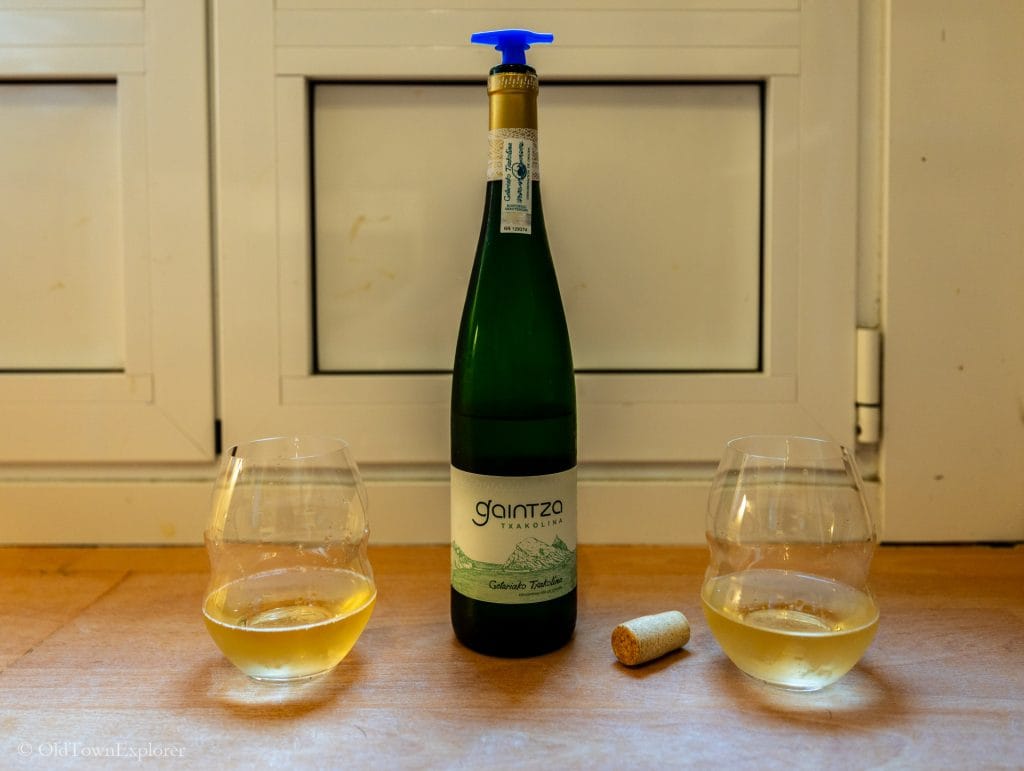
Getariako Txakolina DO
Located along the coast near San Sebastián, this is the best-known Txakoli region. Vineyards grow on steep, seaside slopes, producing light, fresh wines often poured from a height to enhance their spritz and aromatics.
For regulated producer and grape information, use the official Getariako Txakolina information.
Bizkaiko Txakolina DO
Based around Bilbao and the surrounding valleys in Biscay. Wines here are slightly fuller than those from Getaria, with more variation in style due to the diversity of vineyard sites.
Arabako Txakolina DO
The smallest of the three Txakoli appellations, located inland in Álava province. Its higher-altitude vineyards produce wines with crisp acidity and minerality, reflecting a cooler continental influence.
Rioja Alavesa (part of Rioja DOCa)
Although not a Txakoli-producing area, Rioja Alavesa is an important Basque wine region. Known for Tempranillo-based reds, it forms part of the prestigious Rioja DOCa and produces some of Spain’s most recognized wines.
For more detail on Rioja sub-regions, grapes, and aging terms, see Rioja Wine. For official Rioja zone and classification details, see the DOCa Rioja information.
Grape Varieties in the Basque Country
The Basque Country is defined by its local white varieties used for Txakoli, but also plays a role in Spain’s broader red wine culture through Rioja Alavesa.
White Grapes
Hondarrabi Zuri
The signature grape of Txakoli, widely planted across all three Txakolina DOs. Produces crisp, high-acid wines with citrus, green apple, and herbal notes.
Hondarrabi Zuri Zerratia
A local variety related to Petit Courbu. Adds aromatic intensity and body to blends, often used alongside Hondarrabi Zuri.
Izkiriota Txikia (Petit Manseng)
Grown in smaller amounts. Contributes richness and tropical fruit notes, helping round out Txakoli blends.
Black Grapes
Hondarrabi Beltza
A native Basque red grape, historically used in rosé-style Txakoli. Today it is making a comeback, producing light, fresh reds and rosés with red berry and peppery notes.
Tempranillo
The dominant grape in Rioja Alavesa. Produces structured, age-worthy reds, often blended with Garnacha, Graciano, and Mazuelo.
Garnacha, Graciano & Mazuelo
Supporting grapes in Rioja Alavesa blends, adding fruitiness, spice, and acidity.
Wine Styles in the Basque Country
The Basque Country’s wines are strongly influenced by its cool Atlantic climate and deep-rooted traditions. While Txakoli defines the region’s identity, Rioja Alavesa adds world-renowned reds to the Basque wine map.
White Wines
Txakoli (Getariako, Bizkaiko, Arabako)
Crisp, high-acid whites made primarily from Hondarrabi Zuri. Often lightly sparkling, with citrus, green apple, and saline notes that pair perfectly with seafood. Styles vary slightly: coastal Getariako wines are the lightest, Bizkaiko wines fuller, and Arabako wines the most mineral-driven.
Rosé Wines
Txakoli Rosado
Made from Hondarrabi Beltza or blends of red and white grapes. Bright and refreshing, with red berry flavors and lively acidity.
Red Wines
Txakoli Tinto
A rare style made from Hondarrabi Beltza. Light-bodied and fresh, with peppery red fruit flavors, often enjoyed young.
Rioja Alavesa
Tempranillo-based reds ranging from youthful, fruit-forward wines to complex, oak-aged Reservas and Gran Reservas. Known for elegance and balanced acidity, Rioja Alavesa wines are among Spain’s most prestigious reds.
FAQs About Basque Country Wine
What is the local wine to San Sebastián?
The local wine to San Sebastián is Txakoli (Txakolina), a crisp, lightly sparkling white wine traditionally poured from a height into small glasses. It is the signature drink of Getariako Txakolina DO, located just west of the city along the coast.
What is the Basque Country known for?
The Basque Country is known for its Txakoli wines, distinctive cuisine (including pintxos and Michelin-starred dining), and cultural traditions. In wine terms, it is recognized for its three Txakolina DOs (Getariako, Bizkaiko, Arabako) and for being home to Rioja Alavesa, one of Spain’s top red wine areas.
What is the red wine from the Basque region?
The Basque Country produces small amounts of red wine from Hondarrabi Beltza, usually as light reds or rosés under the Txakolina DOs. However, the most famous red wines associated with the Basque Country come from Rioja Alavesa, where Tempranillo dominates in elegant, age-worthy blends.
Can you visit wineries in the Basque Country?
Yes. Visitors can explore Txakoli-producing wineries along the coast near Getaria and inland in Bizkaia and Álava. Rioja Alavesa is also highly visitor-friendly, with numerous bodegas offering tours and tastings, often paired with stunning vineyard views.
What food pairs best with Txakoli?
Txakoli is traditionally paired with seafood and pintxos. Its crisp acidity makes it perfect with anchovies, oysters, grilled fish, and salted cod (bacalao). Rosé styles match well with cured meats, while reds from Rioja Alavesa pair beautifully with lamb and local stews.
For pintxo bars, seafood dishes, and local food shops in the city, see San Sebastian Food.
When is the best time to visit the vineyards in the Basque Country?
The best times are spring (April–June) and autumn (September–October), when the weather is mild and vineyards are active. Harvest season in September offers lively experiences, though wineries may be busier. Summer is popular for coastal visits, while winter provides a quieter, more intimate atmosphere.
Basque Country wine reflects the region’s broader food culture: place-driven, seasonal, and tightly connected to everyday eating and drinking. From coastal Txakoli enjoyed young alongside seafood to fuller inland bottlings that show up on restaurant lists farther from the shore, the wines here tend to prioritize freshness, acidity, and suitability at the table rather than prestige styles. Whether you’re ordering by the glass in San Sebastián, shopping at a neighborhood wine store, or visiting small producers in the countryside, wine in the Basque Country is best understood as part of the local rhythm—meant to be opened, shared, and revisited often as you move through the region.