
Discover Wineries in Beaune: Wine Tastings, Tours & Tips
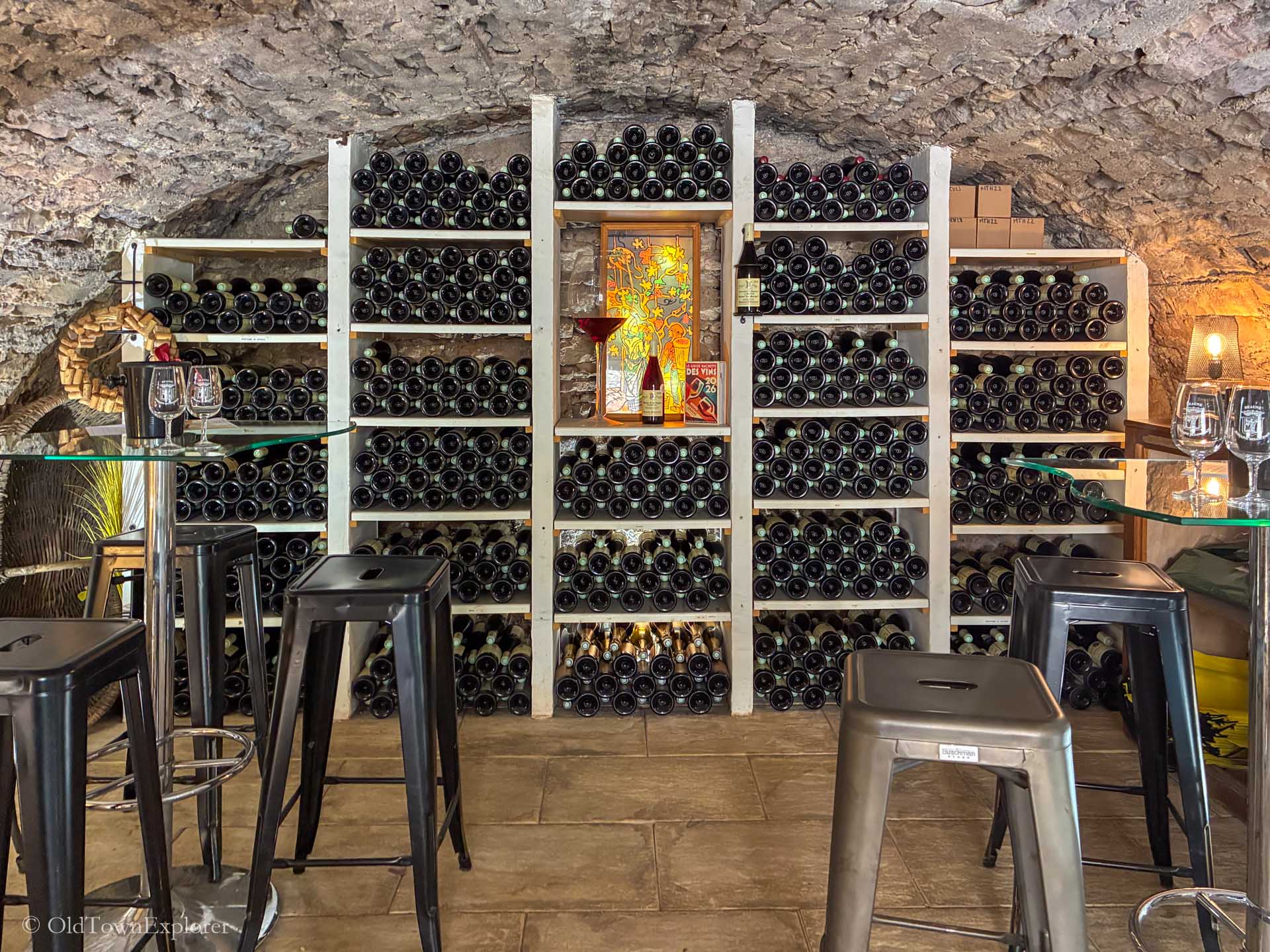
Beaune is one of the easiest places in Burgundy to build a winery day around tastings, cellar visits, and historic wine houses. Instead of forcing a village-hopping itinerary, you can shape a full wine day around appointments in town and keep the schedule manageable.
The practical advantage in Beaune is variety. Some stops are guided cellar visits in historic buildings, some are smaller producer tastings, and some are broader-format wine houses with larger tasting ranges. That makes Beaune workable for both a short tasting half-day and a slower full-day plan.
We spent two weeks in Beaune. The city is both a wine destination and a practical base for visiting villages across Burgundy, but you can plan a complete tasting day without leaving town. Two scheduled visits with lunch between them leave time for cellar tours, walking, and small delays between appointments.
For wine bars and shops inside the city, start with our Beaune Wine page.
This website contains affiliate links that may earn us a small commission at no additional cost to you.
Beaune Wineries at a Glance
Beaune supports a complete wine day on foot, with historic wine houses, producer tasting rooms, and several longer cellar experiences in or near the center. A car becomes useful only when the plan extends to outer Beaune or nearby wine villages.
Key winery-planning points:
- Half-day plan: Reserve one longer cellar visit and add one shorter tasting only if the available times leave a comfortable gap.
- Full-day plan: Schedule one morning visit, stop for lunch, and reserve one producer tasting for the afternoon.
- Realistic tasting count: Two formal visits allow enough time for walking, lunch, and the different lengths of Beaune’s tasting formats.
- No-car option: The train station, historic center, and many tasting addresses are close enough for a walking itinerary.
- Reservation note: Book the main visits before fixing the rest of the day; appointment requirements and seasonal availability differ among producers.
- Main trade-off: Central wine houses offer structured cellar experiences, while producer tastings provide a more focused look at one estate’s wines.
Choose the longer appointment first. Its available time slot will determine whether lunch and a second tasting fit comfortably into the same day.
Top Wineries You Can Visit in Beaune
Beaune offers three distinct types of wine visit: historic cellar routes, tastings with individual producers, and larger tasting sites with broader selections. The most useful comparison is the format and time required, not the number of wines available.
For an overview of appellations, grapes, and wine areas before choosing appointments, see our Burgundy Wine page.
Guided Cellar Visits and Historic Wine Houses
Maison Champy
- Address: 12 Place de la Halle, 21200 Beaune, France
- Visit format: Boutique tastings, guided cellar tours, private visits, and food-and-wine experiences
- Booking: Reserve the selected experience online in advance
Maison Champy offers formats ranging from a shorter boutique tasting to a 1.5-hour guided visit through its 15th-century cellars. The cellar tour includes five or six wines and can serve as the longer appointment in a half-day or full-day itinerary; the boutique tasting is easier to combine with another reservation.
Maison Jaffelin
- Address: Caves du Chapitre de Notre-Dame, 2 Rue Paradis, 21200 Beaune, France
- Visit format: Cellar visit and tasting in the 12th-century Chapitre cellars
- Booking: Book ahead; winter visits and Saturday visits are by appointment
Maison Jaffelin combines a central Beaune location with cellars used for vinification and ageing. Its seasonal visitor schedule is narrower than those of the larger walk-in sites, so confirm an appointment before placing it between lunch and another tasting.
Maison Patriarche
- Address: 5–7 Rue du Collège, 21200 Beaune, France
- Visit format: Self-guided cellar route followed by a guided tasting
- Booking: Advance booking is recommended; a request must be confirmed
Maison Patriarche provides a self-guided route through its extensive vaulted cellars, followed by a guided tasting of six Burgundy wines. Allow about an hour and treat it as a substantial visit rather than adding it between two other reservations.
Marché aux Vins
- Address: 5 Rue Nicolas Rolin, 21200 Beaune, France
- Visit format: Self-guided or guided cellar tour with Burgundy wine tasting
- Booking: Book guided and private formats online; advance booking is prudent for preferred times
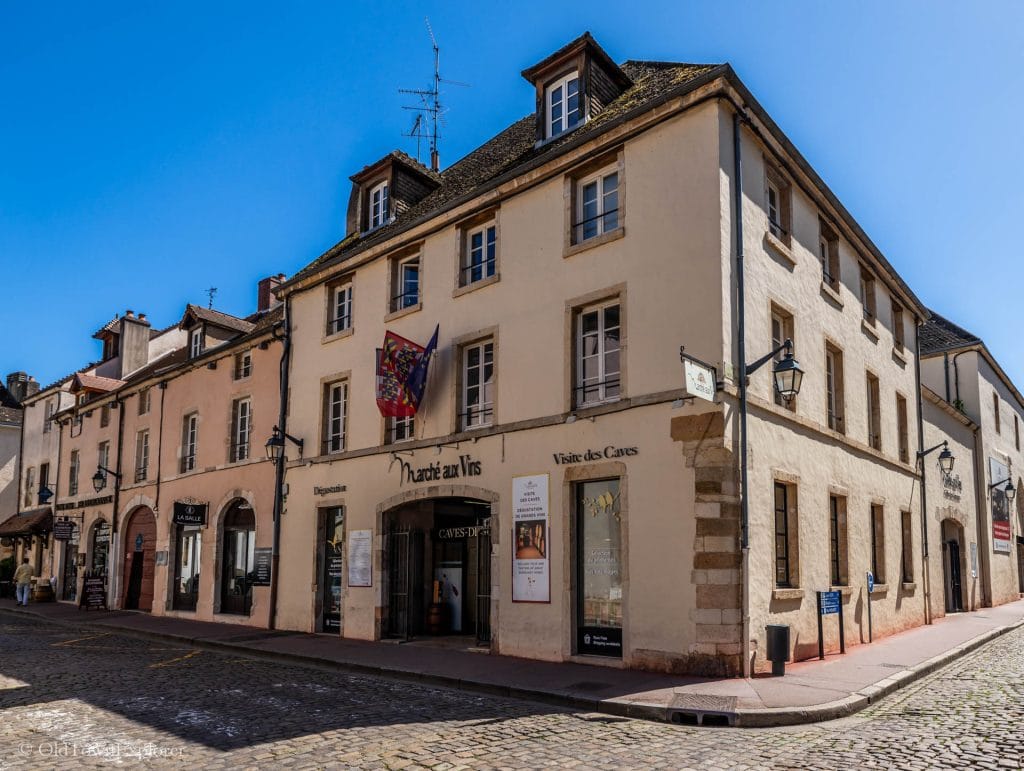
Marché aux Vins occupies the former Cordeliers church opposite the Hospices de Beaune. The available formats combine the church and cellar setting with tastings of three to seven wines, making this a practical choice when you want a central visit with more structure than a tasting-room stop.
Maison Bouchard Aîné & Fils
- Address: Hôtel du Conseiller du Roy, 4 Boulevard Maréchal Foch, 21200 Beaune, France
- Visit format: Guided cellar visit organized around the five senses, followed by a tasting
- Booking: Reserve online in advance
Maison Bouchard Aîné & Fils uses its 18th-century cellars for an interactive visit based on sight, smell, taste, touch, and sound. The standard tour concludes with five wines and merits a dedicated appointment rather than a narrow opening between other tastings.
Producer Tastings in Beaune
Domaine Chanson
- Address: 12 Rue Paul Chanson, 21200 Beaune, France
- Visit format: Guided tastings and longer Bastion visits with tastings
- Booking: Reserve visits and tastings through the online calendar or contact the estate
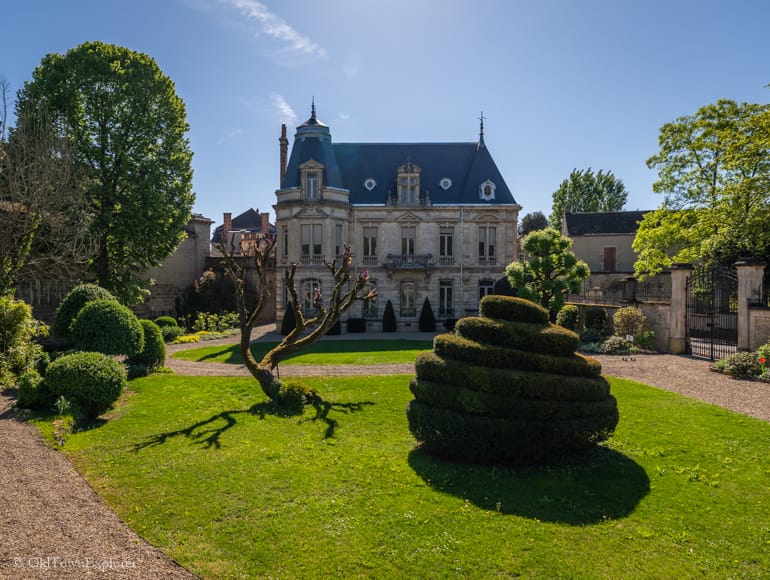
Domaine Chanson offers a 45-minute discovery tasting, a one-hour prestige tasting, and longer visits to the Bastion followed by six wines. The shorter tasting fits after lunch or after a longer morning visit; select a Bastion tour when Chanson will be the day’s principal appointment.
Domaine Albert Morot
- Address: 20 Avenue Charles Jaffelin, 21200 Beaune, France
- Visit format: Private cellar and wine-museum visit with a guided five-wine tasting
- Booking: Contact the estate to reserve
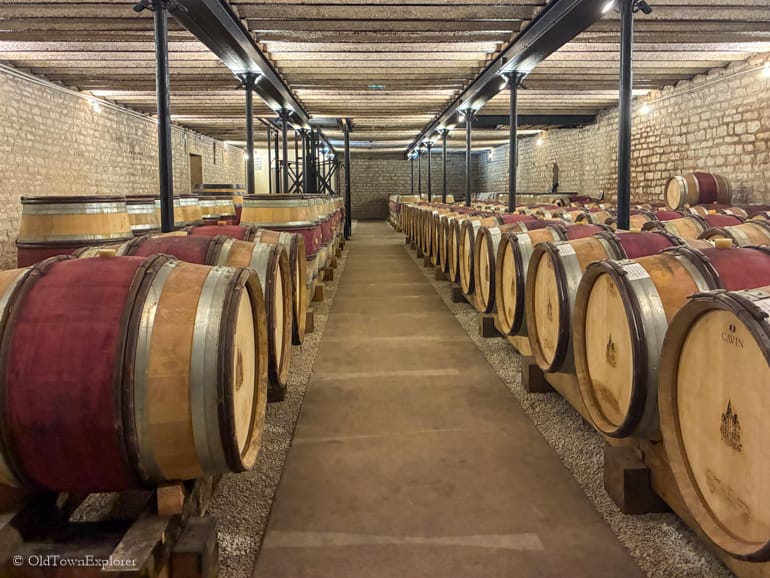
Domaine Albert Morot provides a 1.5-hour private visit covering its two-level Eiffel-style cellars, winemaking and ageing methods, a small vine-and-wine museum, and five wines. Its length makes it the main appointment of the morning or afternoon, with no need to add another substantial visit in the same half-day.
Domaine Loubet-Dewailly
- Address: 11 Impasse Notre-Dame, 21200 Beaune, France
- Visit format: Guided tasting in the estate’s central Beaune tasting cellar
- Booking: Online booking is available
Domaine Loubet-Dewailly offers producer-led tastings in the historic center, including a bookable 45-minute format featuring four Côte de Beaune wines. The compact format and central address make it easy to place before lunch or as the second appointment after a longer cellar tour.
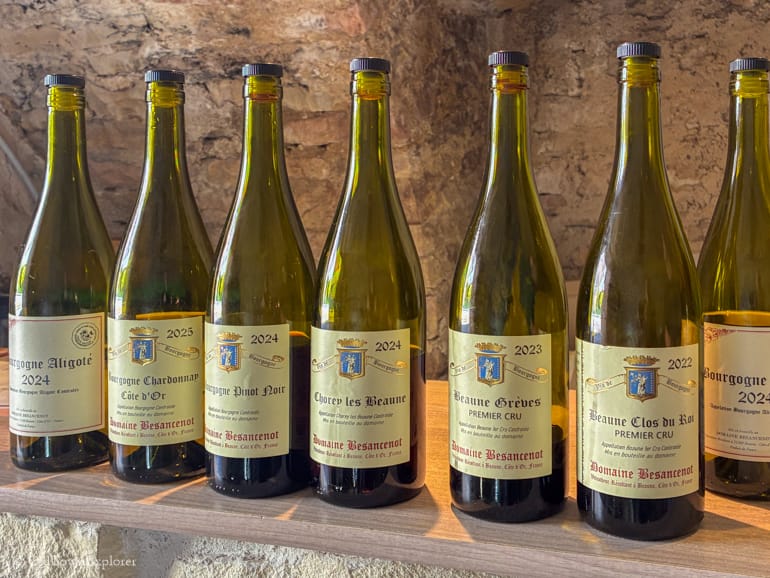
Domaine Besancenot
- Address: 78 Rue du Faubourg Saint-Nicolas, 21200 Beaune, France
- Visit format: Winery and cellar visit with guided tasting options
- Booking: Arrange an appointment in advance; purchasing a tasting ticket alone does not confirm a reservation
Domaine Besancenot offers several formats, including a 45-minute visit and tasting of five wines and a longer family-oriented tasting. This provides a direct producer visit north of the historic center and pairs naturally with a central wine-house appointment separated by lunch.c
Domaine Baptiste Guyot
- Address: 48 Rue du Faubourg Saint-Martin, 21200 Beaune, France
- Visit format: Estate and cellar visit followed by a tasting of four wines
- Booking: Reservation required for the scheduled one-hour visit
Domaine Baptiste Guyot sits on the western side of Beaune where the town meets the vineyards. The visit covers the estate and cellars before two white and two red wines, so it provides both a producer visit and a tasting without requiring travel to another village.
Vins Coudurier-Jung
- Address: 19 Rue du Faubourg Bretonnière, 21200 Beaune, France
- Visit format: Tasting at an urban micro-winery where wines are vinified on site
- Booking: Contact the winery in advance to arrange a tasting
Vins Coudurier-Jung differs from Beaune’s historic wine houses because visitors taste at a small urban winery where the wines are made. Its location southwest of the center allows it to follow lunch or a morning cellar visit without turning the day into a village-to-village route.
Broader-Format Tasting Stops
Cave des Hautes-Côtes Nuiton-Beaunoy
- Address: 97 Route de Pommard, 21200 Beaune, France
- Visit format: Tasting cellar with wines from several Côte-d’Or appellation levels
- Booking: Contact the cellar for a structured or private tasting; group tastings require reservations
Cave des Hautes-Côtes Nuiton-Beaunoy presents wines from regional, village, Premier Cru, and Grand Cru appellations, along with Crémant de Bourgogne. It lies outside the tight historic-center loop and has parking, making it more convenient for a car-based plan or a tasting day already extending toward Pommard.
Veuve Ambal
- Address: Le Pré Neuf, 21200 Montagny-lès-Beaune, France
- Visit format: Audio-guided or guided production-site tour followed by a Crémant de Bourgogne tasting
- Booking: Reservations are recommended and required for groups of ten or more
Veuve Ambal focuses on Crémant de Bourgogne and explains the traditional production method through the winery and ageing cellars. The tour and tasting take about 1.5 hours, and the location south of Beaune requires separate transport from the central walking circuit.
Wine Tours & Experiences
Beaune gives you several ways to build a wine day, and the right format depends less on prestige than on pacing. Some visits are structured cellar tours in historic houses, some are direct producer tastings, and some are broader wine experiences that can carry most of the day on their own.
The practical question is how much structure you want. A guided cellar visit suits a day centered on one longer appointment with interpretation included, while a producer tasting is easier to place before or after lunch. Choose according to the time required, the location, and whether you want a cellar tour or a tasting without a longer visit.
Guided cellar tours
Maison Champy is the clearest example of a guided cellar visit that can anchor a day by itself. Marché aux Vins, Maison Jaffelin, Maison Patriarche, and Maison Bouchard Aîné & Fils also fit readers who want structure, interpretation, and a setting tied closely to Beaune’s historic wine trade.
Self-booked producer tastings
Domaine Chanson, Domaine Loubet-Dewailly, Domaine Besancenot, Domaine Albert Morot, Domaine Baptiste Guyot, and Vins Coudurier-Jung offer direct producer tastings in Beaune. Including one of these appointments creates a different experience from a day limited to the city’s larger historic wine houses.
Museum and wine interpretation stop
Cité des Climats et vins de Bourgogne is not a winery, but it can still play a useful role in a Beaune wine itinerary. Use it on a lighter afternoon or pair it with only one formal tasting if you want part of the day to focus on wine culture and interpretation rather than back-to-back pours.
Check Cité des Climats et vins de Bourgogne visitor information before building it into your tasting schedule.
Self-Guided Wine Tasting Tour in Beaune
A self-guided wine day in Beaune is less about covering as many stops as possible and more about building the right sequence. The town gives you enough cellar visits, tasting rooms, and producer appointments to shape a real itinerary on foot, but the day works best when you treat one visit as the anchor and keep the rest of the schedule simple.
The strongest self-guided plans in Beaune combine one longer or more structured tasting with one shorter second stop, separated by a real lunch break. That approach keeps the pace manageable and gives you room to enjoy the visits without turning the day into a rushed chain of appointments.
Option 1: Half-day itinerary
10:30–12:00 — Maison Champy
Start with a longer guided cellar tour and tasting. This gives the day a clear anchor and keeps the most structured appointment first.
12:15–13:45 — Lunch in Beaune
Take a real lunch break before the second tasting. There are multiple options near Place Carnot.
14:30 — Domaine Chanson
Use Chanson as the second stop. The 45-minute format fits neatly after lunch without turning the day into a marathon.
Why this order works:
The longer visit comes first, lunch resets the pace, and the shorter second tasting closes the day cleanly.
Option 2: Full-day itinerary
Morning — Domaine Albert Morot or Domaine Baptiste Guyot
Build the day around one producer tasting from the start.
Lunch — Beaune
There are multiple options near Place Carnot.
Afternoon — Vins Coudurier-Jung or Domaine Loubet-Dewailly
Finish with a second producer-focused tasting in town.
Why this order works:
This version keeps the day centered on direct producer visits rather than historic cellar houses. It suits readers who want a more winery-focused Beaune itinerary and a slower pace built around two formal appointments.
Option 3: Alternate full-day itinerary
Morning — Marché aux Vins or Maison Bouchard Aîné & Fils
Start with one format-driven cellar or sensory visit that carries the morning.
Lunch — Beaune
There are multiple options near Place Carnot.
Afternoon — Domaine Besancenot
Choose one producer-focused stop for the afternoon.
Why this order works:
The day moves from the more structured house format into a more direct producer visit. That keeps the itinerary varied without overloading it.
How to Get to Beaune from Dijon
By train
Beaune works well as a train-based wine destination because the tasting day can be built inside town rather than across several villages. This supports readers who want to avoid driving and still book two formal wine appointments in one day. Use the TER Bourgogne-Franche-Comté train planner to check current Dijon–Beaune times before booking tastings.
The main limitation is pacing. Once the day includes too many reservations, lunch and transfer time get squeezed.
By car or taxi
A car or taxi matters more when the plan expands beyond the most compact Beaune tasting pattern. It is more useful for readers adding broader-format stops or combining Beaune with other destinations in the area.
For a day focused only on winery visits in Beaune itself, a car is less important than a well-spaced reservation schedule. A car or taxi becomes more useful for nearby routes such as wineries in Pommard or wineries around the Hill of Corton. The Beaune Tourism Route des Grands Crus page is the best official starting point for village routes outside town.
Tips for Visiting Wineries in Beaune
Beaune is one of the easier places in Burgundy to plan a wine day without a car, but that does not mean the day should be packed. The main challenge is not distance. It is choosing the right mix of visit types and leaving enough room between them for the day to stay enjoyable.
The strongest Beaune wine days usually combine one main appointment with one secondary stop rather than trying to turn the center into a tasting crawl. The tips below focus on how to pace the day, how to combine different visit formats, and when to keep the schedule lighter.
Build the Day Around One Main Appointment
Start by choosing the visit that will shape the day. In Beaune, that is often a guided cellar tour, a sensory visit, or a producer tasting you do not want to rush.
Once that main appointment is set, add only one more formal tasting around it. This keeps the day readable and makes it easier to enjoy the second stop instead of arriving late or cutting things short.
Mix Visit Types Instead of Repeating the Same Format
A better Beaune itinerary usually combines two different kinds of stops. One historic cellar visit plus one producer tasting gives the day more balance than two long guided visits back to back.
This also helps with energy and attention. If the morning is structured and information-heavy, the second stop should usually be shorter and simpler.
Keep the Number of Formal Tastings Low
Two formal wine visits is the right target for most readers. That is enough to make the day feel full without turning lunch and walking time into obstacles.
A third wine-related stop only makes sense if it is lighter than a full tasting. In practice, that usually means a museum-style wine stop or a very short additional tasting rather than a third major reservation.
Use Lunch as a Real Break
Lunch should separate the two wine appointments, not compete with them. In Beaune, the cleanest schedule is one tasting in the late morning, lunch in town, then one afternoon visit.
This matters even more when the first stop includes a cellar tour or a more formal guided structure. A real break helps reset the pace and keeps the second visit from feeling like an obligation.
Put the Most Structured Visit First
If one winery visit has a guided format, fixed time slot, or longer cellar component, place it first in the day. That gives you the most reliable part of the schedule early, when timing is easiest to control.
The second stop should usually be the easier one to absorb if the morning runs long. This keeps the whole day from depending on a perfect handoff between appointments.
Treat Producer Tastings Differently From Historic Wine Houses
Beaune includes both direct producer visits and larger wine-house or cellar experiences. These should not be treated as interchangeable.
Historic wine houses and cellar visits often carry more of the day on their own. Producer tastings usually work better as the second appointment or as the main focus of a slower day with only one other stop.
Keep the Day Walkable and Simple
One reason Beaune works so well is that you can build a wine day in town without adding complicated transport. That advantage disappears when the itinerary becomes too crowded.
A simpler route with fewer appointments usually leads to a better day than trying to fit every interesting address into one schedule. The goal is not to check boxes. It is to build a plan that still feels comfortable by the second tasting.
Use a Lighter Format for a Half-Day
If you only have half a day, do not try to recreate a full Burgundy wine itinerary in miniature. Pick one longer visit and one shorter tasting, or even just one strong appointment if lunch is part of the plan.
That approach fits Beaune better than trying to compress several stops into a short window. Half-day wine plans work here, but only when the schedule stays disciplined.
Best Places to Stay for Visiting Wineries in Beaune
Staying in Beaune is the most convenient choice for a wine day centered on the city. Many cellar visits and producer tastings are walkable from the historic center, and an overnight stay removes the need to coordinate an afternoon tasting with the return train to Dijon.
Hotels and Apartments
Look for accommodation in or near the historic center, preferably within walking distance of the train station and Place de la Halle. This keeps the central tasting addresses, restaurants, and transportation close enough to reach on foot. Use the map below to find hotels and apartments in Beaune.
Best Time to Visit
Beaune can work in any season, but the best time to visit depends on how you want to structure the day. The main factors are not scenery or harvest atmosphere. They are appointment availability, walking conditions, and how comfortable it feels to move between tastings without rushing.
In practical terms, spring and autumn are usually the easiest seasons for a balanced wine day on foot, while summer heat and harvest-period scheduling can make the day feel tighter. Winter can still work well in Beaune, especially when the plan stays focused on one or two appointments in town rather than a longer winery circuit.
Spring (April–June)
Spring suits walk-based tasting days in Beaune and makes it easier to combine two visits on foot without building the schedule around weather.
Summer (July–August)
Summer supports longer days, but the strongest Beaune plans still depend more on pacing than on daylight. Keep lunch and downtime in the middle of the day.
Harvest Season (September–Early October)
Harvest is still workable for Beaune wine travel, but appointments matter more. Keep the schedule lean and avoid overpacking the day.
Autumn (Mid–October–November)
Autumn fits Beaune especially well for a slower wine day built around one cellar visit and one producer tasting.
Winter (December–March)
Winter works best when the day is centered on historic cellars and appointments in town. This is the easiest season to keep the plan compact.
FAQs About Wineries in Beaune
Do I need reservations to visit wineries in Beaune?
Yes. The cleanest Beaune wine days are built around pre-booked appointments.
Can I visit wineries in Beaune without a car?
Yes. Beaune is one of the easier Burgundy wine destinations to do on foot.
How many wineries can I realistically visit in one day in Beaune?
Two formal visits is the best target for most people.
Is Beaune better for a half-day or a full-day wine plan?
Both work. Half-day plans suit one longer cellar visit plus one shorter tasting. Full-day plans give you room for lunch and a producer stop.
Which Beaune winery works best as the main morning appointment?
Maison Champy is one of the strongest morning anchors because the visit already runs as a guided cellar tour and tasting.
Which stop is best for a shorter tasting?
Domaine Chanson stands out because the tasting length is 45 minutes.
Should I choose a historic wine house or a producer tasting?
The strongest Beaune itinerary usually includes one of each.
Can I build a full wine day in Beaune without leaving town?
Yes. That is one of Beaune’s main advantages.
Is Cité des Climats et vins de Bourgogne a winery stop?
No. It fits better as a wine interpretation stop than as a winery visit.
Is Beaune better for beginners or for readers who already know Burgundy?
Beaune works for both because the town supports several visit formats, from guided cellar tours to direct producer tastings.
For a broader introduction to the region, continue with our Burgundy Wine page. Our Beaune Wine page covers wine bars, shops, and other tastings in the city. To compare nearby village-based winery days, see our guides to wineries in Pommard and wineries around the Hill of Corton.
