
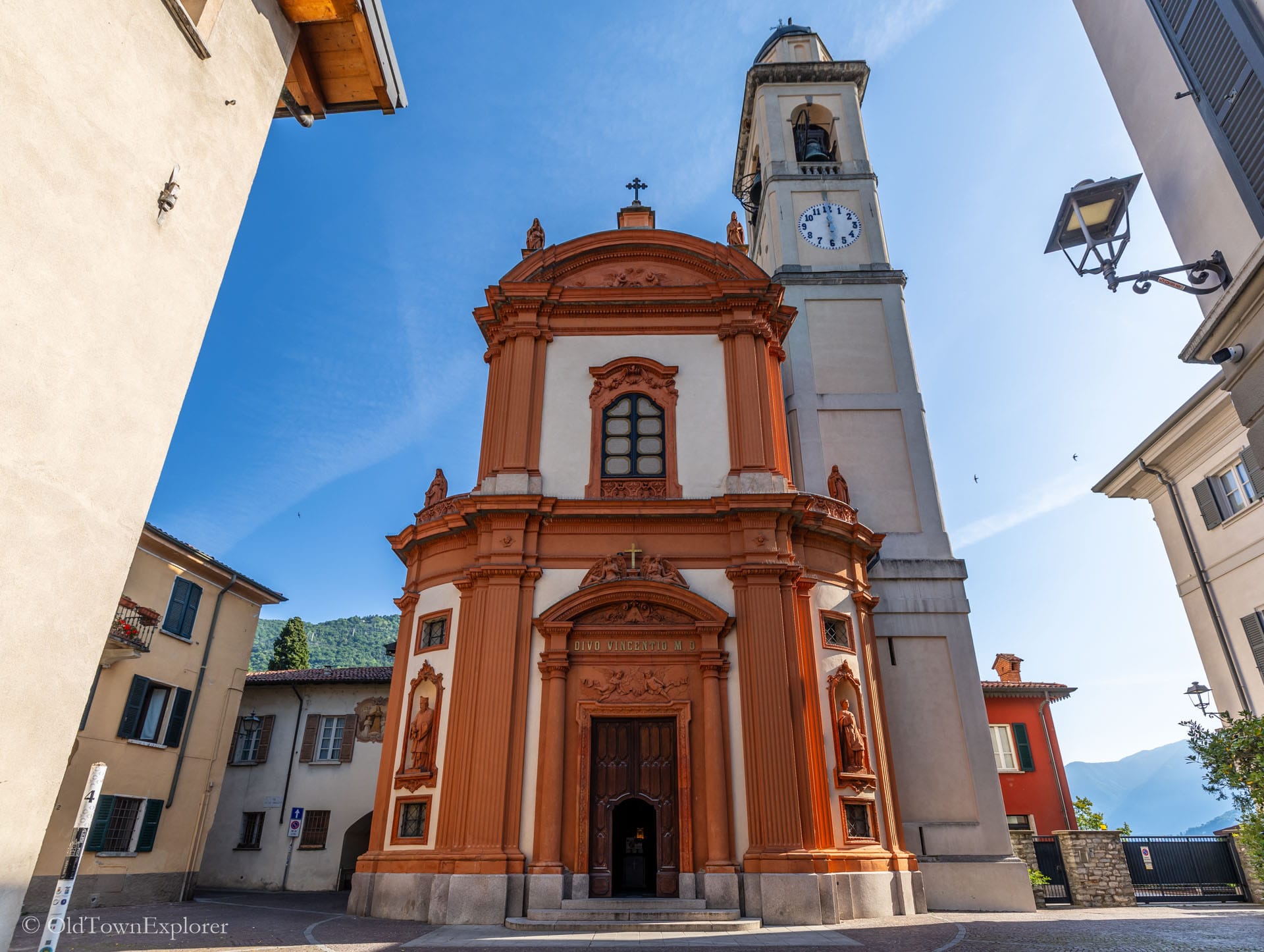
Discover Cernobbio: History, Architecture & Must-See Attractions
Cernobbio, Italy sits on Lake Como’s western shore, just northwest of Como. Its position made it useful for short lake travel, road movement along the Via Regina, and villa estates close to the city. Today, Cernobbio works well as a short day trip from Como because the ferry ride is brief and the main sights sit close to the lakefront.
Cernobbio looks different from Bellagio, Varenna, and Menaggio. It is less about a steep village core and more about villas, lakefront space, church squares, and former silk-industry wealth. Most day trippers walk from the ferry landing to Piazza Risorgimento, continue along the Riva, visit the old center, and add Villa Bernasconi or the villa district if time allows.
We visited Cernobbio during our month-long stay in Como. In this post, we’ll cover what to see and how to plan a day trip.
This post contains affiliate links that may earn us a small commission at no additional cost to you.
Cernobbio at a Glance
Cernobbio is a close-to-Como lake town with a level waterfront, major villas, historic churches, and a compact center that works well for a shorter day trip.
Location: On Lake Como’s western shore, just northwest of Como, with ferry and bus access from the city
Architectural character: Renaissance villa architecture, 19th-century lakefront villas, Art Nouveau details, Baroque church rebuilding, and civic lakefront space
Walkability: Easy along the waterfront and center, with steeper routes toward hillside neighborhoods and Monte Bisbino
Typical time required: 3–5 hours for the lakefront, churches, Villa Bernasconi, and the main villa exteriors
Key landmarks: Piazza Risorgimento, Riva di Cernobbio, Church of San Vincenzo, Church of the Holy Redeemer, Villa d’Este, Villa Erba, Villa Bernasconi
Food role: Useful for lunch, gelato, or a lakefront break, but no first-hand restaurant notes are included here
Seasonality: May brings active lakefront walking, more ferry demand, and busier villa-event periods
Start with the history, then look at how the lake, old road routes, villas, churches, and silk-industry buildings shaped the town.
History of Cernobbio
Cernobbio’s history is tied to its short distance from Como. It grew from a lakeside settlement into a villa town, then added industrial and tourism layers.
Early Settlement and Lake Movement
Cernobbio developed on the western shore of Lake Como, close to the city of Como. This location made short boat trips, fishing, trade, and road movement part of daily life.
Exact early building details are Unknown. The town’s later form still shows the basic pattern of a lake settlement tied to both water and road routes.
Medieval and Religious Foundations
In the medieval period, Cernobbio had religious sites and settlement around the lakefront and old road corridor. The Church of San Vincenzo was documented by the late 12th century and became one of the main religious anchors.
This helped shape the center near today’s Riva and church area. Later rebuilding changed the church, but the location still marks an older layer of the town.
Renaissance Villa Culture
Villa d’Este began in the 16th century as Villa del Garovo, designed for Cardinal Tolomeo Gallio. Its lakefront position shows how Cernobbio became a place for major estates close to Como.
This changed the scale of the town. Large villas, gardens, walls, and lake-facing buildings created a different pattern from the small streets nearby.
19th-Century Villas and Lake Tourism
In the 19th century, Cernobbio became more closely tied to Lake Como tourism and high-status villa life. Villa d’Este became a hotel in 1873, while Villa Erba developed as a major lakeside residence later in the century.
These sites strengthened Cernobbio’s public image as a villa town. The lakefront became more formal, with arrival by boat, garden edges, and larger buildings shaping the first impression.
Silk Industry and Villa Bernasconi
Cernobbio also had an industrial layer linked to silk production. Davide Bernasconi’s textile activity shaped part of the town, and Villa Bernasconi was built near the former factory area.
This gives Cernobbio a useful contrast. Villa Bernasconi is not only a private-villa story; it also points to the economic role of silk in the town’s modern growth.
Present-Day Day Trips
Today, Cernobbio works as one of the easiest Lake Como day trips from Como. It is close, walkable, and less demanding than steeper central-lake villages.
The town’s main value is concentrated around the lakefront, churches, villas, and Villa Bernasconi. This makes it a good half-day or slower day trip rather than a route that requires a long climb.
Architecture of Cernobbio
Cernobbio’s architecture comes from four layers: lakefront settlement, church rebuilding, villa estates, and silk-era growth. The result is a town where the strongest sights are close to the water and easy to connect on foot.
Lakefront Arrival and Civic Space
Cernobbio is often first seen from the ferry. The landing places visitors close to Piazza Risorgimento and the Riva, so the lakefront becomes the natural starting point.
This makes Cernobbio easy to read. The water, square, church area, and villa edges all sit within a short walk.
Church Placement Near the Lake
The Church of San Vincenzo sits close to the old center and the lakefront, so it marks Cernobbio’s older parish layer. Its compact form fits the smaller streets near Piazza Tolomeo Gallio and the Riva.
The Church of the Holy Redeemer has a larger presence nearby. Together, the two churches show how Cernobbio’s religious center expanded from an older lakefront parish site into a larger 20th-century town church.
Villa Walls and Garden Edges
Cernobbio’s villas shape the town through walls, gates, gardens, and lake-facing façades. These features control what visitors see from the street and from the water.
This is important because not every villa works like a public museum. Even when interiors are not part of a visit, the edges, gates, gardens, and lakefront placement still shape the town.
Renaissance Villa Architecture at Villa d’Este
Villa d’Este gives Cernobbio its clearest Renaissance villa layer. Its design began in the 16th century and used a lakefront estate plan rather than a dense town-lane pattern.
The villa shows how a major residence could command the shoreline. It also explains why Cernobbio developed a long association with formal villa culture.
19th-Century Villa Scale at Villa Erba
Villa Erba shows a different villa phase. Its square plan, arcades, tower, and broad lakefront stair speak to late 19th-century residence design.
The building sits close to the water and faces the lake clearly. That placement makes it one of Cernobbio’s strongest architectural markers from the shoreline.
Art Nouveau and Silk at Villa Bernasconi
Art Nouveau uses flowing lines, plant forms, and decorative surfaces rather than strict classical order. Villa Bernasconi is Cernobbio’s clearest example of this style.
Its decoration connects directly to silk production. Silkworms, butterflies, and mulberry leaves are part of the building’s visual language.
Walkability and the Shape of the Town
Cernobbio is one of the easier Lake Como towns for a short walk from Como. The ferry landing, Riva, main churches, and Villa Bernasconi are close enough for a simple loop.
Longer routes climb toward the hills and Monte Bisbino. For a day trip, keep the lakefront as the base and add uphill walking only if that is the point of the visit.
Architectural Attractions in Cernobbio
Cernobbio’s main sights fit together through a short, clear route: ferry landing, lakefront square, old church area, villa edges, Villa Bernasconi, and optional hillside or garden extensions. The sites below show how the main sights fit together in the town’s layout.
Churches and Historic Core
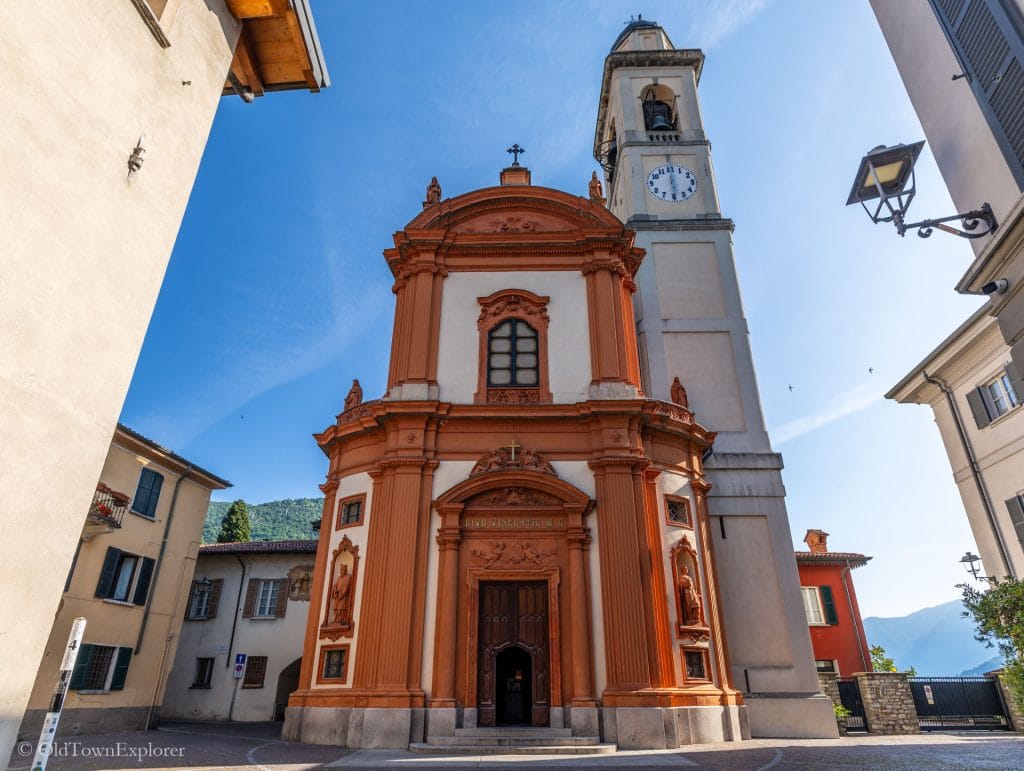
Church of San Vincenzo
- Architect: Unknown
- Style: Baroque rebuilding over earlier Romanesque church
- Built: Earlier church documented by 1183; rebuilt 1758–1775; façade added 1861
- Address: Piazza Tolomeo Gallio, 22012 Cernobbio CO, Italy
The Church of San Vincenzo is one of Cernobbio’s main historic churches. It matters because it preserves the location of an older parish church while showing later Baroque rebuilding. Look for the red-and-white façade, compact church massing, and position near the Riva. It sits in the historic center, a short walk from the ferry landing and Piazza Risorgimento.
Church of the Holy Redeemer
- Architect: Cesare Formenti supervised the early construction
- Style: Neo-Romanesque church architecture
- Built: 1908–1912; consecrated in 1935
- Address: Piazza Don Umberto Marmori, 22012 Cernobbio CO, Italy
The Church of the Holy Redeemer is the largest church in Cernobbio. It matters because it became the main parish church after San Vincenzo. Look for the larger scale, three-nave plan, and the way the church stands close to the town center rather than on the lake edge. It sits near the Riva and the historic core.
Piazza Tolomeo Gallio
- Architect: Unknown
- Style: Historic church square
- Built: Historic square; exact date Unknown
- Address: Piazza Tolomeo Gallio, 22012 Cernobbio CO, Italy
Piazza Tolomeo Gallio is the small space around the Church of San Vincenzo. It matters because it links the older church site with the lakefront center. Look for the tight relationship between church, street, and nearby buildings. It sits just inland from the Riva and close to Piazza Risorgimento.
Lakefront, Streets, and Civic Space
Piazza Risorgimento
- Architect: Unknown
- Style: Lakefront civic square
- Built: Historic lakefront square; exact date Unknown
- Address: Piazza Risorgimento, 22012 Cernobbio CO, Italy
Piazza Risorgimento is Cernobbio’s main lakefront square. It matters because it connects the ferry landing, waterfront, old center, and nearby villas. Look for the open paved space, lake views, and short walking links into the town. It sits directly by the Riva and works as the main arrival point.
Riva di Cernobbio
- Architect: Unknown
- Style: Lakefront promenade and public waterfront
- Built: Historic lakefront area; current promenade phases Unknown
- Address: Riva di Cernobbio, 22012 Cernobbio CO, Italy
The Riva di Cernobbio is the town’s main waterfront walk. It matters because it gives Cernobbio a level public edge along Lake Como. Look for the open lake views, ferry pier, waterfront buildings, and how the route connects the center with villa edges. It sits along the lakefront just below the historic core.
Cernobbio Ferry Landing
- Architect: Unknown
- Style: Lake transport infrastructure
- Built: Current structure date Unknown
- Address: Cernobbio ferry landing, 22012 Cernobbio CO, Italy
The Cernobbio ferry landing is the main boat arrival point for day trippers from Como. It matters because arrival by water shapes the way most visitors read the town. Look for its close position to Piazza Risorgimento and the Riva. It sits directly on the lakefront, within a short walk of the churches and villas.
Via Regina through Cernobbio
- Architect: Not applicable
- Style: Historic road corridor
- Built: Roman origins; later medieval and modern use
- Address: Via Regina, 22012 Cernobbio CO, Italy
Via Regina follows the old western-shore movement corridor near Cernobbio. It matters because the town was shaped by road travel as well as lake travel. Look for how churches, villa gates, and older settlement areas sit close to this route. It runs through Cernobbio and links the town with Como and western-shore villages.
Villas and Garden Architecture
Villa d’Este
- Architect: Pellegrino Pellegrini, known as Il Tibaldi
- Style: Renaissance villa architecture
- Built: 1565–1570; opened as a hotel in 1873
- Address: Via Regina, 40, 22012 Cernobbio CO, Italy
Villa d’Este is Cernobbio’s best-known historic villa. It matters because it began as a 16th-century residence for Cardinal Tolomeo Gallio and later became one of Lake Como’s major villa hotels. Look for the formal lakefront setting, garden edges, and the scale of the estate along the shore. It sits west of the town center along Via Regina.
Villa Erba
- Architect: Angelo Savoldi and Giambattista Borsani
- Style: Late 19th-century villa architecture with classical references
- Built: 1894–1898
- Address: Largo Luchino Visconti, 4, 22012 Cernobbio CO, Italy
Villa Erba is a large lakeside villa and event complex. It matters because it shows Cernobbio’s late 19th-century villa scale and its link to the Erba family and Luchino Visconti. Look for the square plan, arcades on the façades, tower, and broad relationship to the lake. It sits east of the town center, close to the lakefront route toward Como.
Villa Bernasconi
- Architect: Alfredo Campanini
- Style: Art Nouveau
- Built: 1905–1906
- Address: Largo Alfredo Campanini, 2, 22012 Cernobbio CO, Italy
Villa Bernasconi is Cernobbio’s clearest Art Nouveau building. It matters because it connects the town’s villa architecture with its silk-industry history. Look for the turret, decorative surfaces, wrought iron, and motifs linked to silkworms, butterflies, and mulberry leaves. It sits inland from the lakefront, near the former Bernasconi factory area.
Gardens, Hills, and Outer Routes
Giardino della Valle
- Architect: Pupa Frati initiated the garden project
- Style: Community garden and hillside green space
- Built: Began in the 1980s
- Address: Via Monte Santo, 22012 Cernobbio CO, Italy
Giardino della Valle is a small garden area in the valley behind Cernobbio. It matters because it gives a different view of the town beyond villas and lakefront space. Look for stone paths, planting, small water features, and the valley setting. It sits inland from the center and requires a short walk away from the Riva.
Monte Bisbino Route
- Architect: Not applicable
- Style: Mountain road and viewpoint route
- Built: Not applicable
- Address: Route toward Monte Bisbino from Cernobbio, 22012 Cernobbio CO, Italy
Monte Bisbino rises above Cernobbio and marks the town’s mountain backdrop. It matters because it explains why the town is pressed between lakefront space and steep terrain. Look for how the roads climb quickly away from the center toward hillside neighborhoods. It sits above Cernobbio and is better treated as a separate outing unless you have extra time.
Walking Tour in Cernobbio
Start at the Cernobbio ferry landing, which is the natural arrival point from Como.
- Walk into Piazza Risorgimento and use the Riva as your first orientation point.
- Continue to Piazza Tolomeo Gallio and the Church of San Vincenzo.
- From there, walk toward the Church of the Holy Redeemer to see how the religious center expanded beyond the older parish church.
- Return toward the lakefront and follow the Riva east toward Villa Erba. Look at the villa and exhibition centre from the public approach, depending on access and events.
- Continue inland to Villa Bernasconi if you want the strongest architecture stop open to general visitors. Its Art Nouveau details add a different layer from the lakefront villas.
- If you want a longer walk, add Giardino della Valle or continue along parts of Via Regina.
- If you want a shorter day, return to Piazza Risorgimento and the ferry landing after Villa Bernasconi.
Plan on 2–3 hours for the ferry landing, Riva, churches, Villa Erba exterior area, and Villa Bernasconi. Add 1–2 hours for Giardino della Valle, a longer lakefront walk, or hillside routes.
How to Get to Cernobbio from Como
Cernobbio is one of the easiest Lake Como day trips from Como because it sits just northwest of the city. You can reach it by ferry, bus, taxi, car, on foot, or by bike, but the ferry gives the clearest lakefront arrival and places you close to Piazza Risorgimento, the Riva, and the main walking route.
Because Cernobbio is close, the choice depends more on how you want the day to feel than on distance alone. Take the ferry for the lake approach, walk one way for a more active outing, use the bus if boat times do not fit, or save a taxi for mobility needs or a late return.
By Ferry
The ferry is the best way to get from Como to Cernobbio if you want the day trip to feel like a Lake Como outing. The ride is short, scenic, and places you close to the Riva and historic center.
Boats leave from Como’s lakefront docks on routes that serve nearby western-shore towns. Cernobbio is close to Como, but schedules still change by season, so check the current Navigazione Laghi timetable before you go.
Once you arrive at the Cernobbio ferry landing, the town is easy to explore on foot. Piazza Risorgimento, the Riva, San Vincenzo, the Holy Redeemer, and the Villa Erba area are all within a practical walking loop.
For a day trip from Como, check both outbound and return times before you leave. In May and summer, build in extra time for ticket lines and event-day crowds near villa sites.
By Foot
Walking from Como to Cernobbio is possible if you want an active, low-cost day trip. The route is roughly 5–6 km each way, depending on where you start in Como and where you stop in Cernobbio.
This option makes the most sense if you are comfortable walking along urban roads, lakefront sections, and shared pedestrian areas. It is not the same as a quiet lakeside trail the whole way.
Start from Como’s lakefront and follow the western side of the lake toward Villa Olmo, then continue toward Tavernola and Cernobbio. Once you reach Cernobbio, Piazza Risorgimento, the Riva, and the church area are close together.
For most visitors, walking one way and returning by ferry or bus is the best plan. This gives you the lake approach without making the day too repetitive or tiring.
By Bike
Biking from Como to Cernobbio is possible, but it is best for confident riders. The distance is short, but traffic, road width, parked cars, and pedestrian areas can make the ride less simple than it looks on a map.
This option works best if you already have a bike in Como and are comfortable riding in mixed traffic. It is less useful if you are expecting a protected lakeside bike path the whole way.
Follow the western side of the lake from Como toward Villa Olmo, Tavernola, and Cernobbio. Lock the bike outside pedestrian-heavy areas and continue on foot around Piazza Risorgimento, the Riva, churches, and villa areas.
A bike can also help if you want to continue beyond Cernobbio along the western shore. For a simple Cernobbio visit, the ferry or walking one way is usually easier.
By Train
Cernobbio does not have a train station. The train is not a direct way to reach Cernobbio from Como.
If you arrive in Como by train from Milan or another city, continue to Cernobbio by ferry, bus, taxi, on foot, or by bike. The ferry gives the clearest lakefront arrival.
From the Cernobbio ferry landing, you do not need a taxi for the main center. Use taxis only for mobility needs or uphill addresses.
By Bus
Bus service is a practical land option between Como and Cernobbio. It can make sense if boat times do not fit your day, if weather makes the lake less appealing, or if you walked one way and want an easy return.
Check current local schedules before relying on the bus. Como-area routes can vary by season, day, and traffic conditions.
Once you arrive in Cernobbio, the lakefront, churches, Villa Bernasconi, and central streets are walkable. The bus is more useful for arrival and return than for moving around the town itself.
By Car
Driving from Como to Cernobbio is possible, but it is often unnecessary for a simple day trip. The towns are close, and the ferry, bus, walking route, or bike route avoids parking work.
If you drive, plan to park outside the tightest lakefront area and walk in. Watch for pedestrian zones, one-way streets, hotel traffic, and event-related access limits near villa sites.
A car makes more sense if Cernobbio is part of a wider western-shore or mountain route. For a short day trip from Como, the ferry should be the first choice.
By Taxi / Rideshare
A taxi from Como to Cernobbio can be practical because the towns are close. It works well if you need door-to-door travel, have limited mobility, or are returning after boat service slows down.
Rideshare coverage can be limited around Lake Como compared with large cities. Plan around ferry times first, then use taxi service as a backup if needed.
Making the Most of Your Day Trip to Cernobbio
Cernobbio works best as a shorter, villa-focused day trip from Como. Start with the lakefront, churches, and public spaces near the ferry landing, then use the rest of the day for Villa Bernasconi, Villa Erba context, or a short walk beyond the center.
This keeps the route easy to manage. Cernobbio is close to Como and less demanding than Bellagio or Varenna, so the goal is not to fill every hour. The best plan is a clear loop: Riva, churches, villa context, and a return point near the ferry, bus, or walking route.
Morning – architectural spine
After arriving by ferry, start with Piazza Risorgimento and the Riva. This gives you the clearest first view of Cernobbio’s lakefront layout.
Walk to the Church of San Vincenzo, then continue to the Church of the Holy Redeemer. This sequence works because the two churches show the shift from the older parish layer to the larger 20th-century church.
Midday – civic core / street structure
Use midday for the streets between the Riva, Via Regina, and the town center. This part of Cernobbio shows how ferry arrival, road movement, church space, and villa gates sit close together.
This is also the best time to pause for lunch or a simple food stop. No first-hand restaurant recommendation is included here, so choose based on current opening times, menu fit, and your ferry schedule.
For broader planning around regional dishes, use the Italy food guide.
Afternoon – villa and design anchor
Use this part of the day for the strongest villa and design anchor. Choose Villa Bernasconi if you want the clearest architecture visit, Art Nouveau details, and silk-industry context. Add Villa Erba from the outside or event areas if access fits your day.
Late afternoon / evening – wrap-up
Return toward the ferry landing before your planned departure. Cernobbio is close to Como, but return boats and buses can still be affected by seasonal demand.
Use any extra time for Piazza Risorgimento, the Riva, or a short walk along the lakefront. This keeps the final part of the day close to your return transport.
Tips for Visiting Cernobbio
Start at the Riva because the town is lakefront-first
Start with Piazza Risorgimento and the Riva. This gives you the clearest view of how Cernobbio is organized around the lake.
The ferry landing, square, churches, and villa routes sit close together. Use the waterfront as your base before walking inland.
Consider walking one way from Como
Walking from Como to Cernobbio is often the most flexible option if you want an active day. The route gives you a gradual approach along the western side of the lake without needing to plan your outbound trip around a ferry schedule.
For most visitors, walking one way is better than walking both ways. Return by ferry or bus to avoid repeating the same route and to keep the day easier to manage.
Use the ferry when you want the lake approach
The ferry is still a good choice if you want Cernobbio to feel like a Lake Como boat trip. It brings you close to Piazza Risorgimento, the Riva, and the main walking route.
Check return times before you leave Como, especially in May, summer, or event periods. Even on a short route, boat timing can shape the end of the day.
Bike only if you are comfortable with mixed traffic
Biking from Como to Cernobbio is short, but it is not fully protected from traffic. Expect shared roads, parked cars, pedestrians, and changing street conditions.
Use a bike if you are confident riding in town and lake-road conditions. Otherwise, the ferry or one-way walk is easier.
Wear comfortable shoes, but expect an easier walk
Cernobbio is easier underfoot than Bellagio or Varenna if you stay near the lakefront. The Riva, Piazza Risorgimento, and central streets are manageable for most visitors.
You still need good shoes if you add Giardino della Valle, hillside roads, or longer routes toward Monte Bisbino. Those routes climb away from the lake.
Check villa access before planning around interiors
Cernobbio has famous villas, but not every villa is open like a public museum. Villa d’Este is a hotel, and Villa Erba often works around events.
Villa Bernasconi is the safest design-focused stop for many visitors. Check current opening days before making it the center of your plan.
Treat Villa d’Este mainly as context unless you are a guest
Villa d’Este is one of Cernobbio’s most important buildings, but access is not the same as a standard public attraction. Do not plan the day around entering it unless you have a confirmed reason.
You can still understand its role from the town’s layout. Its estate scale explains much of Cernobbio’s villa identity.
Use Villa Bernasconi for the clearest design stop
Villa Bernasconi gives Cernobbio a clear Art Nouveau layer. Its decoration connects architecture with the town’s silk-industry past.
Notice the plant and insect motifs rather than only the villa shape. Those details help explain why the building belongs to Cernobbio specifically.
Keep the itinerary shorter than Bellagio or Varenna
Cernobbio works well as a half-day or slow day trip from Como. It does not need the same time as a full central-lake outing unless you add hillside walking.
A simple plan is enough. Riva, churches, Villa Bernasconi, Villa Erba context, and a lakefront pause give the day a clear structure.
Watch for event-related access near Villa Erba
Villa Erba is a major event site. Access, crowds, and movement around the grounds can change when events are scheduled.
Check the event calendar if Villa Erba is important to your visit. Otherwise, treat it as an exterior and lakefront context stop.
Compare Cernobbio with Bellagio, Varenna, and Menaggio before planning
Cernobbio is closer to Como and easier for a short trip. Bellagio and Varenna give a steeper village experience, while Menaggio has a broader central-lake promenade.
Choose Cernobbio when you want villas, a level waterfront, and less travel time. It is one of the simplest Lake Como day trips from Como.
FAQs About Cernobbio
Is Cernobbio worth visiting as a day trip?
Yes, Cernobbio is worth visiting as a day trip if you want a short Lake Como outing from Como with villas, churches, and an easy lakefront walk. It is especially useful when you do not want a long ferry day.
How long should I spend in Cernobbio?
Plan 3–5 hours in Cernobbio. That is enough for the ferry arrival, Riva, churches, Villa Bernasconi, and a relaxed food or coffee stop.
How is Cernobbio different from nearby towns?
Cernobbio is closer to Como and more villa-focused than Bellagio, Varenna, or Menaggio. It has less steep village walking and a stronger mix of lakefront space, villa estates, and silk-era architecture.
Is Cernobbio walkable?
Yes, Cernobbio is walkable in the center. The ferry landing, Piazza Risorgimento, Riva, churches, and Villa Bernasconi fit into a practical loop.
Can I walk from Como to Cernobbio?
Yes, you can walk from Como to Cernobbio if you are comfortable with a 5–6 km route each way. The best plan for many visitors is to walk one way and return by ferry or bus.
Can I bike from Como to Cernobbio?
Yes, you can bike from Como to Cernobbio, but it is best for confident riders. The route is short, but it includes mixed traffic and is not a protected lakeside bike path the whole way.
When is the best time to visit Cernobbio?
May is a good time to visit Cernobbio because the weather is often comfortable for lakefront walking. It can still be busy on sunny days or during villa events, so check ferry times and access before leaving Como.
What should I prioritize on a short visit?
Prioritize Piazza Risorgimento, the Riva, Church of San Vincenzo, Church of the Holy Redeemer, Villa Bernasconi, and the Villa Erba lakefront area. These give you the clearest view of Cernobbio’s center, churches, villas, and lakefront layout.
Is Cernobbio better by ferry or by car from Como?
Ferry is usually better for a day trip from Como. It brings you directly to the lakefront, avoids parking issues, and makes the short trip feel connected to Lake Como.
Can I visit Cernobbio and Como on the same day?
Yes, Cernobbio and Como work well on the same day because they are close. Visit Como’s historic center first, then use the ferry, bus, or walking route to Cernobbio for the lakefront, churches, and villa context.
Does Cernobbio have enough architecture for a full day?
Yes, Cernobbio has enough architecture for a full day if you include the churches, Riva, Villa Bernasconi, Villa Erba, Villa d’Este context, Giardino della Valle, and hillside routes. For most visitors, it works best as a half-day or relaxed short day trip from Como.
