
Discover Bellagio: History, Architecture & Must-See Attractions
Bellagio, Italy sits on the promontory where Lake Como divides into three branches. Its position made it useful for lake travel, local defense, and later tourism. The town grew between the water, the hillside, and the villas that line the shore.
Bellagio’s historic core is compact but steep. Streets climb from the ferry landing to the upper borgo, and stone stair lanes connect the waterfront with churches, shops, and viewpoints. Most day trippers walk the old center, climb the stair streets, continue to Punta Spartivento, and add Villa Melzi or the lakeside path if time allows.
We visited Bellagio during our month-long stay in Como. In this post, we’ll cover what to see and how to plan a day trip.
This post contains affiliate links that may earn us a small commission at no additional cost to you.
Bellagio at a Glance
Bellagio is a small lakeside town with a steep historic core, Romanesque church architecture, villa gardens, and boat links across central Lake Como.
Location: On the Bellagio promontory, northeast of Como, with direct ferry access from Como’s lakefront docks
Architectural character: Medieval stone lanes, Romanesque churches, Neoclassical villas, and 19th-century lakefront hotels
Walkability: Very walkable in the center, but many routes use stairs, slopes, and stone paving
Typical time required: 4–6 hours for the core, Punta Spartivento, and one garden visit
Key landmarks: Basilica di San Giacomo, Salita Serbelloni, Punta Spartivento, Villa Melzi, Villa Serbelloni
Food role: Useful for lunch, gelato, or lake fish, but no first-hand restaurant notes are included here
Seasonality: May brings active gardens, more boat demand, and heavier ferry queues on sunny days
Start with the history, then look at how the lake, hillside, streets, churches, and villas shaped today’s town.
History of Bellagio
Bellagio’s history is tied to its promontory. Control of this point affected movement across Lake Como, and later the same views brought villas, hotels, and day-trip traffic.
Early Settlement and Roman Lake Routes
The Bellagio area was settled before Roman rule, with later Roman influence around Lake Como. The promontory gave early residents access to several lake routes from one place.
Roman-era villas and lake estates shaped the idea of Bellagio as a place for retreat. Exact remains in the town center are limited, so many early building details are unknown.
Medieval Bellagio and the Borgo
In the Middle Ages, Bellagio developed as a small lake settlement above the water. The borgo grew uphill from the shore, with narrow routes that fit the slope.
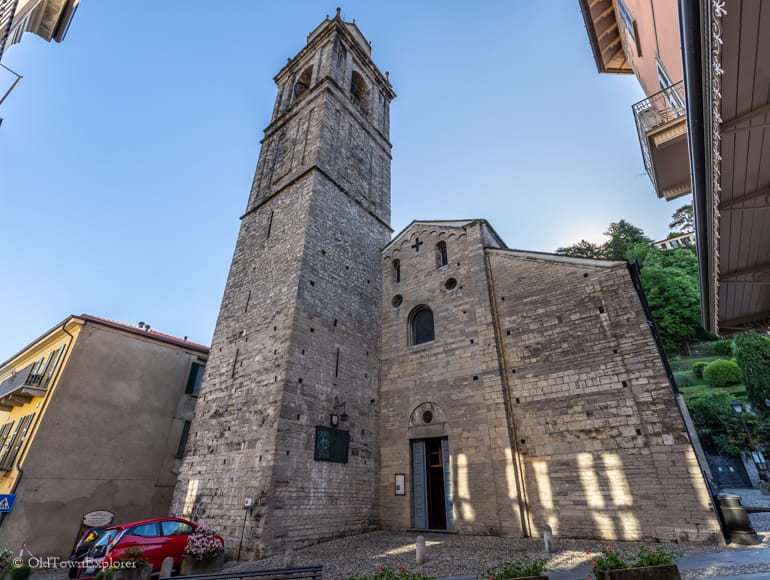
The Basilica di San Giacomo shows this medieval layer clearly. Its stone walls, rounded arches, and bell tower still anchor the upper part of the old town.
Como, Milan, and Regional Control
Bellagio was drawn into the wider struggles around Como and Milan. Control of Lake Como mattered because boats moved people, goods, and military power through the region.
This period helped keep the town compact. The main routes stayed close to the shoreline and hillside rather than spreading into a flat grid.
Villa Culture from the 15th to 18th Centuries
As local defense became less central, noble families used Bellagio for lake estates. Villa Serbelloni developed on the hill behind the town, on land linked to earlier strategic use.
Villa grounds changed the edge of the old town. Large gardens, walls, and paths created a different scale from the tight medieval lanes.
Neoclassical Bellagio in the Napoleonic Era
Villa Melzi d’Eril was built in the early 1800s for Francesco Melzi d’Eril. Its Neoclassical design brought ordered façades, columns, and a strong lake-facing layout to the shoreline.
This changed how Bellagio looked from the water. The villa and gardens made the lakefront part of the town’s main architectural experience.
Tourism and the 19th-Century Lakefront
In the 19th century, Bellagio became an international lake resort. Large hotels, promenades, and boat services changed the town from a local settlement into a visitor hub.
The lakefront became more formal. The old borgo, villas, hotels, and ferry landings now work together as the main day-trip route.
Architecture of Bellagio
Bellagio’s architecture comes from three basic facts: the town is steep, it faces the lake, and it grew in layers. Medieval churches, stair lanes, villa gardens, and hotels all respond to those conditions.
Steep Streets and Stair Lanes
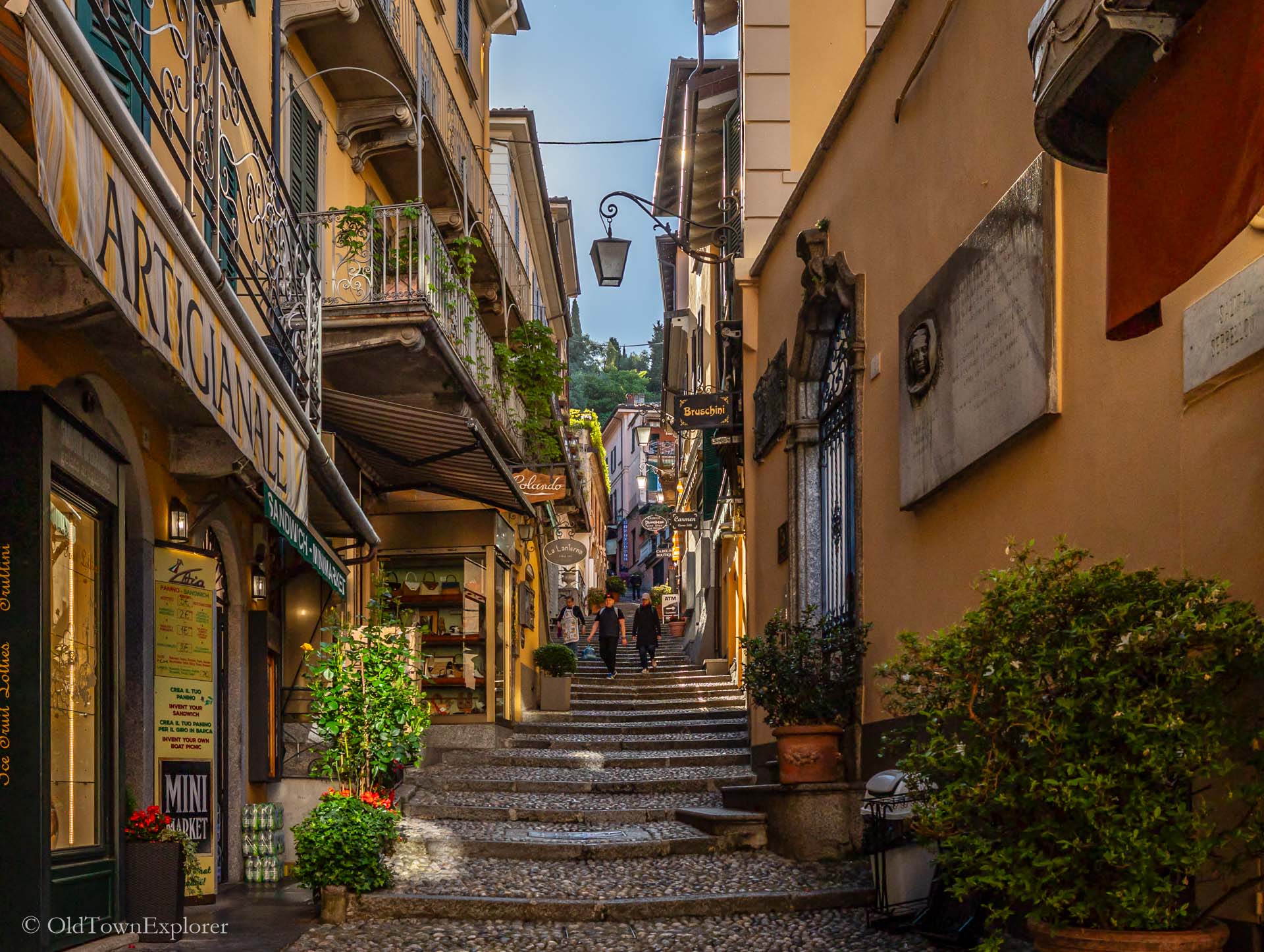
Bellagio’s old center uses stair lanes because the town climbs quickly from the water. These lanes connect the lakefront with Via Garibaldi, Piazza della Chiesa, and the upper borgo.
Salita Serbelloni is the best-known example. It shows how movement, shops, and views share the same narrow corridor.
Stone, Stucco, and Lake Materials
Older buildings use stone walls, stone steps, and plastered surfaces. Stone helped buildings handle the slope and gave stair lanes a hard-wearing surface.
Later villas and hotels often use smoother stucco. This creates a cleaner lake-facing look than the older lanes behind them.
Towers and Vertical Markers
Bellagio does not have a skyline of tall towers, but vertical markers still matter. The bell tower of San Giacomo and the Torre delle Arti rise above the compact roofs near Piazza della Chiesa.
These vertical forms help visitors read the town from below. They also mark the shift from lakefront streets to the upper historic core.
Villas and Garden Edges
Villa architecture in Bellagio works differently from the borgo. Villas use larger plots, lake-facing façades, garden walls, and planned paths.
Villa Melzi shows this clearly. Its ordered Neoclassical front faces the lake, while the gardens stretch along the shoreline.
Lakefront Hotels and 19th-Century Tourism
Bellagio’s hotel architecture reflects the growth of lake tourism. Large lakefront buildings needed broad façades, service access, and direct visual contact with the water.
Grand Hotel Villa Serbelloni is the clearest example. It changed the scale of the waterfront near the historic core.
Squares as Working Space
Bellagio’s main squares are small and practical. Piazza della Chiesa holds the church, tower, fountain, and routes into nearby lanes.
These spaces are not wide civic plazas. They work as pauses between stairs, streets, and landmarks.
Walkability and the Shape of the Town
Bellagio is easy to walk in distance, but not always easy on the legs. Short routes often include stairs, slopes, stone paving, and crowded pinch points.
The town rewards a slow loop. Walking uphill first helps you understand how the borgo, churches, villas, and lakefront fit together.
Architectural Attractions in Bellagio
Bellagio’s main sights fit together through one simple route: waterfront, stair lanes, upper borgo, viewpoint, and villa gardens. The sites below show how the main sights fit together in the town’s layout.
Churches and Medieval Core
Basilica di San Giacomo
- Architect: Unknown
- Style: Roman-Lombard / Romanesque
- Built: 1075–1125
- Address: Piazza della Chiesa, 14, 22021 Bellagio CO, Italy
The Basilica di San Giacomo is the main historic church in Bellagio. It anchors the medieval borgo above the waterfront. Look for the thick stone walls, rounded arches, compact massing, and bell tower. It sits in Piazza della Chiesa, a short uphill walk from the ferry landing.
Torre delle Arti
- Architect: Unknown
- Style: Medieval tower, later adapted for cultural use
- Built: Medieval core; exact date Unknown
- Address: Salita Plinio, 21, 22021 Bellagio CO, Italy
Torre delle Arti is a stone tower near the main church square. It gives the upper borgo one of its strongest vertical markers. Look for the narrow form, plain stone surfaces, and height compared with nearby houses. It sits just off Piazza della Chiesa, where the stair lanes reach the upper historic core.
Church of San Giorgio
- Architect: Unknown
- Style: Romanesque origin with later changes
- Built: 11th–12th century origin; later changes Unknown
- Address: Near Bellagio Town Hall, 22021 Bellagio CO, Italy
The Church of San Giorgio is a small church in the old center. It shows how smaller religious buildings shared space with civic routes and stair lanes. Look for its compact form, simple stonework, and close relationship to the nearby steps. It sits near the town hall, a short walk from San Giacomo.
Church of San Giovanni Battista
- Architect: Unknown
- Style: Baroque over earlier religious site
- Built: 16th century origin; later changes Unknown
- Address: Piazza Pretorio, San Giovanni, 22021 Bellagio CO, Italy
The Church of San Giovanni Battista stands in the San Giovanni hamlet south of the main borgo. It shows Bellagio beyond the busiest day-trip core. Look for the Baroque façade, bell tower, and the scale of the church within a smaller lakeside settlement. It sits near the shoreline route south of Villa Melzi.
Streets, Squares, and Viewpoints
Piazza della Chiesa
- Architect: Unknown
- Style: Historic civic-religious square
- Built: Unknown
- Address: Piazza della Chiesa, 22021 Bellagio CO, Italy
Piazza della Chiesa is the small square around San Giacomo. It matters because several key routes meet here after the climb from the lakefront. Look for how the church, tower, fountain, and surrounding buildings compress the space. It sits at the top of the main borgo, above the ferry landing.
Salita Serbelloni
- Architect: Unknown
- Style: Historic stair street
- Built: Unknown
- Address: Salita Serbelloni, 22021 Bellagio CO, Italy
Salita Serbelloni is one of Bellagio’s main stair streets. It shows how the town handles the steep climb between the lakefront and upper streets. Look for the long stepped route, narrow building fronts, shop entrances, and framed views back toward the water. It sits between the lower lakefront streets and Via Giuseppe Garibaldi.
Via Giuseppe Garibaldi
- Architect: Unknown
- Style: Historic commercial street
- Built: Unknown
- Address: Via Giuseppe Garibaldi, 22021 Bellagio CO, Italy
Via Giuseppe Garibaldi is the main upper street through the borgo. It links churches, lanes, shops, civic buildings, and villa access. Look for narrow frontages, stone paving, and how side lanes drop sharply toward the lake. It runs through the upper historic core above the waterfront.
Punta Spartivento
- Architect: Not applicable
- Style: Natural viewpoint with park setting
- Built: Not applicable
- Address: Via Eugenio Vitali, 22021 Bellagio CO, Italy
Punta Spartivento is the point at the end of the Bellagio promontory. It shows why the town’s location controlled views and movement across Lake Como. Look for the meeting of the lake branches and the way the land narrows at the tip. It sits north of the borgo, a short uphill walk from the ferry area.
Villas, Gardens, and Lakefront Architecture
Villa Melzi d’Eril
- Architect: Giocondo Albertolli
- Style: Neoclassical
- Built: 1808–1810
- Address: Lungo Lario Manzoni, 22021 Bellagio CO, Italy
Villa Melzi d’Eril is a Neoclassical villa on the lakeshore. It shows the early 19th-century villa culture that changed Bellagio’s lakefront. Look for the ordered façade, regular window spacing, and the clear orientation toward the water. It sits south of the historic core along the lakeside garden route.
Villa Melzi Chapel and Orangerie
- Architect: Unknown
- Style: Neoclassical garden architecture
- Built: Early 19th century
- Address: Inside Villa Melzi Gardens, Lungo Lario Manzoni, 22021 Bellagio CO, Italy
The chapel and orangerie are part of the Villa Melzi garden complex. They show how villa grounds used smaller buildings to shape walks, views, and pauses. Look for the controlled scale, simple classical details, and placement along the garden route. They sit within the Villa Melzi grounds, south of the borgo.
Villa Serbelloni Park
- Architect: Unknown
- Style: Historic villa park and terraced garden landscape
- Built: Villa site from the 15th century; later garden changes Unknown
- Address: Access from Via Giuseppe Garibaldi, 22021 Bellagio CO, Italy
Villa Serbelloni Park covers the hill behind the historic center. It occupies high ground above Bellagio and shows the shift from strategic land to villa landscape. Look for terraces, paths, garden walls, and views over both sides of the promontory. It sits directly behind the borgo, above Via Giuseppe Garibaldi.
Grand Hotel Villa Serbelloni
- Architect: Rodolfo Vantini for the original villa; later hotel adaptation by Giovanni Ceruti and Ercole Balossi Merlo
- Style: 19th-century lakefront hotel and villa architecture
- Built: 1850–1854; hotel opened in 1873
- Address: Via Roma, 1, 22021 Bellagio CO, Italy
Grand Hotel Villa Serbelloni is a major 19th-century lakefront hotel. It shows Bellagio’s shift into international lake tourism. Look for the broad waterfront scale, formal façade, and how the building faces the lake rather than the stair lanes. It sits near the historic core on the lakefront side of town.
Hamlets and Shoreline Settlements
Pescallo Hamlet
- Architect: Unknown
- Style: Historic fishing hamlet
- Built: Unknown
- Address: Loc. Pescallo, 22021 Bellagio CO, Italy
Pescallo is a small lakeside hamlet southeast of the main Bellagio promontory. It shows a quieter shoreline settlement pattern outside the busiest visitor core. Look for compact houses, narrow lanes, and buildings placed close to the water. It sits on the Lecco branch side of Bellagio, reached by walking over the hill from the borgo.
Loppia Hamlet
- Architect: Unknown
- Style: Historic lakeside hamlet and villa-edge settlement
- Built: Unknown
- Address: Loc. Loppia, 22021 Bellagio CO, Italy
Loppia is a small hamlet near Villa Melzi and the southern lakeside route. It connects the villa landscape with older lakeside settlement. Look for the tight scale of the hamlet, stone surfaces, and its position near garden walls and the shore. It sits south of the main borgo, close to the Villa Melzi area.
Walking Tour in Bellagio
Start at the Bellagio ferry landing, which is the natural arrival point from Como.
- Walk up Salita Serbelloni to reach Via Giuseppe Garibaldi, then continue to Piazza della Chiesa.
- Visit the outside of the Basilica di San Giacomo, then look at the Torre delle Arti and the small space of Piazza della Chiesa.
- Continue to the Church of San Giorgio and the town hall area before following Via Giuseppe Garibaldi north.
- From there, walk to Punta Spartivento for the lake-branch viewpoint.
- Return toward the borgo, then descend through a different stair lane to the waterfront.
- Continue south along the lake toward Villa Melzi Gardens.
- If time allows, add the Villa Melzi chapel, orangerie, and lakeside garden route.
- End by either returning to the ferry landing or continuing toward Loppia and San Giovanni if you want a longer walk.
Plan on 2–3 hours for the core loop with Punta Spartivento. Add 1.5–2 hours for Villa Melzi and the south-shore hamlets.
How to Get to Bellagio from Como
Bellagio is one of the most popular day trips from Como, and the ferry is usually the best way to get there. The route turns the transfer into part of the Lake Como experience, with views of lakeside towns, villas, gardens, and steep shoreline settlements along the way.
Because Bellagio sits farther up the lake on the central promontory, the trip takes more planning than a short hop to Cernobbio or Blevio. Check both outbound and return times before leaving Como, then build the day around your ferry schedule. This matters most in May and summer, when good weather can bring long ticket lines and busy return boats.
By Ferry
The ferry is the best way to get from Como to Bellagio for most day trips. It avoids the narrow lake road, drops you close to the historic center, and makes the trip part of the Lake Como experience.
Boats leave from the Como ferry docks near the lakefront. Arrival is at the Bellagio ferry landing, below the old town. From there, you can walk directly to the waterfront, Salita Serbelloni, Via Giuseppe Garibaldi, and Piazza della Chiesa.
There are usually two useful boat types. The slower boat takes longer but gives you a scenic trip along the lake with intermediate stops. The fast service, often listed as rapid service or hydrofoil, is better if you want more time in Bellagio and less time in transit.
Check the current Navigazione Laghi schedule before you go because times change by season. In May and summer, arrive early at the dock because ticket lines and return boats can be busy.
By Train
There is no direct train from Como to Bellagio. The train only makes sense as an indirect route if you are combining Bellagio with Varenna.
For that version, take a train route toward Varenna-Esino, then use the central-lake ferry from Varenna to Bellagio. This is usually not the simplest choice from Como, but it can work if Varenna is part of the same day.
Once you arrive in Bellagio by ferry, the historic core starts near the landing. Taxis are not needed for the main borgo, but stairs and slopes matter if you have luggage or mobility limits.
By Bus
Bus service from Como to Bellagio is the main land-based public transport option. It can work well if ferry times do not fit your plan or if you prefer a direct road route.
Check the current ASF Autolinee schedule before you go. Routes and line names can change, and seasonal adjustments are common around Lake Como.
The bus is practical, but it is less scenic and less comfortable than the ferry for many travelers. The lake road is narrow and curving, and traffic can slow the trip on busy days.
Once you arrive, walk toward the waterfront and the old center. The climb into the borgo starts quickly from the lower streets.
By Car
Driving from Como to Bellagio is possible, but it is not the easiest choice for a day trip. The lake roads are narrow, parking is limited, and the historic core is not designed for casual through-traffic.
Park outside the tightest central lanes and walk in. Watch for restricted areas, one-way sections, pedestrian zones, and local traffic rules. ZTL details can change, so follow posted signs on arrival.
A car makes more sense if Bellagio is part of a wider road trip around smaller villages. For a simple Como-to-Bellagio day trip, the ferry is usually easier.
By Taxi / Rideshare
A taxi can work if you need door-to-door travel or have limited mobility. It is usually unnecessary for most visitors because the ferry and bus serve the town well.
Rideshare coverage can be limited around Lake Como compared with large cities. For a day trip from Como, plan around boats first, then buses, rather than assuming an app-based ride will be available.
Making the Most of Your Day Trip to Bellagio
Bellagio works best when you plan the day around the ferry schedule and the town’s steep layout. Start with the uphill lanes and historic core while your legs are fresh, then use the afternoon for the lakefront, gardens, and slower walks.
This sequence keeps the day practical. It puts the busiest stair streets earlier, saves the flatter Villa Melzi route for later, and keeps the final part of the day close to the ferry landing.
Morning – architectural spine
After arriving by ferry, start at the waterfront and climb Salita Serbelloni early. This puts the stairs behind you before the busiest part of the day.
Continue to Via Giuseppe Garibaldi, Piazza della Chiesa, Basilica di San Giacomo, and Torre delle Arti. This sequence works because it follows Bellagio’s main uphill spine from water to medieval core.
Midday – civic core / street structure
Use midday for the upper borgo, Church of San Giorgio, and the lanes around Via Giuseppe Garibaldi. These streets show how the town connects shops, churches, small squares, and steep side routes.
This is also the best time to pause for lunch or a simple food stop. No first-hand restaurant recommendation is included here, so choose based on current opening times and menu fit.
For broader planning around regional dishes, use the Italy food guide.
Afternoon – architecture and garden anchor
Bellagio does not have a cathedral, use this part of the day for the strongest architecture and garden anchor instead.
Walk south to Villa Melzi and the lakeside garden route. This works well after the borgo because the route is flatter and gives a different view of Bellagio’s villas, garden walls, and lakefront design.
For more context on Italian architecture before or after the trip, use the Italy architecture guide.
Late afternoon / evening – wrap-up
Return to the ferry landing before your planned departure. Bellagio’s return boats can draw long lines in good weather, especially in May and summer.
Use any extra time for Punta Spartivento if you skipped it earlier, or for a short lakeside walk. This keeps the final part of the day close to your return transport.
Tips for Visiting Bellagio
Start early because the ferry landing gets busy
Start early if you are visiting Bellagio in May or summer. The old center is small, so boat arrivals can fill the main lanes quickly.
An early arrival also makes Salita Serbelloni easier to walk. You will have more room on the steps and fewer stops for passing crowds.
Wear shoes that handle stairs and stone
Wear shoes with grip because Bellagio has stone paving, stair lanes, and sloped streets. Short walks can still feel tiring when every route climbs.
Avoid thin soles if you plan to walk to Punta Spartivento, Villa Melzi, or Pescallo. The distances are not long, but the surfaces change often.
Treat Bellagio as a walking town, not a driving town
The main sights are close enough to walk. A car adds more problems than benefits in the center.
Use the boat, bus, or a parked car outside the core. Then plan a loop on foot through the borgo, viewpoint, and lakefront.
Use the ferry schedule as the frame for the day
The ferry is the best way to plan a Bellagio day trip from Como. Check both outbound and return times before you leave, then build your walking route around them.
Bellagio works best when your return trip is planned before you start exploring. In high season, build in extra time at the landing.
Visit Villa Melzi when gardens matter to your trip
Villa Melzi is most useful if you want architecture, gardens, and a calmer lakeside walk. It is a different experience from the tight medieval lanes.
May is a strong month for garden interest. It can also bring more visitors, so do it earlier in the afternoon if crowds are heavy.
Do not overpack the itinerary
Bellagio looks small on a map, but stairs slow the pace. Trying to include every hamlet, villa, viewpoint, and ferry connection can make the day feel rushed.
Pick the borgo, Punta Spartivento, and one garden or hamlet. That gives the day a clear shape.
Plan food around timing, not a single must-visit venue
Bellagio has many food stops, but this draft does not include first-hand venue recommendations. Choose a place near your route rather than crossing town at peak lunch time.
For a simple day trip, eat near the upper borgo or waterfront. Then use the afternoon for Villa Melzi or the lakefront walk.
Know that wine is secondary here
Bellagio is not a major in-town wine destination in the way some Italian towns are. You may find wine in restaurants and bars, but it should not control the day plan.
If wine matters, confirm a specific venue before you go. Do not assume walk-in tastings will be available.
Compare Bellagio with Varenna before choosing your route
Bellagio is more central for lake views and ferry connections. Varenna has a train station and a different lakeside layout.
From Como, Bellagio works well as a boat-based or bus-based day trip. From Milan, Varenna can be easier because of the rail link.
Keep the final hour close to the ferry landing
Do not leave the farthest sight for the end of the day. Bellagio’s slopes and ferry lines can make a tight return stressful.
Use the final hour for the waterfront, a short lane walk, or Punta Spartivento if time is safe. Stay within easy reach of your return boat or bus.
FAQs About Bellagio
Is Bellagio worth visiting as a day trip?
Yes, Bellagio is worth visiting as a day trip if you want Lake Como views, stair streets, villa gardens, and compact architecture. It gives you a clear sense of the central lake without needing an overnight stay.
How long should I spend in Bellagio?
Plan 4–6 hours in Bellagio. That is enough for the old center, Punta Spartivento, a meal stop, and either Villa Melzi or a shoreline walk.
How is Bellagio different from nearby towns?
Bellagio sits at the meeting point of Lake Como’s three branches, which makes its views and ferry position different from nearby towns. Varenna is easier by train, while Bellagio has a steeper borgo and stronger villa-garden focus.
Is Bellagio walkable?
Yes, Bellagio is walkable, but it is not flat. The center uses stairs, slopes, and stone lanes, so mobility matters more than distance.
When is the best time to visit Bellagio?
May is a good time to visit Bellagio because gardens are active and the weather is often comfortable for walking. It can still be crowded on sunny days, so early starts help.
What should I prioritize on a short visit?
Prioritize Salita Serbelloni, Basilica di San Giacomo, Piazza della Chiesa, Punta Spartivento, and Villa Melzi. These give you the clearest mix of town layout, church architecture, lake views, and villa design.
Is Bellagio better by boat or by car from Como?
Boat is usually better for a day trip from Como. The ferry drops you close to the center, avoids the narrow lake road, and gives you lake views on the way.
A car can work, but parking and traffic add planning issues. For most visitors staying in Como, the ferry should be the first choice.
Can I visit Bellagio and Varenna on the same day?
Yes, you can visit both if ferry times line up. Keep Bellagio focused on the borgo and Punta Spartivento, then use Varenna for its lakefront and rail access.
Does Bellagio have enough architecture for a full day?
Yes, Bellagio has enough architecture for a full day if you include the medieval core, stair streets, Villa Melzi, Villa Serbelloni’s park area, and the lakefront hotel zone. The value comes from seeing how the town fits the hillside and lake.
