
Discover Butrint: History, Architecture & Must-See Attractions
Butrint, Albania, is an ancient city and archaeological park south of Saranda, near the Vivari Channel and the Greek border. It works as one of the strongest day trips from Saranda because the main ruins, walls, gates, theater, basilica, baptistery, and acropolis can be understood in a single walking visit.
Butrint is a UNESCO World Heritage Site where Greek, Roman, Byzantine, Venetian, and Ottoman layers remain visible in the same compact landscape. The site is not just a ruin field; water, marshland, walls, religious buildings, and defensive positions all explain why Butrint mattered for so long.
We visited Butrint during our stay in Saranda. The most useful plan is to treat it as a half-day archaeological walk, then decide whether to add Ksamil, Ali Pasha Castle, or more time back in Saranda later in the day.
This website contains affiliate links that may earn us a small commission at no additional cost to you.
Butrint at a Glance
Butrint is a day trip for archaeology, layered history, and landscape setting rather than a conventional town visit. The route works best when you move slowly through the ruins and pay attention to how water, walls, religious buildings, and later fortifications changed the city.
Key day-trip points:
- Best for: Greek, Roman, Byzantine, Venetian, and Ottoman history in one compact archaeological park.
- Base city: Saranda is the practical base, with Butrint sitting south of town near Ksamil and the Vivari Channel.
- Main sights: Prioritize the theater, Temple of Asclepius, Baptistery, Great Basilica, Lion’s Gate, defensive walls, and Acropolis Castle.
- Walking difficulty: The site is walkable, but expect uneven paths, stone surfaces, shade changes, and some uphill sections near the acropolis.
- Time needed: Allow a half day if you want the main ruins, museum, and return transport without rushing.
- Main trade-off: Butrint is easy to pair with Saranda, but exact bus, ticket, and opening details should be checked before you build the day around a tight schedule.
Choose Butrint when archaeology is the priority. Choose Gjirokastër for a fuller historic town, or Ksamil when beaches matter more than ruins.
History of Butrint
Butrint’s history matters because each period left something visible on the walking route. Greek sanctuary buildings, Roman public structures, early Christian churches, medieval walls, Venetian fortifications, and later Ottoman defenses all sit inside or near the archaeological park.
UNESCO describes Butrint as a Mediterranean cultural landscape with occupation from early prehistory through the 19th century, including Greek, Roman, Byzantine, Venetian, and Ottoman phases. For a day trip, the goal is not to memorize the full timeline; it is to recognize which layer you are looking at as you walk.
Greek Period (8th–2nd century BCE)
Butrint was originally a Greek settlement, likely founded by colonists from Corfu. By the 6th century BCE, it had become a prosperous city within the region of Epirus. It featured a sanctuary dedicated to Asclepius, the god of healing, and a theater that showcased the city's cultural development. Its location near the Vivari Channel made it an important center for trade and religious activity.
Roman Period (2nd century BCE–5th century CE)
Butrint became a Roman colony in 44 BCE under Julius Caesar, further expanding under Augustus. The city flourished during this era with the construction of major public buildings such as the Roman forum, baths, nymphaeum, and an aqueduct. Roman Butrint maintained its religious importance while becoming a key administrative and commercial hub in the province of Epirus Vetus.
Byzantine Period (5th–13th century)
With the decline of the Western Roman Empire, Butrint came under Byzantine control. During this time, it remained a regional center, notable for the construction of early Christian churches, including the Grand Basilica. The city's fortifications were strengthened, reflecting increasing instability in the region. Despite these efforts, Butrint experienced a gradual decline in population and significance.
Venetian Period (14th–18th century)
The Venetians acquired Butrint in the late Middle Ages, using it primarily as a military outpost to protect their interests in the Adriatic and Ionian Seas. They fortified the city further and constructed a triangular fortress near the Vivari Channel. Although no longer a major urban center, Butrint retained strategic importance under Venetian rule.
Ottoman Period (late 18th–early 20th century)
In the late 18th century, Butrint fell under Ottoman control, during which time it became part of the territory of Ali Pasha of Tepelena. The Ottomans focused on the broader region's control rather than the development of Butrint itself, which remained a minor and largely rural area. The site eventually fell into obscurity until archaeological interest revived in the 20th century.
Architecture of Butrint
Butrint’s architecture is easiest to understand as layers around a small hill, water channel, sanctuary area, and defensive edge. The ruins do not form a complete cityscape, but they do show how the settlement expanded, adapted, flooded, contracted, and reused older buildings over time.
Water Shapes the Site
Lake Butrint and the Vivari Channel are not background scenery. They explain the city’s defensive position, trade value, later marshland problems, and the placement of fortifications near the water.
The Sanctuary Anchors the Classical Core
The Temple of Asclepius and theater show the importance of the sanctuary area. Their position near the slope helps explain how religious, civic, and performance spaces were fitted into the landscape.
Roman Buildings Spread the City Out
Roman Butrint added baths, domestic buildings, civic spaces, and larger infrastructure. The Roman layer is more spread out than the sanctuary core, so it rewards a slower walk rather than a single viewpoint.
Early Christian Buildings Change the Focus
The Baptistery and Great Basilica shift attention from classical civic space to religious architecture. Their plans, columns, mosaic remains, and scale show Butrint’s role as an early Christian center.
Gates and Walls Explain the Walking Route
The Tower Gate, Lion’s Gate, outer wall, and acropolis walls help structure the visit. They make the route feel less like a scattered ruin field and more like a former fortified city with controlled entrances.
The Acropolis Gives the Final View
The Acropolis Castle and museum sit at the high point of the route. This is where the defensive logic, water setting, and layered occupation become easiest to understand together.
Entrance, Gates and Defensive Walls in Butrint
These stops explain Butrint as a fortified settlement. They also help readers understand why the route moves through gates, wall lines, water edges, and the high acropolis rather than following a normal street grid.
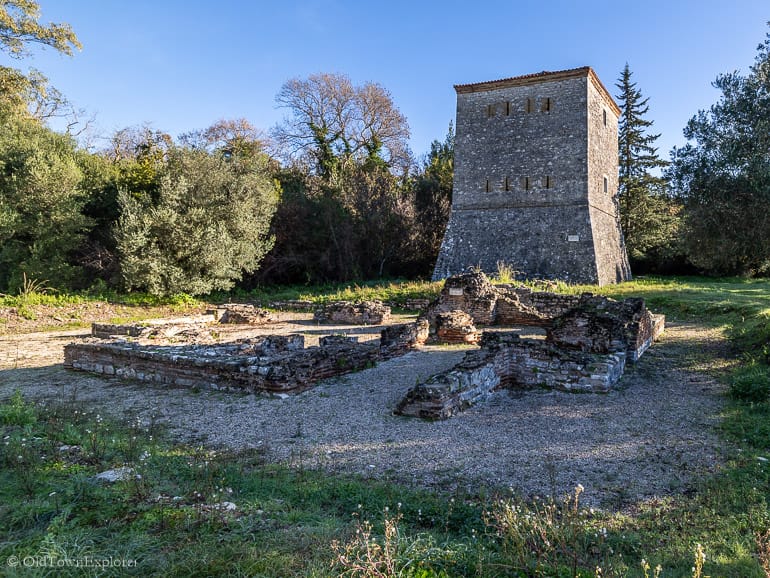
Venetian Tower
- Architect: Constructed under the direction of Cristoforo Condocalli
- Architectural Style: Late medieval Venetian military architecture
- Year Built: 16th century
A two-story defensive structure designed to protect the Butrint Lake fisheries, featuring musket and cannon ports, and originally accessed via a drawbridge.
Tower Gate
- Architectural Style: Hellenistic military architecture
- Year Built: 3rd century BC
A formal entrance to the city and the Sanctuary of Asclepius, characterized by two towers (one square and one U-shaped) and monumental twin portals made of rectangular blocks with rusticated surfaces.
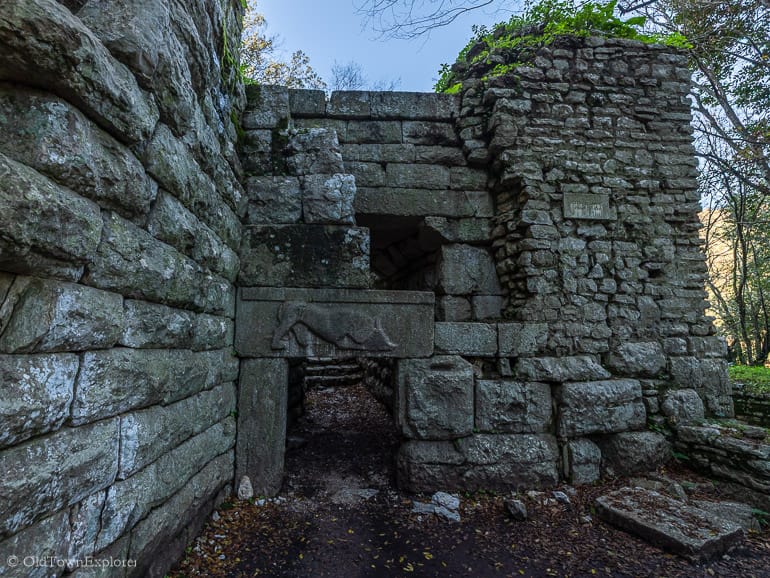
Lion’s Gate
- Architectural Style: Originally Classical or Hellenistic; reconstructed in Late Antiquity
- Year Built: Original construction date unknown; reconstructed around the 6th century AD
Named for the lintel depicting a lion devouring a bull, the gate served as an access point to the acropolis from the northern bay during the Classical and Hellenistic periods.
Outer Defense Wall
- Architectural Style: Hellenistic
- Year Built: Circa 4th century BC
The outer defensive wall of Butrint was constructed during the Hellenistic period, enclosing an area of approximately 6 hectares. This fortification featured at least six gates, including the Asklepieion Gate, West Gate, North Gate, Lion Gate, Lake Gate, and Tower Gate, providing strategic access points to the city.
Inner Defense Wall
- Architectural Style: Medieval
- Year Built: 13th century AD
During the Medieval Phase I building program, the acropolis wall circuit, castle bailey, and outworks were constructed. These fortifications were part of a significant wall-building initiative aimed at enhancing the city's defenses.
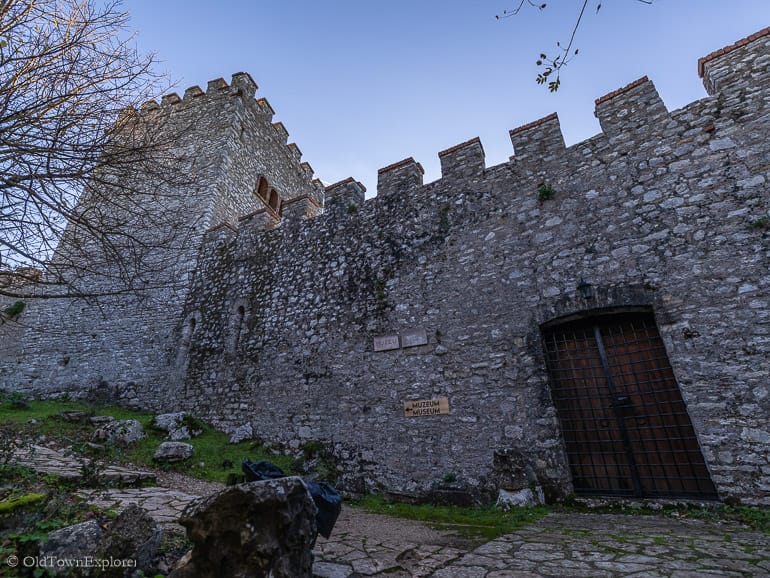
Acropolis Wall
- Architectural Style: Archaic Greek
- Year Built: 7th century BC
The earliest walls, running along the south side of the acropolis, belong to the Archaic Greek age. Constructed of huge blocks in a cyclopean style, these walls represent some of the earliest fortifications in Butrint.
Sanctuary and Roman Core in Butrint
This group contains the ruins that best explain Butrint’s classical and Roman development. The sanctuary, theater, baths, civic buildings, and domestic remains show how the city expanded from religious focus into a fuller urban settlement.
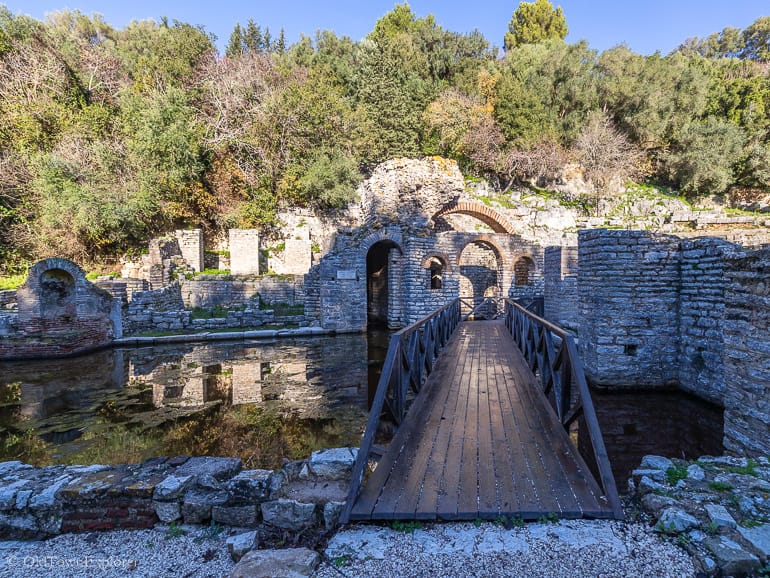
Temple of Asclepius
- Architectural Style: Hellenistic, with Roman modifications.
- Year Built: Believed to have been built between the end of the 4th and the beginning of the 3rd century BC.
Situated on the upper terrace overlooking the theatre, the temple was dedicated to Asclepius, the god of healing. It features a stepped platform and was part of the sanctuary complex.
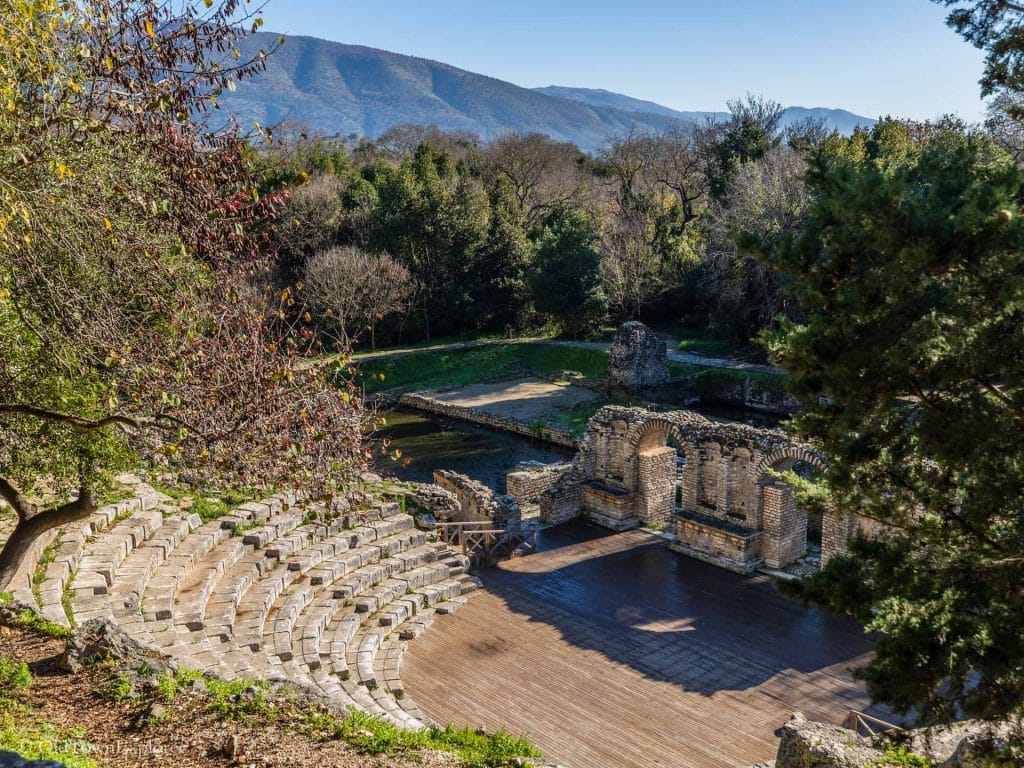
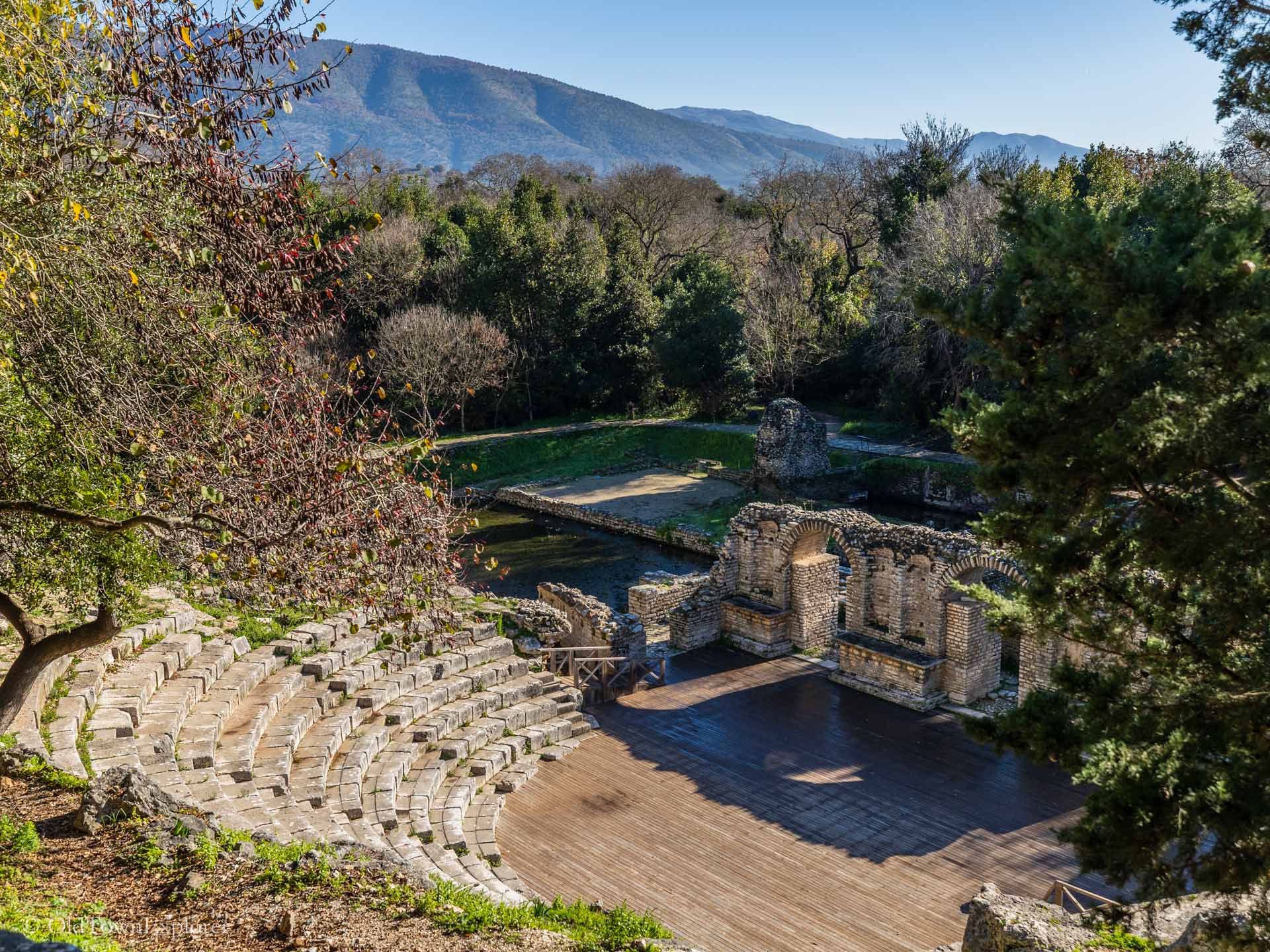
Theater
- Architectural Style: Hellenistic, later modified during Roman times.
- Year Built: Constructed in the 3rd century BC; modifications occurred in the Roman period.
An amphitheater with a cavea built into the hillside, adjacent to the Sanctuary of Asclepius. It was used for performances and gatherings.
Roman Bath-House
- Architect: Unknown
- Style: Roman bath architecture
- Year Built: Roman period, with later alterations
The Roman Bath-House shows how Roman public and private building habits reshaped Butrint after the city became part of the Roman world. The remains include heated-room infrastructure, bathing spaces, and mosaic fragments that help distinguish this layer from the earlier sanctuary buildings nearby.
On a day trip, the bath-house works best as part of the Roman core rather than as a standalone stop. Look for the floor levels, room divisions, and surviving construction details that show how water, heat, and social space were organized inside the ancient city.
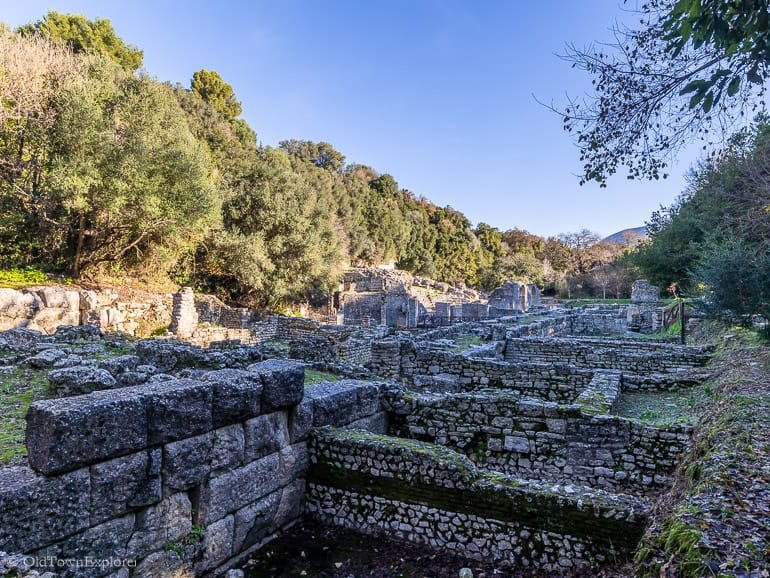
Prytaneum
A Hellenistic building sometimes identified as a prytaneion (civic headquarters) has been excavated near the forum. Its exact form and function remain debated, and the structure is only partially published in modern scholarship.
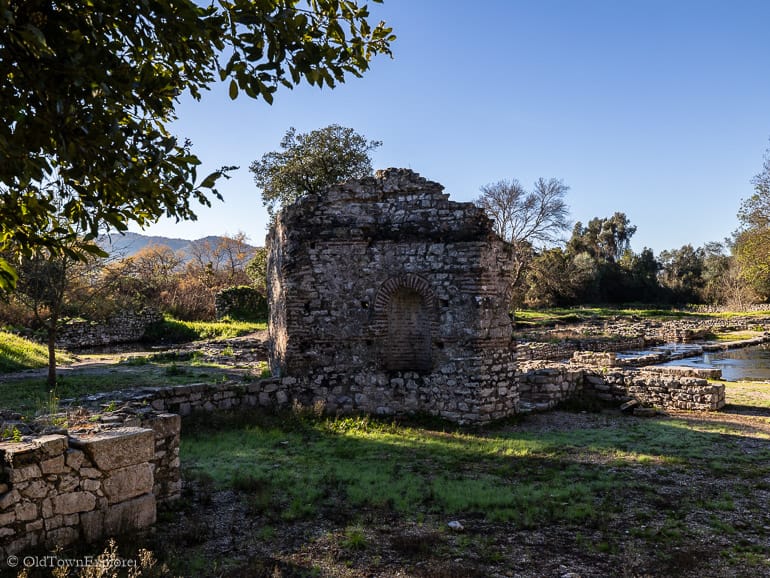
Triconch Palace
- Architectural Style: Late Roman villa architecture
- Year Built: Originally a Roman villa from the 2nd–3rd centuries AD; transformed into a palace around 420 AD.
A luxurious residence named for its three large apses (conchs) around the dining room, situated on the banks of the Vivari Channel. The palace was abandoned before completion, likely due to rising water levels.
Junia Rufina's Well
- Year Built: Unknown
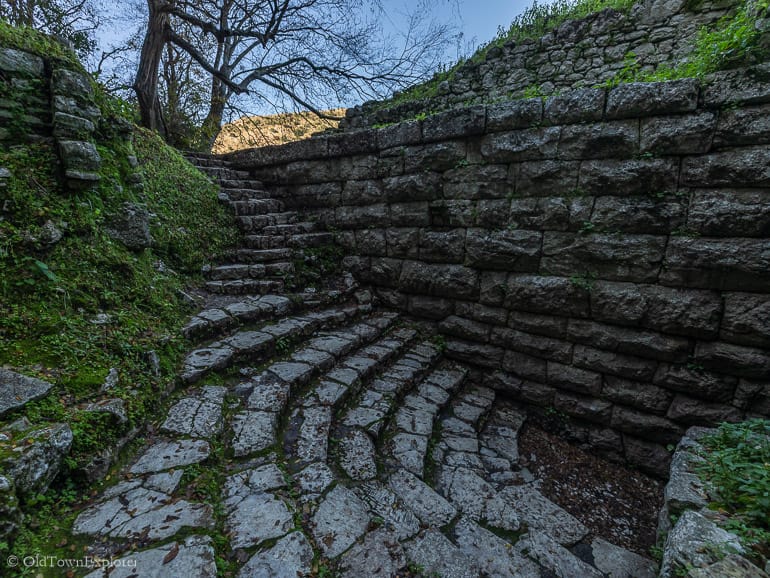
The Well of Junia Rufina, situated just inside the Lion Gate, seems to have been an early cult focus in the city. In the Roman period, it was restructured and dedicated to the nymphs by Junia Rufina, a dedication that is recorded in capitals along the lip of the well.
Early Christian and Acropolis Sites in Butrint
This final group shows Butrint’s late antique and medieval layers. The Baptistery and Great Basilica explain the city’s Christian period, while the Acropolis Castle and museum bring the route back to defense, excavation, and site interpretation.
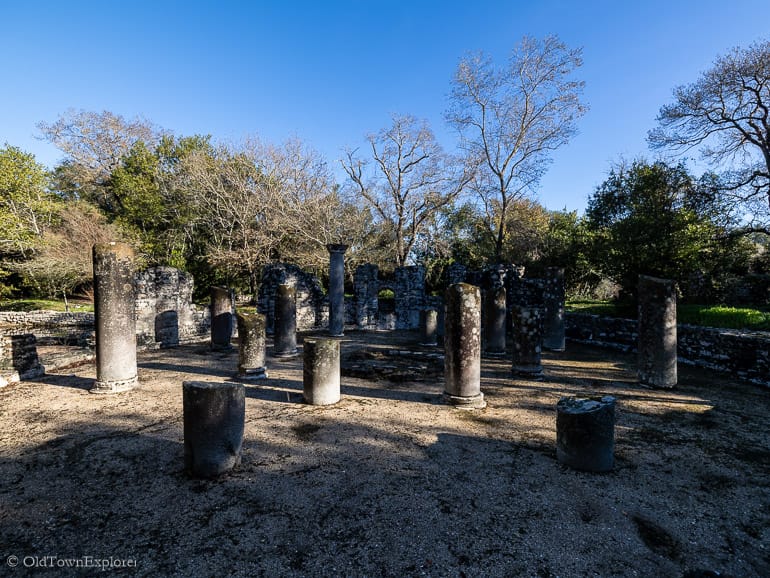
Baptistery
- Architectural Style: Early Christian architecture.
- Year Built: 6th century AD.
A centrally planned, circular baptistery notable for its well-preserved mosaic pavement and a cross-shaped baptismal font. It was built within a large rectangular space, possibly repurposed from a Roman bathhouse.
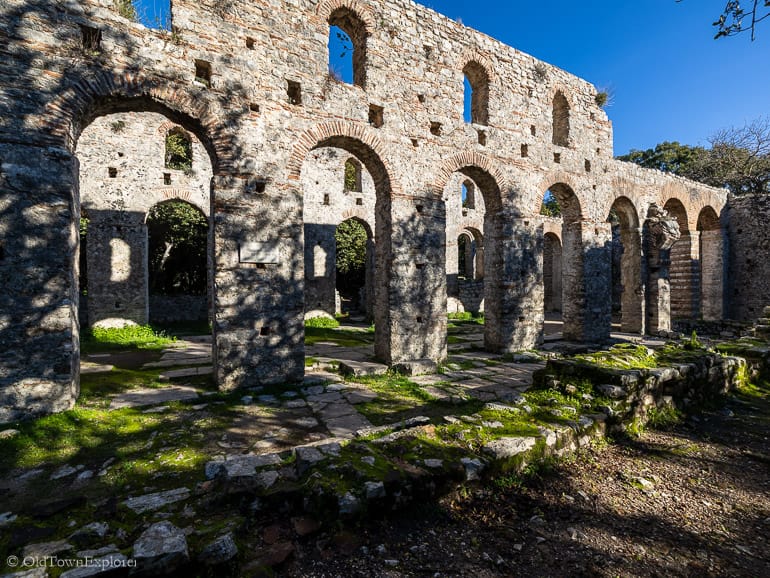
Great Basilica
- Architectural Style: Early Christian basilica
- Year Built: First half of the 6th century AD
The principal church of Butrint during late antiquity, featuring three naves separated by colonnades and a mosaic floor. It is one of the best-preserved late antique basilicas in the Mediterranean.
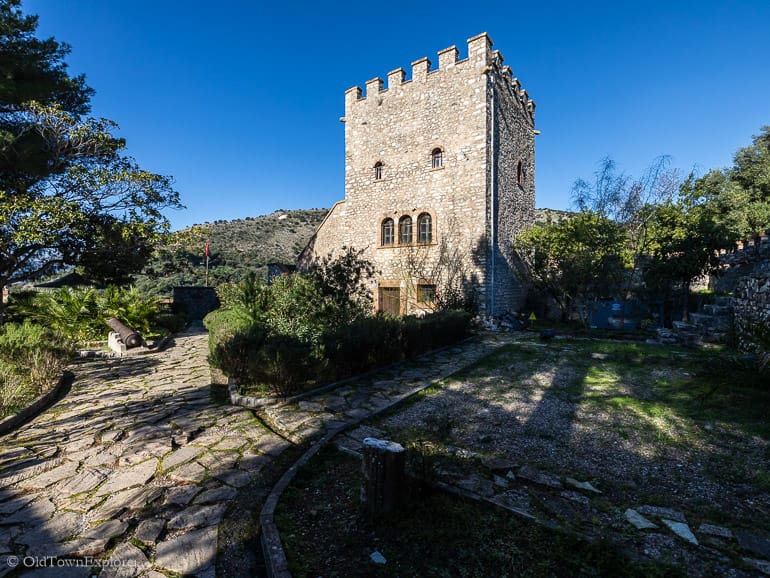
Acropolis Castle
- Architectural Style: Venetian military architecture
- Year Built: 14th century
Built by the Venetians on the highest point of the peninsula after purchasing the land in 1386, the castle served as a defensive structure and now houses the Archaeological Museum of Butrint.
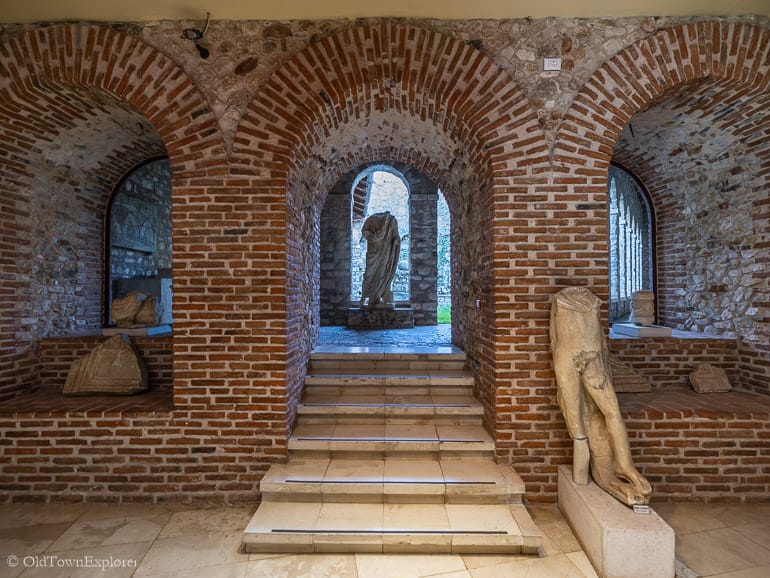
Museum
- Year Built: Established in 1936 within the Acropolis Castle
The Archaeological Museum of Butrint showcases artifacts from the site's extensive history, located within the restored Venetian Acropolis Castle.
How to Get to Butrint from Saranda
Butrint is located approximately 14 kilometers south of Saranda, making it an accessible and popular day trip destination. Travelers have several options to reach this ancient city:

By Bus (Budget-Friendly Option)
Departure Points: Buses to Butrint depart from various locations in Saranda, including near the Port of Saranda, the city center, and close to Hotel Butrinti.
Schedule: Buses run approximately every 30 minutes from 6:30 AM to 7:00 PM.
Duration: The journey takes about 30–40 minutes, passing through the village of Ksamil.
Fare: A one-way ticket costs 200 Albanian Lek (approximately €1.90).
Payment: Tickets are purchased onboard with cash; it's advisable to have small denominations ready.
By Taxi (Convenient and Flexible)
Cost: A one-way trip from Saranda to Butrint costs between €38 and €50.
Round-Trip Option: For a return journey, expect to pay between €75 and €90.
Wait Time: Many taxi drivers offer to wait at Butrint for 2–3 hours, allowing ample time to explore the site before returning to Saranda.
By Rental Car (Ideal for Independent Travelers)
Rental Rates: Car rentals in Saranda start at approximately €20–€25 per day.
Travel Time: The drive to Butrint takes about 20 minutes.
Route: The road is well-signposted, passing through Ksamil.
Considerations: Be aware that driving styles in Albania can be unpredictable; exercise caution and ensure you have a valid driver's license.
What to Expect Upon Arrival at Butrint
Visiting Butrint National Park offers a journey through millennia of history set amidst stunning natural landscapes. Here's what you need to know to make the most of your visit:
Opening Hours
Summer Season (April–October): 8:00 AM – 8:00 PM
Winter Season (November–March): 9:00 AM – 5:30 PM
Note: The park's closing time may vary slightly depending on sunset times.
Entrance Fees
Adults: 1,000 Albanian Lek (approximately €10)
Children (12–18 years): 500 Lek (approximately €5)
Children under 12: Free
Albanian students: 500 Lek
Albanian pensioners and disabled persons: 500 Lek
Note: Group discounts are available for parties of 10 or more. It's advisable to bring cash, as card payments may not be accepted.
Museum of the Ancient City
Located within the Venetian Acropolis Castle, the museum offers a chronological overview of Butrint's history, from the Bronze Age to the Late Middle Ages. It's open daily from 9:00 AM to 4:00 PM.
Making the Most of Your Day Trip to Butrint
A day trip to Butrint works best when the archaeological park is the main priority, not a rushed stop between beaches. Start with the ruins, gates, basilica, baptistery, theater, and acropolis first, then decide whether you have enough time and energy to add Ksamil, Ali Pasha Castle, or a slower return to Saranda.
The site is compact enough for a half-day visit, but the uneven paths, heat, shade changes, museum stop, and transport timing can stretch the day. Build the plan around the archaeological route first, then use nearby stops only as add-ons.
Morning — Start with the Lower Ruins
Begin with the lower part of the archaeological park while the site is cooler and quieter. The theater, Temple of Asclepius, baths, and nearby Roman remains give the best first look at Butrint’s classical and Roman layers.
Midday — Move Through the Christian Sites
Continue toward the Baptistery and Great Basilica before the walk becomes only about walls and viewpoints. These sites add the early Christian layer and make the day feel broader than a classical ruin visit.
Afternoon — Finish at the Gates and Acropolis
Use the Lion’s Gate, defensive walls, and acropolis area to understand Butrint as a fortified settlement. The higher ground also helps connect the ruins to the Vivari Channel, lake, and surrounding landscape.
Late Afternoon — Return or Add a Nearby Stop
After the main archaeological route, return to Saranda or add a nearby stop only if transport is already clear. Ksamil works better for beach time, while Ali Pasha Castle adds another defensive site near the channel.
Tips for Visiting Butrint
Butrint is easy to reach from Saranda, but the visit still needs a little planning. The site combines archaeological ruins, uneven paths, shaded areas, exposed stone, water nearby, and uphill sections near the acropolis, so comfort matters as much as timing.
Use these tips to plan the day around heat, footwear, transport, ticket checks, and the stops that matter most inside Butrint Archaeological Park.
Start Early in Hot Weather
Butrint has shade in places, but the site still involves exposed paths, stone surfaces, and slow walking. In summer, an early start makes the ruins easier to read and reduces the need to rush through the open sections.
Check Current Tickets and Hours
Butrint’s ticket and access details should be checked before you go. Use the official Butrint ticket page and the official site before planning around exact prices, discounts, or entry rules.
Wear Shoes for Uneven Stone
The route includes stone paths, uneven surfaces, ruins, and some uphill walking near the acropolis. Comfortable walking shoes matter more here than they do for a simple promenade or beach stop.
Bring Water and Sun Protection
Bring water, a hat, and sun protection, especially from late spring through early autumn. Wetland areas and shade changes also make insect repellent useful in warmer months.
Plan the Museum as an Add-On
The Archaeological Museum inside the Acropolis Castle is useful if you want more context after seeing the ruins. Check current access before making the museum the center of the day.
Do Not Rush the Sanctuary Area
The theater and Temple of Asclepius are central to understanding Butrint. Slow down here before moving deeper into the Roman, Christian, and defensive layers.
Use a Guide if Context Matters
Butrint can be visited independently, but a guide or audio resource helps connect scattered ruins into a coherent timeline. This is especially useful if Greek, Roman, Byzantine, and Venetian layers start to blur together.
Pair Nearby Stops Carefully
Butrint can pair with Ksamil, Ali Pasha Castle, or a return to Saranda, but do not overload the day. The archaeological park deserves the first priority if history and architecture are the reason for going.
FAQs About Butrint
Is Butrint worth visiting as a day trip from Saranda?
Yes. Butrint is one of the strongest day trips from Saranda because it combines a UNESCO-listed archaeological site, layered ruins, water scenery, and a compact walking route south of the city.
How long should I spend at Butrint?
Plan on a half day for the main archaeological park, especially if you want the theater, sanctuary area, Baptistery, Great Basilica, gates, acropolis, and museum without rushing.
What is Butrint known for?
Butrint is known for its Greek, Roman, Byzantine, Venetian, and Ottoman layers inside a protected archaeological landscape. The theater, Temple of Asclepius, Baptistery, Great Basilica, Lion’s Gate, and Acropolis Castle are the main sights to recognize.
Is Butrint walkable?
Yes, Butrint is walkable, but it is not a flat city stroll. Expect uneven paths, stone surfaces, shaded and exposed sections, and some uphill walking near the acropolis.
Can I visit Butrint without a car?
Yes. Butrint can be visited without a car from Saranda by bus, taxi, or tour. The bus is the budget option, while a taxi or tour gives more control over timing.
When is the best time to visit Butrint?
Morning and late afternoon are usually better than midday in hot weather. The ruins are easier to understand when you are not rushing through sun, heat, or peak visitor pressure.
How is Butrint different from Gjirokastër?
Butrint is an archaeological landscape with ancient and medieval ruins. Gjirokastër is a historic stone city with Ottoman-era houses, hillside streets, and a fortress, so it works better when you want a lived-in urban setting.
Can I combine Butrint with Ksamil?
Yes, Butrint and Ksamil can be combined if you plan transport carefully. Visit Butrint first if archaeology is the priority, then add Ksamil for beach time or a meal afterward.
Can I do wine tasting without a car at Butrint?
No. Butrint is not a wine-tasting destination. Keep the visit focused on archaeology, then use Saranda for wine bars, shops, and meal pairing after you return.
Should I stay near Butrint or in Saranda?
Most visitors should stay in Saranda and visit Butrint as a day trip. Saranda has the broader lodging, restaurant, ferry, and transport base, while Butrint works best as a focused archaeological outing.
For broader trip planning, start with Saranda. For city-level buildings, ruins, and monuments near your base, use Saranda Architecture. For another historic day trip from Saranda, continue with Gjirokastër, Albania.
For meals and wine after the archaeological park, use Saranda Food and Saranda Wine.
