
Vienna Architecture
Explore Vienna Architecture: Palaces, Ringstraße & Secession
Vienna architecture is shaped by its role as the Habsburg imperial capital. The city moves from the medieval core around St. Stephen’s Cathedral to Baroque palaces, grand civic buildings on the Ringstraße, Otto Wagner stations, Secession design, and early modern apartment blocks.
The first layer is the old center, where narrow streets, churches, courtyards, and palace façades sit close together inside the former city walls. The second layer is the Ringstraße, where museums, parliament, theaters, university buildings, and formal boulevards show how Vienna expanded in the 19th century.
We spent a month in Vienna using the center, Ringstraße, Karlsplatz, Schönbrunn, and the Secession Building as the main architecture anchors. The strongest plan is to compare the old core, imperial palace areas, Ringstraße monuments, and early modern design rather than treating Vienna as one single style.
This page contains affiliate links. We may earn a small commission at no extra cost to you.
Vienna Architecture at a Glance
Vienna rewards architecture walks because major buildings sit in clear clusters: the Innere Stadt, the Ringstrasse, the palace districts, MuseumsQuartier, and the Secession or Otto Wagner sites.
Key architecture points:
- Core identity: Gothic St. Stephen’s Cathedral, Habsburg palaces, Ringstrasse Historicism, Viennese Baroque, Secession design, and Otto Wagner transport architecture.
- First buildings to notice: St. Stephen’s Cathedral, Hofburg, Parliament, Vienna City Hall, State Opera, Karlskirche, Belvedere, Schönbrunn, Secession Building, and Otto Wagner’s Stadtbahn pavilions.
- Strongest starting area: Start at Stephansplatz or the Hofburg, then walk toward the Ringstrasse for the State Opera, museums, Parliament, City Hall, and Burgtheater.
- Key features: Look for Gothic spires, Baroque domes, palace courtyards, Historicist façades, gilded Secession ornament, iron-and-glass station details, and formal gardens.
- Main trade-off: The center is walkable, but Schönbrunn, Belvedere, Hundertwasserhaus, Steinhof, Hietzing, and some Otto Wagner sites require U-Bahn, tram, bus, or taxi time.
For two hours, stay between Stephansplatz, the Hofburg, and the Ringstrasse. For a full day, add Belvedere, Schönbrunn, or the Secession and Otto Wagner sites depending on which architectural layer interests you most.
What to See in Vienna
Vienna’s architecture is not concentrated in one small old town. The Innere Stadt gives the Gothic cathedral, medieval lanes, Baroque churches, and Hofburg courtyards, while the Ringstrasse adds the large public buildings built after the city walls came down.
The clearest first plan is to start at St. Stephen’s Cathedral, cross the Hofburg area, and then choose one outside focus: the Ringstrasse, Schönbrunn, Belvedere, MuseumsQuartier, or the Secession and Otto Wagner buildings.
Innere Stadt, Ringstrasse, and Palace Architecture
The Innere Stadt gives Vienna its oldest architecture walk, with St. Stephen’s Cathedral, Michaelerplatz, the Hofburg, churches, old squares, and narrow side streets. The Ringstrasse changes the scale with Parliament, City Hall, the State Opera, Burgtheater, the University of Vienna, Kunsthistorisches Museum, and late-19th-century palaces.
Baroque, Historicist, Secession, and Modern Layers
Baroque Vienna is strongest at Karlskirche, Belvedere, Schönbrunn, and several palace interiors. Historicism dominates the Ringstrasse. Secession and early modern design appear at the Secession Building, Otto Wagner’s Stadtbahn pavilions, the Austrian Post Savings Bank, and later modern additions around MuseumsQuartier.
The category sections below are easiest to scan by building type:
- Hofburg Imperial Palace Complex: Habsburg palace architecture, courtyards, museums, and imperial-state buildings.
- Ringstrasse: Historicist public buildings, theatres, museums, civic monuments, and late-19th-century palace façades.
- MuseumsQuartier: Baroque stables, modern museum blocks, and cultural buildings behind the Ringstrasse.
- Religious Buildings: Gothic, Baroque, Biedermeier, Orthodox, Protestant, synagogue, and modern church architecture.
- Palaces and Houses: Habsburg palaces, aristocratic residences, Baroque houses, and unusual residential architecture.
- Other Attractions: Secession landmarks, transport buildings, concert halls, civic monuments, and modern public architecture.
With those groups in mind, choose the first walk by scale: Innere Stadt for the old center, Ringstrasse for monumental public buildings, Schönbrunn or Belvedere for palace architecture, or the Secession and Otto Wagner sites for Vienna’s early modern turn.
Attractions in the Hofburg Imperial Palace Complex
The Hofburg Imperial Palace complex includes the former winter residence of the Habsburgs and today houses several museums and government offices. Key sites within the Hofburg include the Imperial Apartments, the Sisi Museum, the Silver Collection, and the Austrian National Library. The architecture reflects centuries of expansion and combines Gothic, Renaissance, Baroque, and Rococo styles. Visitors can explore grand halls, ornate rooms, and historic collections showcasing Vienna’s imperial history.

Hofburg
- Architect: Multiple architects over centuries
- Style: Medieval, Renaissance, Baroque, Rococo, and Classicist
- Year Built: 13th century onwards
- Address: Michaelerkuppel, 1010 Vienna, Austria
The former imperial palace of the Habsburg dynasty, the Hofburg has evolved over centuries into a complex housing museums, the Austrian National Library, and the offices of the President of Austria.
Attractions in the Ringstrasse
Vienna’s Ringstrasse, built in the mid-19th century on the site of former city walls, is a grand boulevard lined with some of the city’s most significant public buildings. Important architectural landmarks along the Ringstrasse include the Vienna State Opera, the Parliament building, City Hall (Rathaus), and the Burgtheater. These buildings primarily feature Historicist styles inspired by classical architecture, demonstrating Vienna’s imperial prestige during that period.
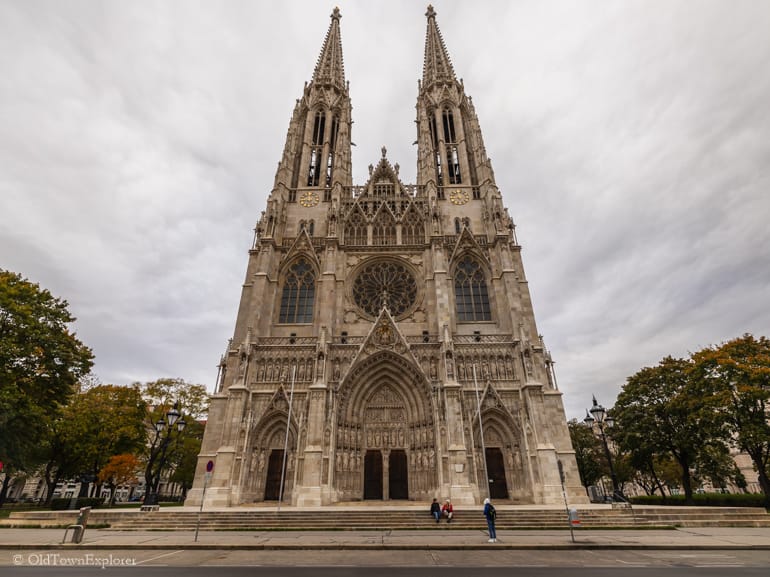
Votive Church
Votivkirche
- Architect: Heinrich von Ferstel
- Architectural Style: Neo-Gothic
- Year Built: 1856–1879
- Address: Rooseveltplatz 8, 1090 Vienna
Built as a votive offering after an assassination attempt on Emperor Franz Joseph, this church is a stunning example of Neo-Gothic architecture with soaring spires and intricate stained glass windows.
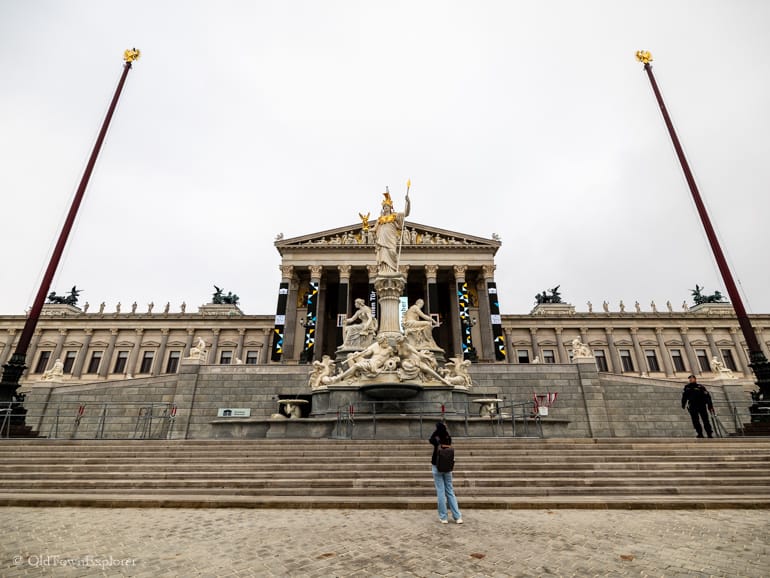
Austrian Parliament Building
Parlamentsgebäude
- Architect: Theophil Hansen
- Architectural Style: Greek Revival / Neoclassical
- Year Built: 1874–1883
- Address: Dr.-Karl-Renner-Ring 3, 1017 Vienna
Inspired by ancient Greek temples, the Parliament features grand Corinthian columns, elaborate sculptures, and the iconic Pallas Athena fountain symbolizing wisdom and democracy.
Austrian Post Savings Bank
Postsparkasse
- Architect: Otto Wagner
- Architectural Style: Jugendstil (Art Nouveau)
- Year Built: 1904–1912
- Address: Georg-Coch-Platz 2, 1010 Vienna
A pioneering work of early modern architecture, this building features clean lines, use of reinforced concrete, aluminum fixtures, and innovative functional design.
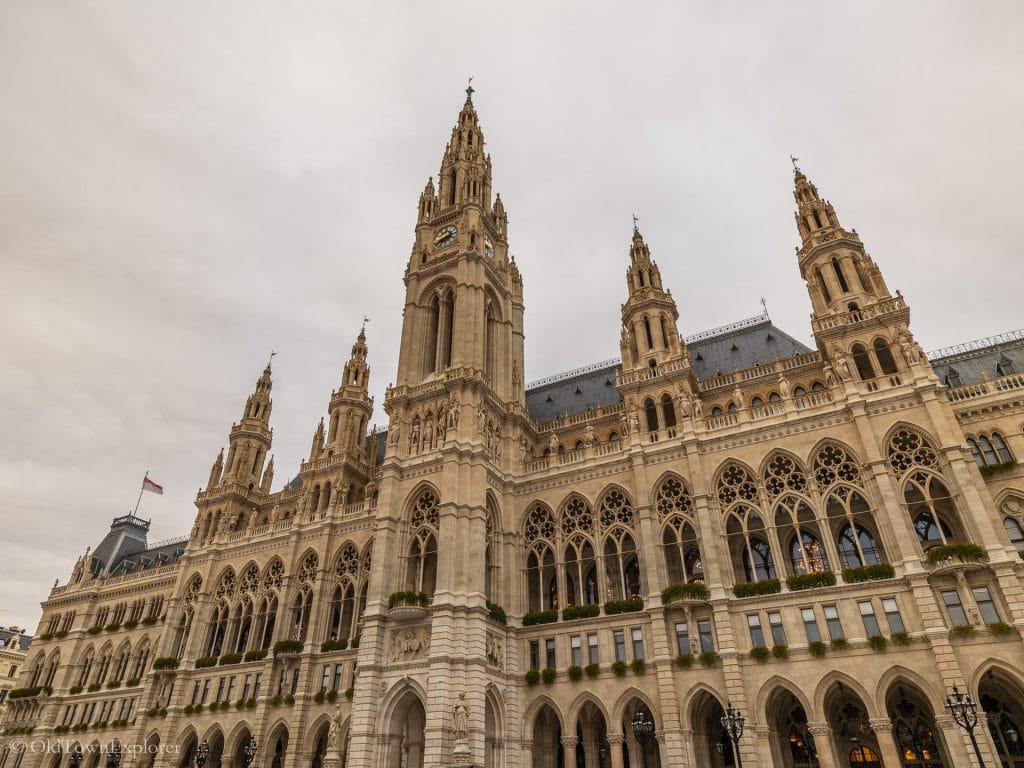
Vienna City Hall
Wiener Rathaus
- Architect: Friedrich von Schmidt
- Architectural Style: Neo-Gothic
- Year Built: 1872–1883
- Address: Friedrich-Schmidt-Platz 1, 1010 Vienna
With its imposing central tower and detailed Gothic façade, Vienna City Hall is the seat of the city government and a landmark of the Ringstrasse.
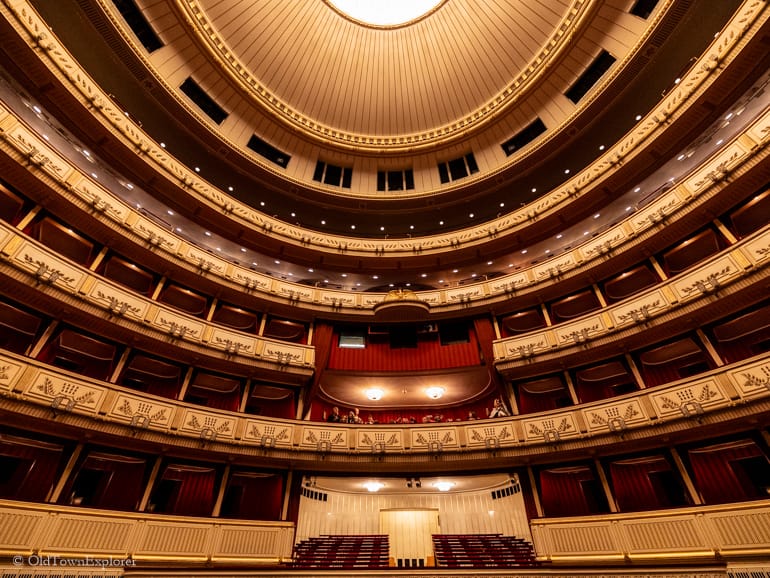
Vienna State Opera
Wiener Staatsoper
- Architects: August Sicard von Sicardsburg and Eduard van der Nüll
- Architectural Style: Neo-Renaissance
- Year Built: 1861–1869
- Address: Opernring 2, 1010 Vienna
One of the world’s leading opera houses, the building features Renaissance-inspired architecture with rich ornamentation and an opulent interior.
University of Vienna
Universität Wien
- Architect: Heinrich von Ferstel
- Architectural Style: Historicist (Renaissance Revival)
- Year Built: 1873–1884
- Address: Universitätsring 1, 1010 Vienna
The university’s main building is known for its grand halls and academic sculptures, reflecting the importance of education in Vienna’s cultural heritage.

Museum of Fine Arts
Kunsthistorisches Museum Wien
- Architects: Gottfried Semper and Carl Hasenauer
- Architectural Style: Renaissance Revival
- Year Built: 1871–1891
- Address: Maria-Theresien-Platz, 1010 Vienna
This grand museum building, mirrored by the Natural History Museum, boasts a richly decorated façade and an extensive collection of European art masterpieces.

Museum of Natural History
- Architect: Gottfried Semper and Carl Hasenauer
- Style: Historicism with Renaissance elements
- Built: 1871–1881; opened in 1889
- Address: Maria-Theresien-Platz, 1010 Vienna
The Museum of Natural History faces the Kunsthistorisches Museum across Maria-Theresien-Platz, creating one of the clearest paired architectural set pieces on the Ringstrasse. The two museums were commissioned by Emperor Franz Joseph I and designed with matching exteriors as part of the unrealized Imperial Forum.
Look for the dome, long symmetrical façade, sculptural program, and the way the museum mirrors the Kunsthistorisches Museum across the square. The building works best as part of a Ringstrasse walk that also includes the Hofburg edge, Heldenplatz, the museums, Parliament, and the public buildings around the boulevard.
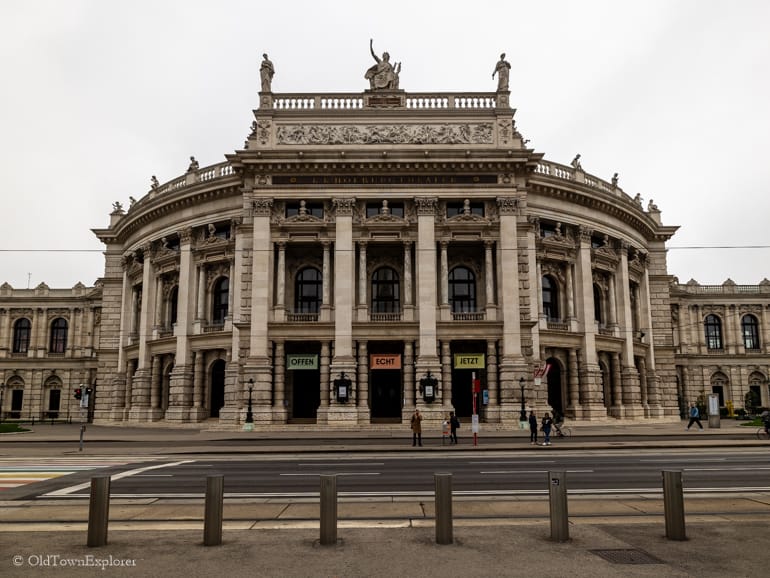
Burgtheater
- Architect: Gottfried Semper and Karl Freiherr von Hasenauer
- Architectural Style: Neo-Renaissance
- Year Built: 1874–1888
- Address: Universitätsring 2, 1010 Vienna
Austria’s National Theatre, renowned for its elegant Neo-Renaissance design and lavish interiors, remains a centerpiece of Vienna’s cultural scene.
MAK - Museum of Applied Arts
- Architect: Heinrich von Ferstel
- Style: Neo-Renaissance
- Built: 1868–1871; opened November 15, 1871
- Address: Stubenring 5, 1010 Vienna, Austria
The MAK’s purpose-built museum has an arcaded central hall and a Renaissance Revival façade on the Ringstrasse. It was the first museum building constructed on the boulevard.
Neue Burg (Part of the Hofburg Palace)
- Architect: Gottfried Semper (initial plans), completed by Karl Hasenauer
- Architectural Style: Historicism / Baroque Revival
- Year Built: 1881–1913
- Address: Heldenplatz, 1010 Vienna
The Neue Burg is a monumental wing of the Hofburg complex, housing several museums and offering grand staircases and lavish interiors reflecting imperial grandeur.
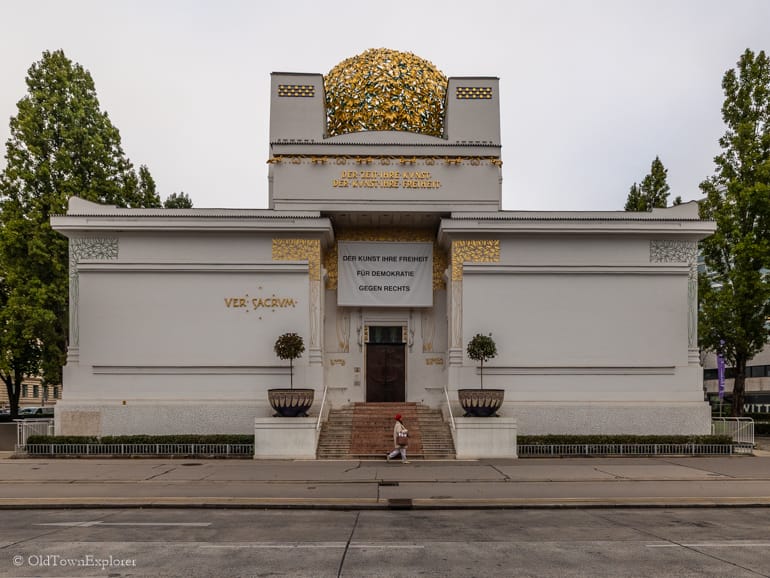
Secession Building
Wiener Secessionsgebäude
- Architect: Joseph Maria Olbrich
- Architectural Style: Jugendstil (Art Nouveau)
- Year Built: 1897–1898
- Address: Friedrichstraße 12, 1010 Vienna
A hallmark of Vienna Secession movement architecture, known for its golden dome of laurel leaves and minimalistic yet symbolic design promoting modern art.
Palais Ephrussi
- Architect: Theophil Freiherr von Hansen
- Architectural Style: Neo-Renaissance
- Year Built: 1889–1895
- Address: Rennweg 1, 1030 Vienna
A lavish palace commissioned by the wealthy Ephrussi banking family, featuring ornate façades and rich interiors representing the historic grandeur of Viennese palatial architecture.
Palais Epstein
- Architect: Theophil Freiherr von Hansen
- Architectural Style: Neo-Renaissance
- Year Built: 1887–1889
- Address: Prinz-Eugen-Straße 8, 1030 Vienna
Known for its grand scale and elegant Renaissance Revival style, Palais Epstein was originally a noble residence and now serves various institutional purposes.
Palais Hansen
- Architect: Theophil Freiherr von Hansen
- Architectural Style: Neo-Renaissance
- Year Built: 1867–1873
- Address: Schottenring 24, 1010 Vienna
Initially built as a luxury hotel for the 1873 World Exhibition, it now operates as a high-end hotel, notable for its stately façade and historic significance.
Kasino am Schwarzenbergplatz
- Architect: Ludwig Baumann
- Architectural Style: Historicism / Neo-Baroque
- Year Built: 1903–1905
- Address: Schwarzenbergplatz 7, 1030 Vienna
Originally a casino and social club, this elegant building showcases late historicist architectural details with a richly decorated façade.
Palais Württemberg
- Architect: Unknown
- Style: Italian Renaissance Revival
- Built: 1863; adapted as Hotel Imperial in 1873
- Address: Kärntner Ring 16, 1010 Vienna, Austria
The former palace of Duke Philipp of Württemberg became Hotel Imperial in 1873. Its Renaissance Revival façade, ceremonial staircase, and Ringstrasse position preserve the character of an aristocratic residence adapted for hotel use.
Palais Erzherzog Wilhelm
aka Deutschmeister-Palais
- Architect: Unknown
- Architectural Style: Historicist
- Year Built: 19th century
- Address: Schwarzenbergplatz 4, 1030 Vienna
This palace was historically associated with the Archduke Wilhelm and the Deutschmeister military order, showcasing elegant historicist architecture.
Palais Henckel von Donnersmarck
- Architect: Ludwig Förster
- Architectural Style: Historicist / Neo-Renaissance
- Year Built: 1869
- Address: Kärntner Ring 10, 1010 Vienna
An aristocratic city palace with richly decorated façades and interiors, reflecting the wealth and social status of the Henckel von Donnersmarck family.
Palais Königswarter
- Architect: Ludwig Förster
- Architectural Style: Neo-Renaissance
- Year Built: 1862–1864
- Address: Kärntner Ring 4, 1010 Vienna
This elegant urban palace exhibits Renaissance Revival style and has served as a private residence and cultural venue.
Palais Leitenberger
- Architect: Unknown
- Architectural Style: Historicist
- Year Built: Late 19th century
- Address: Schwarzenbergplatz 1, 1030 Vienna
A lesser-known historicist palace with characteristic period detailing, part of Vienna’s aristocratic Ringstrasse architecture.
Café Landtmann
- Architect: Gottfried Schumann
- Architectural Style: Historicist / Jugendstil interior
- Year Built: 1873 (café opened in 1873, interior renovated later)
- Address: Universitätsring 4, 1010 Vienna
One of Vienna’s most famous traditional cafés, the building features a classic façade and an elegant interior that has hosted many notable intellectuals.
Palais Todesco
- Architect: Theophil Freiherr von Hansen
- Architectural Style: Neo-Renaissance
- Year Built: 1861–1864
- Address: Kärntner Ring 11, 1010 Vienna
A grand aristocratic palace with elaborate Renaissance Revival features, originally built for the wealthy Todesco family.
Adels Casino
aka Aristocratic Casino
- Architect: Unknown
- Architectural Style: Historicist
- Year Built: Late 19th century
- Address: Near Kärntner Ring area, Vienna
A social club building for Vienna’s aristocracy, exhibiting typical late 19th-century stylistic elements.
Palais Dumba
- Architect: Theophil Freiherr von Hansen
- Architectural Style: Neo-Renaissance
- Year Built: 1871–1874
- Address: Schwarzenbergplatz 6, 1030 Vienna
Commissioned by the industrialist Nikolaus Dumba, this palace is noted for its richly detailed Renaissance Revival design.
Palace of Ludwig Viktor
- Architect: Heinrich von Ferstel
- Architectural Style: Neo-Renaissance
- Year Built: 1863–1866
- Address: Schwarzenbergplatz 6, 1030 Vienna
Built for Archduke Ludwig Viktor, this palace reflects the refined elegance of Renaissance Revival architecture and now houses cultural institutions.
Hotel Imperial
aka Imperial Hotel Vienna
- Architect: Arnold Kosch
- Architectural Style: Neo-Renaissance
- Year Built: 1863 (originally built as a palace), converted to hotel in 1873
- Address: Kärntner Ring 16, 1010 Vienna
Originally built as a city palace for the Duke of Württemberg, this luxurious hotel retains its grand historicist architecture combined with lavish interiors, embodying the elegance of Vienna’s Ringstrasse era.
Palais Clam-Gallas
- Architect: Johann Bernhard Fischer von Erlach (original core), later expansions in the 19th century
- Architectural Style: Baroque with later Historicist additions
- Year Built: Originally early 18th century; expanded in the 19th century
- Address: Währinger Str. 30, 1090 Vienna (just off the Ringstrasse)
A Baroque palace with later 19th-century modifications, now serving as a cultural venue hosting concerts and events.
Ring Tower
Ringturm
- Architect: Erich Boltenstern
- Architectural Style: Modernist / Early skyscraper style
- Year Built: 1953–1955
- Address: Schottenring 30, 1010 Vienna, Austria
Although not historicist like the majority of Ringstrasse buildings, this is one of Vienna’s first high-rise office buildings and an iconic modern architectural landmark on the Ring.
Palais Hoyos
aka Palais Hoyos-Sprinzenstein
- Architect: Otto Wagner
- Architectural Style: Jugendstil (Art Nouveau)
- Year Built: 1899–1902
- Address: Prinz-Eugen-Straße 27, 1040 Vienna (just adjacent to the Ringstrasse)
A fine example of Otto Wagner’s Jugendstil work, combining classical elements with modernist touches; currently serves as a diplomatic building.
Palais Ferstel
- Architect: Heinrich von Ferstel
- Architectural Style: Neo-Gothic / Renaissance Revival
- Year Built: 1856–1860
- Address: Herrengasse 14, 1010 Vienna (close to the Ringstrasse)
Originally built as the Vienna Stock Exchange, now houses cafés and shops, notable for its elegant arcade and richly decorated façade.
Schwarzenberg Palace
Palais Schwarzenberg
- Architect: Johann Lucas von Hildebrandt (original construction)
- Architectural Style: Baroque
- Year Built: 1697–1728 (expanded later)
- Address: Schwarzenbergplatz 4, 1030 Vienna
Though predating the Ringstrasse era, this grand Baroque palace stands prominently near the Ringstrasse and is an important historic aristocratic residence.
The Kursalon Hübner
- Architect: Johann Garben
- Architectural Style: Italian Renaissance Revival
- Year Built: 1865–1867
- Address: Johann Strauss Platz 1, 1030 Vienna (just adjacent to the Ringstrasse, near Stadtpark)
Famous for its concert hall and elegant architecture, the Kursalon is a key venue for classical music and a splendid example of Ringstrasse-era design.
Attractions in the MuseumsQuartier
The MuseumsQuartier is one of the largest cultural complexes in the world, blending historic Baroque buildings with modern architectural interventions. It houses major museums such as the Leopold Museum, featuring Austrian modern art, and the Museum of Modern Art (MUMOK). The district offers public spaces for cultural events, exhibitions, and social gatherings, reflecting Vienna’s contemporary arts scene within a historical context.
Leopold Museum
- Architect(s): Laurids and Manfred Ortner (Ortner & Ortner Baukunst)
- Architectural Style: Modernist
- Year Built: 2001
- Address: Museumsplatz 1, 1070 Vienna, Austria
A modernist cube clad in white Danube shell limestone, the Leopold Museum houses one of the world's most important collections of Austrian art from the second half of the 19th century to the early 20th century.
mumok – Museum of Modern Art
- Architect(s): Laurids and Manfred Ortner (Ortner & Ortner Baukunst)
- Architectural Style: Modernist
- Year Built: 2001
- Address: Museumsplatz 1, 1070 Vienna, Austria
The mumok is a striking, cubist building clad in anthracite gray basalt lava stone, featuring a curved roof and expansive exhibition spaces. It is one of Europe's largest museums dedicated to modern and contemporary art.
Kunsthalle Wien
- Architect(s): Laurids and Manfred Ortner (Ortner & Ortner Baukunst)
- Architectural Style: Modernist
- Year Built: 2001
- Address: Museumsplatz 1, 1070 Vienna, Austria
Housed in the former Winter Riding Hall of the imperial stables, Kunsthalle Wien combines historic architecture with contemporary design. It serves as a venue for international contemporary art exhibitions and cultural discourse.
Austrian Architecture Museum
Az W – Architekturzentrum Wien
- Architect(s): Unknown
- Architectural Style: Contemporary
- Year Built: 2001
- Address: Museumsplatz 1, 1070 Vienna, Austria
As Austria's national architecture museum, Az W focuses on exhibitions, events, and research related to architecture and urban development, particularly from the 20th and 21st centuries.
ZOOM Children's Museum
- Architect(s): Unknown
- Architectural Style: Contemporary
- Year Built: 2001
- Address: Museumsplatz 1, 1070 Vienna, Austria
Designed for children aged 6 to 12, ZOOM Children's Museum offers interactive exhibitions and workshops that make complex topics from science, art, and culture accessible and engaging for young minds.
Tanzquartier Wien
- Architect: Frötscher Lichtenwagner (studio conversion)
- Style: Contemporary conversion within historic buildings
- Built: Studio conversion completed in 2001
- Address: Museumsplatz 1, 1070 Vienna, Austria
Tanzquartier Wien opened in 2001 as a center for contemporary dance and performance in the MuseumsQuartier. Its studios combine historic masonry with exposed concrete, steel, and glass additions. A bridge-like mezzanine provides access to the information center and library while allowing the studios to function independently. Performances also take place in Halle G elsewhere in the complex.
Cultural Initiatives at the MuseumsQuartier
- Style: Adaptive reuse within the historic MuseumsQuartier complex
- Address: Museumsplatz 1, 1070 Vienna, Austria
The MuseumsQuartier also houses smaller cultural organizations, creative workspaces, and artist-residency activities alongside its larger museums and performance venues. These uses show how the former imperial stable complex functions as a working cultural district.
Cafe Leopold
- Architect: Part of the Leopold Museum building by Ortner & Ortner Baukunst
- Architectural Style: Modernist interior within a contemporary museum building
- Year Built: 2001
- Address: Museumsplatz 1, 1070 Vienna, Austria
While primarily a cafe, Cafe Leopold is architecturally significant as part of the modernist museum complex, serving as a vibrant social space within MuseumsQuartier where art lovers gather.
Religious Buildings in Vienna
Vienna’s religious architecture spans more than a millennium, reflecting the city’s evolving spiritual traditions and political history. From the Gothic spires of St. Stephen’s Cathedral to Baroque court churches and early modernist temples, these sites reveal the religious and artistic influences that have shaped the capital.

St. Stephen's Cathedral
- Architect: Unknown
- Style: Romanesque and Gothic
- Built: 12th century onward
- Address: Stephansplatz, 1010 Vienna
St. Stephen’s Cathedral is Vienna’s central Gothic landmark, with a tall south tower, a tiled roof, and a position that fixes the street pattern around Stephansplatz. The cathedral is the best first stop for reading the old center because its tower, roof, portals, and square are visible before any ticketed interior decision.
Dominican Church
- Architect: Not confirmed
- Style: Early Baroque
- Built: 1631–1634, with later interior work
- Address: Postgasse 4, 1010 Vienna, Austria
St. Maria Rotunda is the Dominican church in Vienna’s old center. Its early-Baroque nave and decorated interior belong to the seventeenth-century rebuilding, although the Dominican community has occupied the site since the Middle Ages.
Church of the Teutonic Order
Deutschordenskirche
- Architect: Unknown; Baroque renovations by Johann Bernhard Fischer von Erlach
- Architectural Style: Originally medieval with Baroque updates
- Year Built: Medieval origins; Baroque redesign 1720s
- Address: Deutschordenshaus, Singerstraße 7, 1010 Vienna
Headquarters for the Teutonic Order, notable for its rich Baroque interior and religious artifacts.
Franciscan Church
Franziskanerkirche
- Architect: Unknown
- Architectural Style: Gothic with Baroque modifications
- Year Built: 1603–1607 (completed)
- Address: Franziskanerplatz 6, 1010 Vienna
A modest yet elegant church with a Gothic facade and Baroque interior, serving the Franciscan order.
Lutheran City Church
Lutherische Stadtkirche
- Architect: Pietro Ferrabosco (plans); Jakob Vivian (construction)
- Style: Renaissance, with later alterations
- Built: 1582–1583; adapted for Lutheran worship in 1783
- Address: Dorotheergasse 18, 1010 Vienna, Austria
Originally built as the church of a Poor Clare convent founded by Elisabeth of Austria, the Lutheran City Church became a Protestant place of worship in 1783. Its history connects a former Habsburg religious foundation with Vienna’s oldest Lutheran congregation.
Church at the Court / Kirche am Hof
- Architect: Unknown
- Style: Gothic church with a Baroque façade and interior alterations
- Built: 1386–1403; Baroque façade from 1662
- Location: Am Hof, 1010 Vienna, Austria
Kirche am Hof, also known as the Church of the Nine Choirs of Angels, combines a medieval Gothic core with a broad Baroque façade overlooking the square. It developed as a Carmelite church and later served the Jesuits; today it is associated with Vienna’s Croatian Catholic community.
Capuchin Church
Kapuzinerkirche
- Architect: Unknown
- Architectural Style: Baroque
- Year Built: 1611–1632
- Address: Neuer Markt 6, 1010 Vienna
Known for the Imperial Crypt (Kapuzinergruft) beneath, the burial site of Habsburgs, this simple Baroque church is rich in history.
Maltese Church
- Architect: Not confirmed
- Style: Gothic core with later alterations
- Built: Medieval core; roof timbers dated to 1307–1312
- Address: Kärntner Straße 37, 1010 Vienna, Austria
The Maltese Church is dedicated to St. John the Baptist and stands on Kärntner Straße. Its modest street frontage conceals a medieval church with later decorative changes. Research on the roof timbers has identified surviving early-fourteenth-century construction.
Maria am Gestade
- Architect: Unknown
- Architectural Style: Gothic
- Year Built: 14th century
- Address: Salvatorgasse 12, 1010 Vienna
One of Vienna’s oldest Gothic churches, located near the Danube, notable for its slender tower.
Saint Michael's Church
Michaelerkirche
- Architect: Possibly influenced by Fischer von Erlach
- Architectural Style: Romanesque with Baroque and Gothic elements
- Year Built: 13th century, rebuilt 18th century
- Address: Michaelerplatz 3, 1010 Vienna
Close to the Hofburg, this church has a mix of architectural styles and houses an important Baroque high altar.
St. Rupert's Church
Ruprechtskirche
- Architect: Unknown
- Architectural Style: Romanesque
- Year Built: Possibly 8th or 9th century (oldest church in Vienna)
- Address: Ruprechtsplatz 1, 1010 Vienna
Vienna’s oldest church, modest Romanesque style with historical significance.
Friars Minor Conventual Church
Minoritenkirche
- Architect: Likely Italian Gothic master builders
- Architectural Style: Gothic
- Year Built: 13th century
- Address: Minoritenplatz 3, 1010 Vienna
Notable for its elegant Gothic facade and being the national church for Italy in Vienna.
St. Peter's Church
Peterskirche
- Architect: Johann Lukas von Hildebrandt, with later contributions
- Architectural Style: Baroque
- Year Built: 1701–1733
- Address: Petersplatz 1, 1010 Vienna
A Baroque church modeled after St. Peter’s Basilica in Rome, featuring a magnificent dome and ornate interior.
Scots Church
Schottenkirche
- Architect: Unknown
- Architectural Style: Romanesque and Gothic elements
- Year Built: Originally 12th century; rebuilt and expanded over centuries
- Address: Freyung 6, 1010 Vienna
Founded by Irish (Scottish) monks, this church has a blend of Romanesque and Gothic styles with Baroque interior details.
Scottish Abbey
Schottenstift
- Architect: Various, including Johann Bernhard Fischer von Erlach (Baroque reconstruction)
- Architectural Style: Romanesque and Baroque
- Year Built: Founded 1155; rebuilt after fire in 1276 and major Baroque renovations 17th-18th centuries
- Address: Freyung 6, 1010 Vienna
A Benedictine monastery next to the Scots Church, important for Vienna’s religious and cultural history.
Saint Barbara's Church
Kirche St. Barbara
- Architect: Anton Pilgram (Gothic elements)
- Architectural Style: Gothic
- Year Built: 14th century
- Address: Sonnenfelsgasse 3, 1010 Vienna
A small Gothic church notable for its intricate stonework and historical importance.
Augustinian Church
Augustinerkirche
- Architect: Various, with Baroque renovations
- Architectural Style: Gothic with Baroque interior elements
- Year Built: 1327–1339
- Address: Augustinerstraße 1, 1010 Vienna
The parish church of the imperial court, known for its elaborate tombs and ornate Baroque interior.
Vergilius Chapel
Virgilkapelle
- Architect: Unknown
- Architectural Style: Romanesque
- Year Built: 13th century
- Address: Stephansplatz (beneath St. Stephen’s Cathedral)
An underground Romanesque chapel rediscovered in the 20th century, used historically for burials.
Holy Cross Chapel
Heiligenkreuzkapelle
- Architect: Unknown
- Architectural Style: Gothic
- Year Built: 13th century
- Address: Graben 28, 1010 Vienna
A small chapel associated with the Dominicans, featuring Gothic frescoes.
St. Ursula Church
Ursulinenkirche
- Architect: Johann Bernhard Fischer von Erlach
- Architectural Style: Baroque
- Year Built: 1723–1725
- Address: Annagasse 3, 1010 Vienna
Known for its lavish Baroque architecture and interior.
Salvator Church
Salvatorkapelle
- Architect: Unknown
- Architectural Style: Romanesque / Gothic
- Year Built: 13th century
- Address: Located in the Hofburg complex
A small chapel dedicated to the Savior, part of the imperial complex.
St. Anne's Church
Annakirche
- Architect: Matthias Steinl (Baroque redesign)
- Architectural Style: Baroque
- Year Built: 1703–1705
- Address: Annagasse 8, 1010 Vienna
A richly decorated Baroque church near the Hofburg, known for its stucco and frescoes.
Holy Trinity Greek Orthodox Church
- Architect: Theophil Hansen (nineteenth-century rebuilding)
- Style: Byzantine Revival
- Built: Rebuilt in 1858–1859
- Address: Fleischmarkt 13, 1010 Vienna, Austria
Holy Trinity is the Greek Orthodox cathedral at Fleischmarkt. Its patterned brickwork, gilded ornament, and façade distinguish it from Vienna’s Serbian and Russian Orthodox churches. The present architectural appearance follows Theophil Hansen’s nineteenth-century rebuilding.
Greek Church of St. George
- Architect: Unknown
- Style: Historic Greek Orthodox church with a later Neoclassical façade
- Built: Present church developed in 1803–1806; façade renovated in 1898
- Address: Hafnersteig 2–4, 1010 Vienna, Austria
St. George stands in Vienna’s historic Greek quarter, close to Holy Trinity Cathedral at Fleischmarkt. Its smaller scale and Neoclassical façade distinguish it from the larger cathedral.
St. Charles Church
Karlskirche
- Architect: Johann Bernhard Fischer von Erlach (completed by his son)
- Architectural Style: Baroque with Classical elements
- Year Built: 1716–1737
- Address: Karlsplatz 1, 1040 Vienna
One of Vienna’s most important Baroque churches, with a grand dome and twin columns inspired by Trajan’s Column in Rome.
Church of the Most Holy Trinity
- Architect: Fritz Wotruba
- Architectural Style: Modernist / Brutalist
- Year Built: 1974–1976
- Address: Wotrubakirche, Wiener Straße 61, 1230 Vienna
A unique modern church built from concrete blocks, symbolizing a radical departure from traditional ecclesiastical architecture.
Islamic Center – Mosque
Islamisches Zentrum Wien
- Architect: Heimo Zobernig (recent renovation)
- Architectural Style: Modern Islamic architecture
- Year Built: 1979
- Address: Gudrunstraße 184, 1100 Vienna
The largest mosque in Austria, serving the Muslim community with cultural and religious facilities.
Church of St. Leopold
Kirche am Steinhof
- Architect: Otto Wagner
- Architectural Style: Art Nouveau (Jugendstil)
- Year Built: 1904–1907
- Address: Baumgartner Höhe 1, 1140 Vienna
A masterpiece of Jugendstil architecture, known for its innovative design and beautiful mosaics.
Synagogue (The Jewish City Temple)
Stadttempel
- Architect: Josef Kornhäusel
- Architectural Style: Biedermeier Classicism
- Year Built: 1824–1826
- Address: Seitenstettengasse 4, 1010 Vienna
The main synagogue in Vienna, known for surviving WWII destruction due to its discreet courtyard location.
Piarist Church Maria Treu
Piaristenkirche Maria Treu
- Architect: Johann Lukas von Hildebrandt (design); Mathias Gerl (later construction phase)
- Style: Baroque
- Built: Begun in 1716; vaulted in 1751–1753; consecrated in 1771
- Address: Jodok-Fink-Platz, 1080 Vienna, Austria
The Piarist Church Maria Treu faces Jodok-Fink-Platz between the order’s school and college buildings. Inside, ceiling frescoes painted by Franz Anton Maulbertsch in 1752–1753 are a highlight of the church’s Baroque decoration.
St. Elisabeth Church
- Architect: Hermann von Bergmann
- Style: Gothic Revival
- Built: 1859–1866; consecrated in 1868
- Address: St.-Elisabeth-Platz, 1040 Vienna, Austria
St. Elisabeth Church stands on its own square in Wieden, aligned with Argentinierstraße. Its pointed arches, tower, buttresses, and interior fittings make it a nineteenth-century Gothic Revival church rather than a medieval building.
Palaces and Houses in Vienna
Vienna’s palaces and historic residences reflect its centuries as an imperial capital. These buildings, ranging from Baroque mansions to late 19th-century showpieces, reveal the social ambitions of noble families and the stylistic shifts that defined Viennese architecture.
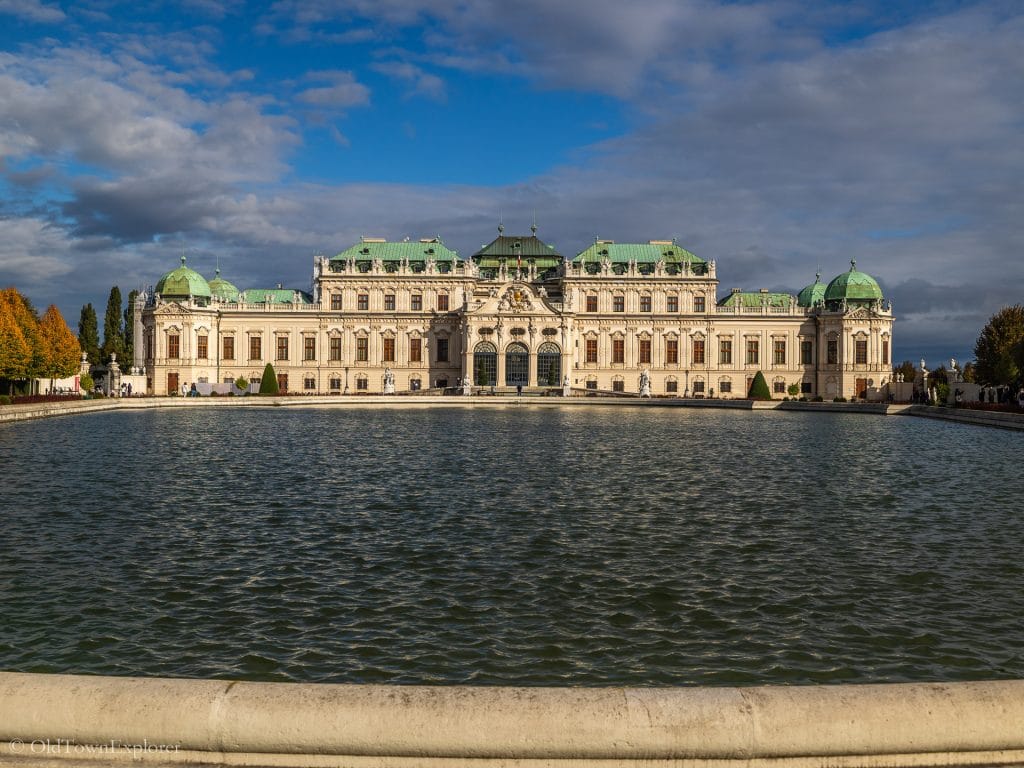
Belvedere Palace
Schloss Belvedere
- Architect: Johann Lucas von Hildebrandt
- Architectural Style: Baroque
- Year Built: 1717–1723 (Upper Belvedere)
- Address: Prinz Eugen-Straße 27, 1030 Vienna
A stunning Baroque palace complex consisting of the Upper and Lower Belvedere, originally built as the summer residence for Prince Eugene of Savoy. The Belvedere houses a world-renowned art collection including works by Gustav Klimt.
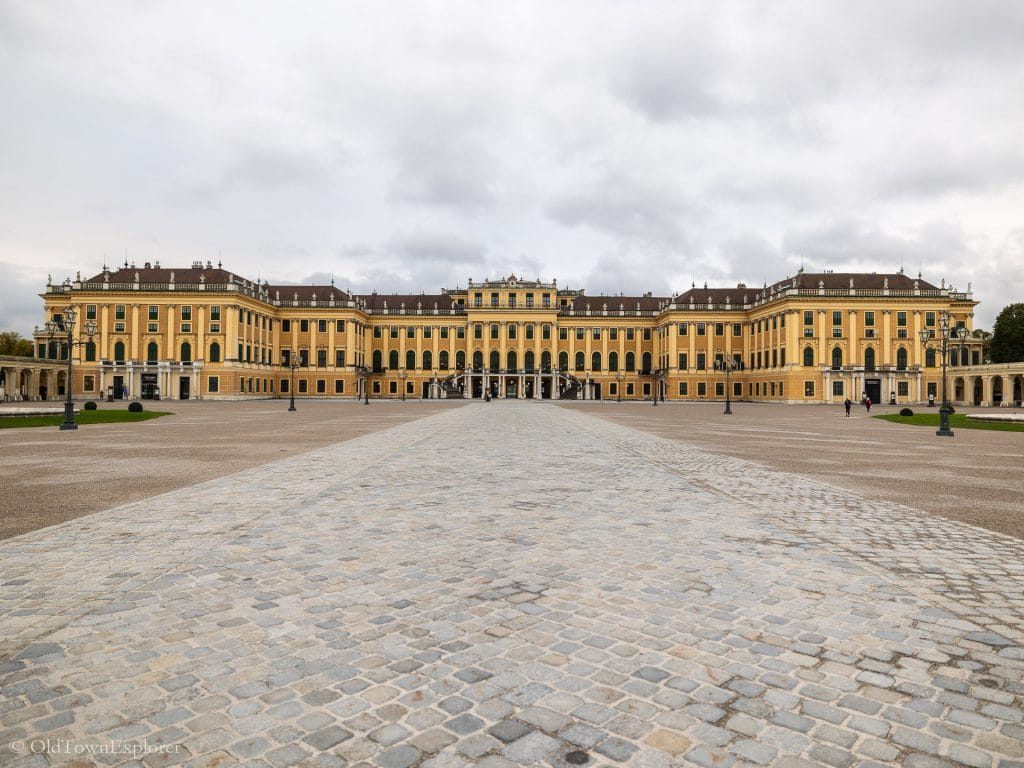
Schönbrunn Palace
- Architect: Johann Bernhard Fischer von Erlach and Nicolaus Pacassi
- Style: Baroque palace and gardens
- Built: 17th–18th century development
- Address: Schönbrunner Schloßstraße 47, 1130 Vienna
Schönbrunn Palace and Gardens is Vienna’s major Baroque palace ensemble outside the Innere Stadt. The long palace façade, formal gardens, Gloriette axis, courtyards, and palace rooms make Schönbrunn the clearest choice when you want Habsburg architecture beyond the Ringstrasse and Hofburg.
Hundertwasser House Vienna
Hundertwasserhaus Wien
- Architect: Friedensreich Hundertwasser (designer), Joseph Krawina (engineer)
- Architectural Style: Expressionist / Organic Architecture
- Year Built: 1983–1985
- Address: Kegelgasse 36-38, 1030 Vienna
A unique and colorful residential building designed by artist Friedensreich Hundertwasser. Known for its irregular shapes, vibrant colors, uneven floors, and integration of natural elements like trees growing from inside the apartments, it is a celebrated example of expressionist and organic architecture in Vienna.
Liechtenstein City Palace
Fürstlich Liechtensteinische Stadtpalais
- Architect: Domenico Egidio Rossi (early 18th century)
- Architectural Style: Baroque
- Year Built: 1692–1705 (major reconstruction)
- Address: Bankgasse 9, 1010 Vienna
The Liechtenstein City Palace is a grand Baroque palace located in Vienna’s first district. It serves as the urban residence of the princely Liechtenstein family and houses part of their extensive art collection. The palace’s lavish interiors and formal gardens exemplify high Baroque elegance.
Liechtenstein Garden Palace
- Architects: Domenico Egidio Rossi and Domenico Martinelli
- Style: Baroque
- Built: Construction began in 1691; subsequently altered and decorated in the early eighteenth century
- Address: Fürstengasse 1, 1090 Vienna, Austria
The Liechtenstein Garden Palace stands in Rossau, outside the Innere Stadt. Its monumental façades, ceremonial rooms, Hercules Hall, and garden distinguish it from the family’s separate City Palace on Bankgasse. Check the palace’s arrangements before planning an interior visit.
Palais Kinsky
- Architect: Johann Lucas von Hildebrandt
- Architectural Style: Baroque
- Year Built: 1713–1716
- Address: Palais Kinsky, Freyung 4, 1010 Vienna
A beautiful Baroque palace located in the city center, once home to the noble Kinsky family. Today, it is used for exhibitions and concerts.
Palais Esterházy
- Architect: Johann Bernhard Fischer von Erlach (major redesign)
- Architectural Style: Baroque
- Year Built: 1685 (original), major renovation early 18th century
- Address: Wallnerstraße 4, 1010 Vienna
A lavish Baroque city palace for the Esterházy family, famous for its elegant ballroom and association with composer Joseph Haydn.
Palais Lieben-Auspitz
- Architects: Carl Schumann and Ludwig Tischler
- Style: Historicism
- Built: 1873–1874
- Address: Universitätsring 4 / Oppolzergasse 6, 1010 Vienna, Austria
Palais Lieben-Auspitz is the Ringstrasse palace housing Café Landtmann. Its formal façade and association with Berta Zuckerkandl’s salon connect the building with Vienna’s late nineteenth- and early twentieth-century cultural life.
Other Attractions in Vienna
Beyond Vienna’s palaces and religious buildings, the city features a wide range of architectural landmarks—from Secessionist pavilions to modernist museums and civic infrastructure. These sites offer a broader view of Vienna’s built environment and architectural evolution.
Palace of Justice
Justizpalast
- Architect: Alexander Wielemans von Monteforte
- Architectural Style: Neo-Renaissance
- Year Built: 1875–1881
- Address: Schmerlingplatz 10, 1010 Vienna
The Palace of Justice is an imposing Neo-Renaissance building that houses Austria’s Supreme Court and other judicial bodies. It is known for its grand façade, large courtyard, and richly decorated interiors.
Vienna’s Historic Stairways
- Architect: Various (public infrastructure developed over centuries)
- Architectural Style: Various, often Baroque and Historicist elements
- Year Built: Various periods, mainly 18th–19th centuries
- Address: Multiple locations throughout Vienna
Vienna features many historic stairways in its hilly areas and old districts. These stairways are often integrated with the cityscape, providing charming pedestrian routes with architectural details reflecting different eras.
Anker Clock
Ankeruhr
- Architect: Franz von Matsch
- Architectural Style: Art Nouveau (Jugendstil)
- Year Built: 1911–1914
- Address: Hoher Markt 10-11, 1010 Vienna
The Anker Clock links two parts of the former Anker insurance building at Hoher Markt. Designed by Franz Matsch, it displays historical figures over the course of the day; the complete procession with music takes place at noon.
Klimt Villa
- Architect: Not confirmed
- Style: Neo-Baroque villa enclosing an earlier studio
- Built: Earlier garden house used by Klimt 1911–1918; villa rebuilt around it in 1923
- Address: Feldmühlgasse 11, 1130 Vienna, Austria
Gustav Klimt used the earlier garden house as his studio from 1911 until his death in 1918. The Neo-Baroque villa visible today was built around that studio in 1923. The museum therefore combines a reconstructed studio setting with a later architectural shell.
Wiener Konzerthaus
- Architects: Ludwig Baumann, Ferdinand Fellner, and Hermann Helmer
- Architectural Style: Historicism with Jugendstil influences
- Year Built: 1911–1913
- Address: Lothringerstraße 20, 1030 Vienna
One of Vienna’s premier concert halls, renowned for its excellent acoustics and Jugendstil design elements.
Metro Kinokulturhaus
- Architects: Christian Ulrich and Rudolf Dick (original association building)
- Style: Historicist building with a historic theatre and cinema auditorium
- Built: Opened as an association building in 1893; cinema opened in 1951; later adaptations
- Address: Johannesgasse 4, 1010 Vienna, Austria
METRO Kinokulturhaus is Filmarchiv Austria’s city-center cinema and exhibition venue. Its historic auditorium began as the ceremonial hall of a commercial association building and was later adapted as a theatre and cinema.
Musikverein
- Architect: Theophil Hansen
- Architectural Style: Neo-Classical
- Built: Construction began in 1867; opened January 6, 1870
- Address: Musikvereinsplatz 1, 1010 Vienna
The Musikverein is one of the world’s most famous concert halls, home to the Vienna Philharmonic Orchestra, celebrated for its Golden Hall and perfect acoustics.
Otto Wagner's Stadtbahn Pavilions
- Architect: Otto Wagner
- Architectural Style: Jugendstil (Viennese Secession)
- Year Built: 1898–1901
- Address: Various locations along the former Vienna Stadtbahn network
These elegant station pavilions designed by Otto Wagner showcase early modernist design and are key examples of Vienna’s Secessionist architecture integrated with public transportation.
Otto Wagner Court Pavilion Hietzing
- Architect: Otto Wagner
- Style: Jugendstil
- Built: Completed in 1899
- Address: Schönbrunner Schloßstraße, 1130 Vienna, Austria
The Hofpavillon was built as a private Stadtbahn stop for Emperor Franz Joseph and his court. Its octagonal waiting room, mahogany paneling, textile decoration, and Carl Moll painting set it apart from Wagner’s ordinary station pavilions.
Vienna Planetarium
- Architect: Not Confirmed
- Architectural Style: Modern
- Year Built: 1964
- Address: Oswald-Thomas-Platz 1, 1020 Vienna, Austria
Vienna Planetarium is beside the Giant Ferris Wheel in the Prater area. Its domed projection space is designed for astronomy presentations; it belongs in a Prater outing rather than a Volksgarten or Hofburg walking route.
Prater
- Architect: Various (public park and amusement area)
- Architectural Style: Various, including historic and modern amusement architecture
- Year Built: Established as a public park in 1766
- Address: Prater, 1020 Vienna
A large public park and amusement area famous for the Giant Ferris Wheel and many other attractions, blending historic and contemporary structures.
Johann Strauss Monument
- Architect: Edmund Hellmer (sculptor)
- Architectural Style: Historicist / Art Nouveau sculpture
- Year Built: 1921
- Address: Stadtpark, Parkring, 1010 Vienna
A famous gilded bronze monument honoring composer Johann Strauss II, located in Vienna’s Stadtpark.
Treasury of the Teutonic Order
Deutschordenshaus
- Architect: Various, including Baroque renovations
- Architectural Style: Medieval and Baroque elements
- Year Built: Origins 12th century, major Baroque renovation 17th century
- Address: Deutschordenshaus, Singerstraße 7, 1010 Vienna
Historic building housing the treasury of the Teutonic Order, reflecting Vienna’s medieval and Baroque religious architecture.
Vienna Stock Exchange
Wiener Börse
- Architect: Theophil Hansen
- Architectural Style: Neo-Renaissance
- Year Built: 1877
- Address: Schottenring 16, 1010 Vienna, Austria
The Vienna Stock Exchange former / historic building is a Neo-Renaissance structure with grand columns and ornamentation reflecting the economic importance of the site.
Plague Column
Pestsäule
- Architect: Paul Strudel (sculptor), commissioned by Emperor Leopold I
- Architectural Style: Baroque
- Year Built: 1679–1693
- Address: Graben, 1010 Vienna
A prominent Baroque monument erected to commemorate the end of the Great Plague in Vienna, adorned with dramatic sculptural groups symbolizing faith and divine intervention.
Architecture Tours in Vienna
Independent architecture walks work well in the Innere Stadt and along the Ringstrasse because the main buildings sit close together. A guided tour becomes more useful when you want help connecting Habsburg history, Ringstrasse planning, Secession design, Otto Wagner sites, and palace architecture in one route.
Guided Tours
Use the guided tours below to compare Vienna architecture tours by route area, walking distance, building focus, interior access, and whether the tour stays in the center or adds palace, museum, or Secession sites. Check current inclusions, meeting points, and cancellation rules before booking.
Things to Know Before You Go
The Innere Stadt Is the Best First Base for Architecture Walks
Stay or start near the Innere Stadt when your first priority is St. Stephen’s Cathedral, the Hofburg, Michaelerplatz, Graben, Kärntner Straße, and the Ringstrasse. This area keeps the densest architecture walk close enough for short visits and evening walks.
The Ringstrasse Changes the Scale of the City
The Ringstrasse replaces the tight old-center streets with large museums, theatres, government buildings, parks, and palace façades. Walk a short section between the State Opera, Hofburg, Parliament, City Hall, Burgtheater, and University of Vienna if you want the clearest Historicist sequence.
Comfortable Shoes Matter More Than Hills
Central Vienna is not a steep city, but architecture days involve long pavements, museum courtyards, palace grounds, and wide boulevards. The walk from Stephansplatz to the Hofburg, Ringstrasse, MuseumsQuartier, and Karlskirche is easy to underestimate because the buildings are large and spread out.
Exterior Viewing Covers a Lot
Many of Vienna’s major architecture decisions can start from the outside: St. Stephen’s Cathedral, Hofburg courtyards, Parliament, City Hall, Burgtheater, State Opera, Secession Building, Otto Wagner pavilions, and Hundertwasserhaus. Interiors, towers, museums, churches, and palace rooms may require tickets, schedules, services, or event checks.
Morning Works Best for the Center
Start early around Stephansplatz, the Hofburg, and the State Opera if you want calmer exterior views. Midday and afternoon are better for museums, palace interiors, coffeehouse breaks, and longer Ringstrasse sections.
Evening Light Works Well on the Ringstrasse
The Ringstrasse façades, Parliament, City Hall, Burgtheater, State Opera, and museum buildings can look better in late light than at midday. Evening also works well for a shorter walk because cafés, restaurants, and tram stops are close to the main buildings.
Weather Changes Palace and Garden Days
Schönbrunn and Belvedere are stronger in dry weather because gardens, courtyards, long façades, and sightlines matter as much as interior rooms. Rainy days work better for Kunsthistorisches Museum, MuseumsQuartier, MAK, the Hofburg museums, and shorter church stops.
Accessibility Varies by Building Type
Ringstrasse sidewalks, museum areas, and major squares are easier than church towers, older staircases, palace gardens, and some historic interiors. Check official access details before planning around towers, crypts, upper galleries, or older buildings with steps.
Two Hours Is Enough for the Old Center and Ring Edge
With two hours, start at St. Stephen’s Cathedral, walk toward Graben and Michaelerplatz, enter the Hofburg courtyards, and finish near the State Opera or Parliament side of the Ringstrasse. This gives you Gothic, Baroque, palace, and Historicist architecture without crossing the city.
A Full Day Lets You Add a Palace or Secession Route
With a half day, combine the Innere Stadt with a focused Ringstrasse walk. With a full day, add Schönbrunn, Belvedere, or the Secession and Otto Wagner pavilions instead of trying to visit every district and museum façade.
Where to Stay for Architecture Walks
Vienna is easiest for architecture walks when your hotel or apartment keeps you close to the Innere Stadt, the Ringstrasse, or a U-Bahn line. The best base depends on whether you want old-center walks, palace access, museum time, or evening Ringstrasse views.
Innere Stadt: Best for St. Stephen’s Cathedral, Hofburg, Michaelerplatz, Graben, old churches, and short architecture walks without transport.
Ringstrasse edge: Best for Parliament, City Hall, Burgtheater, State Opera, Kunsthistorisches Museum, MuseumsQuartier, and large Historicist buildings.
Neubau and MuseumsQuartier: Best for museum architecture, shorter walks to the Ringstrasse, cafés, restaurants, and easier access to the Secession side of the city.
Landstraße and Belvedere: Best when Belvedere, Stadtpark, Wien Mitte, and airport-train access matter more than staying directly beside St. Stephen’s Cathedral.
Hietzing or Schönbrunn area: Best for travelers who want Schönbrunn close by, but less convenient for repeated Innere Stadt and Ringstrasse walks.
Hotels and Apartments in Vienna
Use the interactive map below to compare hotels and apartments near the Innere Stadt, Ringstrasse, MuseumsQuartier, Belvedere, Schönbrunn, Wien Mitte, and U-Bahn stops that make architecture walks easier.
FAQs About Vienna Architecture
What architecture is Vienna known for?
Vienna is known for Gothic churches, Baroque palaces, Ringstrasse Historicism, Secession architecture, Otto Wagner transport buildings, and modern museum or public buildings. Start with St. Stephen’s Cathedral, the Hofburg, the Ringstrasse, Schönbrunn, Belvedere, Karlskirche, and the Secession Building.
Which buildings should I see first in Vienna?
See St. Stephen’s Cathedral, the Hofburg, Vienna State Opera, Austrian Parliament, Vienna City Hall, Burgtheater, Kunsthistorisches Museum, Karlskirche, Belvedere, Schönbrunn, and the Secession Building first. These sites show the main Vienna layers without requiring a specialist route.
Is Vienna architecture easy to see with limited time?
Yes. With two hours, walk from St. Stephen’s Cathedral to Graben, Michaelerplatz, the Hofburg courtyards, and the Ringstrasse. That short route gives Gothic, Baroque, palace, and Historicist architecture in one central walk.
Are Vienna’s key architecture sites inside the historic center?
Many key sites are inside or beside the historic center, including St. Stephen’s Cathedral, the Hofburg, old churches, the State Opera, Parliament, City Hall, Burgtheater, and the major Ringstrasse buildings. Schönbrunn, Belvedere, Hundertwasserhaus, Steinhof, and some Otto Wagner sites sit outside the central walking core.
What architectural styles will I see in Vienna?
Vienna shows Gothic, Baroque, Rococo, Neoclassical, Neo-Gothic, Neo-Renaissance, Historicist, Secession, Jugendstil, Modernist, and contemporary architecture. The easiest sequence is St. Stephen’s Cathedral for Gothic, palaces for Baroque, the Ringstrasse for Historicism, and Otto Wagner or the Secession Building for early modern design.
Can I understand Vienna architecture from the outside?
Yes. Many major exterior views are strong enough for a first architecture walk, including St. Stephen’s Cathedral, Hofburg courtyards, Parliament, City Hall, the State Opera, the Secession Building, Otto Wagner pavilions, and Hundertwasserhaus. Palace rooms, museum interiors, towers, crypts, and some churches need separate access checks.
What is the best area for architecture walks in Vienna?
The Innere Stadt and Ringstrasse are the best first areas for architecture walks. Stay around Stephansplatz, the Hofburg, the State Opera, Schottenring, or MuseumsQuartier if you want the main buildings close together.
What is the Ringstrasse, and why does it matter?
The Ringstrasse is the boulevard around Vienna’s old center, built after the city walls were removed. It matters because Parliament, City Hall, the State Opera, Burgtheater, the University of Vienna, major museums, parks, and palace façades line the route.
Is Schönbrunn Palace part of Vienna architecture planning?
Yes. Schönbrunn Palace is outside the Innere Stadt, but it is one of Vienna’s most important Baroque architecture sites. Add it when you want palace façades, formal gardens, long axes, and Habsburg residential architecture beyond the Hofburg.
Where should I stay in Vienna for architecture?
Stay in the Innere Stadt or near the Ringstrasse for the easiest architecture walks. Choose MuseumsQuartier or Neubau for museums and Secession access, Landstraße for Belvedere and Wien Mitte, or Hietzing when Schönbrunn is the main priority.
For the broader destination plan, start with Vienna. For national styles, regional differences, and Austria-wide architecture context, use Austria Architecture. For meals between architecture walks, continue with Vienna Food. For wine bars, Heuriger areas, and vineyard districts after a day of buildings, use Vienna Wine.