
Dijon Food
Explore Dijon Food: What & Where to Eat
Dijon is a practical base for tasting Burgundian cooking. Traditional dishes appear beside mustard, blackcurrant products, gingerbread, pastries, cheese, and modern menus built around regional ingredients.
The main food areas are compact. Les Halles works well for a market morning, the streets around Place de la Libération follow naturally for lunch or dinner, and Rue Berbisey and Rue Jeannin add specialist shops and restaurants within walking distance.
We spent about a month in Dijon during March and April, eating across the historic center, the Halles area, and streets around Place de la Libération. This page compares signature foods, dining areas, traditional and modern restaurants, specialist shops, markets, and food walks so you can decide what to order and how to organize each meal.
This page contains affiliate links. We may earn a small commission at no extra cost to you.
Dijon Food at a Glance
Dijon’s historic center makes it possible to combine a market, food shops, and a restaurant meal without crossing the city repeatedly.
These are the main decisions to make before planning a food day:
- First traditional dish: Start with œufs en meurette or poulet Gaston Gérard when either appears on the menu.
- Market morning: Les Halles is the central choice and operates on Tuesday, Thursday, Friday, and Saturday mornings.
- Traditional meal: Look around Place de la Libération, Rue Vauban, the Halles quarter, and Rue Berbisey.
- Modern dinner: Rue Jeannin and nearby streets contain several small contemporary restaurants; reserve ahead when a specific table matters.
- Food shopping: Rue de la Chouette and Rue de la Liberté connect mustard, gingerbread, chocolate, and pastry stops.
- Wine planning: Use the Dijon Wine guide for wine bars, shops, tastings, and nearby vineyard outings.
With one day, combine Les Halles, two or three specialist shops, and one planned restaurant meal. A second day leaves room for a modern dinner or a wine-focused outing.
What to Eat in Dijon
Dijon menus draw heavily on Burgundian dishes and products. The France Food guide provides broader national context, while these two groups identify the foods most useful for ordering and shopping in Dijon.

Traditional Dishes on Dijon Menus
Œufs en meurette: Poached eggs are served in a red-wine sauce, commonly with onions, shallots, and bacon. It is a useful first course for tasting the region’s wine-based cooking without committing to a heavy main dish.
Poulet Gaston Gérard: This Dijon dish combines chicken with a creamy sauce flavored with mustard and cheese. It is one of the most city-specific choices on a traditional menu.
Escargots de Bourgogne: Burgundy snails are generally baked with garlic, parsley, and butter. They usually work best as a shared starter or a first course.
Boeuf bourguignon: Beef is slowly cooked with red wine and aromatics until tender. Order it when you want a substantial main course rather than a light lunch.
Jambon persillé: Ham is set in parsleyed aspic and served cold. It is a traditional starter whose firm texture and herbal flavor differ from the city’s wine-sauce dishes.
Gougères: These savory choux pastries contain cheese and are often served as an aperitif snack. They suit a wine tasting or a lighter break between larger meals.
Local Food Products to Recognize
Moutarde de Bourgogne / Dijon mustard: Dijon is closely associated with mustard, but the names are not interchangeable legal categories. Moutarde de Bourgogne is a protected geographical indication with defined regional production rules, while Dijon mustard describes a preparation style. Specialist shops let you compare smooth, whole-grain, flavored, and freshly dispensed versions.
Crème de cassis de Dijon: This sweet blackcurrant liqueur is used in kir and other aperitifs. It is a sensible bottle to look for when you want a product associated directly with Dijon rather than another mustard.
Pain d’épices de Dijon: Dijon gingerbread is sold as loaves, slices, cakes, and other formats. It travels well when packaged for sale.
Nonnettes: Nonnettes are small gingerbread cakes, often filled with marmalade. They are easy to divide, carry, and compare across specialty shops.
Where to Eat in Dijon’s Historic Center
Most useful food stops fall into three connected areas. The differences are less about distance than about whether the priority is a market, a formal restaurant, or an easy sequence of shops and meals.
Les Halles and the Northern Historic Center
Start here on a market morning. The covered hall, surrounding stalls, Rue Bannelier, Rue Odebert, and the streets toward Rue Jeannin combine market shopping, cheese, restaurants, and wine-focused dining in a small area.
Place de la Libération and Rue Vauban
This central zone works well when sightseeing and a seated meal need to share the same part of the day. The square and nearby streets include brasseries, Burgundian cooking, and several more formal options.
Rue Berbisey and the Southern Center
Rue Berbisey extends the restaurant choice south of the main pedestrian streets. It is convenient for combining lunch or dinner with the Cité internationale de la gastronomie et du vin, though the Cité is a separate stop beyond the tight medieval core.
Traditional Restaurants in Dijon’s Historic Center
These restaurants keep a clear connection to Burgundian dishes, brasserie cooking, or regional ingredients. Menus change, so check the current offering before booking when a particular dish matters.
Au Grand Café
- Address: 5 Rue du Château, 21000 Dijon
Au Grand Café is a central brasserie serving French and Burgundian standards in a traditional café setting. Its position just off Place de la Libération makes it practical for a straightforward lunch during a day in the historic center.
Le Pré aux Clercs
- Address: 13 Place de la Libération, 21000 Dijon
Le Pré aux Clercs combines the format of a large brasserie with Burgundian specialties and updated French dishes. The terrace and central square location make it a convenient choice when setting and flexible ordering matter as much as a strictly traditional menu.
La Fine Heure
- Address: 34 Rue Berbisey, 21000 Dijon
La Fine Heure operates as both a restaurant and wine cellar, pairing seasonal French cooking with a strong bottle selection. It suits a relaxed meal when Burgundy wine is part of the decision but a formal tasting menu is not.
Restaurant La Closerie – Maison Philippe le Bon
- Address: 18 Rue Sainte-Anne, 21000 Dijon
La Closerie serves seasonal bistronomic cooking with local ingredients and revised versions of Burgundian dishes. Its dining room and courtyard work for a longer lunch or dinner near the southern side of the historic center.
Modern Restaurants in Dijon
Dijon’s contemporary restaurants range from tasting-menu dining to compact bistros. Local produce, seasonal menus, Burgundy wine, and modern interpretations of regional cooking provide the main connections to the city’s food identity.
William Frachot
- Address: 5 Rue Michelet, 21000 Dijon
William Frachot serves precise tasting menus that reinterpret Burgundy through local ingredients and modern technique. It is a destination dinner for travelers willing to give one meal most of an evening.
Loiseau des Ducs
- Address: 3 Rue Vauban, 21000 Dijon
Loiseau des Ducs applies contemporary presentation to Burgundy-led French cooking in the historic center. It fits a formal dinner when regional references and polished service are priorities.
Origine
- Address: 10 Place Wilson, 21000 Dijon
Origine combines French ingredients and Burgundian context with the Japanese background of chef Tomofumi Uchimura. Its set-menu format is better suited to a planned gastronomic meal than an improvised stop while sightseeing.
L'Arôme
- Address: 2 Rue Jean-Jacques Rousseau, 21000 Dijon
L’Arôme brings Japanese precision to contemporary French dishes in a small dining room. It works well for diners who want a focused modern meal close to Rue Jeannin and the northern historic-center restaurant cluster.
L'Aspérule
- Address: 43 Rue Jean-Jacques Rousseau, 21000 Dijon
L’Aspérule uses French produce in menus shaped by chef Keigo Kimura’s Japanese approach. Choose it for a composed tasting experience rather than a traditional brasserie meal.
Spica
- Address: 48 Rue de la Préfecture, 21000 Dijon
Spica offers modern bistronomic cooking with seasonal ingredients and a Burgundy-aware wine list. Its format is suitable for a contemporary dinner that remains less ceremonial than the city’s longest tasting menus.
Saison
- Address: 17 Rue Lamonnoye, 21000 Dijon
Saison combines French and Italian influences in frequently changing menus based on seasonal produce. It is a useful option when the group wants modern cooking without limiting the meal to Burgundian classics.
La Maison des Cariatides
- Address: 28 Rue Chaudronnerie, 21000 Dijon
La Maison des Cariatides serves contemporary French cooking in a historic-center townhouse. The menu’s seasonal structure makes it appropriate for a considered dinner while keeping the atmosphere closer to a bistro than a hotel dining room.
Sublime
- Address: 24 Rue Bannelier, 21000 Dijon
Sublime blends French and Italian references in modern tasting menus near Les Halles. It is easy to pair with a market-area day, but the meal itself deserves a separate reservation window.
L'Un des Sens
- Address: 3 Rue Jeannin, 21000 Dijon
L’Un des Sens builds surprise menus around current ingredients and contemporary French technique. It suits diners comfortable giving the kitchen more control over the sequence.
DZ'envies
- Address: 12 Rue Odebert, 21000 Dijon
DZ’envies serves contemporary French bistro food beside Les Halles, with local ingredients and recognizable regional references. It is one of the easiest modern choices to combine with a central-market morning.
Cave
- Address: 29 Rue Jeannin, 21000 Dijon
Cave centers the meal on wine and plates designed for sharing. It is a better fit for a flexible evening built around several tastes and bottles than for diners seeking a conventional three-course progression.
CIBO
- Address: 24 Rue Jeannin, 21000 Dijon
CIBO works with local and seasonal ingredients in modern tasting menus. The restaurant suits a planned dinner where ingredient sourcing and a structured sequence are central to the experience.
L'Évidence
- Address: 53 Rue Jeannin, 21000 Dijon
L’Évidence serves fresh, contemporary French cooking in a bistronomic format. It offers a middle ground between a casual bistro and the longer tasting-menu restaurants nearby.
Les Jardins by La Cloche
- Address: 14 Place Darcy, 21000 Dijon
Les Jardins by La Cloche serves seasonal French cooking in the Grand Hôtel La Cloche. It is convenient for a polished meal near the western entrance to the pedestrian center, particularly for travelers staying around Place Darcy.
Monique, boire et manger
- Address: 33 Rue Amiral Roussin, 21000 Dijon
Monique, boire et manger focuses on seasonal produce and direct relationships with growers and makers. The informal modern format works for diners who value ingredient-led cooking more than traditional Burgundy presentation.
So
- Address: 15 Rue Amiral Roussin, 21000 Dijon
So serves compact, produce-led menus with a contemporary approach. Its small scale makes it a good candidate for an advance reservation when you want a quiet dinner away from the busiest squares.
Azerole
- Address: 86 Rue Berbisey, 21000 Dijon
Azérole revisits French cooking with international influences and fresh local products. It broadens the choice on Rue Berbisey for diners who want familiar techniques without a strictly regional menu.
Parapluie
- Address: 74 Rue Monge, 21000 Dijon
Parapluie combines modern French cooking with Asian influences in a compact restaurant south of the historic core. It fits an evening planned around the Monge side of the city rather than a meal between central sights.
La Table des Climats
- Address: 12 Parvis de l’Unesco, 21000 Dijon
Current status: Closed. La Table des Climats ceased operating in April 2026 after the company running it entered judicial liquidation. Older articles and listings may still present it as a dining option, so exclude it from current meal plans.
Bakeries, Pastry Shops & Food Shops in Dijon
The historic center has a strong group of specialist shops for mustard, gingerbread, cheese, pastry, and chocolate. These stops are more useful for tasting and gifts than for replacing a full restaurant meal.
La Moutarderie Edmond Fallot Boutique-Atelier
- Address: 16 Rue de la Chouette, 21000 Dijon
This Fallot shop concentrates on Burgundy mustard, including classic and flavored versions, and explains the product through an in-store workshop format. It is a focused stop for comparing mustard rather than general grocery shopping.
Boutique Maille
- Address: 32 Rue de la Liberté, 21000 Dijon
Maille sells prepared mustards, vinegars, gift sets, and selected mustard dispensed from pumps. The central pedestrian-street location makes it easy to add without changing a sightseeing route.
Mulot et Petitjean – Rue de la Chouette
- Address: 1 Rue de la Chouette, 21000 Dijon
Mulot et Petitjean specializes in Dijon gingerbread, nonnettes, and related cakes. Choose smaller packaged formats for comparison or travel and a loaf when the gingerbread itself is the priority.
Chocolaterie Pâtisserie Jonathan Pautet
- Address: 3 Rue Verrerie, 21000 Dijon
Jonathan Pautet produces pastries, chocolates, and macarons in the historic center. This is the walk’s clearest stop for something ready to eat rather than a jar or packaged regional product.
Fromagerie Porcheret
- Address: 18 Rue Bannelier, 21000 Dijon
Fromagerie Porcheret is a central cheese shop close to Les Halles. Ask for a small selection suited to same-day eating when you do not have refrigeration, or for properly wrapped pieces when traveling onward.
Fabrice Gillotte
- Address: 21 Rue du Bourg, 21000 Dijon
Fabrice Gillotte specializes in chocolates and confectionery. It is a practical choice for boxed gifts or a controlled tasting rather than a pastry break.
Pralus Chocolatier
- Address: 78 Rue de la Liberté, 21000 Dijon
Pralus sells chocolate and the house’s Praluline, a brioche filled with crushed pink pralines. The shop is useful when you want one substantial item to share rather than several small chocolates.
Le Manège à Moutardes
- Address: 12 Parvis de l’Unesco, 21000 Dijon
Le Manège à Moutardes at the Cité internationale de la gastronomie et du vin presents mustard through an automated filling display and retail counter. It works best as an extension of a Cité visit, not as a reason to cross the center solely for shopping.
Markets in Dijon
Dijon’s municipal markets are morning markets. The City of Dijon market schedule should be checked before a visit because operating details can change.
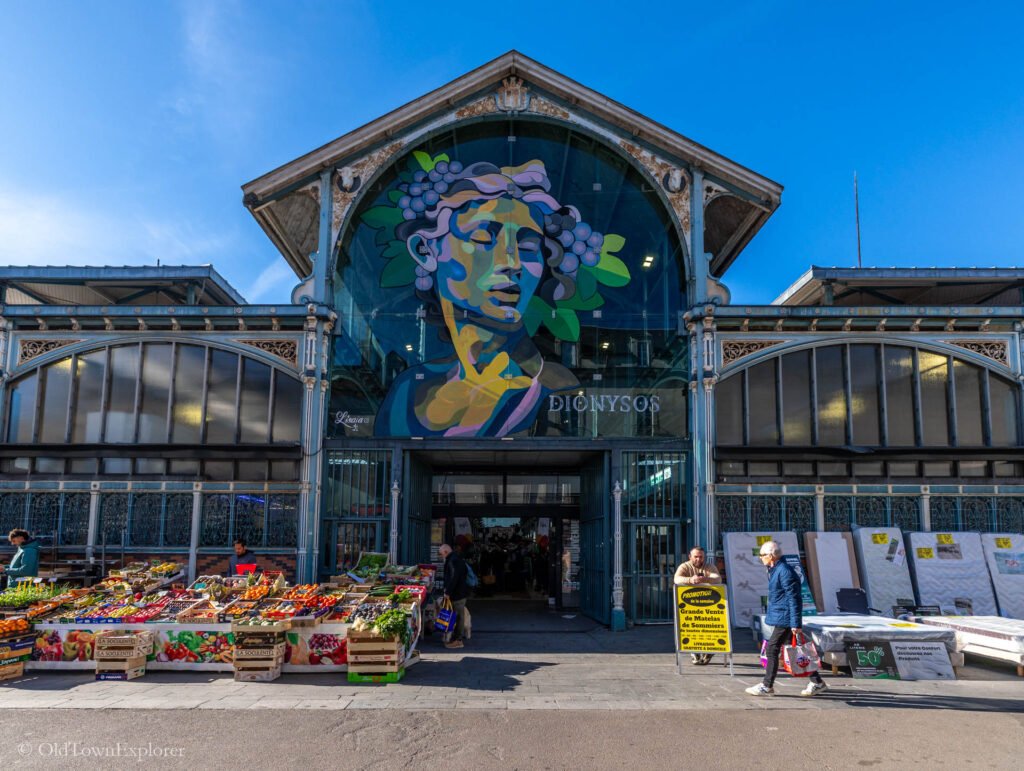
Halles centrales et marché central
- Location: Les Halles and surrounding streets in central Dijon
- Regular market days: Tuesday, Thursday, Friday, and Saturday, 7:00 a.m. to 1:00 p.m.
This is the most useful market for a first visit because it combines covered stalls with the surrounding central-market area. Arrive during the morning and decide in advance whether the goal is a picnic, apartment supplies, or products to carry home.
Marché de Fontaine d’Ouche
- Location: Place Centrale, Fontaine d’Ouche
- Regular market day: Wednesday, 8:00 a.m. to noon
This neighborhood market lies west of the historic center. It is most relevant for travelers staying in Fontaine d’Ouche or exploring that part of Dijon, rather than for a short central food itinerary.
Marché des Grésilles
- Location: Place Galilée and Rue Galilée
- Regular market days: Thursday and Saturday, 8:00 a.m. to noon
The Grésilles market serves the northeastern part of the city. It makes sense when accommodation or another planned stop already brings you into the neighborhood.
Marché du port du Canal
- Location: Port du Canal
- Regular market day: Wednesday, 8:30 a.m. to noon
This smaller market can be paired with a walk around the canal area. For a first food-focused morning, Les Halles remains the more efficient choice.
Self-Guided Food Walk in Dijon
Duration: About 2.5 to 4 hours, depending on tastings and the optional Cité extension
Area covered: Les Halles, Rue de la Chouette, Rue Verrerie, Rue de la Liberté, and the Cité internationale de la gastronomie et du vin
Ideal time window: Friday or Saturday morning through early afternoon
This route starts with fresh-market choices and then moves through cheese, gingerbread, mustard, pastry, and chocolate before an optional extension south to the Cité. Confirm individual shop hours before setting out.
Tip: For the simple version, finish after Stop 6. Add Stop 7 only when the Cité is already part of the day.
Stop 1: Halles centrales et marché central
Begin with one lap before buying. Decide whether you need picnic ingredients, fruit, cheese accompaniments, or only a sense of the market before the shop stops ahead.
Stop 2: Fromagerie Porcheret
Move to Rue Bannelier for cheese. Buy a small quantity for the same day unless storage and onward transport are already settled.
Stop 3: Mulot et Petitjean – Rue de la Chouette
Continue to Rue de la Chouette for pain d’épices and nonnettes. Small packages are easiest to divide across the rest of the walk.
Stop 4: La Moutarderie Edmond Fallot Boutique-Atelier
Compare classic Burgundy mustard with flavored versions, but leave heavy jars until late in the shopping sequence when possible.
Stop 5: Chocolaterie Pâtisserie Jonathan Pautet
Cross into Rue Verrerie for a pastry, chocolate, or macaron. This is the most practical point for a ready-to-eat break.
Stop 6: Boutique Maille or Pralus Chocolatier
Follow Rue de la Liberté and choose according to what is still missing: Maille for mustard and vinegar, or Pralus for chocolate and a shareable Praluline.
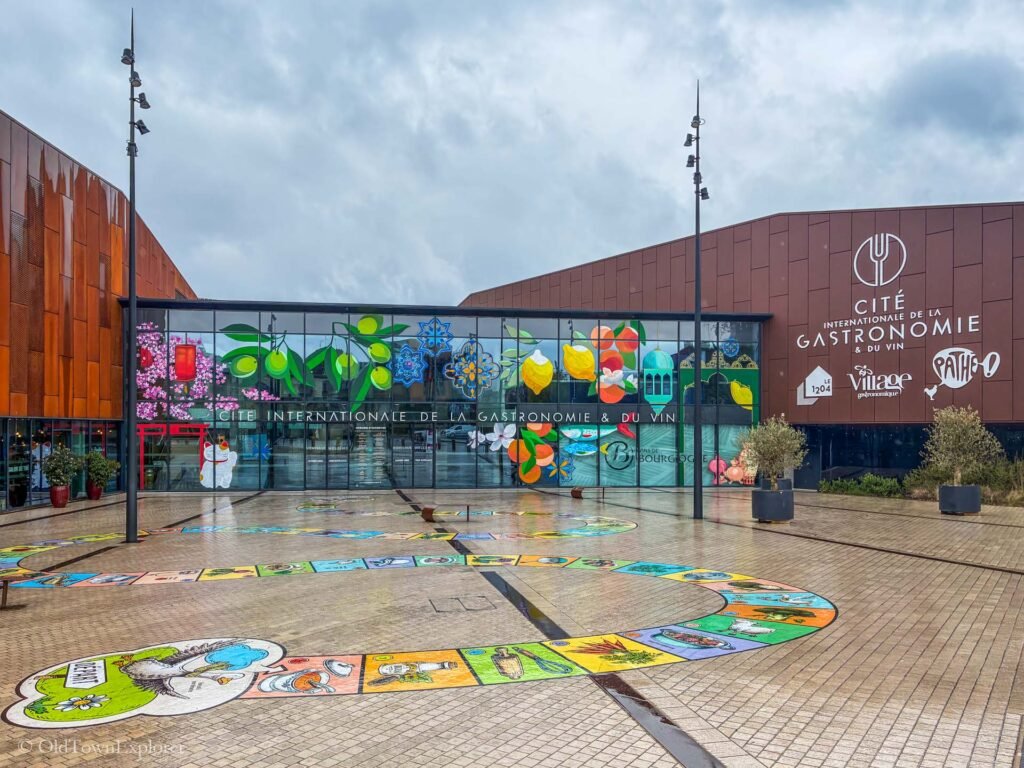
Stop 7: Cité internationale de la gastronomie et du vin / Le Manège à Moutardes
Extend the walk south to the Cité when exhibitions, wine, or the mustard display are already part of the plan. Otherwise, the first six stops form a complete central route.
Food Tours in Dijon
A guided tour can reduce the planning needed to connect products, tastings, and city context, particularly on a first visit.
Guided Tours
Compare the starting point, walking distance, number and type of tastings, language, dietary limitations, and cancellation terms. Check whether the experience is mainly about Dijon food, Burgundy wine, the central market, or a mixture before booking.
Best Places to Stay in Dijon for Food
Accommodation inside or beside the historic center keeps the main restaurant areas and specialist shops within an easy walk.
Hotels and Apartments in Dijon for Food
The area between Les Halles, Place Darcy, Place de la Libération, and Rue Berbisey is the strongest all-purpose base. An apartment is useful for market purchases, while a hotel near the pedestrian center reduces the distance after dinner.
Use the interactive map below to compare hotels and apartments by location, then check the walking route to Les Halles or the restaurant area you expect to use most.
FAQs About Dijon Food
What food is Dijon known for?
Dijon is most closely associated with mustard, pain d’épices, nonnettes, and crème de cassis. City and Burgundian menus also feature œufs en meurette, poulet Gaston Gérard, escargots, jambon persillé, gougères, and boeuf bourguignon.
Is Dijon a good destination for a food-focused trip?
Yes. The historic center combines a central market, specialist shops, traditional restaurants, modern dining, and easy access to Burgundy wine experiences in a compact area.
What should I eat first in Dijon?
Choose poulet Gaston Gérard for a dish tied directly to Dijon, or œufs en meurette for a classic introduction to Burgundian wine-sauce cooking. Gougères are the easier choice for a small snack.
Which food market should I visit in Dijon?
Les Halles is the most efficient choice for a first visit because it is central and connects naturally with food shops and restaurants. The other municipal markets are more useful when you are staying nearby.
When should I go to Les Halles?
Go during the morning on Tuesday, Thursday, Friday, or Saturday. Check the municipal schedule before the visit and arrive with enough time to compare stalls before the 1:00 p.m. close.
Do I need restaurant reservations in Dijon?
Reserve when a small restaurant, tasting menu, or particular dinner is important. Larger brasseries may allow more flexibility, but current opening days and booking policies should still be checked directly.
Is Dijon workable for vegetarians?
Traditional Burgundian menus lean heavily on meat, eggs, cheese, butter, and wine sauces. Markets, bakeries, cheese shops, and some contemporary restaurants broaden the choice, but confirm a full vegetarian menu when booking.
Does Dijon have street food?
Street food is not the main pattern in central Dijon. Bakeries, pastry shops, market purchases, gougères, gingerbread, and other portable foods are more dependable for a quick meal or snack.
Which Dijon food shops suit gifts?
Mustard, nonnettes, packaged pain d’épices, chocolate, and crème de cassis are practical choices. Check luggage, liquid, and destination import rules before buying jars or bottles.
Can I visit Dijon as a food day trip?
Yes. On a market morning, combine Les Halles, two or three central food shops, and one reserved lunch. An overnight stay allows a slower market visit and a separate dinner.
What food experiences are available beyond restaurants?
A self-guided market and shop walk is the simplest option. Mustard-focused visits, food tours, wine tastings, and the Cité internationale de la gastronomie et du vin add more structure when their current programs match your dates.
Does Dijon work as a base for food and wine day trips?
Yes. Dijon has rail and road access to the Côte de Nuits and other parts of Burgundy. Use the Burgundy Wine guide to plan the regional part separately from meals in the city.
For the wider trip, use the Dijon city page for logistics and sightseeing, the France Food guide for national food context, the Dijon Wine guide for wine planning, and the Dijon Architecture guide for the streets and buildings encountered between food stops.