
Barcelona
Food | Wine | ArchitectureExplore Barcelona: Food, Wine & Architecture
Barcelona is the capital of Catalonia on Spain’s Mediterranean coast. The city’s historic center (Ciutat Vella) sits next to 19th-century expansion districts like the Eixample, creating a street-level mix of medieval lanes, planned boulevards, and dense residential blocks.
Food in Barcelona is shaped by Catalan cooking, coastal seafood, and market-driven ingredients. You’ll find classic formats like pa amb tomàquet alongside rice dishes, grilled fish, and restaurant menus that follow seasonal produce.
Barcelona is not a wine region itself, but it’s closely connected to nearby Catalan appellations such as Alella and Penedès, plus day-trip regions farther south like Priorat.
We spent a month in Barcelona research what to eat, what to drink, and how the city’s main districts and landmarks fit together. The guide below summarizes what we found, including when to visit, where to stay, and how to get around efficiently.
This page contains affiliate links. We may earn a small commission at no extra cost to you.
Barcelona Food
Barcelona food is defined by Catalan cooking, market shopping, and an eating culture that moves between quick tapas stops and longer sit-down meals. The city’s menus often combine coastal seafood, preserved fish, pork, and seasonal vegetables, with plenty of dishes designed to share.
Local specialties to look for include:
- Pa amb tomàquet (bread rubbed with tomato, olive oil, salt)
- Escalivada (roasted/charred vegetables, often served as a tapa)
- Esqueixada (salt cod salad)
- Suquet de peix (Catalan fish stew)
- La bomba (fried potato-and-meat tapa linked to Barceloneta)
- Crema catalana (custard dessert)
Markets are one of the most efficient ways to understand what people actually eat in Barcelona. Mercat de la Boqueria sits on La Rambla and operates Monday–Saturday, with a mix of fresh produce, meat, and seafood stalls alongside prepared-food counters. Mercat de Sant Antoni (Eixample Esquerra) is another major market where you’ll see full fresh-food counters inside the historic building.
Barcelona Wine
Barcelona isn’t a wine-producing city, but it sits close to several Catalan appellations, so local wine lists often lean heavily toward bottles from outside the city—especially sparkling wine and whites from coastal vineyards, plus structured reds from inland zones.
Nearby regions that show up often on Barcelona menus include:
- DO Alella just north of Barcelona, one of Spain’s smallest DOs, known for whites made from Pansa Blanca (Xarel·lo)
- DO Penedès southwest of the city, a large production area for still wines; the DO states that from the 2025 vintage it is 100% organic
- DO Cava, centered around Sant Sadurní d’Anoia (Alt Penedès), the capital of Cava
- Priorat DOQ, a top-tier Catalan region in Tarragona province known primarily for reds
In wine bars and restaurants, you’ll typically see Cava by the glass, plus still whites based on Catalan varieties like Xarel·lo, and reds from Garnatxa and Carinyena-heavy blends (especially when Priorat is on the list). If you want tastings outside the city, most trips from Barcelona focus on Penedès for Cava (with Sant Sadurní d’Anoia as the main center) and Priorat for reds.
Barcelona Architecture
Barcelona’s primary architectural attractions are concentrated in Ciutat Vella (the Old Town)—the city’s original district and historic core—and in the major Antoni Gaudí sites spread across the wider city. In Ciutat Vella, the oldest visible layer is Roman Barcino, including surviving sections of the Roman walls in and around the Gothic Quarter, built between the 1st century BC and the 4th century AD.
Medieval Barcelona is represented by large Catalan Gothic churches such as Barcelona Cathedral and Santa Maria del Mar. Gaudí’s work intersects with the Old Town at Palau Güell in El Raval and continues beyond it with the city’s most visited landmarks, many of which are part of UNESCO’s Works of Antoni Gaudí serial inscription.
Where Is Barcelona Located?
Barcelona is located in northeastern Spain on the Mediterranean coast. It is the capital of Catalonia and sits on a coastal plain between the Llobregat River (southwest) and the Besòs River (north), with the Collserola range forming the main upland boundary to the west.
The city is about 150 km south of the French border, which makes it a practical base for travel around Catalonia and onward into southern France.
Barcelona is also a major rail hub: high-speed services connect Barcelona and Madrid in roughly three hours (with planned upgrades intended to reduce that time further).
When Is The Best Time To Visit Barcelona?
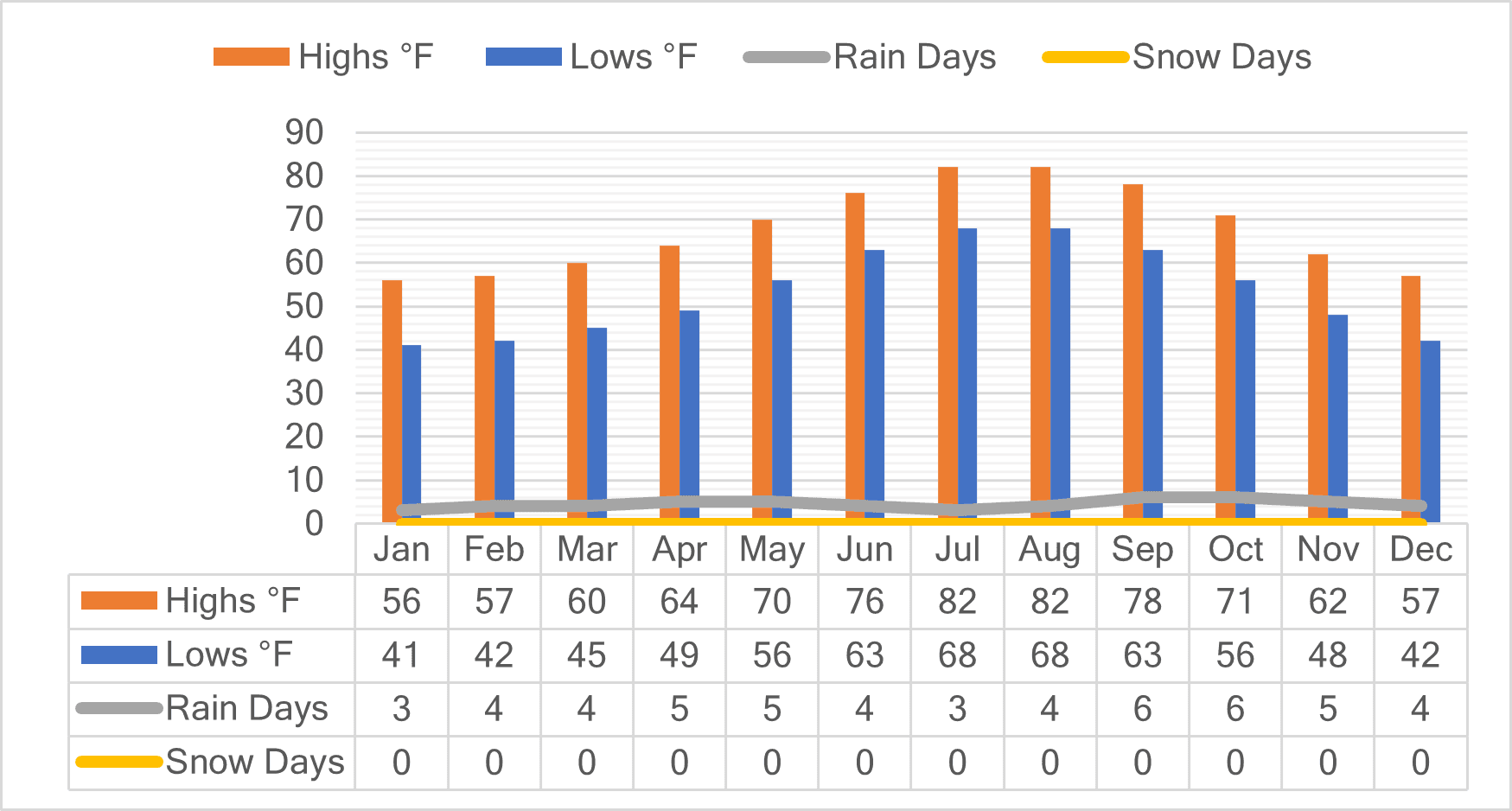
The best times to visit Barcelona are April–June and September–October, when temperatures are generally comfortable for walking and you’ll usually avoid the peak crowd levels of midsummer.
Weather
Barcelona has a Mediterranean climate with warm summers and mild winters. The hottest period is typically late June through mid-September, with average daily highs above about 26°C / 78°F, and August often the warmest month.
Rain is possible year-round, with September–October commonly among the wetter months.
Shoulder Season
Spring and early fall are good for combining architecture sightseeing with neighborhood food stops without planning your day around extreme heat. Late September also overlaps with La Mercè, Barcelona’s major city festival, held around September 24.
Best Value
For lower prices and easier hotel availability, look at late fall and winter (outside holidays). You’ll still get daylight for walking routes, but you’ll have cooler evenings and shorter beach time.
Best Places to Stay In Barcelona
Hotels in Barcelona
For most first-time visits, the easiest base is Ciutat Vella (Barcelona’s Old Town), since you can walk to major architecture sites, food markets, and transit connections without planning your day around long rides.
Ciutat Vella also works best if you want to be close to older street patterns, late-night dining, and short walks to places like the Gothic Quarter and El Born. Expect narrow streets, more foot traffic, and more noise in parts of the district.
Use the interactive map below to explore accommodations by date, budget, and amenities.
Other Things to Know About Barcelona
Airport
Josep Tarradellas Barcelona–El Prat Airport (BCN) is the main airport for the city. It has Terminals T1 and T2 and sits roughly 12 km from central Barcelona.
Common options into town include Aerobús to Plaça de Catalunya, Metro L9 Sud (with transfers), and the R2 Nord (R2N) commuter train from Terminal 2.
Train Station
Barcelona Sants is the city’s main rail station for national and international services, including high-speed routes.
You’ll also see Estació de França near Ciutat Vella for some regional services, but most long-distance arrivals use Sants.
Time Zone
Barcelona uses Central European Time (CET) and switches to Central European Summer Time (CEST) for daylight saving time.
Currency
Spain uses the euro (€). Credit and debit cards are widely accepted, but cash is useful for small purchases, cafés, and local markets.
Language
Catalonia has two official languages: Catalan and Spanish (Castilian). In Barcelona, you’ll see both on street signs, menus, and transit.
Visa
Spain is in the Schengen Area. Many visitors (including U.S. passport holders) can enter for up to 90 days in any 180-day period for tourism or business. For more details, check out our article on traveling visa-free.
For border procedures, the EU’s Entry/Exit System (EES) applies to U.S. travelers as of October 12, 2025, and ETIAS is scheduled to start in the last quarter of 2026.
Electricity
Spain uses Type C and F plugs. Voltage is 230V. U.S. visitors should bring a plug adapter and check if their devices are dual-voltage.
We recommend a travel power strip with multiple USBs and standard plug-ins if you have many items to plug in. Using a power strip, you will only need one adapter to plug the strip into the wall.
SIM Card
For mobile data, travelers can use a local SIM or eSIM. We recommend Airalo eSIMs for convenience—they activate automatically on arrival and are ideal for short-term stays with modest data needs (under 5GB).
Car Rental
A car isn’t necessary for most Barcelona itineraries. If you do drive, note that Barcelona has a low-emissions zone (ZBE Rondes de Barcelona) with access rules based on environmental labels, and parking in central areas is limited.
In addition to the major car rental companies found in the United States, Sixt and Europcar are common throughout Europe. For a comparison of rental car offers from large international brands and smaller regional brands, we recommend Discover Cars.
FAQs About Barcelona
Why is Barcelona famous?
Barcelona is known for its Modernisme landmarks—especially the UNESCO-listed Works of Antoni Gaudí—and for its Old Town (Ciutat Vella), where the city’s earliest urban core developed.
What is Ciutat Vella?
Ciutat Vella is Barcelona’s Old City (Old Town), defined by the perimeter of the former city walls and the area that once contained the historic city centre.
Is Barcelona walkable?
Yes for the central areas: Ciutat Vella is compact, and many major sights are reachable on foot if you stay in or near the center. For longer jumps across neighborhoods, Barcelona’s metro, tram, and FGC network is designed for quick cross-city trips.
What are Barcelona’s must-try local dishes?
Start with staples that show up across the city: pa amb tomàquet, escalivada, and crema catalana. For a more traditional coastal dish, look for suquet de peix (fish stew).
Where should you go for a wine day trip from Barcelona?
The most common direction is Alt Penedès, with Sant Sadurní d’Anoia as the main center for visiting Cava producers.
What wine is Barcelona known for?
Barcelona is closely linked to Cava (Catalan sparkling wine) and nearby still-wine regions, since it sits next to major producing areas in Catalonia.
Which Gaudí sites should you prioritize?
Top priorities usually include Sagrada Família, Casa Batlló, Casa Milà (La Pedrera), and Park Güell. Several are part of UNESCO’s Works of Antoni Gaudí, including Park Güell, Palau Güell, and Casa Milà.
What are the key architectural stops in the Old Town?
In Ciutat Vella, focus on the Gothic Quarter and nearby medieval streets, then add Palau Güell (in El Raval) as the major Gaudí stop within the Old Town district.
Barcelona Blog Posts
No Results Found
The page you requested could not be found. Try refining your search, or use the navigation above to locate the post.