
Barcelona Food
Explore Barcelona Food: Restaurants, Street Food & Food Markets
Barcelona food is grounded in Catalan cooking and a Mediterranean pantry—olive oil, seafood, pork, legumes, seasonal vegetables, and simple sauces like allioli and romesco. In practice, you’ll eat across a mix of tapas bars, seafood restaurants, bakeries, and market counters, with many meals built from small plates ordered in rounds rather than a single main dish.
We spent a month exploring Barcelona's food. This guide covers what to eat in Barcelona and where to find it, with a focus on traditional dishes, tapas bars, restaurants, street food-style snacks, historic food shops, and local food markets.
This page contains affiliate links. We may earn a small commission at no extra cost to you.
Traditional Food in Barcelona
For a broader overview of regional ingredients, dishes, and seasonal food traditions, see our Catalonia Food page. Barcelona food sits within the broader Catalan tradition: tomato-and-olive-oil foundations, seafood and rice along the coast, pork and sausages inland, and a steady reliance on seasonal produce. A lot of the city’s day-to-day eating happens in flexible formats: tapas at the bar, a midweek menú del dia, pastries and coffee at a bakery counter, and quick plates from market stalls.
A few patterns help you order with confidence. Pa amb tomàquet, bread rubbed with tomato and finished with olive oil and salt, shows up as a baseline side for cured meats and cheese. Seafood often appears grilled, fried, or stewed, while rice and noodle dishes lean on stock, sofregit-style bases, and slow simmering rather than heavy sauces. Seasonality matters too, with calçots and romesco-based meals most common in winter and early spring.
For a broader overview of regional ingredients, dishes, and seasonal food traditions, see our Catalonia Food page. For official information about Catalan cooking in Barcelona, see the Barcelona Turisme Catalan cuisine overview. For national context on products and dishes beyond Catalonia, see our Spain Food page.
Catalonia Food
Catalan cooking is built around practical Mediterranean ingredients and seasonal rhythms: olive oil, tomatoes, garlic, beans, pork and sausages, and fish and shellfish along the coast, plus sauces and preparations that repeat across the region.
Barcelona’s food fits into that pattern through market-driven seafood, rice dishes cooked to share, bar-to-bar small plates, and bakery-counter savory items that work as quick meals between stops.
Signature Dishes in Barcelona
Barcelona’s most identifiable food isn’t a separate cuisine from the rest of Catalonia—it’s the city-specific staples and default orders you’ll run into repeatedly as you move between bars, markets, sandwich counters, and seafront dining rooms. Use the list below as a practical “what to order” set for Barcelona. For a broader catalog of Catalan dishes and seasonal traditions, see our Catalonia Food page.
Bomba (Barceloneta-style)
A fried, breaded potato ball (often meat-filled) served with allioli and a brava-style sauce, closely associated with Barceloneta tapas bars
Bikini
A pressed, toasted ham-and-cheese sandwich commonly ordered as a quick snack, especially in cafés and sandwich counters
Pa amb tomàquet
Bread rubbed with ripe tomato and finished with olive oil and salt, often served with jamón, cheese, or grilled meats
Esqueixada de bacallà
A cold salad of shredded salt cod with tomato, onion, and olives, dressed with olive oil
Escalivada
Roasted vegetables—commonly eggplant, red pepper, and onion—served as a tapa, side, or topping for coca and bread
Coca d’escalivada
Flatbread topped with escalivada, often served as a snack, starter, or bakery-counter savory
Arròs negre
Black rice colored with squid ink, usually cooked with cuttlefish or squid and finished with allioli
Mongetes amb botifarra
White beans served with botifarra sausage, a standard Catalan beans-and-pork pairing
Arròs de guatlla i botifarra
Rice cooked with quail and botifarra sausage, combining game flavor with a pork-forward Catalan profile
Fideuà
A seafood dish cooked in a paella-style pan but made with short noodles instead of rice
Suquet de peix
A Catalan fish-and-seafood stew often built on potatoes and a saffron-tomato base
Crema catalana
A set custard dessert with a thin caramelized sugar crust, typically flavored with citrus peel and cinnamon
Mel i mató
Fresh curd-style cheese served with honey, sometimes with nuts
Tapas Bars in Barcelona
Tapas are an efficient way to eat in Barcelona: order a few small plates (or platillos), add pa amb tomàquet, and build the meal in rounds. In Ciutat Vella, you’ll see a mix of classic bar-counter service, market-based cooking, and seafront terraces—often with seafood and rice dishes alongside the usual tapas staples.
Barceloneta & Port Vell (Seafront)
AGUA
Address: Passeig Marítim de la Barceloneta, 30, 08003 Barcelona
A Mediterranean-facing restaurant built around seafood-leaning plates and tapas, set up for a sit-down meal on the waterfront terrace.
BRISA PALAU DE MAR
Address: Plaça Pau Vila, 1, Edifici Palau de Mar, 08039 Barcelona
A port-facing venue where tapas sit alongside chargrilled items and rice dishes, with a broad wine list and cocktail option.
CAN ROS
Address: Emília Llorca Martín, 7, 08003 Barcelona
A long-running tavern format focused on Catalan seafood cooking, rice dishes, and classic tapas built around market-sourced fish.
EL NOU RAMONET
Address: Carbonell, 5, 08003 Barcelona
A seafood-forward kitchen that runs as a tapas-and-rice address, useful when you want familiar Barceloneta seafood dishes in a sit-down setting.
RESTAURANT PASA TAPAS
Address: Dr. Aiguader, 6–8, 08003 Barcelona
A Barceloneta staple format with traditional tapas, paella-style rice dishes, and chargrilled items designed for sharing.
TAPA TAPA MAREMAGNUM
Address: Moll d’Espanya, 5, Local 10 (Maremagnum), 08039 Barcelona
A high-capacity tapas menu with wide coverage (small plates, rice dishes, meat and fish options), set up for quick ordering with a terrace view over the water.
MARINA BAY
Address: Marina, 19–21, 08005 Barcelona
A seafood-focused menu with rice dishes and shellfish, set up for a longer sit-down meal near Port Olímpic.
SHÔKO BARCELONA RESTAURANT AND LOUNGE
Address: Passeig Marítim de la Barceloneta, 36, 08003 Barcelona
A seafront venue combining tapas-style plates with Mediterranean–Asian crossover dishes, operating from daytime meals into late-night service.
Gothic Quarter (Barri Gòtic)
SAGARDI BCN GÒTIC
Address: Argenteria, 62, 08003 Barcelona
A Basque-leaning bar-and-dining-room setup focused on pintxos and tapas, with a tavern-style bar area for ordering in rounds.
RESTAURANT CAN BO
Address: Via Laietana, 30 (Grand Hotel Central), 08003 Barcelona
A share-plates format with a large wine list, suited to a sit-down tapas meal rather than bar-hopping.
SENSI GOURMET
Address: Milans, 4, 08002 Barcelona
A modern tapas & platillos approach in a compact space, geared toward mixed small-plate ordering over a full evening.
PETIT TAPAS
Address: Ample, 26, 08002 Barcelona
A tapas address with a sit-down rhythm and a menu built for sharing, with a strong emphasis on locally sourced ingredients.
SENSI TAPAS
Address: Ample, 24, 08002 Barcelona
A lively tapas restaurant format in the Gothic area with a broad small-plates menu designed for group ordering.
El Raval
CAÑETE
Address: Unió, 17, 08001 Barcelona
A produce-focused tapas bar where the menu is built around ingredient quality, typically ordered as tasting platters plus hot and cold small plates.
CHARLZZ MUSIC HALL
Address: Carrer del Carme, 33, 08001 Barcelona
A tapas-and-dinner stop paired with nightly live music, useful if you want food as part of an evening venue plan.
El Born & Santa Caterina
CUINES DE SANTA CATERINA
Address: Av. Francesc Cambó, 16, Mercat de Santa Caterina (Local 1–26), 08003 Barcelona
A market-based bar-counter format where you eat while plates are cooked in front of you, with Mediterranean options plus vegetarian and some Asian-influenced dishes.
TIME OUT MARKET BARCELONA
Address: Moll d’Espanya, 5, 2ª planta, 08039 Barcelona
A multi-kitchen food-hall setup with bars and terrace seating, built for grazing across different counters rather than ordering from a single kitchen.
Paella Restaurants in Barcelona
Barcelona has a lot of restaurants that specialize in paella and paella-style rice dishes—you’ll often see them grouped on the menu as arrossos (rice cooked in the pan and served to share). In most kitchens, the rice is cooked to order and typically recommended for two or more people, so it helps to treat it as the main order and build the meal around it.
Start with a couple of simple starters (pa amb tomàquet, a salad, croquettes, grilled seafood), then commit to one rice dish as the centerpiece. Along the waterfront and around Port Vell, rice-focused dining rooms are especially common, with arrossos as a consistent part of the menu rather than an occasional option.
MANĀ 75 (Barceloneta)
Address: Passeig de Joan de Borbó, 101, 08039 Barcelona
A dedicated paella-and-rice restaurant in the Barceloneta area, set up for ordering rice as the center of the meal, with additional Mediterranean starters around it.
L’Arrosseria Xàtiva Gràcia (Gràcia)
Address: Carrer del Torrent d’en Vidalet, 26, 08012 Barcelona
A focused arrocería with a large rice menu, commonly cooked to order and designed for sharing as the main course.
L’Arrosseria Xàtiva Les Corts (Les Corts)
Address: Carrer de Bordeus, 35, 08029 Barcelona
The Les Corts branch of the same arrocería format, built around a broad set of paellas and other rice dishes.
7 Portes (Port Vell / La Ribera edge)
Address: Passeig d’Isabel II, 14, 08003 Barcelona
A long-running Barcelona dining room where rice dishes and paellas are a consistent part of what they do, alongside classic Catalan and Mediterranean cooking.
Xiringuito Escribà (Bogatell beachfront, Sant Martí)
Address: Av. del Litoral, 62, 08005 Barcelona
A beach-facing restaurant known for rice dishes served in a full-service dining format rather than a quick bar stop—useful when you want paella by the sea as a planned meal.
El Racó de l’Agüir (Sant Antoni, Eixample)
Address: Carrer de Tamarit, 117, 08015 Barcelona
A Sant Antoni address frequently referenced for arrossos, including seafood-focused rice dishes, in a neighborhood restaurant setup.
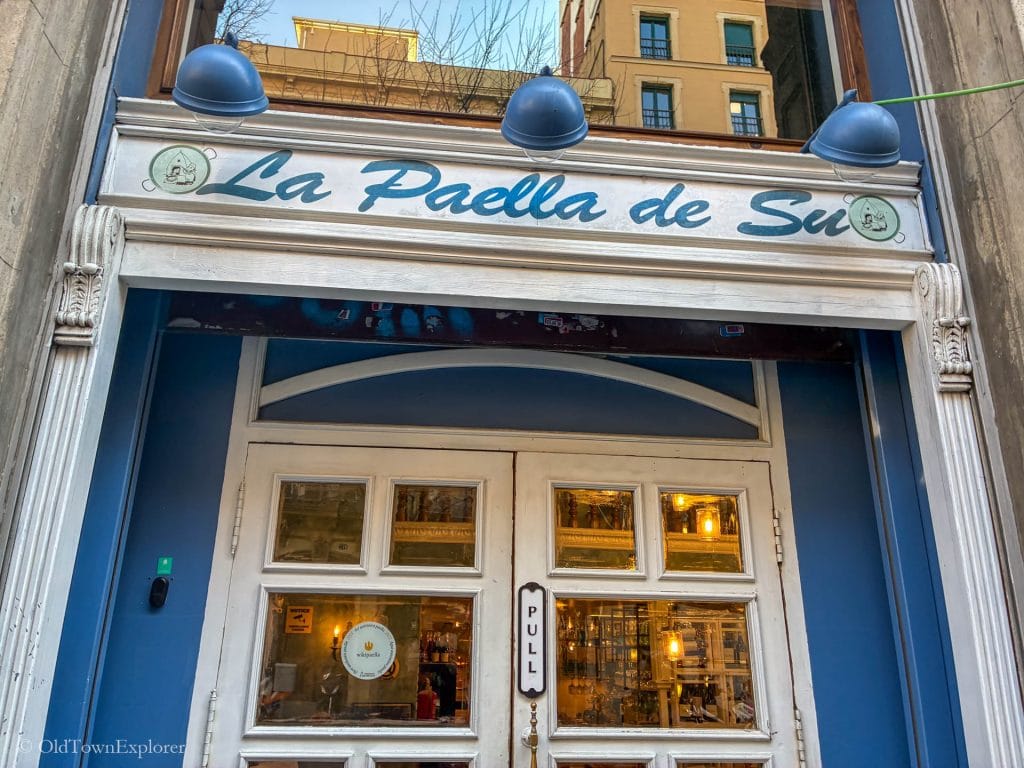
La Paella de Su (Eixample)
Address: Carrer de Pau Claris, 118, 08009 Barcelona
A paella-first restaurant built around rice as the main order, with service structured around lunch and dinner windows.
Paella Bar Boqueria (La Boqueria / El Raval, Ciutat Vella)
Address: Pòrtics de la Boqueria, Locals 6–7, 08001 Barcelona
A market-based dining option inside La Boqueria’s perimeter, oriented around rice and seafood in a daytime, market-linked rhythm.
Paelleria Gaudí (Eixample)
Address: Carrer de Provença, 271, 08008 Barcelona
A paella-and-tapas restaurant near Passeig de Gràcia, structured for mixed groups who want multiple rice options plus starters.
Restaurant Gabriel Barcelona (Barri Gòtic, Ciutat Vella)
Address: Placeta del Pi, 5, 08002 Barcelona
A central Gothic Quarter dining option that mixes seafood, tapas-style starters, and paella/rice dishes in a sit-down restaurant format.
Restaurants in Barcelona
Barcelona has a deep bench of sit-down restaurants that run from seafood dining rooms in Barceloneta to Born addresses focused on market buying, plus tasting-menu counters where Catalan ingredients are handled with more technical detail. The places below are useful when you want a longer meal that goes beyond a quick round of tapas.
Ciutat Vella
1881 Per Sagardí
Address: Pl. Pau Vila, 3 (Palau de Mar), Museu d’Història de Catalunya, 08039 Barcelona
Basque-led Mediterranean cooking in the former port warehouse building, with skyline views
Arenal Restaurant
Address: Passeig Marítim de la Barceloneta s/n, 08003 Barcelona
Mediterranean cooking in a historic setting on the seafront
Agüelo Taberna
Address: Avinyó, 37, 08002 Barcelona
Market-driven menu served in a vaulted room that incorporates remains of the Roman Wall
Arcano Restaurante
Address: Mercaders, 10, 08003 Barcelona
Mediterranean dishes in a dining room set inside stone arches and historic walls
Azul Rooftop Barceloneta
Address: Pg. de Joan de Borbó, 101 (Planta 8), 08038 Barcelona
Rooftop restaurant with a year-round terrace and 360° views over the city and port
Cadaqués BCN
Address: Reina Cristina, 6, 08003 Barcelona
Sea-and-mountain ingredients, with a focus on wood-fired rice dishes and dock-fresh fish
Cafè Pablo
Address: Montcada, 19 (Museu Picasso), 08003 Barcelona
Bistro-style dining with multiple rooms and an interior courtyard
Can Ramonet
Address: Maquinista, 17, 08003 Barcelona
Seafood-leaning Catalan cooking built around seasonal ingredients
Can Solé
Address: Sant Carles, 4, 08003 Barcelona
Established seafood and rice house with suquets (fish stews) and market-based specials
Casa Leopoldo
Address: Sant Rafael, 24, 08001 Barcelona
Historic dining room serving traditional Catalan dishes with market sourcing
CentOnze
Address: La Rambla, 111 (Hotel Le Méridien Barcelona), 08002 Barcelona
“Market to table” Mediterranean cooking close to La Boqueria
Caelis
Address: Via Laietana 49, 08003 Barcelona
One MICHELIN Star (Creative), tasting-menu dining
Dos Palillos
Address: Elisabets 9, 08001 Barcelona
One MICHELIN Star (Fusion), counter-focused fine dining built around small-plate pacing
El Jardí de l’Ateneu
Address: Canuda, 6, 08002 Barcelona
Garden dining inside the Ateneu Barcelonès grounds, with a seafood-forward menu
El Passadís del Pep
Address: Pla de Palau, 2, 08003 Barcelona
Seafood-led cooking with no posted menu and a large wine cellar
Els 4 Gats
Address: Montsió, 3 bis, 08002 Barcelona
Historic modernist venue serving Catalan cuisine in a landmark dining room
La Mar Salada
Address: Pg. Joan de Borbó Comte de Barcelona, 58, 08003 Barcelona
Seafood and rice dishes near the waterfront, with a technique-forward kitchen
Restaurant Calabrasa
Address: Passeig del Born, 27, 08003 Barcelona
Catalan-leaning menu with modern plating, plus a dining room and terrace
Tejada Mar Barcelona
Address: Passeig del Mare Nostrum, 19–21, 08039 Barcelona
Seafront dining focused on fish, seafood, and terrace service
Velissima
Address: Passeig de Joan de Borbó, 103, 08039 Barcelona
Amalfi-coast-inspired seafood-leaning menu in a large-format venue
Street Food in Barcelona
Street food in Barcelona is less about food trucks and more about takeaway counters, xurreries (churro shops), sandwich bars (entrepans), and market stalls where you eat standing up or carry food to a nearby square. Many of the city’s most practical “on-the-go” options are designed for quick service: churros with hot chocolate, a warm pressed sandwich, or a simple entrepà you can eat between stops in Ciutat Vella.
Xurreria dels Banys Nous
Address: Carrer dels Banys Nous, 8, 08002 Barcelona
A dedicated churro stop in the Gothic area, built for quick orders of churros and hot chocolate rather than a long sit-down pace.
Xurreria Laietana
Address: Via Laietana, 46, 08003 Barcelona
A central xurreria format with long opening hours, useful for a fast breakfast or an afternoon snack that doesn’t require reservations or planning.
La Pallaresa Xocolateria Xurreria
Address: Carrer de Petritxol, 11, 08002 Barcelona
A hot-chocolate-and-churros address on Carrer de Petritxol, a street known for traditional chocolate shops—good when you want the classic pairing in a straightforward café setup.
Conesa Entrepans
Address: Carrer de la Llibreteria, 1 (Plaça Sant Jaume), 08002 Barcelona
A sandwich counter format in the Gothic Quarter, useful for a fast entrepà when you want something portable rather than a full restaurant meal.
Historic Food Shops in Barcelona
Barcelona’s food culture isn’t limited to restaurants and tapas bars. The city also has long-running pastry counters and colmados (traditional grocery-delis) where you can buy sweets, conservas, cheese, coffee, spices, and other pantry items for takeaway.
Casa Gispert
Address: Carrer dels Sombrerers, 23, 08003 Barcelona
A long-running specialty shop in El Born selling nuts, dried fruit, coffee, tea, cocoa, and spices, operating since 1851.
Pastisseria La Colmena
Address: Plaça de l’Àngel, 12, 08002 Barcelona
A historic pastry shop in the Gothic Quarter known for traditional Catalan sweets, with the shop tracing its history to 1849.
Colmado Quílez
Address: Rambla de Catalunya, 63, 08007 Barcelona
A classic colmado format on Rambla de Catalunya, in the same location since 1908, useful for conservas, cheeses, and packaged specialties that travel well.
Queviures Múrria (Colmado Múrria)
Address: Carrer de Roger de Llúria, 85, 08009 Barcelona
A Modernisme-era gourmet shop founded in 1898, often used for cheeses, conservas, coffee, and deli staples.
Pastisseria Escribà (La Rambla)
Address: La Rambla (Rambla de les Flors), 83, 08002 Barcelona
A long-running Barcelona pastry counter founded in 1906, set up for quick takeaway boxes and a short stop near La Boqueria.
Granja M. Viader
Address: Carrer d’en Xuclà, 4–6, 08001 Barcelona
A “granja” dairy-café format that dates to 1870, practical for hot chocolate, dairy-based sweets, and a fast sit-down break.
Food Markets in Barcelona
Barcelona’s municipal markets are practical places to see what Catalan cooking runs on day to day: seasonal produce, fish and shellfish, pork cuts, legumes, olives, cheese, and prepared foods. Some markets are best for ingredient shopping, while others also have bars and counters where you can stop for a quick plate.
For current market details, locations, and services, use the official Barcelona Turisme markets list.
Mercat de la Boqueria (Mercat de Sant Josep)
Address: La Rambla, 91, 08001 Barcelona
Barcelona’s best-known fresh-food market, first documented in the medieval period and housed in a purpose-built structure from the 19th century. Expect a dense mix of produce, seafood, meat, and specialist counters, plus prepared-food stalls geared to visitors as well as locals.
Mercat de Santa Caterina
Address: Avinguda de Francesc Cambó, 16, 08003 Barcelona
A central market serving Santa Caterina, Sant Pere, and La Ribera, rebuilt in the 2000s with a distinctive multi-color roof. It works well for produce and everyday shopping, and it’s also one of the easier markets to pair with a sit-down meal nearby.
Mercat de la Barceloneta
Address: Plaça del Poeta Boscà, 1, 08003 Barcelona
A neighborhood market with a strong seafood focus, rebuilt and reopened in the 2000s while retaining the original market structure. You’ll find fish and shellfish counters alongside produce and other staples, plus places to eat within the market footprint.
Food Tours in Barcelona
Food tours in Barcelona are a practical way to understand how to order (tapas vs. platillos, portion sizes, and pacing), what’s seasonal, and how Catalan staples show up across bars, markets, and sit-down restaurants. Most tours follow a walkable route through Ciutat Vella (Gothic Quarter, El Born, El Raval) and usually build the experience around several short stops rather than one long meal.
Best Places to Stay In Barcelona
Hotels in Barcelona
For most first-time visits, the easiest base is Ciutat Vella, because it puts you within short walking distance of high-density eating—tapas streets, bakery counters, and major markets like La Boqueria and Santa Caterina—so you can plan your day around meals instead of transit.
Ciutat Vella also works well if you want to keep dinner flexible: you can do small plates in rounds, stop into a historic pastry shop, and still be a short walk from the Gothic Quarter and El Born. Expect narrower streets, heavier foot traffic, and more late-night noise in some pockets, especially near the busiest restaurant corridors.
Use the interactive map below to explore accommodations by date, budget, and amenities.
FAQs About Barcelona Food
Is Barcelona a foodie destination?
Yes. Barcelona has a dense everyday food scene built around Catalan cooking, large municipal markets, and a wide range of restaurants—from seafood dining rooms to MICHELIN-starred tasting menus.
What is Barcelona famous for food-wise?
Common Barcelona-and-Catalonia staples to look for include pa amb tomàquet, esqueixada de bacallà, escudella i carn d’olla, suquet de peix, arròs negre, and desserts like crema catalana. Seasonal specialties include calçotada (winter–early spring) and sweets tied to specific dates like tortell de Reis.
What’s the difference between tapas and platillos in Barcelona?
In Barcelona you’ll see both terms used for small plates. Tapas is the broad Spanish label; platillos often signals small, composed dishes in a more Catalan/Mediterranean menu style. In practice, both are ordered in rounds and shared.
Do I need reservations for restaurants in Barcelona?
For tasting-menu restaurants and small dining rooms, yes—reservations are a good idea, especially on weekends. For many casual spots and market counters, walk-ins are normal, but peak dinner hours can mean waiting.
What time do locals eat in Barcelona?
Lunch commonly starts around 2:00 pm and can run into mid-afternoon. Dinner typically starts later, with many people eating around 9:00–10:30 pm.
Are food markets worth visiting, or are they just for groceries?
They’re worth it. Markets are where you see the ingredient baseline—produce, fish, meat, olives, cheese—and some also have bars or nearby counters where you can turn shopping into a meal stop.
Where should I go for seafood-focused eating?
Look toward the waterfront and older fishing-linked areas (especially Barceloneta) for seafood-first menus, plus markets and restaurants that build daily specials around fish and shellfish supply.
What should I order if I only have one day in Barcelona?
A practical one-day plan is: pa amb tomàquet + a few small plates at a bar, a market visit for context, and one sit-down meal that includes a rice dish (arròs negre or a seasonal rice) or a fish stew like suquet de peix. Add something sweet—crema catalana or churros with hot chocolate.
Is there vegetarian food in Barcelona?
Yes. Common vegetarian-friendly options include escalivada, salads, vegetable-based small plates, and some bean dishes depending on how they’re prepared. When ordering, ask whether a dish includes pork products (common in stews and some bean preparations).
When is calçot season in Barcelona?
Calçots are strongly seasonal and most commonly appear in winter into early spring, often as part of set meals built around grilled calçots and romesco-style sauce.
What neighborhoods are best for eating in Barcelona?
For density and walkability, Ciutat Vella (Gothic Quarter, El Born, El Raval edges) is practical. Eixample is useful for destination restaurants and a broad range of dining rooms. Gràcia is good for neighborhood-scale eating and markets.
Barcelona food is easiest to understand through a few repeatable routines: start with pa amb tomàquet and a couple of small plates, use the city’s markets to see what’s in season, then commit to at least one sit-down meal where a rice dish (like arròs negre) or a classic stew (like suquet de peix or escudella i carn d’olla) has time to develop real depth. Between historic pastry counters, colmado-style shops for pantry staples, and neighborhoods that range from Ciutat Vella’s bar density to Eixample’s destination dining rooms, you can cover Catalan basics without an over-planned itinerary—just pace meals around local hours and treat rice dishes as the shared centerpiece when you order them.