
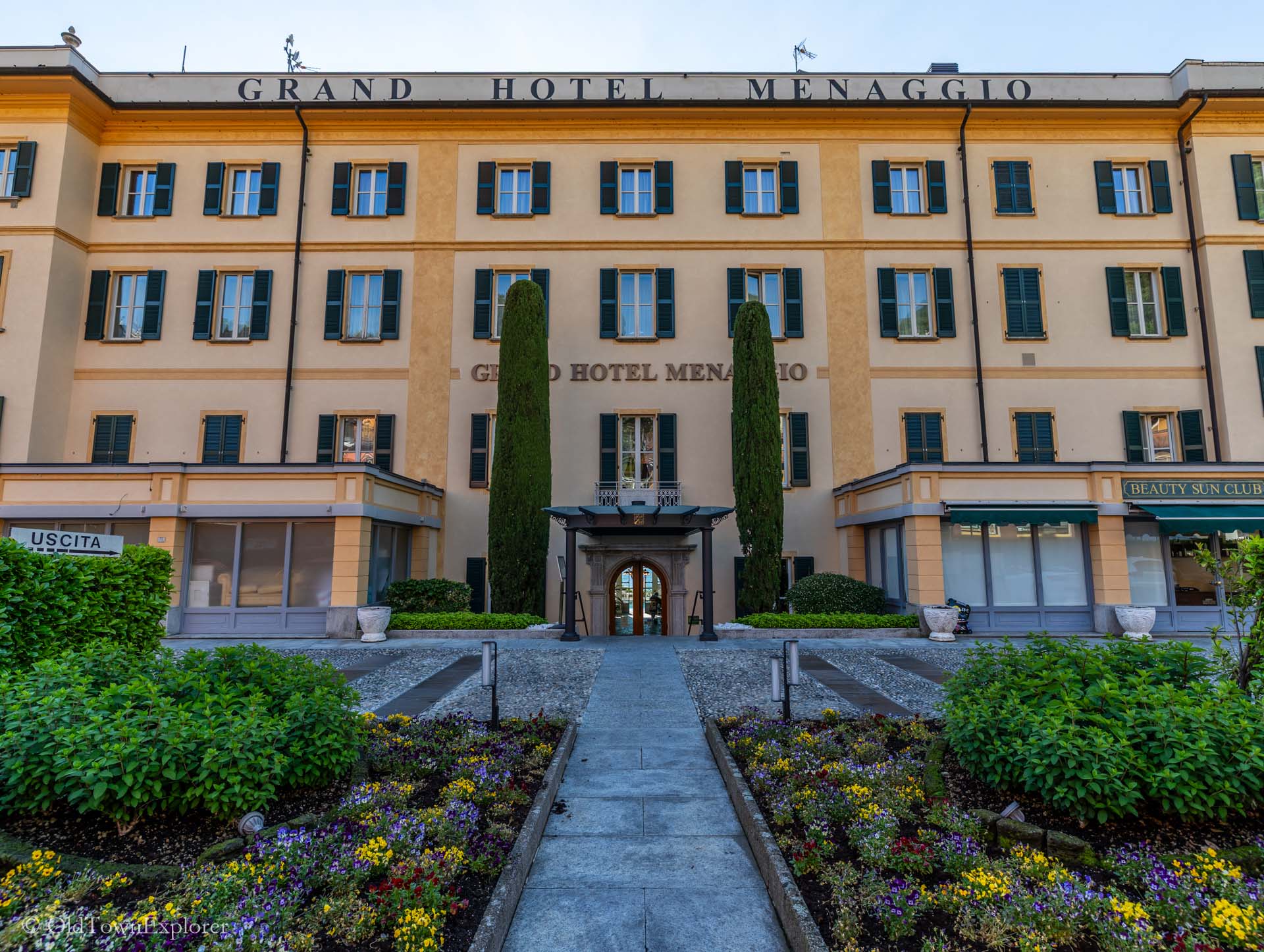
Discover Menaggio: History, Architecture & Must-See Attractions
Menaggio, Italy sits on Lake Como’s western shore, near the mouth of the Senagra valley. Its position mattered because the town connected lake travel with routes toward the mountains and Lake Lugano. Today, that same location makes Menaggio useful for ferries, lake walks, and day trips to nearby villages.
Menaggio’s historic core is easier to walk than Bellagio or Varenna because the lakefront and main square are relatively level. The town still has uphill sections, especially toward the old Castello area, Loveno, and Nobiallo. Most day trippers walk from the ferry landing to Piazza Garibaldi, continue along the lakefront promenade, and add the old lanes, churches, or a short climb if time allows.
We visited Menaggio during our month-long stay in Como. In this post, we’ll cover what to see and how to plan a day trip.
This post contains affiliate links that may earn us a small commission at no additional cost to you.
Menaggio at a Glance
Menaggio is a western-shore Lake Como town with a level lakefront, a central square, historic churches, villa districts, and strong ferry links.
Location: On Lake Como’s western shore, reached from Como by ferry, fast boat, bus, or car
Architectural character: Lakeside promenade, civic square, old stone lanes, 15th-century church fabric, 17th-century hillside church, villa districts, and historic hamlets
Walkability: Easy along the lakefront and center, steeper toward Castello, Loveno, and Nobiallo
Typical time required: 3–5 hours for the center, promenade, churches, and old lanes
Key landmarks: Piazza Garibaldi, Menaggio lakeshore promenade, Church of S. Stefano, Church of S. Marta, Church of S. Carlo, Villa Mylius Vigoni, Nobiallo leaning bell tower
Food role: Useful for lunch, gelato, or a lakeside break, but no first-hand restaurant notes are included here
Seasonality: May brings active lakefront walking, more ferry demand, and heavier crowds on clear days
Start with the history, then look at how the lake, valley routes, churches, villas, and ferry connections shaped the town.
History of Menaggio
Menaggio’s history is tied to movement. The town sat between Lake Como, the Senagra valley, and routes that connected the lake with inland settlements.
Roman Routes and the Western Shore
Menaggio developed along an important western-shore route on Lake Como. The Antica Strada Regina passed through this part of the lake and connected Como with settlements farther north.
This route shaped the town’s early layout. Roads, lake access, and hillside paths mattered as much as the shoreline itself.
Medieval Menaggio and the Castello Area
In the Middle Ages, Menaggio had a fortified upper area known as the Castello. This part of town sat above the lakefront and gave the settlement a defensive layer.
The medieval fortress no longer dominates the town. Its remains and street pattern still explain why the old core climbs behind the lakefront.
Churches and Civic Growth
Churches helped organize Menaggio’s center. The Church of S. Stefano was built in 1443 on the site of an earlier church, with later changes over time.
The area around Via Calvi, Piazza Garibaldi, and the nearby lanes became the main civic and religious zone. This gave Menaggio a clear center between the lakefront and the older uphill streets.
Villas and the Loveno District
Loveno, above the main town, became known for villas and garden estates. Villa Mylius Vigoni is the best-known example in this district.
This created a second architectural layer outside the lakefront core. Menaggio is not just a ferry town; it also has hillside villa districts tied to 19th-century lake culture.
Lake Tourism and the Promenade
As Lake Como tourism grew, Menaggio’s waterfront became more important. The promenade, ferry pier, hotels, and cafés made the lakefront the town’s main arrival space.
This changed how visitors moved through Menaggio. The first impression shifted from old roads and upper lanes to the square, ferry landing, and lakeside walk.
Present-Day Day Trips
Today, Menaggio works as a central-lake connector. Ferries link it with Bellagio and Varenna, while longer boat routes and road links connect it with Como and the northern lake.
The town’s day-trip value comes from this mix. It offers an easier lakefront walk than some nearby villages, plus historic lanes, churches, villas, and access to hill routes.
Architecture of Menaggio
Menaggio’s architecture reflects a town that grew from road, lake, and valley movement. The center is less vertical than Bellagio or Varenna, but the old lanes, upper districts, churches, and villas still show clear layers.
Lakefront Arrival and Open Space
Menaggio is often first seen from the ferry. The arrival feels more open than Varenna because the landing, road, promenade, and central square sit close together.
This makes the town easy to read. Visitors can move from the pier to Piazza Garibaldi and the lakeshore without a steep climb.
Piazza Garibaldi as the Civic Core
Piazza Garibaldi is the main public square in Menaggio. It connects the waterfront, cafés, shops, and lanes leading toward the older parts of town.
The square works as a hinge between lake travel and town life. It is the easiest place to understand Menaggio’s layout before walking farther.
Streets from Lake to Old Town
Menaggio’s old streets climb gently from the lakefront before becoming steeper near Castello. Via Calvi and Via Mazzini help connect the lakefront with churches and older lanes.
These streets show how the town balanced trade, worship, and daily movement. They are practical routes, not just scenic walks.
Church Placement and Rebuilding
The Church of S. Stefano stands close to Menaggio’s main walking routes, so it helps mark the shift from the lakefront toward the older center. Its position makes it one of the easiest landmarks to use when moving between Piazza Garibaldi, Via Calvi, and the parish church area.
The church also shows how older religious sites can change over time. Its 15th-century structure, later details, and central location make it one of the main anchors of Menaggio’s historic core.
Fortified Memory in the Castello Area
Menaggio’s medieval fortress is mostly gone, but the Castello area still matters. The upper lanes, slopes, and surviving traces point to the town’s defensive past.
This is different from Varenna, where Castello di Vezio remains a clear hilltop landmark. In Menaggio, the defensive layer is more about street pattern, walls, and the uphill shift behind the center.
Villa Districts Above the Center
Loveno adds a villa landscape above Menaggio. Villas there use larger plots, garden walls, and broader views than the lakefront center.
Villa Mylius Vigoni is the main architectural anchor in this area. It shows how hillside estates expanded Menaggio beyond its working lakefront.
Lakeside Promenade and Tourism Architecture
Menaggio’s promenade is one of its clearest architectural features. It gives the town a long, level public edge along the water.
This lakefront route connects the ferry area, views, hotels, cafés, and public space. It makes Menaggio easier for a relaxed day trip than steeper villages nearby.
Walkability and the Shape of the Town
Menaggio is walkable, but the difficulty depends on how far uphill you go. The ferry landing, Piazza Garibaldi, promenade, and main churches are easy for most visitors.
Loveno, Nobiallo, and the Castello area require more climbing. A good day trip keeps the lakefront as the base and adds uphill sections only if time and weather allow.
Architectural Attractions in Menaggio
Menaggio’s main sights fit together through a simple route: ferry landing, lakefront promenade, Piazza Garibaldi, church streets, old Castello lanes, and optional villa or hamlet extensions. The sites below show how the main sights fit together in the town’s layout.
Churches and Historic Core
Church of S. Stefano
- Architect: Unknown
- Style: Late medieval church with later changes
- Built: 1443 on the site of an earlier church
- Address: Via Enrico Caronti, 22017 Menaggio CO, Italy
The Church of S. Stefano is Menaggio’s main parish church. It matters because it marks one of the town’s central religious sites and preserves 15th-century fabric. Look for the broad church massing, bell tower, marble portal, and position near the older road pattern. It sits a short walk inland from Piazza Garibaldi and the lakefront.
Church of S. Marta
- Architect: Unknown
- Style: Neo-Gothic façade with older religious use
- Built: Façade rebuilt in 1885
- Address: Via Calvi, 22017 Menaggio CO, Italy
The Church of S. Marta is a small church along Via Calvi. It matters because it adds a religious stop directly on the town’s main walking route between the square and S. Stefano. Look for the narrow frontage, pointed Gothic-style details, and close placement between other buildings. It sits in the historic center, a short walk from Piazza Garibaldi.
Church of S. Carlo
- Architect: Unknown
- Style: 17th-century religious architecture with Spanish-period details
- Built: 1614
- Address: Via Castellino da Castello, 22017 Menaggio CO, Italy
The Church of S. Carlo stands in Menaggio’s Castello area. It matters because it was built above the ruins of the old castle and links the upper district with the town’s defensive past. Look for the simple church form, hillside placement, and bell tower associated with Spanish-period style. It sits above the main lakefront core in the Castello area.
Church of SS. Bartolomeo and Nicola
- Architect: Unknown
- Style: Historic parish church with Romanesque bell tower nearby
- Built: Church phases Unknown; bell tower 12th–13th century
- Address: Loc. Nobiallo, 22017 Menaggio CO, Italy
The Church of SS. Bartolomeo and Nicola is the parish church of Nobiallo. It matters because it anchors the historic hamlet north of central Menaggio. Look for the church’s relationship to the small settlement and the leaning Romanesque bell tower beside it. It sits in Nobiallo, beyond the easiest central Menaggio loop.
Squares, Streets, and Lakefront
Piazza Garibaldi
- Architect: Unknown
- Style: Historic civic square
- Built: Unknown
- Address: Piazza Garibaldi, 22017 Menaggio CO, Italy
Piazza Garibaldi is the main square of Menaggio. It matters because it connects the lakefront, ferry arrival, cafés, and streets into the older town. Look for the open paved space, building fronts, and direct relationship to the water. It sits just inland from the lakeshore promenade and ferry approach.
Via Calvi and Via Mazzini
- Architect: Unknown
- Style: Historic commercial streets
- Built: Unknown
- Address: Via Calvi and Via Mazzini, 22017 Menaggio CO, Italy
Via Calvi and Via Mazzini are key streets in Menaggio’s center. They matter because they connect the square, shops, churches, and older lanes. Look for changing street widths, plastered façades, shopfronts, and how the routes turn inland from the lake. They sit between Piazza Garibaldi and the parish church area.
Menaggio Lakeshore Promenade
- Architect: Unknown
- Style: Lakeside pedestrian promenade
- Built: Unknown
- Address: Lungolago Benedetto Castelli, 22017 Menaggio CO, Italy
The Menaggio lakeshore promenade is the town’s main public waterfront walk. It matters because it gives Menaggio a long, level edge facing Lake Como. Look for open lake views, planting, benches, and how the promenade frames the town from the water. It sits directly along the lakefront near Piazza Garibaldi.
Menaggio Pier
- Architect: Unknown
- Style: Ferry and lake transport infrastructure
- Built: Unknown
- Address: Menaggio ferry landing, 22017 Menaggio CO, Italy
Menaggio Pier is the town’s ferry arrival point. It matters because boats shape how many visitors enter and leave Menaggio. Look for the pier’s position south of the main center and its connection to the lakefront walking route. It sits close enough to Piazza Garibaldi to make arrival on foot simple.
Fortifications, Routes, and Older Layers
La Fortezza and Castello Area
- Architect: Unknown
- Style: Medieval fortification remains and hillside street pattern
- Built: Medieval period; exact date Unknown
- Address: Loc. Castello, 22017 Menaggio CO, Italy
La Fortezza marks Menaggio’s old fortified area. It matters because it points to the medieval settlement above the lakefront. Look for the hillside position, older lanes, wall traces, and the way houses follow the former fortified area. It sits uphill from the center, behind the main lakefront area.
Antica Strada Regina near Menaggio
- Architect: Not applicable
- Style: Historic road route
- Built: Roman origins; later medieval and modern use
- Address: Western-shore route through and near Menaggio, 22017 Menaggio CO, Italy
The Antica Strada Regina is the old route along Lake Como’s western shore. It matters because it connected Como with northern lake settlements and helped shape Menaggio’s role as a travel point. Look for how older streets and hamlets line up with inland routes rather than only with the ferry landing. It passes through the Menaggio area and continues toward nearby western-shore villages.
Villas, Hamlets, and Upper Districts
Villa Mylius Vigoni
- Architect: Gaetano Besia for the 1830 remodeling
- Style: 19th-century villa with English-style garden
- Built: Earlier country house; remodeled in 1830
- Address: Via Giulio Vigoni, 1, Loc. Loveno, 22017 Menaggio CO, Italy
Villa Mylius Vigoni is the best-known villa estate in Menaggio’s Loveno district. It matters because it shows the hillside villa culture above the lakefront town. Look for the expanded villa form, garden setting, and wider views from Loveno. It sits uphill from central Menaggio, outside the compact day-trip core.
Historical Hamlet of Loveno
- Architect: Unknown
- Style: Historic hillside hamlet and villa district
- Built: Unknown
- Address: Loc. Loveno, 22017 Menaggio CO, Italy
Loveno is a historic hamlet above Menaggio. It matters because it adds a villa and hillside layer beyond the lakefront center. Look for stone lanes, garden walls, and larger properties set above the town. It sits uphill from Menaggio and requires more walking or local transport.
Historical Hamlet of Nobiallo
- Architect: Unknown
- Style: Historic lakeside and hillside hamlet
- Built: Unknown
- Address: Loc. Nobiallo, 22017 Menaggio CO, Italy
Nobiallo is a historic hamlet north of central Menaggio. It matters because it shows how small settlements lined the western shore beyond the main town. Look for tight lanes, old route traces, church buildings, and the relationship between houses and the lake. It sits north of the center along the western shore.
Leaning Bell Tower of Nobiallo
- Architect: Unknown
- Style: Romanesque bell tower
- Built: 12th–13th century
- Address: Loc. Nobiallo, 22017 Menaggio CO, Italy
The Leaning Bell Tower of Nobiallo is one of the clearest architectural markers outside central Menaggio. It matters because it preserves a medieval religious layer and gives the hamlet a strong vertical point. Look for the tower’s lean, square plan, stone construction, and simple Romanesque form. It sits beside the Church of SS. Bartolomeo and Nicola in Nobiallo.
Walking Tour in Menaggio
Start at the Menaggio ferry landing, which is the natural arrival point from Como. Walk north along the lakefront toward Piazza Garibaldi.
- Use Piazza Garibaldi as your first pause. From there, continue along the Menaggio lakeshore promenade to understand the town’s open waterfront layout.
- Return toward the center and walk into Via Calvi and Via Mazzini.
- Continue toward the Church of S. Stefano, then stop at the Church of S. Marta along Via Calvi.
- If you want a short uphill extension, continue toward the Castello area and Church of S. Carlo. This adds the older fortified layer behind the lakefront.
- If you want a longer day, add Loveno for Villa Mylius Vigoni or Nobiallo for the historic hamlet and leaning bell tower. These extensions require more time and more climbing than the central loop.
Plan on 2–3 hours for the ferry landing, Piazza Garibaldi, promenade, churches, and nearby lanes. Add 1.5–3 hours for Loveno, Nobiallo, or a longer hillside walk.
How to Get to Menaggio from Como
Menaggio takes more planning than shorter trips from Como because it sits farther up Lake Como on the western shore. The ferry is usually the best choice for a day trip, especially if you want the journey to include lake views, villa-lined shorelines, and a direct arrival near the town’s walking route.
Check both outbound and return times before leaving Como. Menaggio is easy to explore once you arrive, but ferry schedules, bus options, and road traffic can shape how much time you have for Piazza Garibaldi, the promenade, the churches, and any uphill add-on toward Castello, Loveno, or Nobiallo.
By Ferry
The ferry is the best way to get from Como to Menaggio if you want the day trip to focus on Lake Como itself. It turns the journey into part of the visit and brings you close to the lakefront walking route.
Boats leave from Como’s lakefront docks on routes that serve the central and upper lake. Menaggio is on the western shore, so check the current Navigazione Laghi schedule before you go. Routes, travel times, fast services, and seasonal timetables change.
Once you arrive at Menaggio’s ferry landing, the town is easy to reach on foot. Walk north toward Piazza Garibaldi, the promenade, and the historic center.
For a day trip from Como, check both outbound and return times before you leave. In May and summer, build in extra time for ticket lines and return boarding.
By Train
Menaggio does not have a train station. The train is not a direct way to reach Menaggio from Como.
A rail-based route only makes sense if you are combining Menaggio with Varenna. In that case, take the train to Varenna-Esino from another part of Lombardy, then use the central-lake ferry to Menaggio.
From the Menaggio ferry landing, walk toward the lakefront and Piazza Garibaldi. Taxis are not needed for the main center, but uphill extensions to Loveno or Nobiallo take more effort.
By Bus
Bus service is the main land-based public transport option from Como to Menaggio. The C10 route connects Como, Menaggio, and towns farther north along the lake.
This option can work if ferry times do not fit your plan or if you prefer a road route. It is usually less scenic than the boat, and the western-shore road can be slow when traffic is heavy.
Once you arrive in Menaggio, the lakefront, Piazza Garibaldi, and main churches are walkable. Check current schedules before relying on the bus for your return.
By Car
Driving from Como to Menaggio is possible, but it is not the easiest choice for a simple day trip. The lake road can be narrow and slow, and parking near the center can be limited in busy periods.
If you drive, park outside the tightest central area and walk in. Watch for pedestrian areas, one-way streets, and local restrictions.
A car makes more sense if Menaggio is part of a wider road trip to western-shore villages, mountain viewpoints, or Lake Lugano. For most visitors staying in Como, the ferry should be the first choice.
By Taxi / Rideshare
A taxi from Como to Menaggio can work if you need door-to-door travel or have limited mobility. It is usually not practical for a standard day trip because the ferry and bus are more useful.
Rideshare coverage can be limited around Lake Como compared with large cities. Plan around ferry times first, then bus options if needed.
Making the Most of Your Day Trip to Menaggio
Menaggio works best when you use the lakefront as the base for the day. Start with the ferry landing, Piazza Garibaldi, and the promenade, then move inland toward the churches and older lanes.
This keeps the route simple and flexible. The center is easier to walk than Bellagio or Varenna, so you can decide later whether to add Castello, Loveno, or Nobiallo based on time, weather, and your return ferry.
Morning – architectural spine
After arriving by ferry, start with the lakefront route toward Piazza Garibaldi. This gives you the easiest first look at Menaggio’s shape and keeps the morning simple.
Walk the promenade before the busiest part of the day. Then return to Piazza Garibaldi and continue inland through Via Calvi and Via Mazzini toward the Church of S. Stefano.
Midday – civic core / street structure
Use midday for the historic center, the Church of S. Stefano, Church of S. Marta, and the short lanes around the parish church. This part of Menaggio shows how civic space, religious buildings, and old road routes fit together.
This is also the best time to pause for lunch or a simple food stop. No first-hand restaurant recommendation is included here, so choose based on current opening times, menu fit, and your ferry schedule.
For broader planning around regional dishes, use the Italy food guide.
Afternoon – architecture or landscape anchor
Use this part of the day for the strongest architecture or landscape anchor. Choose the Castello area if you want a short uphill link to the medieval town. Choose Loveno if you want villa architecture and a hillside district. Choose Nobiallo if you want a longer walk to a historic hamlet and leaning bell tower.
Late afternoon / evening – wrap-up
Return toward the ferry landing before your planned departure. Menaggio’s return boats can be busy in good weather, especially in May and summer.
Use any extra time for Piazza Garibaldi, the lakefront promenade, or a short walk near the pier. This keeps the final part of the day close to your return transport.
Tips for Visiting Menaggio
Start with the lakefront before heading inland
Start with the promenade because it gives you the clearest view of Menaggio’s layout. The lakefront, ferry landing, and Piazza Garibaldi sit close together.
This also helps you decide how much to add later. After the central loop, you can choose Castello, Loveno, or Nobiallo based on time and energy.
Use the ferry schedule as the frame for the day
The ferry is the best way to plan a Menaggio day trip from Como. Check both outbound and return times before you leave, then build your walking route around them.
Menaggio works best when your return trip is planned before you start exploring. In high season, build in extra time at the landing.
Wear comfortable shoes even though the center is easier
Menaggio’s center is flatter than Bellagio or Varenna. The ferry landing, promenade, and Piazza Garibaldi are easy for most visitors.
You still need good shoes if you add Castello, Loveno, or Nobiallo. Those routes involve slopes, steps, and longer walking stretches.
Choose one uphill extension
Do not try to add every upper district on a short day trip. Loveno, Nobiallo, and Castello each change the pace of the day.
Pick one extension after seeing the center. That keeps the route clear and reduces the risk of rushing back to the ferry.
Treat Loveno as a villa-focused add-on
Loveno is useful if you want to see Menaggio’s hillside villa layer. Villa Mylius Vigoni is the main reason to look toward this district.
Check access before planning around any villa visit. Some properties may not work like open public gardens.
Treat Nobiallo as a longer walking add-on
Nobiallo adds a historic hamlet and the leaning bell tower. It is a good choice if you want to see more than the central lakefront.
It takes more time than the basic Menaggio loop. Add it only if your ferry return is not tight.
Plan food around Piazza Garibaldi or the lakefront
Menaggio’s easiest food stops are near the center and waterfront. This draft does not include first-hand restaurant notes, so choose based on current opening times and menu fit.
Eat before starting a long uphill extension. That keeps the second half of the day easier to manage.
Compare Menaggio with Bellagio and Varenna before planning
Menaggio is more level along the lakefront than Bellagio and Varenna. It is often easier for a relaxed walk, especially if you do not want many stairs.
Bellagio has a stronger promontory setting. Varenna has a tighter village core. Menaggio has a broader lakefront and better access to western-shore routes.
Keep the final hour near the ferry landing
Do not leave Loveno or Nobiallo for the final hour. Those areas can make the return feel rushed if the ferry time is fixed.
Use the last hour for Piazza Garibaldi, the promenade, or a short loop through the center. Stay close enough to the landing to board without stress.
FAQs About Menaggio
Is Menaggio worth visiting as a day trip?
Yes, Menaggio is worth visiting as a day trip if you want a more level Lake Como town with ferry access, a central square, a long promenade, churches, and optional hill walks. It is easier to walk casually than some steeper villages nearby.
How long should I spend in Menaggio?
Plan 3–5 hours in Menaggio. That gives you enough time for the ferry arrival, Piazza Garibaldi, the promenade, the main churches, and a simple food stop.
How is Menaggio different from nearby towns?
Menaggio is broader and more level than Bellagio and Varenna. Bellagio is built around a steep promontory, while Varenna is tighter against the hillside.
Is Menaggio walkable?
Yes, Menaggio is walkable in the center. The ferry landing, Piazza Garibaldi, promenade, and main churches are close enough for an easy loop.
When is the best time to visit Menaggio?
May is a good time to visit Menaggio because the weather is often comfortable for lakefront walking. It can still be busy on sunny days, so plan ferry times before you leave Como.
What should I prioritize on a short visit?
Prioritize Piazza Garibaldi, the lakeshore promenade, Via Calvi, Church of S. Stefano, Church of S. Marta, and the Castello area. These give you the clearest view of Menaggio’s lakefront, civic core, and older town layers.
Is Menaggio better by ferry or by car from Como?
Ferry is usually better for a day trip from Como. It brings you close to the lakefront, avoids parking issues, and makes the route part of the Lake Como experience.
Can I visit Menaggio, Bellagio, and Varenna on the same day?
Yes, you can visit all three if ferry times line up, but it makes for a busy day. Keep Menaggio focused on the promenade and Piazza Garibaldi if you are also visiting Bellagio and Varenna.
Does Menaggio have enough architecture for a full day?
Yes, Menaggio has enough architecture for a full day if you include the center, churches, promenade, Castello area, Loveno, and Nobiallo. The value comes from seeing how the lakefront town connects with hillside villas and older hamlets.
