
Discover Mesi Bridge: Ottoman Architecture on Albania’s Kir River
Mesi Bridge (Ura e Mesit) is an 18th-century stone bridge that spans the Kir River near Shkoder, Albania. Located in the village of Mes, just 5 kilometers northeast of the city, it reflects the craftsmanship of Ottoman-era engineering and once served as a vital link for trade routes connecting inland villages to Shkoder.
Today, Mesi Bridge stands as a well-preserved example of historic Albanian architecture, with its elegant arches and riverside setting making it a popular stop for visitors interested in both history and landscape photography.
We visited Mesi Bridge during our stay in Shkoder. In this post, we explore the architectural details and historical context that define Mesi Bridge’s enduring significance.
This website contains affiliate links that may earn us a small commission at no additional cost to you.
Historical Significance
The construction of the Mesi Bridge around 1770 under Kara Mahmud Pasha's patronage was part of his broader initiative to improve infrastructure, facilitating trade and military movements across the region.
The Bushati Family
The Mesi Bridge was commissioned by Kara Mahmud Pasha, a prominent figure from the Bushati family, who ruled the Pashalik of Scutari from 1757 to 1831. The Bushatis were a powerful Albanian noble family that established semi-autonomous rule in northern Albania during the Ottoman era. Kara Mahmud Pasha, in particular, was known for his military campaigns and efforts to expand his territory, often challenging both neighboring regions and the central Ottoman authority.
Critical Infrastructure Project
The bridge served as a critical infrastructure project aimed at enhancing connectivity between Shkodër, the region's administrative center, and Drisht, a medieval town, as well as other northern settlements. This connectivity was vital for facilitating trade, military movements, and administrative control in the region. The bridge's strategic location along the route that eventually led to Pristina underscores its importance in regional trade and communication networks.
Architectural Features
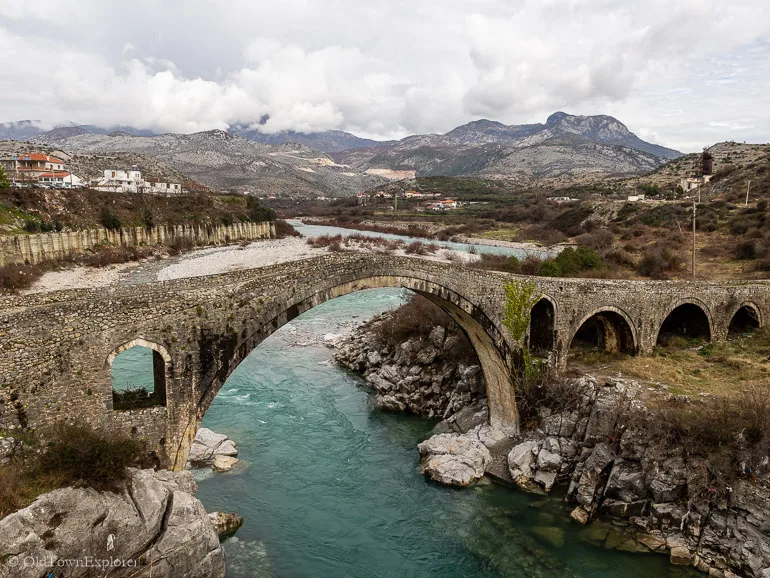
The Mesi Bridge is a remarkable example of 18th-century Ottoman bridge engineering. Spanning 108 meters in length, 3.4 meters in width, and rising to a height of 12.5 meters, the bridge comprises 13 stone arches, with the central arch measuring approximately 21.5 meters.

Engineering
The construction was executed in two phases: the initial phase included the central arch and an adjacent arch, while the subsequent phase added the remaining 11 arches.
The bridge was constructed using locally sourced stone materials, featuring round slick stones and stone plates, providing structural integrity.
Design
The bridge showcases traditional Ottoman architectural elements, featuring round, smooth stones and stone plates that contribute to its aesthetic appeal.
The design reflects the Ottoman architectural emphasis on functionality, durability, and harmony with the natural environment.
Cultural Designation
Designated as a Cultural Monument of the first category by Albanian authorities, the Mesi Bridge has become a popular tourist attraction.
Cultural Monument
The Mesi Bridge holds the designation of a Cultural Monument of the First Category in Albania. This classification is part of the country's legal framework for protecting structures of significant historical, cultural, and architectural value.
The Mesi Bridge's designation as a Category I monument underscores its exceptional historical and architectural significance. This status ensures that the bridge is subject to strict preservation regulations, safeguarding its structural integrity and aesthetic features for future generations.
Tourist Attraction
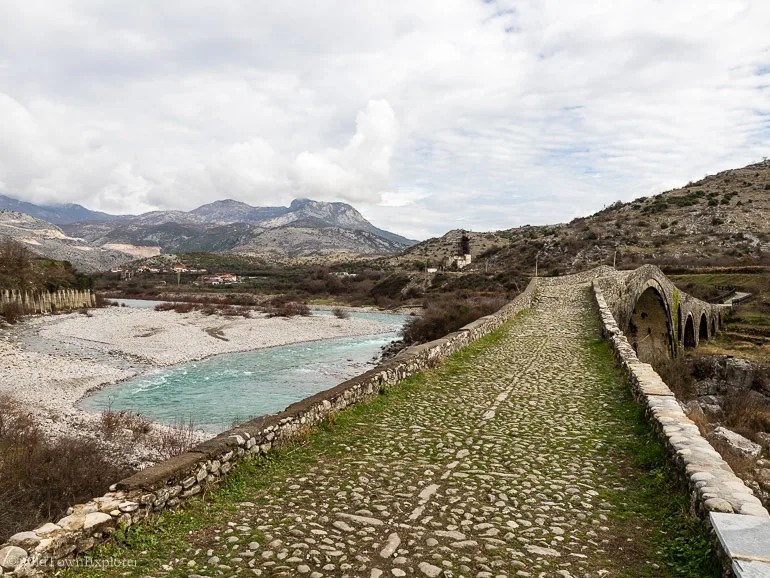
The Mesi Bridge has become a significant tourist attraction in the Shkodër region. Its picturesque setting over the Kir River, combined with its historical and architectural significance, draws visitors from around the world.
The surrounding landscape offers opportunities for photography, nature walks, and exploration of nearby historical sites such as Rozafa Castle. Recognizing its tourism potential, the Albanian Development Fund invested 13 million lekë to improve access to the bridge, allowing tourists to closely experience its architectural features.
Preservation Challenges
Despite its historical resilience, the Mesi Bridge faces preservation challenges, primarily due to natural factors.
Flood Damage
Over time, devastating floods have caused damage to the bridge, particularly affecting the arches on the right side. These floods have led to erosion and cracking, posing risks to the bridge's structural integrity. Continuous monitoring and conservation efforts are essential to protect this cultural heritage site from further deterioration.
Accessibility
In recent years, efforts have been made to preserve and enhance the bridge's accessibility. The Albanian Development Fund invested 13 million lekë to improve access, allowing tourists to experience the bridge more closely.
How to Get to the Mesi Bridge
The bridge is located about 5 km northeast of Shkodër, in the village of Mes. The area around the bridge offers a serene environment, ideal for leisurely walks and appreciating the natural beauty of the Kir River valley.
By Car
Take the road heading toward Drisht; the bridge is signposted. The drive is short and scenic.
By Taxi
Easily accessible by local taxi. If you ask, the taxi driver will wait while you visit the bridge. Don't expect to catch a return taxi in Mesi without making prior arrangements!
By Bike
Easily accessible by bicycle for the more adventurous.
Guided Tour
Some guided tours also include the bridge in their itinerary.
Where Is the Best Place To Stay Near Mesi Bridge?
Hotels in Shkoder
If you are planning a trip to visit the Mesi Bridge, we strongly recommend staying in Shkoder on or very near Kole Idromeno Street. The castle marker on the map below is the center of Kole Idromeno Street. We suggest staying as close to it as possible, depending on your budget and preferences.
The below interactive map provides hotel and apartment options that can be filtered to meet your needs. Select your travel dates to get specific availability and prices.
Book your stay now!
Tips for Visiting the Mesi Bridge
Best Time to Visit
Spring (April–June) and early autumn (September–October) are ideal times. The weather is pleasant, the Kir River is often fuller and more scenic, and there are fewer crowds.
Avoid peak summer afternoons, as the area can get hot and lacks much shade.
Footwear and Clothing
Wear comfortable walking shoes. The area around the bridge includes uneven stone paths and grassy terrain.
Bring a hat, sunscreen, and water, especially in warmer months.
Photography Tips
Visit early in the morning or around golden hour for the best light.
The view from the riverbed, especially when the river is low, offers excellent photo opportunities of the full span of the bridge.
Drone photography is popular here, but check for local restrictions.
FAQs About Mesi Bridge
How old is the Mesi Bridge?
The Mesi Bridge is over 250 years old. It was constructed around 1770 during the Ottoman period, under the direction of Kara Mahmud Bushati, the local pasha of Shkodër. The bridge was built to improve connections between the city and the surrounding mountainous regions.
What is the oldest bridge in Albania?
While the Mesi Bridge is one of the best-preserved Ottoman-era bridges in Albania, the title of the oldest bridge likely belongs to the Kadiu Bridge (Ura e Kadiut) in Gjirokastër, which dates back to the 17th century, or possibly earlier. However, determining the absolute oldest bridge can be difficult due to limited written records. Other contenders include Roman and medieval-era structures, but they are often in ruins or heavily modified.
How tall is the Mesi Bridge?
The Mesi Bridge stands approximately 12.5 meters (41 feet) tall at its highest point. Its central arch, which is the tallest and widest, spans about 21.5 meters, giving the bridge its distinct and elegant rise over the Kir River.
