
Dijon Wine
Explore Dijon Wine: Bars, Shops & Wineries
Dijon is the northern gateway to the Côte de Nuits and the Route des Grands Crus. Wine bars and tasting cellars fill the historic center, while Marsannay-la-Côte, Fixin, Gevrey-Chambertin, Morey-Saint-Denis, Chambolle-Musigny, and Nuits-Saint-Georges form a practical sequence of winery destinations south of the city.
We spent a month in Dijon exploring its wine scene and using the city as a base for the northern Côte d’Or. That extended stay showed us how easily an in-town tasting can be combined with a focused day among nearby appellations.
This guide explains what to drink, where to taste and buy wine in Dijon, which nearby wineries receive visitors, and how to plan guided or self-guided wine trips without trying to cover too much in one day.
This page contains affiliate links. We may earn a small commission at no extra cost to you.
Dijon Wine at a Glance
Dijon combines a walkable urban wine scene with quick access to the northern Côte de Nuits. These are the main points to know before choosing tastings or winery visits.
- Main red grape: Pinot Noir dominates the nearby Côte de Nuits.
- Main white grapes: Chardonnay is the principal white grape, while Aligoté provides a lighter and usually less expensive alternative.
- Closest appellation: Marsannay begins immediately south of Dijon and produces red, white, and rosé wines.
- Best in-town options: The historic center has casual wine bars, guided tasting cellars, specialist shops, and appointment-based workshops.
- Best first winery area: Marsannay and Fixin provide the shortest, simplest introduction from Dijon.
- Reservation rule: Book producer visits in advance unless the venue expressly offers walk-in tastings.
A short stay can cover both sides of Dijon wine: compare appellations in the center first, then choose one compact vineyard area for a half-day or full-day trip.
What Wine to Drink in Dijon
Dijon is a city base rather than a single wine appellation. Lists and shop shelves therefore range from regional Bourgogne wines to village, Premier Cru, and Grand Cru bottles from across the Côte d’Or. For a useful first comparison, begin with approachable regional wines before moving to nearby village names.
Pinot Noir, Chardonnay, and Aligoté
Pinot Noir is the reference red grape around Dijon, particularly in the Côte de Nuits. Chardonnay accounts for most white Burgundy, while Bourgogne Aligoté is generally lighter, more direct, and easier to order as an aperitif.
Crémant de Bourgogne is the local sparkling option. It is widely available by the glass and can provide a practical start to a tasting before still wines.
Marsannay, Fixin, and the Côte de Nuits
Marsannay is the closest village appellation and the only one in Burgundy authorized for red, white, and rosé wines. Fixin is the next village south and is primarily associated with Pinot Noir, including village and Premier Cru wines.
Gevrey-Chambertin, Morey-Saint-Denis, Chambolle-Musigny, and Nuits-Saint-Georges provide increasingly specific village comparisons farther along the Côte de Nuits. Ordering two village wines from the same vintage can be more instructive than moving immediately to an expensive Grand Cru.
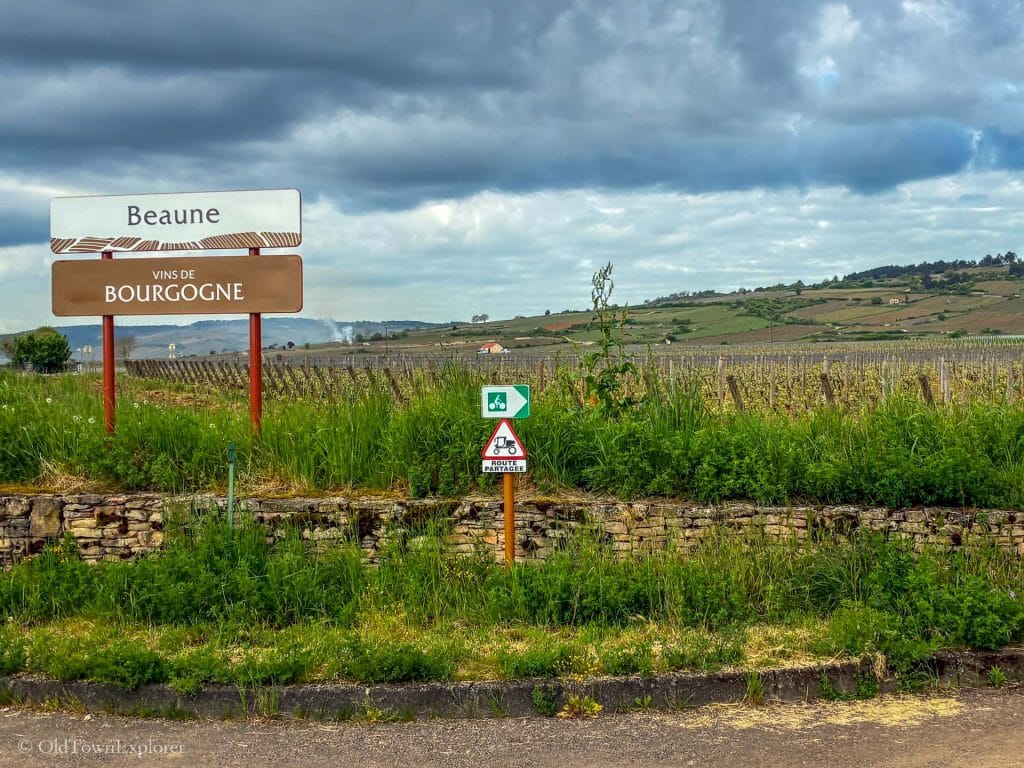
Burgundy Wine
Burgundy labels emphasize origin: regional Bourgogne, village appellation, Premier Cru vineyard, and Grand Cru vineyard. Producer and vintage also matter, so a sommelier or caviste can help distinguish a good-value bottle from one whose price is driven mainly by a famous place name.
Our Burgundy Wine guide explains the region’s appellations, grapes, and principal wine areas in more detail.
Where to Drink Wine in Dijon
Most useful wine stops lie inside or just beyond Dijon’s compact historic center. Choosing by area makes it easier to combine one structured tasting with a bar, meal, or bottle purchase.
Les Halles and Rue Musette
The streets around Les Halles provide the densest central cluster. La Buvette des Halles works around market hours, while Dr Wine, Les Clos Vivants, and Dr Wine Shop place restaurant drinking, guided tasting, and bottle buying within a short walk of one another.
Place de la Libération and Rue Vauban
This area suits visitors who want to combine the Palais des Ducs with wine. Cave Vauban faces the square, Au Duché de Bourgogne occupies another side, and Dingovino is close by on Rue Vauban.
Rue Vannerie and Rue Jeannin
East of the palace, Rue Vannerie and Rue Jeannin concentrate smaller evening venues. Le Caveau de Saulx and La Cave Se Rebiffe are wine-led stops, while Cave is better suited to a meal in which the wine list supports the food.
Rue Monge and the Southern Center
Rue Monge has several hybrid businesses that combine drinking and buying. Au Vieux Millésime and Thé Vin work well for wine with food, while La Cave du Chaignot is primarily a Burgundy bottle shop.
Place Darcy and Rue Devosge
The western edge of the center is convenient for arrivals near the station. Bar le 1855 and 20 by La Cloche offer a bar and shop pairing close to Place Darcy without requiring a walk across the old town.
Wine Bars in Dijon
Dijon’s wine bars range from market counters and restaurant-led lists to cellar tastings centered on guided pours. Check current opening days before visiting because several venues keep limited market or evening schedules.
La Buvette des Halles
- Address: 1 Rue Bannelier, 21000 Dijon
La Buvette des Halles is the market bar inside Dijon’s covered-hall complex. Customers commonly pair drinks with oysters, cheese, charcuterie, and other products bought from market traders.
Choose it for a morning aperitif or market-day lunch rather than a formal appellation tasting. Its schedule follows market activity, making an early check especially important.
Caveau de la Chouette
- Address: 39 Rue des Godrans, 21000 Dijon
Caveau de la Chouette serves wine, cocktails, and sharing boards in the historic center. It has indoor cellar-style space and seasonal outdoor seating.
This is a flexible choice for Burgundy by the glass or bottle without committing to a structured workshop. It is also convenient for an evening stop near Les Halles and Notre-Dame.
La Cave du Palais
- Address: 23 Rue du Palais, 21000 Dijon
La Cave du Palais is a vaulted tasting cellar associated with Hôtel du Palais. Its formats focus on guided Burgundy tastings and explanation rather than casual bar service.
Choose it when understanding appellations is more important than ordering a single glass. Reserve ahead for the desired language and tasting format.
Le Caveau de Saulx
Address: 15 Rue Vannerie, 21000 Dijon
Le Caveau de Saulx, also known as Le Trou, specializes in commented tastings, including blind comparisons and older vintages. Food boards and programmed evenings support the cellar-led format.
This is a destination tasting rather than a quick convenience stop. Review the current program or reserve before going because access and formats can vary by evening.
Bar le 1855
- Address: Place Darcy, 21000 Dijon
Bar le 1855 occupies a restored vaulted cellar at Hôtel Darcy. Its menu combines fine wines, cocktails, and plates based on regional products.
The location works well for an evening glass near the station side of the historic center. Private tasting arrangements are also available for visitors seeking more structure.
L’Auguste
- Address: 6 Rue Auguste Comte, 21000 Dijon
L’Auguste is a central wine bar and restaurant serving Burgundy and other wines alongside beer, spirits, and food. It lies a short walk north of the Palais des Ducs.
Choose it when the group wants wine but not everyone wants a wine-only venue. Its food-led format is more suitable for a relaxed meal or shared plates than a technical tasting flight.
Cave Vauban
- Address: 15 Place de la Libération, 21000 Dijon
Cave Vauban combines a wine shop, tasting space, restaurant, and terrace opposite the Palais des Ducs. Guests select bottles from the cellar with sommelier guidance instead of relying on a conventional fixed wine list.
This is one of the most practical hybrid options for drinking and buying in the same visit. It also runs tasting workshops, although advance booking is preferable for a scheduled session.
Dr Wine
- Address: 5 Rue Musette, 21000 Dijon
Dr Wine is a restaurant and wine bar with a large Burgundy-focused cellar and numerous wines by the glass. Sommeliers build pairings around the restaurant’s lunch and evening menus.
Choose it for a full meal with serious wine options rather than a brief tasting stop. Reservations are sensible for dinner and for anyone prioritizing the courtyard or terrace.
Cave
- Address: 29 Rue Jeannin, 21000 Dijon
Cave is a wine-led restaurant offering a lunch formula and shareable evening dishes. The bottle selection is integrated into the meal rather than presented as a separate tasting program.
This is best for diners who want food and wine considered together. It is not the strongest choice for a quick glass or an instructional Burgundy tasting.
La Cave Se Rebiffe
- Address: 57 Rue Vannerie, 21000 Dijon
La Cave Se Rebiffe is a compact evening wine bar with bottles from Burgundy and other French regions. Cheese, charcuterie, and simple dishes accompany its bottle-led service.
Choose it for a slower conversation with staff and a bottle selected at the table. The small room makes it less predictable for larger groups, so confirm availability when space matters.
Au Vieux Millésime
- Address: 82 Rue Monge, 21000 Dijon
Au Vieux Millésime combines a caviste with a wine bar and carries more than 1,000 references from Burgundy, other French regions, and abroad. The Dijon bar operates alongside the retail cellar.
This hybrid is useful when you want to taste with cheese or charcuterie and then buy from the same range. Evening bar service runs on fewer days than the shop, so check the current schedule.
Thé Vin
- Address: 72 Rue Monge, 21000 Dijon
Thé Vin operates as a wine shop, restaurant, and bar with food and wine available together. Its identity extends beyond conventional Burgundy tasting to a broader selection and food pairing.
Choose it for a seated meal or bottle with food on Rue Monge. Visitors seeking a formal explanation of Burgundy’s classification will be better served by one of the guided tasting venues.
Wine Tastings in Dijon
Appointment-based workshops provide a more structured alternative to wine-bar drinking. These two businesses focus on guided learning and should be booked before arrival.
The Wine Compass Dijon
- Address: 1 Avenue Junot, 21000 Dijon
The Wine Compass is a caviste and tasting venue that operates by appointment. Burgundy workshops explain tasting method, appellations, and regional distinctions through guided flights.
Choose it for a classroom-style introduction before visiting wineries. The cellar also sells a selective range of French and European wines, but it is not a conventional walk-in shop.
Vino Dilectio
- Address: 85 Rue Berbisey, 21000 Dijon
Vino Dilectio provides guided wine workshops led by a Burgundy wine specialist. Sessions are designed for different experience levels and may incorporate food pairing.
This is an activity to schedule rather than a shop to browse. Confirm the current workshop calendar, language, group size, and meeting details when booking.
Wine Shops in Dijon
Dijon’s cavistes are useful for comparing producers, finding bottles at different price levels, and asking what will travel well. The strongest choice depends on whether you want Burgundy specialization, natural wine, international bottles, a scheduled tasting, or simple central convenience.
Les Clos Vivants
- Address: 1 Rue Musette, 21000 Dijon
Les Clos Vivants is an independent central caviste with more than 1,000 wine and spirit references. It also runs recurring Pinot Noir and Chardonnay masterclasses.
The shop works well when you want to taste before buying and compare Burgundy by grape or appellation level. Reserve a masterclass separately rather than assuming one will be available during a walk-in visit.
Dr Wine Shop
- Address: 5 Place Notre-Dame, 21000 Dijon
Dr Wine Shop is the retail branch of the Dr Wine business, separate from its Rue Musette restaurant. It carries wine and spirits and announces tastings and producer events through the wider Dr Wine Selection program.
This is a convenient specialist stop near Notre-Dame when you want advice without committing to a restaurant meal. Check the current event calendar if a tasting is the main reason for visiting.
Dingovino
- Address: 9 Rue Vauban, 21000 Dijon
Dingovino carries Burgundy alongside wines from elsewhere in France and abroad, with attention to organic, biodynamic, and lower-intervention producers. The shop also schedules tastings and meetings with winemakers.
Choose it for an independent selection near Place de la Libération. It suits bottle buyers who want producer guidance without the larger scale of a multi-location merchant.
Les Caves de La Fine Heure
- Address: 34 Rue Berbisey, 21000 Dijon
Les Caves de La Fine Heure combines a caviste, urban micro-winery, vaulted cellar, tastings, and an associated restaurant. The bottle range spans accessible regional appellations through more prestigious crus.
This is useful when you want several wine activities in one address. Book a cellar tasting if that is the priority; ordinary retail access does not automatically include the full guided program.
La Cave du Chaignot
- Address: 20 Rue Monge, 21000 Dijon
La Cave du Chaignot is a grower-merchant and Burgundy specialist carrying its own range alongside wines from other regional producers. The shop also offers reserved tastings in a separate vaulted cellar.
Choose it for a focused Burgundy purchase and direct advice on appellations. Confirm the location when booking a tasting because the tasting cellar is not simply an extension of everyday shop service.
20 by La Cloche
- Address: 5 Rue Devosge, 21000 Dijon
20 by La Cloche combines a wine boutique, cellar, and tasting area operated by Grand Hôtel La Cloche. Burgundy is central to the selection, with staff available to guide bottle choices.
The polished setting near Place Darcy is convenient for gifts or a purchase before leaving Dijon. Check current tasting hours because the shop and tasting functions may not follow identical schedules.
Au Duché de Bourgogne
- Address: 1 Place de la Libération, 21000 Dijon
Au Duché de Bourgogne sells Burgundy wines alongside regional foods, books, souvenirs, and other local products. Tastings can be organized in the cellar beneath the shop.
This is more useful for mixed Burgundy purchases than for the depth of a dedicated caviste. Its central position makes it practical when members of a group are shopping for different types of regional gifts.
Nicolas
- Address: 6–8 Rue François Rude, 21000 Dijon
Nicolas is a national wine-shop chain with a central Dijon branch. Its standardized retail format covers wine, Champagne, and spirits at varied price points.
Choose it for convenience, a chilled bottle, or a straightforward purchase near Rue de la Liberté. Independent Dijon cavistes are generally better for extended discussion of small Burgundy producers.
La Source des Vins
- Address: 6 bis Rue Michelet, 21000 Dijon
La Source des Vins is a historic-center caviste selling Burgundy and wines from other regions, plus spirits, local products, and sommelier accessories. It also organizes occasional producer tastings.
The location opposite Saint-Bénigne is convenient for combining a bottle purchase with sightseeing. Check the published program if you want a tasting rather than standard shop advice.
Le Goût du Vin Dijon
- Address: 31 Rue Bossuet and 37 Rue d’Auxonne, 21000 Dijon
Le Goût du Vin operates two Dijon shops as well as locations outside the city. Its range covers Burgundy, other French regions, spirits, and a substantial selection of imported wines.
The newer Rue Bossuet branch is the more convenient option from the historic center and offers wines in permanent tasting. Rue d’Auxonne provides another large retail location south of the center.
L’Arsouille
- Address: 51 Rue des Godrans, 21000 Dijon
L’Arsouille is an independent shop focused on natural, organic, and biodynamic wine, with beer, cider, and spirits also represented. Its range is narrower in purpose than that of a general Burgundy caviste.
Choose it when low-intervention production matters more than collecting famous appellations. Ask for current drinking windows because natural-wine styles and storage needs can vary considerably.
Le Nez de Saint-Pierre
- Address: 26 Rue Amiral Courbet, 21000 Dijon
Le Nez de Saint-Pierre is a Dijon wine merchant associated with selected Burgundy wines, older bottles, and organized tastings. Its current website functions more as a merchant and tasting journal than a conventional walk-in store catalog.
Contact the business before visiting or attempting a purchase. This is a specialist option for serious bottle interest, not a dependable last-minute retail stop.
Wineries Near Dijon
The northern Côte de Nuits begins immediately south of Dijon, but winery access varies. Some estates maintain visitor programs and online reservations; others receive guests only by prior arrangement. Confirm every appointment directly and keep visits within one compact area.
For more producer detail, compare our guides to wineries in Gevrey-Chambertin and wineries in Nuits-Saint-Georges before finalizing a route.
Marsannay & Fixin
Château de Marsannay
- Address: 2 Rue des Vignes, 21160 Marsannay-la-Côte
Château de Marsannay is a visitor-ready estate at the northern end of the Côte de Nuits. Guided options combine an introduction to Burgundy’s climats, a cellar visit, and a commented tasting.
This is the easiest first estate for visitors who want a formal explanation close to Dijon. Advance booking secures the desired language and format, although short tastings may sometimes be available without reservations.
Le Marsannay - Caveau de Vignerons
- Address: 41 Rue de Mazy, 21160 Marsannay-la-Côte
Le Marsannay – Caveau de Vignerons represents multiple producers from the appellation in one tasting cellar. It provides a broader Marsannay comparison than visiting a single domaine.
Choose it for an efficient introduction to red, white, and rosé Marsannay. The multi-producer range also makes it practical for bottle buying when individual estate appointments are unavailable.
Domaine Joliet
- Address: Manoir de la Perrière, 21220 Fixin
Domaine Joliet is centered on the historic Clos de la Perrière, a Fixin Premier Cru monopole producing red and white wine. The domaine accepts reservations for tastings.
This stop narrows the day from Marsannay’s broad appellation comparison to one specific site. Book directly and allow enough time for the estate’s history and vineyard focus.
Gevrey-Chambertin & Morey-Saint-Denis
Domaine Quivy
- Address: 7 Rue Gaston Roupnel, 21220 Gevrey-Chambertin
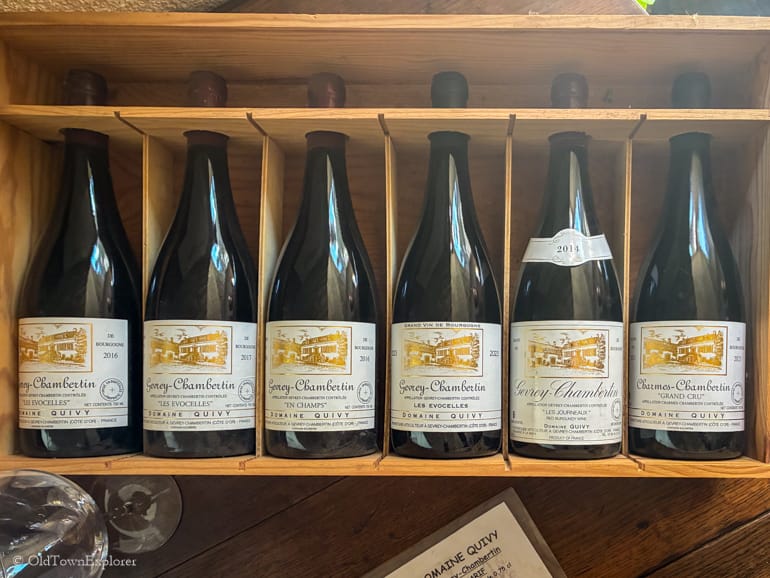
Domaine Quivy receives visitors in an eighteenth-century property in old Gevrey-Chambertin. Its tastings provide direct producer context for the village and its vineyards.
This is a practical first Gevrey stop before continuing south. Reserve in advance rather than treating the domaine as an open retail cellar.
Domaine Geantet-Pansiot
- Address: 4 Route de Saulon, 21220 Gevrey-Chambertin
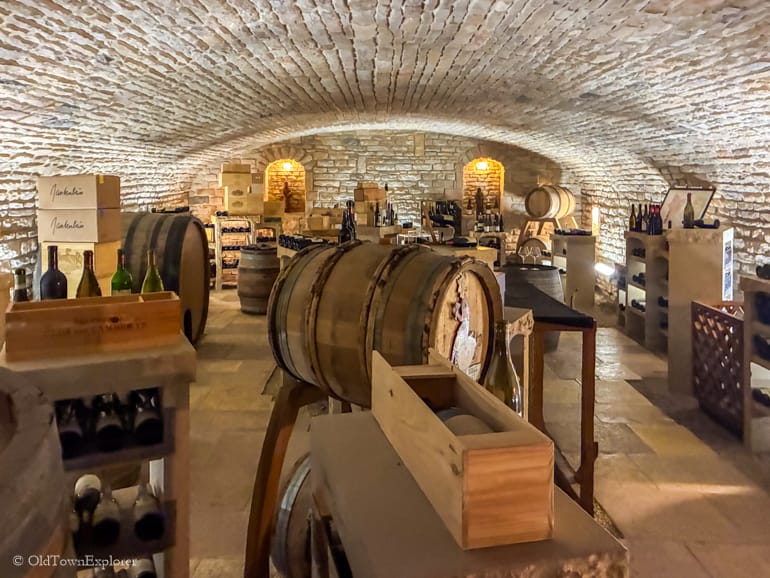
Domaine Geantet-Pansiot is an established family producer with holdings in Gevrey-Chambertin and other Côte de Nuits appellations. It is a working domaine rather than a large public tourism facility.
Contact the domaine directly before including it in an itinerary. Do not assume walk-in tastings or regular visitor hours without confirmation.
Domaine des Beaumont
- Address: 9 Rue Ribordot, 21220 Morey-Saint-Denis
Domaine des Beaumont offers bookable tastings in Morey-Saint-Denis and produces wines from several Côte de Nuits villages. Its formats range from introductory tastings to more extensive comparisons.
This is the clearest public-facing stop for adding Morey-Saint-Denis to a Gevrey day. Reserve a defined experience so the timing and number of wines are known in advance.
Boursot Père et Fils
- Address: 7 Rue de la Fontaine, 21220 Chambolle-Musigny
Boursot Père et Fils is a family producer in Chambolle-Musigny with visits and tastings available by reservation. The stop adds another village reference without leaving the main Côte de Nuits axis.
Choose it as an extension after Gevrey-Chambertin or Morey-Saint-Denis, not as an extra stop on an already crowded schedule. Book ahead and confirm the tasting language.
Nuits-Saint-Georges & the Southern Côte de Nuits
Domaine Henri Gouges
- Address: 7 Rue du Moulin, 21700 Nuits-Saint-Georges
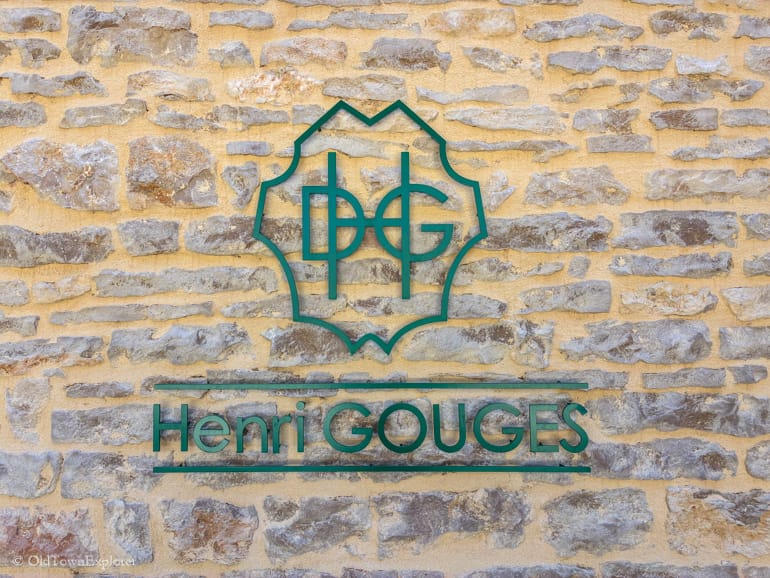
Domaine Henri Gouges is closely associated with Nuits-Saint-Georges and now has a dedicated tasting room. Visits focus on the estate’s history, vineyards, and village identity. This is better suited to visitors who already understand the basic Burgundy classification. Confirm availability directly because access to a tasting room does not mean unrestricted cellar visits.
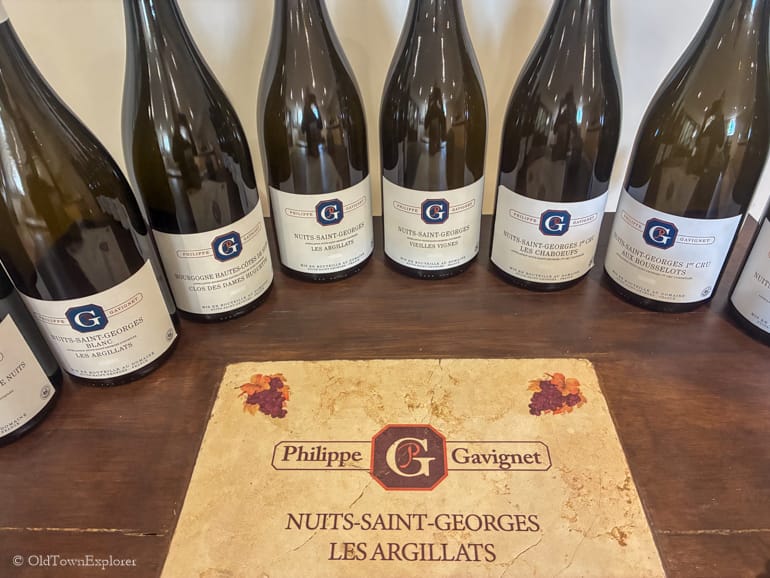
Domaine Philippe Gavignet
- Address: 36 Rue Docteur Louis Legrand, 21700 Nuits-Saint-Georges
Domaine Philippe Gavignet is a family estate producing several Côte de Nuits appellations, including multiple Nuits-Saint-Georges wines. Tastings provide a producer-level comparison within one address.
Reserve before visiting and treat it as one of the day’s principal appointments. It pairs logically with another Nuits-Saint-Georges tasting rather than a long north-to-south list of villages.
Maison Moillard
- Address: 2 Route de Dijon, 21700 Nuits-Saint-Georges
Maison Moillard operates a public tasting cellar at the northern entrance to Nuits-Saint-Georges. Its larger visitor format provides a different experience from a small family domaine.
Choose it for a structured, accessible introduction with a broad range of wines. Confirm current tour and tasting options before arrival, especially when an English-language visit is required.
Wine Tours from Dijon
A guided wine tour is the simplest way to reach the Côte de Nuits without driving after tastings. Most itineraries combine transport with two or more winery visits and an explanation of Burgundy labels, appellations, and vineyard hierarchy.
Guided Tours
Compare the departure point, group size, included tastings, lunch arrangements, and cancellation terms before booking. A half-day tour usually concentrates on fewer villages, while a full-day tour can reach farther south but still should not prioritize stop count over tasting time.
Choose a Dijon departure when possible. Tours described only as “Burgundy” may begin in Beaune or require separate transportation from Dijon.
Self-Guided Winery Tour from Dijon
A self-guided wine day works best with a designated driver, confirmed appointments, and one compact group of villages. Distances are short, but tastings, discussions, lunch, and bottle purchases make an overloaded schedule impractical.
Before You Go
- Reserve producer visits in advance.
- Limit a half-day to two tastings and a full day to three.
- Group appointments within one small area.
- Allow time for a proper lunch.
- Carry water and spit during multi-stop tastings.
- Leave secure, temperature-conscious space for bottle purchases.
Two well-paced appointments usually provide more useful comparison than several rushed stops. Never drive if you have not controlled alcohol intake.
A simple Way to Choose a Route
- Châteauneuf-du-Pape: flagship style reference, biggest name close to Avignon
- Tavel + Lirac: structured rosé plus west-bank contrast, shortest driving
- Gigondas + Vacqueyras: cru reds with firmer structure, Dentelles landscape
Whatever route you pick, keeping it to a small number of booked tastings in one area usually leads to better visits and less time in the car.
Route 1: Marsannay and Fixin
This is the shortest and simplest route from Dijon. It suits first-time Burgundy visitors and travelers who want a clear progression from multi-producer orientation to a major visitor estate and then a site-specific domaine.
- Le Marsannay – Caveau de Vignerons: compare several Marsannay producers and all three wine colors.
- Château de Marsannay: add a guided explanation of climats, cellars, and the appellation hierarchy.
- Domaine Joliet: finish with the more concentrated perspective of the Clos de la Perrière in Fixin.
The route keeps transfers short and returns easily to Dijon for dinner. If only two stops are available, choose the caveau plus either Château de Marsannay for breadth or Domaine Joliet for a more specific estate visit.
Route 2: Gevrey-Chambertin and Morey-Saint-Denis
This route is best for comparing Côte de Nuits Pinot Noir across neighboring villages. It makes more sense after you understand the distinction between regional, village, Premier Cru, and Grand Cru labels.
- Domaine Quivy: begin with a producer tasting in old Gevrey-Chambertin.
- Domaine des Beaumont: continue south for a bookable comparison in Morey-Saint-Denis.
- Optional Chambolle-Musigny: add Boursot Père et Fils only if the appointment times leave a comfortable margin.
Keep the third village optional. Two full producer visits plus time to walk through Gevrey-Chambertin or Morey-Saint-Denis can already fill a satisfying half-day.
Route 3: Nuits-Saint-Georges
This route concentrates on one wine town and works well as a second vineyard day. It offers more depth than a fast drive through several famous village names.
- Domaine Philippe Gavignet: begin with a family-estate comparison across several appellations.
- Domaine Henri Gouges: continue with a focused Nuits-Saint-Georges producer perspective.
- Optional Château du Clos de Vougeot: add a heritage visit between appointments, recognizing that it is not a producer tasting stop.
Maison Moillard can substitute for one domaine when a larger public-facing tasting format is easier to schedule. Avoid treating it as an automatic fourth tasting.
Best Places to Stay in Dijon for Wine
The historic center is the most practical base for wine-focused visits. Staying between Les Halles, Place de la Libération, and Place Darcy keeps most wine bars, tasting venues, and central cavistes within walking distance while maintaining easy access to the station and vineyard-tour departures.
Hotels and Apartments in Dijon for Wine
Use the interactive map below to compare hotels and apartments by location, dates, price, and amenities. Prioritize the historic center for evenings on foot, or the station side of the center if early train travel and organized tour pickup matter more.
FAQs About Dijon Wine
What wine region is Dijon associated with?
Dijon is associated with Burgundy, particularly the Côte d’Or and the northern Côte de Nuits. The city stands just north of Marsannay and works as an urban base for the Route des Grands Crus.
What nearby appellations matter most for Dijon wine?
The most practical nearby appellations are Marsannay, Fixin, Gevrey-Chambertin, Morey-Saint-Denis, Chambolle-Musigny, and Nuits-Saint-Georges. They form a compact north-to-south sequence below Dijon.
What should I try first in Dijon?
Begin with Bourgogne Aligoté or Crémant de Bourgogne, followed by a Marsannay and one Côte de Nuits Pinot Noir. This provides a useful progression without starting with the most expensive labels.
Can you do Dijon wine tasting without a car?
Dijon is associated with Burgundy, particularly the Côte d’Or and the northern Côte de Nuits. The city stands just north of Marsannay and works as an urban base for the Route des Grands Crus.
What is the easiest winery day trip from Dijon?
Marsannay-la-Côte is the easiest winery destination because its vineyards begin immediately south of Dijon and it has several public-facing tasting options. Adding nearby Fixin still keeps the route compact.
What makes Marsannay different from other Burgundy stops?
Marsannay is the only Burgundy village appellation authorized for red, white, and rosé wine. This makes it especially useful for comparing several styles within one appellation.
What grapes should I know around Dijon?
Pinot Noir is the principal red grape and Chardonnay the principal white grape. Aligoté appears in lighter white wines, while Crémant de Bourgogne may use several permitted Burgundy grapes depending on the cuvée.
Do wineries near Dijon require reservations?
Most producer visits should be reserved. A few larger visitor facilities and multi-producer cellars accept some walk-in tastings, but availability, language, and cellar access are more reliable with a confirmed booking.
What should I buy as an everyday Burgundy bottle?
Bourgogne Aligoté, Bourgogne Blanc, Bourgogne Rouge, Crémant de Bourgogne, and some Marsannay wines are practical starting points. Ask a caviste for current-value producers rather than relying only on famous village names.
When is the best time for a Dijon wine trip?
Spring through autumn offers the broadest combination of city activity and winery access. Harvest can limit producer availability, while winter visits may require more careful advance scheduling; confirm opening dates in every season.
Dijon works best as a combined city-and-vineyard base: use the historic center for by-the-glass comparisons and bottle buying, then choose one nearby village group for cellar visits. For restaurants, markets, and regional dishes to pair with those wines, continue with Dijon Food. For the churches, mansions, and palace complex to explore between tastings, use Dijon Architecture.