
Dijon Architecture
Explore Dijon Architecture: Palaces & More
Dijon architecture reflects the city’s role as a political, religious, and commercial center in Burgundy. The medieval street plan, ducal palace, churches, merchant houses, and later civic buildings remain layered inside a compact historic core. That center forms the urban component of the UNESCO-listed Climats, terroirs of Burgundy, representing the political and regulatory power that helped shape the region’s vineyard system.
Gothic stonework and timber-framed houses dominate the oldest streets, while Renaissance town houses, classical palace fronts, iron-and-glass market architecture, and 19th- and 20th-century public buildings record later phases of growth.
We spent a month in Dijon during the spring. Drawing on that stay and further research, this guide compares the buildings, streets, architectural details, viewpoints, and time choices that matter most when planning an architecture-focused visit to Dijon.
This page contains affiliate links. We may earn a small commission at no extra cost to you.
Dijon Architecture at a Glance
Dijon’s historic center brings several architectural periods into a small walking area. These anchors give the clearest first read of the city:
- Defining complex: Palais des ducs et des États de Bourgogne, where medieval ducal structures meet later classical rebuilding and civic reuse.
- Main urban space: Place de la Libération, whose broad curve makes the palace frontage easier to read.
- Best high viewpoint: Tour Philippe le Bon, the central skyline marker above the palace and old town.
- Key Gothic church: Église Notre-Dame, with its screen-like west façade, Jacquemart clock, and owl carving.
- Religious counterpoint: Cathédrale Saint-Bénigne, where the cathedral, crypt, and former abbey precinct reveal a different part of Dijon’s development.
- Street-level sequence: Les Halles centrales de Dijon, Maison Millière and nearby timber-framed streets, followed by Porte Guillaume at the western edge of the old core.
For a short visit, prioritize the palace, Place de la Libération, Notre-Dame, and the timber-framed streets. Add Saint-Bénigne, Les Halles, and Porte Guillaume for a broader half-day view; reserve more time for interiors, the tower, private-house courtyards, and sites beyond the center.
What to See in Dijon
The most useful way to understand Dijon is to compare four overlapping parts of the city rather than search for one dominant style. The palace and its square express political power; churches and former monasteries preserve the religious city; merchant streets and private town houses show domestic wealth; later markets, boulevards, and public buildings reveal expansion beyond the old enclosure.
The Ducal and Civic Core
Begin with the Palais des ducs et des États de Bourgogne, Place de la Libération, and Tour Philippe le Bon. Read the palace as a group: medieval towers and service spaces survive within an ensemble reshaped by classical façades and later civic uses. The square provides the clearest ground-level view, while the tower gives the strongest overview when access and time allow.
The Church and Monastic Core
Église Notre-Dame is the most concentrated Gothic exterior in the medieval center. Cathédrale Saint-Bénigne and nearby Saint-Philibert create a second religious cluster, while Saint-Michel, former convents, the Chartreuse de Champmol, and reused abbey buildings broaden the picture. Check access before relying on an interior: façades and precincts are generally easier to plan around than crypts, chapels, or former monastic spaces.
Merchant Streets and Private Houses
Rue de la Chouette, Rue Verrerie, Rue de la Liberté, Place François-Rude, and the lanes around Les Halles reveal Dijon at domestic scale. Look above altered shopfronts for timber frames, projecting upper floors, carved details, narrow plots, and changes in roofline. Renaissance and classical hôtels particuliers add stone portals, courtyards, and more formal street fronts, although many remain private and are best appreciated from public space.
Later Civic Expansion
Les Halles, Place Grangier, Jardin Darcy, Porte Guillaume, the former hospital and Cité district, and the canal side show how Dijon expanded and repurposed older ground. These sites are less visually uniform than the palace quarter, but they explain the transition from enclosed medieval city to modern regional center. Choose them after the historic core if you have half a day or longer.
Attractions in Place de la Libération
This is Dijon’s main political and ceremonial core. The category brings together the ducal residence, later state rooms, civic functions, museum spaces, and surviving medieval service buildings in one compact area. It is the clearest place to see how Dijon changed from a ducal capital into a civic center without losing the earlier structure.
Place de la Libération
- Architect: Jules Hardouin-Mansart (overall redesign concept), later completed by successors
- Style: Classical square
- Built: Late 17th to 18th centuries
- Address: Place de la Libération, 21000 Dijon
This is the large formal square in front of the palace complex. It gives Dijon one of its clearest ceremonial spaces and sets up the long classical façade of the palace. Look for the broad curved arc of the square, the regular stone façades, and the sharp contrast with the tighter medieval streets just behind it. It sits in the heart of the historic core and works as the main forecourt to the palace.
Palais des ducs et des États de Bourgogne
- Architect: Multiple phases; later state works associated with Jules Hardouin-Mansart and successors
- Style: Medieval ducal architecture with later classical additions
- Built: 14th to 18th centuries
- Address: Place de la Libération, 21000 Dijon
This is the main palace complex of the dukes of Burgundy and later the seat of the Estates of Burgundy. It is Dijon’s defining monument, combining medieval ducal buildings, later administrative spaces, and major classical rebuilding in one ensemble. Look for the shift between older towers and court buildings on one side and the long ordered frontage facing the square on the other. It stands at the center of the old town and anchors the city’s main visitor zone.
For current palace access, guided-tour options, and visitor details, check official Palais des Ducs visitor information.
Tour Philippe le Bon
- Architect: Unknown
- Style: Flamboyant Gothic tower
- Built: 1450–1455
- Address: Palais des ducs et des États de Bourgogne, Place de la Libération, 21000 Dijon
This is the main tower of the ducal palace and one of Dijon’s strongest skyline markers. It belongs to the great rebuilding campaign of Philippe the Good and gives the palace its clearest vertical sign of power. Look for the tall shaft, the Gothic detailing, and the way it rises above the broader palace mass. It stands at the center of the historic core above Place de la Libération.
For current booking rules, tour length, and access details, check official Tour Philippe le Bon visitor information.
Hôtel de Ville de Dijon
- Architect: Multiple phases
- Style: Classical civic building within an earlier palace complex
- Built: Main visible phases 17th to 18th centuries, with older medieval fabric in the ensemble
- Address: Place de la Libération, 21000 Dijon
Dijon’s city hall occupies part of the former palace complex. It shows the change from ducal and provincial power to municipal administration while keeping the same monumental setting. Look for the formal frontage, the integration with the larger palace range, and the way civic use sits inside a former princely site. It faces the square at the center of the old town.
Musée des Beaux-Arts de Dijon
- Architect: Multiple phases; modern museum renovation by Yves Lion
- Style: Museum housed in medieval and classical palace buildings
- Built: Palace fabric from the 14th to 18th centuries; museum use later; recent renovation 21st century
- Address: Place de la Sainte-Chapelle / Place de la Libération, 21000 Dijon
The museum is installed inside major parts of the palace complex. The building itself is part of the visit, with ducal rooms, later state spaces, and museum circulation layered together. Look for changes in court layouts, older masonry, ceremonial rooms, and the way newer interventions sit against older fabric. It occupies the palace complex directly off Place de la Libération in the historic center.
Water-jet fountain installation at Place de la Libération
- Architect: Jean-Michel Wilmotte associated with the 2006 square redesign
- Style: Contemporary fountain installation in a historic square
- Built: 2006
- Address: Place de la Libération, 21000 Dijon
This is the contemporary fountain installation set into the paving of Place de la Libération. It stands out because the jets were designed as part of the square’s 2006 pedestrian redevelopment, adding movement and seasonal use without blocking the long view of the palace façade. Look for the ground-level water jets, arranged as three fountain zones in the open square, and the contrast between this low contemporary intervention and the ordered classical setting around it. It sits directly in front of the Palais des ducs et des États de Bourgogne at the center of the old town.
Religious Buildings in Dijon
This category covers the main religious layers of Dijon, from Romanesque remains and Gothic parish churches to monastic compounds, convent buildings, and later 19th- and 20th-century churches. It is one of the best ways to understand how the city grew beyond ducal power and merchant streets. Most of the older sites sit inside or just beside the historic core, while a few major complexes and newer churches lie farther out.
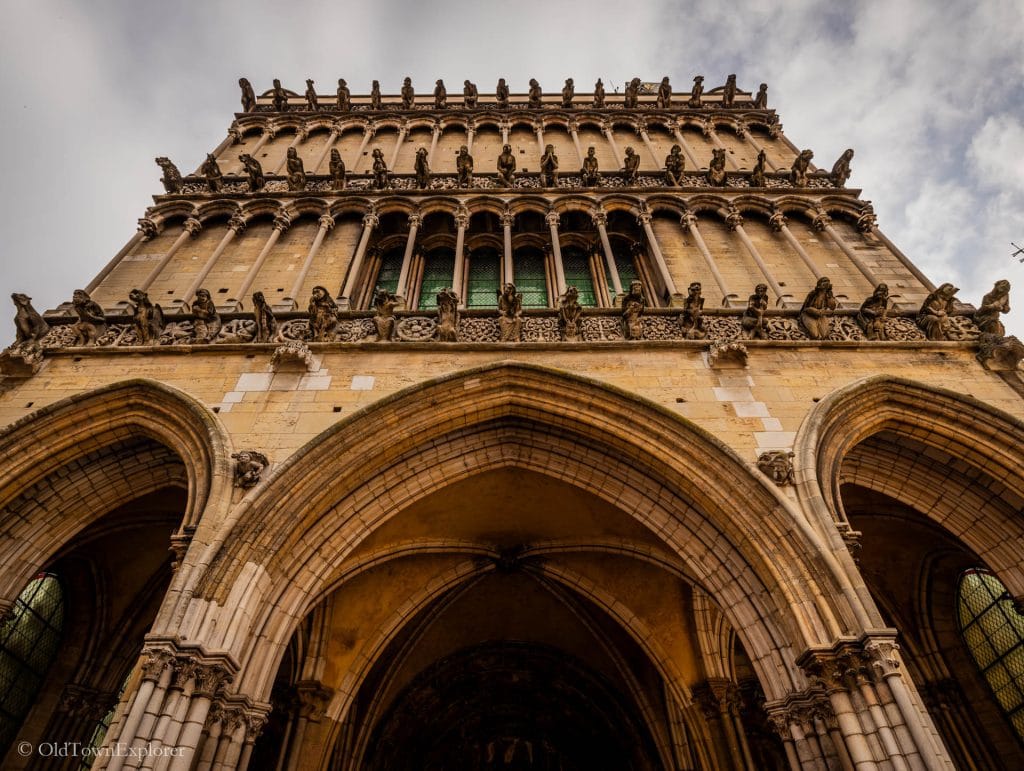
Église Notre-Dame
- Architect: Unknown
- Style: Gothic
- Built: 13th century
- Address: Place Notre-Dame, 21000 Dijon
This is one of Dijon’s key Gothic churches and one of the city’s best-known façades. The west front stands out for its stacked arcades, narrow vertical lines, and dense stonework pressed into a tight urban site. Look for the screen-like façade, the carved portal zone, and the clock figures mounted high above. It sits in the medieval core a short walk northeast of Place de la Libération.
Cathédrale Saint-Bénigne
- Architect: Unknown
- Style: Gothic church over earlier monastic remains
- Built: Main visible structure 13th to 14th centuries, with earlier phases on site
- Address: Place Saint-Bénigne, 21000 Dijon
This is Dijon’s cathedral and the main surviving church of the former Saint-Bénigne abbey. It is one of the city’s deepest religious sites, where cathedral, crypt, rotunda history, and former monastic buildings all meet. Look for the long church mass, the more open setting, and the relationship between the cathedral and the adjacent abbey structures. It sits just south of the tightest medieval core near the station side of the center.
Église Saint-Philibert
- Architect: Unknown
- Style: Romanesque
- Built: 12th century, later changes
- Address: Rue Michelet / near Place Saint-Bénigne, 21000 Dijon
This is one of the main Romanesque churches still standing in Dijon. It gives a strong contrast to the city’s Gothic churches, with heavier massing and a simpler structural language. Look for the solid walls, Romanesque arches, and lower, weightier profile. It sits near Saint-Bénigne on the southern side of the old center.
Église Saint-Michel
- Architect: Unknown
- Style: Gothic with Renaissance façade elements
- Built: 15th to 16th centuries
- Address: Place Saint-Michel, 21000 Dijon
This is one of the largest parish churches in Dijon. The building stands out for its mix of late Gothic structure and a façade shaped by Renaissance ornament and composition. Look for the broad west front, carved stone detail, and the way the church commands its open square. It sits on the eastern side of the historic core beyond the palace and Notre-Dame area.
The Chapel of the Holy Cross of Jerusalem
Chapelle Sainte-Croix de Jérusalem
- Architect: Unknown
- Style: Late Gothic funerary chapel
- Built: 1454–1459
- Address: Cité internationale de la gastronomie et du vin / former Hôpital général sector, Dijon
This chapel was built as the funerary chapel of the medieval Hôpital du Saint-Esprit. It is the only major surviving witness of the medieval hospital and adds an older Gothic layer to a site better known today for hospital and gastronomy redevelopment. Look for the small chapel mass, sculpted portal zone, and the restored roof of mixed glazed and natural tiles with its bell turret above. It sits southwest of the historic core inside the former hospital precinct, now folded into the Cité internationale de la gastronomie et du vin.
Chapelle de l’Assomption
- Architect: Édouard Mairet
- Style: Neo-Gothic chapel
- Built: 1877–1882
- Address: Beside Église Notre-Dame, Place Notre-Dame sector, 21000 Dijon
This chapel was built next to Notre-Dame during the 19th-century restoration campaign. It stands out because it was created both to serve worship during the works and to house the former high altar and Assumption retable removed from Notre-Dame’s choir. Look for the compact Neo-Gothic mass, the chapel-scale proportions, and the reused 17th-century sculptural ensemble by Jean Dubois inside. It sits in the medieval core beside Notre-Dame, just off the main palace-and-market route.
Church of Sainte-Anne
- Architect: Louis Trestournel
- Style: Baroque
- Built: 1699–1709
- Address: 17 Rue Sainte-Anne, 21000 Dijon
This is the former church of the Bernardine monastery, now used as the Musée d’Art sacré. It stands out in Dijon for its circular plan and its copper-covered dome, which gives the south side of the old center a very different roofline from the city’s Gothic churches and steep domestic streets. Look for the monumental portal with Doric columns and pediment, then the rotunda form and dome above rather than a long basilica-type church body. It sits within the Bernardine complex on the eastern side of the historic core, a short walk from the palace area but outside the tightest palace-and-market cluster.
Bernardine monastery
- Architect: Unknown
- Style: Classical and Renaissance monastic complex
- Built: Main convent phases 17th century; complex completed 1767
- Address: 17 Rue Sainte-Anne, 21000 Dijon
This is the former Bernardine monastery, now home to the Musée de la Vie bourguignonne. It is one of Dijon’s clearest surviving convent complexes and shows how cloistered religious life was built into the city rather than outside it. Look for the long ranges, cloistered organization, and the restrained façades that contrast with the domed church of Sainte-Anne beside it. It sits on the eastern side of the historic core, just beyond the tightest palace-and-market cluster.
Chapel of the Carmelite convent
- Architect: Nicolas Tassin or Guillaume Tabourot (attribution debated)
- Style: Baroque
- Built: 1609–1642
- Address: Rue Victor-Dumay / Rue Sainte-Anne area, 21000 Dijon
This is the surviving chapel front of the former Carmelite convent in Dijon. It stands out as one of the rare Baroque façades in the city and adds a very different architectural note from Dijon’s Gothic churches and classical civic buildings. Look for the richly carved stone façade, stacked columns, pediments, and sculpted figures rather than a large surviving convent complex. It sits in the protected historic center on the eastern side of the old core near the Bernardine complex.
Synagogue of Dijon
- Architect: Unknown
- Style: 19th-century synagogue architecture
- Built: 19th century
- Address: Rue de la Synagogue, 21000 Dijon
This is the historic synagogue of Dijon. It broadens the city’s religious map beyond the Catholic majority and marks the long presence of a Jewish community within the urban core. Look for the street-facing façade, the formal entrance composition, and details that set it apart from surrounding domestic buildings. It sits inside the central city a short walk from the main old-town streets.
Protestant temple
- Architect: Félix Paumier
- Style: Neo-Romanesque
- Built: 1896–1898
- Address: 14 Boulevard de Brosses, 21000 Dijon
This is Dijon’s main Protestant temple and one of the clearest non-Catholic religious buildings in the city. It stands out for its Neo-Romanesque design, which gives it a compact and disciplined public presence very different from the Gothic churches of the old center. Look for the round-arched forms, the restrained stone façade, and the way the building presents itself as a late 19th-century place of worship on a broader boulevard rather than in a tight medieval lane. It sits just west of the historic core, near Darcy and the outer edge of the old center.
Musée Archéologique in the Saint-Bénigne complex
- Architect: Unknown
- Style: Museum in former abbey buildings
- Built: Historic fabric from the former Saint-Bénigne abbey; exact main phase Unknown
- Address: 5 Rue Docteur Maret, 21000 Dijon
This museum is housed in former abbey buildings beside Saint-Bénigne. It is one of Dijon’s best examples of religious reuse, with monastic fabric adapted to explain the city’s archaeological past. Look for the long stone ranges, the restrained monastic character, and the close relationship between museum, cathedral, and older site remains. It sits just south of the main historic core in the Saint-Bénigne precinct.
Musée Rude in Saint-Étienne
- Architect: Unknown
- Style: Museum in a former Romanesque church
- Built: 11th century origins, later changes
- Address: 6 Rue Vaillant, 21000 Dijon
This museum is installed in the former church of Saint-Étienne. It is one of Dijon’s clearest reuse sites, where the old church shell still controls the scale and feel of the interior. Look for the church volume, surviving Romanesque fabric, and the contrast between ecclesiastical form and museum function. It sits in the central old town just north of the palace area.
Palaces and Houses in Dijon
This category covers Dijon’s elite residences, major town houses, landmark domestic buildings, and former palace sites. Together, these buildings show how ducal power, noble status, church wealth, and merchant life shaped the city street by street. Most of the entries sit inside the historic core, where courtyard houses and street façades are packed tightly into the medieval and early modern plan.
Hôtel de Vogüé
- Architect: Unknown
- Style: Renaissance hôtel particulier
- Built: Early 17th century
- Address: 8 Rue de la Chouette, 21000 Dijon
This is one of Dijon’s best-known private town houses. It is a strong example of elite residential architecture in the old center, with a controlled street front and a more inward-looking plan behind it. Look for the carved stone details, steep roofline, and the way the house fits tightly into a narrow historic street. It sits in the medieval core close to Notre-Dame and Rue de la Chouette.
Hôtel Aubriot
- Architect: Unknown
- Style: Gothic and early Renaissance town house
- Built: 15th century, later changes
- Address: 40 Rue des Forges, 21000 Dijon
This is one of the most important surviving late medieval houses in Dijon. It shows the transition from fortified urban residence to more formal town-house design within the dense city core. Look for the pointed-arch forms, stone detailing, and the way the façade still carries a strong late medieval character. It sits on Rue des Forges in the central old town.
Hôtel Lantin / Musée Magnin
- Architect: Unknown
- Style: 17th-century hôtel particulier
- Built: 17th century
- Address: 4 Rue des Bons-Enfants, 21000 Dijon
This is a private town house later reused as the Musée Magnin. It is a good example of a refined urban residence with an internal layout shaped more by status and collection than by trade. Look for the formal façade, orderly window rhythm, and the inward domestic scale of the house. It sits just east of the palace area within the historic center.
Hôtel Bouhier de Lantenay
- Architect: Samson-Nicolas Lenoir
- Style: Classical hôtel particulier
- Built: 1757
- Address: 52 Rue de la Préfecture, 21000 Dijon
This is one of Dijon’s most important 18th-century private mansions. It stands out for the scale and polish of its design, built for Bénigne III Bouhier and his son, the marquis de Lantenay, in the mature classical language of the period. Look for the balanced façade, the controlled proportions, and the way the house presents a calmer and more regular urban face than the city’s Gothic and Renaissance residences. It sits south of the palace core within the historic center.
Hôtel Chartraire de Montigny
- Architect: Jacques Cellerier
- Style: Classical and Rocaille hôtel particulier
- Built: c. 1670; extensively remodeled 1744–1750
- Address: 39 Rue Vannerie, 21000 Dijon
This is one of Dijon’s most important private mansions and a strong example of 18th-century elite residential rebuilding over an older house. It stands out for its Rocaille portal, one of the rare examples of that decorative language in Dijon, and for the later grand staircase that brings a more neoclassical note into the interior sequence. Look for the sculpted doorway with its shell motif, the formal street front, and the relationship between entrance, courtyard, and main residential block. It sits in the historic center east of the palace area, within the old urban core rather than on the later ring boulevards.
Hôtel Coeurderoy
Hôtel Cœurderoy
- Architect: Unknown
- Style: Classical hôtel particulier with earlier medieval remains
- Built: Late 17th century over older 15th-century fabric
- Address: 35 Rue Vannerie, 21000 Dijon
This is a private town house built for the Cœurderoy family on the site of an older residence. It helps show how Dijon’s elite housing was rebuilt in the classical period while still keeping parts of the medieval city underneath, including vaulted Gothic cellars from the earlier house. Look for the sober monumental portal, the U-shaped plan around a courtyard, and the contrast between the regular street front and the deeper garden side. It sits in the historic center on Rue Vannerie, east of the palace area and inside the protected old core.
Hôtel Bouchu dit d’Esterno
- Architect: Unknown
- Style: Louis XIII hôtel particulier
- Built: 1641–1643
- Address: 1 Rue Monge, 21000 Dijon
This is one of Dijon’s largest 17th-century private mansions, built for Jean Bouchu, first president of the Parlement of Burgundy. It stands out for its scale and for its clear entre cour et jardin layout, with a main court at the front and a garden side behind, which marks it as a high-status aristocratic residence rather than an ordinary town house. Look for the ashlar stone façades, the sober classical composition, the courtyard wings, and the ordered window lines with corner quoins. It sits on Rue Monge at the southern edge of the historic center, just beyond the tightest palace-and-market core.
Hôtel des Barres
- Architect: Unknown
- Style: Classical hôtel particulier
- Built: c. 1640, with an added portico in 1783
- Address: 43, 45, 47 Rue Chabot-Charny, 21000 Dijon
This is one of Dijon’s larger 17th-century private mansions, built for Pierre des Barres, president of the Parlement of Burgundy. It stands out for its formal courtyard plan, with a main block flanked by wings and closed to the street by a wall and wrought-iron gate. Look for the alternating window heads, the ordered classical façade, and the later balustraded portico with Ionic columns added in the 18th century. It sits in the protected historic center east of the palace area, inside the old urban core.
Hôtel Chambellan
- Architect: Unknown
- Style: Gothic and early Renaissance town house
- Built: 15th century
- Address: 34 Rue des Forges, 21000 Dijon
This is one of the most striking late medieval houses in Dijon. It is especially known for the court side, where Gothic carving and stair elements make it one of the city’s strongest domestic monuments. Look for the courtyard, the stair tower, and the carved stone details rather than only the street front. It sits on Rue des Forges in the central historic core.
Hôtel Maleteste
- Architect: Unknown
- Style: 17th-century hôtel particulier with Régence interior elements and earlier remains
- Built: 17th century, with surviving 16th-century features
- Address: 7 Rue Hernoux, 21000 Dijon
This is a private mansion built for the Maleteste family in the 17th century. It stands out for the way later domestic refinement sits over older fabric, including a stair turret, a shell-decorated well in the garden, and a Régence library that is protected as a historic interior. Look for the formal town-house frontage, the older masonry elements folded into the property, and the relation between house, court, and garden. It sits in the historic center on Rue Hernoux, close to the line of the old castrum walls and inside the protected core.
Hôtel de la Croix-de-Fer
- Architect: Unknown
- Style: Late Gothic hôtel particulier
- Built: 15th century
- Address: 3 Rue Verrerie, 21000 Dijon
This is one of Dijon’s older private town houses in the medieval core. It stands out as a surviving late Gothic urban residence on one of the city’s historic commercial streets, and it helps show how elite domestic buildings were fitted into narrow central parcels rather than broad later avenues. Look for the street-facing stone façade, the tight fit within the Rue Verrerie frontage, and the contrast between this older house type and the more regular classical hôtels particuliers elsewhere in Dijon. It sits in the protected historic center near Notre-Dame and the palace-and-market zone.
Maison Millière
- Architect: Unknown
- Style: Medieval timber-framed house
- Built: Late 15th century
- Address: 10 Rue de la Chouette, 21000 Dijon
This is one of Dijon’s most recognizable domestic buildings. It stands out as a well-known surviving medieval house and gives the old center one of its clearest non-monumental landmarks. Look for the exposed timber frame, projecting upper level, and irregular geometry of the façade. It sits in the medieval core close to Notre-Dame.
Maison Maillard dit Milsand
- Architect: Hugues Sambin (upper façade and courtyard elements attributed)
- Style: Renaissance hôtel particulier
- Built: 1561
- Address: 38 Rue des Forges, 21000 Dijon
This is one of Dijon’s strongest Renaissance town houses and one of the most ornate private façades in the old center. It stands out for its dense carved decoration and for the courtyard atlantes, which are among the clearest Sambin-linked details in the city. Look for broken pediments, garlands, lion masks, the richly worked street front, and the sculpted supports in the inner court. It sits on Rue des Forges in the historic core, close to the palace area and the main old commercial streets.

Maison aux Trois Visages
- Architect: Unknown
- Style: Medieval timber-framed house
- Built: c. 1470s, with timber dated to the late 1430s
- Address: 54–56 Rue de la Liberté / 1 Rue Bossuet, 21000 Dijon
This is one of Dijon’s best-known timber-framed houses and one of the clearest medieval façades on Rue de la Liberté. It stands out for its three joined gables, which give the building its name and make it read more like a grouped street composition than a single flat front. Look for the timber framing, the projecting upper levels, and the way the façade turns the corner at the Coin du Miroir. It sits in the historic core on one of Dijon’s main central streets, between the palace area and the older market-and-church quarter.
La Maison des Cariatides
- Architect: Unknown
- Style: Renaissance town house
- Built: 16th century
- Address: 28 Rue Chaudronnerie, 21000 Dijon
This is one of Dijon’s most distinctive Renaissance houses. It stands out for the sculpted female support figures on the façade, a caryatid being a carved figure used in place of a column. Look for those façade figures, the orderly Renaissance composition, and the contrast with the tighter medieval buildings nearby. It sits in the old center east of the palace area.
Petit Hôtel Berbisey
- Architect: Nicolas Lenoir, called “Le Romain”
- Style: Louis XVI hôtel particulier
- Built: 17th century core, with major 18th-century rebuilding
- Address: 27 Rue Berbisey, 21000 Dijon
This is one of the smaller but more refined private mansions in Dijon’s historic center. It stands out for its Louis XVI redesign by Nicolas Lenoir, which gives the house a calmer and more ordered character than many of the city’s earlier Gothic and Renaissance residences. Look for the formal street front, the controlled classical proportions, and the relation between the house and its garden, part of which now opens toward the Jardin Jean de Berbisey. It sits in the protected historic core on Rue Berbisey, south of the palace-and-market area but still inside the old center.
Hôtel Legouz de Gerland
- Architect: Unknown
- Style: Renaissance core with later classical remodeling
- Built: 1530s; major remodeling after 1690
- Address: 21 Rue Vauban, 21000 Dijon
This is one of Dijon’s most distinctive hôtels particuliers, built over a 16th-century house and heavily reworked in the late 17th century. It stands out for the semicircular court on Rue Vauban, which echoes the formal language of the nearby royal square and palace works, while the older façade with échauguettes survives on Rue Jean-Baptiste Liégeard behind it. Look for the curved court, the arcades, and the contrast between the later classical front and the earlier Renaissance remains. It sits in the historic core just south of the palace area, within the protected old center.
Hôtel Thomas Berbisey
- Architect: Unknown
- Style: Late Gothic and early 17th-century hôtel particulier ensemble
- Built: from c. 1490, with a second house added in the early 17th century
- Address: 18 Rue Sainte-Anne, 21000 Dijon
This site brings together two hôtels particuliers: one begun for the Berbisey family around 1490 and another built in the early 17th century for Jean-Baptiste Legouz de la Berchère. It stands out for its richly ornamented inner court, which preserves one of the stronger late medieval domestic settings in Dijon, while the combined property shows how elite residences expanded through adjoining plots. Look for the decorated courtyard and the way the ensemble mixes late medieval and later residential fabric. It sits in the eastern part of the historic core near the Bernardine and Carmelite complexes.
Hôtel Millotet ou de Gissey
- Architect: Unknown
- Style: 17th-century hôtel particulier
- Built: c. 1650
- Address: 17 Rue Piron, 21000 Dijon
This is one of the largest private mansions built in Dijon in the 17th century. It stands out for its scale and for the way its construction reflects the gradual expansion of aristocratic urban houses through successive acquisitions, including space once occupied by a jeu de paume. Look for the depth of the plot, the portal and street front modified in the 18th and 19th centuries, and the large residence set deeper in the court. It sits in the historic center just east of the palace area, inside the protected old core.
Hôtel de Samerey
- Architect: Unknown
- Style: French Renaissance hôtel particulier
- Built: 1541
- Address: 19 Rue du Petit-Potet, 21000 Dijon
This is one of Dijon’s clearest early Renaissance private houses. It stands out for its façade, which keeps its original rendered surface and uses carved details such as cartouches, lion heads, and acanthus decoration to give the house a strong 16th-century identity. Look for the triple window, the courtyard arrangement, and the former stables set at right angles to the main block. It sits in the historic center east of the palace area, within the protected old core.
Hôtel Thomas ou Grasset / Maison Rhénanie-Palatinat
- Architect: Unknown
- Style: 18th-century hôtel particulier
- Built: 1767
- Address: 29 Rue Buffon, 21000 Dijon
This is an 18th-century private mansion later reused for institutional and cultural purposes. It stands out for its painted ceilings in the ground-floor salons and for the way it shows a later, calmer phase of elite residential architecture than Dijon’s Gothic and Renaissance houses. Look for the ordered 18th-century composition, the portal on Rue Buffon, and the formal interior rooms if accessible. It sits in the protected historic center east of the palace area.
Maison Renaissance
- Architect: Unknown
- Style: Renaissance town house
- Built: 1554
- Address: 14 Rue Chaudronnerie, 21000 Dijon
This is a Renaissance house best known for the façade visible from its inner court. It stands out because the most important architectural display is not on the street but inside, where the court side preserves a finer 16th-century composition than the exterior front suggests. Look for the courtyard façade, its carved stone details, and the way the house fits a narrow urban plot while keeping a richly worked interior face. It sits in the historic center east of the palace area, on Rue Chaudronnerie.
Pavillon Bénigne Serre
- Architect: Unknown
- Style: Renaissance pavilion
- Built: 1541
- Address: 3–5 Rue du Lycée, 21000 Dijon
This is one of the earliest surviving Renaissance domestic buildings in Dijon and the last major remnant of a larger house built for Bénigne Serre. It stands out for introducing antique-inspired ornament into the city’s civil architecture at an early date, long before the Renaissance style became more common in Dijon. Look for the delicately carved portico, the symmetrical façade, and the upper parts that were heavily restored in the 19th century but still keep their original overall composition. It sits inside a courtyard off Rue du Lycée, on the southern side of the historic core near the Saint-Bénigne sector.
Hôtel de Sassenay
- Architect: Unknown
- Style: 17th-century hôtel particulier with earlier turret
- Built: Main residence 17th century; enclosed street-edge turret from the 16th century
- Address: 3 Rue Berbisey, 21000 Dijon
This is a private mansion built for the Le Compasseur family, a parliamentary family established in Dijon. It stands out because the main 17th-century house is paired with a small enclosed turret from the 16th century at the street edge, which makes the building read as both a classical town house and a site layered over older fabric. Look for the court-based layout, the quieter street front on Rue Berbisey, and the surviving turret element built into the frontage. It sits in the southern part of the historic core, within the protected old center south of the palace-and-market cluster.
Hôtel Jehanin de Chamblanc / Hôtel d’Arviset
- Architect: Unknown
- Style: Classical hôtel particulier
- Built: 1673
- Address: 33 Rue Jeannin, 21000 Dijon
This is a private mansion built in 1673 for Antoine Arviset, treasurer of France, and later occupied by Jean-Baptiste Jehannin de Chamblanc, a Dijon bibliophile, art collector, and parlement councillor. It stands out as a strong classical hôtel particulier in the old center and helps widen the page beyond the better-known houses on Rue des Forges and Rue de la Chouette. Look for the controlled classical composition, the inward court logic, and the way the property is read from Rue Jeannin rather than from one of the main tourist streets. It sits within the protected historic core east of the palace area.
Timber-Framed Houses in Dijon
This category isolates one of Dijon’s clearest street-level building types: the timber-framed house. These buildings matter less as single monuments than as a repeating fabric across lanes, corners, and market streets. They are best read slowly, with attention to upper floors, rooflines, and the way old commercial streets still hold medieval domestic structure.
Maison Millière
- Architect: Unknown
- Style: Medieval timber-framed house
- Built: Late 15th century
- Address: 10 Rue de la Chouette, 21000 Dijon
This is one of the best-known timber-framed houses in Dijon. It gives a clear single-building example of the medieval domestic fabric that once filled much of the center. Look for the exposed timber frame, projecting upper floor, and irregular shape of the façade. It sits in the medieval core near Notre-Dame and Rue de la Chouette.
Timber-framed houses on Rue Verrerie
- Style: Medieval and early modern timber-framed domestic buildings
- Built: Mainly late medieval to early modern, exact dates vary
- Address: Rue Verrerie, 21000 Dijon
This street preserves a group of timber-framed houses rather than one single landmark building. The value here is the run of façades, which shows how commercial and domestic uses were layered along a narrow old-town street. Look for exposed wooden structure, close parcel widths, and upper floors that press toward the street. It sits within the medieval core north of the palace area.
Timber-framed houses on Place François-Rude
- Style: Timber-framed urban houses
- Built: Various dates, mostly late medieval and later altered
- Address: Place François-Rude, 21000 Dijon
These houses frame one of Dijon’s most active central squares. They help explain how older domestic fabric survived around later public space and commercial use. Look for timber framing above ground-floor shopfront changes and the contrast between old upper structures and busier modern street life below. They sit in the center between Darcy and Place de la Libération.
Timber-framed houses on Rue de la Chouette
- Style: Medieval timber-framed houses
- Built: Various late medieval phases
- Address: Rue de la Chouette, 21000 Dijon
This street is one of the clearest places to read Dijon’s medieval domestic scale. The houses here show how closely timber-framed dwellings, church walls, and narrow lanes fit together in the old core. Look for exposed framing, overhanging upper stories, and tight spacing between façades. It sits beside Notre-Dame in the heart of the medieval center.
Timber-framed houses on Rue de la Liberté
- Style: Timber-framed and later altered urban houses
- Built: Medieval origins, many later modified
- Address: Rue de la Liberté, 21000 Dijon
This is Dijon’s main central commercial street, but older domestic fabric still survives within it. The interest here lies in spotting medieval and early structures inside a busier later shopping street. Look for timber framing above altered ground floors and differences in parcel rhythm behind more commercial fronts. It runs through the core between Place Darcy and Place de la Libération.
Timber-framed houses on Rue de l’Amiral-Roussin
- Style: Medieval timber-framed houses
- Built: Various late medieval phases
- Address: Rue de l’Amiral-Roussin, 21000 Dijon
This street keeps part of the old domestic timber-framed character of Dijon. It is useful because the houses read as a group and help extend the medieval fabric beyond the best-known postcard corners. Look for exposed wood structure, narrow frontages, and upper stories that lean visually into the street. It sits within the broader historic center west of the palace area.
Municipal Buildings in Dijon
This category covers the buildings where the city governed, judged, traded, studied, performed, and delivered public services. It shows Dijon as more than a ducal and religious center by tracing the civic institutions that shaped daily urban life. The entries stretch from the old core to later expansion districts, so this category also helps explain how the city grew outward over time.
Palais de Justice
(former Parliament of Burgundy)
- Architect: Hugues Sambin associated with the Renaissance portal and major 16th-century works
- Style: Renaissance judicial architecture with later additions
- Built: Main phases 1518–1580, with later 17th- to 19th-century alterations
- Address: 8 Rue du Palais, 21000 Dijon
This is the former Parliament of Burgundy and one of Dijon’s main judicial monuments outside the palace complex. It stands out because it gave the city a second major power center, where regional law, ceremony, and state authority were expressed through a large Renaissance civic building. Look for the façade on Rue du Palais, the sculpted Sambin portal, and the scale of the interior rooms tied to the Chambre Dorée, the Tournelle, and the old court spaces. It sits just north of the palace area in the historic core, on the civic cluster around Place du Théâtre and Rue du Palais.
Grand Théâtre de Dijon
- Architect: Jacques Cellerier and Simon Vallot associated with the theater project
- Style: Neoclassical theater
- Built: Early 19th century
- Address: Place du Théâtre, 21000 Dijon
This is Dijon’s historic theater building. It marks the move from court and church architecture toward a formal civic culture of performance in the center of the city. Look for the ordered façade, the public square setting, and the way the building acts as a strong urban front rather than a domestic block. It sits north of the palace area on Place du Théâtre.
Les Halles centrales de Dijon
- Architect: Louis-Clément Weinberger
- Style: Iron-and-glass market hall
- Built: 1873–1875
- Address: Rue Odebert / Rue Claude Ramey area, 21000 Dijon
This is Dijon’s main covered market. It brings 19th-century public architecture into the old center through iron structure, wide spans, and a building type made for trade rather than residence or worship. Look for the metal frame, glazed surfaces, and the way the hall opens to several surrounding streets. It sits northwest of the palace in the commercial core.
Hôtel des Postes / La Poste Grangier
- Architect: Louis Perreau
- Style: Early 20th-century public service building
- Built: 1907–1909
- Address: 5 Place Grangier, 21000 Dijon
This is the main historic post office building at Place Grangier. It stands out because it occupies part of the former ducal castle site, so it ties modern public services to one of the city’s older power zones. Look for the large civic scale, the ordered façade, and the way the building helps define Place Grangier as a later central square rather than a medieval space. It sits west of the palace core at the edge of the historic center.
Former hospital of Dijon
- Architect: Multiple phases
- Style: Medieval hospital origins with major classical and later institutional rebuilding
- Built: From 1204, with major rebuilding from the 17th to 19th centuries
- Address: 4 Rue de l’Hôpital / 12 Parvis de l’Unesco, 21000 Dijon
This is Dijon’s former general hospital, founded in the early 13th century and later rebuilt into a large medical and charitable complex. It stands out because it adds healthcare, shelter, and public welfare to the city’s architectural story, and because the site preserves layers from the medieval hospital of the Saint-Esprit to the later hospital ranges reused today within the Cité internationale de la gastronomie et du vin. Look for the long institutional wings, courtyard-based planning, and the contrast between surviving historic fabric and newer redevelopment around it. It sits southwest of the historic core beyond Saint-Bénigne, on the route toward the canal and just outside the tight palace-and-market center.
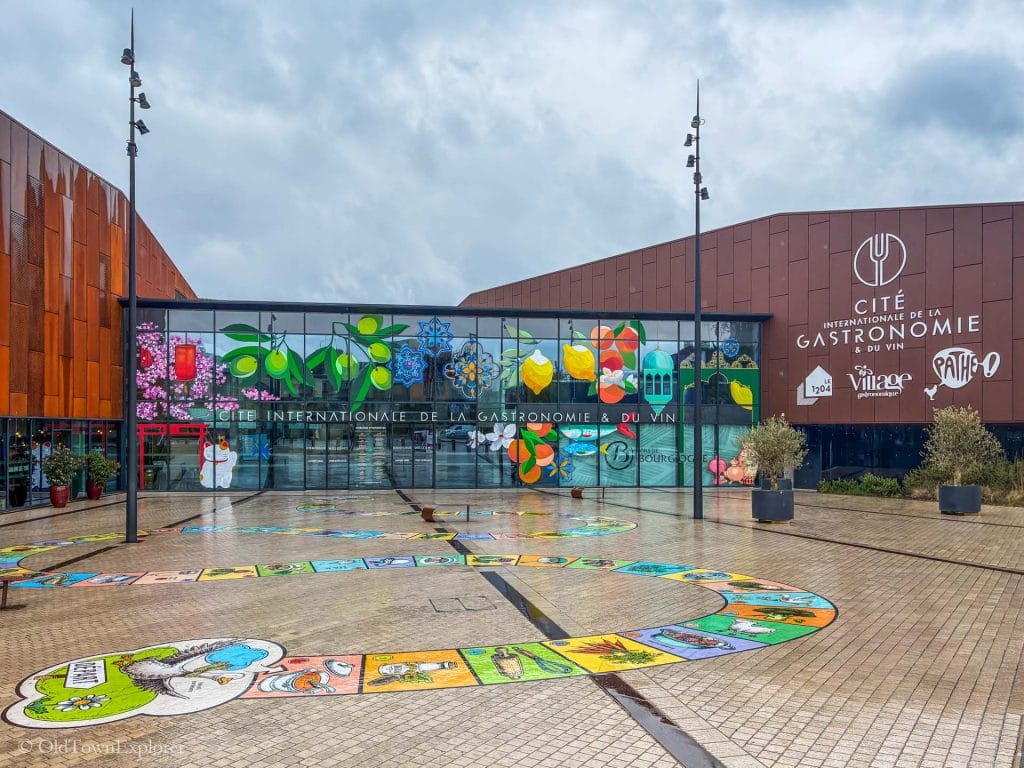
Cité internationale de la gastronomie et du vin
- Architect: Contemporary redevelopment project, multiple contributors
- Style: Contemporary reuse of historic hospital site
- Built: 21st-century redevelopment on older hospital fabric
- Address: 12 Parvis de l’Unesco, 21000 Dijon
This is the large public redevelopment on the former hospital site. It shows how Dijon reuses institutional ground for a new civic and cultural role while keeping links to older structures. Look for the mix of restored historic fabric and new construction, along with the broader open site layout. It sits south-west of the historic core on the route toward the canal.
For restaurants, markets, and food products tied to the same gastronomy district and central market area, see our Dijon Food page.
Le 1204
- Architect: Unknown
- Style: Reused historic institutional building with contemporary exhibition fit-out
- Built: Historic hospital fabric, later adapted as a heritage interpretation center
- Address: 12 Parvis de l’Unesco, 21000 Dijon
This is Dijon’s Centre d’interprétation de l’architecture et du patrimoine, installed within the former hospital site at the Cité internationale de la gastronomie et du vin. It stands out because it explains the city’s urban history, building materials, housing types, and contemporary projects inside a reused institutional setting rather than a purpose-built museum box. Look for the older hospital fabric around the exhibition spaces and the way the site connects architecture interpretation with the wider hospital precinct, including the history of the former Hôpital général. It sits southwest of the historic core within the Cité complex, beyond Saint-Bénigne and outside the tight palace-and-market center.
Savings Bank building at Place du Théâtre
- Architect: Arthur Chaudouet
- Style: Neo-Gothic civic-commercial institutional building
- Built: 1889–1890
- Address: Place du Théâtre, 21000 Dijon
This is the former savings bank building on one of Dijon’s key civic squares. It adds a financial institution to a setting already shaped by theater, justice, and administration, which helps explain Place du Théâtre as a broader civic node rather than a single-monument square. Look for the Neo-Gothic treatment, the more formal and upright façade language, and the way the building presents public solidity rather than domestic scale. It sits on Place du Théâtre just north of the palace area, inside the historic center.
Towers, Walls, and City Gates in Dijon
This category covers the clearest surviving defensive elements in Dijon, from late antique wall traces and reused enclosure fragments to palace towers and the city’s main surviving gate. It is useful because Dijon’s fortifications do not survive as one continuous scenic circuit. Instead, you read them through towers, scattered masonry, altered edges, archaeological remains, and key threshold points where former defenses still shape streets and approaches. Together, these entries show how Dijon grew from a smaller fortified core into a larger medieval city, then later reworked its defensive line into boulevards, gates, and fragments embedded in the urban fabric.
Petit Saint-Bénigne tower
- Architect: Unknown
- Style: Late antique tower with early medieval rebuilding
- Built: Late 3rd century core, rebuilt in the 9th and 11th centuries
- Address: Rue de l’Amiral-Roussin area, 21000 Dijon
This is one of the rare surviving towers tied to the ancient castrum of Dijon. It stands out because it preserves both the late antique defensive line and later rebuilding phases, which makes it one of the clearest small-scale witnesses to the city’s earliest fortified history. Look for the compact stone mass and the way the tower survives embedded in later urban fabric rather than as a freestanding monument. It sits on the southern side of the historic core near the Saint-Bénigne sector, in the Rue de l’Amiral-Roussin area.
Castrum de Divio wall remains
- Architect: Unknown
- Style: Late antique defensive wall
- Built: Late 3rd century
- Address: Scattered remains in the historic center, exact points vary
These remains belong to the fortified core of ancient Dijon, known as the castrum of Divio. They are among the oldest defensive elements in the city and explain why the earliest urban nucleus was smaller and more tightly bounded than the later medieval town. Look for thick masonry fragments and odd wall lines rather than a long continuous rampart. The remains are dispersed through the historic center rather than gathered in one single viewing point.
Traces of the medieval enceinte
- Architect: Unknown
- Style: Medieval city wall
- Built: Mainly 12th century, later altered
- Address: Traces around the expanded historic core, exact points vary
These traces belong to the larger medieval wall that replaced the smaller late antique enclosure as Dijon expanded. They explain how the city grew beyond the castrum and enclosed new suburbs and open ground within a broader defensive line. Look for changes in street alignment, fragments in later buildings, and edges in the urban plan rather than one continuous wall walk. The traces sit around the wider historic center beyond the oldest core.
Porte Guillaume
- Architect: Jean-Philippe Maret
- Style: Neoclassical triumphal gate
- Built: 1786–1788
- Address: Place Darcy, 21000 Dijon
This is Dijon’s main surviving city gate and one of the clearest approach monuments to the old town. It replaced an earlier medieval gate on the line of the former walls and turns a defensive entry point into a late 18th-century civic arch. Look for the large central arch, rusticated piers, Doric entablature, and the sculpted reliefs on both faces. It stands at Place Darcy on the western edge of the historic core, where the boulevard space opens into Rue de la Liberté and the old center beyond.
Statues and Monuments in Dijon
This category covers the sculptural and commemorative works that give Dijon many of its most recognizable details. Some are small features attached to major buildings, while others are major independent monuments or tomb sculptures tied to ducal Burgundy. Together, they show how public memory, religion, dynastic display, and local identity are built into the city’s streets, squares, churches, and museum spaces.
Owl of Dijon
- Architect: Unknown
- Style: Carved stone relief
- Built: Late 15th century
- Address: North side of Église Notre-Dame, Rue de la Chouette area, 21000 Dijon
This is the small stone owl carved into a buttress of Notre-Dame. It stands out as Dijon’s best-known architectural detail and as the emblem behind the city’s Owl Trail, even though the carving itself is very small. Look for the worn relief set low in the masonry on the north side chapel area rather than expecting a large sculptural program. It sits beside Notre-Dame in the medieval core, just off the main palace-and-market route in the narrow streets around Rue de la Chouette.
Le Bareuzai / grape-treader statue
- Architect: Unknown
- Style: Public statue within a fountain ensemble
- Built: 19th century
- Address: Place François-Rude, 21000 Dijon
This is the grape-treader figure that crowns the Fontaine du Bareuzai. It gives Dijon one of its clearest public references to Burgundy wine culture and anchors one of the city’s busiest central squares. Look for the standing figure above the basin and the way the monument reads against the compact façades around the square. It sits on Place François-Rude between Place Darcy and Place de la Libération.
For the wine-region context behind this public symbol, see our Burgundy Wine page.
Puits de Moïse
- Architect: Claus Sluter and workshop context
- Style: Late Gothic monumental sculpture
- Built: c. 1395–1405
- Address: Chartreuse de Champmol, 1 Boulevard Chanoine-Kir, 21000 Dijon
This is the sculpted base of the former Calvary at the Chartreuse de Champmol. It is one of the greatest surviving works from ducal Burgundy and one of Dijon’s strongest sculptural monuments. Look for the hexagonal form, the large prophet figures, and the deep carving in the drapery and faces. It sits on the western side of Dijon within the former Chartreuse precinct outside the main historic core.
White Bear of Jardin Darcy
- Architect: François Pompon
- Style: Animal sculpture
- Built: 20th century
- Address: Jardin Darcy, Place Darcy, 21000 Dijon
This is the white bear sculpture in Jardin Darcy. It is one of Dijon’s best-known modern monuments and adds a very different sculptural note to the city than the Gothic and ducal works in the old center. Look for the smooth simplified body, clean silhouette, and the way the sculpture stands out against the garden setting. It sits in Jardin Darcy at the western approach to the historic center near Porte Guillaume.
Henry Darcy monument
- Architect: Émile Sagot; bust by François Jouffroy
- Style: Neo-Renaissance civic monument
- Built: 1841
- Address: Jardin Darcy / Place Darcy, 21000 Dijon
This monument honors the engineer Henry Darcy, whose water-supply works changed Dijon in the 19th century. It stands out because it ties public commemoration directly to urban infrastructure: the monument was built above the reservoir that brought running water into the city. Look for the Neo-Renaissance stone setting, the bust of Darcy, and the way the monument sits within the terraces and water features of Jardin Darcy. It stands at the western edge of the historic center in Jardin Darcy, beside Place Darcy and the approach to Porte Guillaume.
Other Architectural Attractions in Dijon
This category covers the pieces that help explain Dijon between the main palace, church, house, and museum entries. Some are urban spaces, some are routes or details, and some are later buildings that show how the city kept changing after the medieval and ducal periods. Together, they make the historic center easier to read and widen the page beyond single monuments.
Colombière castle / Château de la Colombière
- Architect: Unknown
- Style: Classical hunting lodge / château
- Built: Late 17th to early 18th century
- Address: Castel de la Colombière, Longvic, at the southeast edge of Parc de la Colombière
This is the former hunting lodge built for the governors of Burgundy as part of the Colombière estate. It stands out because it shifts the domestic story away from tight courtyard houses in the old center and into an axial park-and-estate setting tied to formal landscape design. Look for the château aligned with the main allée of the park and the way house, grounds, and long perspectives were planned together rather than fitted into a narrow street parcel. It sits beyond the southeast side of Dijon’s historic core, just past Parc de la Colombière, and is best read with the park rather than as an isolated old-town monument.
Parc de la Colombière
- Architect: Multiple phases
- Style: Formal park landscape with estate setting
- Built: Early modern origins, later park development
- Address: Cours du Parc / Parc de la Colombière, 21000 Dijon
This is one of Dijon’s largest historic green spaces. It shifts the architectural story from tight old-town plots to axial walks, estate planning, and a broader open setting. Look for the long alignments, controlled tree planting, and the relation between paths and the former Colombière estate. It sits southeast of the historic core outside the main old-town walking zone.
Jardin Darcy
- Architect: Henri Darcy associated with the reservoir project; garden design phase by city planners, exact designer attribution Unknown
- Style: 19th-century public garden over civic infrastructure
- Built: 19th century
- Address: Place Darcy, 21000 Dijon
This is Dijon’s first public garden and one of the main western approaches to the old town. It combines landscaped paths, water features, balustrades, and hidden reservoir infrastructure in one civic space. Look for the formal garden layout, the relation between planted areas and public circulation, and the way the site frames the walk toward Porte Guillaume. It sits at the western edge of the historic core.
Meridian on rue de la Liberté
- Architect: Unknown
- Style: Scientific or commemorative street marker
- Built: Unknown
- Address: Rue de la Liberté, 21000 Dijon
This is one of Dijon’s lesser-known urban markers. It adds a layer of measurement and orientation to a street better known for commerce and pedestrian flow. Look for the marker set into the street or façade context rather than expecting a large monument. It sits on Rue de la Liberté in the center of the old town.
Villa Messner
- Architect: Régis-Joseph Jardel
- Style: Early 20th-century villa
- Built: 1912–1913
- Address: 5 Rue Parmentier, 21000 Dijon
This is one of Dijon’s clearest high-end detached villas from the early 20th century. It stands out because it shifts the domestic story away from courtyard houses in the center and into a suburban villa format with a terrace, ceremonial vestibule, decorated salon, and stair with wrought-iron railing. Look for the freestanding composition, the dressed-stone construction, and the more open residential setting around the house. It sits outside the medieval core in a later residential district.
Neo-Renaissance building on Place François-Rude
- Architect: Unknown
- Style: Neo-Renaissance
- Built: 19th century
- Address: Place François-Rude, 21000 Dijon
This building adds a later historicist layer to one of the city’s busiest central squares. It shows how 19th-century architecture inserted revival styles into a setting otherwise framed by older houses and public monuments. Look for symmetrical façade composition, decorative stonework, and references to Renaissance forms. It sits on Place François-Rude in the heart of the center.
Art Nouveau building on Place Grangier
- Architect: Louis Perreau
- Style: Art Nouveau
- Built: Early 20th century
- Address: 3 Place Grangier, 21000 Dijon
This is one of the clearest Art Nouveau façades in central Dijon. It stands out for the curved door design and the more vertical, decorative composition that breaks with the heavier stone language of many nearby civic buildings. Look for the flowing entrance details and the way the façade adds an early 20th-century note to a square created after the demolition of the medieval castle. It sits on Place Grangier west of the palace core.
Former Art Deco department store Au Pauvre Diable on rue de la Liberté
- Architect: Unknown
- Style: Department-store commercial architecture with later Art Deco development
- Built: Business founded 1875; later 20th-century architectural evolution
- Address: Rue de la Liberté, 21000 Dijon
This former department store is one of the markers of Dijon’s retail modernization. It stands out because Au Pauvre Diable was one of the city’s long-running grands magasins, linking 19th-century commercial expansion to later changes in façade and store architecture on the city’s main shopping street. Look for the broad retail frontage and the way large-scale commerce was inserted into an older street built on medieval plots. It sits on Rue de la Liberté in the heart of the historic center.
Galeries Lafayette on rue de la Liberté
- Architect: Unknown
- Style: Department-store commercial architecture
- Built: 20th century
- Address: Rue de la Liberté, 21000 Dijon
This building belongs to the later department-store phase of Dijon’s main commercial axis. It stands out because it shows how large retail fronts reshaped the visual rhythm of Rue de la Liberté while keeping the street as the city’s central shopping spine. Look for the wider commercial frontage, the display-oriented façade treatment, and the contrast between department-store scale and the tighter historic fabric around it. It sits on Rue de la Liberté between Place Darcy and Place de la Libération in the historic center.
Building at 6 Place Grangier
- Architect: Louis Perreau
- Style: Early 20th-century urban block with historicist detailing
- Built: Early 20th century
- Address: 6 Place Grangier, 21000 Dijon
This is one of the key buildings framing Place Grangier. It helps complete the square as a coherent early 20th-century urban set piece shaped after the medieval castle site was cleared and rebuilt. Look for the regular façade rhythm, the scale of the block within the square, and the way it contributes to a broader ensemble rather than standing as an isolated monument. It sits west of the palace core within the broader central city.
Port du Canal
- Architect: Unknown
- Style: Canal port infrastructure
- Built: 19th century
- Address: Port du Canal area, southwest of the historic center, 21000 Dijon
This is Dijon’s historic canal-side port area. It marks the point where the city connected to barge traffic, storage, and later industrial-era movement beyond the old center. Look for the basin layout, long quay edges, and the broader open grain of the area compared with the tighter medieval street pattern. It sits southwest of the historic core beyond Saint-Bénigne and the former hospital sector.
Fontaine du Bareuzai
- Architect: Paul Deshérault
- Style: Monumental urban fountain with allegorical bronze statue
- Built: 1904
- Address: Place François-Rude, 21000 Dijon
This is one of Dijon’s best-known fountains and one of the clearest sculptural markers in the city center. It stands out for the bronze grape-treader, known as the Bareuzai, a local figure tied to Burgundy wine work, set on a purpose-built fountain in the middle of the square. Look for the central bronze statue, the stone basin and pedestal, and the way the monument anchors the compact façades and timber-framed edges of Place François-Rude. It sits on Place François-Rude between Place Darcy and Place de la Libération in the historic core.
Architecture Tours in Dijon
A guided tour is most useful if you want access-dependent interiors, help interpreting the palace’s building phases, or context for features that are easy to miss on a self-guided walk. If your priority is façades, squares, timber-framed streets, and the main civic sequence, Dijon’s compact center also works well independently.
Guided Tours
The Dijon Métropole Tourist Office offers changing heritage visits, including access to parts of the palace complex and the Tour Philippe le Bon. Topics, languages, availability, and entry conditions vary, so compare the current program on the official guided tours page before booking. Use the tour listings below to compare additional formats and dates.
Things to Know Before You Go
Base Yourself in or Beside the Historic Center
The palace, Notre-Dame, Les Halles, timber-framed streets, Saint-Bénigne, and Porte Guillaume lie within a practical central walking area. A central base makes it easy to revisit façades in different light and reduces the need for local transport.
Wear Shoes for Uneven Surfaces
Most central routes are straightforward, but old paving, kerbs, sloping lanes, and occasional wet stone can slow the walk. Supportive footwear is useful if you plan to cover the full inventory rather than only the principal squares.
Use Mornings for Quieter Streets
Rue de la Chouette, Maison Millière, Place François-Rude, and the streets near Les Halles become busier as shops, cafés, and the market area fill. Earlier hours generally make façades and narrow street views easier to study.
Separate Exterior and Interior Plans
Dijon offers substantial architecture from public streets, but opening hours govern church interiors, museum rooms, crypts, courtyards, and tower access. Treat any interior as a planned visit and build the exterior walk so it still works if a site is closed.
Expect Weather to Change the Experience
Rain deepens the color of stone and timber but makes paving more slippery. Summer brings longer viewing hours and more activity; colder months can offer clearer sightlines but shorter days. Carry a light layer or rain protection when the forecast is unsettled.
Return for Evening Light
Late-day light is especially effective on the palace frontage and the open spaces around Place de la Libération and Porte Guillaume. Narrow timber streets lose direct light sooner, so examine their upper stories earlier in the day.
Accessibility Varies by Site
The pedestrian center and major squares are generally the easiest parts to navigate. Historic thresholds, stairs, crypts, towers, tight interiors, and uneven paving may present barriers. Confirm current access directly with the relevant venue before planning around a particular interior or viewpoint.
If You Have Two Hours
Focus on the palace and Place de la Libération, Église Notre-Dame, Maison Millière, nearby timber-framed streets, and Place François-Rude. This compact selection shows ducal, religious, and domestic Dijon without rushing to the outer sites.
If You Have Half a Day
Add Les Halles, Cathédrale Saint-Bénigne, Saint-Philibert, Rue de la Liberté, Porte Guillaume, and Jardin Darcy. Choose one interior or the tower only if its schedule fits naturally.
If You Have a Full Day
Use the extra time for palace or museum interiors, private-house exteriors and courtyards visible from public space, the former hospital and Cité district, or the Chartreuse de Champmol. A full day also allows a second pass through the center when light and street activity have changed.
Where to Stay for Architecture Walks
Staying in or immediately beside Dijon’s historic center keeps the principal architecture within walking distance. The best area depends on whether you prefer direct access to the medieval core, a convenient arrival from the station, or quieter edges near later districts.
- Place de la Libération and Notre-Dame: Best for immediate access to the palace, Gothic church streets, private town houses, and evening views of the central squares.
- Les Halles and Rue de la Liberté: A practical central choice for the market, timber-framed streets, Place François-Rude, and routes in several directions.
- Darcy and Saint-Bénigne: Convenient for the station, Porte Guillaume, Jardin Darcy, the cathedral precinct, and the western edge of the old center.
- Cité and canal side: Better for the former hospital, contemporary reuse, and canal district, but less immediate for repeated walks around Notre-Dame and the palace.
For a first architecture-focused stay, the old center or Darcy edge offers the best balance. Choose the Cité or canal side when those later layers are a priority or when a specific property outweighs the extra walk.
Hotels and Apartments in Dijon
Use the interactive map below to compare accommodations by location, date, budget, and amenities.
FAQs About Dijon Architecture
What is Dijon architecture known for?
Dijon is known for the Palais des ducs et des États de Bourgogne, Gothic churches, medieval timber-framed houses, Renaissance and classical hôtels particuliers, and later civic buildings. These layers sit close together, making the city unusually easy to compare on foot.
Is Dijon Worth Visiting for Architecture on a Short Stop?
Yes. The palace, Place de la Libération, Notre-Dame, Maison Millière, timber-framed streets, Les Halles, and Porte Guillaume form a compact central group. Two hours covers the main contrasts; half a day allows a broader view without turning the visit into a checklist.
Which Buildings Should First-Time Visitors See First?
Prioritize the Palais des ducs et des États de Bourgogne, Tour Philippe le Bon, Église Notre-Dame, Maison Millière, Cathédrale Saint-Bénigne, and Les Halles. Add Porte Guillaume for the clearest transition between the historic core and later city.
Are Most Architectural Sights in Dijon’s Old Center?
Most principal sights are in or beside the historic center. The Chartreuse de Champmol, canal district, Parc de la Colombière, and some modern buildings lie farther out and require additional walking or local transport.
Which Architectural Styles Can You See in Dijon?
The most visible layers include Romanesque remains, Gothic churches, medieval timber framing, Renaissance and classical town houses, formal 17th- and 18th-century civic architecture, 19th-century iron-and-glass construction, and selected Art Nouveau, Art Deco, and contemporary work.
What Is the Best Viewpoint for Dijon’s Architecture?
Tour Philippe le Bon gives the broadest central view of roofs, church towers, and the old street pattern when the climb is available. At ground level, Place de la Libération is the strongest place to read the palace ensemble.
Is Dijon Better for Palaces or Churches?
The palace is the city’s defining architectural anchor, but the churches provide greater variety across periods and settings. Notre-Dame, Saint-Bénigne, Saint-Philibert, and Saint-Michel make the religious layer essential rather than secondary.
Do You Need to Enter Museums to Understand Dijon Architecture?
No. Façades, streets, squares, gates, wall traces, and timber-framed houses provide a substantial exterior experience. Museum and palace interiors add value when you want to understand reused spaces, ducal rooms, archaeology, or construction phases.
Is Dijon’s Architecture Mostly Medieval?
No. Medieval Dijon remains highly visible, but classical palace rebuilding, early modern town houses, 19th-century markets and boulevards, and later public projects are equally important to the city’s present form.
How Does Wine Relate to Dijon’s Architecture?
Dijon’s historic center represents the political and regulatory component of the UNESCO-listed Climats of Burgundy. Wine also appears through civic symbols such as the Bareuzai and through the reuse of the former hospital site for the gastronomy and wine district. For tastings, wine bars, and vineyard planning, see the Dijon Wine guide.
Continue with the main Dijon travel guide, or compare the city’s buildings with the broader France Architecture guide. For the same trip, use Dijon Food and Dijon Wine; for the wider regional context, see Burgundy Wine.