
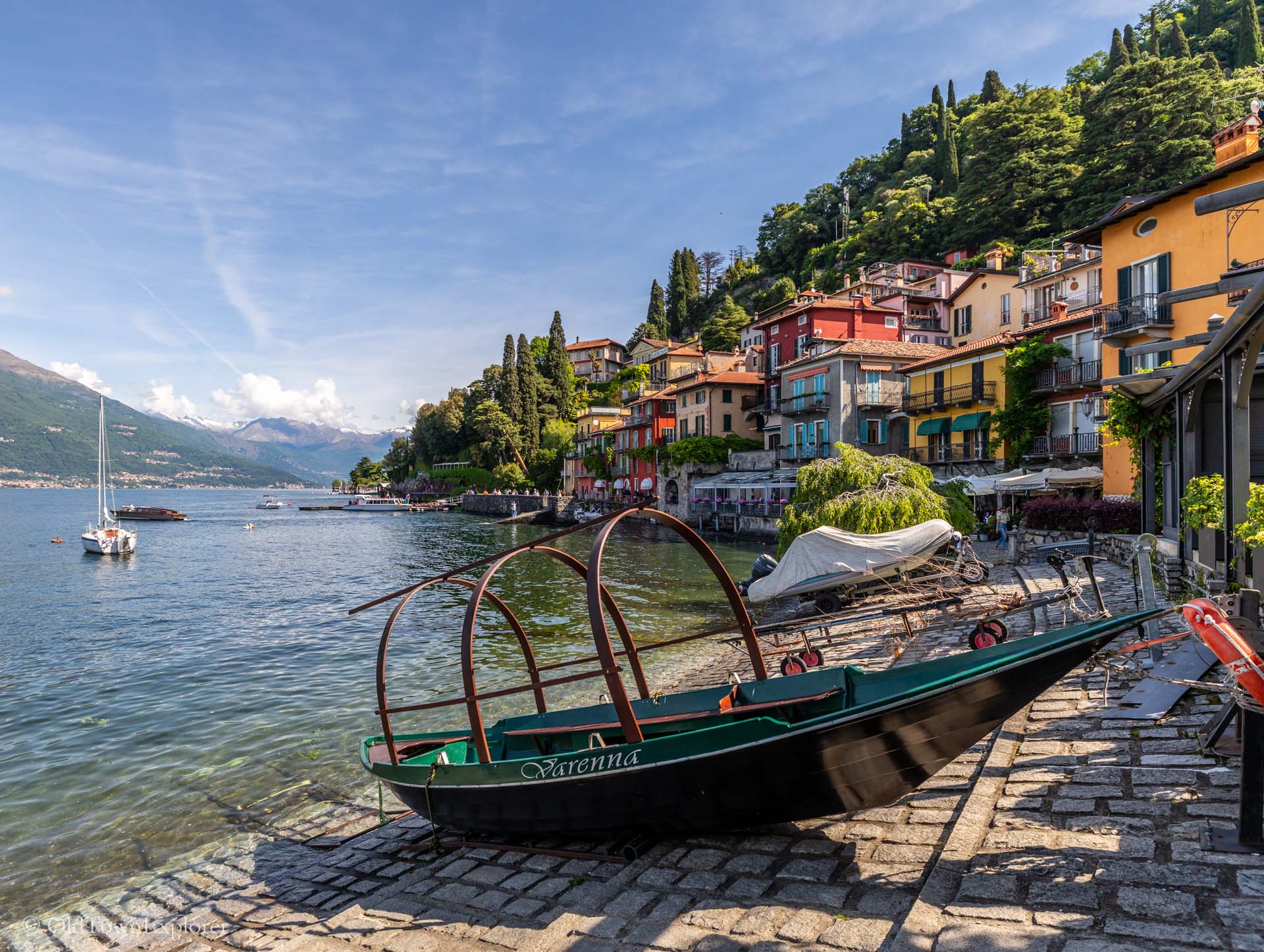
Discover Varenna: History, Architecture & Must-See Attractions
Varenna, Italy sits on the eastern shore of Lake Como, along the Lecco branch of the lake. Its position gave the town access to water routes, hillside paths, and later rail connections. The village grew between the lake, steep lanes, villa gardens, and the slopes below Vezio.
Varenna’s historic core is smaller and tighter than Como. The main day-trip route usually starts at the ferry landing, follows the lakeside walkway into the village, climbs through narrow lanes, and continues to Villa Monastero, Villa Cipressi, or Castello di Vezio if time allows.
We visited Varenna during our month-long stay in Como. In this post, we’ll cover what to see and how to plan a day trip.
This post contains affiliate links that may earn us a small commission at no additional cost to you.
Varenna at a Glance
Varenna is a compact Lake Como village with a ferry landing, medieval churches, steep lanes, villa gardens, and a castle above the town.
- Location: On Lake Como’s eastern shore, reached from Como by ferry or by train from other parts of Lombardy
- Architectural character: Medieval stone lanes, 14th-century church architecture, lakefront houses, villas, gardens, and hilltop fortifications
- Walkability: Easy in the lakeside core, but steep if you climb toward Castello di Vezio
- Typical time required: 4–6 hours for the village, lakefront walk, churches, and one villa garden
- Key landmarks: Passeggiata degli Innamorati, Piazza San Giorgio, Church of San Giorgio, Villa Monastero, Villa Cipressi, Castello di Vezio
- Food role: Useful for lunch, gelato, or a lakeside break, but no first-hand restaurant notes are included here
- Seasonality: May brings active gardens, more ferry demand, and busier lakefront paths on clear days
Start with the history, then look at how the lake, rail access, hillside, churches, villas, and castle shape the village today.
History of Varenna
Varenna’s history is shaped by water, stone, and slope. The village grew along a narrow edge of Lake Como, then expanded through churches, villas, transport routes, and hillside paths.
Early Lake Settlement and Roman Routes
The eastern shore of Lake Como was used for movement long before modern roads and trains. Lake travel connected small settlements, fishing areas, and mountain routes.
Exact early building details in Varenna are Unknown. The town’s later form still shows the basic pattern of a lake settlement pressed between water and rock.
Medieval Varenna and Local Defense
In the Middle Ages, Varenna developed as a small lakeside village below the heights of Vezio. The lakefront gave access to trade and fishing, while the hill above gave a defensive position.
Castello di Vezio became the clearest defensive marker above the town. Its position still explains why Varenna feels tied to both the lake and the hillside.
Churches and the Village Core
The Church of San Giorgio was consecrated in 1313 and became the main religious anchor of the village. Piazza San Giorgio formed around this church and nearby smaller religious buildings.
This shaped the core that visitors still walk today. The main square sits above the lakefront, connected by narrow lanes and steps
Villa Culture Along the Shore
Varenna later developed villa estates along the lake. Villa Monastero began as a religious site before becoming a villa, while Villa Cipressi grew as a group of buildings and gardens.
These villas changed the lake edge. Gardens, walls, terraces, and lakeside paths created a more formal shoreline beside the older village.
Rail and Modern Tourism
The railway gave Varenna a strong transport advantage compared with many Lake Como villages. Varenna-Esino station made the town easier to reach from Milan and Lecco.
This changed the visitor pattern. Today, Varenna works as both a train-based arrival point and a ferry stop for the central lake.
Present-Day Day Trips
Today, Varenna is one of the easiest Lake Como villages to combine with Bellagio and Menaggio. Ferries connect the central lake, while trains connect the east shore.
The village’s form is still simple to understand. The ferry landing, lakeside walkway, old core, villas, and castle climb form the main day-trip route.
Architecture of Varenna
Varenna’s architecture comes from its narrow strip of land between Lake Como and the hillside. The village uses stone lanes, compact squares, lake-facing houses, villa terraces, and a castle above the core.
Lakefront Arrival and First Impressions
Varenna is often first seen from the ferry. From the water, the village appears as a tight group of houses at the base of the slope.
This matters because the lakefront is the front door. The ferry landing and lakeside walkway guide most visitors into the historic core before they reach the churches or villas.
Narrow Lanes and Stone Steps
Varenna’s lanes are narrow because the village had little flat land. Routes climb from the water to Piazza San Giorgio, then continue toward villa entrances and hillside paths.
Stone steps and walls handle the slope. They also make short distances feel more demanding than they look on a map.
Church Placement in the Village Core
The Church of San Giorgio gives Varenna’s old center its main landmark. Its broad front, bell tower, and position on Piazza San Giorgio make the square easy to recognize after climbing up from the lakefront.
The church also helps organize movement through the village. From the square, lanes lead back down to the waterfront, across the old center, and toward the villa routes south of town.
Lakefront Houses and Vertical Stacking
Varenna’s houses often stack upward from the water. This vertical pattern comes from the steep site and limited building space.
Look for tight façades, small balconies, shutters, and changing rooflines. These features show how the village adapted to the lake edge.
Villa Gardens and Terraces
Villa gardens in Varenna use terraces because the land slopes toward the water. A terrace is a flat outdoor level cut into a slope or held by a wall.
Villa Monastero and Villa Cipressi both use gardens as part of the architecture. Paths, walls, stairways, and lake views guide movement through the grounds.
Castle and Hilltop Defense
Castello di Vezio sits above Varenna rather than inside the lakefront core. This placement shows how defense used height, sightlines, and control of movement.
The castle also changes how the village is read from below. It adds a clear upper landmark above the churches, villas, and waterfront.
Rail, Ferry, and Walking Routes
Varenna’s architecture is also shaped by transport. The station, ferry landing, and village lanes all pull visitors through the same compact area.
This makes the village easy to explore without a car. It also means the main routes can feel busy when trains and ferries arrive close together.
Walkability and the Shape of the Village
Varenna is walkable, but the experience depends on your route. The lakeside path and village core are easy, while the castle climb is steep.
A good day trip keeps the route simple. Start at the water, walk into the core, visit one villa garden, then climb only if you have time and energy.
Architectural Attractions in Varenna
Varenna’s main sights fit together through one clear route: ferry landing, lakeside walkway, village core, villa gardens, and hillside castle. The sites below show how the main sights fit together in the town’s layout.
Churches and Village Core
Church of San Giorgio
- Architect: Unknown
- Style: 14th-century Lombard architecture
- Built: Consecrated in 1313
- Address: Piazza S. Giorgio, 25, 23829 Varenna LC, Italy
The Church of San Giorgio is the main church in Varenna. It anchors the village core and gives Piazza San Giorgio its main architectural focus. Look for the broad stone form, bell tower, and simple exterior facing the square. It sits above the lakefront, a short walk from the ferry landing and lakeside promenade.
Church of San Giovanni Battista
- Architect: Unknown
- Style: Romanesque
- Built: 11th century origin; later changes Unknown
- Address: Piazza San Giorgio, 23829 Varenna LC, Italy
The Church of San Giovanni Battista is a small church near the main square. It matters because it preserves an older religious layer beside the larger Church of San Giorgio. Look for the compact scale, plain stone surfaces, and close placement within the village core. It sits near Piazza San Giorgio, just above the lakefront lanes.
Church of Santa Marta
- Architect: Unknown
- Style: Unknown
- Built: Unknown
- Address: Near Piazza San Giorgio, 23829 Varenna LC, Italy
The Church of Santa Marta is a small religious building near the main square. It shows how several religious sites shared the same compact civic space. Look for its smaller scale compared with San Giorgio and its close relationship to the square. It sits in the historic core near the main church and village lanes.
Piazza San Giorgio
- Architect: Unknown
- Style: Historic village square
- Built: Unknown
- Address: Piazza San Giorgio, 23829 Varenna LC, Italy
Piazza San Giorgio is the main square of Varenna. It matters because it gathers the village’s key churches and routes in one compact place. Look for how the church fronts, stone paving, and side lanes shape the square. It sits above the lakefront and works as the main pause between the ferry area, villas, and upper lanes.
Lakefront Streets and Walking Routes
Passeggiata degli Innamorati
- Architect: Unknown
- Style: Lakeside pedestrian walkway
- Built: Unknown
- Address: Between Varenna ferry landing and the village center, 23829 Varenna LC, Italy
Passeggiata degli Innamorati is the short lakeside walkway from the ferry area toward the village. It matters because it creates the main arrival route into Varenna from the water. Look for the walkway set between rock and lake, with railings, views, and tight shoreline placement. It sits directly between the ferry landing and the historic core.
Riva Grande
- Architect: Unknown
- Style: Historic lakefront harbor area
- Built: Unknown
- Address: Riva Grande, 23829 Varenna LC, Italy
Riva Grande is the old lakeside area below the village core. It matters because it shows Varenna’s direct relationship with the lake. Look for the narrow waterfront, closely packed houses, and routes climbing back toward Piazza San Giorgio. It sits below the old center and connects naturally with the lakeside promenade.
Contrada del Torchio and Old Village Lanes
- Architect: Unknown
- Style: Historic stone lanes
- Built: Unknown
- Address: Historic core around Contrada del Torchio, 23829 Varenna LC, Italy
Contrada del Torchio is part of Varenna’s tight village lane network. It matters because it shows how the settlement adapted to limited space between lake and slope. Look for stone paving, narrow passages, small building fronts, and steps leading between levels. It sits in the old core between the lakefront and Piazza San Giorgio.
Villas and Gardens
Villa Monastero
- Architect: Unknown
- Style: Eclectic villa architecture with historic monastic origins
- Built: Late 12th-century monastic origin; villa transformation later
- Address: Viale Giovanni Polvani, 4, 23829 Varenna LC, Italy
Villa Monastero is a historic villa and garden complex on the lakefront. It began as a Cistercian women’s monastery before later owners reshaped it into a villa. Look for the long lakeside garden, terraces, decorative details, and how the complex follows the shoreline. It sits south of the village core along the lake.
Villa Cipressi
- Architect: Unknown
- Style: Historic villa and garden complex
- Built: Mainly 15th–18th centuries
- Address: Via IV Novembre, 22, 23829 Varenna LC, Italy
Villa Cipressi is a group of historic buildings and gardens near the center of Varenna. It matters because it shows how villa architecture grew in stages beside the village. Look for terraces, garden walls, lake-facing views, and the layered form of the complex. It sits between the village core and Villa Monastero.
Castle, Hill, and Outer Settlements
Castello di Vezio
- Architect: Unknown
- Style: Medieval fortified castle
- Built: Late 11th–early 12th century; earlier origins uncertain
- Address: Via del Castellano, 16, 23828 Perledo LC, Italy
Castello di Vezio is a hilltop castle above Varenna. It matters because it explains the defensive role of the slope above the lake village. Look for the tower, walls, exposed stonework, and wide sightlines over Lake Como. It sits above Varenna in the hamlet of Vezio, reached by a steep uphill walk or road access from Perledo.
Vezio Hamlet
- Architect: Unknown
- Style: Historic hill settlement
- Built: Unknown
- Address: Vezio, 23828 Perledo LC, Italy
Vezio is the small hill settlement near the castle. It matters because it shows the upper layer of settlement above Varenna’s lakefront core. Look for stone houses, narrow lanes, and the close link between village and castle. It sits above Varenna, near Castello di Vezio.
Fiumelatte Hamlet and River
- Architect: Unknown
- Style: Lakeside hamlet and natural watercourse
- Built: Unknown
- Address: Fiumelatte, 23829 Varenna LC, Italy
Fiumelatte is a small hamlet south of Varenna, known for its short river. It matters because it adds another settlement layer along the lake edge beyond the villa zone. Look for the houses near the slope, the watercourse, and the way the hamlet sits between mountain and lake. It sits south of Villa Monastero and can be added to a longer walk.
Walking Tour in Varenna
Start at the Varenna ferry landing, which is the natural arrival point from Como.
- Follow the Passeggiata degli Innamorati toward the village center.
- Continue to Riva Grande, then climb the short lanes toward Piazza San Giorgio. Visit the outside of the Church of San Giorgio, then look for the smaller Church of San Giovanni Battista and Church of Santa Marta nearby.
- From the square, walk toward Villa Cipressi and Villa Monastero. If you want a moderate day, use one villa garden as your main stop and return toward the ferry landing.
- If you want a harder route, climb toward Vezio and Castello di Vezio after seeing the village core. This adds steep walking and more time, but it gives the clearest view of how Varenna sits between lake and hillside.
Plan on 2–3 hours for the ferry landing, lakefront, village core, and one villa garden. Add 1.5–2.5 hours for the castle climb, depending on pace and weather.
How to Get to Varenna from Como
Varenna is farther from Como than nearby towns like Cernobbio or Blevio, so transportation planning matters more. The ferry is usually the best choice if you want the trip to feel like part of the Lake Como experience, with shoreline views and a direct arrival near Varenna’s lakeside walking route.
Because Varenna sits on the eastern shore, check both outbound and return ferry times before leaving Como. This is especially important in May and summer, when boat schedules, fast services, and return demand can shape how much time you actually have for the lakefront, village core, villas, and Castello di Vezio.
By Ferry
The ferry is the best way to get from Como to Varenna if you want the day trip to focus on Lake Como itself. It turns the journey into part of the visit and brings you directly to the lakeside arrival route.
Boats leave from Como’s lakefront docks on routes that serve the central and upper lake. Varenna is on the eastern shore, so check the current Navigazione Laghi schedule before you go. Routes, travel times, fast services, and seasonal timetables change.
Once you arrive at Varenna’s ferry landing, the village is easy to reach on foot. The Passeggiata degli Innamorati leads from the ferry area toward the historic core, Riva Grande, and Piazza San Giorgio.
For a day trip from Como, check both outbound and return times before you leave. In May and summer, build in extra time for ticket lines and return boarding.
By Train
Varenna has a train station, Varenna-Esino, which makes it easier to reach from Milan and Lecco than many Lake Como villages. From Como, however, the train is not usually the simplest route.
A train route from Como to Varenna usually requires connections. It can make sense if you are already planning a wider rail day or combining Varenna with another east-shore stop.
From Varenna-Esino station, walk downhill toward the lakefront and village core. The walk is manageable for most visitors, but the return to the station is uphill.
By Bus
Bus routes around Lake Como can help with local connections, but they are not the primary way to reach Varenna from Como. The ferry is more useful for a direct day-trip experience from the lake.
A bus may make sense for short local moves on the eastern shore or if you are connecting through nearby towns. Check current local schedules before relying on it.
Once in Varenna, buses are not needed for the main village core. The lakefront, churches, and villas are all walkable.
By Car
Driving from Como to Varenna is possible, but it is not the best choice for a simple day trip. The route is longer than it looks because of lake roads, traffic, and parking limits.
If you drive, plan to park outside the tightest parts of the village and walk in. Watch for narrow streets, pedestrian areas, and local restrictions.
A car makes more sense if Varenna is part of a wider road trip along the eastern shore. For most visitors staying in Como, the ferry should be the first choice.
By Taxi / Rideshare
A taxi from Como to Varenna is possible but usually not practical for a standard day trip. The distance, roads, and cost make it less useful than the ferry.
Rideshare coverage can be limited around Lake Como compared with large cities. Plan around ferry times first, then train options if needed.
Making the Most of Your Day Trip to Varenna
Varenna works best when you plan around the ferry schedule, the lakeside arrival route, and one main add-on. Start with the waterfront and village core, then choose either a villa garden or the climb to Castello di Vezio.
This keeps the day focused. The lakefront and Piazza San Giorgio are easy to connect on foot, while Villa Monastero, Villa Cipressi, and Castello di Vezio each need enough time to be useful rather than rushed.
Morning – architectural spine
After arriving by ferry, start with the Passeggiata degli Innamorati. This gives you the easiest entry into Varenna and helps you understand how the village sits between the lake and the rock face.
Continue to Riva Grande, then climb toward Piazza San Giorgio. Visit the outside of the Church of San Giorgio, Church of San Giovanni Battista, and Church of Santa Marta while the village core is still quieter.
Midday – civic core / street structure
Use midday for the lanes around Piazza San Giorgio, Contrada del Torchio, and the route toward the villa district. These streets show how Varenna handles slope, foot traffic, and tight building plots.
This is also the best time to pause for lunch or a simple food stop. No first-hand restaurant recommendation is included here, so choose based on current opening times, menu fit, and your ferry schedule.
For broader planning around regional dishes, use the Italy Food guide.
Afternoon – architecture and garden anchor
Use this part of the day for the strongest architecture and garden anchor. Choose Villa Monastero or Villa Cipressi if you want lakefront gardens, terraces, and historic villa architecture. Choose Castello di Vezio if you want a steeper walk and a hilltop view over Lake Como.
Late afternoon / evening – wrap-up
Return toward the ferry landing before your planned departure. Varenna’s return boats can be busy in good weather, especially in May and summer.
Use any extra time for the lakefront, a short lane walk, or a final view from the waterfront. This keeps the final part of the day close to your return transport.
Tips for Visiting Varenna
Start early because the ferry and lakefront path get busy
Start early if you are visiting Varenna in May or summer. The ferry landing, lakeside walkway, and villa entrances can all get busy on clear days.
An early start also gives you more choice. You can decide later whether to add a villa garden, the castle climb, or a longer walk toward Fiumelatte.
Wear shoes that handle steps and slopes
Wear shoes with grip because Varenna has stone lanes, steps, and sloped paths. The lakeside route is easy, but the village climbs quickly once you leave the water.
This matters most if you plan to walk to Castello di Vezio. The climb is not long, but it is steep enough to change the day.
Use the ferry schedule as the frame for the day
The ferry is the best way to plan a Varenna day trip from Como. Check both outbound and return times before you leave, then build your walking route around them.
Varenna works best when your return trip is planned before you start exploring. In high season, build in extra time at the landing.
Choose one major add-on, not all of them
Varenna has more to do than its small size suggests. Villa Monastero, Villa Cipressi, Castello di Vezio, and Fiumelatte can fill a full day if you try to do everything.
Pick one main add-on after the village core. This keeps the day practical and avoids rushing back to the ferry.
Visit villa gardens when the weather is clear
Villa Monastero and Villa Cipressi work best when you can enjoy the terraces and lake views. Rain or low clouds can reduce the value of the gardens.
In May, gardens are a strong reason to visit Varenna. Check current opening days before you build the day around them.
Treat the castle climb as optional
Castello di Vezio gives a strong view over Varenna and the central lake. It also adds a steep climb and more time.
Do the castle only if your ferry schedule, weather, and legs make sense. Otherwise, stay near the lakefront and villas.
Plan food around the route, not a single venue
Varenna has food stops near the waterfront and village core, but this draft does not include first-hand restaurant notes. Choose a place near your walking route rather than doubling back at lunch.
If your ferry return is fixed, eat earlier rather than late. That keeps the final part of the day less rushed.
Know that wine is secondary here
Varenna is not mainly a wine-tasting destination. You may find wine in restaurants or bars, but architecture, gardens, ferry access, and lakefront walking are the stronger reasons to visit.
If wine matters, confirm a specific place before you go. Do not assume a walk-in tasting will fit the day.
Compare Varenna with Bellagio before planning the route
Varenna is easier by train from Milan and has a quieter east-shore layout. Bellagio sits at the central lake junction and has stronger ferry connections between lake branches.
From Como, both work as ferry day trips. Varenna usually feels more linear, while Bellagio feels more like a steep promontory town.
Keep the final hour near the lakefront
Do not leave the castle climb or Fiumelatte walk for the final hour. Both can make a return ferry stressful if the timing is tight.
Use the last hour for Riva Grande, the lakeside walkway, or a short loop through the village core. Stay close enough to the landing to board without rushing.
FAQs About Varenna
Is Varenna worth visiting as a day trip?
Yes, Varenna is worth visiting as a day trip if you want a compact Lake Como village with ferry access, villa gardens, medieval churches, and a clear walking route. It works especially well if you like smaller places that are easy to explore on foot.
How long should I spend in Varenna?
Plan 4–6 hours in Varenna. That gives you enough time for the ferry arrival, lakeside walkway, village core, one villa garden, and a relaxed food stop.
How is Varenna different from nearby towns?
Varenna is more linear and compact than Bellagio. Bellagio sits on a promontory with several lake-facing routes, while Varenna runs along the eastern shore below a steep hillside.
Is Varenna walkable?
Yes, Varenna is walkable, but not every route is flat. The lakefront and village core are easy, while Castello di Vezio requires a steep uphill walk.
When is the best time to visit Varenna?
May is a good time to visit Varenna because the gardens are active and the weather is often comfortable for walking. It can still be busy on sunny days, so early ferry planning helps.
What should I prioritize on a short visit?
Prioritize the Passeggiata degli Innamorati, Riva Grande, Piazza San Giorgio, Church of San Giorgio, and either Villa Monastero or Villa Cipressi. These give you the clearest view of the village’s lakefront, church core, and garden architecture.
Is Varenna better by ferry or by car from Como?
Ferry is usually better for a day trip from Como. It brings you directly to the lakefront, avoids parking issues, and makes the route part of the Lake Como experience.
Can I visit Varenna and Bellagio on the same day?
Yes, you can visit Varenna and Bellagio on the same day if ferry times line up. Keep each stop focused, because both towns have enough sights to fill several hours.
Does Varenna have enough architecture for a full day?
Yes, Varenna has enough architecture for a full day if you include the village core, churches, villa gardens, lakefront walkway, and Castello di Vezio. The value comes from seeing how the village fits between the lake and the hillside.
