
Italy Food
Explore Italy Food: Local Food Products & Traditional Dishes
Italian food changes sharply by region. Butter, rice, polenta, filled pasta, and Alpine cheese are common across parts of the north. Central Italy leans toward bread, beans, pecorino, pork, olive oil, and pasta, while the south and islands bring durum-wheat pasta, vegetables, seafood, citrus, and fresh cheeses.
Bologna is the strongest first base for Emilia-Romagna pasta, cured meats, cheese, and balsamic vinegar. Rome adds Lazio’s pasta and artichokes; Naples brings pizza, tomatoes, buffalo mozzarella, street food, and pastries; Turin, Venice, Genoa, Florence, and Lecce each open a different regional table.
We have spent extended time in Italy, including month-long stays in Rome, Naples, Bologna, Turin, Venice, Como, Lucca, and Lecce. The practical questions are which food region fits the route, which local names to recognize, and which dishes belong to the places you are visiting.
Italy Food at a Glance
Italy is easier to eat when you choose a region first and national favorites second. Bologna, Rome, Naples, Turin, Venice, and Genoa introduce very different combinations of pasta, rice, cheese, cured meat, vegetables, seafood, bread, and pastries.
Key food-planning points:
- Best starting points: Bologna for Emilia-Romagna products and fresh pasta; Rome for Lazio pasta and artichokes; Naples for pizza and Campania products; Turin for Piedmont food; Venice for lagoon seafood and cicchetti
- Core food pattern: Northern cooking relies more heavily on rice, polenta, butter, dairy, and filled pasta; central and southern regions bring different combinations of bread, pasta, olive oil, pork, vegetables, seafood, and fresh cheese
- Key food regions: Northwest Italy, Northeast Italy, Central Italy, Southern Italy, Sicily, and Sardinia
- Local products: Parmigiano Reggiano, Prosciutto di Parma, Mozzarella di Bufala Campana, Pecorino Romano, Basilico Genovese, and regional olive oils
- Traditional dishes: Carbonara, tagliatelle al ragù, pizza Napoletana, risotto alla milanese, orecchiette con cime di rapa, and cannoli
- Main trade-off: Major food cities are easy to combine by train, but rural dairies, wine-country meals, small fishing towns, olive-growing areas, and producer visits often need a car or advance arrangement
For a first food trip, choose one main city and its surrounding region. Add a second region only when it gives a clear contrast, such as Bologna and Naples or Turin and Genoa.
Food Regions in Italy
Italy’s 20 regions have distinct food traditions shaped by climate, altitude, farming, livestock, fishing, trade, and the grains and cooking fats available locally. Rice, butter, polenta, and mountain dairy appear more often in parts of the north, while olive oil, durum wheat, vegetables, seafood, and fresh cheeses become more prominent through much of the south.
Find the region on your itinerary, then compare its main products, traditional dishes, and most practical food base.
Abruzzo
Abruzzo joins the sheep-farming and mountain cooking of the Apennines with the fish and seafood of the Adriatic coast. Saffron, lamb, hand-cut pasta, cured pork, cheese, legumes, and fish stews distinguish the inland provinces from Pescara, Vasto, and the coastal towns.
Look for these regional names when planning meals:
- Key products: Zafferano dell’Aquila, Pecorino di Farindola, Canestrato di Castel del Monte, Ventricina del Vastese, Mortadella di Campotosto, Patata del Fucino, Aglio Rosso di Sulmona, and Confetti di Sulmona
- Traditional dishes: Arrosticini, maccheroni alla chitarra, scrippelle ’mbusse, timballo teramano, pallotte cace e ove, sagne e fagioli, brodetto alla vastese, and fiadoni
- Food base: L’Aquila for mountain products and lamb, with routes toward Teramo, the Gran Sasso, Sulmona, Pescara, and the Trabocchi Coast
Choose L’Aquila or Teramo when lamb, saffron, cheese, and mountain dishes come first. Base yourself near Pescara or Vasto when Adriatic fish and brodetto are the main reason for visiting.
Aosta Valley
Aosta Valley cooking is built for an Alpine climate. Cow’s-milk cheese, cured meat, rye bread, polenta, cabbage, chestnuts, butter, apples, and slowly cooked meat appear far more often than the tomato sauces and olive-oil dishes associated with southern Italy.
These products and dishes give the clearest first introduction:
- Key products: Fontina, Vallée d’Aoste Fromadzo, Vallée d’Aoste Lard d’Arnad, Vallée d’Aoste Jambon de Bosses, mocetta, boudin, rye bread, chestnuts, and mountain honey
- Traditional dishes: Polenta concia, fonduta valdostana, zuppa alla valpellinentze, carbonade valdostana, costoletta alla valdostana, civet di camoscio, boudin with potatoes, and tegole
- Food base: Aosta, with routes toward Cogne, Courmayeur, Gressoney, Saint-Rhémy-en-Bosses, and the side valleys
Aosta gives the broadest introduction without a car. Continue into the valleys when mountain dairies, village bakeries, chestnut products, and high-altitude food are central to the trip.
Basilicata
Basilicata’s inland cooking relies on durum wheat, bread, handmade pasta, peppers, legumes, pork, lamb, goat, cheese, olive oil, and preserved vegetables. Matera and the Murgia differ from Potenza, the Vulture, and the mountain interior, but both share a direct, ingredient-led style.
Look for these Lucanian products and dishes:
- Key products: Peperone di Senise, Pane di Matera, Lucanica di Picerno, Canestrato di Moliterno, Caciocavallo Podolico, Fagioli di Sarconi, olive oil from the Vulture, and Lucanian honey
- Traditional dishes: Pasta with peperoni cruschi, lagane e ceci, strascinati with breadcrumbs and peppers, cialledda, acquasale, baccalà alla lucana, rafanata, and lamb with potatoes
- Food base: Matera, with routes toward Potenza, Castelmezzano, the Vulture, Venosa, and smaller inland towns
Matera is the easiest base when arriving from Puglia or Campania. Add Potenza or the Vulture when peppers, sausages, mountain cheese, lamb, and inland pasta matter more than Matera’s bread traditions alone.
Calabria
Calabrian food moves between the Tyrrhenian and Ionian coasts, the Strait of Messina, citrus-growing areas, and the mountains of the Sila, Pollino, and Aspromonte. Chile, pork, preserved vegetables, olive oil, onions, citrus, pasta, cheese, mushrooms, and seafood recur in different combinations.
These names cover the strongest regional food signals:
- Key products: ’Nduja di Spilinga, Soppressata di Calabria, Capocollo di Calabria, Cipolla Rossa di Tropea, Bergamotto di Reggio Calabria, Cedro di Calabria, Caciocavallo Silano, Liquirizia di Rossano, and Calabrian chile
- Traditional dishes: Fileja with ’nduja, pasta ca muddica e alici, lagane e ceci, melanzane ripiene, stocco alla mammolese, pesce spada alla ghiotta, morzeddhu, and pitta ’mpigliata
- Food base: Reggio Calabria, with routes toward Scilla, the Costa Viola, Tropea, Catanzaro, Cosenza, and the Sila
Choose Reggio Calabria for swordfish, bergamot, and the food of the Strait. Tropea and the Tyrrhenian coast suit onions and seafood, while Cosenza and the Sila lead toward mushrooms, potatoes, cured meat, and mountain cheese.
Campania
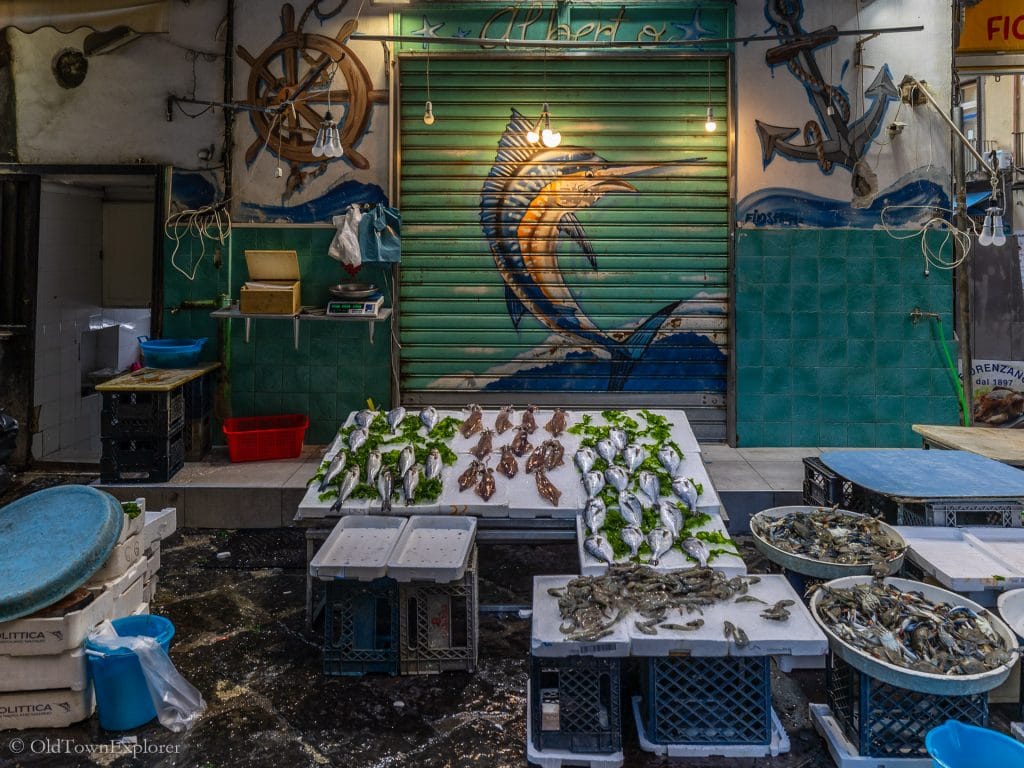
Campania food is shaped by Naples, the Bay of Naples, the Amalfi Coast, volcanic soils, buffalo dairy, tomatoes, pasta, citrus, seafood, and inland mountain products. Naples, Caserta, Irpinia, Benevento, Cilento, and the coast should not be treated as one uniform menu.
These products and dishes give the region its clearest food vocabulary:
- Key products: Mozzarella di Bufala Campana, Pomodoro San Marzano, Pomodorino del Piennolo del Vesuvio, Provolone del Monaco, Limone Costa d’Amalfi, Melannurca Campana, Pasta di Gragnano, and Colatura di Alici di Cetara
- Traditional dishes: Pizza Napoletana, spaghetti alle vongole, parmigiana di melanzane, pasta e patate con provola, genovese napoletana, sfogliatella, babà, and struffoli
- Food base: Naples, with routes toward Caserta, the Vesuvian towns, Gragnano, Sorrento, the Amalfi Coast, and inland Campania
Campania Food compares Naples with the coast, buffalo-dairy areas, Vesuvian agriculture, Cilento, Irpinia, Benevento, and the wider region.

Emilia-Romagna
Emilia-Romagna contains two related but distinct food areas. Emilia is especially strong for fresh egg pasta, filled pasta, aged cheese, cured pork, ragù, and balsamic vinegar. Romagna adds flatbreads, fresh cheeses, handmade pasta, grilled meat, and Adriatic seafood.
These products, dishes, and bases give the region its clearest structure:
- Key products: Parmigiano Reggiano, Grana Padano, Prosciutto di Parma, Mortadella Bologna, Aceto Balsamico Tradizionale di Modena, Aceto Balsamico di Modena, Coppa Piacentina, Culatello di Zibello, and Squacquerone di Romagna
- Traditional dishes: Tagliatelle al ragù, tortellini in brodo, lasagne verdi, tortelloni, passatelli, piadina romagnola, gnocco fritto, and erbazzone
- Food base: Bologna, with routes toward Modena, Parma, Reggio Emilia, Ferrara, Ravenna, and Romagna
Emilia-Romagna Food compares Bologna’s pasta and mortadella with Parma’s cured meat and cheese, Modena’s vinegar, Reggio Emilia, Ferrara, Ravenna, and the Romagna coast.
Friuli-Venezia Giulia
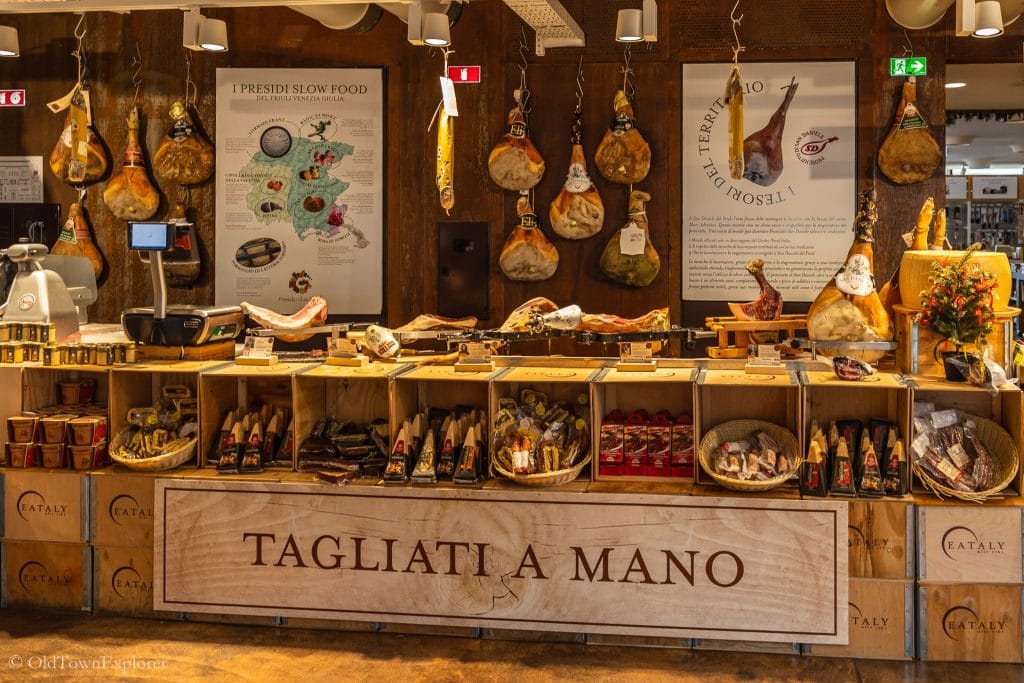
Friuli-Venezia Giulia combines Alpine, Adriatic, Friulian, Venetian, Austrian, Hungarian, and Slovenian traditions. Trieste, Udine, the Karst, San Daniele, Carnia, the mountain valleys, and the coast each bring different products and dishes.
These names introduce the region’s borderland table:
- Key products: Prosciutto di San Daniele, Montasio, Prosciutto di Sauris, Brovada, Tergeste olive oil, Pitina, Formadi frant, and mountain dairy products
- Traditional dishes: Frico, jota, brovada e muset, cjarsòns, gubana, gnocchi di susine, goulash, and Adriatic fish dishes
- Food base: Trieste, with routes toward the Karst, Udine, San Daniele, Cividale del Friuli, Carnia, and the Adriatic coast
Friuli-Venezia Giulia Food compares Trieste’s coffeehouses and Central European dishes with Friulian cured meat, cheese, mountain food, and Adriatic seafood.
Lazio
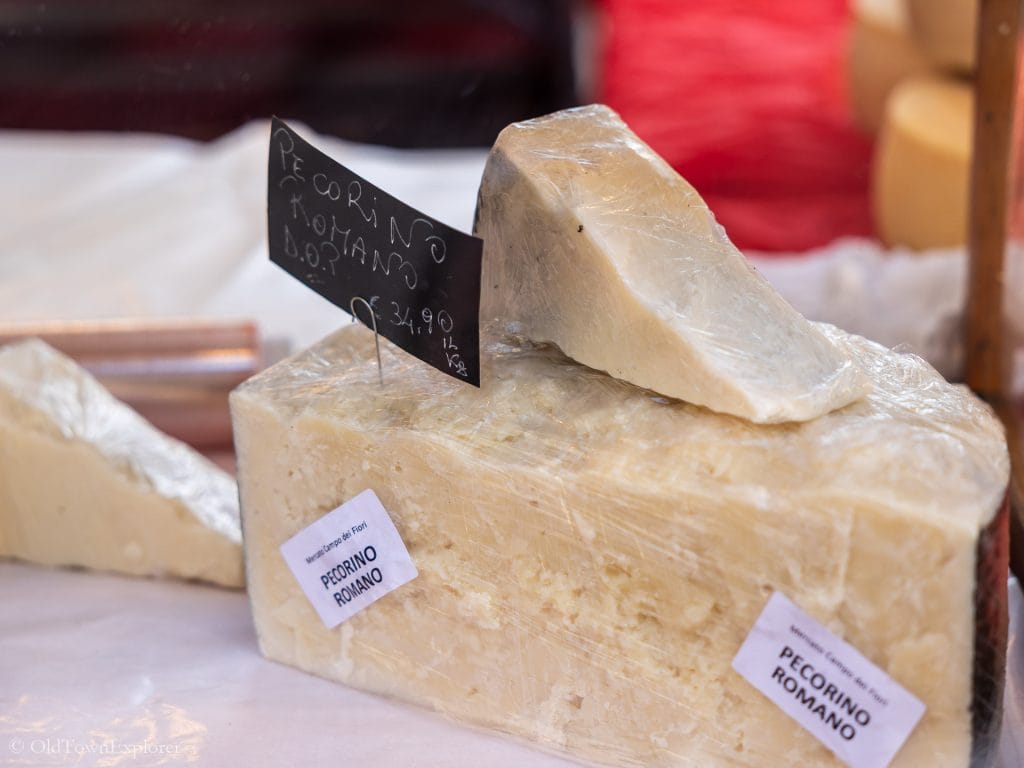
Lazio food extends beyond Rome’s pasta dishes into the Castelli Romani, volcanic lakes, Tuscia, the Apennines, the coast, and the agricultural south. Pecorino, pork, lamb, artichokes, beans, fresh and dried pasta, fried foods, and seasonal vegetables appear throughout the region.
These products and dishes provide the strongest first reference:
- Key products: Pecorino Romano, Abbacchio Romano, Carciofo Romanesco del Lazio, Porchetta di Ariccia, Pane Casareccio di Genzano, Castagna di Vallerano, Kiwi Latina, and Patata dell’Alto Viterbese
- Traditional dishes: Cacio e pepe, carbonara, amatriciana, gricia, saltimbocca alla romana, carciofi alla giudia, carciofi alla romana, supplì, and maritozzi
- Food base: Rome, with routes toward the Castelli Romani, Viterbo and Tuscia, the volcanic lakes, Rieti, and coastal Lazio
Lazio Food compares Rome’s pasta, fried foods, lamb, and offal with porchetta towns, artichoke-growing areas, lake fish, coastal food, and the cooking of northern Lazio.

Liguria
Liguria’s narrow coast and steep inland valleys favor olive oil, basil, herbs, vegetables, chickpea flour, filled pasta, anchovies, mussels, salt cod, chestnuts, and relatively small amounts of meat. Genoa and the two Rivieras have related but distinct food traditions.
Look for these Ligurian products and dishes:
- Key products: Basilico Genovese, Riviera Ligure olive oil, Acciughe sotto sale del Mar Ligure, Focaccia di Recco col formaggio, Taggiasca olives, prescinsêua, chestnut flour, and salted or preserved fish
- Traditional dishes: Pesto alla Genovese, trofie al pesto, focaccia Genovese, farinata, pansotti with walnut sauce, cappon magro, stuffed vegetables, and buridda
- Food base: Genoa, with routes toward Recco, Camogli, Portofino, Cinque Terre, the western Riviera, and the inland valleys
Liguria Food compares Genoa’s pesto, focaccia, filled pasta, and market products with seafood towns, olive-growing areas, Cinque Terre, and the inland mountains.
Lombardy
Lombardy changes considerably between Milan, Mantua, Cremona, Bergamo, Brescia, the lakes, the lower Po plain, and the Alpine valleys. Rice, polenta, butter, beef, pork, freshwater fish, filled pasta, cured meat, and a large range of cheeses replace any idea of one Milan-centered regional menu.
These names cover the region’s main food traditions:
- Key products: Grana Padano, Gorgonzola, Taleggio, Bitto, Bresaola della Valtellina, Salame di Varzi, Mostarda di Cremona, Formai de Mut, and lake fish
- Traditional dishes: Risotto alla milanese, ossobuco, cotoletta alla milanese, cassoeula, pizzoccheri, polenta taragna, casoncelli, tortelli di zucca, and missoltini
- Food base: Milan, with routes toward Bergamo, Brescia, Mantua, Cremona, Lake Como, Lake Garda, Franciacorta, and Valtellina
Lombardy Food compares Milanese risotto and veal with lake fish, Valtellina buckwheat and cured beef, Mantuan filled pasta, Cremonese mostarda, and the cheeses of the Alpine valleys.
Marche
Marche moves quickly from the Adriatic coast to farmland, wooded hills, and the Apennines. Seafood, stuffed pasta, cured meat, olives, truffles, cheese, game, flatbreads, and slow-cooked meat change between Pesaro, Ancona, Macerata, Ascoli Piceno, and the inland mountains.
These products and dishes give the region its clearest food vocabulary:
- Key products: Ciauscolo, Prosciutto di Carpegna, Casciotta d’Urbino, Formaggio di Fossa, Oliva Ascolana del Piceno, Maccheroncini di Campofilone, Fabriano salami, white truffles, and regional olive oil
- Traditional dishes: Vincisgrassi, olive all’ascolana, brodetto, passatelli, crescia sfogliata, coniglio in porchetta, stoccafisso all’anconetana, and frustingo
- Food base: Ascoli Piceno, with routes toward Macerata, Ancona, the Conero coast, Urbino, Pesaro, and the Apennine interior
Choose Ascoli Piceno for stuffed olives and southern Marche dishes, Ancona for Adriatic seafood, or Urbino and Pesaro when cured meat, cheese, flatbreads, and northern Marche cooking matter more.
Molise
Molise combines wheat fields, transhumance routes, sheep and cattle farming, pork traditions, olive groves, mountain towns, truffle areas, and a short Adriatic coast. Pasta, cheese, cured meat, lamb, vegetables, and legumes dominate inland meals, while Termoli adds fish and seafood.
Look for these names in shops, bakeries, and regional restaurants:
- Key products: Caciocavallo di Agnone, Pecorino di Capracotta, soppressata molisana, Signora di Conca Casale, saggiciotto di Montenero, Molise olive oil, white truffles, and regional durum-wheat pasta
- Traditional dishes: Cavatelli with pork ragù, fusilli alla molisana, cavatelli with spigatelli, brodetto di Termoli, pampanella, pizza e minestra, torcinelli, baccalà arracanato, and ferratelle
- Food base: Campobasso, with routes toward Isernia, Agnone, the Matese, Larino, and Termoli
Campobasso and Isernia suit pasta, cheese, pork, truffles, and mountain food. Stay in Termoli when brodetto, Adriatic fish, and the coast are the main priorities.
Piedmont
Piedmont combines Turin’s cafés and chocolate shops with the rice fields of Vercelli and Novara, the wine hills of the Langhe and Monferrato, Alpine valleys, truffle country, and a strong tradition of filled pasta, beef, cheese, and long-cooked sauces.
These products and dishes provide the strongest first comparison:
- Key products: Nocciola Piemonte, Alba white truffles, Castelmagno, Toma Piemontese, Bra cheese, Robiola di Roccaverano, rice from Vercelli and Novara, gianduiotti, and regional cured meats
- Traditional dishes: Agnolotti del plin, tajarin, bagna càuda, vitello tonnato, brasato al Barolo, bollito misto, finanziera, panissa, and bonet
- Food base: Turin, with routes toward Alba, the Langhe, Asti, Monferrato, Bra, the rice-growing plains, and the Alpine valleys
Piedmont Food compares Turin’s cafés, chocolate, and aperitivo with Langhe truffles and wine-country meals, eastern rice dishes, mountain cheese, and the region’s filled pasta.

Puglia
Puglia’s long coastline and agricultural interior bring together durum wheat, bread, olive oil, vegetables, legumes, fresh cheese, seafood, and grilled meat. Bari, the Gargano, the Valle d’Itria, the Murge, Taranto, and Salento each contribute different products and dishes.
These names provide the strongest first introduction:
- Key products: Pane di Altamura, Canestrato Pugliese, Burrata di Andria, Terra di Bari olive oil, La Bella della Daunia olives, Arancia del Gargano, Clementine del Golfo di Taranto, and Limone Femminello del Gargano
- Traditional dishes: Orecchiette con cime di rapa, ciceri e tria, sagne ncannulate, fave e cicorie, tiella barese, polpo alla pignata, panzerotti, bombette, and pasticciotto
- Food base: Bari, with Lecce as a second base for Salento and routes toward Altamura, the Valle d’Itria, Taranto, the Gargano, and the southern coast
Puglia Food compares Bari’s bread and street food with Salento pasta and pastries, Valle d’Itria dairy, Gargano citrus, Taranto seafood, olive-growing areas, and the regional interior.
Sardinia
Sardinia combines shepherding, grain farming, bread making, fishing, inland livestock traditions, and island-specific pasta. Food changes markedly between Cagliari and the south, the Catalan-influenced northwest, Gallura, the central mountains, Oristano, and the smaller coastal areas.
These products and dishes provide a practical introduction to the island:
- Key products: Pecorino Sardo, Fiore Sardo, bottarga di muggine, pane carasau, Carciofo Spinoso di Sardegna, Zafferano di Sardegna, Sardinian honey, regional cured sausage, and fresh sheep’s-milk cheese
- Traditional dishes: Malloreddus alla campidanese, culurgiones, fregula con arselle, porceddu, pane frattau, zuppa gallurese, burrida, seadas, and pardulas
- Food base: Cagliari, with routes toward Oristano, Alghero, Gallura, Nuoro, Barbagia, and the central mountain villages
Cagliari works for markets, seafood, pasta, and southern dishes. Add Alghero for Catalan influence, Oristano for bottarga and western products, or Barbagia when bread, cheese, roasted meat, and pastoral food are central to the trip.
Sicily
Sicily’s food reflects grain farming, fishing, citrus groves, volcanic soil, pastoral areas, and centuries of Mediterranean trade. Palermo, Catania, Trapani, the southeast, the central interior, the Aeolian Islands, and the slopes of Etna all lead toward different products and dishes.
These names cover the island’s strongest first food signals:
- Key products: Pistacchio di Bronte, almonds from Avola, Pomodoro di Pachino, Arancia Rossa di Sicilia, Cioccolato di Modica, Cappero di Pantelleria, Sicilian ricotta, tuna products, citrus, and regional olive oils
- Traditional dishes: Pasta alla Norma, pasta con le sarde, arancine or arancini, caponata, couscous di pesce, panelle, sarde a beccafico, cannoli, cassata, and granita with brioche
- Food base: Palermo, with Catania as a second base for Etna and routes toward Trapani, Agrigento, Syracuse, Ragusa, Noto, Modica, and the island’s smaller towns
Palermo is strongest for markets, street food, pasta with sardines, and western Sicilian dishes. Catania suits Etna products and pasta alla Norma, while Trapani and the southeast add couscous, tuna, chocolate, almonds, tomatoes, and Baroque-town food.
Trentino-Alto Adige
Trentino-Alto Adige joins two autonomous provinces with related Alpine landscapes but different Italian, German-speaking, Ladin, and Tyrolean traditions. Bread, dumplings, polenta, cured meat, apples, potatoes, cabbage, mountain cheese, freshwater fish, and enriched pastries appear throughout the region.
These products and dishes cover both Trentino and South Tyrol:
- Key products: Speck Alto Adige, Trentingrana, Puzzone di Moena, Vezzena, Graukäse, apples from Val di Non and South Tyrol, carne salada, Schüttelbrot, mountain honey, and Alpine dairy products
- Traditional dishes: Canederli or Knödel, strangolapreti, tortel di patate, carne salada e fasoi, schlutzkrapfen, spätzle, polenta carbonera, goulash, apple strudel, and zelten
- Food base: Trento, with Bolzano as a second base and routes toward Merano, Bressanone, Val di Non, Val di Fassa, the Dolomites, and the smaller Alpine valleys
Choose Trento for carne salada, potato dishes, polenta, Trentino cheese, and the southern valleys. Bolzano, Merano, and Bressanone lead toward speck, dumplings, rye bread, apples, South Tyrolean pastries, and German-language menus.

Tuscany
Tuscan food is built around bread, beans, olive oil, cured meat, pecorino, beef, soups, wild boar, chestnuts, and seasonal produce. Florence, Siena, Lucca, the Maremma, the coast, and the mountain north each show a different side of the region.
These products and dishes give Tuscany its clearest first food vocabulary:
- Key products: Pecorino Toscano, Prosciutto Toscano, Lardo di Colonnata, Finocchiona, Olio Toscano, Zafferano di San Gimignano, Fagiolo di Sorana, Farro della Garfagnana, Ricciarelli di Siena, Panforte di Siena, and Miele della Lunigiana
- Traditional dishes: Ribollita, pappa al pomodoro, bistecca alla fiorentina, pici, panzanella, crostini toscani, wild-boar ragù, cacciucco, castagnaccio, and cantucci
- Food base: Florence, with routes toward Siena, Lucca, the Chianti area, the Garfagnana, the Maremma, Livorno, and smaller hill towns
Tuscany Food compares Florence’s markets, beef, and street food with Siena’s sweets, Lucca and the Garfagnana, coastal fish, Maremma meat dishes, hill-town pasta, and the region’s olive oils and pecorino.

Umbria
Landlocked Umbria is closely tied to olive oil, pork, lentils, grains, truffles, game, beans, freshwater fish, pecorino, and hill-town cooking. Norcia, Perugia, Orvieto, Spoleto, Lake Trasimeno, and the Apennine east each contribute different products.
These regional names are the most useful to recognize:
- Key products: Prosciutto di Norcia, Lenticchia di Castelluccio di Norcia, Patata Rossa di Colfiorito, Farro di Monteleone di Spoleto, Vitellone Bianco dell’Appennino Centrale, Umbria olive oil, black truffles, and pecorino
- Traditional dishes: Porchetta, strangozzi al tartufo, umbricelli, torta al testo, lentil soup, wild-boar dishes, roasted meat, palomba alla ghiotta, and fish from Lake Trasimeno
- Food base: Perugia, with routes toward Orvieto, Norcia, Spoleto, Assisi, Lake Trasimeno, Castelluccio, and smaller hill towns
Umbria Food compares Perugia and Orvieto with Norcia’s pork and truffles, Castelluccio lentils, Spoleto, Lake Trasimeno, olive-growing areas, and the region’s rural restaurants.
Veneto
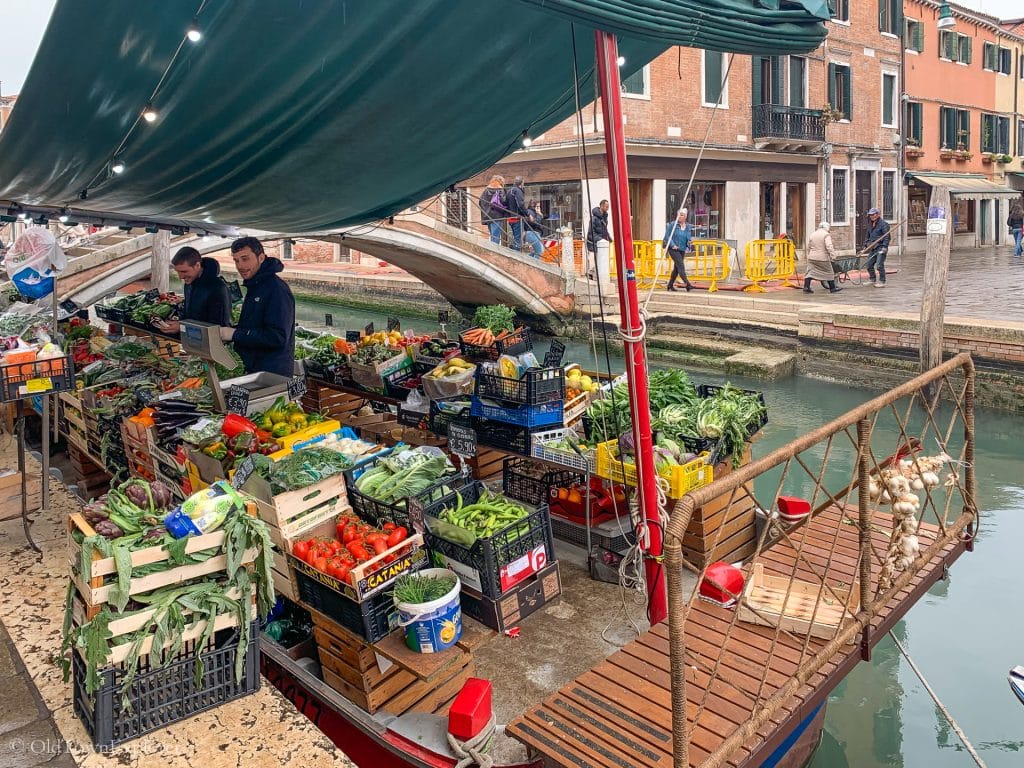
Veneto food changes between Venice and its lagoon, Verona, Vicenza, Padua, Treviso, the rice-growing plains, Lake Garda, the Prosecco hills, and the Dolomites. Seafood, rice, polenta, vegetables, cheese, cured meat, freshwater fish, and pastries all belong within the region.
These products and dishes give the clearest first comparison:
- Key products: Casatella Trevigiana, Monte Veronese, Piave, Aglio Bianco Polesano, Asparago Bianco di Bassano, Radicchio Rosso di Treviso, Radicchio Variegato di Castelfranco, Riso Nano Vialone Veronese, Ciliegia di Marostica, Marrone di San Zeno, and Prosciutto Veneto Berico-Euganeo
- Traditional dishes: Baccalà mantecato, sarde in saor, risi e bisi, risotto al nero di seppia, bigoli in salsa, fegato alla veneziana, polenta e schie, pasta e fasoi, tiramisù, and zaletti
- Food base: Venice, with routes toward Treviso, Padua, Vicenza, Verona, Lake Garda, the rice-growing plains, the Prosecco hills, and the Dolomites
Veneto Food compares Venetian cicchetti and lagoon seafood with Treviso radicchio, Verona rice, Vicenza baccalà, Lake Garda products, inland meat dishes, and Alpine cheese and polenta.
Local Food Products in Italy
Local products are often the fastest way to recognize where you are eating. DOP and IGP names protect products linked to a defined place, while STG protects a traditional composition or production method without requiring the same geographic connection.
Check Italy’s current DOP and IGP register and STG register when an official designation matters. Similar-looking cheese, ham, oil, bread, or vinegar may not carry the same protected name.
Cheese and Dairy
Cheese changes with the animals, pasture, climate, and aging traditions of each region. These are among the most useful names to recognize at cheese counters and on menus:
- Parmigiano Reggiano: Granular, long-aged cow’s-milk cheese from Emilia-Romagna and adjoining production areas; different ages change its texture and intensity.
- Grana Padano: Hard cow’s-milk cheese produced across a broad part of the Po Valley and commonly served grated or in pieces.
- Mozzarella di Bufala Campana: Fresh buffalo-milk cheese closely associated with Campania and best eaten soon after production.
- Pecorino Romano: Salty aged sheep’s-milk cheese used at the table and in Roman pasta dishes such as cacio e pepe and amatriciana.
- Gorgonzola: Northern blue cow’s-milk cheese sold in softer dolce and firmer piccante forms.
- Taleggio: Soft washed-rind cheese associated with Lombardy, with a strong aroma and a milder flavor than its rind suggests.
- Burrata di Andria: Fresh Puglian cheese with a stretched-curd exterior and a creamy center.
- Montasio: Cow’s-milk cheese from Friuli-Venezia Giulia and Veneto whose flavor and texture change substantially with age.
Order cheese by region rather than asking for a generic Italian selection: Piedmont, Lombardy, Emilia-Romagna, Lazio, Puglia, Sardinia, and the Alpine northeast lead toward very different boards.
Cured Meats and Meat Products
Salumerie and market counters make regional pork and beef traditions easy to compare. Look for the full geographic name rather than stopping at prosciutto or salame:
- Prosciutto di Parma: Delicately seasoned dry-cured ham from the Parma area, usually sliced thinly.
- Prosciutto di San Daniele: Dry-cured ham from Friuli-Venezia Giulia with a soft texture and a recognizable hoof-on presentation.
- Mortadella Bologna: Large cooked pork sausage with a smooth texture, visible pieces of fat, and optional pistachios.
- Culatello di Zibello: Carefully aged cured pork from the lowlands near the Po River in Emilia-Romagna.
- Bresaola della Valtellina: Lean air-dried beef from Lombardy, often served thinly sliced with lemon, oil, or cheese.
- Speck Alto Adige: Lightly smoked and cured ham from South Tyrol, commonly served with bread, cheese, or Alpine dishes.
- Finocchiona: Tuscan salami seasoned with fennel, available in textures ranging from soft and fresh to firmer and more aged.
- Porchetta di Ariccia: Seasoned roast pork from Lazio, commonly sliced for plates or sandwiches.
A mixed salumi plate makes the most sense when the meats come from the region around you. Parma, Bologna, San Daniele, Valtellina, South Tyrol, Tuscany, and Lazio should not taste interchangeable.
Olive Oils and Vinegars
Regional oils vary in fruitiness, bitterness, peppery heat, and the foods they accompany. Vinegar also ranges from everyday balsamic products to long-aged traditional versions used a few drops at a time:
- Toscano IGP: Tuscan extra virgin olive oil, often marked by grassy, bitter, or peppery notes.
- Terra di Bari DOP: Puglian extra virgin olive oil tied to the province of Bari and its different olive-growing areas.
- Riviera Ligure DOP: Ligurian extra virgin olive oil, generally suited to pesto, vegetables, fish, and the region’s lighter coastal dishes.
- Umbria DOP: Umbrian extra virgin olive oil from the region’s hills and valleys, commonly paired with bread, beans, lentils, soup, and grilled meat.
- Garda DOP: Extra virgin olive oil from the sheltered Lake Garda area, where northern conditions produce a comparatively delicate oil.
- Val di Mazara DOP: Sicilian extra virgin olive oil from western parts of the island, used with vegetables, fish, bread, and pasta.
- Aceto Balsamico Tradizionale di Modena DOP: Long-aged traditional balsamic vinegar with a dense texture, intended for small amounts rather than as an everyday salad vinegar.
- Aceto Balsamico di Modena IGP: A broader Modena balsamic category with different ages, densities, ingredients, and uses.
Read the complete label before buying. A bottle marked only with a broad regional or marketing phrase is not necessarily the same product as one carrying the full DOP or IGP name.
Breads, Pasta, Rice, and Grains
Wheat type, grain, shape, and local baking methods explain much of the difference between northern, central, and southern meals:
- Pane di Altamura DOP: Puglian bread made from durum-wheat semolina, with a substantial crust and yellow-toned crumb.
- Pasta di Gragnano IGP: Dried durum-wheat pasta associated with Gragnano in Campania and sold in a broad range of shapes.
- Piadina Romagnola IGP: Thin Romagna flatbread folded around cheese, cured meat, vegetables, or other fillings.
- Focaccia di Recco col formaggio IGP: Very thin Ligurian dough enclosing soft cheese rather than the thick, airy crumb of many other focaccia styles.
- Riso Nano Vialone Veronese IGP: Veneto rice valued for risotto and grown in the Verona area.
- Riso di Baraggia Biellese e Vercellese DOP: Piedmont rice from the Baraggia area near Biella and Vercelli.
- Farro della Garfagnana IGP: Tuscan spelt used in soups, salads, and grain dishes around the Garfagnana.
- Farro di Monteleone di Spoleto DOP: Umbrian spelt associated with the highlands around Monteleone di Spoleto.
Do not assume pasta is the default everywhere. Rice matters across Piedmont, Lombardy, and Veneto; polenta appears throughout much of the north; and breads change markedly between Tuscany, Liguria, Romagna, Puglia, and Sardinia.
Fruit, Vegetables, Herbs, and Nuts
Produce names often identify both the ingredient and the place where a familiar Italian dish makes the most sense:
- Pomodoro San Marzano dell’Agro Sarnese-Nocerino DOP: Plum tomato from the designated area between Naples and Salerno, commonly associated with sauces and Campanian cooking.
- Pomodorino del Piennolo del Vesuvio DOP: Small Vesuvian tomato traditionally stored in hanging clusters and used fresh, preserved, or in sauces.
- Basilico Genovese DOP: Ligurian basil central to pesto Genovese and the food around Genoa and the Riviera.
- Radicchio Rosso di Treviso IGP: Veneto radicchio used raw, grilled, baked, or folded into risotto and pasta.
- Carciofo Romanesco del Lazio IGP: Large Lazio artichoke found in markets and dishes such as carciofi alla romana.
- Lenticchia di Castelluccio di Norcia IGP: Small lentil from the high plateau around Castelluccio, used in soups and simple legume dishes.
- Limone Costa d’Amalfi IGP: Amalfi Coast lemon used in desserts, drinks, savory dishes, and local preserves.
- Nocciola del Piemonte IGP: Piedmont hazelnut central to regional chocolate, cakes, biscuits, creams, and desserts.
- Pistacchio Verde di Bronte DOP: Sicilian pistachio from the Bronte area, found in pastries, gelato, creams, sauces, and savory dishes.
Season matters as much as the label. Artichokes, radicchio, truffles, citrus, tomatoes, chestnuts, asparagus, and fresh nuts appear at different points in the year and may disappear from local menus outside their best season.
Fish and Seafood Products
Italy’s protected fish and seafood products include salted anchovies, anchovy extract, lagoon mussels, Alpine fish, and freshwater species. These names are tied to specific coasts, lakes, rivers, or production areas rather than to Italian seafood as a whole.
- Acciughe sotto sale del Mar Ligure IGP: Ligurian anchovies preserved in salt and used in sauces, fillings, vegetable dishes, and simple starters.
- Colatura di alici di Cetara DOP: Concentrated anchovy liquid from Cetara on the Amalfi Coast, added sparingly to pasta, vegetables, and other dishes.
- Cozza di Scardovari DOP: Mussels from the Sacca di Scardovari in the Veneto section of the Po Delta.
- Salmerino del Trentino IGP: Arctic char raised in Trentino’s cold waters and found in regional fish dishes.
- Trote del Trentino IGP: Trentino trout sold fresh or prepared in the region’s Alpine restaurants and food shops.
- Tinca Gobba Dorata del Pianalto di Poirino DOP: Freshwater tench from the Pianalto di Poirino area of Piedmont.
Look for anchovy products in Liguria and Campania, mussels in the Po Delta, and trout or char in Trentino. These regional names give a clearer buying guide than a generic label such as Italian seafood.
Pantry Products
Capers, saffron, and liquorice are small ingredients, but their complete protected names identify specific islands, uplands, and growing areas. Italy’s official registers list the capers among protected fruit and vegetable products and the saffron and liquorice among protected spices and related products.
- Cappero di Pantelleria IGP: Capers from Pantelleria, normally sold preserved in salt or brine for Sicilian pasta, fish, vegetable, and salad dishes.
- Cappero delle Isole Eolie DOP: Capers from the Aeolian Islands, also sold salted or preserved for island and Sicilian cooking.
- Zafferano dell’Aquila DOP: Saffron from the province of L’Aquila in Abruzzo, sold in small quantities for rice, pasta, meat, sweets, and local dishes.
- Zafferano di San Gimignano DOP: Tuscan saffron tied to San Gimignano and used as a seasoning rather than as a prepared food.
- Zafferano di Sardegna DOP: Sardinian saffron grown in designated areas and used in pasta, rice, meat dishes, breads, and sweets.
- Liquirizia di Calabria DOP: Calabrian liquorice sold as root, powder, extract, confectionery, and an ingredient in sweets or drinks.
These products travel well, but read the full name before buying. Generic capers, saffron, or liquorice do not automatically come from the protected area named on a DOP or IGP label.
Sweets, Chocolate, and Biscuits
Italy’s regional sweets are often easier to buy in pastry shops and specialty stores than to find on every restaurant menu. The official chocolate register and pastry and confectionery register confirm the protected names below.
- Cioccolato di Modica IGP: Sicilian chocolate known for a firm texture and noticeable sugar crystals, sold plain or flavored with spices, citrus, nuts, or salt.
- Ricciarelli di Siena IGP: Soft almond biscuits from Siena, normally shaped as flattened ovals and covered with powdered sugar.
- Panforte di Siena IGP: Dense Sienese sweet made with nuts, candied fruit, spices, sugar, and flour.
- Cantuccini Toscani or Cantucci Toscani IGP: Crisp Tuscan biscuits, usually made with almonds and commonly served with coffee or dessert wine.
- Torrone di Bagnara IGP: Calabrian nougat from Bagnara Calabra, made in firm bars with toasted nuts, honey or sugar, and a flavored outer coating.
- Pampapato di Ferrara or Pampepato di Ferrara IGP: Rich Emilia-Romagna sweet made with nuts, candied fruit, spices, cocoa or chocolate, and other ingredients.
Choose sweets by destination: almond biscuits and panforte in Siena, grainy chocolate in Modica, nougat in Bagnara Calabra, and pampepato in Ferrara. Packaged versions are generally easier to carry home than fresh pastries or filled desserts.
Traditional Dishes in Italy
Traditional Italian dishes belong to regions and cities rather than one fixed national menu. Use the categories below to recognize what you are ordering, then choose the examples tied to the places on your route.
Pasta, Rice, and Polenta
Pasta dominates many menus, but rice and polenta are equally important across the Po Valley, Alpine areas, and the northeast:
- Cacio e pepe: Roman pasta coated with Pecorino Romano and black pepper.
- Carbonara: Roman pasta with egg, guanciale, Pecorino Romano, and black pepper.
- Amatriciana: Lazio pasta sauce built around tomato, guanciale, pecorino, and chile.
- Tagliatelle al ragù: Emilia-Romagna egg pasta served with a slow-cooked meat sauce.
- Tortellini in brodo: Small filled pasta served in broth and closely associated with Bologna and Modena.
- Risotto alla milanese: Saffron risotto from Milan, often served alone or beside ossobuco.
- Orecchiette con cime di rapa: Puglian ear-shaped pasta with turnip greens, olive oil, garlic, and often anchovy.
- Pasta alla Norma: Sicilian pasta with tomato, eggplant, basil, and salted ricotta.
- Trofie al pesto: Ligurian twisted pasta with basil pesto, sometimes accompanied by potatoes and green beans.
- Polenta taragna: Lombard polenta combining maize and buckwheat, commonly enriched with butter and cheese.
Order pasta by region rather than searching for the same shape everywhere. Bologna, Rome, Bari, Genoa, Palermo, Milan, and the mountain north each lead toward a different first plate.
Pizza, Bread, and Street Food
Bakeries, pizzerias, fry shops, and market counters make these foods easier to try without planning a long restaurant meal:
- Pizza Napoletana: Naples-style pizza with a soft, raised rim, flexible center, and a short list of toppings.
- Focaccia Genovese: Ligurian flatbread marked by olive oil, salt, and shallow dimples.
- Farinata: Thin Ligurian chickpea-flour pancake baked in a wide pan.
- Piadina Romagnola: Romagna flatbread folded around cheese, cured meat, vegetables, or other fillings.
- Supplì: Roman fried rice croquette, commonly filled with tomato rice and mozzarella.
- Arancini or arancine: Sicilian fried rice snacks whose name, shape, and filling change across the island.
- Panzerotti: Stuffed dough pockets associated especially with Puglia, commonly fried and filled with tomato and cheese.
- Lampredotto: Florentine tripe served as a plate or sandwich, often with salsa verde and chile sauce.
These foods work well for a quick lunch, but local habits differ: Genoa’s focaccia, Bologna’s piadina, Rome’s supplì, Naples’s pizza, and Sicily’s rice snacks are not versions of the same street-food tradition.
Soups, Vegetables, and Legumes
Bread, beans, greens, tomatoes, eggplant, artichokes, and other vegetables carry many regional meals without depending on meat as the main ingredient:
- Ribollita: Tuscan soup of bread, beans, and vegetables, traditionally thickened through reheating.
- Pappa al pomodoro: Tuscan bread-and-tomato dish with olive oil, garlic, and basil.
- Pasta e fagioli: Pasta and bean dish with numerous regional versions, from brothy to thick and creamy.
- Fave e cicorie: Puglian puréed broad beans served with bitter greens and olive oil.
- Parmigiana di melanzane: Layered eggplant with tomato, cheese, and basil, strongly associated with southern cooking.
- Carciofi alla giudia: Roman Jewish-style artichokes opened and fried until crisp.
- Caponata: Sicilian sweet-and-sour eggplant dish with vegetables, capers, olives, and vinegar.
- Frico: Friulian cheese dish prepared as a crisp wafer or a softer mixture with potatoes.
Vegetable dishes follow the season closely. Artichokes in Rome, bitter greens in Puglia, eggplant in Sicily and the south, and bean-and-bread dishes in Tuscany are strongest when the main ingredients are locally abundant.
Meat and Sausage Dishes
Beef, veal, pork, lamb, wild boar, and mixed boiled meats become more prominent in inland, northern, and mountain cooking:
- Bistecca alla fiorentina: Thick Tuscan T-bone steak grilled over high heat and normally served rare for sharing.
- Ossobuco: Cross-cut veal shank slowly cooked until tender and associated especially with Milan.
- Cotoletta alla milanese: Breaded veal chop fried in butter, traditionally served with the bone attached.
- Saltimbocca alla romana: Thin veal with prosciutto and sage, associated with Rome.
- Brasato al Barolo: Piedmont beef braised with red wine and served as a substantial main course.
- Porchetta: Seasoned roast pork found across central Italy, commonly sliced for plates or sandwiches.
- Bollito misto: Mixed boiled meats served with sauces and especially associated with Piedmont and parts of northern Italy.
- Cinghiale in umido: Wild boar stew found in Tuscany, Umbria, and other parts of central Italy.
Large meat dishes are often designed for sharing or a slower meal. Ask about portion size before ordering bistecca alla fiorentina, bollito misto, or a mixed grill for one person.
Fish and Seafood Dishes
Italy’s long coastline does not produce one national seafood style. The lagoon, Ligurian coast, Adriatic, Bay of Naples, Puglia, Calabria, Sicily, and Sardinia handle fresh and preserved seafood differently:
- Spaghetti alle vongole: Pasta with clams, olive oil, garlic, and parsley, especially common around Naples and other coastal areas.
- Baccalà mantecato: Venetian whipped salt cod commonly served on bread or polenta.
- Sarde in saor: Venetian sardines marinated with onions, vinegar, raisins, and pine nuts.
- Risotto al nero di seppia: Squid-ink risotto associated with Venice and the northern Adriatic.
- Cappon magro: Elaborate Ligurian arrangement of seafood, vegetables, and sauce.
- Polpo alla pignata: Salento octopus slowly cooked in a covered earthenware pot.
- Brodetto: Adriatic fish stew with regional versions in Marche, Abruzzo, and other coastal areas.
- Fritto misto di mare: Mixed fried fish and seafood whose contents depend on the coast and the day’s catch.
Ask what is local and in season rather than ordering a generic seafood platter. Lagoon fish in Venice, anchovies in Liguria, clams around Campania, and octopus in Puglia belong to different coastal meals.
Desserts and Pastries
Pastry shops and cafés reveal another set of regional differences through ricotta, almonds, hazelnuts, citrus, coffee, custard, chocolate, and enriched dough:
- Tiramisù: Layered dessert of coffee-soaked biscuits, mascarpone, eggs, sugar, and cocoa.
- Cannoli: Crisp Sicilian pastry tubes filled with sweetened ricotta.
- Sfogliatella: Neapolitan pastry with a ridged or smooth shell and a sweet ricotta-and-semolina filling.
- Babà: Neapolitan yeast cake soaked in rum syrup.
- Pasticciotto: Salento shortcrust pastry filled with custard.
- Panna cotta: Set cream dessert associated especially with Piedmont and commonly served with fruit, caramel, or chocolate.
- Ricciarelli: Soft almond biscuits from Siena coated with powdered sugar.
- Cantucci: Crisp Tuscan almond biscuits commonly paired with coffee or dessert wine.
- Panettone: Tall Milanese enriched bread with candied fruit and raisins, most visible during the winter holidays.
- Granita con brioche: Sicilian ice served with a soft brioche, often eaten for breakfast in warm weather.
Choose the pastry linked to the city rather than ordering the same dessert throughout the trip: sfogliatella and babà in Naples, pasticciotto in Lecce, gianduja or panna cotta in Piedmont, almond sweets in Siena, and cannoli or granita in Sicily.
FAQs About Italy Food
What food is Italy known for?
Italy is known for regional pasta and pizza traditions, northern rice and polenta, cheeses and cured meats, olive oil, seafood, bread, vegetables, and pastries. The important distinction is geographic: food in Piedmont, Emilia-Romagna, Lazio, Campania, Puglia, Sicily, and Sardinia does not follow one national menu.
What Traditional Dishes Should I Try in Italy?
Choose dishes that match the route. Order carbonara or cacio e pepe in Rome, tagliatelle al ragù or tortellini in Bologna, pizza Napoletana in Naples, pesto with local pasta in Liguria, orecchiette with greens in Puglia, and arancini or pasta alla Norma in Sicily.
A short trip does not need a national checklist. Five regional dishes eaten in the places where they belong usually tell you more than fifteen unrelated favorites collected across distant cities.
What Local Products Is Italy Known For?
Start with Parmigiano Reggiano, Prosciutto di Parma, Mozzarella di Bufala Campana, Pecorino Romano, Gorgonzola, regional olive oils, balsamic vinegar from Modena, Ligurian basil, Campanian tomatoes, and Puglian bread. Check the complete DOP or IGP name when the geographic designation affects what you are buying.
How Does Food Vary by Region in Italy?
Northern regions rely more heavily on rice, polenta, butter, filled pasta, dairy, cured meat, and freshwater fish. Central Italy brings bread, beans, pecorino, pork, olive oil, pasta, truffles, and roasted meat. The south and islands shift toward durum-wheat pasta, vegetables, tomatoes, seafood, citrus, fresh cheese, nuts, and chile.
The pattern is not absolute. Liguria is northern but strongly tied to olive oil and seafood, while inland Sicily and Sardinia have substantial meat, grain, dairy, and pastoral traditions.
Which Cities Are Strongest for Food in Italy?
Bologna Food is the strongest first choice for fresh pasta, cured meat, aged cheese, and Emilia-Romagna products. Rome Food centers on Lazio pasta, artichokes, fried snacks, lamb, and pork, while Naples Food brings pizza, Campanian products, seafood, street food, and pastries together.
Choose Turin Food for Piedmont products, cafés, chocolate, and aperitivo, or Venice Food for cicchetti, lagoon seafood, rice, polenta, and baccalà.
Are Food Tours Worth Taking in Italy?
A food tour can be worthwhile at the start of a city stay when it explains local dishes, market products, bakery terms, cured meats, cheese, or regional labels that you will encounter again. Choose a tour built around one city or food tradition rather than one promising a complete introduction to Italian cuisine in a few hours.
Independent food walks also work well in compact centers with markets, bakeries, salumerie, pastry shops, pizzerias, and cafés. A tour becomes less valuable when it mainly moves between generic tastings that could be served in any Italian city.
For other city-level choices, compare Genoa Food for pesto, focaccia, and Ligurian seafood; Florence Food for Tuscan bread, beans, beef, and street food; Lecce Food for Salento pasta, vegetables, pastries, and seafood; or Como Food for lake fish, polenta, rice, and mountain cheese.
Return to Italy to plan the wider route, or compare Italy Wine when Piedmont, Tuscany, Veneto, Campania, Puglia, Sicily, or another wine region will influence where you eat and stay.