
Austria Architecture
Explore Vienna Architecture: Palaces, Ringstraße & Secession
Vienna architecture is shaped by its role as the Habsburg imperial capital. The city moves from the medieval core around St. Stephen’s Cathedral to Baroque palaces, grand civic buildings on the Ringstraße, Otto Wagner stations, Secession design, and early modern apartment blocks.
The first layer is the old center, where narrow streets, churches, courtyards, and palace façades sit close together inside the former city walls. The second layer is the Ringstraße, where museums, parliament, theaters, university buildings, and formal boulevards show how Vienna expanded in the 19th century.
We spent a month in Vienna using the center, Ringstraße, Karlsplatz, Schönbrunn, and the Secession Building as the main architecture anchors. The strongest plan is to compare the old core, imperial palace areas, Ringstraße monuments, and early modern design rather than treating Vienna as one single style.
Austria Architecture at a Glance
Austria architecture is easiest to plan through three city bases and several landscape-based routes. Vienna gives the broadest architectural sequence, Graz adds a smaller old-town and palace route, and Salzburg concentrates Baroque church-and-square planning below Hohensalzburg Fortress.
Key architecture points:
- Best starting points: Vienna for Gothic, Baroque, Ringstraße, Secession, Jugendstil, palace, museum, and civic architecture; Graz for Renaissance courtyards, Baroque palaces, Schlossberg fortifications, and Schloss Eggenberg; Salzburg for Baroque churches, squares, residences, and fortress views.
- Core architecture pattern: Medieval town cores, Gothic churches, Baroque palaces and monasteries, Habsburg civic planning, Secession design, Alpine settlements, and 19th-century railway engineering.
- Main styles or periods: Gothic, Renaissance, Baroque, Neoclassical, Historicist, Jugendstil, Secession, Roman frontier remains, Romanesque churches, and Alpine vernacular building.
- UNESCO or heritage anchors: Historic Centre of Vienna, Schönbrunn, Salzburg, Graz and Schloss Eggenberg, Wachau, Hallstatt-Dachstein / Salzkammergut, Semmering Railway, and the Danube Limes.
- How to see it: Walk Vienna, Graz, and Salzburg first, then add interior visits for palaces and monasteries or landscape routes for Wachau, Hallstatt, Semmering Railway, and Neusiedlersee.
A first Austria architecture route works best when city walks are balanced with at least one palace, monastery, railway, Danube, or Alpine landscape site.
Architectural Styles in Austria
Austrian architecture is easiest to read through churches, palaces, monasteries, civic buildings, historic centers, and cultural landscapes. The strongest architectural layers are Gothic, Baroque, Neoclassical, Historicist, Jugendstil, Secession, Renaissance, and Roman-frontier remains.
Gothic Architecture
Gothic architecture in Austria appears most clearly in medieval churches and old-town centers. Pointed arches, ribbed vaults, tracery, carved portals, tall naves, steep roofs, and tower silhouettes mark the main visual language. St. Stephen’s Cathedral in Vienna is the clearest starting point, while Salzburg, Graz, and smaller historic towns preserve additional Gothic layers in churches, chapels, and street patterns.
Look first at portals, vaulting, choir spaces, tower profiles, and the relationship between church buildings and surrounding market streets.
Baroque Architecture
Baroque architecture is one of Austria’s defining architectural traditions. It appears in palaces, monasteries, churches, formal gardens, staircases, ceremonial rooms, frescoed ceilings, stucco interiors, and axial planning. Vienna’s Schönbrunn Palace, Belvedere, Salzburg’s churches and squares, Melk Abbey, and Schloss Eggenberg in Graz show different versions of Baroque design.
Baroque Austria is best read through movement, sequence, and hierarchy: courtyards, gates, staircases, domes, altars, gardens, and state rooms often work together as a planned architectural route.
Neoclassical and Historicist Architecture
Neoclassical and Historicist architecture reshaped Austria’s major cities during the 18th and 19th centuries. Vienna’s Ringstraße is the strongest example, with museums, theaters, parliament buildings, university buildings, and civic institutions using classical, Renaissance, Gothic, and Baroque references at urban scale.
Compare columns, pediments, symmetrical façades, long street views, monumental staircases, and civic building groups to see how imperial Vienna turned architecture into a public planning language.
Jugendstil and Art Nouveau Architecture
Jugendstil and Art Nouveau architecture appeared in Austria around 1900, especially in Vienna. The style uses floral ornament, curved lines, decorative ironwork, ceramic tiles, stylized lettering, and carefully designed façades. Otto Wagner’s transit architecture and apartment buildings are among the clearest examples of this shift toward modern urban design.
Jugendstil is often easiest to spot in façade details: balcony railings, window surrounds, tile panels, lettering, doorways, and repeated decorative patterns.
Secession Architecture
Secession architecture developed in Vienna as a more geometric and reform-minded branch of early modern design. Joseph Maria Olbrich’s Secession Building is the best-known example, with its clean block form, ornamental dome, and programmatic façade. Otto Wagner’s later work also connects Secession design with transport, infrastructure, and modern city life.
The strongest Secession details are geometric surfaces, flat wall planes, controlled ornament, metalwork, and the contrast between historicist Vienna and new design around 1900.
Renaissance Architecture
Renaissance architecture in Austria is especially visible in Graz, where arcaded courtyards, palace façades, portals, and civic buildings show Central European and Italian-influenced design. The Grazer Landhaus and historic center courtyards are among the clearest places to see this layer.
Renaissance Austria is often quieter than the Baroque layer, but arcades, courtyards, proportional façades, and carved portals make it visible in old-town walks.
Roman and Romanesque Architecture
Roman remains in Austria are tied mainly to the Danube frontier, forts, military roads, settlement traces, and archaeological sites. Romanesque architecture survives in early medieval churches, monastery remains, heavy masonry, rounded arches, and compact church plans.
The Danube Limes adds a frontier-architecture layer to Austria, while Romanesque churches and monasteries provide an earlier medieval contrast to Gothic and Baroque buildings.
UNESCO World Heritage Sites in Austria
The UNESCO World Heritage Centre lists 12 properties in Austria, including historic centers, cultural landscapes, palace and monastery complexes, railway engineering, Roman frontier remains, prehistoric pile-dwelling areas, spa-town architecture, and one natural property. For architecture-focused routes, start with Vienna, Salzburg, and Graz before adding Schönbrunn, Wachau, Hallstatt, Semmering Railway, or the Danube Limes.

Historic Centre of Vienna
Vienna Architecture combines medieval street fabric, Gothic church architecture, Baroque palaces, imperial institutions, 19th-century Ringstraße planning, and early modern design. St. Stephen’s Cathedral, the Hofburg, palace courtyards, churches, museums, theaters, and civic buildings make Vienna the strongest single base for Austria architecture.
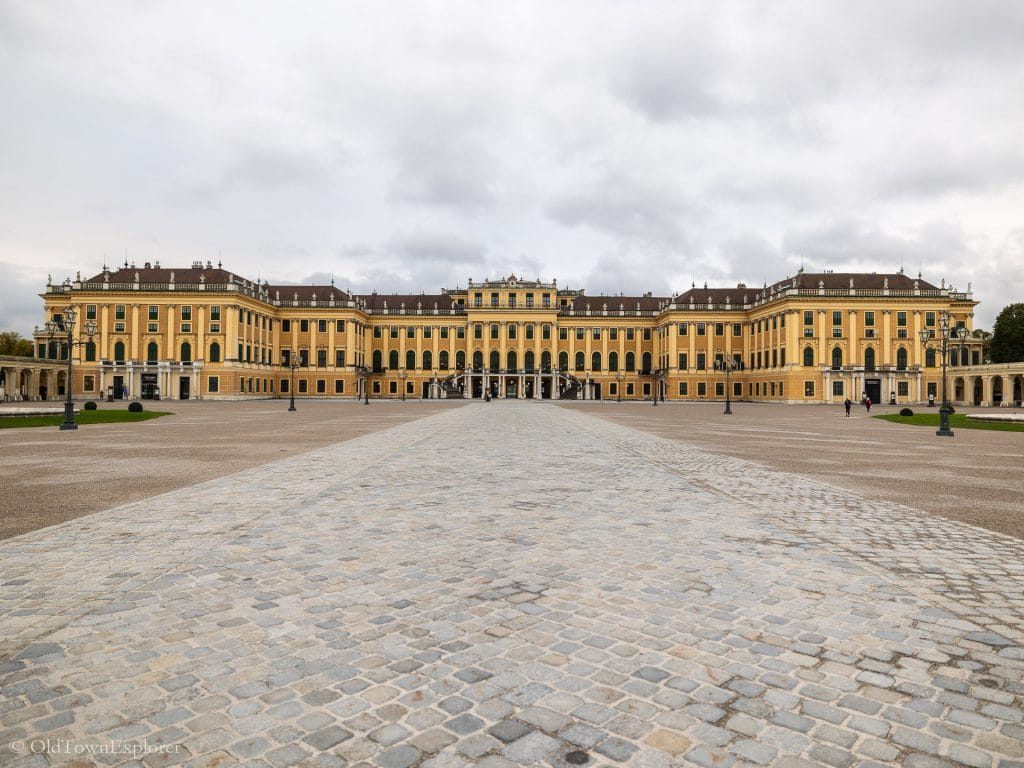
Palace and Gardens of Schönbrunn
Schönbrunn Palace is Austria’s clearest Baroque imperial palace complex. The architecture combines a large palace block, ceremonial rooms, service buildings, formal gardens, axial views, fountains, garden structures, and the Gloriette.
Historic Centre of the City of Salzburg
Salzburg’s historic center is organized around churches, squares, narrow streets, prince-archbishop residences, and the fortress above the old town. Baroque architecture dominates the city’s public spaces, while older medieval layers remain visible in the street pattern and fortress setting.

City of Graz – Historic Centre and Schloss Eggenberg
Graz Architecture combines medieval lanes, Renaissance courtyards, Baroque palaces, civic squares, Schlossberg fortifications, and Schloss Eggenberg. The city is especially strong for comparing Renaissance arcades, old-town façades, Baroque interiors, fortified hill architecture, and palace planning.
Wachau Cultural Landscape
The Wachau follows the Danube between Melk and Krems, combining monasteries, castles, small towns, vineyard terraces, riverfront settlement, and medieval trade-route architecture. Melk Abbey is the strongest architectural anchor, while the towns and castle ruins show how river traffic, religion, and viticulture shaped the landscape.
Hallstatt-Dachstein / Salzkammergut Cultural Landscape
Hallstatt and the Salzkammergut show Alpine settlement shaped by salt production, lake geography, steep terrain, timber construction, and mountain routes. Architecture here is less about monumental urban planning and more about how houses, streets, churches, mining infrastructure, and lakefront settlement fit into a constrained Alpine site.
Semmering Railway
The Semmering Railway is one of Austria’s strongest architecture-and-engineering sites. Viaducts, tunnels, retaining walls, stations, and mountain alignments show how 19th-century railway design crossed difficult Alpine terrain while becoming part of the surrounding landscape.
Frontiers of the Roman Empire – The Danube Limes (Western Segment)
The Austrian section of the Danube Limes preserves the northern frontier of the Roman Empire through forts, watchtower sites, roads, settlement remains, and archaeological traces along the Danube. It adds a military and infrastructure layer to Austria’s architecture history.
Fertö / Neusiedlersee Cultural Landscape
The Fertö / Neusiedlersee landscape spans Austria and Hungary, with architecture tied to Pannonian settlement, estates, wine villages, reed landscapes, and lake-edge land use. Its value is architectural and landscape-based rather than centered on a single monument.
The Great Spa Towns of Europe
Austria’s part of The Great Spa Towns of Europe is Baden bei Wien. The architecture includes spa buildings, villas, parks, hotels, theaters, promenades, and 19th-century leisure infrastructure connected to European spa culture.
Prehistoric Pile Dwellings around the Alps
Austria’s prehistoric pile-dwelling sites preserve traces of lake and wetland settlement. These are archaeological rather than urban architecture sites, but they add an early timber-construction and settlement-planning layer to Austria’s architectural timeline.
How to See Austria Architecture
City Architecture Routes
Austria architecture is easiest to plan around a few strong bases. Vienna Architecture is the best starting point for Gothic, Baroque, Ringstraße, Secession, Jugendstil, palace, museum, and civic architecture. Graz Architecture is strongest for Renaissance courtyards, Baroque palaces, Schlossberg fortifications, and Schloss Eggenberg. Salzburg works well for compact Baroque old-town walks beneath Hohensalzburg Fortress.
Guided Architecture Tours
Guided tours add the most value in palace complexes, monasteries, historic centers, and cultural landscapes where the architecture spans several periods. Schönbrunn, the Hofburg, Melk Abbey, Schloss Eggenberg, Salzburg’s old town, and the Wachau are stronger with architectural explanation that connects façades, interiors, ceremonial routes, gardens, churches, courtyards, fortifications, and landscape planning.
Independent Architecture Walks
Independent travel works well for old-town architecture walks in Vienna, Graz, Salzburg, Krems, Hallstatt, and Baden bei Wien. For landscape-based architecture, plan more deliberately: the Wachau, Semmering Railway, Hallstatt-Dachstein / Salzkammergut, and Neusiedlersee are better treated as regional routes rather than single-site stops.
Interiors, Landscapes, and Route Planning
Interior access matters more in Austria than on some country architecture routes. Baroque palaces, monasteries, museums, churches, opera houses, and spa buildings often reveal their strongest architecture inside, while old-town streets, Ringstraße façades, railway viaducts, fortress views, and cultural landscapes can be appreciated from the exterior.
FAQs About Austria Architecture
What architecture is Austria known for?
Austria architecture is known for Gothic churches, Baroque palaces and monasteries, Habsburg imperial planning, Ringstraße civic buildings, Secession and Jugendstil design, Alpine cultural landscapes, Roman frontier remains, and 19th-century railway engineering.
What are the main architectural styles in Austria?
The main architectural styles in Austria are Gothic, Renaissance, Baroque, Neoclassical, Historicist, Jugendstil, Secession, Romanesque, and modern architecture. Vienna is strongest for Gothic, Baroque, Historicist, Secession, and Jugendstil buildings, while Graz is especially useful for Renaissance courtyards and Baroque palace architecture.
What are the best cities for architecture in Austria?
Vienna, Graz, and Salzburg are the best cities for architecture in Austria. Vienna Architecture is strongest for imperial planning, Gothic churches, Baroque palaces, Ringstraße historicism, and Secession design. Graz Architecture is strongest for Renaissance courtyards, Baroque palaces, Schlossberg fortifications, and Schloss Eggenberg. Salzburg is strongest for Baroque church-and-square planning beneath Hohensalzburg Fortress.
Which Austrian city has the best Baroque architecture?
Vienna and Salzburg are the strongest cities for Baroque architecture in Austria. Vienna has palace complexes, churches, court architecture, and formal gardens, while Salzburg has a compact Baroque old town shaped by churches, squares, residences, and its fortress setting.
Where should I start with Austria architecture?
Start with Vienna if you want the broadest introduction to Austria architecture. A Vienna route can combine St. Stephen’s Cathedral, the Hofburg, Schönbrunn Palace, Belvedere, Ringstraße civic buildings, Otto Wagner architecture, and Secession design. Add Graz and Salzburg for smaller historic centers with different architectural patterns.
What UNESCO sites in Austria are most important for architecture?
The most architecture-focused UNESCO sites in Austria are the Historic Centre of Vienna, Palace and Gardens of Schönbrunn, Historic Centre of Salzburg, City of Graz – Historic Centre and Schloss Eggenberg, Wachau Cultural Landscape, Hallstatt-Dachstein / Salzkammergut Cultural Landscape, and Semmering Railway.
Which old towns in Austria are best for architecture?
Vienna, Graz, and Salzburg are the strongest old-town bases for architecture in Austria. Krems and Dürnstein in the Wachau add Danube town planning, churches, abbey views, and castle ruins, while Hallstatt shows Alpine lakeside settlement, steep lanes, timber houses, and mountain-edge town form.
What should I notice in Austrian Baroque architecture?
In Austrian Baroque architecture, look for domes, frescoed ceilings, stucco interiors, ceremonial staircases, axial gardens, palace courtyards, altar spaces, dramatic light, and planned movement through rooms and outdoor spaces. Schönbrunn, Belvedere, Melk Abbey, Salzburg Cathedral, and Schloss Eggenberg are strong examples.
What is distinctive about Vienna architecture?
Vienna architecture combines medieval, Baroque, imperial, Historicist, Secession, Jugendstil, and modern layers within one city. St. Stephen’s Cathedral, the Hofburg, Schönbrunn, the Ringstraße, Otto Wagner’s buildings, and the Secession Building show the city’s main architectural sequence.
Can you see Austria architecture without a car?
Yes. Vienna, Graz, Salzburg, and Baden bei Wien work well without a car because their main architecture areas are walkable and connected by rail. A car or organized tour can help with rural castles, monasteries, Alpine landscapes, lake districts, and some Danube or mountain routes.
For city-level architecture planning, continue with Vienna Architecture for Gothic churches, imperial palaces, Ringstraße buildings, Secession design, Jugendstil façades, museums, and civic architecture. Add Graz Architecture when Renaissance courtyards, Baroque façades, Schlossberg fortifications, and Schloss Eggenberg should shape the route.
For a single-site visit, use Schönbrunn Palace before planning palace interiors, gardens, fountains, the Gloriette, and the wider Hietzing visit. For the broader trip, return to Austria to compare architecture with food, wine, seasons, transport, and city-base choices.