
Como Food
Explore Como Food: Signature Dishes, Restaurants & More
Como food sits within Lombardy’s lake-and-mountain cooking, so you see rice, butter, polenta, alpine cheese, cured meats, and freshwater fish on the same table. Around the old center and lakefront, Como food is less about one single signature format and more about a pattern: espresso and pastry in the morning, a market stop or bakery slice at midday, and a longer lunch or dinner built around perch, missoltini, braised meat, or polenta.
We spent a month in Como, walking the center, checking bakeries, eating in old-town osterie, and using the city’s market rhythm to plan meals. This guide covers traditional food, restaurants, markets, food shops, tours, and a self-guided food walk, plus where to stay if food access is your priority.
This page contains affiliate links. We may earn a small commission at no extra cost to you.
Quick Planning Tip
If you want the easiest way to structure a food-focused day in Como, build it around the hours when markets and bakeries are most active.
- Plan your main food day around the market schedule, not around dinner
- Start with coffee and pastry, then go to the Mercato Coperto or the Porta Torre market area while stalls are active
- Book one proper sit-down lunch for local dishes such as perch, polenta, or other Lombardy specialties
- Saturday is usually the best day if you want markets, bakery stops, food shopping, and a longer lunch in one walkable route
- Stay inside the walled center or near Piazza Cavour for the easiest access to breakfast, markets, lunch, and evening aperitivo
This works best when you treat Como as a morning-and-lunch food city first, then add dinner afterward.
Traditional Food in Como
Traditional food in Como belongs to the western Lombardy and Lake Como cooking zone, where lake fish and mountain pantry staples meet. In practical terms, that means freshwater fish such as perch and agone, a steady use of rice and polenta, butter more often than olive oil in hot dishes, and a strong role for cheese from nearby valleys. Herbs are usually restrained rather than dominant, with sage appearing often in butter-based preparations.
The daily meal pattern is also fairly clear. Breakfast is usually quick and pastry-based at a bar, lunch can be a bakery slice, market stop, or trattoria plate, and dinner is where you are more likely to see perch risotto, grilled missoltini, braised meats, or a longer multi-course meal. In the center, old osterie and trattorie still matter, while the lakefront and Borgo Vico side of town add more polished dining rooms.
Como’s cooking logic is seasonal and local without being narrow. Warmer months bring more lake fish, vegetables, and lighter pastry-and-gelato eating, while colder months lean toward polenta, butter, cheese, braised meat, and cabbage-based dishes from the wider Lombardy table. Desserts and bakery products also matter here more than many visitors expect, especially local sweets such as miascia, resta, and Nuvola.
For a broader perspective on regional products and dishes beyond Como, see our Italy Food page.
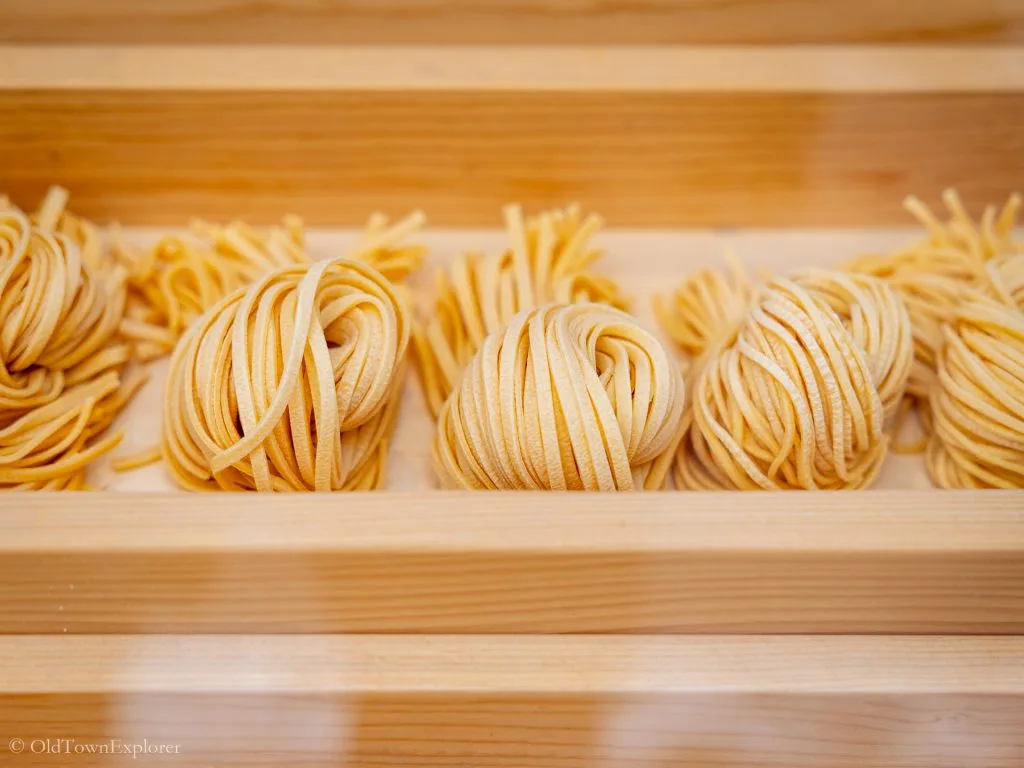
italy Food
Como shares a lot with Italian food more broadly: respect for seasonality, strong regional identity, daily market shopping, bakery culture, and meals that move from first course to main course in a clear structure. You still find pasta, cured meats, cheeses, espresso, and pastry culture here, but Como’s version of Italian food is shaped more by Lombardy than by central or southern Italy.
What feels locally distinct is the lake itself and the alpine hinterland behind it. Freshwater fish, polenta, butter-based finishes, and cheeses from nearby upland zones give Como a different profile from olive-oil-heavy coastal cities. Border geography also matters: the city sits close to Switzerland, and the surrounding territory has long linked lake commerce, mountain farming, and urban market life.
Signature Dishes in Como
Before choosing where to eat in Como, it helps to know which dishes are actually tied to the lake and the wider Lombardy table. Some are built around freshwater fish, others lean on polenta, butter, cheese, or old pastry traditions, and together they give you a clearer picture of how Como food works in practice.
Risotto con pesce persico
This is the plate most visitors should prioritize first: risotto topped with golden perch fillets and finished with butter and sage. You see it in traditional restaurants around Como and across the lake, and it works best at lunch or an early dinner when you want something specific to the area rather than a generic pasta dish.
Missoltini
Missoltini are preserved lake fish, usually agone, that are salted, dried, and then grilled or warmed before serving. They often appear with polenta in traditional restaurants and are one of the clearest links between the lake and the local table, though they are stronger in flavor than perch and not always a first-choice dish for cautious eaters.
Polenta uncia
Polenta uncia is a dense, filling preparation of polenta enriched with melted cheese, butter, garlic, and sage. It shows up in cooler weather, in mountain-leaning trattorias, and alongside meat or fish, and it makes the most sense when you want a heavier lunch after walking or taking the funicular.
Miascia
Miascia is a local cake made from stale bread, milk, eggs, sugar, and fruit, often with variations that include nuts or raisins. You are more likely to find it in traditional restaurants, pastry shops, or as a house dessert rather than in every café window, and it is especially useful to order when you want something regional instead of tiramisù.
Tóc
Tóc is a very old Lake Como polenta preparation associated especially with Bellagio, made with cornmeal, butter, and cheese and traditionally eaten communally. It is not on every menu in Como city, but it belongs in a Como-area food guide because it explains the butter-and-cheese side of the lake’s food culture.
Pesce in carpione
This is a cold preparation of fried freshwater fish marinated in vinegar, wine, onion, and aromatics. It is the kind of dish that makes sense as an antipasto in warmer weather, especially when you want something local but lighter than a full hot main.
Alborelle fritte
These small lake fish are floured and fried, then served as a snack, starter, or informal plate to share. They fit best in relaxed trattorias and are a good order when you want something tied to the lake without committing to missoltini.
Brasato con polenta
Braised beef with polenta is not unique to Como alone, but it is fully at home here because the city sits in Lombardy’s colder-climate cooking tradition. Expect it more in the cooler part of the year and in restaurants that lean toward old-fashioned regional cooking rather than lakefront seafood polish.
Resta di Como
Resta is a local sweet bread associated with the Como area, often elongated and tied in a traditional style. It is more of a bakery specialty than a restaurant dessert, so look for it in pastry shops and bakeries rather than on dinner menus.
Nuvola
Nuvola is a modern local pastry specialty created in Como. It is a soft leavened cake with apricot cream, closer in texture to a very airy sweet bread than to a standard sponge cake, and it works well as a takeaway gift or an afternoon coffee stop item.
Restaurants in Como
Como’s restaurant scene splits fairly clearly between traditional local dining and more polished contemporary rooms. Inside the walled center, Via Vitani and the streets around the Duomo are the most useful zones for older osterie, pastry stops, and wine bars, while Borgo Vico and the lakefront side give you easier access to hotel dining rooms and higher-end tasting menus. Reservations matter at dinner, especially on weekends and during the main lake season, and price bands run from bakery counters and simple lunch plates to full tasting-menu restaurants.
Traditional Restaurants
Osteria del Gallo
Address: Via Vitani, 16, 22100 Como CO, Italy
This is one of the most useful traditional picks in the center because the setting already puts you inside one of Como’s oldest old-town streets. Expect Lombard cooking, a compact dining room, and a menu that makes sense for a classic lunch or dinner rather than a fast stop. It suits travelers who want local dishes in a setting tied to the historic core. Reserve ahead for dinner, especially in high season.
Crotto del Sergente
Address: Via Crotto del Sergente, 13, 22100 Como CO, Italy
This is outside the center in Lora, so it works best if you are willing to take a taxi or drive for a meal. The kitchen leans into local tradition with a more refined presentation, making it a good choice when you want regional dishes without a tourist-center setting. Lunch or dinner both work here, and the more residential location gives it a quieter feel than the lakefront.
La Colombetta
Address: Via Armando Diaz, 40, 22100 Como CO, Italy
La Colombetta sits close to the center and works well if you want a traditional base with a slightly more formal room than an osteria. It is a good place to look for local fish, rice dishes, and a longer meal without moving fully into tasting-menu territory. This suits couples or small groups who want table service and a more structured dinner in the old town.
La Tua Osteria
Address: Via Maurizio Monti, 38, 22100 Como CO, Italy
This is a useful fallback when you want an osteria-style meal in Como without a full fine-dining setup. It is best treated as an option for a simple dinner rather than a destination meal. Verify the exact address before going.
Fine Dining
Kitchen
Address: Via per Cernobbio 41A, 22100 Como CO, Italy
Kitchen is the city’s clearest special-occasion restaurant, with a contemporary format and tasting-menu focus in a hotel setting west of the center. The style is modern Italian rather than traditional trattoria cooking, so come here for technique, pacing, and a longer meal rather than for an old-town atmosphere. It suits dinner best and usually makes the most sense for travelers planning one higher-budget meal in Como.
Feel Como
Address: Via Diaz 54, 22100 Como CO, Italy
Feel Como is inside the historic center and gives you a more contemporary reading of local ingredients, including wild products, game, and freshwater fish. The room is small enough that reservations matter, and the experience is more chef-led than tradition-led. Pick this when you want to stay in the center but still do a serious dinner.
Comi 107
Address: Via Borgo Vico 107, 22100 Como CO, Italy
Comi 107 sits on the Borgo Vico side, convenient for travelers staying between the center and Como San Giovanni station. The cooking is contemporary and seafood-forward, with a compact room and a format that works well for a planned dinner rather than a casual walk-in meal. It is a practical fine-dining choice when you want something polished but slightly less formal than a hotel tasting room.
Sottovoce
Address: Piazza Camillo Benso Conte di Cavour, 24, 22100 Como CO, Italy
Sottovoce gives you a lakefront-facing fine-dining setting, which makes it one of the strongest picks for travelers who care about service and room style as much as the food itself. The menu is contemporary Italian and works best for dinner, especially if you want a polished night out without leaving central Como. This is the kind of place to book early in peak season.
Historic Food Shops & Artisanal Boutiques in Como
Como’s food shopping is easiest when you focus on a small number of good bakery, pastry, deli, and specialty-food stops rather than trying to cover the whole city. These shops are useful not just for gifts, but for breakfast, picnic supplies, local sweets, and ingredients you can pick up after a market visit or before heading to the lakefront.
Beretta Il Fornaio
Address: Via Boldoni, 15, 22100 Como CO, Italy
Beretta matters because it is tied to one of Como’s best-known local sweets, the Nuvola. Go here for breakfast pastry, focaccia, or a takeaway cake, and use it as a practical stop if you want something you can carry to the lakefront or on the train. It is especially useful for visitors who want a local sweet that is more place-specific than standard Italian pastry.
Pasticceria Vago Carlo
Address: Via Gerolamo Borsieri, 24, 22100 Como CO, Italy
Vago is a long-running family pastry shop and bar, and it works best in the morning when you want a standing coffee and something from the pastry case. It is outside the strict tourist core but still central enough to work into a walk from the old town toward Borghi. Use it for breakfast or an afternoon sugar stop rather than for packaged food shopping.
La Vecchia Como
Address: Via Lambertenghi, 35, 22100 Como CO, Italy
La Vecchia Como is another pastry-focused stop that works well for travelers staying in or near the center. It is useful for coffee, breakfast pastry, and small sweet purchases, and the location makes it easy to combine with a walk between the station side and the old town. This is more of a daily-use stop than a destination bakery.
Enosalumeria del Centro
Address: Via Indipendenza, 25, 22100 Como CO
This is worth flagging because this kind of shop is exactly what many travelers need for cheese, salumi, and a quick edible souvenir. Verify the location before heading over.
Mercato Coperto shop counters
Address: Via Mentana 5 / Via Giuseppe Sirtori 1, 22100 Como CO, Italy
The covered market is not a single shop, but it functions like one practical food-shopping cluster. Inside and around it, you can buy produce, cheese, meat, fish, and ready-to-carry items without spending half a day crossing town. It is the best single stop in Como for travelers who want to assemble lunch from multiple vendors.
Food Markets in Como
Food markets in Como are most useful in the morning, when produce stalls, specialty counters, and weekly market activity are at their busiest. For travelers, they work best as practical stops for picnic supplies, local products, and a clearer view of everyday food shopping in the city.
Mercato Coperto / Mercato Annonario
- Address/Location: Via Mentana 5 / Via Giuseppe Sirtori 1, 22100 Como CO, Italy
- Day(s): Tuesday, Thursday, Saturday
- Typical hours: Tuesday 08:00-13:00; Thursday 08:00-13:00; Saturday 08:00-19:00
This is the city’s main practical food market, with produce, fish, meat, cheese, and multi-vendor shopping in one stop. It is the best market for travelers who actually want to buy food rather than browse souvenirs.
Agricultural Market of Comaschi Producers
- Address/Location: Inside the covered market area, Via Mentana 5, Como
- Day(s): Tuesday, Thursday, Saturday
- Typical hours: Unknown
Local producers selling directly to consumers, with seasonal fruits, vegetables, and other short-supply-chain products. This is the most useful stop if your goal is local rather than just convenient.
Mercerie Market
- Address/Location: Along the city walls from Viale Battisti to Viale Varese, near Porta Torre
- Day(s): Tuesday, Thursday, Saturday
- Typical hours: Tuesday and Thursday 08:00-13:00; Saturday until 18:00
This is a broader weekly market rather than a food-only market, with clothing, household goods, and some food-and-drink stalls. It is worth a stop if you are already walking near Porta Torre, but it is less focused for serious food buying than the covered market.
Piazza San Fedele Market
- Address/Location: Piazza San Fedele, 22100 Como CO, Italy
- Day(s): Saturday
- Typical hours: Unknown
Antiques, handicrafts, and artisan stalls rather than core grocery shopping. It is useful as part of a Saturday old-town walk, but not as your main food market stop.
Mercato Produttori Como Rebbio
- Address/Location: Via Salvadonica 3, Como-Rebbio
- Day(s): Saturday
- Typical hours: 08:00-12:00
A producers’ market with honey, vegetables, cheese, flour, and local farm goods. This is best for travelers with more time, a car, or a strong interest in buying directly from growers and makers.
Self-Guided Food Walk in Como
- Duration: 3 to 4 hours
- Area covered: Porta Torre to the old town, then across the center toward the lakefront
- Ideal time window: Saturday 09:00-13:30 for the best market overlap, or Tuesday/Thursday morning for a shorter market-focused version
Mercerie Market near Porta Torre
- Browse for seasonal produce and any portable snacks from food stalls
- Use this stop mainly to see local shopping patterns rather than to build your whole meal
This is best treated as an opening walk-through before you move to the food-focused covered market.
Mercato Coperto / Mercato Annonario
- Buy cheese, salumi, fruit, or ready-to-carry lunch items
- Look for what is actually busy with locals rather than only what is nearest the entrance
This is the main provisioning stop of the walk, so leave room in your bag before you arrive.
Beretta Il Fornaio
- Try a slice of focaccia or pizza for a quick savory stop
- Pick up Nuvola if you want a local sweet to take away
Go earlier rather than later if you want the widest bakery selection.
Piazza San Fedele
- On Saturdays, check the stalls if the artisan market is on
- Use the square as a pause point before heading deeper into the center
Even when the market is thin, this is still a useful waypoint in the old town.
Osteria del Gallo
- Order a local lunch plate such as perch, polenta, or another Lombard main
- Pair it with a glass of local wine rather than over-ordering multiple courses
Book ahead if you want to turn this walk into a sit-down lunch instead of a snack crawl.
Enoteca da Gigi
- Buy a bottle for later aperitivo
- Pick up oils, vinegars, or deli goods that travel well
This is the strongest stop on the route for edible souvenirs that are easy to pack.
Piazza Cavour lakefront finish
- Sit down with pastry or coffee from a nearby stop
- Use the lakefront benches or cafés to sort what you bought
Ending here works well because you can pivot into a ferry ride, a lakeside walk, or dinner reservations.
Food Tours in Como
Food tours in Como usually focus on the historic center, with a sequence of tastings rather than market-heavy instruction. They suit first-time visitors, short stays, and travelers who want one guided overview of local pastry, wine, and traditional dishes before choosing where to return on their own.
Best Places to Stay In Como
Hotels in Como
For food-focused stays, the simplest move is to sleep either inside the walled center or just outside it on the San Giovanni/Borgo Vico side. Those two zones give you the easiest morning access to pastry bars, the shortest walks to dinner, and the least friction when returning after a late meal.
The old town works best if you want to step out directly into restaurants, wine bars, pastry shops, and the Saturday market pattern. It is the strongest base for people who plan to eat two full meals in town and walk everywhere. The trade-off is that arrival by car can be less convenient and the most central rooms often book early.
The San Giovanni and Borgo Vico side works best if you are arriving by train, planning day trips, or mixing city meals with lake travel. You still stay within walking distance of the center, but you also get easier station access and a smoother late return from dinner.
Use the interactive map below to compare hotels in the historic center, lakefront, and station area.
FAQs About Como Food
What is Como known for food-wise?
Como is best known for lake fish, especially perch dishes and missoltini, plus polenta-based cooking and a handful of local sweets such as miascia, resta, and Nuvola. In practice, the most recognizable restaurant order is risotto con pesce persico.
What is the one dish to try first in Como?
Start with risotto con pesce persico. It is specific to the Lake Como area, widely recognized, and easier for most travelers than missoltini, which has a stronger preserved-fish profile.
Are there good food markets in Como?
Yes. The covered market on Via Mentana is the main practical food market, and the city also has the Mercerie market along the walls plus producers’ activity on market days. Saturday morning is usually the best slot if you want the fullest market rhythm.
Which market is best for actual food shopping?
The Mercato Coperto / Mercato Annonario is the best choice if you want produce, cheese, meat, fish, or picnic supplies in one place. Piazza San Fedele is better for browsing artisan stalls than for building a meal.
Is Como good for vegetarians?
Yes, but the city’s identity leans heavily toward fish, cheese, butter, polenta, and meat. Vegetarians will still find risotto, polenta, pastry, market produce, and contemporary restaurant options, but reading menus in advance helps.
Do I need restaurant reservations in Como?
For dinner at the better-known traditional rooms and nearly all fine-dining restaurants, yes. Lunch is easier, but central old-town places and tasting-menu restaurants are safer with advance booking, especially on weekends and during the main lake season.
Is street food a big part of Como food?
Not really. Como is better for markets, bakeries, pastry bars, and sit-down trattorias than for a large street-food scene, so plan around those instead.
What sweet should I buy in Como?
Nuvola is the most place-specific sweet to seek out. Miascia and resta are also worth trying when you see them, but they are less consistently available in every shop.
Where should I stay in Como if food is the priority?
Stay inside the old town if you want the shortest walks to pastry bars, wine stops, and dinner. Stay near Piazza Cavour or Borgo Vico if you want better ferry or station access without giving up restaurant options.
Can I do a food-focused day in Como without a tour?
Yes. Start at the market, add a bakery stop, book one traditional lunch, and finish with a wine shop or pastry stop near the lakefront. The city center is compact enough that a self-guided food walk works very well.
Is Como a good base for food day trips around the lake?
Yes, especially if you want to combine city dining with ferry access to other lake towns. Como itself is strong for markets and urban dining, while other towns around the lake add more destination-style restaurants and village-specific specialties.
Should I choose a market morning or a long lunch?
The best plan is to do both on the same day, especially Saturday. Shop the market first while stalls are active, then sit down for lunch once you know what local products are in season and what dishes look most relevant.
Como works best when you plan your eating around the city’s actual rhythm: pastry first, market in the morning, one serious local lunch or dinner, and a few targeted stops for wine, bakery items, and lake-specific dishes rather than trying to sample everything at once.