
Saranda Architecture
Explore Saranda Architecture: Religious Buildings, Ruins & More
Saranda architecture is shaped less by a preserved old town than by layers along the Ionian waterfront: ancient Onhezmus remains near the center, religious buildings, postwar development, memorials, and Lëkurësi Castle above the bay.
The first sites to notice are the Synagogue and Basilica Complex, the Monastery of 40 Saints, the Church of Saint Charalambos, Saranda Mosque, the promenade, and the hilltop castle. The strongest architecture days balance the compact city-center sites with viewpoints above the bay.
We spent a month in Saranda, using the city as a coastal base for its promenade, religious buildings, archaeological remains, castle views, and nearby heritage trips to Butrint and Gjirokastër.
This page contains affiliate links. We may earn a small commission at no extra cost to you.
Saranda Architecture at a Glance
Saranda’s architecture is compact but uneven. The city does not have the preserved old-town fabric of Berat or Gjirokastër, but it does have visible layers of ancient, religious, Ottoman, communist-era, and modern waterfront development.
Key architecture points:
- Core identity: Coastal resort development sits beside archaeological remains from ancient Onhezmus, religious buildings, memorials, and castle views.
- First buildings to notice: Start with the Synagogue and Basilica Complex, the Monastery of 40 Saints, the Church of Saint Charalambos, Saranda Mosque, and Lëkurësi Castle.
- Strongest starting area: The promenade and center work best for a short architecture walk, especially if you want the synagogue remains, monuments, waterfront, and religious buildings close together.
- Key features: Look for mosaic and foundation remains, minarets, modern Orthodox forms, hilltop fortification walls, bunker concrete, and memorial busts along the waterfront.
- Main trade-off: Saranda is easy to walk at sea level, but several important views and religious sites sit uphill or outside the tight promenade area.
Choose Saranda for a light city architecture day with archaeological remains, religious buildings, memorials, and bay views; use Butrint and Gjirokastër for deeper ancient and Ottoman-era architecture.
What to See in Saranda
The main architecture decision in Saranda is geographic: stay in the center, follow the waterfront, or add the hillside sites above town. Saranda does not have a preserved old town, so its architecture appears in fragments rather than one continuous historic district.
The main categories are religious buildings, ancient ruins, fortifications, waterfront architecture, monuments, and modern civic layers.
Center
The center is the best place to start because it has the tightest group of architecture stops. The Synagogue and Basilica Complex, Saranda Mosque, Church of Saint Charalambos, waterfront monuments, and nearby streets give you the most architecture in the least walking time.
Hillside Sites
The hillside sites change the scale of the visit. Lëkurësi Castle, the Monastery of 40 Saints, Xhamia Gjashtë Saranda, and Teqeja Sarandë sit above or away from the flat waterfront, so they add views, religious layers, and a stronger sense of Saranda’s setting.
Waterfront
The waterfront shows modern Saranda most clearly. The promenade, beach-facing development, monuments, cafés, hotels, and public spaces are not the city’s oldest architecture, but they explain how Saranda functions as a contemporary Ionian resort town.
For a short architecture walk, the waterfront works best as the link between the center and the wider bay setting. It is where Saranda’s public monuments, resort development, ferry activity, and evening promenade life sit closest together.
Religious Buildings in Saranda
Saranda’s religious sites reflect the city’s layered history—from early Christian communities to Byzantine, Orthodox, Islamic, and Bektashi traditions. Many of these structures were rebuilt or restored after the communist period, while others preserve elements dating back more than a thousand years. Together, they form a compact collection of churches, monasteries, and mosques that illustrate the city’s cultural and architectural development.
Monastery of 40 Saints
- Architect: Unknown
- Style: Byzantine Basilica
- Built: 6th century AD (Justinian I period)
- Address: Hill overlooking Sarandë, Albania
A ruined early Byzantine monastery overlooking Saranda, once a major pilgrimage site in the Ionian Sea region, notable for its historic religious significance and ancient architecture.

Synagogue and Basilica Archeological Complex
- Architect: Unknown
- Style: Late Antique / Early Christian
- Built: 5th century AD
- Address: Rruga Skënderbeu 7, Sarandë, Albania
An important archaeological site with remains of a 5th-century synagogue and early Christian basilica, reflecting the religious diversity and heritage of ancient Saranda.

Church of Saint Charalambos
Kisha e Shën Harallambit
- Architect: Unknown
- Style: Byzantine Revival
- Built: Early 20th century
- Address: Rruga Mustafa Matohiti 51, Sarandë, Albania
Church of Saint Charalambos is a Greek Orthodox church near Saranda’s waterfront. Its white façade, arched openings, and Byzantine Revival form make it one of the easiest religious buildings to identify during a central Saranda architecture walk.

Xhamia Saranda
- Architect: Unknown
- Style: Modern Islamic
- Built: 1990s (post-communist reconstruction)
- Address: Rruga Onhezmi, Sarandë, Albania
The central mosque in Saranda’s heart, rebuilt after religious restrictions ended in the 1990s, featuring a tall minaret visible from much of the city.
Xhamia Gjashtë Saranda
- Architect: Unknown
- Style: Modern Islamic
- Built: Late 20th century
- Address: Near entrance road off Rruga Skënderbeu, Sarandë, Albania
A mosque positioned on a hill near Saranda’s main entrance, distinguished by its tall minaret and role in serving the local Muslim community.
Teqeja Sarandë
aka Teqeja Reshat Dede Baba
- Architect: Unknown
- Style: Alevi/Bektashi Traditional
- Built: Rebuilt late 20th century (original unknown)
- Address: Rruga Idriz Alidhima, Sarandë, Albania
A spiritual center for the Bektashi community located on a hill overlooking Saranda, rebuilt after the communist era’s suppression of religion.

Evangelical Church of Saranda
aka Saranda Evangelical Church (Kisha Ungjillore Sarandë)
- Architect: Unknown
- Style: Contemporary
- Built: Likely post‑1990s
- Address: Rruga Mitat Hoxha 15‑9, Saranda, Albania
The Saranda Evangelical Church is a modern white church located across from the ferry terminal in Saranda.
Ancient Ruins in Saranda
Onhezmus was an ancient city located in present-day Saranda, Albania. The city served as a port town in ancient Epirus and was home to the Chaonian tribe.
Fortification Wall of Onhezmus
- Architect: Unknown
- Style: Greco-Roman fortification
- Built: 4th century BC – 2nd century AD
- Address: Inside Republika Hotel, Rruga Jonianet, Sarandë, Albania
Remnants of the defensive walls of the ancient city of Onhezmus, partially preserved and displayed within the Republika Hotel, highlighting Saranda’s ancient military past.

Entrance Gate of Onhezmus
- Architect: Unknown
- Style: Greco-Roman
- Built: Antiquity (approx. 4th century BC – 2nd century AD)
- Address: Saranda Public Beach, Sarandë, Albania
Surviving ruins of the city gate of Onhezmus, located on Saranda’s public beach, providing a direct link to the town’s ancient urban heritage.
Fortifications and Waterfront Architecture in Saranda
Saranda’s most visible architectural contrast is between the hilltop fortification above town and the modern waterfront below it. Lëkurësi Castle gives the city its clearest defensive structure, while the promenade shows the resort-era layer that shapes most first impressions of Saranda.
Lëkurësi Castle
- Architect: Unknown
- Style: Ottoman fortress architecture
- Built: 1537
- Address: Hill above Sarandë, Albania
Lëkurësi Castle was built in 1537 during the Ottoman period to protect the port and control sea and land routes near Saranda. The surviving fortified walls and hilltop position make it the clearest place to understand the city’s relationship to the Ionian Sea, the road toward Butrint, and the hills behind the bay.
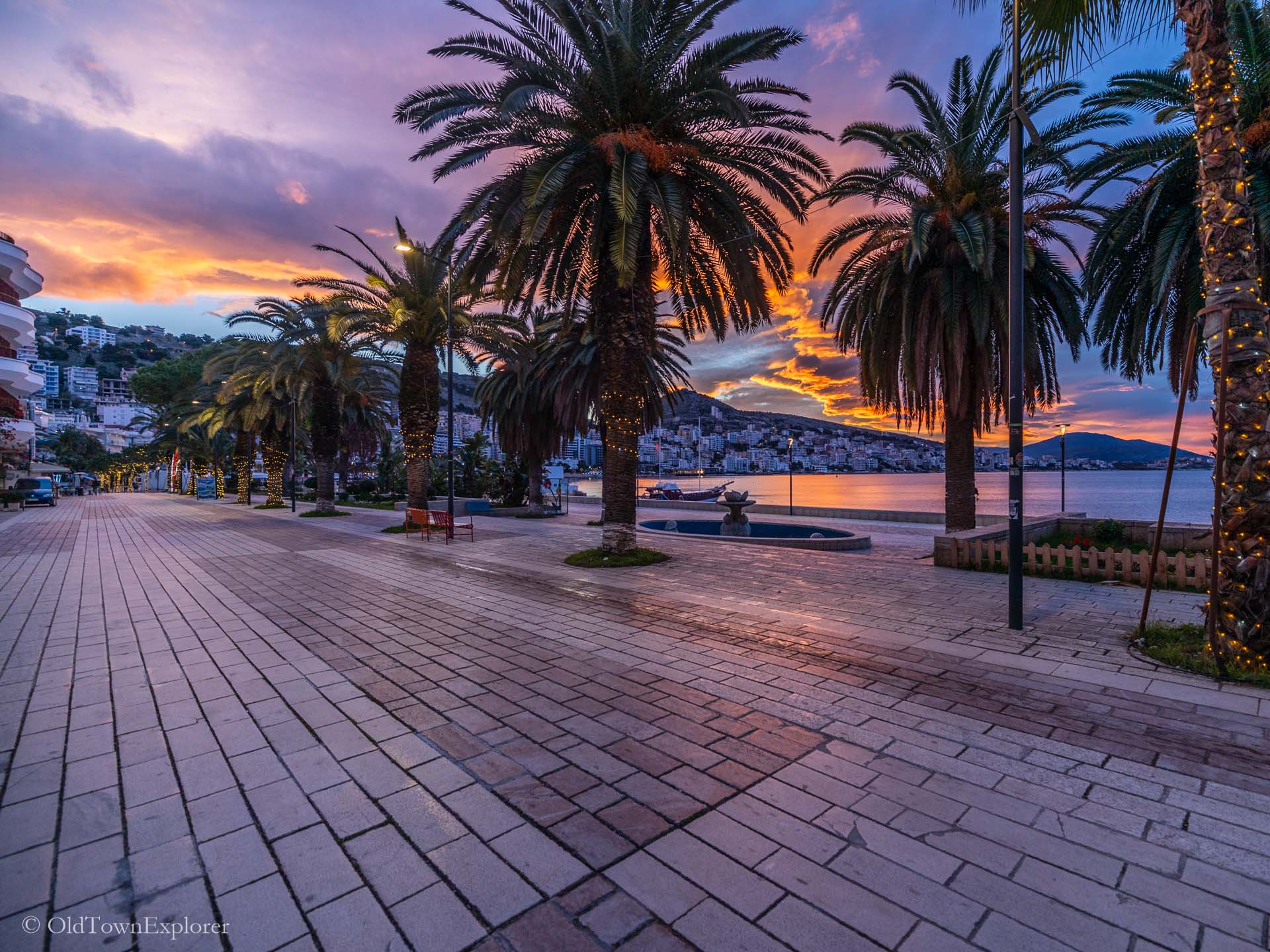
Saranda Promenade
- Architect: Not applicable
- Style: Contemporary waterfront development
- Built: Late 20th to early 21st century
- Address: Rruga Jonianet and the central waterfront, Sarandë, Albania
Saranda Promenade is the city’s main public waterfront space. Architecturally, it is more useful as urban form than as a single monument: hotels, apartment blocks, cafés, beach access, memorials, and sea-facing paths show how modern Saranda presents itself along the bay.
Monuments, Memorials and Modern Layers in Saranda
Saranda’s smaller monuments and memorials are not major architectural works on their own, but they help explain the city’s civic landscape. Most are short stops along or near the waterfront, where modern public space, political memory, and local identity sit beside the resort promenade.
Hasan Tahsini Monument
- Architect: Not applicable
- Style: Bust sculpture
- Built: Modern, date not confirmed
- Address: Bulevardi Hasan Tahsini, Sarandë, Albania
The Hasan Tahsini Monument is a bust on the beachfront promenade honoring Hoxhë Hasan Tahsini, the Albanian astronomer, mathematician, philosopher, and Ottoman-era intellectual. It is a small civic monument rather than a major architecture stop, but it helps anchor the boulevard that carries his name.
Nicolae Iorga Monument
- Architect: Not applicable
- Style: Bust sculpture
- Built: Modern, date not confirmed
- Address: Bulevardi Hasan Tahsini, Sarandë, Albania
The Nicolae Iorga Monument honors the Romanian historian and Albanologist associated with archaeological research and Albanian studies. Its value on an architecture walk is mostly contextual: it adds another civic marker to the line of monuments along Saranda’s waterfront.
Monument of Bilal Xhaferri
- Architect: Not applicable
- Style: Bust sculpture
- Built: Modern, date not confirmed
- Address: Bulevardi Hasan Tahsini, Sarandë, Albania
The Bilal Xhaferri Monument stands on the beachfront promenade near the Hasan Tahsini Monument. It commemorates the Albanian writer and political dissident and works best as part of a short civic-monument walk rather than as a standalone architecture destination.
Hillary Clinton Monument
- Architect: Not applicable
- Sculptor: Idriz Balani
- Style: Bronze bust sculpture
- Built: 2016
- Address: Rruga Flamurit, Sarandë, Albania
The Hillary Clinton Monument is a bronze bust created by Albanian sculptor Idriz Balani and unveiled in 2016. It is more political monument than architectural landmark, but it adds a visible modern public-sculpture layer to central Saranda.
Saranda’s Martyrs' Cemetery
- Architect: Unknown
- Style: War cemetery and memorial
- Built: Post-World War II
- Address: Near Rruga Skënderbeu, Sarandë, Albania
Saranda’s Martyrs’ Cemetery is a memorial cemetery dedicated to World War II martyrs, set slightly southeast of the center. The site adds a formal commemorative landscape to the city’s architecture, with the bay still visible beyond the surrounding urban development.
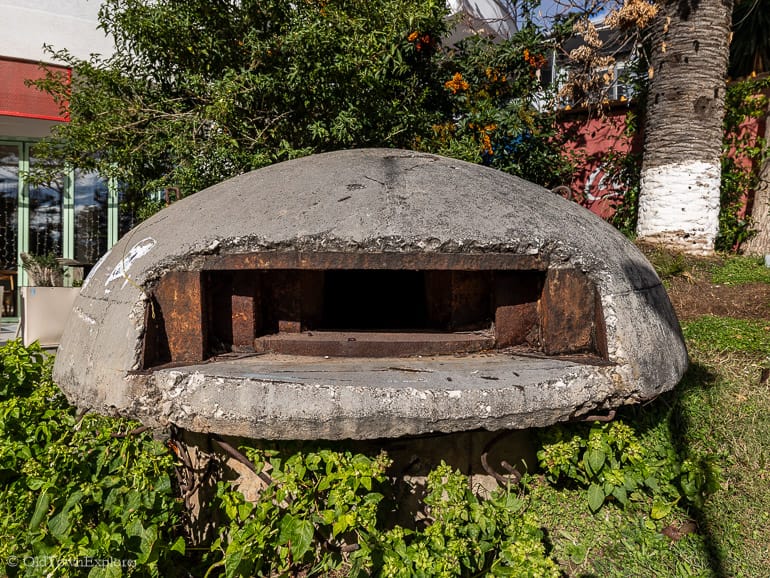
Memorje ’78
- Architect: Unknown
- Style: Communist-era concrete bunker
- Built: 1978
- Address: Corner of Rruga Flamurit, opposite Sarandë Post Office, Albania
Memorje ’78 is a small concrete bunker opposite the Saranda Post Office. It gives the city a compact communist-era architecture stop, with the bunker form, concrete shell, and interpretive display standing in contrast to the waterfront and resort development nearby.
Things to Know Before You Go
The Center Is the Best Short Architecture Base
Start near the promenade and central streets if you only have a short time. This area keeps the Synagogue and Basilica Complex, waterfront monuments, Saranda Mosque, the promenade, and several nearby religious buildings within the most manageable part of the city.
The Best Views Require Going Uphill
Lëkurësi Castle and the Monastery of 40 Saints sit above the waterfront, so they change the visit from a flat city walk into a hill-based outing. Add them when the castle setting, monastery ruins, and bay views matter more than staying in the center.
Street Surfaces Are Easier Near the Promenade
The promenade and central streets are the easiest parts of Saranda for casual walking. Hillside sites, side streets, and some older surfaces can be steeper or less even, so shoes matter more if you plan to connect ruins, viewpoints, and religious buildings on foot.
Most Architecture Can Be Understood from Outside
Many of Saranda’s architecture stops are exterior-first: ruins, memorials, the promenade, castle walls, minarets, and viewpoint settings. Interior access can vary for religious buildings and small heritage sites, so do not build the day around a specific interior unless you have checked current access.
Summer Heat Changes Architecture Walks
Saranda’s architecture is exposed to sun, especially along the waterfront, on castle viewpoints, and around open ruins. In hot months, early morning and late afternoon are better for walking, photography, and uphill sites.
Evening Light Works Well for the Promenade and Castle Views
The promenade, bayfront monuments, and Lëkurësi Castle are strongest visually when the light softens over the water. Evening walks are useful for modern Saranda, while daytime is better for reading ruins, foundations, and small architectural details.
A Two-Hour Plan Should Stay Central
With two hours, stay near the center: walk the promenade, see the Synagogue and Basilica Complex, note Saranda Mosque, and add nearby monuments. This gives the best architecture return without spending time on taxis or hill climbs.
A Half Day Can Add a Hilltop Site
With a half day, combine the center with either Lëkurësi Castle or the Monastery of 40 Saints. That gives you both the city’s compact archaeological and civic layers and one elevated view over Saranda’s waterfront form.
A Full Day Works Better with Butrint or Gjirokastër
Saranda itself does not need a full architecture-only day for most visitors. If architecture is the priority, use the extra time for Butrint’s archaeological landscape or Gjirokastër’s Ottoman-era stone houses and fortress setting.
Architecture Tours in Saranda
Independent architecture walks are manageable in the center, but a tour can make more sense when transport, site sequence, and historical background matter.
Guided Tours
A guided tour can help when you want Saranda’s archaeology, religious buildings, castle views, and nearby heritage sites explained in context. It is most useful if the route combines central Saranda with Butrint, Gjirokastër, or other inland stops rather than only repeating the promenade.
Where to Stay for Architecture Walks
For architecture walks in Saranda, the promenade and central streets are the most practical base. This area keeps the city’s easiest architecture stops close together while still giving access to taxis or drivers for hilltop sites.
- Promenade and port area: Best for the easiest walking access to the waterfront, monuments, central ruins, cafés, restaurants, and ferry logistics.
- Central Saranda: Useful for the Synagogue and Basilica Complex, Saranda Mosque, Church of Saint Charalambos, shops, and short walks away from the water.
- Hillside stays: Better for views over the bay, but less convenient for repeated walks to central architecture sites unless you are comfortable with slopes or taxis.
- Rruga Butrinti: Practical for beach hotels and coastal stays, but less useful if your main goal is central ruins, monuments, and short architecture walks.
Choose the promenade or central Saranda if architecture walks matter most; choose hillside or Rruga Butrinti stays when views, beaches, or resort-style convenience matter more than repeated short walks to the central sites.
Hotels and Apartments in Saranda
Use the interactive map below to compare hotels and apartments near the promenade, port area, central Saranda, hillside streets, and Rruga Butrinti.
FAQs About Saranda Architecture
What architecture is Saranda known for?
Saranda is known for a mix of archaeological remains, religious buildings, modern waterfront development, hilltop castle views, memorials, and communist-era concrete structures. The Synagogue and Basilica Complex, Monastery of 40 Saints, Lëkurësi Castle, and promenade are the clearest starting points.
Is Saranda architecture easy to see with limited time?
Yes. With limited time, stay near the center and promenade. You can see the Synagogue and Basilica Complex, waterfront monuments, Saranda Mosque, and the promenade without building a long route.
Which buildings should I see first in Saranda?
Start with the Synagogue and Basilica Complex, the Monastery of 40 Saints, Church of Saint Charalambos, Saranda Mosque, and Lëkurësi Castle. These sites explain the city’s ancient, religious, modern, and hilltop layers better than the smaller monuments alone.
Does Saranda have an old town?
Saranda does not have a preserved old town like Berat or Gjirokastër. Its architecture is more fragmented, with ancient remains, religious buildings, monuments, the waterfront promenade, and hillside viewpoints spread through and above the modern city.
What styles will I see in Saranda?
You will see late antique and early Christian ruins, Byzantine religious remains, modern Orthodox and Islamic buildings, Ottoman fortress architecture at Lëkurësi Castle, communist-era bunker concrete, and contemporary waterfront development.
Can I understand Saranda architecture from the outside?
Yes. Much of Saranda’s architecture is exterior-first, including ruins, memorials, the promenade, castle walls, mosque minarets, and viewpoints. Interior access is secondary and can vary for religious buildings and small sites.
What is the best viewpoint for Saranda architecture?
Lëkurësi Castle is the best architecture viewpoint because it shows the bay, port, waterfront development, hillside growth, and Ionian setting from above. It also adds Ottoman fortress context to the city’s mostly modern seafront.
How much time do I need for architecture in Saranda?
Two hours is enough for the center and promenade. A half day allows time for one hilltop site such as Lëkurësi Castle or the Monastery of 40 Saints. A full architecture-focused day is better spent adding Butrint or Gjirokastër.
Where should I stay in Saranda for architecture walks?
Stay near the promenade, port area, or central Saranda for the easiest architecture access. These areas keep the central ruins, religious buildings, waterfront monuments, cafés, and taxi access close together.
How does Saranda architecture compare with Butrint and Gjirokastër?
Saranda is lighter and more fragmented architecturally. Butrint is stronger for ancient archaeology, while Gjirokastër is stronger for Ottoman-era stone houses, hillside streets, and fortress setting.
For broader city planning, start with Saranda. For national style context, use Albania Architecture. For nearby deeper architecture trips, continue with Butrint, Albania or Gjirokastër, Albania. For same-day meal and wine planning, use Saranda Food and Saranda Wine.