
Istria Wine
Explore Istria Wine: Appellations, Grapes & Styles
Istria wine comes from the Croatian part of the Istrian peninsula, where vineyards sit between the Adriatic coast, inland hill towns, red soils, flysch, limestone, forests, olive groves, and truffle country. Malvazija Istarska defines the white-wine side of the region, Teran defines the red-wine side, and Muškat adds an aromatic and sweet-wine tradition around Momjan.
Rovinj puts coastal restaurants, wine bars, and western Istrian producers within the same trip. Motovun shifts the route inland toward Teran, Malvazija, truffles, and wineries around the hill towns. Momjan is the place to prioritize when Muškat momjanski / Moscato di Momiano is the main reason for the wine day.
We have spent time in Istria over several trips, including stays in Rovinj and Motovun. The practical questions are whether to drink Istrian wine in town or visit producers, which protected names and grapes to recognize, and how to match the wines with coastal or inland food. Croatia Wine places those choices in the wider national wine map.
Istria Wine at a Glance
Istria's wine map is compact enough to combine coast and hill towns, but wineries are spread through the countryside. Malvazija Istarska, Teran, and Muškat Momjanski give you the first three wine names to recognize.
For a first wine trip, these are the distinctions that matter:
- Starting points: Rovinj combines coastal wine drinking with seafood and access to western Istria; Motovun puts you closer to inland wineries and truffle country; Momjan anchors the northern route for Muškat Momjanski.
- Protected names: Hrvatska Istra and Muškat momjanski / Moscato di Momiano have EU-level protection. Buje / Buie is listed under transitional national protection valid in Croatia.
- Main grapes: Malvazija Istarska leads the white wines, Teran the local reds, and Muškat bijeli is the grape behind Muškat Momjanski.
- Wines to recognize: Fresh and more structured Malvazija, Teran, and Muškat Momjanski come first, followed by sparkling, rosé, and skin-contact wines from individual producers.
- Tasting: Wine bars and restaurants make tasting possible from town; a countryside winery day needs more planning and usually arranged transport or a non-drinking driver.
- Food: Malvazija fits seafood and olive-oil dishes, Teran fits pršut, Boškarin, mushrooms, and truffles, while the sweeter versions of Muškat Momjanski suit Istrian pastries and dried fruit.
If time is short, combine one coastal base with one inland or northern wine area rather than trying to cover every producer cluster.
Wine Areas and Appellations in Istria
The Croatian Ministry of Agriculture, Forestry and Fisheries lists Hrvatska Istra and Muškat momjanski / Moscato di Momiano among EU-level protected wine designations. Buje / Buie is listed separately under transitional national protection valid only in Croatia. On labels and tasting sheets, Hrvatska Istra is the broad regional origin, while Muškat Momjanski identifies a much narrower Momjan wine made from Muškat bijeli.
Hrvatska Istra
Hrvatska Istra is the main protected wine designation to recognize on Istrian labels. It ties the Croatian part of the peninsula to a regional wine identity built around Malvazija Istarska, Teran, Muškat, international grapes, coastal vineyards, inland hills, and producer routes.
On a label, Hrvatska Istra identifies wine from the Croatian part of Istria. That distinction matters because the Istrian peninsula also extends into Slovenia and Italy.
Buje, Momjan, and Muškat Momjanski
Buje and Momjan anchor the northern Istrian wine route. Momjan is especially important because Muškat momjanski / Moscato di Momiano is a protected designation tied to Muškat bijeli and the Momjan area.
Muškat momjanski / Moscato di Momiano is a protected wine name tied to Momjan and Muškat bijeli. Buje / Buie is a separate protected name under transitional national protection in Croatia; the two names are not equivalent label terms.
Rovinj, Poreč, and the West Coast
Rovinj, Poreč, and the west coast connect Istrian wine with seafood, olive oil, coastal dining, and producers in the surrounding countryside. Fresh Malvazija Istarska is a natural starting glass here because it fits fish, shellfish, risotto, vegetables, and olive-oil dishes.
Rovinj Wine compares drinking in town with nearby producer visits when Rovinj is your coastal base.
Motovun and Central Istria
Motovun and central Istria connect Teran and structured Malvazija with truffles, mushrooms, Boškarin, pršut, pasta, and winery visits in the surrounding hills. The food shifts toward richer sauces, cured meat, beef, and forest products compared with the seafood-heavy coast.
Motovun Wine compares drinking in town with producer visits around Kanal, Brkač, and Kaldir.
Brtonigla, Grožnjan, and Inland Wine Roads
Brtonigla, Grožnjan, and the roads between northern and central Istria connect small towns with vineyards, olive groves, truffle country, and winery visits. Arranged transport or a non-drinking driver makes it easier to combine more than one producer.
This part of Istria is not only about one grape. It connects Malvazija, Teran, Muškat, sparkling wines, skin-contact wines, olive oil, truffles, cheese, and cured meats into one compact wine-country route.
Grape Varieties in Istria
Istrian grape names matter because labels and wine lists often move between local grapes, protected names, and producer-led styles. Malvazija Istarska and Teran are the first two grapes to recognize; Muškat bijeli matters because it connects directly to Muškat momjanski / Moscato di Momiano.
White Grapes
These grapes define the white, aromatic, and sweet-wine side of Istria.
- Malvazija Istarska: Istria’s main white grape. It produces dry whites that range from fresh and citrus-driven to fuller, textured, aged, sparkling, or skin-contact styles.
- Muškat bijeli: Aromatic grape used for Muškat momjanski / Moscato di Momiano. It belongs especially to the Momjan area and can appear in regular, dessert, or aged expressions under the protected name.
- Chardonnay: International white grape grown by some Istrian producers. It appears as a supporting variety rather than as the region’s main identity.
- Other white grapes: Sauvignon Blanc, Pinot Gris, Pinot Blanc, and other international varieties may appear in producer portfolios, but they are secondary to Malvazija Istarska for most Istrian wine routes.
Malvazija Istarska is the first white grape to know; Muškat bijeli becomes important when the route includes Momjan or sweet aromatic wines.
Red and Black Grapes
These grapes explain the red-wine side of Istria.
- Teran: Istria’s main local red grape. It usually produces wines with firm acidity, tannin, red fruit, dark fruit, and strong food-pairing value with inland dishes.
- Merlot: International red grape that appears in varietal wines and blends. It can soften or round Istrian red wines.
- Cabernet Sauvignon: International red grape used by some producers for fuller reds and blends.
- Refosco / Refošk-related names: These names belong to the wider northern Adriatic red-grape context. Treat them carefully on labels because naming and variety usage can differ across Croatia, Slovenia, and Italy.
Teran should come before international reds when reading Istrian labels, especially when the meal includes truffles, Boškarin, pršut, mushrooms, or aged cheese.
Wines in Istria
Istrian wine lists usually revolve around Malvazija Istarska, Teran, and Muškat Momjanski, with sparkling, rosé, and skin-contact wines adding more variation from producer to producer. Malvazija Istarska and Teran are grape names commonly used on wines, while Muškat Momjanski is a protected place-linked wine name from the Momjan area.
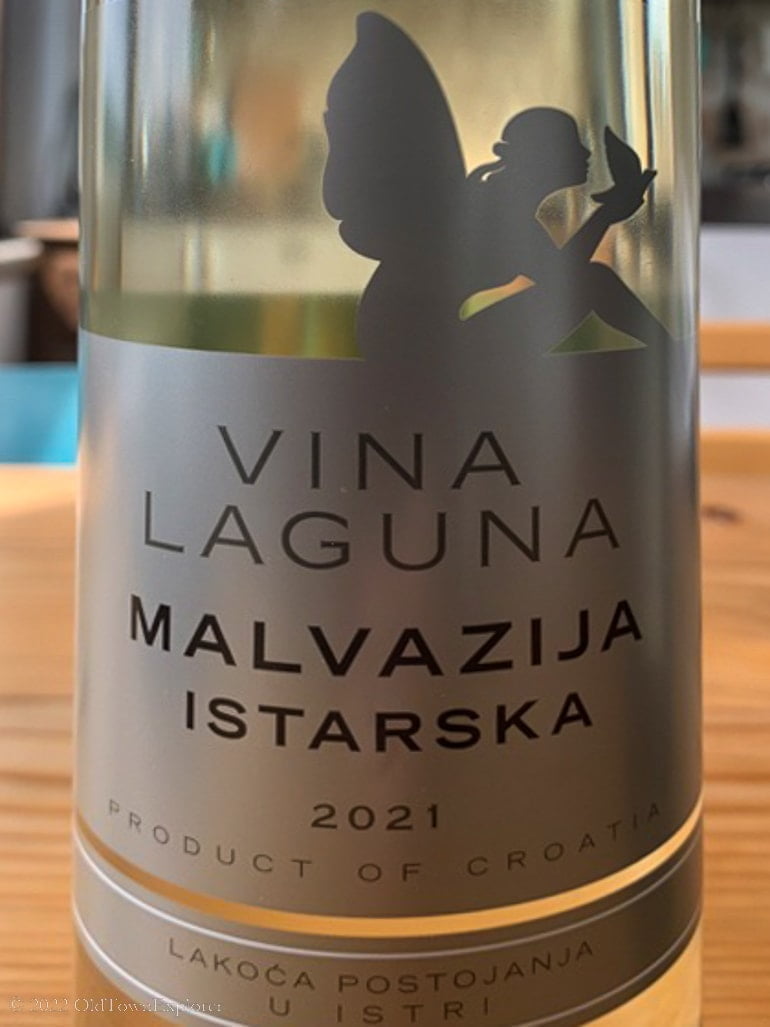
Malvazija Istarska
Malvazija Istarska is the main white wine of Istria. Fresh versions usually work as coastal whites for seafood, white fish, shellfish, vegetables, pasta, risotto, fresh cheese, and olive-oil-based dishes.
More structured versions may have fuller body, lees influence, oak, or extended skin contact. They fit truffle pasta, richer seafood, veal, pork, and aged cheese when you want more weight and texture than a fresh young Malvazija.
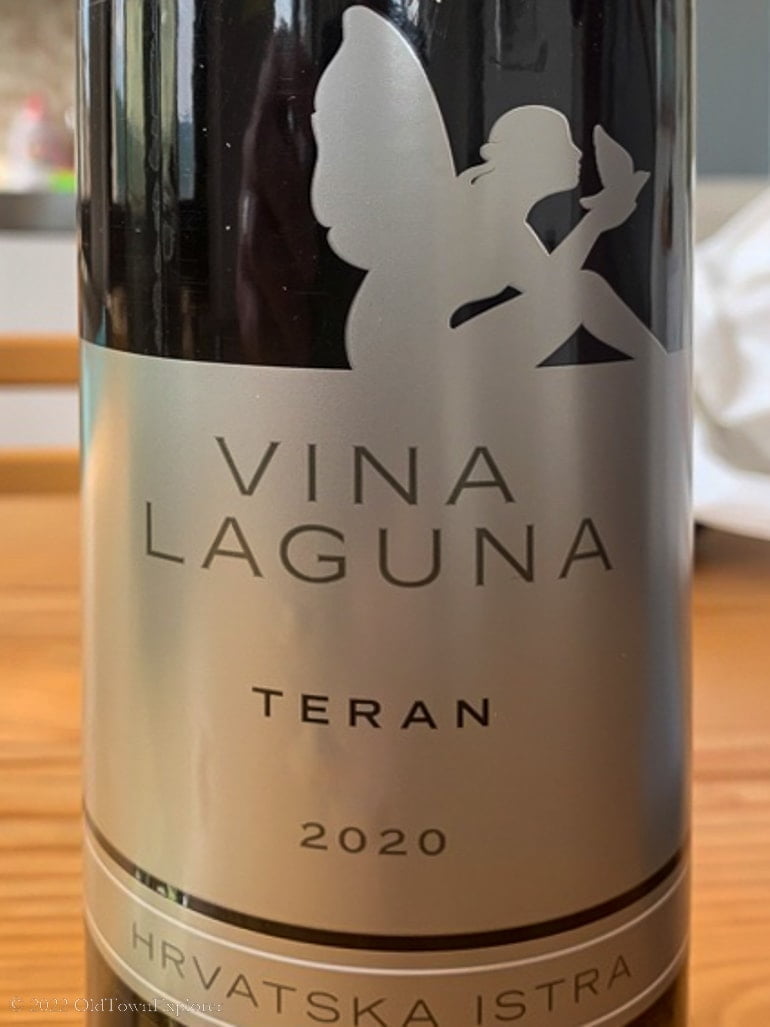
Teran
Teran is the main local red wine of Istria. Dry versions typically bring firm acidity and tannin with red- and dark-fruit character, giving the wine enough structure for the meat, mushrooms, cured foods, and truffle dishes of inland Istria.
Teran fits inland Istrian food: Boškarin beef, pršut, aged cheese, mushrooms, truffles, game, slow-cooked dishes, and meat sauces. Merlot, Cabernet Sauvignon, and red blends appear beside Teran but should not replace it as the first red-wine reference.
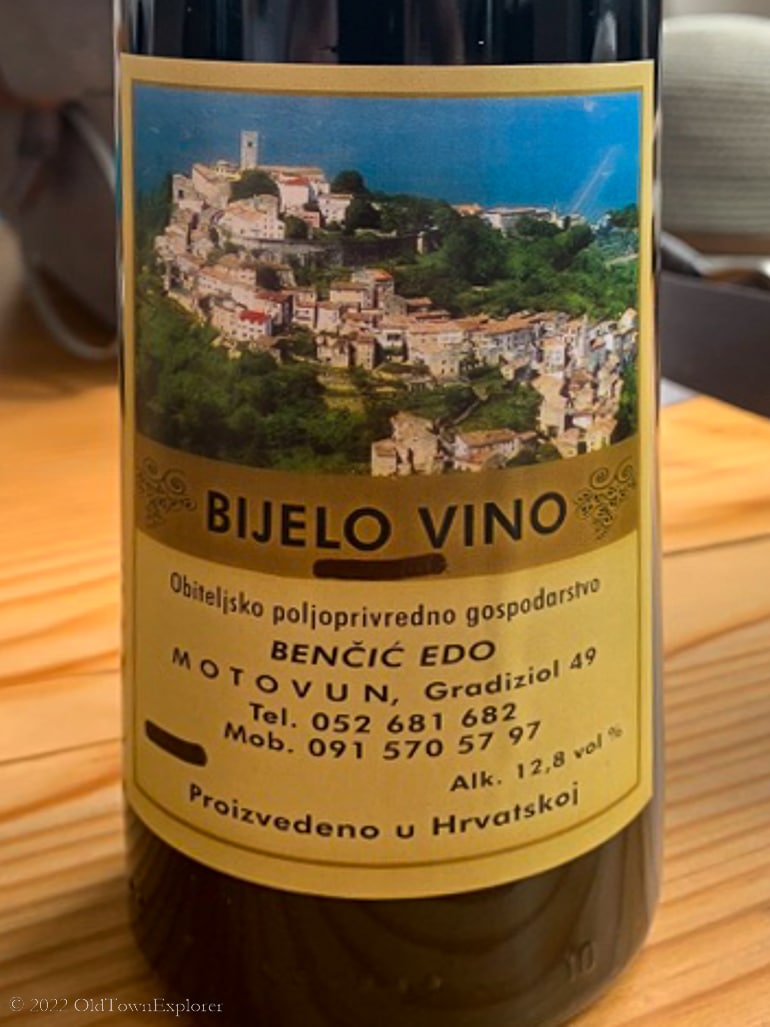
Muškat Momjanski
Muškat momjanski / Moscato di Momiano is an EU-protected wine name from the Momjan area, made from Muškat bijeli. The protected specification includes regular-harvest and dessert wines, so the name itself does not tell you exactly how sweet the bottle will be.
Drier bottlings can work as an aromatic aperitif or with lighter food, while sweeter versions suit dried fruit, honey, nuts, fritule, kroštule, and other pastries. Check the producer's style or sweetness description rather than assuming every Muškat Momjanski is a dessert wine.
Other Wine Styles in Istria
Sparkling wines, rosé, and skin-contact whites are important producer-led styles in Istria. They matter, but they usually come after Malvazija, Teran, and Muškat Momjanski in the first regional wine comparison.
- Sparkling wines: Often made from Malvazija Istarska, Chardonnay, or other grapes depending on producer and method. They fit oysters, fried foods, fresh cheese, seafood starters, cured meats, and lighter courses.
- Rosé wines: Usually made from red grapes such as Teran, Merlot, Cabernet Sauvignon, or producer-specific blends. They fit seafood pasta, grilled fish, cured meats, salads, vegetables, lighter meat dishes, and warm-weather meals.
- Skin-contact whites: Often made from Malvazija Istarska or other white grapes. They fit truffles, aged cheese, mushrooms, richer seafood, pork, poultry, and dishes that need more structure than a fresh white wine.
These styles broaden Istrian wine without changing the main starting point: Malvazija first, Teran second, Muškat Momjanski when sweet or aromatic wine is part of the route.
Wine Tasting and Wine Routes in Istria
Istria's wine roads spread through the countryside rather than staying inside one city. Rovinj, Motovun, Poreč, and Pula let you drink Istrian wine without building the day around winery appointments, while northern and central Istria put more producers within a rural driving route.
Best Wine Bases
Rovinj makes sense when wine is part of a coastal stay built around seafood, olive oil, restaurants, wine bars, and western Istria. Rovinj Wine gives the city-level choices for drinking, buying bottles, and deciding whether to add a nearby producer visit.
Motovun puts you closer to central Istrian wineries, Teran, Malvazija, truffles, and inland food. Motovun Wine compares wine in town with producer groups around Kanal, Brkač, and Kaldir.
Buje and Momjan suit a northern route when Muškat Momjanski is a priority. Poreč and Pula are additional coastal bases when wine is one part of a broader trip rather than the only reason for the day.
Wine Towns and Winery Areas
Northern Istria brings Buje, Momjan, Brtonigla, and Grožnjan into the same broad wine landscape, with Malvazija, Teran, Muškat, olive oil, and hill-town stops. Momjan stands apart because Muškat momjanski / Moscato di Momiano is tied specifically to that area.
Central Istria shifts the route toward Motovun and nearby villages, where Teran and Malvazija meet truffle country and inland food. Western and southern producers can be added from coastal bases such as Rovinj, Poreč, and Pula.
Wine Routes and Day Trips
For a northern wine day, keep the route around Buje, Momjan, Brtonigla, and Grožnjan rather than crossing the whole peninsula between tastings. From Motovun, build the day around one nearby producer group and leave time for lunch or a hill-town stop.
From Rovinj, Poreč, or Pula, a single inland producer loop usually fits more naturally into a coastal trip than a full day spent driving between distant winery areas.
Reservations, Transport, and Seasonality
Many wineries sit outside the old towns and village centers. Confirm tasting arrangements directly with each producer before setting out, because access and opening patterns vary.
For several tastings, arrange a non-drinking driver or other transport rather than driving between producers yourself. Without rural transport, drink Istrian wine in town and add a winery only when the visit and return journey are already arranged.
Food Pairings with Istria Wine
Istria's coastal and inland foods create two different pairing patterns. Fresh Malvazija Istarska fits fish, shellfish, vegetables, and olive-oil dishes, while Teran has the acidity and tannin for pršut, Boškarin, mushrooms, truffles, and slow-cooked meat. Muškat Momjanski changes with the bottling, from drier aromatic wines to sweeter dessert expressions.
Malvazija Istarska Pairings
Fresh Malvazija Istarska pairs with grilled fish, shellfish, seafood risotto, pasta, vegetables, fresh cheese, chard, olive oil, and lighter meat dishes. Structured Malvazija fits truffle pasta, richer seafood, aged cheese, pork, veal, and dishes with more texture.
Rovinj and the west coast put these pairings directly onto coastal menus, where Malvazija often appears beside seafood, vegetables, and olive-oil dishes.
Teran Pairings
Teran pairs with Istrian pršut, Boškarin beef, aged sheep cheese, mushrooms, truffles, game, meat sauces, grilled meats, and slow-cooked inland dishes. Its acidity and tannin work better with strong dishes than with delicate seafood.
Motovun and central Istria bring Teran together with truffles, mushrooms, pasta, cured meat, Boškarin, and other inland dishes.
Muškat, Sparkling, Rosé, and Skin-Contact Pairings
Check the sweetness of Muškat Momjanski before pairing it. Drier bottlings can work as an aromatic aperitif or with lighter starters, while sweeter versions fit fritule, kroštule, dried fruit, honey, nuts, and pastries. Sparkling wines suit oysters, fried foods, fresh cheese, and seafood starters, while rosé works with mixed seafood, cured meat, vegetables, and lighter meat dishes.
Skin-contact Malvazija and other textured whites fit truffles, aged cheese, mushrooms, richer seafood, pork, and poultry. Istria Food goes deeper into the seafood, truffles, olive oil, Boškarin, pršut, sheep cheese, pasta, and traditional dishes behind these pairings.
FAQs About Istria Wine
What wine is Istria known for?
Istria is known first for Malvazija Istarska and Teran, with Muškat momjanski / Moscato di Momiano adding a protected aromatic wine tradition around Momjan. Malvazija Istarska is the main local white-wine reference and Teran the main local red, while Muškat Momjanski ranges from drier expressions to sweet dessert wines.
What are the main wine areas and appellations in Istria?
The main protected names to recognize are Hrvatska Istra and Muškat momjanski / Moscato di Momiano at EU level, plus Buje / Buie under transitional national protection in Croatia. Wine routes also run through Rovinj and the west coast, Motovun and central Istria, Buje, Momjan, Brtonigla, Grožnjan, Poreč, and Pula.
What grapes are grown in Istria?
The main Istrian grapes are Malvazija Istarska for white wine, Teran for red wine, and Muškat bijeli, the grape behind Muškat Momjanski. Merlot, Cabernet Sauvignon, Chardonnay, Sauvignon Blanc, Pinot Gris, and other international grapes also appear, but Malvazija Istarska and Teran give you the clearest introduction to the region.
What wines should I try in Istria?
Start with a fresh Malvazija Istarska and a Teran, then add Muškat Momjanski to taste a wine tied specifically to the Momjan area. Sparkling wine, rosé, aged Malvazija, and skin-contact whites show what individual producers make beyond those three regional reference points.
Where should I start with Istria wine?
Rovinj makes a good starting point for coastal restaurants, seafood pairings, wine bars, and western Istrian producers. Motovun puts you closer to inland wine, truffles, Teran, Malvazija, and nearby wineries. Buje and Momjan make more sense when Muškat Momjanski and northern Istrian wine roads are the priority.
Do I need a car for wine tasting in Istria?
You do not need a car to drink Istrian wine in towns such as Rovinj or Motovun, but rural winery visits require more planning. For several tastings, arrange a non-drinking driver or other transport and confirm each producer visit before setting out.
Is Istria better for white wine or red wine?
You do not need to choose one side of Istrian wine. Malvazija Istarska gives the region its principal local white-wine reference, while Teran is the local red to compare with it. If you are tasting only two wines, one of each gives you a better introduction than treating Istria as only a white- or red-wine region.
What food pairs with Istria wine?
Fresh Malvazija Istarska pairs well with fish, shellfish, risotto, pasta, vegetables, fresh cheese, and olive-oil dishes. Teran suits pršut, Boškarin, truffles, mushrooms, aged cheese, game, and slow-cooked meat. With Muškat Momjanski, check the sweetness first: drier versions can work as an aperitif or with lighter food, while sweeter bottlings suit fritule, kroštule, dried fruit, honey, nuts, and pastries.
Is Istria in Italy or Croatia?
Istria is a peninsula shared by Croatia, Slovenia, and Italy. This page focuses on Croatian Istria, including the wine areas around Rovinj, Motovun, Buje, Momjan, Poreč, and Pula.
Rovinj anchors the coastal side of Istrian wine through seafood, olive oil, restaurants, wine bars, and western Istrian producers. Motovun anchors the inland side through truffles, Teran, Malvazija, hill-town restaurants, and nearby wineries.
Rovinj Wine covers the city-level coastal tasting choices, while Motovun Wine covers the inland hill-town tasting choices. Istria Food covers the truffles, olive oil, seafood, Boškarin, pršut, sheep cheese, and traditional dishes behind the pairings.