
Cesky Krumlov Wine
Explore Cesky Krumlov Wine: What to Drink & Where to Drink It
Cesky Krumlov wine is mainly an in-town experience rather than a vineyard trip. The South Bohemian town sits away from Czechia’s main wine-growing areas, but the historic center has wine bars, vinotéky, restaurant wine lists, and seasonal tastings where you can try Czech and Moravian bottles.
For a first glass, look for Veltlínské zelené, Ryzlink rýnský, Ryzlink vlašský, Sauvignon, or Pálava. If you prefer red, Frankovka, Svatovavřinecké, Rulandské modré, and Zweigeltrebe are useful names to recognize.
We spent the month of June in Cesky Krumlov, walking the historic center and checking wine bars and shops. Drawing on that stay and further research, this page compares what to drink, where to stop for a glass, where to buy a bottle, and when a guided wine experience beyond the old town makes sense.
This page contains affiliate links. We may earn a small commission at no extra cost to you.
Cesky Krumlov Wine at a Glance
Wine fits Cesky Krumlov best as part of an old-town stay. You can compare Czech and Moravian bottles on foot without turning a short visit into a long drive through wine country.
Key wine decisions:
- What to drink first: Start with Veltlínské zelené, Ryzlink rýnský, Ryzlink vlašský, or Pálava for white wine; try Frankovka or Rulandské modré for red.
- Where to start: Vnitřní Město has the tightest concentration of central bottle shops and casual wine stops.
- Wine with food: Latrán and the monastery side of town add cafés, bistros, and restaurants where wine fits naturally with a meal.
- Bottle buying: Radniční, Masná, and Dlouhá put several vinotéky within a short old-town walk.
- No-car tasting: Stay in town for wine bars, bottle shops, restaurant wine lists, and scheduled tastings rather than trying to reach distant wineries independently.
- Wine events: October and November bring the strongest concentration of dedicated wine events through the Český Krumlov Wine Festival.
If wine is one part of a one- or two-night stay, keep the tasting in town. A dedicated winery day makes more sense as a separate wine-country trip or a guided excursion.
What Wine to Drink in Cesky Krumlov
Cesky Krumlov is not a wine-producing center, so you only need a few Czech wine names before choosing a glass or bottle in town. Our Czechia Wine page goes deeper into the country’s wine regions, grapes, and label terms.

Czech and Moravian Wines to Recognize
For whites, look for Veltlínské zelené, Ryzlink vlašský, Ryzlink rýnský, Müller-Thurgau, Sauvignon, Rulandské šedé, and Pálava. Veltlínské zelené and Ryzlink vlašský are good starting points when you want a dry white, while Pálava moves toward a more aromatic style.
For red wine, Frankovka and Svatovavřinecké are good first choices. Rulandské modré, Zweigeltrebe, and Modrý Portugal give you lighter alternatives. A vinotéka is especially helpful when you want to compare grape, region, sweetness, and producer before buying a whole bottle.
Wine Pairings with Cesky Krumlov Food
Dry Veltlínské zelené, Ryzlink vlašský, or Ryzlink rýnský pair easily with trout, lighter poultry, fried dishes, and fresh cheese. Sauvignon is a good match for vegetables and goat cheese, while Pálava suits pâté, softer cheeses, and mildly spiced food.
For duck, pork, sausages, mushrooms, or richer sauces, try Frankovka, Svatovavřinecké, or Rulandské modré. Our Cesky Krumlov Food page covers the dishes and restaurant choices in more detail.
Where to Drink Wine in Cesky Krumlov
Most wine stops are walkable from the historic center. Vnitřní Město is strongest for combining bottle shops with a casual glass, Latrán works well when wine is part of castle-side sightseeing or dinner, and the streets south of the old town add more tasting-focused and natural-wine choices.
Vnitřní Město
Start inside the old-town river loop if you want the shortest walk between bottle buying and a glass of wine. Radniční, Masná, Dlouhá, and Široká put Vinotéka Svatého Kryštofa, Vinotéka u Lenina, Vinotéka Dlouhá 93, and Egon Café within the central walking area.
Latrán and the Monastery Area
Latrán is an easy place to add wine to a castle or monastery day. Café Kolektiv and Papas Living Restaurant are on Latrán itself, while Bistro Na Krajíčku sits by the monastery complex and specializes in natural wines.
South of the Historic Center
Head south of the tight old-town core when you want a quieter wine stop. Wine Bar Dionys on Po Vodě is the more tasting-focused choice, while Bistro Topinka on Rooseveltova pairs natural wine with its bistro menu.
Wine Bars in Cesky Krumlov
Cesky Krumlov has only a few wine-first venues, so the strongest list also includes cafés, bistros, and restaurants where wine has a clear role. Choose Dionys for a tasting-focused stop, the natural-wine bistros for a daytime glass with food, and Papas when wine belongs with a full dinner.
Wine Bar Dionys
- Address: Po Vodě 283, 381 01 Český Krumlov
Wine Bar Dionys is the most tasting-focused stop in this group, with Moravian and international wines plus producer meetings and tailored tastings.
Come here when the wine itself is the reason for the stop rather than a side drink with lunch or dinner.
Egon Café
- Address: Široká 71, 381 01 Český Krumlov
Egon Café combines a café and bistro with Austrian wines and wine snacks beside the Egon Schiele Art Centrum.
It is a relaxed choice for a glass and something small to eat while you are already exploring Široká and the western side of Vnitřní Město.
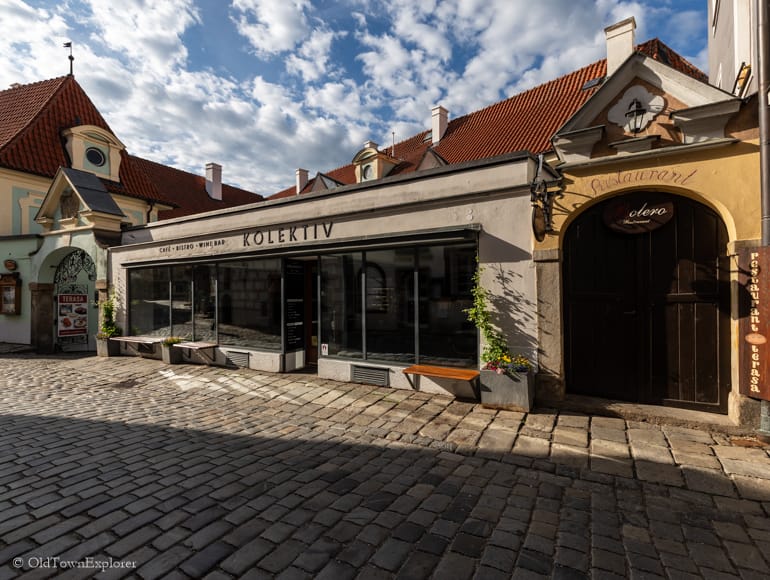
Café Kolektiv
- Address: Latrán 13, 381 01 Český Krumlov
Café Kolektiv is primarily a café and bistro, but its drinks include Czech and Austrian wine and prosecco.
Choose it for a casual daytime glass on Latrán, especially when coffee, breakfast, brunch, or a light meal is part of the stop.
Bistro Na Krajíčku
- Address: Klášterní 49, 381 01 Český Krumlov
Bistro Na Krajíčku sits by the Monastery Garden and makes natural wine a stated specialty alongside breakfast, lunch, and snacks.
It is a good fit when you want natural wine with a lighter daytime meal rather than a formal tasting.
Bistro Topinka
- Address: Rooseveltova 34, 381 01 Český Krumlov
Bistro Topinka combines breakfast, brunch, and lunch with natural wines in a modern bistro just south of the historic center.
Stop here when natural wine matters but you also want a proper daytime meal instead of a wine-bar-only visit.
Papas Living Restaurant
- Address: Latrán 13, 381 01 Český Krumlov
Papas Living Restaurant is food-first, but wine has a substantial place on the menu, including Moravian wine and wines by the glass.
Choose Papas for lunch or dinner with wine on Latrán rather than for bottle shopping or a dedicated tasting session.
Wine Shops in Cesky Krumlov
Three useful bottle shops sit inside Vnitřní Město, so buying Czech or Moravian wine does not require leaving the historic center. A fourth producer-run shop in Domoradice makes more sense when you already have a car or are shopping outside the old town.
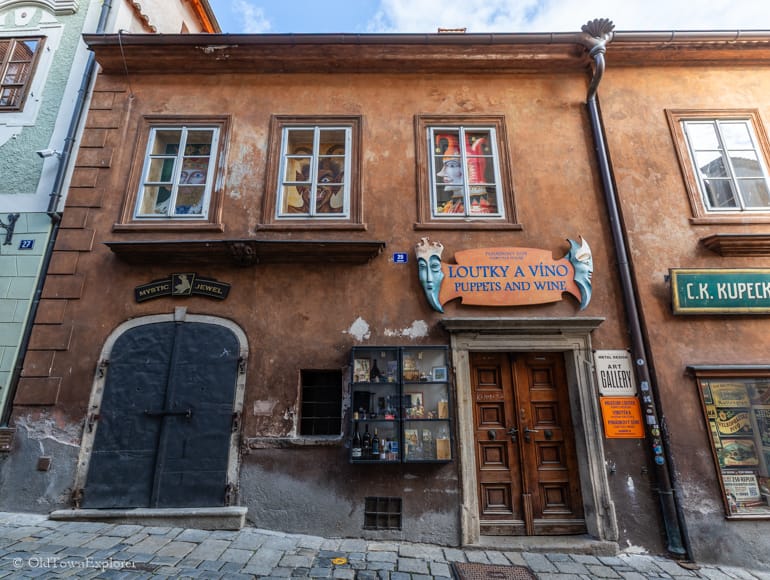
Vinotéka Svatého Kryštofa – Loutky a Víno
- Address: Radniční 29, 381 01 Český Krumlov
Vinotéka Svatého Kryštofa, also associated with the Loutky a Víno and Pohádkový dům operation, occupies Gothic cellars close to the main square. The shop focuses mainly on bottled wines from Bohemia and Moravia, particularly smaller and medium-sized producers, with a smaller selection from abroad.
Come here when you want to compare Czech and Moravian bottles before buying, or ask about arranged tastings in the adjoining Pohádkový dům.
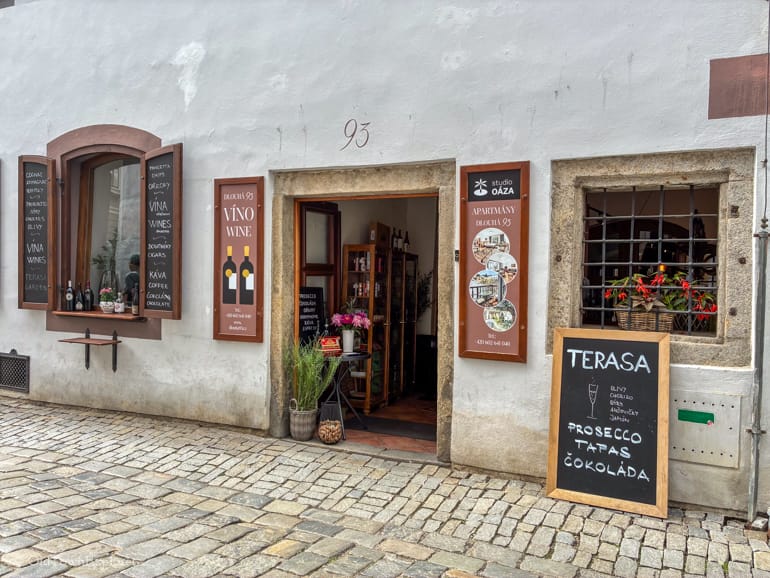
Vinotéka Dlouhá 93
- Address: Dlouhá 93, 381 01 Český Krumlov
Vinotéka Dlouhá 93 is both a central bottle shop and a venue for scheduled tastings.
It becomes especially interesting during the Český Krumlov Wine Festival, when its small tasting events let you spend more time with individual producers and wine themes.
Vinotéka u Lenina
- Address: Masná 131, 381 01 Český Krumlov
Vinotéka u Lenina is a compact bottle shop on Masná inside the historic center.
Its location is the main advantage for travelers: you can stop for a bottle without breaking an old-town walk or making a separate shopping trip.
Vinotéka Český Krumlov – Tesco
- Address: Domoradice 299, 381 01 Český Krumlov
Vinotéka Český Krumlov – Tesco is a Vinařství U Kapličky branch in Domoradice, outside the historic center. The producer’s shops carry its own wines alongside other Czech and Moravian bottles.
This stop makes more sense if you are driving, staying outside the old town, or already shopping in Domoradice.
Wineries Near Cesky Krumlov
Most winery visits from Cesky Krumlov are day trips or overnight extensions. The town is not surrounded by a dense cellar-door route, so transport matters more here than in major wine towns.
Use this decision order:
- Stay in town for the simplest wine experience
- Choose South Bohemia or Bohemia for a slower Czech wine day
- Choose Znojmo for the clearest Moravian wine-region route
- Choose Mikulov and Pálava for vineyard scenery and white wines
- Choose Velké Pavlovice or Slovácko for red-wine planning and village cellar culture
Do not combine several Moravian areas in one day from Cesky Krumlov. Pick one route, keep the number of tastings low, and check current visitor hours before building the day around a specific winery.
South Bohemia and Bohemia
Vinice u náhonu
Address: Kestřany, 398 21 Kestřany
Vinice u náhonu is one of the closer vineyard stops to Český Krumlov, with a small planted area tied to the Kestřany estate and local vineyard history. A visit helps explain small-scale South Bohemian vineyard work and cooler-climate grape choices such as Souvignier Gris, Solaris, Muscaris, and Cabernet Cortis.
Vinné sklepy Kutná Hora
Address: Jiřího z Poděbrad 288, 284 01 Kutná Hora
Vinné sklepy Kutná Hora is a biodynamic producer in the Bohemia wine region. It is useful for understanding the Bohemian side of Czech wine: cooler vineyards, lighter styles, and cellar visits outside the Moravian wine corridor.
Rodinné vinařství Hanuš
Address: Sukovská ulice, 284 04 Kutná Hora
Rodinné vinařství Hanuš is a family winery in Kutná Hora with guided tastings and seasonal outdoor tasting formats. It works well as a smaller-producer contrast to larger Moravian estates.
Vinařství Vinaře
Address: Prostřední Ves p.č. 82/2, 285 21 Zbraslavice
Vinařství Vinaře offers guided tastings with food and an explanation of production. The visit format is useful for travelers who want a quieter Bohemian wine stop rather than a busy town-center wine bar.
Znojmo Wine Region
Znovín Znojmo
Address: Šatov 404, 671 22 Šatov
Znovín Znojmo is a large Znojmo-region producer with a broad wine tourism program and vineyard ties around Šatov and Znojmo. A visit helps explain the scale of Moravian wine, the role of aromatic whites, and the organized side of Czech winery tourism.
LAHOFER Winery
Address: Vinice 579, 671 82 Dobšice
LAHOFER Winery is a modern Znojmo producer with vineyard-side tasting options near Dobšice. It is useful for comparing Znojmo whites such as Riesling, Sauvignon, and Veltlínské zelené in a structured setting.
Vinařství Nešetřil / Vinařský dům Znojmo
Address: Masarykovo náměstí 389/14, 669 02 Znojmo
Vinařství Nešetřil operates from cellars under a Renaissance house in Znojmo’s center, with a wine bar, terrace, and cellar tasting format. It helps connect Znojmo wine with an old-town setting instead of a vineyard-only visit.
Vinné sklepy Lechovice
Address: Borotice 76, 671 78 Borotice
Vinné sklepy Lechovice works with vineyards around Lechovice, Borotice, Božice, and Oleksovice. The producer is useful for seeing the broader Znojmo-area network and tasting aromatic whites such as Riesling, Pálava, Tramín, and Sauvignon.
Mikulov and Pálava
Vinařství Volařík
Address: K Vápence 1811/2a, 692 01 Mikulov
Vinařství Volařík is a Mikulov producer strongly associated with Ryzlink vlašský and white wines from the Mikulov subregion. The winery is useful for understanding how Pálava, limestone soils, and varietal bottlings shape this part of Moravia.
Sonberk
Address: Sonberk 393, 691 27 Popice
Sonberk is a modern winery near Popice with vineyard views toward the Pálava Hills. It is strongest for a white-wine focused visit, especially Riesling, Pálava, Tramín, and Sauvignon.
Mikrosvín Mikulov
Address: Sklepní 657, 691 85 Dolní Dunajovice
Mikrosvín Mikulov has cellars in Dolní Dunajovice in the Mikulov wine subregion. A visit helps explain classic cellar infrastructure, larger-volume production, and the importance of Ryzlink vlašský around the Pálava Hills.
Vinařství U Kapličky
Address: Vinařská 484, 691 05 Zaječí
Vinařství U Kapličky is a Zaječí producer with a cellar and guided tasting format. It is useful for visitors who want a scheduled tasting framework and a broader view of wine hospitality in the Mikulov and Velké Pavlovice border area.
Velké Pavlovice and Slovácko
Vinařství Fasora a synové
Address: Hovorany 203, 696 12 Hovorany
Vinařství Fasora a synové is a family winery in Hovorany with cellar tastings and a wide set of grape varieties. It is useful for seeing smaller-scale Moravian production away from the better-known Mikulov and Znojmo routes.
Vinařství Springer
Address: Bořetice 417, 691 08 Bořetice
Vinařství Springer is a family winery in Bořetice, an important village in the Velké Pavlovice subregion. A visit helps explain Moravian red wines, especially Pinot Noir, Frankovka, and structured village-level bottlings.
Vinařství Gotberg
Address: Popice 418, 691 27 Popice
Vinařství Gotberg is a modern winery in Popice with wines from the Velkopavlovická subregion. It is useful for tasting whites, rosé, and reds in a contemporary winery setting between Hustopeče, Popice, and the Pálava landscape.
Self-Guided Winery Tour Near Cesky Krumlov
A self-guided wine day from Cesky Krumlov works best when the route matches your transport. Without a car, stay in town and build the day around one wine shop, one café-wine bar, and dinner with a Czech or Moravian bottle. With a car or driver, choose one wine area and keep the schedule short.
No-car wine plan
- Start with a central wine shop for bottle advice
- Add one café-wine bar or restaurant wine stop
- Use the evening for dinner with Czech or Moravian wine
- Look for wine festival events if visiting in October or November
Driver-based wine plan
- Choose one wine area only
- Book one or two tastings
- Leave space for lunch or dinner
- Avoid mixing distant regions in the same day
Overnight wine plan
- Use Znojmo, Mikulov, Pálava, Velké Pavlovice, or Slovácko as the overnight base
- Visit two wineries at most in one day
- Add one town-center wine bar or cellar stop
- Return to Cesky Krumlov the next day
This keeps the day practical: taste wine in town if you are staying local, or choose one focused route if you want to see Czech wine country beyond Český Krumlov.
South Bohemia and Bohemia day
This route keeps the focus on cooler-climate Czech wine outside Moravia. It is less about famous appellations and more about small vineyards, historic towns, and the difference between Bohemian and Moravian wine culture.
- Kutná Hora for Vinné sklepy Kutná Hora or Rodinné vinařství Hanuš
- Vinařství Vinaře for an appointment-based tasting near Zbraslavice
- Dinner back in Český Krumlov with a Czech or Moravian bottle
This route is best for visitors who want Czech wine without committing to a long Moravian day. It also pairs well with architecture or town visits because the wine stops sit near historic places.
Znojmo wine-region day
Znojmo is the clearest Moravian wine area to pair with Český Krumlov if you want a true wine-region day. It combines wineries, enotecas, cellar spaces, restaurant wine lists, and a historic town center.
- LAHOFER Winery in Dobšice for a vineyard-side tasting
- Znojmo center for cellar tasting at Vinařství Nešetřil
- Znovín Znojmo or Šatov for a larger producer perspective
- Dinner in Znojmo before returning or staying overnight
This route gives the clearest one-day picture of Znojmo wines. It works especially well for Riesling, Sauvignon, Veltlínské zelené, Müller-Thurgau, and other dry white styles.
Mikulov and Pálava day
Mikulov and Pálava are better as an overnight route than a simple day trip from Český Krumlov. The payoff is a concentrated look at Moravian limestone-influenced whites, especially Ryzlink vlašský, Pálava, Pinot Gris, and Riesling.
- Sonberk in Popice for a modern winery visit with vineyard views
- Vinařství U Kapličky in Zaječí for a scheduled tasting format
- Vinařství Volařík in Mikulov for Ryzlink vlašský and Mikulov whites
- Mikrosvín Mikulov in Dolní Dunajovice for cellar infrastructure and regional whites
This route is the strongest option for visitors who want the most recognizable Moravian wine landscape. It is not the easiest from Český Krumlov, but it gives the clearest contrast between a South Bohemian base and a major Czech wine area.
Velké Pavlovice and Slovácko reds day
This route is for visitors who want to understand Czech red wine more than white wine. Velké Pavlovice and parts of Slovácko are more relevant for Frankovka, Svatovavřinecké, Zweigelt, Pinot Noir, Modrý Portugal, and fuller Moravian reds.
- Hovorany for Vinařství Fasora a synové and smaller family production
- Bořetice for Vinařství Springer and red-wine focused tasting
- Vinařství Gotberg in Popice for an additional Velké Pavlovice-area stop
- Overnight in South Moravia if you want more than two producers
This route requires the most planning from Český Krumlov. It is best treated as a Moravian wine extension rather than a simple add-on to an old-town stay.
Wine Tours in Cesky Krumlov
A guided wine experience makes the most sense when you want more structure than a casual glass or bottle-shop visit. In-town tastings keep the day centered on Cesky Krumlov, while longer excursions are better when wine country itself deserves most of the day.
Guided Tours
Compare guided options by where the tasting takes place, how much transport is involved, the number of wines, food stops, group size, meeting point, total duration, and cancellation terms. For a short Cesky Krumlov stay, an in-town tasting leaves much more time for the historic center than a long wine-region excursion.
Best Places to Stay in Cesky Krumlov for Wine
For wine bars and bottle shops, stay close to Vnitřní Město or Latrán. Both keep the town’s central wine stops within walking distance, while the edge of the historic center is easier if you are arriving by car.
Hotels and Apartments in Cesky Krumlov for Wine
Vnitřní Město puts Radniční, Masná, Dlouhá, and Široká close to your accommodation. Latrán is convenient for Café Kolektiv, Papas, the monastery area, and castle-side sightseeing. If a guided wine trip outside town is part of the stay, the edge of the center can simplify pickup or parking without moving you far from evening wine stops.
Use the interactive map below to compare hotels and apartments in Vnitřní Město, Latrán, and along the edge of the historic center.
FAQs About Cesky Krumlov Wine
Is Cesky Krumlov a wine town?
Cesky Krumlov is better for drinking Czech and Moravian wine than for visiting vineyards. Its practical wine experience is concentrated in old-town wine shops, wine-focused cafés and bistros, restaurant lists, tastings, and the annual Wine Festival.
What wine region is Cesky Krumlov associated with?
Cesky Krumlov is in South Bohemia rather than one of Czechia’s main wine-growing centers. The bottles you encounter in town can come from both Bohemia and Moravia, with Moravian wines especially common on Czech wine lists and in vinotéky.
What wines should I try in Cesky Krumlov?
For white wine, start with Veltlínské zelené, Ryzlink vlašský, Ryzlink rýnský, Sauvignon, or Pálava. For red, try Frankovka, Svatovavřinecké, Rulandské modré, or Zweigeltrebe.
Where can I drink wine in the historic center?
Vnitřní Město and Latrán are the easiest areas for a walkable glass with sightseeing or dinner. Egon Café is on Široká, Café Kolektiv and Papas are on Latrán, while Bistro Na Krajíčku is by the monastery complex. Wine Bar Dionys and Bistro Topinka sit just beyond the tightest old-town core.
Where can I buy wine in Cesky Krumlov?
Vinotéka Svatého Kryštofa on Radniční, Vinotéka Dlouhá 93, and Vinotéka u Lenina on Masná are the most convenient central bottle stops. Vinařství U Kapličky also has its Vinotéka Český Krumlov – Tesco branch in Domoradice.
Can I taste wine in Cesky Krumlov without a car?
Yes. Stay in the historic center and combine a wine shop with a tasting-focused stop such as Wine Bar Dionys or a café, bistro, or restaurant where Czech or Moravian wine has a clear place on the menu. During the Wine Festival, scheduled tastings add more structured options.
Are there wineries near Cesky Krumlov?
There is no dense cellar-door winery cluster that makes Cesky Krumlov an easy vineyard base. If winery visits are a main reason for the trip, plan a separate wine-country stay or guided day and use our Czechia Wine page to compare the country’s main wine areas.
Does a guided wine tour make sense from Cesky Krumlov?
It can, especially if you want a wine-country day without driving between tastings. For a short stay, compare the time spent traveling with the simpler option of tasting Czech and Moravian wine inside Cesky Krumlov.
When should I visit Cesky Krumlov for wine events?
Look at October and November if dedicated wine events matter to your trip. The official Český Krumlov Wine Festival program fills those months with tastings, presentations, food-and-wine events, and the annual Chateau Wine Celebration.
Cesky Krumlov wine is not about moving quickly between nearby estates. It is about using the historic center as a compact place to taste Czech and Moravian bottles, ask for shop guidance, and decide whether a longer wine trip fits your itinerary. For a deeper look at regions, grapes, and producer areas, continue to Czechia Wine.