
Bordeaux Wine
Explore Bordeaux Wine: Bars, Shops & Wineries
Bordeaux is both a city for tasting wine and the main base for exploring the surrounding vineyards. In the center, wine bars, specialist shops, museums, and tasting rooms bring bottles from across the region into a compact urban area.
Red blends based on Merlot, Cabernet Sauvignon, and Cabernet Franc dominate, but the region also produces dry white Bordeaux, sweet wines from Sauternes and Barsac, sparkling Crémant de Bordeaux, rosé, and clairet.
We spent a month in Bordeaux, tasting at local bars, browsing wine shops, and visiting nearby wineries. Use this guide to choose what to drink in the city, compare places to taste and buy wine, and decide between a guided excursion and an independently planned vineyard day.
This page contains affiliate links. We may earn a small commission at no extra cost to you.
Bordeaux Wine at a Glance
Bordeaux offers several ways to explore its wine culture, from an informal glass in the historic center to a full day among vineyards outside the city.
These are the main planning points:
- Start in the city: Compare regional styles at a wine bar before choosing which vineyard area to visit
- Main red grapes: Merlot, Cabernet Sauvignon, and Cabernet Franc, with smaller amounts of Petit Verdot, Malbec, and Carménère
- Other styles: Dry white Bordeaux, Sauternes and Barsac, Crémant de Bordeaux, rosé, and clairet
- Easiest vineyard access: Estates in Bordeaux and Pessac are closest, while Saint-Émilion can be reached by train with additional local transportation
- Advance planning: Most château visits require reservations, and rural estates may not be connected by practical public transportation
- Main trade-off: A guided tour simplifies transportation, while an independent trip gives you more control over the estates and schedule
Choose the wine area before arranging transportation. Médoc, Saint-Émilion, Pessac-Léognan, and Sauternes differ in both wine style and how easily their estates can be combined in one day.
What Wine to Drink in Bordeaux
Bordeaux wine is defined by appellation and blend rather than by a single grape. A city tasting can therefore compare several banks, subregions, grapes, and production styles without requiring a trip to every vineyard area.
Bordeaux Wine Region
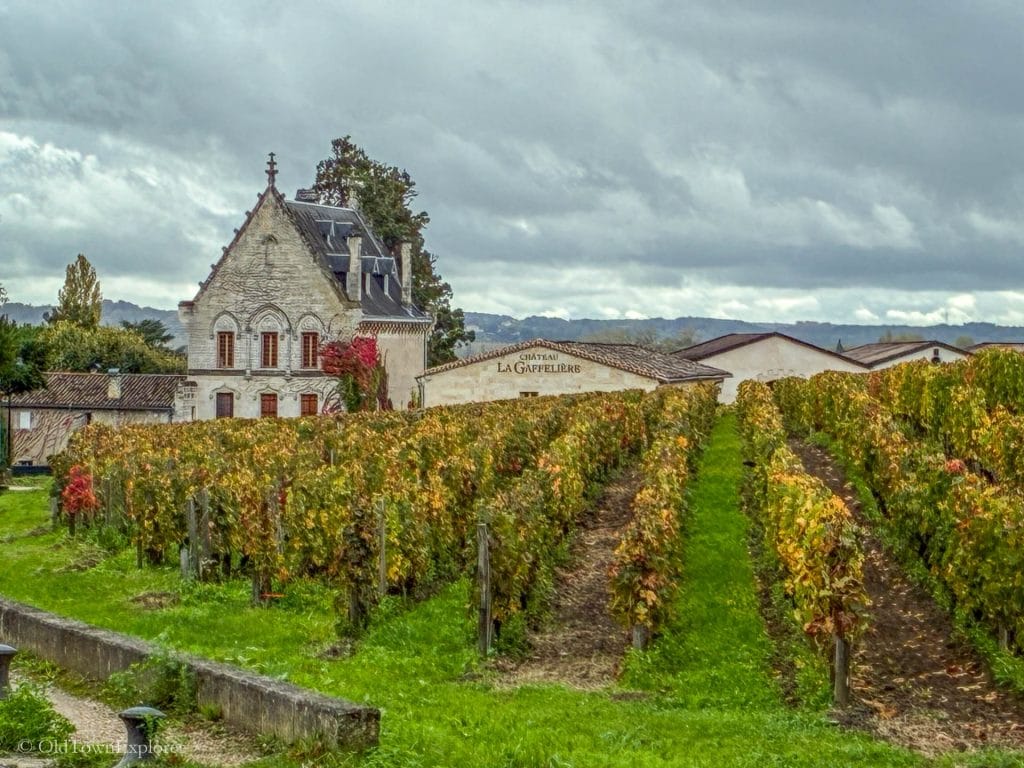
The Bordeaux wine region surrounds the city and stretches west to the Atlantic coast, east to Libourne, and south along the Garonne and Dordogne rivers. Divided into subregions known as the Left Bank and Right Bank, Bordeaux is home to over 60 AOCs (Appellations d’Origine Contrôlée), producing everything from powerful red blends to sweet whites and sparkling Crémants.
See our Bordeaux Wine Region guide for appellations, geography, grapes, and regional wine styles. For broader national context, continue to our France Wine guide.
Red Bordeaux
Merlot, Cabernet Sauvignon, and Cabernet Franc form the core of most red Bordeaux blends. Wines from the Médoc and Graves commonly place more emphasis on Cabernet Sauvignon, while Saint-Émilion and Pomerol are generally more Merlot-led. Ask for contrasting Left Bank and Right Bank glasses if you want to compare the two broad traditions.
Dry White Bordeaux
Dry white Bordeaux commonly combines Sauvignon Blanc and Sémillon, sometimes with Muscadelle. Styles range from fresh, citrus-led wines to fuller barrel-aged examples, particularly in Pessac-Léognan and Graves.
Sauternes and Barsac
Sauternes and Barsac produce sweet white wines, principally from Sémillon and Sauvignon Blanc affected by noble rot. A small glass can work with blue cheese, foie gras, fruit desserts, or as a tasting on its own; it does not have to be reserved for dessert.
Crémant, Rosé, and Clairet
Crémant de Bordeaux is the region’s traditional-method sparkling wine. Bordeaux also produces rosé and clairet, a darker and more structured style that sits between conventional rosé and red wine.
Choosing a First Glass or Bottle
For a short tasting, compare a Merlot-led Right Bank red, a Cabernet-led Left Bank red, and either a dry white or Sauternes. When buying a bottle, tell the caviste your budget, when you intend to drink it, and whether you need help arranging shipment.
Where to Drink Wine in Bordeaux
Most city wine venues are concentrated in walkable central neighborhoods, although Bacalan and the right bank require a longer walk or tram ride. Opening days vary, and some wine bars operate mainly in the evening.
Saint-Pierre and the Historic Center
Saint-Pierre and the streets around Place de la Comédie have the densest concentration of central wine bars and shops. This area works well for comparing several venues on foot and combining a tasting with dinner.
Chartrons and Bacalan
Chartrons reflects Bordeaux’s history as a wine-trading port and combines bottle shops, bars, and the Musée du Vin et du Négoce. Farther north, Bacalan contains the Halles de Bacalan and La Cité du Vin.
Saint-Michel, Capucins, and Sainte-Croix
The southern center has smaller wine bars and independent shops near Marché des Capucins, Saint-Michel, and Sainte-Croix. It is also convenient for travelers arriving through Bordeaux Saint-Jean.
Beyond the Historic Center
Fondaudège, Saint-Seurin, Mériadeck, La Bastide, and other residential districts have neighborhood cavistes and mixed wine-and-food venues. These locations are more dispersed, so check tram routes and opening times before crossing the city for one stop.
Wine Bars in Bordeaux
Bordeaux wine bars range from regional tasting rooms to neighborhood caves à manger and bars specializing in natural or international bottles. Confirm current opening hours and whether reservations are accepted before making a special trip.
Saint-Pierre and the Historic Center
Le Bar à Vin
- Address: 3 Cours du XXX Juillet
Le Bar à Vin, operated by the Bordeaux Wine Council, offers a changing selection of regional red, white, rosé, clairet, sweet, and sparkling wines by the glass.
Aux Quatre Coins du Vin
- Address: 8 Rue de la Devise
Aux Quatre Coins du Vin uses self-service tasting machines, making it possible to compare small pours from Bordeaux and other wine regions.
Sonate
- Address: 18 Rue Parlement Saint-Pierre
Sonate combines wines by the glass and bottle with a food menu in the Saint-Pierre district.
Le Laboratoire
- Address: 17 Rue Parlement Saint-Pierre
Le Laboratoire serves wine alongside cocktails and other drinks. Check its current program if you are interested in a scheduled tasting or themed evening.
Voilà ! Bar à Vins du Monde
- Address: 36 Rue Parlement Saint-Pierre
Voilà ! Bar à Vins du Monde focuses on bottles from countries beyond France, making it useful when you want a comparison with Bordeaux rather than another regional-only tasting.
Wine More Time
- Address: 8 Rue Saint-James
Wine More Time operates as both a bar and bottle shop, with wines from Bordeaux and other regions accompanied by small plates. Bottles can also be purchased to take away.
Wine Corner cave et bar à vin
- Address: 5 Rue de la Merci
Wine Corner combines tastings, classes, and bottle sales. Its complete buying entry appears in the Wine Shops section below.
Chartrons and the Waterfront
Le Sobre Chartrons
- Address: 24 Quai des Chartrons
Le Sobre Chartrons is a quayside wine bar and shop with bottles to drink on site or take away.
Bistrot du Fromager
- Address: 73 Quai des Chartrons
Bistrot du Fromager centers its menu on cheese, with wines selected for pairing rather than a stand-alone tasting format.
CORNICHON – Cave à trinquer
- Address: 1 Quai Richelieu
CORNICHON combines wine, small plates, and riverfront access near the southern edge of the historic center.
Vinimarché
- Address: Halles de Bacalan, 15 Quai du Maroc
Vinimarché is associated with the Halles de Bacalan food hall. See its Wine Shops entry below and confirm its current counter hours before visiting.
Saint-Michel and Sainte-Croix
Julo
- Address: 11 Rue des Faures
Julo is a wine bar and cave à manger with organic and low-intervention bottles, accompanied by food intended for sharing.
Levain Le Vin Bordeaux
- Address: 75 Rue de la Rousselle
Levain Le Vin combines wine with naturally leavened bread and a compact food menu, giving the venue a more food-led role than a conventional tasting room.
ComplanTerra
- Address: 42 Rue Sainte-Colombe
ComplanTerra focuses on low-intervention wines and small-producer bottles in the historic center south of Porte Cailhau.
Pey-Berland, Gambetta & Surrounding Streets
Maison Julien
- Address: 35 Rue Bouffard
Maison Julien combines a sommelier-led wine selection with dishes and bottles intended for longer seated visits.
La Bande à Roro
- Address: 23 Rue des Piliers de Tutelle
La Bande à Roro serves wine with a broader bar-and-food menu near the Grand Théâtre and Rue Sainte-Catherine.
L'ampélo, cave à manger
- Address: 3 Rue Gobineau
L'ampélo operates as a cave à manger, pairing a changing wine selection with plates rather than offering only stand-alone pours.
The Wine of Bordeaux
- Address: 8 Cours du XXX Juillet
The Wine of Bordeaux is listed as a tasting-focused venue near the Bordeaux Wine Council. Confirm its current visitor format and reservation requirements directly.
L'accolade
- Address: 10 Rue Louis Combes
L'accolade combines wine service with bottle sales and food pairings. It is also retained as a short cross-reference in the Wine Shops section.
Cave Le Charabia
- Address: 24 Rue du Maréchal Joffre
Cave Le Charabia is a small neighborhood wine venue near Pey-Berland, with bottles selected for on-site drinking and conversation.
Victoire, Mériadeck, and the Central Corridors
Les Trois Pinardiers
- Address: 2 Rue Georges Bonnac
Les Trois Pinardiers uses wine-dispensing equipment to offer several tasting quantities, which helps when comparing multiple wines.
Chez le Pépère
- Address: 19 Rue Georges Bonnac
Chez le Pépère combines wine, food, and occasional live entertainment in an informal bar setting.
Le Métropolitain
- Address: 49 Cours d'Alsace-et-Lorraine
Le Métropolitain serves French wine with food in a central location between Pey-Berland and the river.
Buvette, cave de quartier
- Address: 41 Cours d'Alsace-et-Lorraine
Buvette is a neighborhood cave and bar with an emphasis on low-intervention wines and bottles from independent producers.
Au Bon JaJa Bar à Vin Bordeaux
- Address: 4 Cours d'Alsace-et-Lorraine
Au Bon JaJa serves organic, biodynamic, and low-intervention wines, with bottles available for on-site drinking or takeaway.
Couleurs du Vin: Bar à Vin Bio
- Address: 1 Place Duburg
Couleurs du Vin specializes in organic and biodynamic wine near Sainte-Croix and Bordeaux Saint-Jean.
Elsewhere in the City
Coumé Vaï
- Address: 65 Rue Saint-Rémi
Coumé Vaï is a small central venue with a selection oriented toward natural and small-producer wines.
Blouge
- Address: 16 Rue Fernand Philippart
Blouge offers seated wine service near Place de la Bourse and the central riverfront.
Le verre sifflé
- Address: 36 Rue le Chapelier
Le verre sifflé is a small neighborhood venue with a compact wine selection. Check its current opening schedule before traveling across the city.
Monette
- Address: 37 Rue de la Fusterie
Monette is retained as a small bar listing in the historic center. Confirm its current wine service and opening hours directly.
L'officine
- Address: 48 Rue du Docteur Albert Barraud
L'officine is a broader concept bar rather than a wine-only venue, so it is most suitable when a group wants cocktails and other drinks alongside wine.
POINT ROUGE
- Address: 1 Quai de Paludate
POINT ROUGE combines a large bar, food, cocktails, and wine near the southern riverfront. Check its evening schedule and reservation policy before visiting.
L'Éphémère de Supergraal
- Address: 87 Quai des Queyries
L'Éphémère de Supergraal is a seasonal right-bank venue associated with Darwin. Confirm that the current edition is operating before crossing the river.
Quivre: Bar à vins et bières
- Address: 355 Avenue Thiers
Quivre serves both wine and beer in La Bastide, making it a practical mixed-drinks option rather than a Bordeaux-only tasting stop.
Pépin Bordeaux
- Address: 45 Rue de la Compagnie du Midi
Pépin Bordeaux is a neighborhood wine venue south of Bordeaux Saint-Jean. Verify its current service hours before making a dedicated trip.
Wine Shops in Bordeaux
Bordeaux wine shops range from merchants specializing in classified growths to neighborhood cavistes selling low-intervention wine, spirits, beer, and bottles from elsewhere in France. Ask about drinking windows, packing, and shipping before purchasing bottles for travel.
Place de la Comédie and Allées de Tourny
Nicolas Bordeaux les Grands Hommes
- Address: 12 Place des Grands Hommes
Nicolas is a national chain with a central Bordeaux branch carrying regional wine alongside bottles from elsewhere in France.
L'Intendant Grands Vins de Bordeaux
- Address: 2 Allées de Tourny
L'Intendant specializes in Bordeaux wine, including older vintages and classified estates, displayed around the shop’s tall spiral staircase.
Badie
- Address: 60–62 Allées de Tourny
Badie is a long-established merchant for Bordeaux wine, Champagne, and spirits, with options across a wide price range.
La Vinothèque de Bordeaux
- Address: 8 Cours du XXX Juillet
La Vinothèque de Bordeaux carries a broad regional inventory and is useful for comparing appellations in one central shop.
Historic Center and Saint-Pierre
L'accolade
- Address: 10 Rue Louis Combes
L'accolade also sells bottles to take away; see its full entry in the Wine Bars section above.
Émile et Marguerite
- Address: 13 Rue Parlement Saint-Pierre
Émile et Marguerite is an independent central caviste with bottles from Bordeaux and other French wine regions.
Wine Corner cave et bar à vin
- Address: 5 Rue de la Merci
Wine Corner combines bottle sales, wines by the glass, and tasting classes. Its range includes Bordeaux, organic wines, and bottles from other regions.
Au Bon JaJa Bar à Vin Bordeaux
- Address: 4 Cours d'Alsace-et-Lorraine
Au Bon JaJa sells bottles as well as serving them at the bar; see its full entry in the Wine Bars section.
Wine More Time
- Address: 8 Rue Saint-James
Wine More Time offers bottles for takeaway in addition to bar service; see its full entry in the Wine Bars section.
Chartrons and Bacalan
Le Chai Des Chartrons
- Address: 20 Rue Minvielle
Le Chai Des Chartrons is located in Bordeaux’s historic wine-trading district and carries regional wine alongside other French selections.
Vinimarché
- Address: Halles de Bacalan, 15 Quai du Maroc
Vinimarché is a food-hall wine counter for buying bottles or choosing wine with food from other Halles de Bacalan vendors. Confirm its current counter hours before visiting.
CLOS DES MILLESIMES
- Address: 3 Rue Lucien Faure
CLOS DES MILLESIMES focuses on fine wine, mature bottles, and collectible vintages from Bordeaux and other regions.
Clos des Spiritueux
- Address: 93 Quai de Bacalan
Clos des Spiritueux carries spirits alongside wine and suits shoppers who want both categories in one stop.
La Cave du Musée
- Address: 37 Rue Borie
La Cave du Musée is a small bottle shop near the Musée du Vin et du Négoce in Chartrons.
Musée du Vin et du Négoce de Bordeaux
- Address: 41 Rue Borie
The Musée du Vin et du Négoce combines exhibits about Bordeaux’s wine trade with tastings and a museum shop.
North and East Bordeaux
Mondowine | Cave à vin Bordeaux
- Address: 174 Rue Achard
Mondowine is a Bacalan neighborhood caviste with regional wine and bottles from outside Bordeaux.
Raisin & Bulles - Bordeaux
- Address: 236 Rue d'Ornano
Raisin & Bulles carries still and sparkling wines, making it useful when Crémant and Champagne are part of the shopping list.
12bouteilles
- Address: 115 Cours Balguerie Stuttenberg
12bouteilles offers a curated selection of wine for local purchase and delivery. Confirm whether the Bordeaux address currently accepts walk-in shopping.
Cave BRIAU
- Address: 94 Rue David Johnston
Cave BRIAU is an independent Chartrons-area caviste carrying Bordeaux and other French wines.
Le domaine du vin
- Address: 180 Cours de la Marne
Le domaine du vin is a traditional bottle shop southwest of Bordeaux Saint-Jean with regional and national selections.
Cave à vins
- Address: 104 Cours de la Marne
This neighborhood listing is identified simply as Cave à vins. Confirm the business name, opening hours, and current retail service before visiting.
Pey-Berland, Fondaudège, and Palais Gallien
Maison Desire
- Address: 11 Cours du Maréchal Gallieni
Maison Désiré is a modern caviste carrying wine and spirits near the western edge of central Bordeaux.
MAISON JUDE
- Address: 20 Rue d'Alzon
MAISON JUDE works with fine wine and imported bottles. Check whether your visit requires an appointment.
Le Pied à Terre - Cave à vin & atelier dégustation
- Address: 22 Rue Judaïque
Le Pied à Terre combines bottle sales with tasting workshops, making it useful for a structured session inside the city.
Muzo
- Address: 53 Rue du Palais Gallien
Muzo is a small independent caviste with a curated selection near Palais Gallien.
Malt & Co
- Address: 62 Rue du Palais Gallien
Malt & Co carries beer as well as wine, making it suitable for mixed shopping rather than a Bordeaux-only selection.
Edgar le livreur
- Address: 143 Rue Fondaudège
Edgar le livreur specializes in wine and spirits delivery. Confirm whether the address currently supports walk-in purchases before traveling there.
Saint-Michel, Capucins, and Sainte-Croix
Julo
- Address: 11 Rue des Faures
Julo sells bottles alongside its cave à manger service; see its full entry in the Wine Bars section.
La Belle Cave
- Address: 1 Place du Palais
La Belle Cave is a small independent bottle shop near Porte Cailhau with an emphasis on terroir-driven wines.
La Cave
- Address: Place des Capucins
La Cave is retained as a small market-area wine listing. Confirm its precise location and current opening schedule before relying on it as a dedicated stop.
Raisins & Copains
- Address: 2 Rue de la Croix-de-Seguey
Raisins & Copains is a neighborhood caviste north of the center with staff guidance for bottle selection.
La Cave de Monsieur Seurin - JDM Vin
- Address: 19 Rue Capdeville
La Cave de Monsieur Seurin is an independent shop near the Saint-Seurin district.
La Maison Gabin
- Address: 37 Cours Portal
La Maison Gabin is a Chartrons neighborhood shop with a curated bottle selection.
Autres Châteaux
- Address: 29 Cours Portal
Autres Châteaux is an independent caviste on Cours Portal with Bordeaux and other producer-led selections.
Elsewhere in Bordeaux
RN7 - Vins Fins et de Caractère
- Address: 102 Rue Notre-Dame
RN7 specializes in characterful French wines, including a strong representation from the Rhône alongside Bordeaux bottles.
La C.U.V
- Address: 7 Place du Maucaillou
La C.U.V combines bottle sales with tastings and wine classes. Check the workshop calendar if you want a structured session.
CLARENCE DILLON WINES
- Address: 3 Rue Avison
CLARENCE DILLON WINES represents wines associated with the Clarence Dillon group. Confirm the current retail and appointment arrangements before visiting.
CAVE SAINT SEURIN
- Address: 16 Place des Martyrs de la Résistance
CAVE SAINT SEURIN is a neighborhood bottle shop serving the Saint-Seurin area northwest of the historic center.
BH CORNER
- Address: 73 Avenue de la République
BH CORNER is a Caudéran-area caviste carrying wine and other drinks outside the central tourist districts.
Seignouret Frères
- Address: 40 Cours du Maréchal Foch
Seignouret Frères is associated with Bordeaux wine trading and bottle sales near Jardin Public.
Bordeaux Classique
- Address: 15 Rue de la Porte Bouqueyre
Bordeaux Classique is a traditional bottle shop near Saint-Michel and Porte de Bourgogne.
Feral - Art & Vin
- Address: 22 Rue Buhan
Feral combines wine with art and cultural programming near the southern historic center.
Esprit Liquide
- Address: 199 Rue Georges Bonnac
Esprit Liquide carries wine and spirits west of Mériadeck.
L.m. Grands Vins
- Address: 109 Rue de Saint-Genès
L.M Grands Vins specializes in fine wine and bottle recommendations south of the historic center.
Wineries Near Bordeaux
The closest estates lie in Bordeaux, Pessac, and nearby suburbs. Médoc, Saint-Émilion, Pessac-Léognan, and Sauternes require separate route planning, and most estates expect advance reservations. Confirm current visit times directly before arranging transportation.
Bordeaux and the Urban Outskirts
Château Les Carmes Haut-Brion
- Address: 20 Rue des Carmes, 33000 Bordeaux
Château Les Carmes Haut-Brion is an urban-edge Pessac-Léognan estate with contemporary cellar architecture. Check the estate’s current reservation options before visiting.
Château Pape Clément
- Address: 216 Avenue du Docteur Nancel Penard, 33600 Pessac
Château Pape Clément offers scheduled tours, tastings, and workshops in Pessac. It is one of the more practical château visits to combine with public transportation from Bordeaux.
Château Peychaud
- Address: Chemin de Peychaud, 33440 Ambarès-et-Lagrave
Château Peychaud lies northeast of central Bordeaux. Check both the estate reservation and the final bus or taxi connection before relying on public transportation.
Graves and Pessac-Léognan
Château Smith Haut Lafitte
- Address: Château Smith Haut Lafitte, 33650 Martillac
Château Smith Haut Lafitte produces red and white Pessac-Léognan and offers several visitor experiences in Martillac. Transportation should be arranged separately from the reservation.
Château Larrivet Haut Brion
- Address: 84 Avenue de Cadaujac, 33850 Léognan
Château Larrivet Haut Brion combines red and white wine production with gardens and scheduled tastings. Confirm the current visitor program directly with the estate.
Château la Louvière
- Address: 149 Avenue de Cadaujac, 33850 Léognan
Château la Louvière is a Pessac-Léognan estate producing red and white wine. Check André Lurton’s current booking options before traveling to Léognan.
Médoc and Margaux
Château Marquis d’Alesme
- Address: 7 Rue de la Trémoille, 33460 Margaux-Cantenac
Château Marquis d’Alesme is a Margaux estate on the Médoc château route, with visits centered on its vineyards, cellar architecture, and classified-growth wine.
Château Branaire‑Ducru
- Address: 1 Chemin de Bourdieu, 33250 Saint-Julien-Beychevelle
Château Branaire-Ducru is a Saint-Julien classified growth north of Margaux. Reserve directly and allow enough driving time between appellations.
Château Lynch‑Bages
- Address: Château Lynch-Bages, 33250 Pauillac
Château Lynch-Bages offers guided visits and tastings by appointment in Pauillac. Its location can be combined with other northern Médoc stops if reservation times are spaced conservatively.
Château Pontet-Canet
- Address: Château Pontet-Canet, 33250 Pauillac
Château Pontet-Canet is a Pauillac classified growth north of the town. Confirm whether visitor access is available for your date before including it in an itinerary.
Saint-Émilion and the Right Bank
Château Fonroque
- Address: Château Fonroque, 33330 Saint-Émilion
Château Fonroque offers tours and tastings focused on its Saint-Émilion vineyard and biodynamic approach.
Château Cadet Bon
- Address: 38 Route de Montagne, 33330 Saint-Émilion
Château Cadet Bon is near the northern edge of Saint-Émilion and offers scheduled visits to its organically farmed vineyard and cellar.
Château Bernateau
- Address: 195 Route de Canterane, 33330 Saint-Étienne-de-Lisse
Château Bernateau offers reserved vineyard and cellar visits east of Saint-Émilion. Its rural location requires a car, driver, bicycle plan, or arranged transfer.
Sauternes and Other Directions
Château de Malle
- Address: Château de Malle, 33210 Preignac
Château de Malle combines Sauternes and Graves wine with a historic château and gardens. Restoration or event activity can affect access, so check the current tour format when booking.
Château Du Taillan
- Address: 56 Avenue de la Croix, 33320 Le Taillan-Médoc
Château Du Taillan offers tours and tastings at a Haut-Médoc estate close to Bordeaux’s northwestern edge.
Château Angludet
- Address: Château Angludet, 33460 Margaux-Cantenac
Château Angludet offers reserved visits in Margaux-Cantenac, including its vineyard and winemaking facilities.
Château Mauvinon
- Address: 217 Mauvinon, 33330 Saint-Sulpice-de-Faleyrens
Château Mauvinon is a family-run organic Saint-Émilion Grand Cru estate offering several reserved tasting formats.
Château Guiraud
- Address: 1 Château Guiraud, 33210 Sauternes
Château Guiraud produces Sauternes and dry white wine and offers visitor tastings focused on the estate, biodiversity, and its different wine styles.
Self-Guided Wine Tasting from Bordeaux
An independent vineyard day works best when transportation and reservations are treated as one plan. Médoc generally requires a car or hired driver, while Saint-Émilion can be reached by train but still requires additional walking, cycling, taxi, or tour arrangements for countryside estates.
Before You Go
Confirm every château reservation, travel time, parking arrangement, tasting language, and return connection. Do not assume that adjacent estates accept visitors or that a late arrival can be accommodated.
How Many Stops Is Realistic?
Two château visits usually leave enough time for transportation, tasting, and lunch without rushing. Three may work with a hired driver and carefully spaced reservations, but combining distant appellations in one day creates unnecessary travel.
Self-Guided Médoc Wine Route
The D2 through Margaux, Saint-Julien, and Pauillac passes many well-known estates, but cellar visits are not designed for unannounced arrivals. Reserve each tasting and assign a driver who will not drink.
Begin around Margaux with Château Marquis d’Alesme and, if its schedule fits, Château Angludet. Le Savoie in Margaux remains a possible lunch stop, but confirm its current opening day and reserve separately from winery appointments.
Continue north toward Pauillac for Château Lynch-Bages. Château Pichon Baron is another potential Pauillac stop, but include it only after confirming visitor access and allowing enough time between appointments. Finish with Château Branaire-Ducru in Saint-Julien if its available time creates a practical return route to Bordeaux.
Self-Guided Saint-Émilion Wine Route
Saint-Émilion combines an old town with vineyards extending well beyond the station and village. Check train times in both directions and arrange the connection to each countryside estate before leaving Bordeaux.
In the village, begin around the Église Monolithe and historic center. Château Cadet Bon lies near the northern side of town but still requires a confirmed appointment. L’Essentiel remains a possible wine-shop stop between scheduled tastings.
For lunch, Logis de la Cadène and L’Envers du Décor remain established village options, but reserve directly and confirm current service days. In the countryside, Château Fonroque and Château Bernateau require separate transportation planning.
Return to the upper town for the Tour du Roy and the Belvédère de Saint-Émilion if daylight and the return-train schedule allow.
Wine Tours from Bordeaux
A guided wine tour is the simplest way to visit rural estates without arranging a car, appointments, and a designated driver separately. The most common departures focus on Saint-Émilion, the Médoc, Pessac-Léognan, Graves, or Sauternes.
Guided Tours
Choose the wine area before comparing tours. Half-day trips limit driving but generally allow fewer stops, while full-day tours provide more time for château visits, tastings, and a village or lunch break. Read the itinerary carefully to confirm the region, number of estate visits, group size, language, meal arrangements, and whether château names are guaranteed.
Best Places to Stay in Bordeaux for Wine
A central base works well for city tastings and guided-tour departures. A vineyard stay offers a quieter setting but normally requires a car, driver, or prearranged transfers.
Hotels and Apartments in Bordeaux for Wine
Saint-Pierre: This is the most convenient area for walking to central wine bars, restaurants, Place de la Bourse, and shops around the historic center. Check street-facing rooms for evening noise.
Chartrons: Stay here for the historic wine-trading district, northern quays, Musée du Vin et du Négoce, and tram access toward Bacalan and La Cité du Vin.
Saint-Paul: This central district provides short walks to Saint-Pierre, Pey-Berland, and several tram lines while placing you slightly away from the busiest riverfront streets.
Vineyard areas: Pessac-Léognan, Médoc, and the countryside around Saint-Émilion suit travelers who want to stay near estates. Confirm dinner options and transportation because rural accommodations may be far from restaurants and other wineries.
Use the interactive map below to compare hotels and apartments near Saint-Pierre, Chartrons, Saint-Paul, Bordeaux Saint-Jean, and central tour departure points.
FAQs About Bordeaux Wine
What type of wine is Bordeaux known for?
Bordeaux is best known for blended red wines based on Merlot, Cabernet Sauvignon, and Cabernet Franc. The region also produces dry white wine, Sauternes and Barsac, Crémant de Bordeaux, rosé, and clairet.
Can you visit vineyards from Bordeaux?
Yes. Estates in Bordeaux and Pessac are closest to the center, while Médoc, Saint-Émilion, Pessac-Léognan, Graves, and Sauternes can be visited on separate day trips. Most château visits require advance reservations.
What grapes are grown around Bordeaux?
The principal red grapes are Merlot, Cabernet Sauvignon, and Cabernet Franc, supported by Petit Verdot, Malbec, and Carménère. Sauvignon Blanc, Sémillon, and Muscadelle are the principal white grapes.
Is Bordeaux a city or a wine region?
It is both. Bordeaux is a city on the Garonne and the commercial center of the much larger Bordeaux wine region surrounding it. The vineyards and most wine estates lie outside the city.
For additional information on appellations, vineyard maps, and wine tourism in the region, visit the official Bordeaux wine site.
What drink is Bordeaux famous for?
Bordeaux is famous for wine, particularly red blends from appellations such as Margaux, Pauillac, Saint-Émilion, Pomerol, Graves, and Pessac-Léognan. Sauternes is the region’s best-known sweet white style.
Is Bordeaux good for wine tasting?
Yes. Wine bars and shops allow you to compare several Bordeaux appellations in the city, while scheduled tours and independent day trips provide access to vineyard estates.
How far are the vineyards from Bordeaux?
Some vines and estates are within Bordeaux or nearby Pessac. Other vineyard areas require a longer journey: Margaux, Pauillac, Saint-Émilion, and Sauternes should each be planned as a separate excursion rather than treated as city-center attractions.
Is Bordeaux wine sweet or dry?
Most Bordeaux wine is dry, including its red blends and dry whites. Sauternes, Barsac, and several other appellations produce sweet white wine, while Crémant de Bordeaux is sparkling.
Do you need a car to visit Bordeaux wineries?
Not always. A few estates can be approached by tram, bus, or train with an additional walk or local transfer. A guided tour or hired driver is more practical for combining rural estates, especially in Médoc, Pessac-Léognan, and Sauternes.
How many wineries can you visit in one day?
Two reserved château visits are comfortable for most independent day trips. Three may be possible when the estates are in the same area and transportation is arranged, but tasting times and rural travel make larger schedules difficult.
Bordeaux’s wine bars and shops make it possible to explore the region without leaving the city, while vineyard trips add the landscapes and production sites behind the bottles. Continue planning with our guides to Bordeaux Food and Bordeaux Architecture.