
Bordeaux Wine REgion
Explore Bordeaux Wine Region: Appellations, Grapes & Styles
Bordeaux wine country spreads around the Garonne and Dordogne rivers and the Gironde estuary, with an Atlantic climate and soils that change from gravel on much of the Left Bank to clay and limestone across important parts of the Right Bank. Merlot, Cabernet Sauvignon, and Cabernet Franc define most red blends, while Sauvignon Blanc and Sémillon lead the dry and sweet whites. The region also produces rosé, Bordeaux Clairet, and traditional-method Crémant.
Bordeaux is the strongest all-around base when you want city wine bars, shops, and day trips into several vineyard areas. Saint-Émilion puts you closer to the Merlot-led Right Bank, while Margaux and Pauillac make sense when Médoc Cabernet Sauvignon is the priority. Graves and Sauternes are better choices when dry white and sweet Bordeaux matter as much as red wine.
We spent a month in Bordeaux, tasting at local wine bars, browsing wine shops, and visiting nearby wineries, including day trips to Margaux and Saint-Émilion. Drawing on that stay and further research, we compare the region’s wine areas and appellations, grape varieties, wine styles, quality tiers, tasting routes, and food pairings to help you read labels, choose bottles, and decide where to taste. For the national picture, see our France Wine page.
Bordeaux Wine Region at a Glance
Bordeaux is easier to understand when you separate four things that often appear together on a bottle: place, grape blend, wine style, and château classification. An appellation such as Pauillac or Pomerol tells you where the wine comes from; the blend helps explain how it may taste; and terms such as Grand Cru Classé or Cru Bourgeois belong to separate classification systems.
Start with these points:
- Best starting points: Bordeaux for the widest tasting and transport options; Saint-Émilion for the Right Bank; Médoc for Cabernet Sauvignon-led reds; Graves and Sauternes for dry white, red, and sweet wines.
- Main wine areas: Bordeaux, Bordeaux Supérieur and Crémant; Médoc; Graves-Sauternes; Saint-Émilion, Pomerol and Fronsac; Entre-deux-Mers, Premières Côtes de Bordeaux and Sainte-Foy; and Blaye-Bourg.
- Main grapes: Merlot, Cabernet Sauvignon, and Cabernet Franc lead the reds; Sauvignon Blanc, Sémillon, and Muscadelle lead the whites.
- Main wine styles: Fresh and supple reds, structured reds, fresh and richer dry whites, sweet whites, Clairet, rosé, and Crémant de Bordeaux.
- Label cues: Appellation and château classification answer different questions. Saint-Émilion Grand Cru is an appellation, while Grand Cru Classé is a classification; Bordeaux Supérieur follows different rules from Bordeaux but is not automatically a better bottle.
- Tasting trade-off: Bordeaux works well without a car, and trains reach places such as Saint-Émilion and Pauillac, but a car, driver, or organized tour gives you more freedom when visiting several rural châteaux in one day.
For a first comparison, taste a regional Bordeaux red, one Cabernet-led Médoc wine, one Merlot-led Right Bank wine, a dry white, and a sweet Sauternes or Barsac. Add Clairet or Crémant when you want to see how far Bordeaux extends beyond its famous red blends.
Wine Areas and Appellations in Bordeaux
Left Bank and Right Bank remain useful shortcuts in Bordeaux, but they do not tell the whole story. For appellations and vineyard travel, the Bordeaux wine region is better understood through six winegrowing landscapes: Bordeaux, Bordeaux Supérieur and Crémant; Médoc; Graves-Sauternes; Saint-Émilion, Pomerol and Fronsac; Entre-deux-Mers, Premières Côtes de Bordeaux and Sainte-Foy; and Blaye-Bourg. Start with the area name on the label, then use grape and classification information to narrow the bottle further.
Bordeaux, Bordeaux Supérieur and Crémant
Bordeaux and Bordeaux Supérieur are broad appellations whose production areas extend across much of the regional vineyard rather than belonging to one small corner of it. Bordeaux AOP covers red, dry white, sweet white, rosé, and Clairet, while Bordeaux Supérieur is used mainly for more structured reds and a much smaller amount of sweet white. Crémant de Bordeaux adds traditional-method sparkling white and rosé wines to the same broad regional picture.
This is the most useful starting point when you want to understand Bordeaux before moving into smaller appellations. A regional Bordeaux can establish the basic blend and style, while the more geographically specific names that follow show what changes as you move around the vineyard.
Médoc
The Médoc occupies the Left Bank between the Gironde estuary and the Atlantic side of the peninsula. Gravel is particularly important in many of its best-known vineyard areas, and Cabernet Sauvignon plays a larger role here than it does across much of the Right Bank.
The eight Médoc appellations are Médoc, Haut-Médoc, Listrac-Médoc, Moulis-en-Médoc, Margaux, Saint-Julien, Pauillac, and Saint-Estèphe. Haut-Médoc surrounds the six communal appellations, while Médoc covers the broader northern portion of the peninsula. All are red-wine appellations.
Margaux, Saint-Julien, Pauillac, and Saint-Estèphe are especially useful when you want to compare Cabernet-led Bordeaux over relatively short distances. For winery planning in one of those areas, see our wineries in Margaux post.
Graves-Sauternes
Graves-Sauternes extends south from Bordeaux along the Left Bank of the Garonne. Gravel gives Graves its name, but the area supports several different wine styles: red and dry white wines from Graves and Pessac-Léognan, plus sweet whites from Sauternes, Barsac, Cérons, and Graves Supérieures.
Pessac-Léognan begins close to Bordeaux itself and is particularly useful when you want to compare serious red and dry white Bordeaux within the same appellation. Farther south, Sauternes and Barsac shift the emphasis to Sémillon-led sweet wines shaped by noble rot, with Sauvignon Blanc usually contributing freshness and acidity.
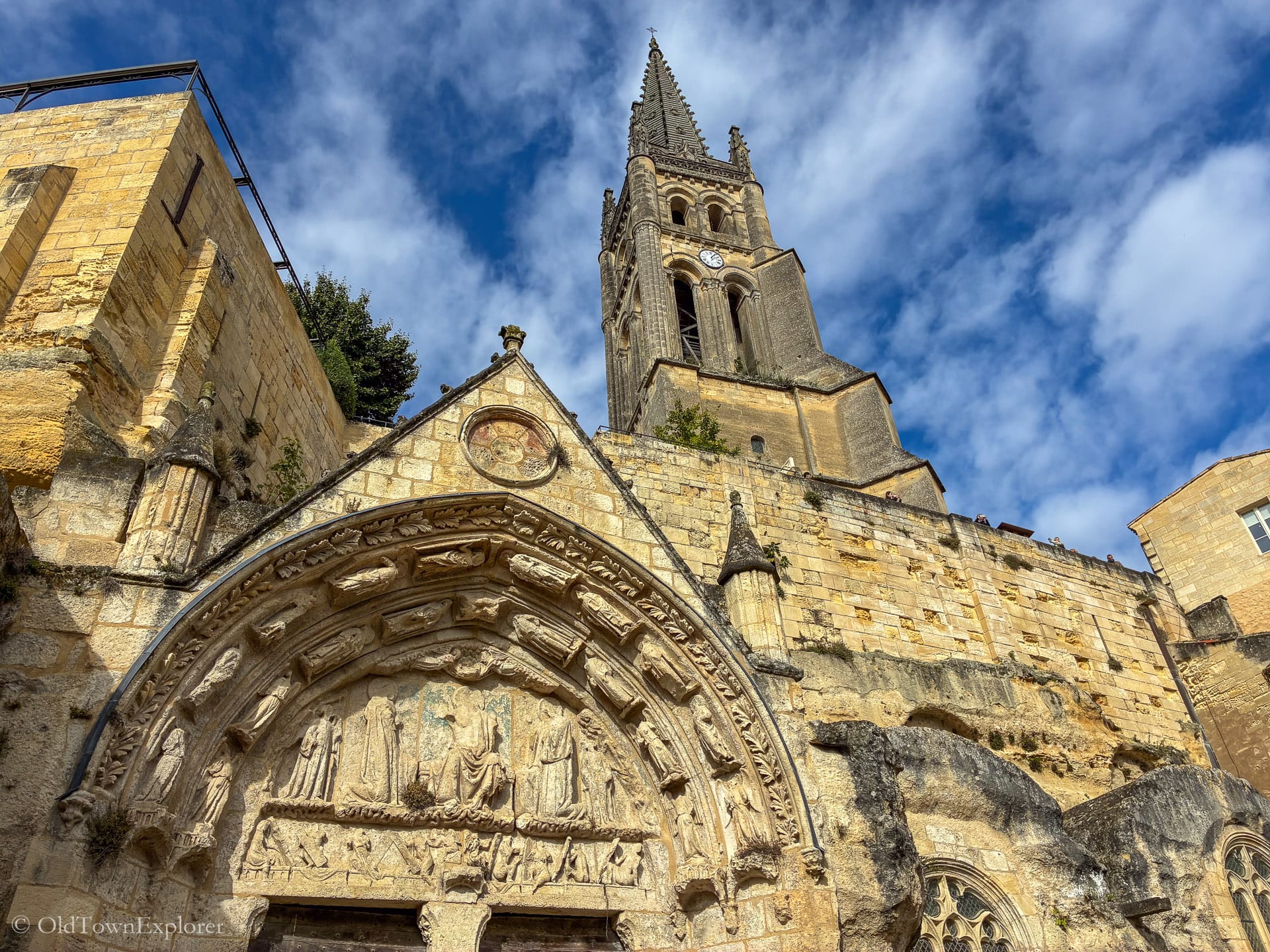
Saint-Émilion, Pomerol and Fronsac
East of Bordeaux, this Right Bank landscape is centered on Merlot and Cabernet Franc. Clay and limestone are important across Saint-Émilion, while Pomerol includes gravel and clay-rich sites. The resulting wines often put Merlot at the center of the blend rather than Cabernet Sauvignon.
Important names include Saint-Émilion, Saint-Émilion Grand Cru, Pomerol, Lalande-de-Pomerol, Fronsac, Canon-Fronsac, and the Saint-Émilion satellite appellations Montagne-Saint-Émilion, Lussac-Saint-Émilion, Puisseguin-Saint-Émilion, and Saint-Georges-Saint-Émilion. Castillon Côtes de Bordeaux and Francs Côtes de Bordeaux continue the Right Bank vineyard farther east.
Saint-Émilion is the easiest village base for combining wine with a historic town, while Pomerol and Fronsac become easier to explore with your own transport or a planned winery route. For individual visits, see our wineries in Saint-Émilion post.
Entre-deux-Mers, Premières Côtes de Bordeaux and Sainte-Foy
Entre-deux-Mers lies between the Garonne and Dordogne rivers and covers a broad landscape of vineyards, villages, and mixed soils. Sauvignon Blanc, Sauvignon Gris, Sémillon, and Muscadelle define many of the whites, while Merlot, Cabernet Franc, Cabernet Sauvignon, Malbec, and Petit Verdot appear in reds.
Entre-Deux-Mers itself now covers both dry white and red wine, so the older rule of assuming local reds must appear only as Bordeaux or Bordeaux Supérieur is no longer current. Other names in this landscape include Cadillac Côtes de Bordeaux, Cadillac, Loupiac, Sainte-Croix-du-Mont, Premières Côtes de Bordeaux, Côtes de Bordeaux Saint-Macaire, and Sainte-Foy Côtes de Bordeaux.
Blaye-Bourg
Blaye and Bourg sit along the Right Bank of the Gironde and Dordogne north of Bordeaux. Merlot leads many of the reds, supported by Cabernet Sauvignon, Cabernet Franc, Malbec, and smaller blending grapes, while white wines use varieties such as Sauvignon Blanc, Sauvignon Gris, and Sémillon.
Key appellations include Blaye, Blaye Côtes de Bordeaux, and Côtes de Bourg. Côtes de Bourg is particularly useful when you want to seek out Malbec within Bordeaux: the grape has a more visible role here than it does across much of the region. Blaye and Bourg also offer a quieter vineyard alternative when the famous Médoc and Saint-Émilion names are not the only focus of the trip.
Grape Varieties in Bordeaux
Bordeaux is primarily a blending region, so the useful question is usually not which single grape is in the bottle but which grapes lead the blend. The six principal Bordeaux varieties are Merlot, Cabernet Sauvignon, Cabernet Franc, Sauvignon Blanc, Sémillon, and Muscadelle. Petit Verdot, Malbec, Carménère, Sauvignon Gris, and several other auxiliary grapes add smaller but sometimes important contributions. For a first comparison, use Merlot and Cabernet Sauvignon to understand the main Right Bank–Left Bank contrast, then compare Sauvignon Blanc and Sémillon in dry and sweet whites.
Black Grapes
Merlot
Profile: Round and supple, with plum, cherry, fig, violet, and other ripe-fruit aromas. Tannin is generally softer than Cabernet Sauvignon, although serious Merlot-based wines can still have considerable structure and aging potential.
Regions: Grown throughout Bordeaux and especially important on the Right Bank in Saint-Émilion, Pomerol, Fronsac, and neighboring appellations.
Styles: Fresh regional reds, fuller blended reds, rosé, and Clairet.
Merlot is the best grape to follow when you want to understand why many Right Bank wines feel rounder and more immediately open than Cabernet-led Médoc wines.
Cabernet Sauvignon
Profile: Firm in tannin and naturally structured, with blackcurrant, dark fruit, mint, cedar, spice, and other savory aromas that can become more complex with bottle age.
Regions: Most important on gravel-rich Left Bank sites, especially the Médoc, Haut-Médoc communal appellations, Graves, and Pessac-Léognan.
Styles: Structured red blends designed for anything from relatively early drinking to long cellar aging.
Compare Cabernet-led Médoc with Merlot-led Saint-Émilion or Pomerol when you want the clearest introduction to Bordeaux's two best-known red-wine patterns.
Cabernet Franc
Profile: Fresh and aromatic, commonly bringing raspberry, violet, herbs, and spice with finer tannins than Cabernet Sauvignon.
Regions: Particularly important in Saint-Émilion and other Right Bank blends, although it is planted across the wider region.
Styles: Red blends and smaller amounts of rosé and Clairet.
Cabernet Franc often acts as the bridge between Merlot's roundness and the freshness needed to keep a Right Bank blend lively.
Petit Verdot
Profile: Deeply colored, firm in tannin, and often spicy or floral. It ripens late, so it usually appears as a supporting rather than dominant grape.
Regions: Most closely associated with Left Bank red blends, particularly the Médoc and other warmer, well-drained sites.
Styles: Small-percentage components in structured red Bordeaux blends.
Petit Verdot is mainly a blend-reading grape: when present, it can add color, tannin, spice, and aromatic depth without defining the whole bottle.
Malbec
Profile: Darkly colored and fruit-driven, with black fruit, violet, spice, and firm tannin depending on ripeness and site.
Regions: A minor Bordeaux grape overall but more visible in Côtes de Bourg and some other Right Bank and regional blends.
Styles: Supporting grape in red blends, with occasional wines giving Malbec a more prominent role.
Côtes de Bourg is the most useful Bordeaux area to remember when you specifically want to see what Malbec contributes locally.
Carménère
Profile: Deep in color and generally fleshy, with dark fruit, spice, and herbal or peppery notes depending on ripeness.
Regions: Grown only in very small quantities across Bordeaux and used far less often than Merlot or the Cabernets.
Styles: Supporting component in red blends rather than a standard varietal Bordeaux wine.
Carménère is worth recognizing as part of Bordeaux's historic grape vocabulary, but it is not a grape you need to seek out on a first regional tasting.
White Grapes
Sauvignon Blanc
Profile: High in acidity and strongly aromatic, commonly showing citrus, grapefruit, herbs, fresh grass, or floral notes depending on ripeness and winemaking.
Regions: Important across Graves, Pessac-Léognan, Entre-deux-Mers, and the sweet-wine areas including Sauternes and Barsac.
Styles: Fresh dry whites, richer dry white blends, and sweet wines where it usually works alongside Sémillon.
Sauvignon Blanc is the grape to follow when you want Bordeaux's freshest white-wine expression or want to see how acidity balances richer Sémillon.
Sémillon
Profile: Rounder and less sharply aromatic than Sauvignon Blanc, with citrus, stone fruit, wax, honey, and richer textures that become especially important with bottle age or noble rot.
Regions: Grown across the white-wine vineyard and particularly important in Sauternes, Barsac, Graves, and Pessac-Léognan.
Styles: Dry white blends and concentrated sweet wines, including the classic botrytized wines of Sauternes and Barsac.
Sémillon is the grape that connects Bordeaux's dry and sweet white traditions: taste it in both settings to see how dramatically harvest conditions and winemaking change the result.
Muscadelle
Profile: Floral and perfumed, with grape, blossom, musk, and sometimes honeyed aromas, but generally less acidity than Sauvignon Blanc.
Regions: Planted in small quantities across the white-wine areas and used in both dry and sweet blends.
Styles: Supporting component in aromatic dry whites and sweet Bordeaux wines.
Muscadelle is rarely the dominant grape, but recognizing it helps explain the floral side of many white Bordeaux blends.
Sauvignon Gris
Profile: Related to Sauvignon Blanc but generally fuller and softer in acidity, with citrus, floral, and ripe or exotic-fruit aromas.
Regions: Found in smaller quantities across several Bordeaux white-wine appellations, including Graves and Entre-deux-Mers.
Styles: Dry and sweet white blends where it can add body and aromatic complexity.
Sauvignon Gris is most useful as a secondary label and blend clue rather than a grape around which to build a first Bordeaux tasting.
Wine Styles in Bordeaux
Bordeaux ranges from easy-drinking regional reds to structured wines made for long aging, while the white side runs from crisp Sauvignon-led wines to rich dry blends and concentrated sweet wines. Clairet, rosé, and Crémant add three lighter styles that are easy to miss when Bordeaux is reduced to Cabernet and Merlot. For a first comparison, taste a fresh red, a structured Left Bank red, a Merlot-led Right Bank red, a dry white, and a sweet white before adding Clairet or sparkling wine.
Red Wines
Fresh and Supple Red Wines
Typical grapes: Merlot, Cabernet Franc, and Cabernet Sauvignon, sometimes with Malbec, Petit Verdot, or Carménère.
Profile: Red and black fruit, moderate tannin, freshness, and relatively immediate drinkability rather than the concentration of Bordeaux's most structured reds.
Choose this style when: You want an introduction to Bordeaux red wine, a bottle for charcuterie or poultry, or something that does not require years of bottle age to become approachable.
Regional Bordeaux, many Côtes wines, and younger Merlot-led blends are useful places to start before comparing more structured appellations.
Structured and Age-Worthy Red Wines
Typical grapes: Cabernet Sauvignon-led blends in the Médoc and Graves; Merlot and Cabernet Franc-led blends in Saint-Émilion, Pomerol, Fronsac, and neighboring Right Bank appellations.
Profile: Greater tannin, concentration, and depth, with black or red fruit, cedar, spice, graphite, herbs, earth, and other savory aromas developing differently according to place and bottle age.
Choose this style when: You want to compare Bordeaux's major appellations, explore wines with cellar potential, or pair red wine with lamb, beef, duck, mushrooms, or other substantial dishes.
Do not assume Left Bank automatically means better or Right Bank automatically means softer. Producer, vintage, site, blend, and winemaking still matter within both sides of the region.
Bordeaux Clairet
Typical grapes: Bordeaux's red varieties, led by Merlot and the Cabernets.
Profile: Deeper in color and usually more structured than conventional rosé but lighter and more immediately fruity than most Bordeaux red wine.
Choose this style when: You want a chilled red-fruit wine for charcuterie, grilled food, picnics, or warm-weather drinking without moving all the way to a pale rosé.
Clairet is one of the most distinctly Bordeaux styles to add once you have tasted the region's more familiar reds and whites.
White Wines
Fresh and Aromatic Dry White Wines
Typical grapes: Sauvignon Blanc with Sémillon, Muscadelle, and sometimes Sauvignon Gris.
Profile: Citrus, grapefruit, herbs, flowers, and fresh acidity, usually with less weight and oak influence than Bordeaux's richer dry whites.
Choose this style when: You want an aperitif, a wine for oysters or seafood, or a fresh contrast after several red Bordeaux wines.
Entre-Deux-Mers and regional Bordeaux Blanc are good places to begin with this brighter side of Bordeaux.
Round and Complex Dry White Wines
Typical grapes: Sauvignon Blanc and Sémillon, often with smaller amounts of Sauvignon Gris or Muscadelle.
Profile: More body and texture, with citrus, stone fruit, herbs, wax, toast, smoke, or creamy notes depending on fermentation and aging.
Choose this style when: You want a dry white with more weight for fish, poultry, creamy sauces, or a tasting comparison with lighter Sauvignon-led Bordeaux.
Graves and especially Pessac-Léognan are the main appellations to know for this fuller dry-white style.
Sweet, Rosé & Sparkling Wines
Sweet and Botrytized White Wines
Typical grapes: Sémillon and Sauvignon Blanc, with Muscadelle and Sauvignon Gris permitted in several appellations.
Profile: Ripe apricot, citrus, honey, flowers, spice, dried fruit, and a spectrum from gently sweet to intensely concentrated. Noble rot is especially important in the classic wines of Sauternes and Barsac.
Choose this style when: You want to compare Bordeaux beyond dry wine or need a wine for foie gras, blue cheese, fruit-based desserts, or a small final glass on its own.
Sauternes and Barsac are the best-known names, while Loupiac, Cadillac, Sainte-Croix-du-Mont, Cérons, Graves Supérieures, and other sweet Bordeaux appellations broaden the choice.
Rosé Wines
Typical grapes: Merlot, Cabernet Sauvignon, Cabernet Franc, and other permitted red varieties.
Profile: Light-bodied and fresh, with red berries, citrus, floral notes, and less tannin than red Bordeaux.
Choose this style when: You want a lighter wine for salads, grilled vegetables, charcuterie, poultry, or summer meals.
Rosé and Clairet are worth tasting side by side because they show two different ways Bordeaux uses the same family of red grapes for lighter drinking.
Crémant de Bordeaux
Typical grapes: Bordeaux red and white varieties permitted under the Crémant de Bordeaux appellation.
Profile: Traditional-method sparkling white or rosé, with acidity and bubbles bringing a completely different texture from still Bordeaux wine.
Choose this style when: You want a sparkling aperitif, a wine for oysters or other seafood, or a break between still wines during a broader regional tasting.
Crémant is a parallel sparkling appellation, not a quality level above or below Bordeaux's still wines.
Quality Tiers in Bordeaux
Bordeaux does not have one classification ladder covering every bottle. Appellations identify geographic origin and production rules, while several separate systems classify particular châteaux or estates in the Médoc, Graves, and Saint-Émilion. A classified estate is therefore different from a more geographically specific appellation, and an unclassified château is not automatically a lower-quality producer.
Appellation Names and Estate Classifications
Start by separating the appellation from any estate classification. Bordeaux, Médoc, Pauillac, Pomerol, Sauternes, Saint-Émilion, and Saint-Émilion Grand Cru are appellation names. Grand Cru Classé, Premier Grand Cru Classé, Cru Bourgeois, and Cru Artisan belong to classification systems or recognized estate categories.
Bordeaux Supérieur is another useful example. It has different production requirements from Bordeaux, including lower yields, greater minimum ripeness and, for red wines, minimum aging. That does not mean every Bordeaux Supérieur is automatically better than every Bordeaux AOP bottle.
Pomerol provides the opposite lesson: it has no estate classification equivalent to the Médoc's 1855 ranking or the Saint-Émilion classification. The appellation name, producer, vineyard, vintage, and bottle itself therefore matter more than looking for a classed-growth term.
The 1855 Classification
The 1855 Classification covers 61 classified red-wine estates—60 in the Médoc and Château Haut-Brion in Pessac-Léognan—and 27 sweet-wine estates in Sauternes and Barsac.
The reds are divided into five levels from Premier Cru through Cinquième Cru. The five First Growths are Château Lafite Rothschild, Château Latour, Château Margaux, Château Haut-Brion, and Château Mouton Rothschild, which was elevated to First Growth in 1973.
The Sauternes and Barsac portion uses three levels: Premier Cru Supérieur, Premier Cru, and Second Cru. Château d'Yquem is the sole Premier Cru Supérieur.
The Graves Classification
The Graves Classification now covers 14 châteaux, all within Pessac-Léognan. Unlike the 1855 red ranking, it does not divide the estates into First, Second, or lower growths.
Some estates are classified for red wine, some for dry white, and some for both. Château Haut-Brion also appears in the 1855 Classification, making it the main Bordeaux example of an estate belonging to two different historic classification systems.
The Saint-Émilion Classification
Saint-Émilion has a periodically revised estate classification attached to the Saint-Émilion Grand Cru appellation. The 2022 classification approved by the INAO contains 14 Premiers Grands Crus Classés, including two with the distinction A—Château Figeac and Château Pavie—and 71 Grands Crus Classés.
This is also where label terminology matters most. Saint-Émilion Grand Cru is an appellation. Saint-Émilion Grand Cru Classé and Premier Grand Cru Classé indicate estates admitted to the separate classification. A bottle labeled Saint-Émilion Grand Cru is therefore not automatically a classified growth.
Cru Bourgeois du Médoc
The 2025 Crus Bourgeois du Médoc classification covers 170 Médoc estates: 120 Crus Bourgeois, 36 Crus Bourgeois Supérieurs, and 14 Crus Bourgeois Exceptionnels.
The system applies to red wines from Médoc appellations and is separate from the 1855 Classification. For bottle shopping, the three Cru Bourgeois levels give you an additional château-level cue within the Médoc rather than a replacement for the appellation name.
Cru Artisan du Médoc
Cru Artisan recognizes smaller Médoc estates where the owner is directly involved throughout wine production and sale. The wines must come from one of the eight Médoc appellations, and the classification applies to red wine.
The list is revised every five years. The current Bordeaux listing covers 33 estates for the 2022–2026 vintages, so the term should be read as a distinct Médoc estate classification rather than as another level within the 1855 or Cru Bourgeois systems.
Wine Tasting and Wine Routes in Bordeaux
Bordeaux's vineyards spread in several directions from the city, so one wine area per day usually makes more sense than trying to combine opposite sides of the region. Bordeaux is the most flexible base for a mixed trip; Saint-Émilion works particularly well for the Right Bank; and a stay farther into the Médoc or Graves-Sauternes makes sense when winery visits are the main purpose of the trip.
Best Wine Bases
Bordeaux gives you the widest mix of wine bars, shops, restaurants, museums, trains, and organized vineyard excursions. It is the best base when you want to taste across several appellations without changing accommodation. Our Bordeaux Wine page covers city tasting, wine shops, bars, and nearby winery planning in more detail.
Saint-Émilion is stronger when you want vineyards immediately around a historic town and plan to spend most of your time on the Right Bank. Margaux, Pauillac, and other Médoc towns reduce driving when Cabernet-led Left Bank wine is the priority, while Graves and Sauternes make better overnight choices for a trip weighted toward dry whites and sweet wines.
Médoc and the Left Bank
The Médoc is best approached as a north-south sequence through neighboring appellations. Margaux comes first from Bordeaux, followed farther north by Saint-Julien, Pauillac, and Saint-Estèphe. That makes it practical to compare two adjacent appellations rather than collecting isolated châteaux from opposite ends of the peninsula.
During our month in Bordeaux, we used the train for a day trip to Margaux. For a more winery-heavy day, see our Margaux winery guide; continuing beyond Margaux becomes easier with a car, driver, or organized route.
Saint-Émilion, Pomerol and Fronsac
Saint-Émilion combines the easiest historic-town stop with a dense surrounding vineyard, making it the clearest first Right Bank destination. Pomerol lies immediately to the northwest, while Fronsac and Canon-Fronsac extend the route farther west along the Dordogne.
We also visited Saint-Émilion by train during our month in Bordeaux. Once there, walking works for the town and nearby vineyards, while a bike, driver, tour, or car makes it easier to reach a wider selection of estates and neighboring Pomerol. Our Saint-Émilion winery guide covers individual winery options.
Graves-Sauternes
Graves and Pessac-Léognan are the logical route when you want red and dry white Bordeaux in the same day. Several Pessac-Léognan vineyards lie close to the metropolitan area, while the wider Graves vineyard continues south toward Podensac.
Sauternes and Barsac deserve their own focus when sweet wine is the main reason for the trip. Combining one dry-wine stop farther north with one or two sweet-wine estates farther south gives the day a clearer tasting progression than trying to cross to the Médoc or Right Bank as well.
Entre-deux-Mers and Blaye-Bourg
Entre-deux-Mers offers a different Bordeaux landscape between the Garonne and Dordogne, with dry white and red wines, rolling countryside, and small towns spread across a broad area. It works best when you want a rural wine day that is less focused on famous classed-growth estates.
Blaye-Bourg follows the estuary and river landscape north and east of Bordeaux. The area is especially useful for Merlot-led reds, Côtes de Bourg wines with a more visible Malbec component, and an alternative to the better-known Médoc and Saint-Émilion routes.
Without a Car, Reservations and Timing
Bordeaux is unusually workable for selected wine trips without a car. The Bordeaux Tourist Office's car-free vineyard guidance identifies regional trains to Pauillac and Saint-Émilion, as well as Podensac and Barsac for Graves-Sauternes. Saint-Émilion station is about one kilometer from the village, while tram, bus, bike, and train combinations can also reach parts of Pessac-Léognan and Entre-deux-Mers.
A car, hired driver, or organized tour is still more practical when the goal is several rural châteaux in one day. Visiting arrangements differ by estate, so check each château's current reservation information before building the day's route around it, especially when vineyard work or harvest may affect normal visits.
Food Pairings with Bordeaux Wine
Bordeaux's range of wine styles makes local pairing more varied than the familiar red-wine-and-steak combination. Structured reds fit lamb, beef, duck, and mushrooms; dry whites suit the Atlantic seafood found around Bordeaux and Arcachon; and Sauternes can move from foie gras to strong cheese or dessert. For the dishes and products themselves, see Bordeaux Food.
Red Bordeaux Pairings
Fresh, Merlot-led reds work well with charcuterie, pâté, roast chicken, pork, and mushroom dishes. Their fruit and moderate tannins suit foods that would be overwhelmed by a heavily structured Cabernet Sauvignon blend.
More tannic Médoc, Graves, Pessac-Léognan, and structured Right Bank wines can move toward lamb, entrecôte à la bordelaise, duck, beef, game, mushrooms, and mature cheeses. Lamb is a particularly natural match for Cabernet-led Médoc because the meat has enough richness to meet the wine's tannin without masking its fruit.
Dry White Bordeaux Pairings
Fresh Sauvignon-led Bordeaux works particularly well with oysters, shellfish, grilled fish, fresh goat cheese, and lighter starters. Arcachon oysters are one of the most useful local pairings because the wine's acidity and citrus character fit the oysters without adding unnecessary weight.
Rounder Graves and Pessac-Léognan whites can handle richer fish, salmon, poultry, creamy sauces, and softer cheeses. Use these when a fresh Entre-Deux-Mers would feel too light for the dish.
Clairet and Rosé Pairings
Bordeaux Clairet works with charcuterie, grilled pork, sausages, burgers, roast chicken, and other foods that benefit from red-fruit character without the tannin of a full red Bordeaux. Serving it lightly chilled makes it particularly useful for warm-weather lunches.
Rosé is lighter still and fits salads, seafood, grilled vegetables, poultry, and picnic food. Tasting rosé and Clairet side by side is an easy way to see why Bordeaux maintains both styles.
Crémant de Bordeaux Pairings
Crémant de Bordeaux works well as an aperitif and with oysters, shellfish, salty snacks, charcuterie, and poultry. The bubbles and acidity make it especially useful at the start of a meal before moving into still white or red Bordeaux.
Rosé Crémant adds more red-fruit character and can move toward charcuterie or lighter meat dishes while retaining the freshness of sparkling wine.
Sweet Bordeaux Pairings
Sauternes, Barsac, and Bordeaux's other sweet wines do not need to be reserved for dessert. Foie gras is the classic savory pairing, while Roquefort and other blue cheeses use salt and pungency to contrast with the wine's sweetness and concentration.
Fruit tarts, apricot, citrus, and other desserts can also work, provided the dessert does not overwhelm the wine. A concentrated Sauternes or Barsac can just as easily finish the meal on its own in a small glass.
FAQs About the Bordeaux Wine Region
What kind of wine is Bordeaux known for?
Bordeaux is best known for blended red wine based on Merlot, Cabernet Sauvignon, and Cabernet Franc. The region also produces dry whites from Sauvignon Blanc and Sémillon, sweet wines such as Sauternes and Barsac, plus Clairet, rosé, and Crémant de Bordeaux.
What are the main wine areas in Bordeaux?
Bordeaux's current winegrowing map can be grouped into six landscapes: Bordeaux, Bordeaux Supérieur and Crémant; Médoc; Graves-Sauternes; Saint-Émilion, Pomerol and Fronsac; Entre-deux-Mers, Premières Côtes de Bordeaux and Sainte-Foy; and Blaye-Bourg. Left Bank and Right Bank remain useful broader shortcuts, especially when comparing Cabernet Sauvignon-led and Merlot-led reds.
What are the main grapes in Bordeaux?
Merlot, Cabernet Sauvignon, and Cabernet Franc are the three principal black grapes. Sauvignon Blanc, Sémillon, and Muscadelle are the principal whites. Petit Verdot, Malbec, Carménère, Sauvignon Gris, and several other auxiliary varieties appear in smaller quantities.
What wine styles should I try first in Bordeaux?
Start with a regional red, then compare a Cabernet-led Médoc with a Merlot-led Right Bank wine. Add a fresh dry white, a richer Graves or Pessac-Léognan white, and a sweet Sauternes or Barsac. Clairet or Crémant shows another side of Bordeaux once you understand the main red and white styles.
What is the difference between Left Bank and Right Bank Bordeaux?
The Left Bank includes the Médoc and Graves-Sauternes side of the Garonne and Gironde and is especially associated with Cabernet Sauvignon-led reds on gravel soils. The Right Bank around Saint-Émilion, Pomerol, and Fronsac generally puts more emphasis on Merlot and Cabernet Franc, with clay and limestone important in many vineyard areas.
How do Bordeaux wine classifications work?
Bordeaux does not have one classification covering the entire region. The main estate systems are the 1855 Classification, Graves Classification, Saint-Émilion Classification, Crus Bourgeois du Médoc, and Crus Artisans du Médoc. They apply to different places and follow different rules, so a term from one system should not be treated as a level within another.
How do I read a Bordeaux wine label?
Start with the appellation because it tells you where the wine comes from and narrows the permitted production rules. Then look at the château or producer, vintage, and any classification term. In Bordeaux, the grape blend often is not prominent on the front label, so knowing the typical grapes of the appellation helps you anticipate the wine.
What is the difference between Saint-Émilion Grand Cru and Grand Cru Classé?
Saint-Émilion Grand Cru is an appellation with its own production rules. Grand Cru Classé and Premier Grand Cru Classé are château classifications within the Saint-Émilion Grand Cru appellation. A bottle labeled Saint-Émilion Grand Cru is therefore not necessarily from a classified château.
What are the five First Growths of Bordeaux?
The five red First Growths in the 1855 Classification are Château Lafite Rothschild, Château Latour, Château Margaux, Château Haut-Brion, and Château Mouton Rothschild. Mouton Rothschild was promoted to First Growth in 1973.
What does Bordeaux Supérieur mean?
Bordeaux Supérieur is an appellation with different production requirements from Bordeaux AOP, including stricter conditions for yield, ripeness, and red-wine aging. The word Supérieur should not be read as a guarantee that every bottle will be better than a wine labeled simply Bordeaux.
Is Bordeaux dry or sweet?
Bordeaux makes both. Most of the region's red wines and dry whites are dry, while Sauternes, Barsac, Loupiac, Cadillac, Sainte-Croix-du-Mont, and several other appellations produce sweet white wines. Bordeaux Supérieur can also include a small amount of sweet white wine.
Can you visit Bordeaux wineries?
Yes. Winery visits are available throughout the Médoc, Saint-Émilion, Pomerol, Graves, Sauternes, Entre-deux-Mers, Blaye-Bourg, and other parts of the region. Visiting arrangements vary by château, so check the individual producer before traveling rather than assuming every estate accepts walk-ins.
Do you need a car for Bordeaux wine tasting?
No, not for every trip. Bordeaux has trains to Saint-Émilion and Pauillac and useful rail, tram, bus, and cycling options for selected vineyard areas. A car, driver, or organized tour becomes more useful when you want several rural châteaux in one day or need to connect estates that are far from stations.
Where should I start wine tasting in Bordeaux?
Start in Bordeaux city when you want the widest choice and do not yet know which vineyard area interests you most. Choose Saint-Émilion for a Merlot-led Right Bank day, the Médoc for Cabernet Sauvignon-led reds, or Graves-Sauternes when dry white and sweet wine are priorities.
When is a good time to visit Bordeaux wine country?
Spring and early autumn are comfortable periods for combining vineyard visits with time outdoors, while summer brings longer days. Harvest adds vineyard activity but can also affect normal château visits, so confirm appointments directly when traveling during the picking period rather than assuming regular schedules.
Why is Bordeaux wine distinctive?
Bordeaux combines a strong blending tradition with dozens of appellations, several different soils and river landscapes, dry and sweet wine styles, and multiple château classification systems. That makes it possible to compare place, blend, style, and classification within one region rather than reducing Bordeaux to Cabernet Sauvignon and expensive classed growths.
What food pairs with Bordeaux wine?
Structured reds work well with lamb, beef, duck, mushrooms, and mature cheese, while lighter reds suit charcuterie and poultry. Dry white Bordeaux is a natural choice with oysters, seafood, fish, and fresh cheese; Sauternes and other sweet wines work with foie gras, blue cheese, fruit desserts, or as a final glass on their own.