
Puglia Wine
Explore Puglia Wine: Grapes, Wines & Styles
Puglia wine comes from southeastern Italy, where long coastlines, warm plains, limestone soils, and old vineyard areas shape the region’s red, rosé, white, sparkling, and dessert wines. The region is especially important for Primitivo, Negroamaro, Nero di Troia, Bombino Nero, Bombino Bianco, Verdeca, Fiano, Malvasia Nera, and Susumaniello.
The most useful names to know first are Primitivo di Manduria DOC, Salice Salentino DOC, Castel del Monte DOC and DOCG wines, Gioia del Colle DOC, Locorotondo DOC, and Gravina DOC. These help connect grape names with places across Salento, the Itria Valley, Bari, and northern Puglia.
We spent a month in Lecce researching Puglia wine to understand what to drink, where the main wine areas are located, and how local wines pair with Puglia food.
Grape Varieties in Puglia
Puglia grows both local and international grape varieties, but the regional grapes are the best starting point for visitors. Primitivo and Negroamaro are the two best-known red grapes, while Nero di Troia, Bombino Nero, Malvasia Nera, and Susumaniello add important local context.
For a concise reference list of the main red and white grapes grown in the region, see the Puglia wine region grape varieties overview.
Red Grapes
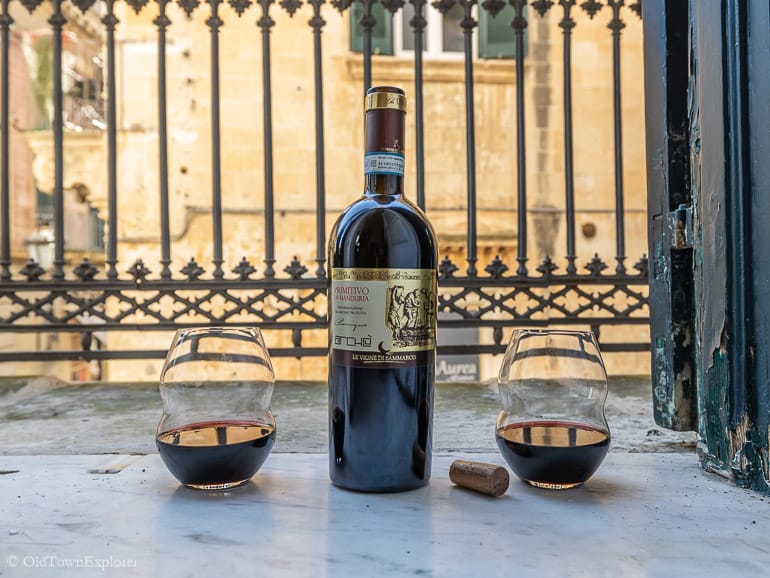
Primitivo
Primitivo is one of Puglia’s most important red grapes and is closely associated with Primitivo di Manduria DOC and Gioia del Colle DOC. It often produces full-bodied red wines with dark fruit, spice, and higher alcohol.

Negroamaro
Negroamaro is a major red grape in Salento and is central to wines such as Salice Salentino DOC. It can produce red and rosé wines with dark fruit, herbs, firm structure, and a slightly bitter edge.

Susumaniello
Susumaniello is a local red grape from Puglia, especially associated with Salento. It can produce deeply colored wines with dark fruit, spice, and firm structure.

Nero di Troia
Nero di Troia, also known as Uva di Troia, is an important red grape in northern Puglia. It appears in Castel del Monte wines and can produce structured reds with dark fruit, spice, and tannin.
Malvasia Nera
Malvasia Nera is often used in blends with Negroamaro and other red grapes. It can add fruit, softness, and aromatic character to Puglia red wines.
Bombino Nero
Bombino Nero is a red grape used especially for rosé wines in Puglia, including Castel del Monte Bombino Nero DOCG. It can produce fresh rosato with red fruit and bright acidity.
White Grapes

Verdeca
Verdeca is a white grape associated with central Puglia and the Itria Valley. It can produce dry white wines with citrus, herbs, and fresh acidity.
Bombino Bianco
Bombino Bianco is a white grape grown in Puglia and other parts of southern Italy. In Puglia, it appears in still and sparkling wines and can produce fresh whites with citrus and orchard fruit notes.
Fiano
Fiano is grown in Puglia as well as Campania. In Puglia, it can produce dry white wines with stone fruit, citrus, floral notes, and enough texture for seafood and vegetable dishes.
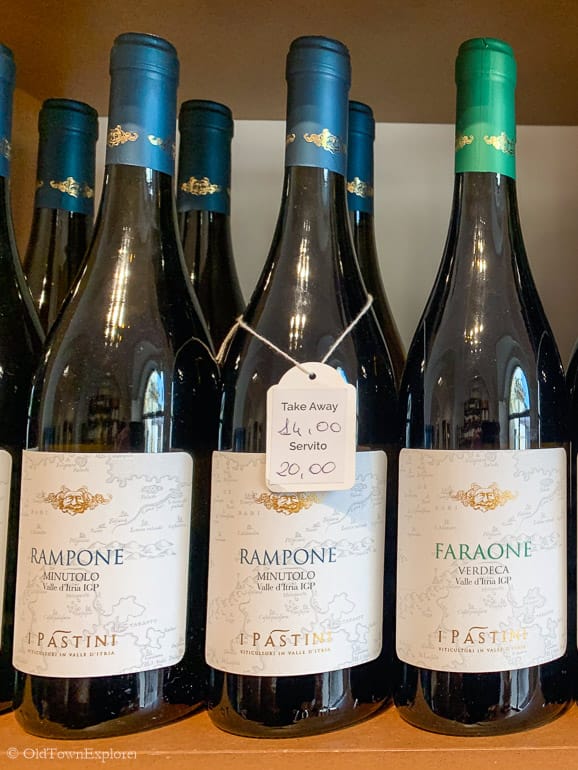
Minutolo
Minutolo is an aromatic white grape associated especially with the Valle d’Itria. It can produce dry white wines with floral notes, citrus, herbs, fresh acidity, and a lightly aromatic finish.
The grape is useful to know in Puglia because it gives the region a white-wine identity beyond Verdeca, Bombino Bianco, Fiano, Malvasia Bianca, and Bianco d’Alessano.
Malvasia Bianca
Malvasia Bianca appears in several Puglia white wines and blends. It can add floral and stone-fruit notes depending on the style.
Bianco d’Alessano
Bianco d’Alessano is a white grape associated with the Itria Valley and is often used in blends with Verdeca, including wines from Locorotondo and Martina Franca.
DOCG, DOC & IGP Wines in Puglia
Puglia’s wine designations include DOCG, DOC, and IGP categories. These labels connect wines to specific places, grapes, and production rules. They are useful for orientation, but producer, vintage, and style still matter when choosing a bottle.
For the official breakdown of these appellations, you can consult the Puglia DOCG, DOC and IGP designations on Federdoc, Italy’s national confederation of wine consortia.
DOCG Wines
Castel del Monte Bombino Nero
Castel del Monte Bombino Nero is produced in the provinces of Bari and Foggia.
Rosato (Ro): Minimum 90% Bombino Nero + OANRG
Producers:
Fior di Ribes (4.1)
Jazzo de Cesare (4.1)
Castel del Monte Nero di Troia Reserva
Castel del Monte Nero di Troia Reserva is produced in the provinces of Bari and Foggia.
Riserva (Rd): Minimum 90% Uva di Troia + OANRG
Producers:
Torrevento (4.1)
Castel del Monte Rosso Riserva
Castel del Monte Rosso Riserva is produced in the provinces of Bari and Foggia.
Riserva (Rd): Minimum 65% Uva di Troia (locally Nero di Troia) + OANRG
Producers:
Cantina Vignuolo Maniero (4.1)
Primitivo di Manduria Dolce Naturale
Primitivo di Manduria Dolce Naturale is produced in the province of Taranto.
Rosso (RdSw): 100% Primitivo
Producers:
Madrigale (4.0)
San Marzano Filari (4.1)
Attanasio (4.3)
DOC Wines
Aleatico di Puglia
Aleatico di Puglia is produced throughout Puglia.
Alezio
Alezio is a Salento DOC near Gallipoli, in the province of Lecce. It is mainly associated with red and rosato wines based on Negroamaro, often with support from other local red grapes.
Barletta
Barletta DOC is a northern Puglia appellation near the Adriatic coast. It is especially useful for understanding Uva di Troia, also known as Nero di Troia, in red, rosato, and varietal wines.
Brindisi
Brindisi DOC covers wines from the area around the city of Brindisi in southern Puglia. The appellation is especially associated with Negroamaro-based red and rosato wines from Salento.
Cacc'e mmitte di Lucera
Cacc’e Mmitte di Lucera is a northern Puglia DOC from the Lucera area in the province of Foggia. It is known for red wines that can include Uva di Troia, Montepulciano, Sangiovese, and other permitted grapes.
Castel del Monte
Castel del Monte DOC covers an important wine area in northern Puglia around the Murge plateau. It includes red, white, and rosato wines, with grapes such as Nero di Troia, Bombino Nero, Bombino Bianco, Aglianico, and other permitted varieties.
Colline Joniche Taratine
Colline Joniche Tarantine DOC covers wine areas in the hills of the Taranto province. It is useful for understanding Primitivo, Negroamaro, rosato, white wines, and other styles from the Ionian side of Puglia.
Copertino
Copertino DOC is a Salento appellation in the province of Lecce. It is mainly associated with Negroamaro-based red and rosato wines, often blended with Malvasia Nera and other local red grapes.
Galatina
Galatina DOC is located in Salento, south of Lecce. The appellation includes red, rosato, and white wines, with Negroamaro especially important for the red and rosato styles.
Gioia del Colle
An inland DOC associated with Primitivo, red blends, white wines, and rosé wines.
Gravina
A DOC in northern Puglia known especially for white wines from local and regional grapes.
Leverano
Leverano DOC is a Salento appellation west of Lecce. It includes red, rosato, white, and sparkling wines, with Negroamaro, Malvasia Nera, and white grapes such as Malvasia Bianca and Verdeca contributing to different styles.
Lizzano
Lizzano DOC is in the province of Taranto, close to the Ionian coast. It includes red, rosato, white, sparkling, and dessert styles, with Negroamaro, Primitivo, Malvasia Nera, and local white grapes all relevant to the appellation.
Locorotondo
A white wine DOC in the Itria Valley, commonly associated with Verdeca and Bianco d’Alessano.
Martina
Martina DOC, also known as Martina Franca DOC, is an Itria Valley white-wine appellation. The wines are commonly associated with Verdeca and Bianco d’Alessano, often with support from other permitted white grapes.
Matino
Matino DOC is a small Salento appellation in the province of Lecce. It is mainly associated with red and rosato wines based on Negroamaro and other local red grapes.
Moscato di Trani
Moscato di Trani DOC is a sweet-wine appellation from northern Puglia. The wines are made from Moscato grapes and are usually served with pastries, dried fruit, almond-based desserts, or cheese.
Nardò
Nardò DOC is a Salento appellation near the Ionian coast in the province of Lecce. It is mainly associated with Negroamaro-based red and rosato wines.
Negroamaro di Terra d'Otranto
Negroamaro di Terra d’Otranto DOC covers Negroamaro-based wines from the wider Terra d’Otranto area. It is useful for travelers who want to connect the grape name Negroamaro with Salento and southern Puglia wine labels.
Orta Nova
Orta Nova DOC is a northern Puglia appellation in the province of Foggia. It is mainly associated with red and rosato wines from local and regional red grapes, including Uva di Troia and Sangiovese.
Ostuni
Ostuni DOC is a white-wine appellation around the town of Ostuni in the province of Brindisi. It is especially tied to local white grapes such as Impigno, Francavidda, Verdeca, and Bianco d’Alessano.
Primitivo di Manduria
One of Puglia’s best-known red wines, made from Primitivo in the Manduria area.
Rosso Barletta
Barletta DOC is a northern Puglia appellation near the Adriatic coast. It is especially useful for understanding Uva di Troia, also known as Nero di Troia, in red, rosato, and varietal wines.
Rosso di Cerignola
Rosso di Cerignola DOC is a red-wine appellation from northern Puglia. It is associated with the Cerignola area and red wines based on local and regional grapes such as Uva di Troia, Negroamaro, Sangiovese, and Montepulciano.
Salice Salentino
A Salento DOC associated especially with Negroamaro-based red and rosé wines.
San Severo
San Severo DOC is a northern Puglia appellation in the province of Foggia. It includes red, rosato, white, and sparkling wines, making it one of the more varied DOC names in the region.
Squinzano
Squinzano DOC is a Salento appellation north of Lecce. It is best known for Negroamaro-based red and rosato wines, often with Malvasia Nera and other permitted local grapes.
Tavoliere delle Puglie or "Tavoliere"
Tavoliere delle Puglie DOC, also called Tavoliere, is a northern Puglia appellation connected to the Tavoliere plain. It is especially important for Nero di Troia, which appears in red and rosato wines from this part of the region.
Terra d'Otranto
Terra d’Otranto DOC covers a large part of southern Puglia across the provinces of Brindisi, Lecce, and Taranto. It includes red, rosato, white, sparkling, and dessert wines, with Negroamaro, Primitivo, Malvasia Nera, and local white grapes all relevant depending on the style.
IGP Wines
Daunia
Daunia IGP covers wines from northern Puglia, especially the province of Foggia. The label can appear on red, white, rosato, sparkling, and varietal wines made with local, regional, or international grapes.
Murgia
Murgia IGP refers to wines from the inland Murge area of Puglia. The designation can include red, white, rosato, sparkling, and varietal wines, often giving producers more flexibility than DOC or DOCG rules.
Puglia
Puglia IGP is the broad regional designation for wines made across Puglia. It can appear on many styles, including Primitivo, Negroamaro, Nero di Troia, Fiano, Verdeca, rosato, sparkling wine, and producer-specific blends.
Salento
Salento IGP is one of the most common labels visitors will see in southern Puglia. It is especially useful for Primitivo, Negroamaro, Susumaniello, Malvasia Nera, rosato, and white wines from the Salento peninsula.
Tarantino
Tarantino IGP covers wines from the Taranto area and the Ionian side of Puglia. It is especially relevant for Primitivo, Negroamaro, rosato, and flexible producer blends from western and southern Puglia.
Valle d'Itria
Valle d’Itria IGP covers the inland area around towns such as Locorotondo, Martina Franca, Cisternino, Ceglie Messapica, Ostuni, Crispiano, and Alberobello. It is especially useful for white wines from grapes such as Verdeca, Bianco d’Alessano, Minutolo, Malvasia Bianca, and Fiano.
Wine Producers in Puglia
Wine producers in Puglia range from long-established family estates to newer cellars focused on single-varietal bottlings and organic farming. The examples below are not a complete list of wineries in the region, but they highlight producers whose bottles regularly appear on local wine lists and earn strong consumer ratings. Together, they offer a practical starting point if you want to taste how different grapes, subzones, and styles are expressed across Puglia.
Sparkling Wines
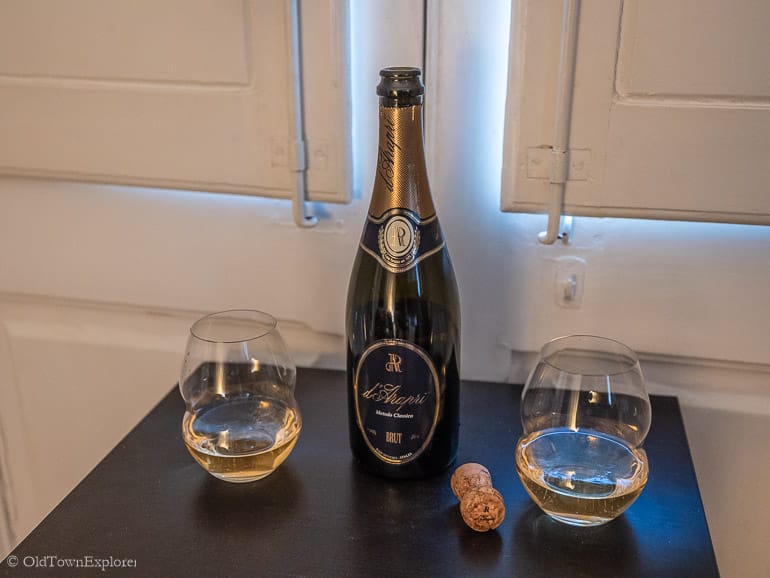
d'Arapri Riserva Nobile
- Producer: d’Araprí Cellar
- Wine: Riserva Nobile
- Rating: Vivino 4.0
White Wines
Vallone Tenuta Serranova Fiano
- Producer: Agricole Vallone
- Wine: Tenute Serranova Fiano
- Rating: Vivino 3.8
The wine Tenute Serranova, made from 100% Fiano grapes, is named after the region where it grows and represents the core of the Vallone company.
Polvanera Minutolo
- Producer: Cantine Polvanera
- Wine: Minutolo
- Rating: Vivino 3.8
Minutolo wine is organic, just like all Polvanera wines. It is a white wine known for its unmistakable aroma, both on the nose and the palate, making it a perfect match for raw seafood.
Rose Wines
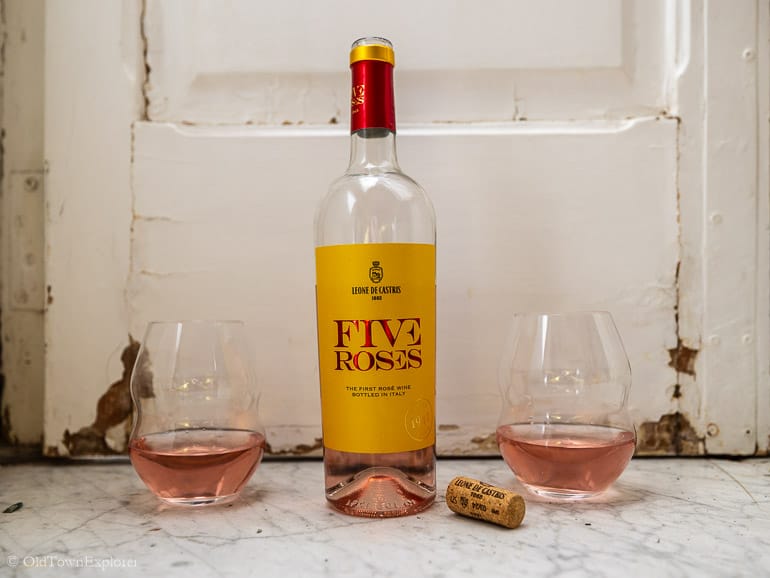
Cantine Leone de Castris Rosé
- Producer: Cantine Leone de Castris
- Wine: Five Roses
- Rating: Vivino 3.9
“Five Roses” wine from Cantine Leone de Castris is regarded as the first rosé bottled in Italy and comes highly recommended.
Michele Calò & Figli Cerasa Rosé
- Producer: Michele Calo & Figli
- Wine: “Cerasa”
- Rating: Vivino 4.0
Cerasa Rose is made from Negroamaro grapes.
Red Wines
Michele Calò & Figli Spano
- Producer: Michele Calo
- Wine: “Spano”
- Rating: Vivino 4.1
Michele Calò & Figli Spano is made from Negroamaro grapes.
Vallone Graticciaia
- Producer: Agricole Vallone
- Wine: “Graticciaia”
- Rating: Vivino 4.4
Vallone Graticciaia is made from Negroamaro grapes.
Gianfranco Fino Es Riserva
- Producer: Gianfranco Fino
- Wine: Es Riserva
- Rating: Vivino 4.5
Gianfranco Fino Es Riserva is made from Primitivo grapes.
Gianfranco Fino 'Es' Primitivo di Manduria
- Producer: Gianfranco Fino
- Wine: Es Primitivo di Manduria
- Rating: Vivino 4.4
Gianfranco Fino 'Es' Primitivo di Manduria is made from Primitivo grapes.
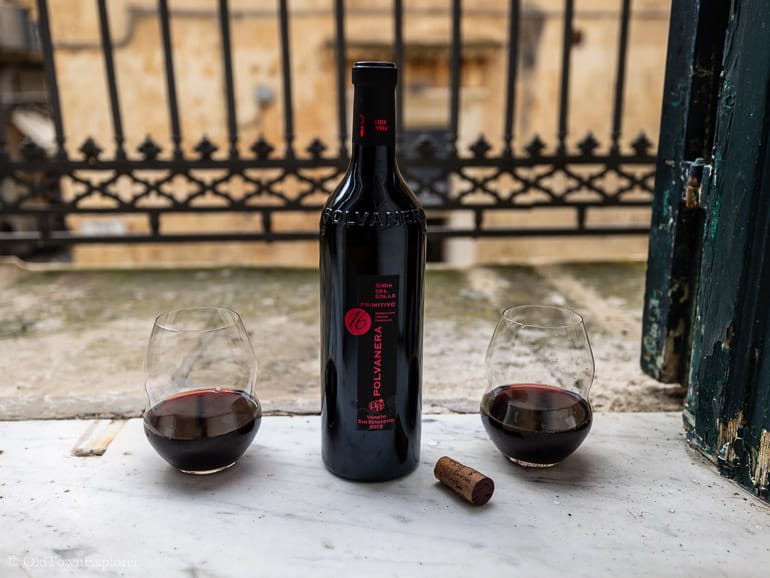
Polvanera '16' Primitivo Gioia del Colle
- Producer: Cantine Polvanera
- Wine: “16”
- Rating: Vivino 4.2
Fatalone Gioia del Colle Primitivo Riserva
- Producer: Fatalone
- Wine: Gioia del Colle Primitivo Riserva
- Rating: Vivino 4.0
Fatalone Gioia del Colle Primitivo Riserva is made from Primitivo grapes.
Tenute Rubino Torre Testa Susumaniello
- Producer: Tenute Rubino
- Wine: “Torre Testa” Susumaniello
- Rating: Vivino 4.2
Tenute Rubino Torre Testa Susumaniello is made from Susumaniello grapes.
Morella Old Vines Primitivo Salento IGT
- Producer: Morella
- Wine: Primitivo “Old Vines”
- Rating: Vivino 4.3
Morella Old Vines Primitivo Salento IGT is made from Primitivo grapes.
FAQs About Puglia Wine
What wine is Puglia known for?
Puglia is best known for Primitivo, Negroamaro, Nero di Troia, Bombino Nero, Susumaniello, Salice Salentino DOC, Primitivo di Manduria DOC, and Castel del Monte wines.
What is the main red wine in Puglia?
Primitivo and Negroamaro are the two best-known red grapes in Puglia. Primitivo is closely tied to Manduria and Gioia del Colle, while Negroamaro is especially important in Salento.
What white wine is Puglia known for?
Puglia white wines can include Verdeca, Bombino Bianco, Fiano, Bianco d’Alessano, and Malvasia Bianca. Locorotondo DOC and Gravina DOC are useful white-wine names to know.
Is Primitivo the same as Zinfandel?
Primitivo is genetically linked to Zinfandel and the Croatian grape Crljenak Kaštelanski. In Puglia, it has its own regional identity and is especially important in Primitivo di Manduria DOC and Gioia del Colle DOC.
Can you visit wineries in Puglia?
Yes. Winery visits are possible in Salento, Manduria, the Itria Valley, Gioia del Colle, and other areas, but many require appointments. Confirm tasting times and transport before planning a route.