
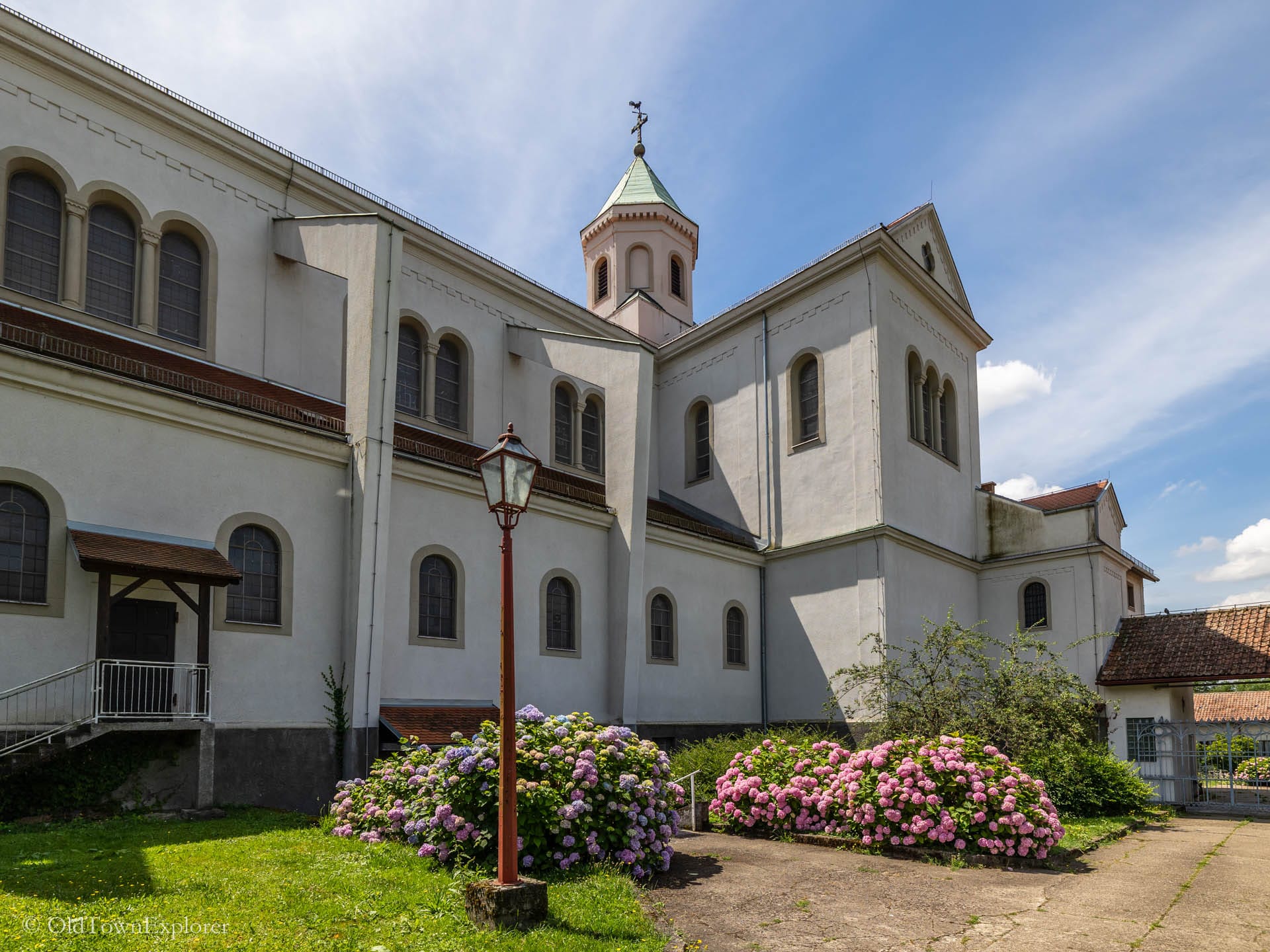
Discover Mariastern Trappist Abbey: Trappist History, Church Architecture & More
Mariastern Trappist Abbey, also known locally as Marija Zvijezda, sits northeast of central Banja Luka in the Trapisti area near the Vrbas River. It is worth visiting when you want a quieter side of the city: not another central monument, but a monastery tied to Banja Luka’s religious life, early industry, cheese, beer, electricity, and river-edge expansion.
We visited Mariastern Trappist Abbey during our month-long stay in Banja Luka and walked there from the city center. The walk was longer than the central sightseeing routes, but it had sidewalks the full way and gave us a better feel for how the city stretches beyond Gospodska Street, Kastel Fortress, and the main squares.
Mariastern Trappist Abbey at a Glance
Mariastern Trappist Abbey is best treated as a short half-day extension from central Banja Luka, especially if you are interested in religious architecture, Trappist history, local food production, beer history, or the city’s industrial development along the Vrbas River.
Key visit points:
- Best for: travelers who like monasteries, quiet church interiors, local food history, industrial history, and less obvious Banja Luka stops.
- Main draw: the abbey church, Trappist story, monastery setting, and the connection to cheese, beer, the Vrbas River, and early city industry.
- Time needed: allow more time than for central sights, especially if you walk from the city center or want to look for nearby Trappist history.
- Access caution: do not assume that every interior, shop, museum, or guided element will be available without checking first.
- Best fit: add it after you have already seen Kastel Fortress, Ferhat Pasha Mosque, Banski Dvor, and the central churches.
The abbey is not the first stop for a short Banja Luka visit, but it becomes much more interesting once you understand how far the Trappist story reaches into the city’s food, beer, electricity, and architecture.
History of Mariastern Trappist Abbey
Mariastern Trappist Abbey grew from the Trappists’ 19th-century arrival on the northern edge of Banja Luka. The Banja Luka Diocese traces Marija Zvijezda to the Trappist monastery founded in 1869, while the present monastery church was begun in 1925 and completed in 1929.
Trappists and Banja Luka’s Northern Edge
The Trappists did more than build a monastery. In Delibašino Selo, they helped turn the northern edge of Banja Luka into a working landscape of mills, workshops, cheese production, beer, river power, and religious life.
That industrial story is what makes Mariastern worth the extra distance from the center. It connects the abbey to the Vrbas River, Trappist cheese, beer history, early electricity, and the way Banja Luka grew beyond its fortress, Ottoman mosques, and central civic buildings.

The Abbey Church
The present church gives the visit its main architectural focus. It was damaged in the 1969 earthquake and later restored, which ties the abbey to the same earthquake-and-rebuilding story that appears in other parts of Banja Luka.
Mariastern feels different from the city’s central churches and mosques because it sits apart from the main sightseeing route. Reaching it feels like leaving civic Banja Luka for a quieter religious and industrial edge of the city.
Architecture and Layout of Mariastern Trappist Abbey
Think of Mariastern Trappist Abbey as a church, monastery, and former production landscape rather than a single isolated monument. The church is the main architectural stop, but the wider Trapisti setting matters because the Trappists tied religious life to mills, workshops, river power, cheese, and beer.
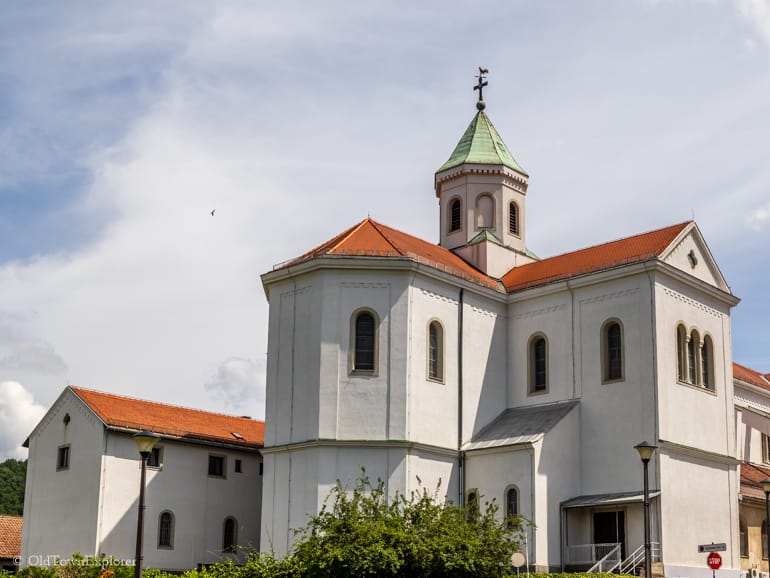
The Church Exterior
From the outside, look first at the size and plain mass of the church rather than expecting the ornament of a central Baroque or Orthodox landmark. Its position outside the main sightseeing core makes it feel more like a working religious place than a showpiece on a city square.
The exterior also helps explain why the abbey works well as an architecture extension from Banja Luka’s center. After Kastel Fortress, Banski Dvor, the Palace of the Republic, Ferhat Pasha Mosque, and the Cathedral of Christ the Saviour, Mariastern adds a different Catholic and monastic layer to the city’s building story.
The Church Interior
If you can enter, slow down inside the church rather than treating it as a quick photo stop. Look for the scale of the interior, the softer colors, and the art that makes the abbey feel different from Banja Luka’s central religious buildings.
Interior access can vary, so plan the church as a possible highlight rather than a guaranteed all-access visit. If the interior is closed when you arrive, the exterior, monastery setting, and Trapisti walk can still make the trip worthwhile.
The Trapisti Setting
The abbey’s setting is part of the architecture story. This is not a monument boxed into the historic center; it sits in a part of Banja Luka where river power, workshops, production, and religious life once overlapped. That makes Mariastern one of the better places to understand how the city’s story reaches beyond its central squares.
What to See at Mariastern Trappist Abbey
A visit to Mariastern Trappist Abbey works best when you focus on four things: the abbey church, the monastery setting, the Trappist cheese and beer story, and the walk or ride out from central Banja Luka. It is a small, specific visit, not a full museum-style attraction.
The Abbey Church
The church is the main stop. Look at the scale, interior colors if open, and the way the building differs from Banja Luka’s central religious landmarks. It gives the city’s Catholic architecture a quieter, more monastic counterpoint to the Cathedral of St. Bonaventure in the center.

Trappist Cheese and Beer History
The Trappist food story is one of the best reasons to visit. The Trappists are closely tied to Banja Luka cheese and beer history, and the city’s tourism history connects them with cheese production and brewery development on the northern edge of the city.
Treat any current cheese, beer, shop, or tasting access as something to confirm before going. A guided local trip, such as the Cheese and Beer in the Trappist Monastery tour, may be the better choice if buying cheese, entering a museum, visiting the brewery, or seeing the hydroelectric plant matters to you.

The Monastery Setting
Even without a full interior visit, the monastery setting helps place the abbey in Banja Luka’s wider geography. You are outside the main pedestrian core, away from the city’s most obvious landmarks, in a part of town that makes the Trappist industrial and religious story easier to picture.

The Walk from the City Center
The walk from central Banja Luka is part of the experience if you like seeing how a city changes block by block. We walked from the city center during our month in Banja Luka. It was a bit far, but the route had sidewalks the full way and gave the abbey visit more context than a quick taxi ride would have.
How to Visit Mariastern Trappist Abbey
Visit Mariastern Trappist Abbey with flexible expectations. It is a worthwhile Banja Luka extension, but it is not a heavily managed attraction where every part of the visit follows a fixed tourist route.
- Location: Trapisti area, northeast of central Banja Luka.
- Best reason to go: Trappist history, monastery architecture, cheese and beer history, and a quieter side of Banja Luka.
- Best timing: visit after you have already seen the central sights, especially Kastel Fortress, Gospodska Street, and the main churches and mosques.
- Access: check ahead if entering the church, seeing an exhibition, buying cheese, or joining a guided visit is important to you.
- Getting there: walk from the center if you enjoy long urban walks; use a taxi or bus if you want the abbey without the long approach.
The abbey is most rewarding when you treat it as a Banja Luka history stop rather than a quick church detour.
Independent Visit
An independent visit works well if you mainly want to see the abbey church, walk through the Trapisti area, take photos, and connect the monastery with Banja Luka’s wider religious and industrial history. Check church or parish contact details before going if interior access is important to you.
Guided Visit
A guided visit makes more sense if you want the cheese, beer, museum, hydroelectric plant, or brewery side of the story. The Trappist history is broad enough that a guide can add value, especially because the abbey connects several Banja Luka themes that are easy to miss when visiting alone.
How Long to Allow
Allow enough time for the abbey and the journey there, not just the church itself. If you walk from the center, treat the visit as a longer outing rather than something to squeeze between two central stops. If you go by taxi or bus, the abbey can fit more easily into a half day with another Banja Luka architecture or food stop.
How to Get to Mariastern Trappist Abbey from Banja Luka
Mariastern Trappist Abbey sits outside the tight central sightseeing area, so the main decision is whether you want the journey to be part of the visit. Walking gives you a stronger sense of the city’s layout, while a taxi or bus keeps the visit easier and faster.
Walking from the City Center
We walked from Banja Luka city center to Mariastern Trappist Abbey during our month-long stay. The route was a bit far, but it was generally interesting and had sidewalks the full way. Choose this option if you enjoy long urban walks and want to see how Banja Luka stretches beyond the central pedestrian streets.
Do not compare this walk with the short route between Gospodska Street, Krajina Square, Kastel Fortress, and Banski Dvor. Mariastern is a separate outing, and the return walk can feel long if the weather is hot, rainy, or cold.
Taxi
A taxi is the easiest choice if your main goal is the abbey rather than the walk. It also makes sense if you are carrying camera gear, traveling with someone who does not want a long walk, or trying to combine Mariastern with another stop outside the center.
Bus
Banja Luka’s tourism office lists public transport information for the city, including urban and suburban bus routes. Check the Banja Luka public transport page before relying on a bus route to the Trapisti area, because route details and timetables can change.
What to Expect Upon Arrival at Mariastern Trappist Abbey
Mariastern Trappist Abbey feels quieter and less central than Banja Luka’s main sights. That is part of the appeal, but it also means you should arrive with a flexible plan rather than expecting a polished attraction entrance, fixed visitor sequence, or guaranteed access to every space.
A Working Religious Place
Treat the abbey as a religious site first. Dress and behave as you would in an active church, avoid interrupting services or private areas, and keep photography discreet when people are present. If the church is closed, do not force the visit; use the exterior and setting as the main stop.
Variable Access
Access to interiors, exhibitions, shops, or guided spaces can depend on timing and arrangements. If the abbey interior, Trappist cheese, beer history, or museum element is the reason you are going, contact the parish or use a guided arrangement before setting out.
A Different Side of Banja Luka
The arrival is part of the contrast. Central Banja Luka gives you squares, cafés, churches, mosques, and fortress walls in a compact loop. Mariastern gives you a quieter edge of the city where religious life, industry, food production, and the Vrbas River sit closer together.
Tips for Visiting Mariastern Trappist Abbey
Mariastern rewards travelers who plan around access, distance, and context. It is not difficult to visit, but it works better when you treat it as a focused Banja Luka extension rather than a quick central stop.
Go after the center
Visit Kastel Fortress, Gospodska Street, Krajina Square, Banski Dvor, and the main central religious buildings first. Mariastern makes more sense once you can compare it with Banja Luka’s central architecture.
Check access first
Confirm access if you want to enter the church, see an exhibition, buy cheese, or join a guided visit. Without confirmation, plan for an exterior visit and a look at the wider Trapisti setting.
Walk only if you enjoy it
The walk from the center is possible and had sidewalks the full way when we did it, but it is not a short old-town stroll. Walk if the route itself interests you; take a taxi or bus if your time or weather window is limited.
Bring water
Bring water if you walk from central Banja Luka, especially in warm weather. The route is straightforward enough, but the distance makes small practical choices more important than on the central sightseeing loop.
Connect it with food history
Do not treat the abbey only as a church. The Trappist cheese and beer story gives the visit a strong food-history angle, especially if you are also using Banja Luka Food to plan what to eat in the city.
Where to Stay When Visiting Mariastern Trappist Abbey
Stay in central Banja Luka when visiting Mariastern Trappist Abbey. The abbey is worth the trip, but the city center is the better base for restaurants, cafés, groceries, evening walks, Kastel Fortress, Gospodska Street, Krajina Square, and the main architecture route.
The best areas are near Gospodska Street, Krajina Square, Kastel Fortress, and the Vrbas River. From there, you can walk the central sights first, then visit Mariastern as a longer walk, taxi ride, bus trip, or guided outing.
Hotels and Apartments in Banja Luka Center
Use the interactive map below to compare hotels and apartments near Gospodska Street, Krajina Square, Kastel Fortress, the Vrbas River, and central cafés or grocery stops you would use before and after the abbey visit.
FAQs About Mariastern Trappist Abbey
Is Mariastern Trappist Abbey worth visiting?
Yes, if you are interested in monasteries, religious architecture, Trappist cheese, beer history, or the quieter edges of Banja Luka. It is less important for a very short first visit focused only on the central sights.
Can you walk to Mariastern Trappist Abbey from Banja Luka city center?
Yes. We walked there from the city center during our month in Banja Luka. The walk was a bit far, but it had sidewalks the full route and gave us a better sense of the city beyond the central core.
How much time do you need for Mariastern Trappist Abbey?
Allow a longer outing if you walk from the center. If you go by taxi or bus and only see the church and setting, the abbey can fit into a shorter visit, but access-sensitive parts such as exhibitions, shop visits, or guided elements should be checked in advance.
Can you buy Trappist cheese at Mariastern Trappist Abbey?
Do not assume cheese will be available without checking first. The Trappist cheese story is central to the abbey’s appeal, but current shop, product, and tasting access should be confirmed before you plan the visit around buying cheese.
Is Mariastern Trappist Abbey part of Banja Luka architecture?
Yes. Mariastern adds a Catholic monastic and industrial layer to Banja Luka’s architecture story. It works well after the central route through Kastel Fortress, Gospodska Street, Banski Dvor, Ferhat Pasha Mosque, the Cathedral of Christ the Saviour, and the Cathedral of St. Bonaventure.
For the full city plan, start with Banja Luka. To compare Mariastern with the city’s fortress, mosques, churches, palaces, and central squares, use Banja Luka Architecture. For the Trappist cheese angle and other local food decisions, use Banja Luka Food.
