

Explore How to Get from Brașov to Peleș Castle: Transportation Options & Travel Tips
The easiest way to get from Brașov to Peleș Castle is usually to take a train from Brașov to Sinaia, then walk, use local transport, or take a taxi from Sinaia station to the castle area. The train keeps the route simple, avoids parking, and works well for a day trip when you check return times before leaving Brașov.
We visited Peleș Castle while staying in Brașov and used the train route through Sinaia. This guide explains the main transport options, the step-by-step train route, what to check before you go, and where ticket and opening-hour details can change.
This website contains affiliate links that may earn us a small commission at no additional cost to you.
Brasov to Peles Castle at a Glance
For most independent travelers, the train to Sinaia is the simplest route. A taxi, private transfer, rental car, or tour can make sense when timing, mobility, or multiple stops matter more than cost.
- Train to Sinaia: Best for most day trips from Brașov
- Taxi or private transfer: Best for small groups, limited walking, or tight schedules
- Rental car: Best for travelers combining Peleș Castle with other Prahova Valley stops
- Organized tour: Best for travelers who want transport and timing handled for them
Choose the route before booking castle tickets, because timed entry and return trains can shape the whole day.
History of Peles Castle
Located in the Carpathian Mountains, Peles Castle has an extensive royal history and holds remarkable cultural significance.

Commissioned by King Carol I
Peles Castle was commissioned by Carol I of Hohenzollern-Sigmaringen, the first King of Romania. King Carol I's visionary leadership and royal patronage were instrumental in the development of the splendid Peles Castle. The regal influences and royal aspirations behind its creation reflect the king's profound cultural impact and personal involvement.

Home to Romania's Royal Family
Peles Castle was used as a summer residence for the royal family. Its majestic interiors, royal chambers, and historical relics immerse visitors in captivating tales and royal traditions. The regal ambiance, lavish decor, and timeless elegance offer a glimpse of royalty and historical grandeur. Peles Castle is truly a cherished home of Romania's royal family, preserving cultural heritage and captivating visitors with its royal legacy.

Houses a Collection of Artwork
Peles Castle houses a vast collection of artistic treasures, including paintings, sculptures, and decorative arts that date back to medieval times and showcase modern artistic expressions. The collection reflects the refined taste of the castle's royal residents, providing a fascinating glimpse into their cultural inclinations. Visitors can embark on a captivating journey through centuries of art and cultural heritage, harmonizing with the region's rich history and presenting an enriching experience for enthusiasts and history buffs alike.

Declared a Museum in 1953
In 1953, Peles Castle underwent a remarkable transformation into a revered museum, safeguarding its historical, cultural, and artistic treasures. Following its declaration as a museum, significant milestones were achieved, including extensive conservation efforts and increased public access.
The establishment of Peles Castle as a museum beautifully showcases its historical legacy. Visitors can experience immersive exhibits, guided tours, and cultural preservation efforts, making the castle a renowned museum.
Architecture of Peles Castle
Peleș Castle, built in two phases between 1873 and 1914, is more palace than castle in terms of its form and function. The castle showcases a stunning architectural style, fusing Neo-Renaissance, Gothic, and Baroque elements.
The facades of the interior courtyard depict an influence of Saxon architecture, with ornate framework and hand-painted murals. The interior decoration is primarily influenced by the Baroque style, with intricately carved woodwork and luxurious fabrics. This grandeur exemplifies 19th-century European design and engineering, integrating diverse influences into a visually striking and historically significant structure.
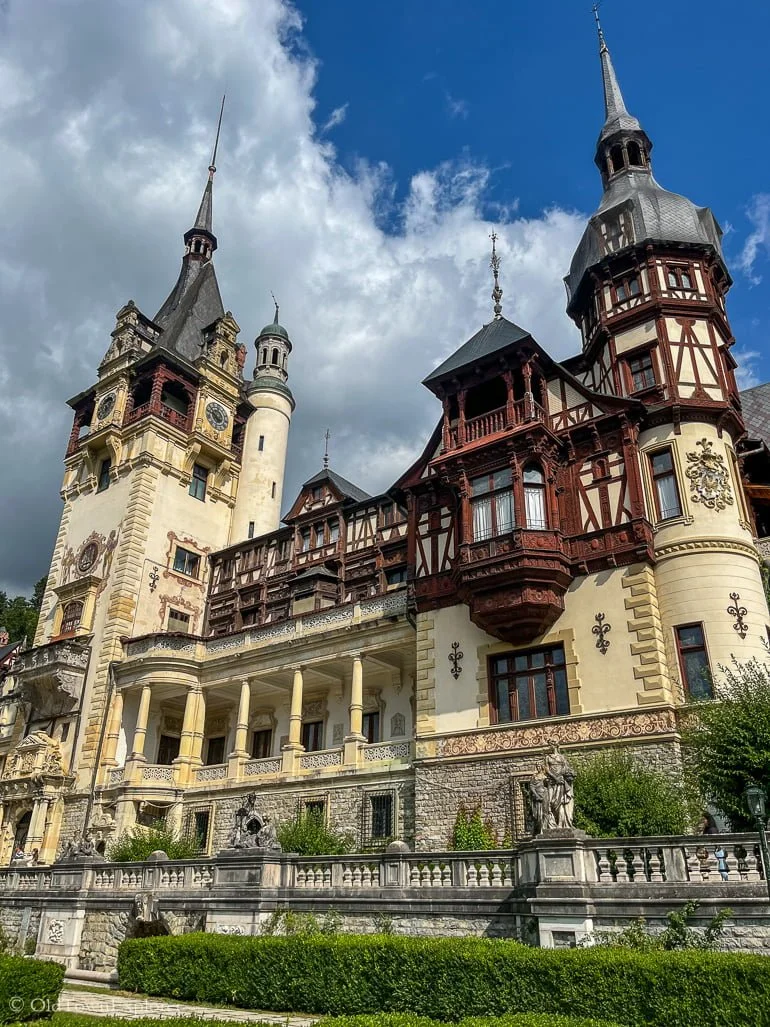
Designed by Architect Johannes Schultz
Interestingly, the initial three design plans submitted for Peleș Castle were copies of other palaces in Western Europe. King Carol I rejected all of them for being too costly and lacking originality.
Eventually, the project was given to German architect Johannes Schultz who presented a more unique and original plan that appealed to the King's taste. Schultz proposed a grand palatial alpine castle, which combined different aspects of classic European styles, mostly following Italian elegance and German aesthetics along Renaissance lines.
Construction of Peles Castle started in 1873 and was completed in 1883. During the first stage of construction, the German Neo-Renaissance style dominated both the exterior and interior of the castle. However, there were two exceptions where the neo-Ottoman and neo-Rococo styles were used instead.

Expanded by Architect Karel Liman
Between 1890 and 1914, Peles Castle was transformed and expanded under the supervision of Czech architect Karel Liman.
In the second stage of construction, significant changes were made to the castle's volumes, facades, and interiors. Additionally, Liman designed the towers, including the main central tower, which is 66 meters (217 ft) in height.
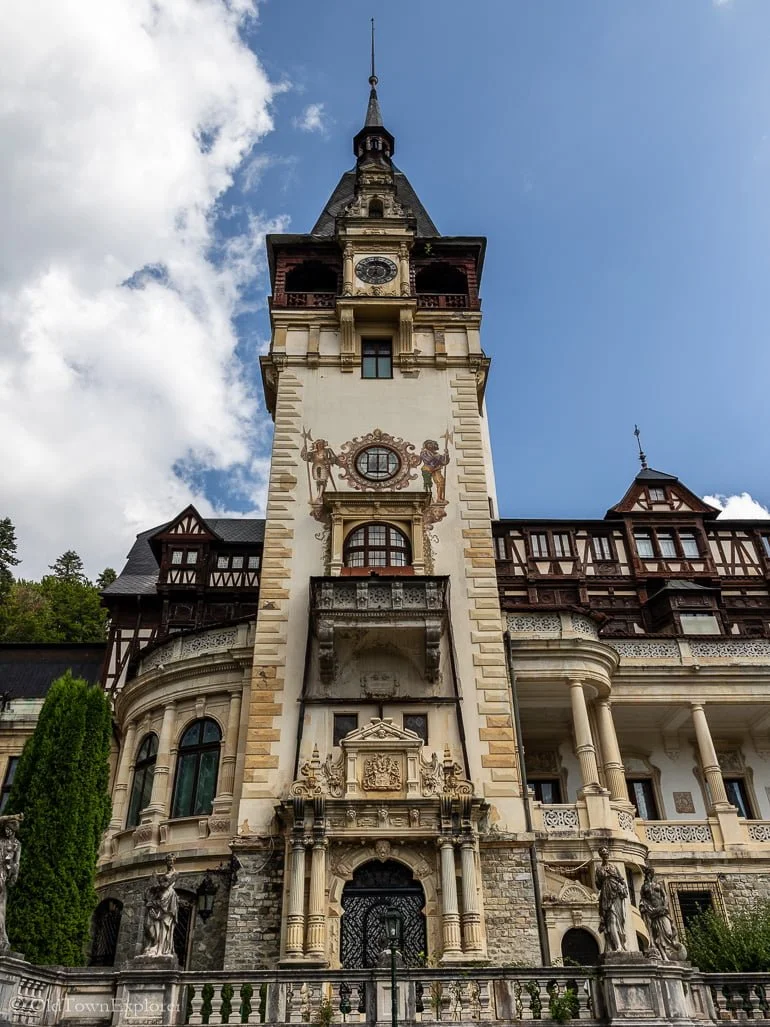
Restored in the 1990s
Peles Castle underwent extensive restoration in the 1990s to preserve its architectural grandeur. The project aimed to revive the castle's original charm while incorporating modern techniques, reinstating its structural integrity, and showcasing a commitment to safeguarding Romania's cultural heritage.
This comprehensive endeavor revitalized the castle's interiors, exteriors, and surrounding landscape, ensuring its enduring legacy for future generations.
The Rooms of Peles Castle
The Peleș Castle is a grand palace with a floor plan that covers 3,200 square meters (34,000 square feet) with more than 170 rooms. Inspired by world cultures, each room has its own unique theme, similar to other Romanian palaces like the Cotroceni Palace. The palace's most notable grand rooms include:

The Hall of Honor
The Hall of Honor (Holul de Onoare) was finally completed in 1911, under the guidance of Karel Liman. The hall is spread across three floors and adorned with exquisitely carved woodwork, primarily made of European walnut and other exotic timbers. The walls are decorated with bas-reliefs, alabaster sculptures, and retractable stained glass panels, which add to the overall grandeur of the hall.

The Imperial Suite
The Imperial Suite (Apartamentul Imperial) is believed to have been designed as a tribute to the Austrian Emperor Franz Joseph I. The emperor was a close friend of the Romanian Royal Family and had visited the palace on multiple occasions. The decorator, Auguste Bembe, chose the sumptuous Austrian Baroque style, which was favored by Empress Maria Theresa. One of the rarest and most precious features of the suite is the five-hundred-year-old Cordoban tooled leather wall cover, which has been perfectly preserved over time.

Royal Suites

The Grand Armory
The Grand Armory, also known as The Arsenal (Sala Mare de Arme), is home to 1,600 out of 4,000 pieces of weaponry and armor. The collection on display is one of the finest in Europe, containing hunting and war implements dating from the 14th to the 19th century. The king even added pieces that were used in his victory against the Ottoman Turks during the War of Independence. Among the collection is a complete Maximilian armor for horse and rider, and a 15th-century German "nobles only" decapitation broadsword. Visitors can also see a wide array of polearms such as glaives, halberds, lances, hunting spears, firearms including muskets, blunderbusses, snaphaunces, flintlocks, pistols, as well as axes, crossbows, and swords such as rapiers, sabers, broadswords, and many others.
The Small Armory
The Small Armory (Sala Mică de Arme) showcases a collection of predominantly Oriental weapons and armor pieces, with a focus on Indo-Persian, Ottoman, and Arab pieces. Many of these items are made of precious metals such as gold and silver, and are inlaid with precious stones. The collection includes a variety of items such as chainmail armor, helmets, scimitars, yataghans, daggers, matchlocks, lances, pistols, shields, axes, and spears.

The Playhouse
The Playhouse (Sala de Teatru) features a Louis XIV style decor with 60 seats and a Royal Box. The architectural decoration and mural paintings were created by Gustav Klimt and Frantz Matsch.

The Florentine Room
The Florentine Room (Sala Florentină) is a beautiful example of Italian Renaissance architecture, with many of its elements being taken from Florence. The room boasts some impressive features, including the solid bronze doors which were made in Rome by the Luigi Magni ateliers. The grand marble fireplace was executed by Paunazio and features motifs inspired by Michelangelo.

The Moorish Salon
The Moorish Salon (Salonul Maur) was designed by Charles Lecompte de Nouy. It aims to showcase elements of North African and Hispanic Moorish style. The salon features exquisite mother-of-pearl inlaid furniture, fine Persian Sarouk and Ottoman Isparta rugs, as well as Oriental weapons and armor. One of the most striking features of the salon is the indoor marble fountain.

The Turkish Parlor
The Turkish Parlor (Salonul Turcesc) recreates the ambiance of the Ottoman era. It features Turkish Izmir rugs and copperware from Anatolia and Persia and was originally designed as a smoking room for gentlemen. The walls are adorned with hand-crafted textiles such as silk brocades from the Siegert shops of Vienna.

Dining Room

Guest Floor and Rooms
The Romanian Royal Family had many guests during their summers at Peles Castle. These included ladies-in-waiting, musicians, performers, and various political figures. They stayed on the top floor of Peles Castle.
Hotels near Peles Castle
While most people stay in Brasov and take a day trip to Peles Castle, there are rooms available in Sinaia. The castle marker on the map below is Peles Castle. You can change the dates, set your preferences, and zoom in and out to explore the area hotels.
How to Reach Peleș Castle from Brașov
For most travelers, the train is the simplest route from Brașov to Peleș Castle. Take a train from Brașov to Sinaia, then continue from Sinaia station to the castle by walking, local transport, or taxi. Check the timetable for your travel date, especially for the return trip to Brașov.
Private Tour To Peles Castle
Here are some great options for a private tour to Peles Castle! In addition to the options below, we have used GetTranfer to book private transfers and recommend it as well.
By Train
Take a train from Brașov station to Sinaia station. Journey times and prices vary by train type, so use the official timetable before choosing a departure. Once you arrive in Sinaia, allow extra time for the uphill route from the station area to Peleș Castle.
From Sinaia Station to Peleș Castle
From Sinaia station, you can walk to the castle area, use local transport where available, or take a taxi. Walking is straightforward but uphill in sections, so a taxi or local transport can make sense in bad weather, with luggage, or when you want to save time before a timed castle visit.
By Taxi or Private Transfer
A taxi or private transfer is the most direct option from Brașov to Peleș Castle. It can work well for small groups or for travelers combining Peleș Castle with nearby stops. Agree on the price, waiting time, and return plan before leaving Brașov.
By Car
Driving gives the most flexibility, especially if Peleș Castle is part of a wider route through Sinaia or the Prahova Valley. Plan for traffic, parking, and the walk from the parking area to the castle entrance.
Step-By-Step Guide to Get from Brasov to Peles Castle by Train
Peles Castle was one of the highlights of our stay in Brasov. It is one of the area's top attractions and takes about an hour to get from Brasov to Sinaia, the town where Peles Castle is located, by train.

Brasov Train Station
Address: Bulevardul Gării 1A, Brașov 500148, Romania

Train from Brasov to Sinaia
The trip from Brasov to Sinaia takes about 1 hour and costs 10 to 20 RON ($2.50 to $5.00) per person each way. The train runs several times per day.
Train times and prices vary by departure and train type. Check CFR Călători for Brașov to Sinaia departures on your travel date.

Sinaia Train Station
Address: Sinaia, Romania

Sinaia Train Station to Peles Castle
There are several options to get from the Sinaia Train Station to Peles Castle. The most scenic option is to walk about 40 minutes to the castle. After exiting the train station, you'll need to cross the street and follow signs to the Peles Castle.
If you choose not to walk, the most economic option is to take the T1 bus from the city center. Of course, the easiest and quickest option is to take a taxi from the train station.

Return Train from Peles Castle to Brasov
The train from Sinaia to Brasov runs approximately every hour. Check here for departure times on your travel date.
What to Expect Upon Arrival at Peles Castle
When planning your visit to Peles Castle, it's essential to consider the entry fees, opening times, and what you'll find inside to ensure an enriching visit to this iconic fortress.
Entry Fees
Upon arrival at Peles Castle, visitors can expect to pay the following entry fee:
BASIC TOUR (GROUND FLOOR)
Adults: 50 RON
Seniors: 25 RON
Children and Students: 12.5 RON
Last admisson for the Basic Tour is 16:15.
OPTIONAL TOUR I (GROUND FLOOR + FIRST FLOOR)
Adults: 100 RON
Seniors: 50 RON
Children and Students: 25 RON
Last admission for the Optional Tour I is 15:30.
OPTIONAL TOUR II (GROUND FLOOR + FIRST FLOOR + SECOND FLOOR)
Adults: 150 RON
Seniors: 75 RON
Children and Students: 37.5 RON
Last admission for the Optional Tour II is 14:45.
Opening Times
Peles Castle is open to the public almost every day of the year, with a few exceptions during holidays and special events. Generally, the castle opens its gates in the morning, typically around 9:00 AM, and closes in the late afternoon or early evening.
Winter Hours (October thru April)
Monday-Tuesday: closed
Wednesday: 10:00 – 17:00
Thursday-Sunday: 09:15 – 17:00
Summer Hours (May thru September)
Monday: closed
Tuesday: 9:15 – 17:00
Wednesday: 10:00 – 17:00
Thursday-Sunday: 9:15 – 17:00
See last admission times for each tour above.
NOTE: Only the basic tour is available on Tuesdays during Summer Hours.
Check the Peleș National Museum site for current opening days, ticket rules, guided-tour times, and last-entry details before you travel.
Tips for Visiting Peles Castle
A good day trip from Brașov depends on matching three things: train times, castle entry, and the transfer between Sinaia station and the castle area.
Plan the Return First
Choose your return train from Sinaia before you leave Brașov. This helps you avoid rushing through the castle or waiting longer than planned at Sinaia station after your visit.
Check Castle Entry Before Choosing a Train
Use the official Peleș Castle site to check current opening days, ticket rules, guided-tour options, and last-entry times. Then choose a train or transfer that leaves a buffer for the uphill route from Sinaia station.
Buy Your Admission Ticket in Advance
The best advice we received before our visit to Peles Castle was to buy our ticket in advance. If you don't already have a ticket, be prepared to stand in line and pay for admission when you arrive at the castle.
The fees may vary depending on whether you opt for a guided tour or explore on your own. It's advisable to check the official website of Peles Castle for the most up-to-date information on ticket prices and tour options.
Visit Early or Later in the Day
Peles Castle is a popular tourist destination, so expect crowds, especially during peak travel seasons. To avoid long lines, consider arriving early or visiting later in the day when it tends to be quieter.
Weather
The weather in Transylvania can be unpredictable, so it's a good idea to check the forecast before your visit. Also, it is advisable to dress in layers, as the castle's interior can be cool even during warmer months.
Leave Time for Sinaia
Peleș Castle is not directly beside the train platform. Allow time to get from Sinaia station to the castle, especially in wet weather, winter conditions, or when traveling with luggage.
Wear Comfortable Shoes
Don’t forget to wear comfortable shoes to explore the town and castle.
FAQs About Peles Castle
Why is Peles Castle so famous?
Peleș Castle was the first castle in the world to be fully powered by electricity.
Is Peles Castle worth visiting?
Peles Castle is definitely worth a visit due to its stunning beauty and unique style.
What movie was filmed at Peles Castle?
The movie "A Christmas Prince" was filmed at Peles Castle, adding to its allure and popularity among tourists. The castle's picturesque surroundings and exquisite architecture have made it a favored location for filmmakers, further enhancing its charm.
How much is ticket to Peles Castle?
The ticket price for Peles Castle varies depending on the type of tour and access you choose. General admission tickets start at approximately 30 lei for adults and 10 lei for children. There are also options for guided tours, which provide in-depth insights into the castle's history and architecture. Prices for guided tours range from 50 to 100 lei per person. It is advisable to check the official website or contact the tourist center in Brasov for the most up-to-date information regarding ticket prices and availability.
How to Get to Peles Castle from Train Station?
There are several options to get from the Sinaia Train Station to Peles Castle. The most scenic option is to walk about 40 minutes to the castle. The economic option (aside from walking) is to take the T1 bus from the city center. The easiest and quickest option is to take a taxi from the train station.
Is it Worth Going Inside Peles Castle?
It's a beautiful castle that is definitely worth visiting. The rooms are decorated and furnished with a mixture of styles. Guided tours are available, and when we visited, there were many tourists visiting from all over the world.
Is Peles Castle Cash Only?
No, the admission fee can be paid with cash (LEI only) or by card.
Other Attractions Near Peles Castle
In addition to Peles Castle, there are several other great day trips from Brasov, including:
Near the castle route, Sinaia Monastery is one of the easiest nearby stops to pair with a Peleș Castle day trip.
