
Banja Luka Architecture
Explore Banja Luka Architecture: Churches, Palaces & More
Banja Luka architecture is shaped by the Vrbas River, Ottoman rule, the 1930s civic-building boom, the 1969 earthquake, and post-war reconstruction. Unlike Mostar or Dubrovnik, Banja Luka does not have one preserved old town; its main buildings sit in layers around the river, fortress, central squares, and pedestrian streets.
Kastel Fortress gives the city its riverfront defensive layer. Ferhat Pasha Mosque and Arnaudija Mosque show the Ottoman city, while the Cathedral of Christ the Saviour, Banski Dvor, the Palace of the Republic, and the Cathedral of St. Bonaventure show how religious, civic, and modern architecture reshaped the center in the 20th century.
We spent a month in Banja Luka walking the central streets, fortress area, Vrbas riverfront, and main civic spaces. The strongest architecture plan is to compare those layers on foot, then decide whether to add Banj Brdo, outlying mosques, or a guided tour.
This page contains affiliate links. We may earn a small commission at no extra cost to you.
Banja Luka Architecture at a Glance
Banja Luka’s architecture is compact enough to compare on foot. The main walk stays close to Gospodska Street, Krajina Square, Kastel Fortress, Banski Dvor, the Palace of the Republic, and the central religious buildings.
Key architecture points:
- Core identity: Ottoman mosques, Austro-Hungarian civic buildings, Serbian Orthodox churches, modern Catholic architecture, and Yugoslav-era public spaces share the central city.
- First buildings to notice: start with Kastel Fortress, Ferhat Pasha Mosque, the Cathedral of Christ the Saviour, Banski Dvor, and the Palace of the Republic.
- Strongest starting area: Gospodska Street and Krajina Square make the easiest first base because several major buildings sit within a short walk.
- Key features: look for fortress walls, domes, minarets, civic façades, bronze statues, wide public squares, and post-earthquake rebuilding.
- Main trade-off: the city center is easy on foot, but Banj Brdo and some river-area stops need extra time or transport.
For a short visit, stay in the central core. Add Banj Brdo only when you want the monument and viewpoint above the city rather than another central-street loop.
What to See in Banja Luka
Banja Luka’s first architecture decision is whether to stay in the central walking area or add the hill and outlying river stops. The center gives the clearest mix: fortress walls by the Vrbas, Ottoman mosque architecture, 1930s civic buildings, churches, squares, and pedestrian streets.
For most visitors, the first walk should connect Gospodska Street, Krajina Square, the Cathedral of Christ the Saviour, Banski Dvor, the Palace of the Republic, Ferhat Pasha Mosque, and Kastel Fortress. That route shows the city’s main layers without turning the day into a long sightseeing circuit.
Central Streets, Religious Buildings, and the Vrbas River
Start around Gospodska Street when you want the densest architecture walk. From there, Banski Dvor and the Palace of the Republic show the 1930s civic layer, the Cathedral of Christ the Saviour marks the Orthodox center, and Ferhat Pasha Mosque and Kastel Fortress pull the walk toward Ottoman and riverfront architecture.
Fortress, Squares, and Public Monuments
Kastel Fortress is the strongest Vrbas-side stop because its stone walls, bastions, courtyards, and river position make the city’s defensive layer visible. Krajina Square, Petar Kočić Park, and Banj Brdo add the public-space and monument layer, but they work better after the central building group is clear.
The main categories below help you decide what to focus on:
- Religious buildings: Ferhat Pasha Mosque, Arnaudija Mosque, the Cathedral of Christ the Saviour, and the Cathedral of St. Bonaventure show the city’s mosque, Orthodox, and Catholic layers.
- Palaces and civic buildings: Banski Dvor, the Palace of the Republic, Hotel Palace, City Hall, the Archives, and the National Theater show the 20th-century public-building core.
- Monuments: Banj Brdo, Safikada’s Tomb, Petar Kočić, King Petar I, and the World War I memorial add memory, legend, and public sculpture.
- Streets and public spaces: Gospodska Street and Krajina Square make the easiest central architecture walk.
- Fortress and riverfront: Kastel Fortress ties the historic core to the Vrbas River.
With those places in mind, the first decision is where to spend time: the central civic-and-religious core, Kastel Fortress and the Vrbas River, or Banj Brdo when the monument and city view matter more than staying in the center.
Religious Buildings in Banja Luka
Banja Luka’s religious buildings show the city’s main architectural and religious layers in a short walking area. The Ferhat Pasha Mosque represents 16th-century Ottoman mosque design and post-war reconstruction. The Cathedral of Christ the Saviour reflects Serbian-Byzantine revival architecture. The Cathedral of St. Bonaventure adds a modern Catholic landmark shaped by the rebuilding period after the 1969 earthquake.
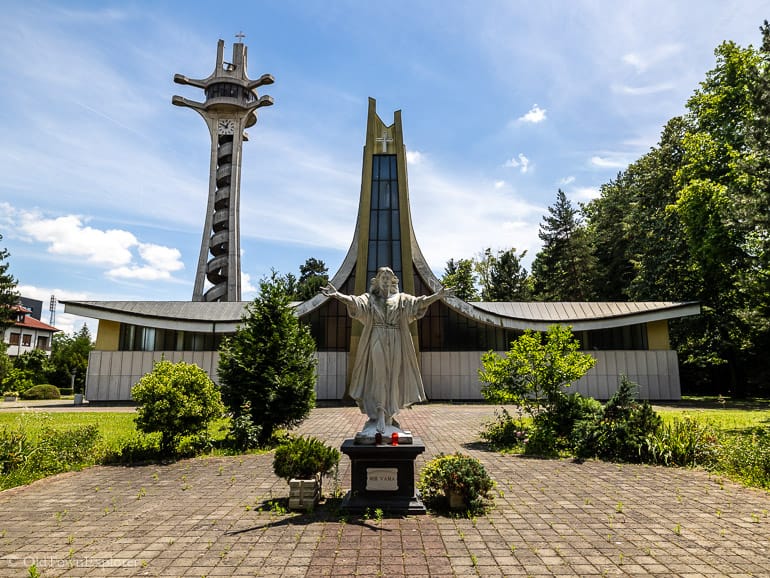
Cathedral of St. Bonaventure
- Architect: Miroslav Matasović (main structure), Danilo Fürst (facade), Viktor Plestenjak (sculptural elements)
- Style: Modern, with symbolic “tent” architecture and contemporary stone and stained-glass details
- Built: Groundbreaking in 1972, completed 1973; consecrated December 1, 2001
- Address: Kralja Petra I Karađorđevića 80, 78000 Banja Luka, Bosnia and Herzegovina
Standing on the site of an earlier Gothic church, this cathedral is a modern, tent‑shaped structure symbolizing divine presence and post‑earthquake recovery. It features Pazin stone cladding, a 42 m bell tower (added 1990–91), works by Slovenian sculptor Viktor Plestenjak, stained glass by Croatian artist Ivo Dulčić, and a restored Ibach organ.
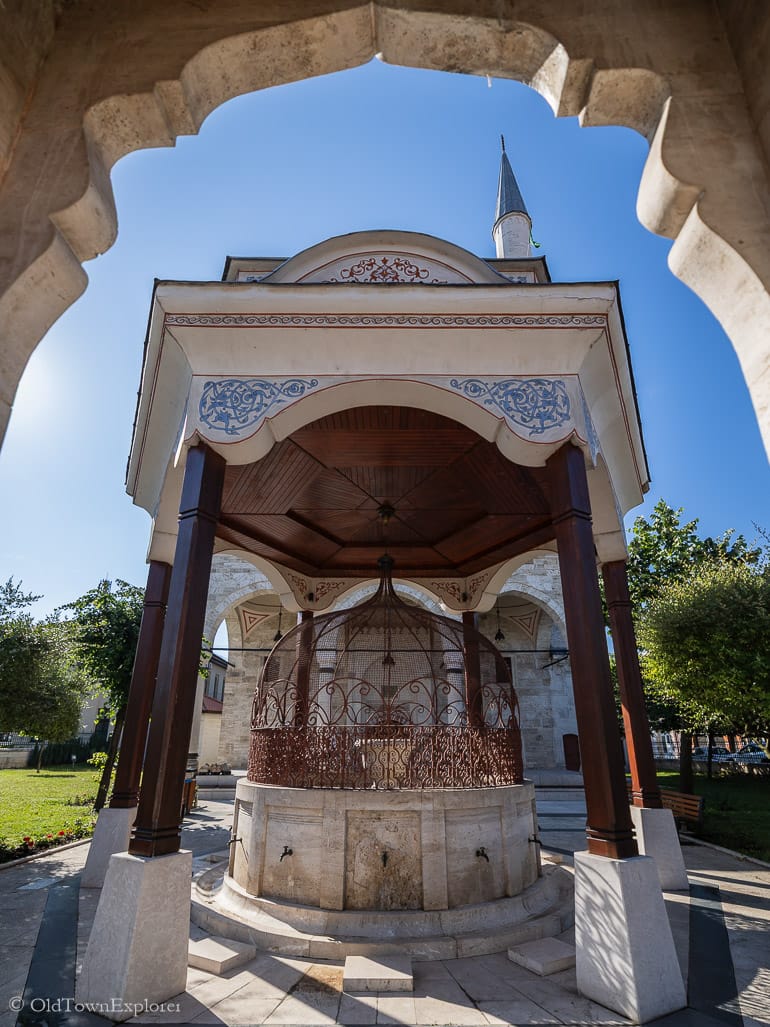
Ferhat Pasha Mosque
aka Mosque of Ferhadija
- Architect: Unknown (likely inspired by the Ottoman Great Architect Sinan)
- Style: 16th-century Classical Ottoman
- Built: Circa 1579–1580; destroyed in 1993; fully reconstructed and reopened in 2016
- Address: Kralja Petra I Karađorđevića 42, 78000 Banja Luka, Bosnia and Herzegovina
Commissioned by Ferhad Pasha Sokolović, this mosque is one of the finest examples of Ottoman architecture in Bosnia. Its courtyard once included a fountain, mausoleums (turbes), and elaborate walls, typical of a vakuf complex. Rebuilt using original techniques and stones, it was reopened in 2016 as a symbol of heritage restoration.
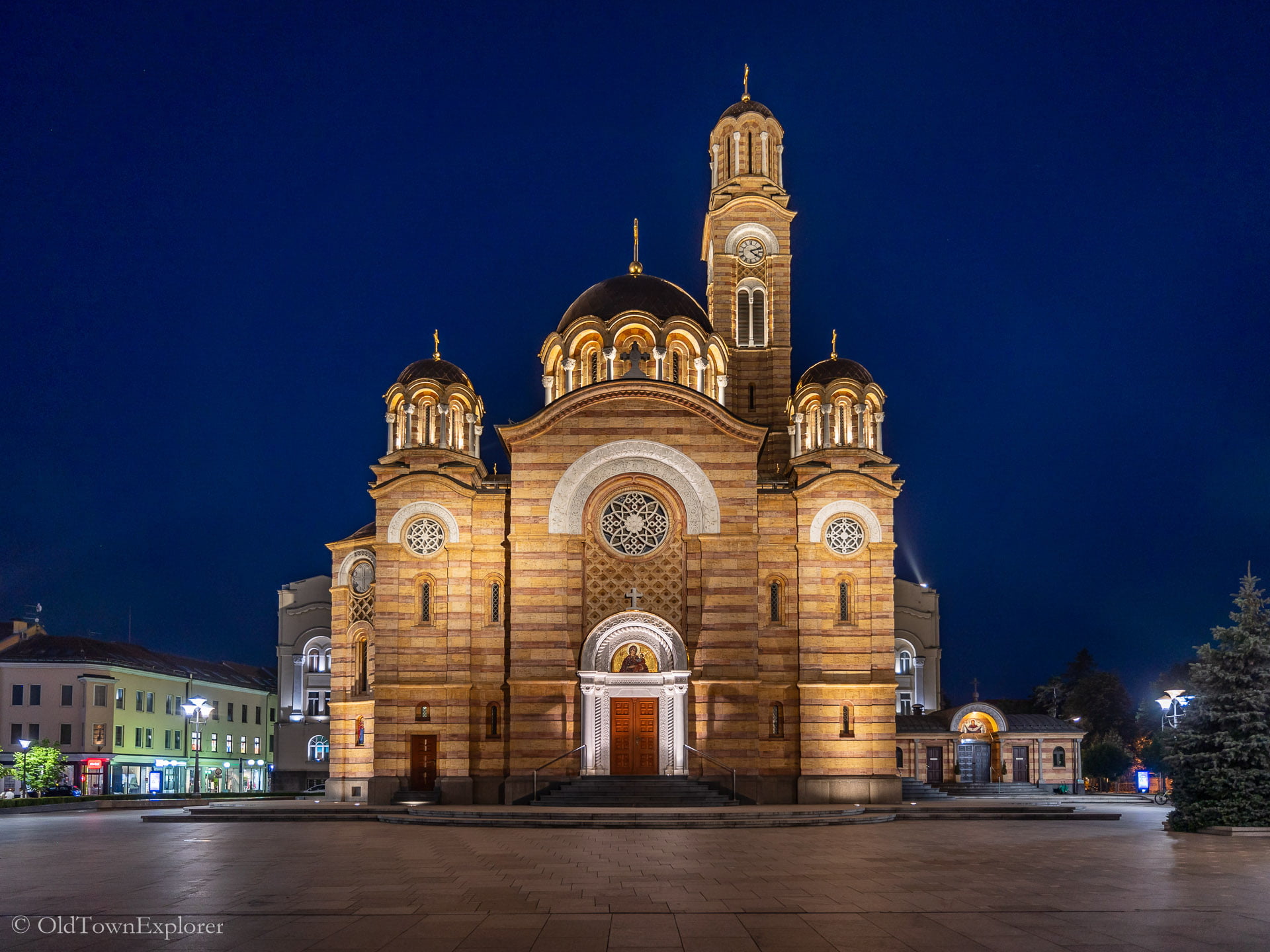
Cathedral of Christ the Saviour
- Architect: Dušan Živanović, Belgrade (design), interior planning by Grigorije Samojlov; iconostasis by Jovan Bijelić, Veljko Stanojević & team
- Style: Serbian-Byzantine revival, early 20th-century ecclesiastical architecture
- Built: Original church 1925–1929; destroyed in 1941; reconstruction began in 1993; consecrated in 2009
- Address: Trg Krajine (Kralja Petra I Karađorđevića 1), 78000 Banja Luka, Bosnia and Herzegovina
Originally the Holy Trinity Church, it was designed by Dušan Živanović and built 1925–1929 in a Greek-cross layout with central and four subsidiary domes. After destruction in WWII, the foundations were laid in 1993 and reconstruction completed in 2004 with red‑and‑yellow Mesopotamian travertine, granite columns, golden domes, and a 47 m bell tower—the tallest religious structure in Banja Luka.
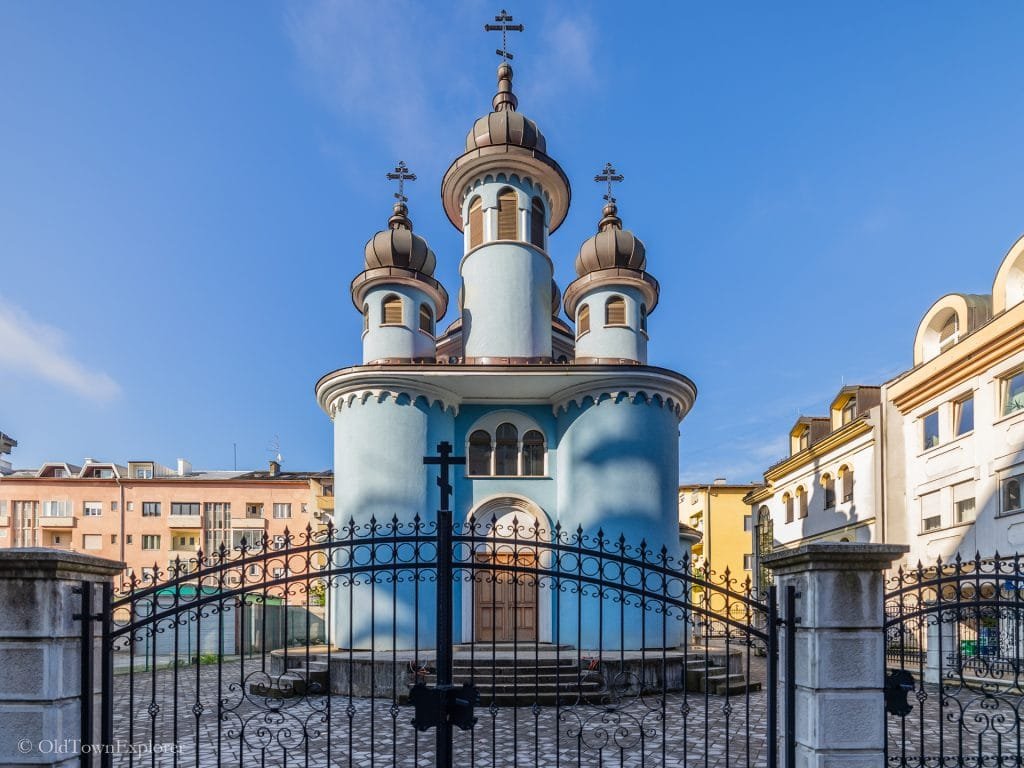
Ukrainian Greek Catholic Church of Christ the King
- Architect: Pavle Paštar
- Style: Ukrainian Greek Catholic church with Byzantine-influenced onion domes
- Built: first church built in 1932; current church designed in 1990, with construction beginning in 1998
- Address: Srpska Street, central Banja Luka
The Ukrainian Greek Catholic Church of Christ the King adds a different religious and visual layer to central Banja Luka. The first church on the site was built in the 1930s and destroyed during the Second World War; the current church was designed by Pavle Paštar, with construction beginning in 1998.
Look for the blue façades, white decorative trim, onion dome on a circular drum, and smaller domes above the altar area. The church is a useful stop when you want Banja Luka’s religious architecture walk to include more than the city’s main Orthodox, Catholic, and Ottoman buildings.
Gazanfer Bey (Gazanferija) Mosque
- Architect: Unknown
- Style: Ottoman Islamic architecture (late classical phase)
- Built: Circa late 1500s
- Address: Donji Šeher neighborhood, right bank of the Vrbas River, Banja Luka, Bosnia and Herzegovina
This small but historically important mosque is contemporary with the Ferhadija Mosque and named after Gazanfer Bey, a 16th-century Ottoman dignitary. Though less well-known, it’s recognized for its heritage value and classic Ottoman proportions and dome.
Arnaudija Mosque
- Architect: Unknown
- Style: Classical Ottoman mosque architecture
- Built: Completed around 1595
- Destroyed: Demolished in 1993; reconstructed and reopened in 2024
- Location: Donji Šeher, near Ferhadija Mosque, central Banja Luka, Bosnia and Herzegovina
A National Monument of Bosnia and Herzegovina, the Arnaudija Mosque stood as a symbol of Ottoman-era religious architecture until its destruction. Its recent reconstruction restores a significant piece of Banja Luka’s cultural and religious heritage.
Palaces in Banja Luka
Banja Luka’s palaces reflect the city’s political and cultural evolution during the 20th century, particularly under the Vrbas Banovina. These grand buildings combine elegant architectural styles with historical significance, serving as former government seats, cultural centers, and iconic landmarks that continue to shape the city’s identity.
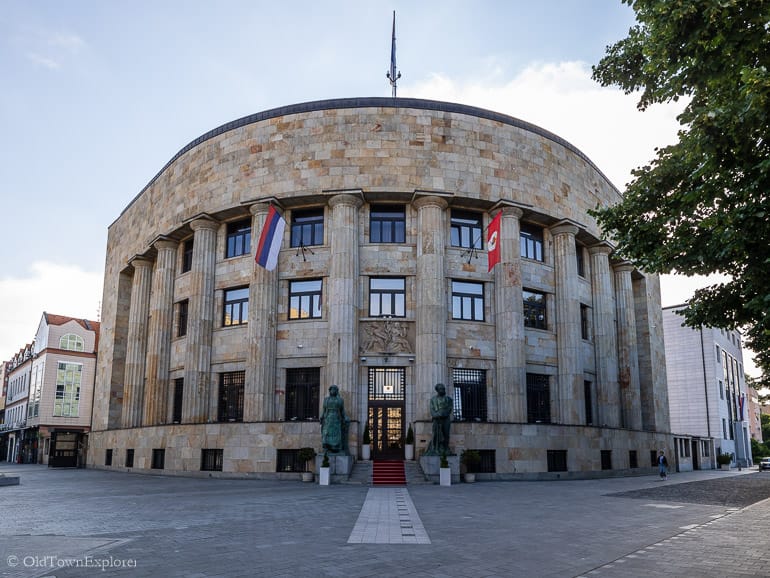
Palace of the Republic
- Architect: Miodrag Vasić
- Architectural Style: 1930s design blending Bauhaus with Neo‑Classicist elements
- Built: 1936 (inaugurated 27 December 1936)
- Address: Bana Milosavljevića 4, 78000 Banja Luka, Bosnia and Herzegovina
Originally built as the Mortgage (State Mortgage) Bank, this monumental structure now serves as the official Presidential Residence of Republika Srpska. Notable for its fusion of clean Bauhaus lines and grand Neo-Classical formality, it’s distinguished by two 600 kg bronze statues of Krajina peasants by sculptor Volodemer Zahorodnjuk, as well as eleven facade reliefs

Banski Dvor
aka Governor’s Palace aka Palace of the Ban
- Architect(s): Jovanka Bončić‑Katerinić, Anđelija Pavlović, Jovan Ranković
- Style: Eclectic academicism combining Renaissance and medieval-inspired detailing
- Built: 1931–1932
- Address: Trg kralja Petra I Karađorđevića 1, 78000 Banja Luka, Bosnia and Herzegovina
Commissioned by the Vrbas Banovina administration under Ban Svetislav Tisa Milosavljević, Banski Dvor served as the Ban’s seat. After WWII, it was a military and political HQ, later converted into the House of Culture in 1955. Since 1998, it’s been the central cultural institution in Banja Luka, hosting concerts, exhibitions, and lectures. Following damage in WWII and a major earthquake in 1969, the building was restored in 1953 and again preserved in 1972, maintaining its original volumes and decorative elements
Hotel Palace
aka Palas Hotel
- Architect: Architect originally from the Vrbas Banovina government—commonly attributed to Dionis Sunko
- Architectural Style: Early 1930s Modernist with French-influenced detailing
- Built: 1933 during the mandate of Ban Svetislav Tisa Milosavljević
- Address: Kralja Petra I Karađorđevića 60, 78000 Banja Luka, Bosnia and Herzegovina
Erected during a burst of modernization across Banja Luka, the Palas Hotel stands as one of the city's iconic heritage landmarks. It features Modernist architecture infused with French park-like elegance—including a pavilion and fountain—with modern amenities still housed within. Recognized as a protected first-category heritage site, it underscores the urban development ambitions of the 1930s municipality.
Statues and Monuments in Banja Luka
Banja Luka’s statues and monuments reflect its history, culture, and the people who have shaped the city. Scattered throughout the urban landscape, these works of art offer insight into the region’s heritage and serve as important landmarks for both locals and visitors.
Monument to Fallen Krajina Soldiers on Banj Brdo
- Architect: Antun Augustinčić
- Architectural Style: Modernist, with Socialist Realist elements
- Year Built: 1961
- Address: Put banjalučkog odreda, Banja Luka, Bosnia and Herzegovina
This monumental mausoleum, one of the largest in the former Yugoslavia, commemorates the fallen fighters from the Krajina region during World War II. Designed by renowned Croatian sculptor Antun Augustinčić, the structure is constructed from Brač marble and features a dynamic, bullet-like form symbolizing the region's resistance. The monument stands 13 meters tall and 24 meters long, with reliefs depicting scenes of battle and post-war reconstruction. It is situated atop Banj Hill, offering panoramic views of Banja Luka.
Safikada’s Tomb
- Architect: Unknown
- Architectural Style: Traditional Bosnian Ottoman architecture
- Year Built: Exact date unknown; the tomb is believed to date back to the 18th century
- Address: Safikadin sokak, Banja Luka, Bosnia and Herzegovina
Safikada’s Tomb is a small, whitewashed structure located in the old part of Banja Luka. It marks the burial site of Safikada, a young woman whose tragic love story has become a symbol of eternal love and devotion in the city. The tomb is a popular spot for both locals and visitors, often adorned with flowers and candles. A plaque nearby provides information about the legend of Safikada, adding to the site's cultural and historical significance.
Monument to Petar Kočić
- Sculptors: Antun Augustinčić and Vanja Radauš
- Style: Figurative bronze sculpture
- Created: Completed in 1929; unveiled November 6, 1932
- Location: Petar Kočić Park, central Banja Luka
The bronze monument honors writer and political figure Petar Kočić. It stands in the park across from Krajina Square and forms a short public-sculpture stop on the central walking route.
Monument to King Petar I Karađorđević
- Architect: Unknown
- Architectural Style: Figurative sculpture / Realism
- Year Built: 1936
- Address: King Petar I Karađorđević Square, Banja Luka
This monument celebrates King Petar I, the first king of the Kingdom of Serbs, Croats, and Slovenes (later Yugoslavia). The statue portrays the king in regal attire and is a significant historic symbol in the city.
Monument to the Fallen Soldiers of World War I
- Architect: Unknown
- Architectural Style: War memorial / Traditional monument
- Year Built: Early 20th century (post-WWI)
- Address: Near the central park area in Banja Luka
This memorial honors soldiers from the region who died during World War I. It is a solemn structure, often visited during commemorations and remembrance days.
Other Attractions in Banja Luka
Beyond religious buildings and palaces, Banja Luka’s architecture is visible in its fortress, central pedestrian street, public squares, archives, theater, and civic buildings. These places show how the city developed around the Vrbas River, Austro-Hungarian administration, 20th-century public planning, and later reconstruction.
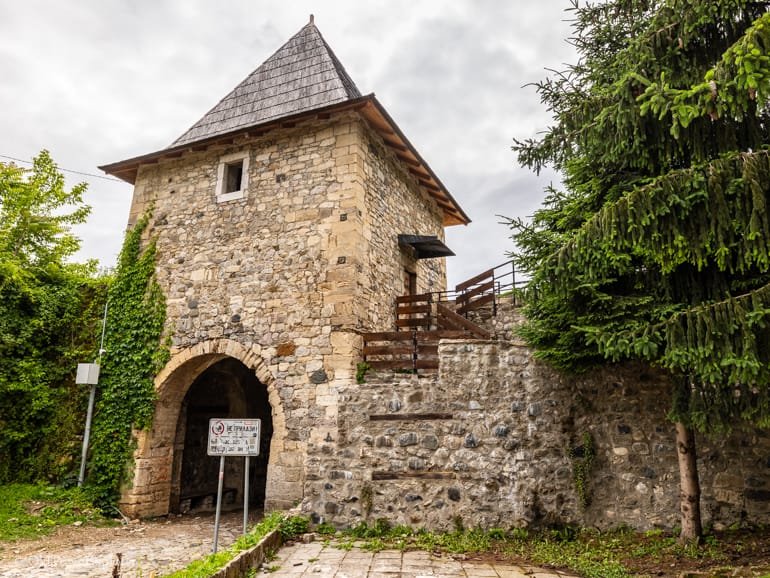
Fortress Kastel
- Architect: Unknown
- Architectural Style: Multi-period fortress—Roman (Castra) origins, later Ottoman artillery fortifications following Vauban-style polygonal planning, with Austro-Hungarian military adaptations
- Built:
- Roman foundation (possibly 2nd century AD) and medieval fortification
- Ottoman conversion into artillery fortress under Ferhad Pasha (late 16th century)
- Major redesign in Vauban style (1712–1714)
- Address: Tvrđava Kastel, Trg srpskih vladara 1, 78000 Banja Luka, Bosnia and Herzegovina
Fortress Kastel stands on the left bank of the Vrbas River near the center of Banja Luka. The site is associated with earlier defensive layers, while the visible fortress fabric reflects later Ottoman and Austro-Hungarian military use.
Visitors should focus on the stone walls, bastions, river position, open courtyards, and the way the fortress connects the historic core with the Vrbas riverfront. Today, the complex functions as a public landmark and event space as well as a historic site.
Gospodska Street
- Architectural Style: Eclectic mix, including Austro-Hungarian influences, 19th and early 20th-century commercial and residential buildings with Secessionist and Historicist details.
- Year Built: The street’s core developed mainly during the late 19th and early 20th centuries as Banja Luka modernized under Austro-Hungarian rule.
- Address: Central pedestrian street in downtown Banja Luka, stretching roughly from the Cathedral of Christ the Savior to the Vrbas River.
Gospodska Street is Banja Luka’s main historic thoroughfare and commercial heart. It reflects the city’s growth during the Austro-Hungarian period when many buildings were constructed in a blend of Historicist and Secessionist styles. Today, it remains a vibrant pedestrian zone lined with shops, cafés, and landmarks, showcasing a lively architectural tapestry that captures Banja Luka’s transition into a modern urban center.
Krajina Square
Trg Krajine
- Architectural Style: The square features a blend of modernist and postmodernist elements, with notable influences from the Austro-Hungarian era
- Year Established: The square's current form was shaped during the mid-20th century, with significant developments occurring in the 1960s and 1970s
- Address: Trg Krajine, 78000 Banja Luka, Bosnia and Herzegovina
Krajina Square is the central public space in Banja Luka, serving as the city's main gathering place. Located between Gospodska Street and Petar Kočić Park, it is surrounded by shops, cafes, and cultural landmarks. The square is known for its modernist design, featuring wide pedestrian zones, fountains, and a prominent clock monument that commemorates the devastating earthquake of 1969. Over the years, Krajina Square has been a focal point for various cultural events, protests, and public celebrations, reflecting the dynamic social life of Banja Luka.
Archives of the Republic of Srpska
- Architect: Unknown
- Architectural Style: Austro-Hungarian military architecture
- Year Built: Completed in 1885
- Address: Kralja Petra I Karađorđevića 78, Banja Luka, Bosnia and Herzegovina
Known locally as "Carska kuća" (Imperial House), this building was constructed during the Austro-Hungarian period to serve military purposes. It measures 58.2 meters by 13.8 meters and comprises two floors. The structure has been in continuous public use longer than any other building in Banja Luka. Between 2003 and 2006, it underwent thorough repairs and was equipped with restoration and preservation facilities for archival materials, funded through donations from the Government of Japan.
National Theater of the Republic of Srpska
- Architect: Unknown
- Architectural Style: Bauhaus elements with neoclassical features
- Year Built: 1934
- Address: Kralja Petra I Karađorđevića 78, Banja Luka, Bosnia and Herzegovina
Founded on September 2, 1930, as the "National Theater of Vrbaska Banovina," the National Theater of the Republic of Srpska is a significant cultural institution in Banja Luka. The building, completed in 1934, exhibits a blend of Bauhaus and neoclassical architectural styles. It serves as a venue for a wide range of performances, including drama, ballet, and opera, contributing to the vibrant cultural scene of the city.
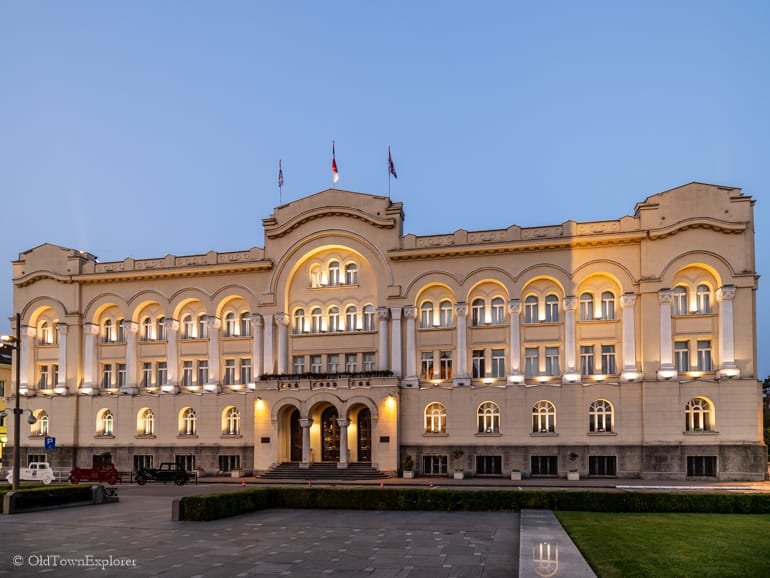
City Hall
Gradska Uprava
- Architect: Unknown
- Architectural Style: Historicist with Austro-Hungarian influences
- Year Built: Early 20th century (circa 1909)
- Address: Trg Krajine, Banja Luka, Bosnia and Herzegovina
The City Hall is a key administrative building in Banja Luka and an example of Austro-Hungarian period architecture. Its façade features ornate details typical of historicist styles popular in Central Europe at the time. It remains an important symbol of the city’s governance and civic identity.
Architecture Tours in Banja Luka
You can see the main central buildings independently if you are comfortable walking between Gospodska Street, Krajina Square, Ferhat Pasha Mosque, Kastel Fortress, and Banski Dvor. A guided tour helps more when you want the Ottoman, Austro-Hungarian, Yugoslav, and post-war reconstruction layers explained while you walk.
Guided Tours
Compare guided tours by meeting point, walking distance, fortress time, religious-building stops, city-center coverage, cancellation rules, and whether the route includes Kastel Fortress, Ferhat Pasha Mosque, Gospodska Street, Banski Dvor, Krajina Square, or the Vrbas River.
Where to Stay for Architecture Walks
Stay near the central pedestrian area if architecture is a major reason for visiting Banja Luka. Gospodska Street, Krajina Square, Kastel Fortress, Banski Dvor, the Palace of the Republic, and the Cathedral of Christ the Saviour are much easier to combine when your room is nearby.
- Gospodska Street and Krajina Square: the strongest base for a first architecture walk, with churches, palaces, public squares, cafés, and evening walks close together.
- Kastel Fortress and the Vrbas River: better for river views, fortress walks, and a quieter edge of the center, but slightly less central for the palace and square group.
- Obilićevo: useful when you want access to the Vrbas-side mosque and restaurant areas, though the main civic buildings require a longer walk or short taxi ride.
- Station or outer areas: practical for arrival and parking, but weaker for architecture walks because the main sites are in the center.
For most short stays, the central core saves the most walking time. Choose the river side only when Kastel Fortress, Vrbas walks, and quieter evenings matter more than being beside Krajina Square.
Hotels and Apartments in Banja Luka
Use the interactive map below to compare hotels and apartments near Gospodska Street, Krajina Square, Kastel Fortress, the Vrbas River, Obilićevo, and the central pedestrian area.
Things to Know Before You Go
Gospodska Street Is the Easiest First Base
Start around Gospodska Street when you want the most architecture in the shortest time. Krajina Square, Banski Dvor, the Palace of the Republic, the Cathedral of Christ the Saviour, cafés, shops, and the route toward Kastel Fortress are all close by.
Kastel Fortress Changes the Walk
Kastel Fortress adds walls, bastions, courtyards, and the Vrbas River to a city-center route. It is the best stop when you want Banja Luka’s defensive layer rather than another civic building or church.
Most Central Architecture Is Exterior-Friendly
You can understand much of Banja Luka’s architecture from the outside: mosque courtyards, church façades, public squares, fortress walls, and palace exteriors all carry the main visual story. Check current rules before planning around any specific interior visit.
Religious Buildings Need Extra Courtesy
Ferhat Pasha Mosque, Arnaudija Mosque, the Cathedral of Christ the Saviour, and the Cathedral of St. Bonaventure are active religious sites. Dress and behave conservatively, and avoid entering during services or prayer unless visitors are clearly welcome.
Flat Streets Make the Central Walk Easy
The central architecture walk is mostly flat around Gospodska Street, Krajina Square, Banski Dvor, and Kastel Fortress. Comfortable shoes still help because the route mixes pedestrian paving, sidewalks, fortress surfaces, and park paths.
Banj Brdo Needs a Separate Plan
The Monument to Fallen Krajina Soldiers on Banj Brdo is not part of the compact central loop. Add it when you want a viewpoint and memorial stop above the city, and leave enough time for transport or the climb.
Evening Light Works Well Around Kastel and the Vrbas
Late afternoon and evening are good for Kastel Fortress, the Vrbas River, and the central pedestrian streets. The fortress walls and river edge are easier to enjoy when the day is cooler and the center has slowed down.
A Two-Hour Walk Should Stay Central
With two hours, stay around Gospodska Street, Krajina Square, the Cathedral of Christ the Saviour, Banski Dvor, the Palace of the Republic, Ferhat Pasha Mosque, and Kastel Fortress. Do not add Banj Brdo unless the monument is your main goal.
A Half Day Can Add More Religious Buildings
With a half day, add the Cathedral of St. Bonaventure, Arnaudija Mosque, or Gazanfer Bey Mosque after the central loop. This gives the walk more religious variety without turning it into a full-day route.
A Full Day Can Include Banj Brdo
With a full day, start in the center, take time at Kastel Fortress and the river, then add Banj Brdo later for the monument and view. This is the best plan when you want both the compact city core and the hilltop memorial.
FAQs About Banja Luka Architecture
What architecture is Banja Luka known for?
Banja Luka is strongest for a compact mix of Ottoman mosques, Serbian Orthodox church architecture, modern Catholic architecture, Austro-Hungarian and 1930s civic buildings, Yugoslav-era monuments, and Kastel Fortress by the Vrbas River.
Which buildings should I see first?
Start with Kastel Fortress, Ferhat Pasha Mosque, the Cathedral of Christ the Saviour, Banski Dvor, the Palace of the Republic, Gospodska Street, and Krajina Square. These stops give the clearest first view of the city’s main architecture layers.
Is Banja Luka architecture easy to see with limited time?
Yes. A two-hour walk around Gospodska Street, Krajina Square, Banski Dvor, the Palace of the Republic, the Cathedral of Christ the Saviour, Ferhat Pasha Mosque, and Kastel Fortress covers the strongest central architecture.
Are the main sites inside the city center?
Most first-priority sites are in or near the center. Kastel Fortress, Ferhat Pasha Mosque, Gospodska Street, Krajina Square, Banski Dvor, the Palace of the Republic, and the Cathedral of Christ the Saviour sit close enough for one walk.
What styles will I see in Banja Luka?
You will see Ottoman mosque architecture, Serbian Orthodox church architecture, modern Catholic cathedral architecture, Austro-Hungarian civic façades, 1930s academic civic buildings, modernist memorials, and post-war reconstruction.
Can I understand the main architecture from the outside?
Yes. Fortress walls, mosque courtyards, church exteriors, civic façades, squares, and monuments carry most of the first-visit architecture experience. Check current access before planning around interiors.
What is the best short architecture walk in Banja Luka?
The best short walk starts on Gospodska Street, crosses Krajina Square, passes the Cathedral of Christ the Saviour, Banski Dvor, and the Palace of the Republic, then continues toward Ferhat Pasha Mosque and Kastel Fortress.
Should I add Banj Brdo to an architecture walk?
Add Banj Brdo if you want the Monument to Fallen Krajina Soldiers and a view over Banja Luka. Skip it on a short visit because it sits outside the compact central architecture loop.
Where should I stay for architecture walks?
Stay near Gospodska Street, Krajina Square, or Kastel Fortress if architecture is a priority. These areas keep the main central buildings, fortress, river, cafés, and evening walks close together.
How does Banja Luka architecture connect to Bosnia Architecture?
Banja Luka shows northern Bosnia through Ottoman mosques, Vrbas-side fortress architecture, Austro-Hungarian and 1930s civic buildings, Orthodox and Catholic churches, and post-war reconstruction. For the wider country pattern, use Bosnia Architecture.
For the full city plan, start with Banja Luka. For dinner after a central architecture walk, use Banja Luka Food. For wine bars and bottle shops before or after Kastel Fortress, use Banja Luka Wine. For the wider country pattern behind mosques, bridges, fortresses, and old towns, use Bosnia Architecture.