
Palermo
Food | Wine | ArchitectureExplore Palermo: Food, Wine & Architecture
Palermo sits on the north coast of Sicily in Italy, with its historic center stretching inland from the waterfront. Via Vittorio Emanuele and Via Maqueda meet at Quattro Canti, giving you a straightforward starting point for exploring streets lined with churches, palaces, shops, and market stalls.
Food is a strong reason to spend several days here. Market lunches, fried street food, seafood, and Sicilian pastries give Palermo a different eating rhythm from a trip built entirely around restaurant reservations.
Palermo also makes a practical city base for tasting Sicilian wine. You can compare regional bottles over dinner, then arrange a separate countryside visit toward Monreale, Camporeale, or Alcamo if wineries are a priority.
We spent a month in Palermo. Drawing on that stay, our wider travels in Italy, and further research, this page compares Palermo’s food, wine, architecture, and places to stay to help you decide what to explore, where to base yourself, and when to visit.
This page contains affiliate links. We may earn a small commission at no extra cost to you.
Palermo at a Glance
Palermo suits a city stay built around markets, Sicilian meals, churches, palaces, and evenings on foot. Staying centrally makes it easier to return to your accommodation between sightseeing and dinner. Key planning points:
- Best for: Street food, market shopping, Arab-Norman monuments, Baroque churches, and Sicilian wine
- Best starting area: The historic center between Quattro Canti and Teatro Massimo for a first visit focused on walking
- Suggested stay: Three full days for the city; add time for Monreale, Cefalù, or a countryside wine visit
- Best timing: April–May and October for a trip centered on walking and architecture
- Main trade-off: Central streets can be noisy, and a waterfront address does not necessarily put you near a swimming beach
Choose a central base for markets and monuments. Stay in Mondello when beach time matters more than walking straight out to Palermo’s historic sights.
Palermo Food
Palermo is a good city for alternating market snacks with longer Sicilian meals. Ballarò and Capo bring food shopping into the historic center, while Palermo street food includes arancine, panelle, potato crocchè, and sfincione. Seafood, pasta con le sarde, caponata, and ricotta-filled cannoli give you plenty to try beyond the frying stalls.
Our Italy Food page compares Sicily’s dishes and products with the food of other Italian regions.
Palermo Wine
Palermo is a city base for drinking Sicilian wine, with western wine country beyond the urban center. Grillo and Catarratto are white-grape names to recognize, while Nero d’Avola and Perricone introduce the red wines. The countryside toward Monreale, Camporeale, and Alcamo gives you a different trip from tasting bottles over dinner; choose the winery first, then arrange the visit and transport around it.
Our Italy Wine page compares Sicily’s principal grapes and wine styles with those of the mainland regions.
Palermo Architecture
Palermo’s architecture is concentrated around the streets between the Norman Palace, the cathedral, Quattro Canti, and Piazza Bellini. The Palatine Chapel and Martorana bring Byzantine mosaics into Norman-period buildings, while Quattro Canti and the Church of the Gesù introduce the city’s Baroque façades and interiors. Teatro Massimo marks another major stop toward the northern edge of the historic center.
The Arab-Norman Palermo and the Cathedral Churches of Cefalù and Monreale World Heritage property comprises nine separate monuments across the three municipalities. Its designation applies to those monuments, rather than the whole modern city.
Our Italy Architecture page places Sicily’s Norman and Baroque buildings alongside the country’s other architectural traditions.
Location of Palermo
Palermo is the capital of Sicily, facing the Tyrrhenian Sea on the island’s northern coast. The historic center lies inland from the harbor and waterfront, with later neighborhoods extending north toward Politeama and Via Libertà. Mondello occupies a separate coastal bay beyond the central sightseeing area. Palermo works well for the city itself and excursions into northwestern Sicily. Monreale lies inland above Palermo, while Cefalù is farther east along the coast and can be reached by train. Allow separate travel time for eastern Sicily rather than treating Palermo as a single base for the entire island.
Best Time to Visit Palermo
April–May and October are strong choices for Palermo when markets, architecture, and long walks are the priority. Summer better suits a trip with beach time, but heat makes the middle of the day less comfortable for sightseeing.
Weather
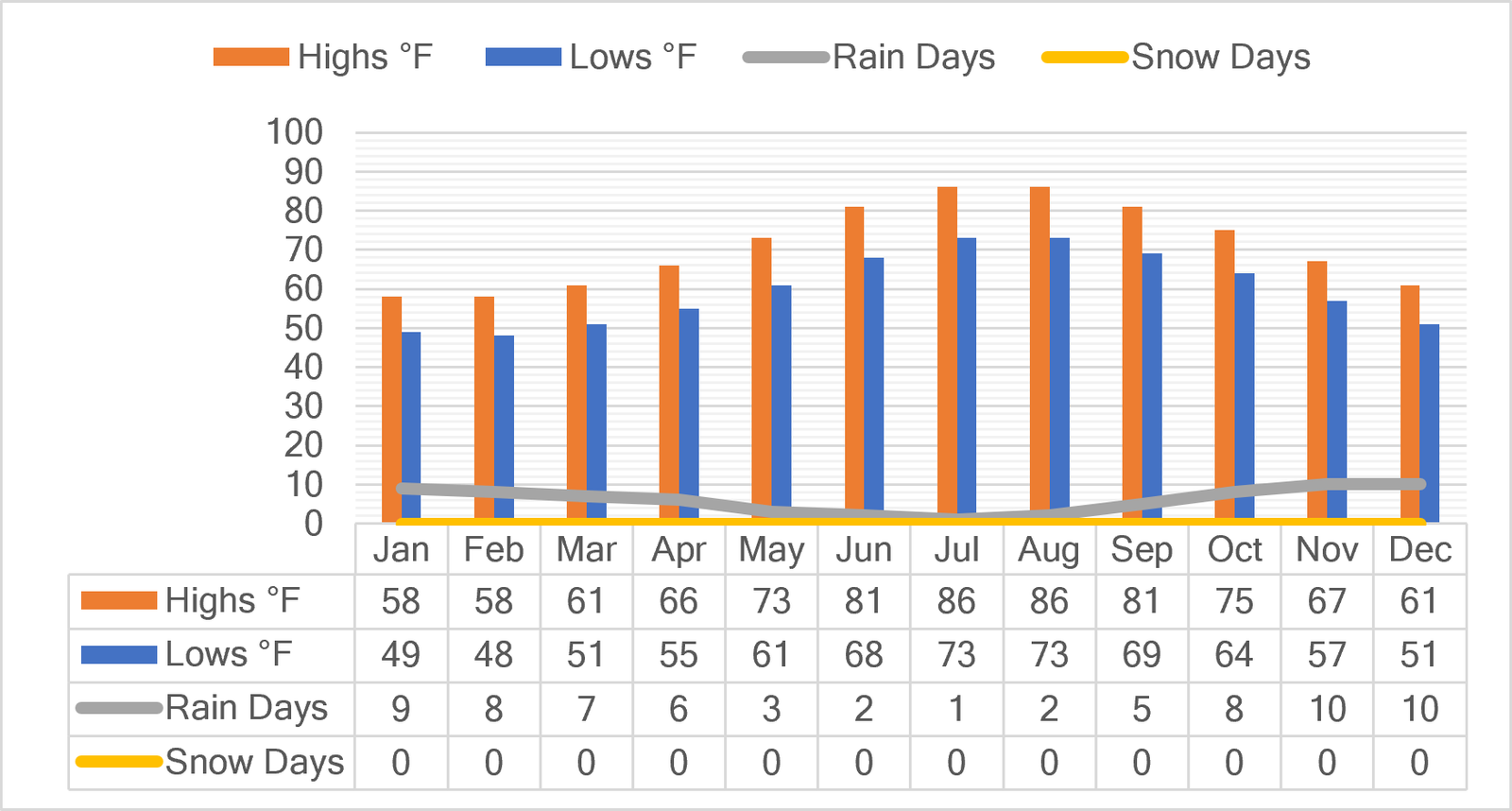
Palermo has hot, generally dry summers and cooler winters with more frequent rain. July and August are the most demanding months for extended walks, while winter calls for layers and a rain jacket rather than beach clothing.
The monthly climate averages for Palermo show the strong difference between summer dryness and the wetter autumn and winter months. In hot weather, plan longer outdoor walks early and leave time for an indoor visit or a break during the afternoon.
Shoulder Season
April and May give you longer days for combining markets, churches, and waterfront walks before midsummer heat. October is another good walking month, although rain becomes more likely. September can still feel distinctly summery, so it suits travelers who want to combine Palermo with time at Mondello.
Best Value
Compare accommodation for several possible dates rather than assuming one season will always be cheapest. Check the total price alongside air conditioning for warm-weather stays, heating for winter apartments, and the room’s exposure to street noise. A central property that lets you walk between meals and monuments may be better value than a cheaper room requiring repeated transfers.
Best Places to Stay In Palermo
For a first visit focused on food and architecture, stay in or beside the historic center. The main choice is between walking straight out to the old-town sights and staying farther north around Politeama, with longer walks to the cathedral and Norman Palace.
Hotels and Apartments in Palermo
The streets between Quattro Canti and Teatro Massimo make a practical starting point for comparing hotels and apartments. Around Piazza Marina and the Kalsa, you will be closer to the eastern side of the old town and waterfront. Politeama suits travelers who prefer the northern central area, while Mondello makes more sense for a beach-focused stay.
Check the exact street and bedroom position before booking. Rooms above bars or busy pedestrian streets can be noisy, and historic buildings may involve stairs or a walk from the nearest vehicle access point. If you have substantial luggage, ask about the lift and where a taxi can stop.
Use the map below to compare hotels and apartments around Quattro Canti, Teatro Massimo, Piazza Marina, and Politeama, then choose a location that fits your walking, arrival, and sightseeing plans.
Other Things to Know About Palermo
Palermo’s historic center is easiest to explore on foot. Your accommodation location matters most for the airport transfer, luggage, and any excursions beyond the city.
Airport
Palermo Falcone Borsellino Airport is the main airport for the city. Trenitalia’s airport trains connect Palermo Aeroporto with city stations, including Palermo Notarbartolo and Palermo Centrale. Compare the station with your accommodation’s location before choosing your transfer.
Train Station
Palermo Centrale is the main station for planning intercity and regional journeys, at the southern end of Via Roma beside Piazza Giulio Cesare. Palermo Notarbartolo may be more convenient for accommodation farther north. Check your exact departure and arrival stations in Trenitalia, including any replacement buses or engineering changes.
Time Zone
Palermo uses Central European Time (CET; UTC+1:00) and Central European Summer Time (CEST; UTC+2:00), the same time system used elsewhere in Italy.
Currency
Italy uses the euro (€). Carry a payment card and some euro cash for small purchases, market shopping, and a backup if a payment terminal is unavailable.
Language
Italian is the main language for travel in Palermo. Basic greetings and food words help in markets, bakeries, and smaller shops; download an offline translation tool for menus and everyday questions.
Visa
Italy is part of the Schengen area. Entry requirements depend on nationality, residence status, trip purpose, and length of stay, so check the official European travel-document and visa guidance before departure.
Electricity
Italy uses a 230V, 50Hz electricity supply, with Type C, F, and L plugs and sockets. Check your devices and bring an appropriate adapter; the Italy travel-adapter reference explains the plug types and voltage considerations.
SIM Card
An existing roaming plan, local SIM, or compatible eSIM can cover maps, translation, and transport searches in Palermo. Check your plan’s Italian coverage and data allowance, and confirm that your phone is unlocked before buying another SIM.
We use Airalo eSIMs. They work great, and I recommend them if you plan to use less than 5 GB of data during your stay or if you need internet immediately on arrival.
Car Rental
A rental car is unnecessary for a stay centered on Palermo’s historic streets. Consider collecting one when leaving for rural accommodation or winery visits. If you bring a car into the city, check parking with your accommodation and consult the municipal guidance on Palermo’s restricted traffic zone before driving into the center.
In addition to the major car rental companies found in the United States, Sixt and Europcar are common throughout Europe. For a comparison of rental car offers from large, international brands and smaller regional brands, we recommend Discover Cars.
FAQs About Palermo
These questions address the main choices for a first Palermo stay, from sightseeing time and accommodation to wine, beaches, and nearby excursions.
What is Palermo known for?
Palermo is known for its historic food markets, Sicilian street food, Arab-Norman monuments, and Baroque churches. The Norman Palace and Palatine Chapel, Palermo Cathedral, Quattro Canti, and Teatro Massimo give a first visit several distinct architectural priorities.
Is Palermo worth visiting?
Yes, Palermo is worth visiting for a trip centered on Sicilian food, historic architecture, and exploring a working city on foot. It is a stronger choice for markets and monuments than for a quiet seaside holiday, although you can add beach time in Mondello.
How many days do you need in Palermo?
Allow about three full days for a first visit to Palermo. That gives you time for the principal monuments, markets, and meals without fitting every visit into one long sightseeing day. Add another day for Monreale or Cefalù, and more time if you want a winery excursion.
What is the historic center of Palermo?
Palermo’s historic center is the old urban area around the crossing of Via Vittorio Emanuele and Via Maqueda at Quattro Canti. The surrounding streets extend toward the Norman Palace, Ballarò, Capo, the Kalsa, and the waterfront.
Is Palermo walkable?
Yes, the historic center is well suited to walking between markets, churches, palaces, and restaurants. Palermo as a whole is much larger, so plan transport for Mondello and other places beyond the central sightseeing area. AMAT runs the city’s bus and tram services.
Where should I stay in Palermo for a first visit?
Start by comparing accommodation between Quattro Canti and Teatro Massimo if walking to food and architecture is your priority. Piazza Marina and the Kalsa suit the eastern side of the historic center, while Politeama puts you farther north. Check recent noise comments and the bedroom’s position as carefully as the neighborhood name.
What food should I try first in Palermo?
Start with an arancina, panelle, or a piece of sfincione for a quick introduction to Palermo’s street food. Follow with pasta con le sarde or another Sicilian meal, then try a cannolo for dessert. Ballarò and Capo are central places to include when food shopping is part of the visit.
What wine should I look for in Palermo?
Look for Grillo or Catarratto for white wine and Nero d’Avola or Perricone for red. Ask which Sicilian bottles are available by the glass before choosing a full bottle. Our Italy Wine page explains the broader regional differences.
What architecture should I prioritize in Palermo?
Prioritize the Norman Palace and Palatine Chapel, Palermo Cathedral, the Martorana, and San Cataldo for the Norman-period monuments. Quattro Canti and the Church of the Gesù add Baroque architecture. Monreale Cathedral is a separate excursion outside Palermo.
When is the best time to visit Palermo?
April–May and October are strong choices for a Palermo trip focused on walking, food, and architecture. July and August bring more heat, while autumn and winter require greater flexibility for rain. September suits a trip that gives more time to the coast.
Can you visit Palermo without a car?
Yes, a central Palermo stay is practical without a car. Airport trains, regional rail, city buses, and taxis cover different parts of the trip. Rural winery visits need more individual transport planning than the city’s central monuments and markets.
Can you visit Cefalù, Monreale, and Mondello from Palermo?
Yes, all three can be visited from Palermo, but they suit different days. Cefalù adds a coastal town and cathedral by train; Monreale is an inland cathedral excursion; Mondello is the beach choice. Check the current transport and allow each outing its own time rather than trying to combine all three.
Palermo Blog Posts
No Results Found
The page you requested could not be found. Try refining your search, or use the navigation above to locate the post.