
Lazio Food
Explore Lazio Food: Local Products & Traditional Dishes
Lazio food changes from Rome’s pasta and market cooking to sheep farming, olive groves, volcanic soils, inland legumes, and the Tyrrhenian coast. Pecorino Romano, Abbacchio Romano, artichokes, and regional olive oils provide the main product reference points.
Rome is the broadest base for dishes, markets, and food shops. Amatrice and Rieti connect guanciale, pecorino, and mountain cooking. Viterbo and southern Lazio add olive oil, hazelnuts, beans, vegetables, buffalo dairy, and coastal food.
We spent two months in Rome while traveling through Italy, comparing protected products, local differences, regional dishes, producer routes, and seasonal food across Lazio.
Lazio Food at a Glance
Best Food Bases
- Rome Food: markets, trattorias, Roman pasta, artichokes, street food, bakeries, and the region’s broadest food-shop selection
- Rieti and Amatrice: Prosciutto Amatriciano, Amatriciana, pecorino, guanciale, lamb, and mountain cooking
- Viterbo and Tuscia: olive oil, hazelnuts, chestnuts, potatoes, lentils, asparagus, soups, and local pasta
- Southern Lazio: Pecorino di Picinisco, Cannellino di Atina, Pontecorvo peppers, buffalo dairy, Pontine vegetables, and Gaeta food
These four bases divide Lazio’s city, mountain, volcanic, agricultural, and coastal food areas into practical routes.
Core Food Identity
- Sheep farming supplying lamb, aged pecorino, whey ricotta, and dishes finished with grated cheese
- Olive groves across Sabina, Tuscia, the Pontine hills, Canino, and the wider Rome production area
- Volcanic and alluvial soils supporting artichokes, hazelnuts, chestnuts, legumes, potatoes, celery, asparagus, peppers, and kiwi
The region combines Rome’s urban cooking with livestock, olive, vegetable, orchard, mountain, and coastal production.
Signature Products and Dishes
- Pecorino Romano DOP, Ricotta Romana DOP, Abbacchio Romano IGP, and Porchetta di Ariccia IGP
- Carciofo Romanesco del Lazio IGP, Pane Casareccio di Genzano IGP, Cannellino di Atina DOP, and Lazio olive oils
- Amatriciana Tradizionale STG, acquacotta, fieno canepinese, pappafuocchie, tiella di Gaeta, and falia e broccoletti
A first comparison should include one dairy product, one olive oil or vegetable, one cured or roasted meat, and one dish tied to the day’s area.
Main Areas and Local Differences
- Rome and Castelli Romani: Roman dishes, markets, porchetta, Genzano bread, fraschette, and volcanic-area products
- Sabina and northern Lazio: olive oil, Amatrice products, lamb, soups, legumes, mountain meat, and cheese
- Tuscia: hazelnuts, chestnuts, potatoes, lentils, asparagus, olive oil, acquacotta, and fine-cut egg pasta
- Ciociaria and the southern coast: pecorino, beans, peppers, buffalo dairy, Pontine vegetables, Gaeta olives, seafood, and filled breads
Rome provides the broadest restaurant choice, but the strongest product connections require separate trips north, east, south, or toward the coast.
Eating and Shopping Notes
- The current regional register contains 30 DOP and IGP food names, plus Amatriciana Tradizionale STG in the separate Italian STG register
- Several protected zones extend beyond Lazio, including Pecorino Romano, buffalo dairy, Mortadella Bologna, Oliva di Gaeta, and protected livestock products
- Aged cheese, olive oil, cured meat, dried legumes, nuts, bread products, and preserves travel more easily than fresh ricotta, mozzarella, lamb, seafood, or fresh vegetables
Check the complete registered name rather than assuming that every pecorino, porchetta, olive oil, or amatriciana carries protected status.
Local Food Products in Lazio
The official Lazio protected-food register lists 30 DOP and IGP names connected with the region. Some belong entirely to Lazio, while others have production areas that cross regional boundaries.
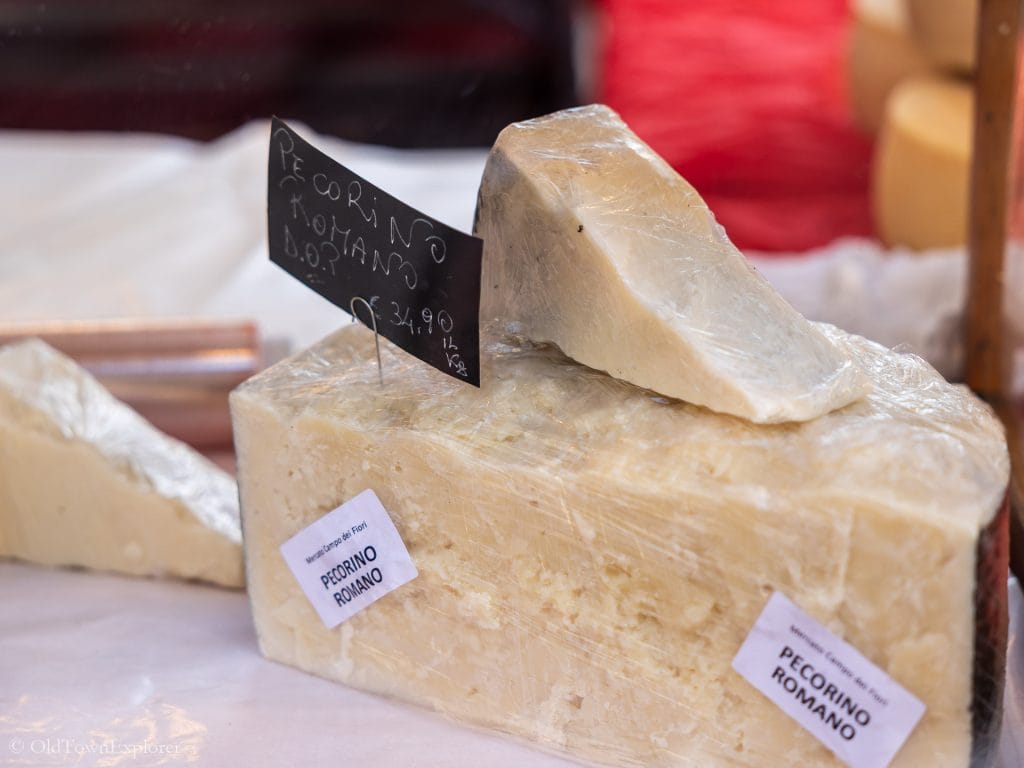
Pecorino Romano and Ricotta Romana
Pecorino Romano DOP is a firm sheep’s-milk cheese made for table use or longer aging and grating. Its registered production area includes Lazio, Sardinia, and the province of Grosseto, so it is not exclusive to Lazio.
Ricotta Romana DOP is a fresh whey product made from sheep’s milk. In Rome and central Lazio, the two products appear in pasta, filled pastries, vegetable dishes, market stalls, salumerie, and cheese shops.
Pecorino di Picinisco and Southern Lazio Dairy
Pecorino di Picinisco DOP is a raw-milk cheese from the Comino Valley in Frosinone province. It is sold as the younger Scamosciato type and the longer-aged Stagionato type, with permitted sheep’s milk and a limited proportion of local goat’s milk.
Mozzarella di Bufala Campana DOP and Ricotta di Bufala Campana DOP are also produced in approved parts of southern Lazio. Their registered zones extend into Campania, so the complete designation rather than a generic buffalo-dairy name should appear on labels.
Abbacchio Romano
Abbacchio Romano IGP protects young lamb born, raised, and slaughtered within Lazio under the registered specification. The lambs are fed with maternal milk and pasture-based feed during their short rearing period.
Butchers sell specific cuts, while restaurants prepare the meat roasted, grilled, or with wine, herbs, garlic, vinegar, or anchovy. The protected meat product and a named cooked lamb dish should not be treated as the same entry.
Porchetta di Ariccia and Prosciutto Amatriciano
Porchetta di Ariccia IGP is seasoned roast pork produced within Ariccia and sold whole, in sections, or sliced. The finished product is identified by its seasoned meat and crisp roasted rind.
Prosciutto Amatriciano IGP is a dry-cured ham associated with the Amatrice area of northern Lazio. It is distinct from guanciale, which appears in Amatriciana and other pasta preparations but does not carry the same protected name.
Lazio Olive Oils
Lazio’s registered oils are Canino DOP, Colline Pontine DOP, Sabina DOP, Tuscia DOP, and Olio di Roma IGP. Each designation has its own production area and permitted olive varieties.
Frantoi and farm shops sell recently milled and bottled oils, while markets and regional shops carry oil from several subregions. Use the complete designation when comparing Tuscia, Sabina, Pontine, Canino, and Rome-area oils.
Artichokes and Pontine Plain Vegetables
Carciofo Romanesco del Lazio IGP is a large globe artichoke produced in the registered Lazio area. It is sold fresh and used in Roman-style braised and fried preparations.
Sedano Bianco di Sperlonga IGP, Kiwi Latina IGP, and produce from the Pontine plain reflect the region’s irrigated coastal agriculture. Kiwi Latina protects fresh Hayward fruit grown in specified municipalities of Rome and Latina provinces.
Cannellino di Atina and Peperone di Pontecorvo
Fagiolo Cannellino di Atina DOP is a white bean from the Comino Valley with a thin skin that does not require soaking before cooking. It appears in soups, stews, salads, and local pasta-and-bean preparations.
Peperone di Pontecorvo DOP is a thin-skinned red pepper from the registered Frosinone-area zone. It is sold fresh and used roasted, fried, preserved, or cooked with meat, fish, pasta, and vegetables.
Tuscia Hazelnuts, Chestnuts, Potatoes, Asparagus, and Lentils
Nocciola Romana DOP and Castagna di Vallerano DOP come from northern Lazio’s volcanic and hill areas. Hazelnuts are sold raw, roasted, ground, or used in confectionery, while chestnuts appear fresh, roasted, dried, milled, or processed.
Patata dell’Alto Viterbese IGP, Asparago Verde di Canino IGP, and Lenticchia di Onano IGP add three more protected crops to Tuscia. Fresh availability follows their growing cycles, while dried lentils and processed products remain available longer.
Pane Casareccio di Genzano
Pane Casareccio di Genzano IGP is a naturally leavened bread from Genzano di Roma. Its large loaves have a dark crust coated with bran or grain residue and a soft, open interior.
Bakeries, food shops, fraschette, and restaurants serve it with porchetta, cured meat, cheese, soups, vegetables, and olive oil. Buy a cut piece when a full loaf is too large for the remaining trip.
Oliva di Gaeta and Cross-Regional Products
Oliva di Gaeta DOP is a fermented table olive made from the Itrana variety. Its protected zone includes parts of Lazio and adjoining Campania, so the name should not be described as exclusive to the Gulf of Gaeta.
Other cross-regional names in Lazio’s register include Pecorino Toscano DOP, Salamini italiani alla cacciatora DOP, Mortadella Bologna IGP, Vitellone Bianco dell’Appennino Centrale IGP, and Agnello del Centro Italia IGP. Their inclusion means that part of the approved production system lies in Lazio, not that each product originated or is produced only there.
Complete Lazio DOP and IGP Register
The current regional register contains 30 DOP and IGP food names connected with Lazio. The list includes both Lazio-centered products and registrations whose production areas extend into other regions.
Cheese and Dairy
- Mozzarella di Bufala Campana DOP
- Pecorino di Picinisco DOP
- Pecorino Romano DOP
- Pecorino Toscano DOP
- Ricotta di Bufala Campana DOP
- Ricotta Romana DOP
Pecorino di Picinisco and Ricotta Romana have the clearest Lazio-only production identity, while the other registered zones cross regional boundaries.
Meat and Cured Meat
- Salamini italiani alla cacciatora DOP
- Porchetta di Ariccia IGP
- Prosciutto Amatriciano IGP
- Mortadella Bologna IGP
- Abbacchio Romano IGP
- Vitellone Bianco dell’Appennino Centrale IGP
- Agnello del Centro Italia IGP
Abbacchio Romano, Porchetta di Ariccia, and Prosciutto Amatriciano provide the strongest Lazio-specific visitor routes within this group.
Olive Oils and Table Olives
- Canino DOP
- Colline Pontine DOP
- Sabina DOP
- Tuscia DOP
- Olio di Roma IGP
- Oliva di Gaeta DOP
The five oil names cover separate areas, while the Oliva di Gaeta zone extends beyond Lazio.
Fruit, Vegetables, Legumes, and Nuts
- Castagna di Vallerano DOP
- Fagiolo Cannellino di Atina DOP
- Nocciola Romana DOP
- Peperone di Pontecorvo DOP
- Carciofo Romanesco del Lazio IGP
- Kiwi Latina IGP
- Patata dell’Alto Viterbese IGP
- Sedano Bianco di Sperlonga IGP
- Asparago Verde di Canino IGP
- Lenticchia di Onano IGP
Tuscia, Ciociaria, the Rome countryside, and the Pontine plain account for most of this protected produce.
Bread and Traditional Specialities
- Pane Casareccio di Genzano IGP
- Amatriciana Tradizionale STG
Pane Casareccio di Genzano is part of the regional DOP and IGP list. Amatriciana Tradizionale appears separately in the national STG register because STG protects a traditional specification rather than a geographic production area.
Food by Area in Lazio
Rome and the Roman Countryside
Rome provides the broadest concentration of markets, salumerie, bakeries, trattorias, street-food counters, and regional food shops. Pecorino, ricotta, lamb, artichokes, guanciale, olive oil, bread, and vegetables appear across city menus and market stalls.
The surrounding countryside supplies produce, dairy, meat, bread, and oil to the capital. Detailed dishes, markets, street food, and verified restaurants belong on Rome Food.
Castelli Romani and the Alban Hills
Castelli Romani connects Porchetta di Ariccia, Pane Casareccio di Genzano, olive oil, vegetables, cured meat, cheese, and fraschette, casual establishments traditionally associated with local wine and simple foods.
Ariccia and Genzano provide the clearest product stops, while the surrounding hill towns add bakeries, butchers, food shops, and restaurants. Use Lazio Wine for wine appellations, grapes, and cellar routes.
Rieti, Amatrice, and Sabina
Northern and northeastern Lazio connect Prosciutto Amatriciano, Amatriciana Tradizionale, Sabina oil, sheep’s cheese, lamb, guanciale, legumes, and mountain cooking. Rieti provides the main service base, while Amatrice has the strongest association with its namesake sauce.
Producer stops and mountain restaurants are spread across a broad area. Choose either an Amatrice route or a Sabina oil route rather than trying to combine both with Rome in one short day.
Tuscia and the Cimini Hills
Tuscia supplies Canino and Tuscia olive oils, Nocciola Romana, Castagna di Vallerano, potatoes, lentils, asparagus, lake fish, soups, and fine-cut pasta such as fieno canepinese. Viterbo is the main city base.
Canino, Vallerano, Onano, the Cimini Hills, and Alto Viterbese production areas require separate road travel. Markets in Viterbo provide a simpler way to compare several northern Lazio products in one stop.
Ciociaria and the Comino Valley
Ciociaria and the Comino Valley connect Pecorino di Picinisco, Cannellino di Atina, Peperone di Pontecorvo, buffalo dairy, sagne, soups, cured meat, lamb, and vegetable dishes.
Atina, Picinisco, Pontecorvo, and surrounding towns form a dispersed rural route. Farm shops, dairies, agriturismi, bakeries, and local restaurants carry more production detail than one central city market.
Pontine Coast, Agro Pontino, and the Gulf of Gaeta
The Pontine plain supplies Carciofo Romanesco, Kiwi Latina, Sedano Bianco di Sperlonga, buffalo dairy, vegetables, and Colline Pontine olive oil. Coastal towns add fish, shellfish, preserved seafood, and vegetable-and-seafood preparations.
Gaeta and the southern coast add Oliva di Gaeta and tiella, while Priverno is associated with falia and broccoletti. The coast and inland agricultural plain form separate day routes despite their short map distances.
Traditional Dishes Across Lazio
Lazio’s dishes extend beyond Rome’s pasta, artichokes, street food, and offal cooking. Amatrice, Tuscia, Ciociaria, Priverno, and Gaeta each add preparations tied to local products and geography.
Amatriciana Tradizionale
Amatriciana Tradizionale STG is a controlled traditional sauce preparation used with pasta. The STG specification governs the ingredients and process rather than limiting production to one geographic area.
Generic amatriciana on a menu does not automatically carry STG certification. Amatrice and the Rieti area provide the strongest regional association, while versions are served widely in Rome and elsewhere.
Roman Pasta, Artichokes, and Quinto Quarto
Carbonara, cacio e pepe, gricia, Roman-style and Jewish-style artichokes, coda alla vaccinara, trippa, pajata, supplì, and maritozzi belong primarily to Rome’s city-food coverage.
See Rome Food for detailed dish descriptions, market guidance, street food, and traditional and modern restaurant options.
Acquacotta della Tuscia
Acquacotta is a bread-based soup associated with Tuscia and the Lazio Maremma. Stale bread is covered with a broth of seasonal greens, potatoes, onion, tomato, herbs, olive oil, or other available vegetables.
Versions change with the season and household. Wild chicory, nettles, chard, cardoons, and other greens may appear, while eggs, cheese, or pork are added in some preparations.
Fieno Canepinese
Fieno canepinese, also called maccaroni canepinesi, is very thin egg pasta associated with Canepina in Tuscia. Rolled pasta sheets are cut into narrow strands and left to dry before cooking.
Common sauces include meat ragù, mushrooms, and grated pecorino. Local names and sauce choices vary between festivals, homes, and restaurants.
Pappafuocchie
Pappafuocchie, also called sagne e fagioli, is a Ciociaria pasta-and-bean dish. Strips of flour-and-water pasta are combined with Cannellino di Atina, tomato, garlic, onion, celery, chili, and olive oil.
The consistency ranges from soup-like to dense depending on the kitchen. It is most closely associated with home-style restaurants, agriturismi, and local food events in southern Lazio.
Tiella di Gaeta
Tiella di Gaeta is a round filled bread made from two thin layers of dough sealed around a savory filling. Octopus with Gaeta olives is a reference version, while fillings may also include anchovies, mussels, salt cod, onions, escarole, or zucchini.
It is served warm or at room temperature and eaten by hand or in wedges. Bakeries, takeaway shops, and casual restaurants in Gaeta provide the most direct setting.
Falia e Broccoletti
Falia is an elongated bread associated with Priverno, made with flour, water, natural leavening, salt, and olive oil. It is commonly split and filled with cooked broccoletti from the Amaseno Valley.
The combination appears at bakeries, food events, takeaway shops, and local restaurants. Sausage or other fillings may be added, but bread and greens provide the defining local pairing.
Where to Try Lazio Food
Food Markets and Specialty Shops
Rome has the broadest concentration of municipal markets, salumerie, cheese shops, bakeries, butchers, produce stalls, and regional-food stores. Viterbo, Rieti, Frosinone, Latina, and coastal towns provide smaller bases for comparing products from their surrounding provinces.
Use city markets for a regional overview, then travel to production areas for oils, cheese, bread, meat, beans, peppers, nuts, or coastal foods. Rome’s individual markets and food shops are covered in more detail on Rome Food.
Dairies, Olive Mills, Bakeries, and Meat Producers
Caseifici make cheese and fresh dairy, frantoi mill olives, forni bake bread, and salumifici prepare cured meat. Butchers and farm shops also sell lamb, pork, cheese, legumes, preserves, and seasonal vegetables.
The Comino Valley suits pecorino and buffalo-dairy stops, Sabina and Tuscia suit olive mills, Genzano suits bread, Ariccia suits porchetta, and Amatrice suits cured meat and mountain products. Confirm current public access and direct sales before traveling.
Traditional Restaurants and Regional Dining
Rome’s trattorias and osterias carry the broadest selection of Roman dishes. Castelli Romani fraschette serve bread, porchetta, cured meat, cheese, vegetables, and local wine in a simpler format.
Agriturismi and rural restaurants in Tuscia, Sabina, and Ciociaria add soups, lamb, beans, peppers, pasta, olive oil, and dairy products. Coastal restaurants from Sperlonga to Gaeta place more emphasis on fish, shellfish, olives, vegetables, and filled breads.
Regional Food Routes
The official Lazio food and wine directory groups material by Rome, Castelli Romani, Sabina and the Reatini mountains, Tuscia, Ciociaria, the Pontine area, the coast, and other regional zones.
Choose one product area per day: Castelli Romani for porchetta and bread, Sabina for oil, Tuscia for oil and volcanic-area crops, Ciociaria for cheese and legumes, or the southern coast for vegetables, olives, buffalo dairy, and seafood.
Seasonal and Shopping Notes
- Cooler months into spring: artichokes, leafy vegetables, soups, lamb dishes, and some asparagus preparations become more visible
- Spring and summer: peppers, celery, vegetables, coastal food, fresh cheese, and fruit follow farm and market supply
- Autumn: hazelnuts, chestnuts, kiwi, potatoes, lentils, mushrooms, and recently pressed olive oil become more prominent
- Longer availability: aged pecorino, olive oil, cured meat, dried beans, dried lentils, nuts, bread products, and preserves remain on sale beyond harvest
- Cold-storage products: fresh ricotta, mozzarella, lamb, seafood, and prepared foods require controlled storage during onward travel
Sealed oil, dried legumes, nuts, aged cheese, cured meat, and packaged bread products are simpler to carry than fresh dairy or meat. Check current import rules before taking animal products across an external border.
FAQs About Lazio Food
What food is Lazio known for?
Lazio is known for Pecorino Romano, Ricotta Romana, Abbacchio Romano, Porchetta di Ariccia, regional olive oils, Romanesco artichokes, Genzano bread, Amatriciana, Roman pasta dishes, Tuscia crops, Ciociaria beans and peppers, and Gaeta food.
How many protected food products does Lazio have?
The current regional register contains 30 DOP and IGP food names connected with Lazio. Amatriciana Tradizionale is listed separately as an STG because it protects a traditional preparation rather than a geographic production area.
Which products should a first-time visitor try?
Start with Pecorino Romano DOP or Ricotta Romana DOP, Abbacchio Romano IGP, one Lazio olive oil, and one product tied to the route. Choose Porchetta di Ariccia near Castelli Romani, hazelnuts or chestnuts in Tuscia, Cannellino di Atina in Ciociaria, or olives and tiella near Gaeta.
How is Lazio food different from Roman food?
Roman food is one part of Lazio’s regional cooking. Rome emphasizes pasta, artichokes, offal, lamb, fried foods, street food, and pastries. The wider region adds protected olive oils, mountain ham, volcanic-area crops, Comino Valley cheese and beans, Pontine vegetables, buffalo dairy, and coastal seafood.
Where are the main food bases in Lazio?
Rome is the broadest base for markets, restaurants, street food, and regional shopping. Viterbo suits Tuscia, Rieti suits Sabina and Amatrice routes, Frosinone and the Comino Valley suit Ciociaria products, and Latina, Sperlonga, and Gaeta suit the Pontine plain and southern coast.
Which Lazio foods are seasonal?
Fresh artichokes, asparagus, peppers, celery, kiwi, chestnuts, hazelnuts, potatoes, vegetables, fruit, fish, and shellfish follow local growing or supply cycles. Olive oil, dried legumes, aged cheese, cured meat, nuts, bread products, and preserves remain available for longer.
Can Lazio food be explored without a car?
Rome provides the easiest food exploration by foot and public transport. Viterbo, Rieti, Frosinone, Latina, and Gaeta can serve as secondary bases, but dairies, olive mills, farms, and small production towns are easier to reach by car or organized excursion. For comparison with other regions, see Italy Food.