
Friuli-Venezia Giulia Food
Explore Friuli-Venezia Giulia Food: Local Products & Traditional Dishes
Friuli-Venezia Giulia food changes between Alpine valleys, the Friulian plain, the Karst, and the Adriatic coast. Prosciutto di San Daniele, Montasio, Brovada, and Tergeste olive oil provide the main product reference points.
Trieste is the easiest base for markets, buffets, seafood, and Karst food. Udine and San Daniele connect city shops with ham and dairy routes, while Carnia and Sauris lead toward smoked meat and mountain cheese.
We spent a month in Trieste while traveling through Italy. This page covers protected products, local differences, regional dishes, producer routes, and where to try them across Friuli-Venezia Giulia.
Friuli-Venezia Giulia Food at a Glance
Best Food Bases
- Trieste Food: buffets, fish markets, coffeehouse sweets, cooked ham, seafood, and access to Karst osmize
- Udine and San Daniele: osterie, specialty shops, Prosciutto di San Daniele producers, Montasio, frico, and Brovada
- Cividale and the Natisone Valleys: Gubana, bakeries, cheese, cured meat, and eastern hill routes
- Carnia and Sauris: smoked ham, malga cheese, cjarsons, polenta, mushrooms, and mountain dining
These bases divide the city, ham, hill, Karst, and mountain routes into manageable trips.
Core Food Identity
- Mountain dairying, smoked meat, polenta, mushrooms, and filled pasta in the Alpine valleys
- Cow’s-milk cheese, cured pork, fermented turnips, grains, and vegetable farming across the Friulian plain
- Olive oil, cave-aged cheese, cooked ham, seafood, and osmiza meals around Trieste and the Karst
- Fish, shellfish, lagoon cooking, and preserved anchovy dishes along the Adriatic coast
The region’s food changes sharply over short distances between mountains, plains, limestone plateau, lagoons, and port cities.
Signature Products and Dishes
- Prosciutto di San Daniele DOP, Montasio DOP, Prosciutto di Sauris IGP, and Pitina IGP
- Tergeste DOP, Brovada DOP, and Salamini italiani alla cacciatora DOP
- Frico, cjarsons, Brovada e muset, jota, Gubana, and boreto alla graisana
A first comparison should include one protected cured meat, one cheese or dairy product, one vegetable preparation, and one dish tied to the day’s area.
Main Areas and Local Differences
- Trieste and the Karst: buffets, osmize, cooked pork, cave-aged cheese, olive oil, seafood, and Central European-influenced sweets
- Central and eastern Friuli: San Daniele ham, Montasio, frico, Brovada, Gubana, and osteria dining
- Carnia and Sauris: smoked meat, malga dairy, cjarsons, polenta, mushrooms, and mountain soups
- Western valleys and coast: Pitina in the Pordenone mountains; fish, shellfish, and boreto around Grado and the lagoons
Choose one adjoining pair of areas for a day rather than crossing the region for individual products.
Eating and Shopping Notes
- The current official food register contains five DOP names and two IGP names
- Montasio and Salamini italiani alla cacciatora have production areas extending beyond Friuli-Venezia Giulia
- Cured ham, aged cheese, Pitina, olive oil, and baked sweets travel more easily than fresh dairy, seafood, or chilled filled pasta
Read the complete protected name and designation before treating a cheese, ham, oil, or traditional product as part of the EU register.
Local Food Products in Friuli-Venezia Giulia
Friuli‑Venezia Giulia is a borderland region where Italian, Slavic, and Alpine food traditions overlap — and its local products reflect this diversity. Many are safeguarded under PDO, PGI, traditional, or Slow Food designations. Below are key categories and noteworthy items.
Protected Products

Prosciutto di San Daniele (PDO)
Produced in the nearby Friulian town of San Daniele del Friuli, this world-renowned prosciutto is cured with just sea salt and mountain air. Aged for at least 13 months, the ham develops a sweet, delicate flavor and silky texture. In Trieste, it is typically served thinly sliced with fresh bread, seasonal fruit, or local cheeses.
For production rules, aging times, and the official production area, see the Consorzio del Prosciutto di San Daniele.
Prosciutto di Sauris (PGI)
Less famous than San Daniele but beloved locally, Prosciutto di Sauris is distinguished by its light smoking over beechwood, which gives the ham a subtle, aromatic flavor. The result is a prosciutto that blends northern Alpine traditions with Mediterranean curing techniques.

Montasio (PDO)
Montasio is a cow’s milk cheese originating from the Friulian Alps. It comes in four distinct ages:
- Fresco (2–3 months): soft and creamy
- Mezzano (4–10 months): richer, with a nutty flavor
- Stagionato (over 10 months): firmer, more savory
- Stravecchio (over 18 months): intense, sharp, and aromatic
Montasio is enjoyed sliced on a cheese board, paired with fruit and honey, or grated over pasta. Its versatility makes it a staple across Trieste.
You can find more details on production zones, aging categories, and tasting notes on the official Montasio cheese website.
Tergeste Extra Virgin Olive Oil (PDO)
Produced only in six municipalities around Trieste, Tergeste olive oil is made primarily from the local Bianchera olive. It has a golden-green color, a fruity aroma, and a balanced, slightly peppery taste. This oil is treasured for finishing seafood dishes, drizzling over soups, or enhancing simple bruschetta.
Other Regional Products
Prosciutto Cotto Triestino
A specialty cooked ham, unique for being prepared on the bone, lightly smoked, and slow-steamed for tenderness. Traditionally served with mustard or horseradish.

Carnia Alto But Cheese
A raw-milk mountain cheese from the Carnia Alps, ranging from sweet when young (fresco) to robust and nutty when aged (vecchio).
Malga Cheese
Made in alpine huts (malghe), this semi-hard cheese reflects the high pastures where cows graze, producing grassy and slightly tangy flavors.
Jamar
A cave-aged cow’s milk cheese matured in karst caves outside Trieste. It has an earthy, spicy profile, often compared to blue cheese, and pairs beautifully with local honey.
Seafood
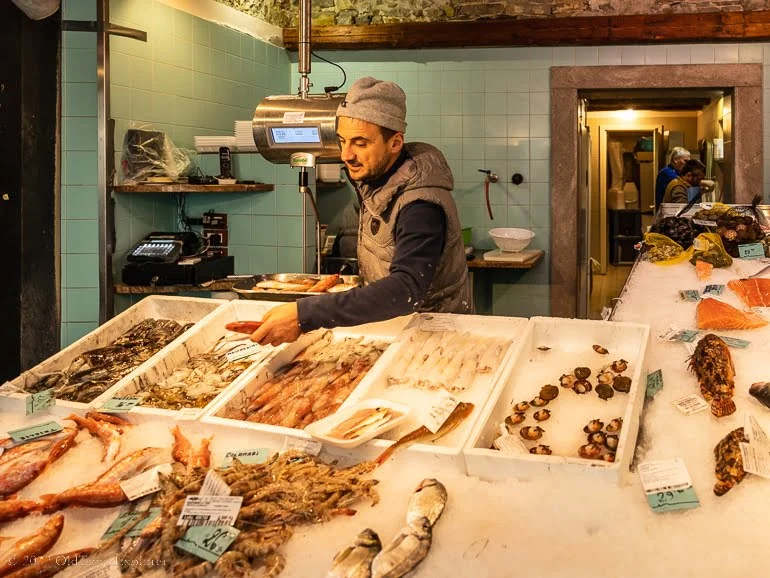
With its location on the Adriatic, Trieste also boasts excellent tuna, sea bass, sardines, and mussels, which appear in both rustic home cooking and refined restaurant menus.
Food by Area in Friuli-Venezia Giulia
Trieste and the Karst
Trieste combines buffets, coffeehouses, pastry shops, fish sellers, seafood restaurants, and dishes linked with the former Habsburg port. Cooked ham, jota, sardoni, goulash, Presnitz, and apple strudel-style sweets are more visible here than in western Friuli.
The Karst adds Tergeste olive oil, cave-aged and farm cheeses, bread, cured meat, pickled vegetables, honey, and osmize. City and plateau stops can be combined in one area, but rural osmize and farms require separate access planning.
Udine, San Daniele, and the Friulian Hills
Udine is the main urban base for osterie, markets, salumerie, bakeries, Montasio, frico, Brovada, and Friulian dishes. San Daniele del Friuli provides the clearest route for prosciutto producers and direct sales.
The hills east and north of Udine add dairies, cured meat, orchards, bakeries, and wine estates. Use Friuli-Venezia Giulia Wine for grape varieties, appellations, cellars, and tasting routes.
Cividale and the Natisone Valleys
Cividale del Friuli and the Natisone Valleys connect bakeries, Gubana, cheese, cured meat, seasonal produce, and eastern hill cooking. Slovenian-language names and cross-border preparations may appear alongside Italian and Friulian terms.
Cividale provides the easiest town base, while valley producers and agriturismi are dispersed. Combine bakery and market stops in town with one selected rural route.
Carnia and Sauris
Carnia adds malga cheese, cjarsons, polenta, mushrooms, smoked meat, soups, and dairy dishes. Sauris has the region’s protected smoked ham and a separate group of smoked pork products.
Mountain restaurants, malghe, rifugi, agriturismi, and producer shops may operate seasonally. Confirm current access before planning a route around one high-elevation stop.
Pordenone Mountain Valleys
The mountain and foothill municipalities north of Pordenone form the protected area for Pitina. Polenta, potatoes, smoked meat, game, dairy products, and soups provide the wider local food setting.
Maniago is a practical service base for parts of the area, but the protected municipalities extend across several valleys. A car or organized visit allows a more focused producer route than relying on one town center.
Grado, Marano Lagoon, and the Lower Plain
Grado and Marano Lagoon center food around fish, shellfish, lagoon catch, boreto, and simple cooking methods designed around the day’s supply. The lower plain adds grains, vegetables, pork, and dairy products.
Grado provides the clearest visitor base for coastal dining. Lagoon excursions and producer visits should be checked separately because access and operation can change with season and weather.
Traditional Dishes in Friuli‑Venezia Giulia
Friuli‑Venezia Giulia’s cuisine blends Alpine, Slavic, Venetian, and Mediterranean traditions. The region offers a mix of mountain, lagoon/coastal, and plateau dishes — from savory stews to sweet‑savory pasta.
For a broader overview of regional specialties like frico, cjarsons, and jota, see the Italia.it guide to typical food and dishes in Friuli-Venezia Giulia.
First Courses
La Jota Triestina
Perhaps the most iconic dish of Trieste, jota is a rustic bean and sauerkraut soup enriched with potatoes, pancetta, and aromatic spices. Warming and deeply flavorful, it represents the city’s Austro-Hungarian heritage.
Chifelini (Chifeletti)
Golden, crescent-shaped fritters made from potatoes, flour, butter, and eggs. They can be served savory, sprinkled with salt and paired with sauces, or sweet, dusted with sugar or cinnamon. Popular at street festivals, they’re a beloved local snack.
Sardoni Impanai (Fried Pilchards)
Small fish, similar to anchovies, coated in breadcrumbs and fried until crispy. The best sardoni, called barcolani, are caught near the Barcola Riviera. They are often eaten cold and rival more elaborate seafood dishes in local popularity.
Minestra de Bisi Spacai (Bunkersuppe)
A pea soup traditionally made with split peas, onions, and pork. The nickname bunkersuppe comes from its history as a staple for Austrian soldiers during wartime.
Capuzi Garbi
White sauerkraut that serves as a quintessential side in Triestine cooking, often accompanying pork dishes. It’s also a key ingredient in jota.
Brodetto alla Triestina
A seafood stew typical of the Adriatic, prepared with a variety of fresh fish and shellfish simmered in a fragrant tomato, garlic, and white wine broth. Rustic and hearty, it’s one of Trieste’s great seafaring dishes.
Main Courses
Goulasch alla Triestina
A local take on Hungarian goulash, slow-cooked with beef, onions, paprika, tomatoes, and herbs. Unlike its Central European cousin, the Triestine version often uses olive oil and Italian spices, giving it a unique regional twist. It is traditionally served with polenta, gnocchi, or potatoes.
Desserts
Presnitz
A spiral pastry filled with nuts, raisins, and spices, wrapped in delicate dough. According to legend, it was created for Empress Sissi on her first visit to Trieste. Its rich layers symbolize the city’s mix of cultures and traditions.
Struccolo de Pomi
Trieste’s version of apple strudel, brought from Central Europe. The pastry is filled with apples, nuts, and cinnamon, and often served warm with cream.
Pinza and Titola
Sweet Easter breads enriched with eggs and citrus zest, traditionally shared during the spring holidays.
Fave
Small almond cookies flavored with rosewater, chocolate, or vanilla. They come in three colors — white, pink, and brown — representing birth, life, and death. They are eaten during All Souls’ Day in remembrance of loved ones.
Where to Try Friuli-Venezia Giulia Food
Food Markets and Specialty Shops
Trieste and Udine provide the broadest city selection of salumerie, cheese shops, bakeries, pastry shops, fish sellers, market stalls, and regional food stores. San Daniele, Cividale, Sauris, Grado, and other smaller bases give closer access to one product or subregional style.
Use city shops to compare products before committing to a rural route. Sealed oil, cured meat, aged cheese, Pitina, Gubana, honey, preserves, and dry bakery products are simpler to transport than seafood, fresh cheese, or filled pasta.
Prosciuttifici, Dairies, Malghe, and Olive Producers
Prosciuttifici produce and mature ham, caseifici make cheese, and malghe are seasonal mountain dairy and grazing sites. Karst farms and olive producers provide direct access to Tergeste oil, cheese, honey, bread, and preserved foods.
San Daniele suits prosciuttificio visits, Sauris suits smoked-ham producers, the Friulian plain and foothills suit Montasio dairies, and the Trieste Karst suits olive and farm routes. Confirm current visits and direct sales before traveling.
Traditional Restaurants and Regional Dining
Trieste buffets serve cooked ham, pork, sausages, soups, and other quick plates. Karst osmize serve farm wine and foods such as cured meat, cheese, eggs, bread, and pickled vegetables during limited opening periods.
Udine and the Friulian towns have osterie and trattorias for frico, Brovada, muset, filled pasta, and seasonal dishes. Mountain rifugi, malghe, and agriturismi add polenta, dairy products, mushrooms, smoked meat, and local soups, while Grado and the coast center meals on fish and shellfish.
Regional Food Routes
The official Karst food and wine route groups osmize, farms, oil producers, cheese, restaurants, and Trieste-area food stops. The hills around Cividale, San Daniele, Collio, and the Torre Valleys form a separate producer corridor.
The regional food and wine experiences directory can be filtered by Carnia, Trieste and the Karst, Udine, Cividale and the Natisone Valleys, Grado, Pordenone, and other areas. Use it to confirm current producer access rather than assuming every business accepts unscheduled visits.
Seasonal and Shopping Notes
- Spring: asparagus, herbs, mountain greens, and early vegetables become more visible in markets and seasonal dishes
- Summer: coastal fish, shellfish, fresh produce, alpine dairy activity, and mountain dining depend on local supply and operation
- Autumn: mushrooms, chestnuts, orchard fruit, and mountain products become more prominent
- Cold-weather dishes: Brovada, muset, jota, polenta, soups, and longer-cooked pork preparations appear more often
- Longer availability: cured ham, Pitina, aged Montasio, olive oil, preserves, honey, and packaged sweets remain on sale beyond harvest
Fresh cheese, seafood, uncooked filled pasta, and chilled meat need controlled storage. Check the destination country’s current import rules before carrying meat or dairy across an external border.
FAQs About Friuli‑Venezia Giulia Food
What food is Friuli-Venezia Giulia known for?
Friuli-Venezia Giulia is known for Prosciutto di San Daniele, Montasio, Prosciutto di Sauris, Pitina, Brovada, Tergeste olive oil, frico, cjarsons, jota, Gubana, Karst foods, and Adriatic fish dishes.
Which Friuli-Venezia Giulia foods have protected status?
The current official register lists five DOP products: Prosciutto di San Daniele, Montasio, Tergeste, Brovada, and Salamini italiani alla cacciatora. It also lists two IGP products: Prosciutto di Sauris and Pitina. Montasio and Salamini italiani alla cacciatora have production systems extending beyond the region.
Which products should a first-time visitor try?
Start with Prosciutto di San Daniele DOP, Montasio DOP, and one product tied to the day’s route. Choose Tergeste oil around Trieste and the Karst, Sauris ham in Carnia, Pitina in the Pordenone mountain valleys, or Brovada around Udine and the Friulian plain.
How does food change across the region?
Trieste and the Karst emphasize cooked pork, seafood, olive oil, osmiza foods, soups, and Central European-influenced sweets. Central Friuli adds San Daniele ham, Montasio, frico, and Brovada. Carnia adds smoked meat, malga dairy, cjarsons, polenta, and mushrooms, while Grado and the lagoons center meals on fish and shellfish.
Where are the main food bases?
Trieste is the broadest base for markets, buffets, seafood, pastries, and the Karst. Udine and San Daniele suit ham, cheese, osterie, and central Friulian dishes. Cividale suits Gubana and eastern hill routes, while Sauris and Carnia suit mountain products.
Which regional foods are seasonal?
Fresh asparagus, greens, mushrooms, chestnuts, fruit, fish, shellfish, and malga dairy follow local seasons and supply. Brovada and pork dishes are more closely associated with colder months. Cured meat, aged cheese, olive oil, honey, preserves, and packaged sweets have longer availability.
Can Friuli-Venezia Giulia food be explored without a car?
Trieste and Udine provide the easiest food exploration by foot and public transport because markets, restaurants, bakeries, and specialty shops are concentrated in the cities. San Daniele, Sauris, mountain malghe, Karst farms, and dispersed producer routes are easier by car or organized excursion. Compare the broader national food regions with Italy Food.