
Discover Burano: History, Architecture & Must-See Attractions
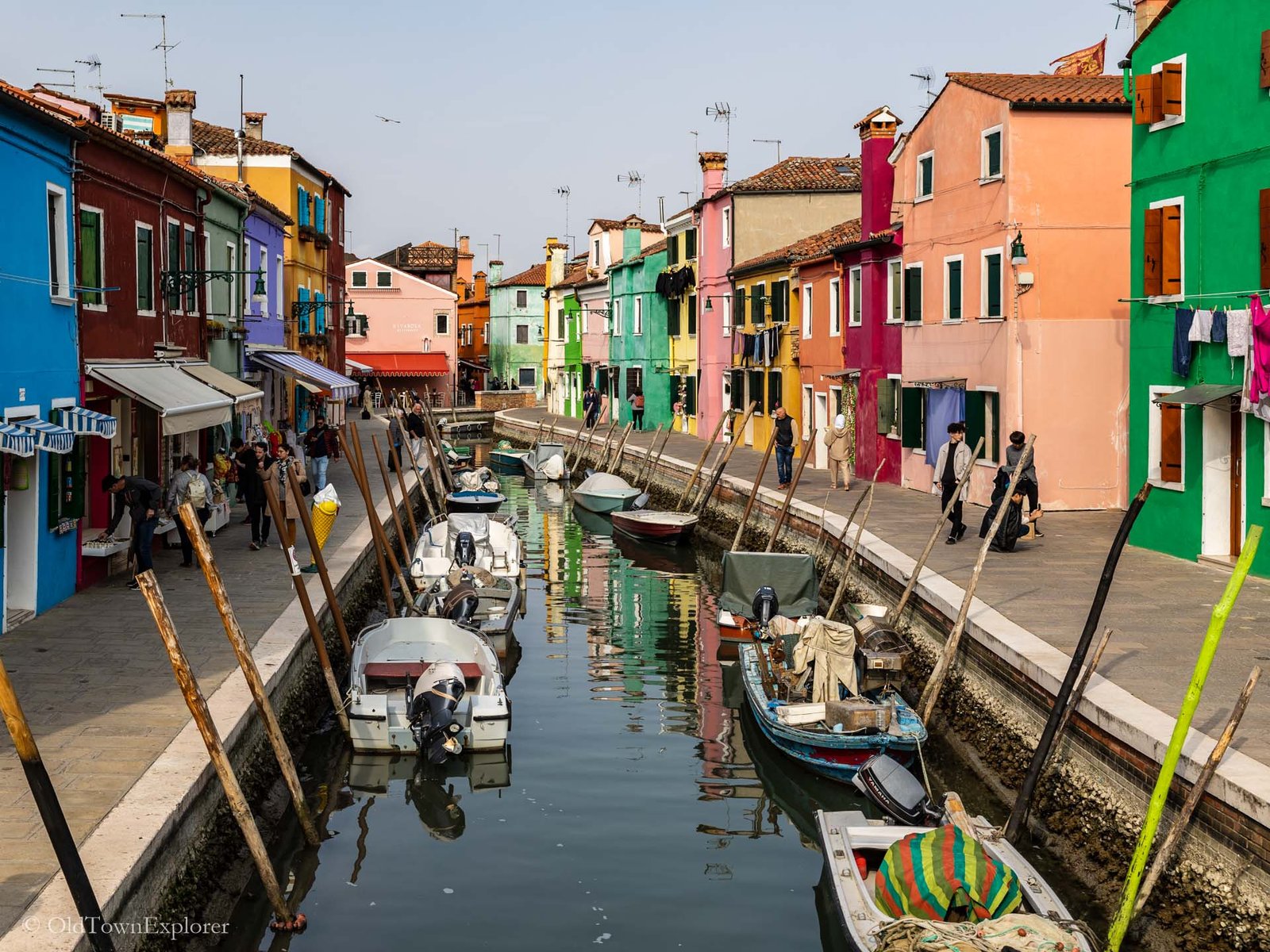
Burano, Italy, is a lagoon day trip from Venice where the main attraction is a walk past painted houses and small canals. Narrow house fronts, waterside footpaths, and bridges give the island a different scale from the palaces and broad waterways of central Venice.
The canal walk becomes more rewarding when paired with Burano’s lace heritage and San Martino. The Lace Museum occupies the former lace school on Piazza Galuppi, while the church and its leaning bell tower explain another part of the island’s history. These sights fit into a compact visit without moving between widely separated districts.
Allow three to four hours on Burano for the canals, museum, church, and lunch, plus travel from Venice. Nearby Mazzorbo can extend the day with a booked vineyard visit; choose that extension instead of trying to fit every northern lagoon island into the same afternoon.
This post contains affiliate links that may earn us a small commission at no additional cost to you.
Burano at a Glance
Burano is a compact settlement in the northern Venetian Lagoon, reached from Venice by boat. Its painted houses and canals make walking the main activity, with the Lace Museum adding an indoor stop.
Use these points to decide how much of the day to reserve:
- Location: In the lagoon northeast of central Venice, beside Mazzorbo and near Torcello.
- Architecture: Narrow houses, plaster façades, canal bridges, and San Martino’s leaning brick tower.
- Key sights: Fondamenta San Mauro, Casa Bepi, Tre Ponti, Piazza Galuppi, San Martino, and the Lace Museum.
- Walking: Short distances and mostly level streets; bridge steps and access routes need attention.
- Time: Plan three to four hours on the island, plus boat travel, waiting, and your journey to the Venice departure stop.
- Optional extension: A booked wine visit at Venissa on neighboring Mazzorbo.
If lace is a main reason for visiting, choose a day other than Monday, when the Lace Museum is closed.
History of Burano
Burano’s history is visible in the relationship between the canals, parish church, and former lace school. Fishing and lacemaking shaped the settlement’s working life, while successive building projects changed its square and skyline.
Sixteenth and Seventeenth Centuries: Church Building and Lace
Burano’s lace tradition developed during the centuries when Venetian lace became an important decorative craft. San Martino was also rebuilt during the sixteenth and seventeenth centuries and consecrated in 1645. The church beside Piazza Galuppi is much larger than the houses along the canals.
Early Eighteenth Century: A New Bell Tower
The present campanile was built between 1703 and 1714. Its tall brick shaft introduced the skyline marker visible above the low house roofs. Settlement during construction contributed to its lean, and the tower later required structural reinforcement.
Nineteenth Century: The Lace School
The Burano Lace School opened in 1872 in the historic Palazzo del Podestà of Torcello. The craft now had a permanent teaching space on the main square. The building’s later use as the Lace Museum allows visitors to connect the displayed work with the place where lace was taught.
Twentieth Century: Painted Houses and the Museum
Burano’s strongly colored house fronts add a more recent decorative layer to the canal streets. From the 1960s, Giuseppe Toselli decorated Casa Bepi with geometric patterns. After the lace school closed in 1970, a consortium formed in 1978 to revive the craft and convert the building into an exhibition venue.
Explore the change from lace school to exhibition venue in the Lace Museum’s building history.
Architecture of Burano
Burano’s architecture is most apparent at street level. Look at the proportions of individual houses, the space between their doors and the canal, and the way each bridge changes the view.
Painted Plaster Façades
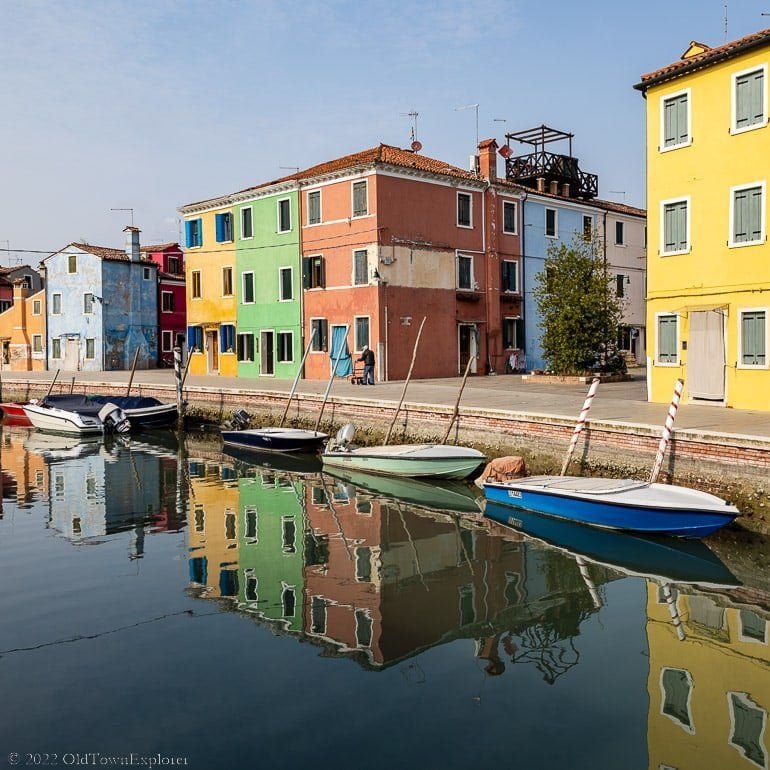
Color separates neighboring house fronts along the canals. Plaster provides the surface for the paint, while shutters, doors, and window surrounds create smaller patterns within it. Notice how a change in color can mark the boundary between two adjoining homes.
Narrow House Fronts
Many canal houses have narrow fronts and closely spaced entrances. Their small scale allows a short stretch of waterfront to contain many different façades. Compare the width of a doorway with the windows above it rather than looking only at the paint.
Fondamente Beside the Canals
A fondamenta is a walkway along a canal. On Burano, these paths place house entrances, pedestrian movement, and moored boats close together. Walking both sides of a canal reveals how the same row of houses looks from nearby and across the water.
Bridges and Canal Junctions
Bridges join the small parts of the settlement and provide views along the waterways. Tre Ponti is especially useful for seeing several canal directions from one junction. Keep the crossing clear while stopping to look or take photographs.
Piazza Galuppi’s Open Space
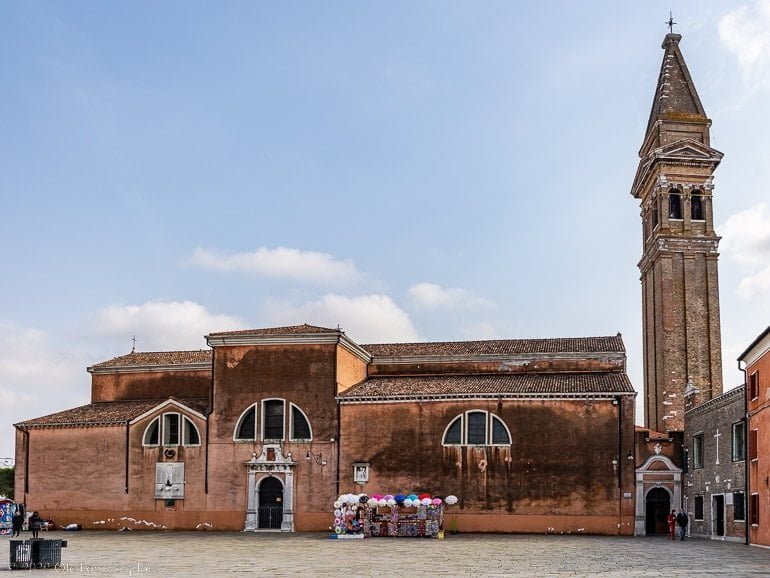
Piazza Galuppi provides a broad pause between the narrower streets and canal paths. The church, museum, shops, and restaurants make it a practical place to orient yourself. Its open space also gives a better view of the relationship between the church and tower.
San Martino’s Interior
Inside San Martino, rounded arches and rows of piers divide the nave from the side aisles. The church combines a Renaissance building history with Baroque decoration and later changes. Its tall interior and decorated surfaces contrast with the smaller houses outside.
The Brick Campanile
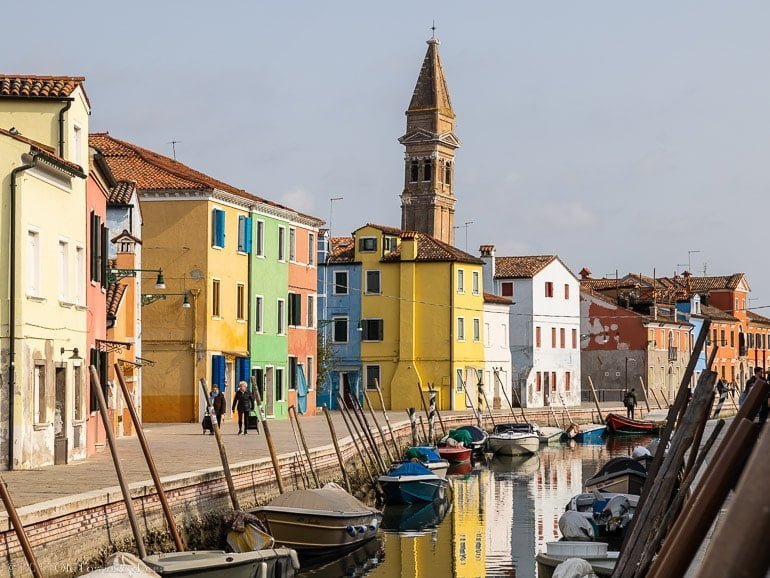
San Martino’s tower rises above the houses with a long brick shaft and a lighter stone belfry, the upper chamber containing the bells. Its tilt is visible from several streets. Compare the tower with nearby vertical door and window edges to see the lean more clearly.
Mazzorbo’s Walled Vineyard
Across on Mazzorbo, Venissa’s enclosing walls separate cultivated land from the waterside path. A fourteenth-century bell tower stands within the vineyard. This is a different use of lagoon space from Burano’s closely packed houses, and it suits an optional extension.
For the wider context of church forms and materials, see Italy architecture.
Architectural Attractions in Burano
The main stops fall into the canal streets and Piazza Galuppi. Mazzorbo is a separate, optional extension reached on foot from Burano.
Canal Streets and Waterfront
Fondamenta San Mauro
- Architect: Multiple builders; individual architects unknown.
- Style: Vernacular lagoon houses with painted plaster façades.
- Built: Buildings from multiple periods; individual dates unknown.
- Address: Fondamenta San Mauro, Burano.
Fondamenta San Mauro is a useful first canal walk after arriving by public boat. Look across the water at the narrow painted house fronts, then compare them with the doorways and shutters on your own side. The walkway leads toward the routes into Via Baldassarre Galuppi and the central square.
Casa Bepi
- Architect: Unknown; façade decoration by Giuseppe Toselli.
- Style: Vernacular house with geometric painted decoration.
- Built: House date unknown; façade decoration begun in the 1960s.
- Address: Calle del Pistor, off Via Baldassarre Galuppi, Burano.
Casa Bepi stands out for its geometric painted decoration rather than a single color. Giuseppe Toselli, known as Bepi Suà, covered the façade with circles, squares, triangles, and other shapes from the 1960s onward. Treat it as an exterior stop in a residential lane off Via Baldassarre Galuppi.
Explore Toselli’s painted decoration in the SPACES archive entry for Casa Bepi.
Tre Ponti
- Architect: Unknown.
- Style: Wooden pedestrian bridge structure.
- Built: Unknown.
- Address: Canal junction beside Via Giudecca, Via San Mauro, and Via San Martino Sinistro, Burano.
Tre Ponti is the wooden bridge junction connecting the San Mauro, San Martino Sinistro, and Giudecca canal routes. Its branching arrangement lets you compare several waterways and rows of houses from a small area. Include it on the return half of the loop before continuing toward the lagoon edge.
Pescaria Vecia
- Architect: Unknown.
- Style: Covered waterfront market structure.
- Built: Unknown.
- Address: Lagoon end of Via Giudecca, Burano.
Pescaria Vecia is Burano’s former covered fish market near the lagoon end of Via Giudecca. Its roofed structure gives the waterfront a different character from the enclosed canal streets. Walk here from Tre Ponti for an outward view over the lagoon before turning back toward the boat landing.
Piazza Galuppi and the Parish Church
Piazza Galuppi
- Architect: Multiple contributors; no single architect identified.
- Style: Civic square with church, historic palace, and mixed surrounding buildings.
- Built: Developed over multiple periods; a single construction date is unknown.
- Address: Piazza Baldassarre Galuppi, Burano.
Piazza Galuppi is Burano’s main square, named for the island-born composer Baldassare Galuppi. It brings the parish church and Lace Museum into the same open space, with shops and places to eat around them. Pause here to choose between an interior visit, lunch, and the next canal section.
Church of San Martino
- Architect: Unknown.
- Style: Renaissance church with Baroque interior decoration and later alterations.
- Built: Rebuilt in the sixteenth and seventeenth centuries; consecrated in 1645.
- Address: Beside Piazza Galuppi, Burano.
San Martino is the parish church beside Piazza Galuppi, rebuilt in the sixteenth and seventeenth centuries and consecrated in 1645. Inside, look along the arcades separating the nave and aisles and seek out Giambattista Tiepolo’s Crucifixion. Enter when visitor access permits, allowing for services.
Read more about the church’s rebuilding and decoration in the parish’s San Martino history.
Leaning Bell Tower of San Martino
- Architect: Attributed to Andrea Tirali.
- Style: Brick campanile with classical stone belfry.
- Built: 1703–1714.
- Address: Beside San Martino, Piazza Galuppi area, Burano.
The campanile is a separate early-eighteenth-century construction rising beside the church. Look for the change from its plain brick shaft to the stone belfry, then view the lean from farther along the surrounding streets. This is an exterior skyline stop; do not plan the day around an assumed tower climb.
Learn about the lean and later reinforcement in the bell tower’s construction history.
Lace Museum in Palazzo del Podestà
- Architect: Unknown.
- Style: Gothic palace adapted for a school and museum.
- Built: Palace construction date unknown; lace school use from 1872 to 1970.
- Address: Piazza Galuppi 187, Burano.
The Lace Museum occupies the historic palace that housed the Burano Lace School from 1872 to 1970. Its Gothic building gives the visit an architectural setting as well as a collection of Venetian and lagoon lace. Allow time to examine the stitches and patterns rather than treating it as a quick shop stop.
Check the Lace Museum’s opening hours before choosing your visit day.
Optional Extension on Mazzorbo
Venissa’s Walled Vineyard
- Architect: Unknown for the historic walls and bell tower.
- Style: Walled agricultural enclosure with a medieval bell tower.
- Built: Bell tower: fourteenth century; dates of the enclosing walls unknown.
- Address: Fondamenta Santa Caterina 3, Mazzorbo.
Venissa occupies a walled vineyard on neighboring Mazzorbo, with a fourteenth-century bell tower rising within the cultivated ground. The enclosing walls and open planting space provide a useful contrast with Burano’s canal housing. For a visit that includes wine, reserve an experience rather than assuming a tasting will be available on arrival.
Explore the walled vineyard’s history or reserve one of Venissa’s vineyard and wine experiences.
Walking Tour in Burano
Start and finish at the Burano ACTV landing. This suggested loop takes roughly 60–90 minutes with exterior stops and photographs; allow three to four hours for the museum, church, and lunch as well.
Suggested Walking Route
- Burano ACTV landing: Note the return departure area, then follow the signs toward the village streets.
- Fondamenta San Mauro: Begin along the canal and compare the house fronts across the water.
- Casa Bepi: Follow the route toward Via Baldassarre Galuppi and make the short detour into Calle del Pistor.
- Piazza Galuppi: Enter the main square and use its open space to locate the church and museum.
- San Martino and its bell tower: Visit the church if open, then look at the tower from more than one angle.
- Lace Museum: Return across the square for the collection, or continue the outdoor loop when the museum is closed.
- Tre Ponti: Head toward the San Martino Sinistro and Giudecca canal junction for views along the branching waterways.
- Pescaria Vecia: Continue along Via Giudecca toward the lagoon, then turn back through the canal streets to the ACTV landing.
Shorter Visits and Optional Extensions
With only two hours on Burano, keep the canal walk, Piazza Galuppi, and one interior visit. For a longer day, add Mazzorbo before returning to Venice; confirm the walking access and timing with Venissa if you have a tasting reservation.
Visitors who need to avoid bridge steps can use the municipality’s accessible Burano itinerary to choose suitable crossings instead of following every detour in the loop.
How to Get to Burano from Venice
Burano is reached by boat. Public waterbuses suit an independent visit; a private water taxi or organized excursion can suit a group or a fixed departure plan.
By Public Waterbus
ACTV line 12 runs from Fondamente Nove in northern Venice to Burano via Murano Faro and Mazzorbo. The boat ride is approximately 40–45 minutes on the usual daytime service. Add the journey from your accommodation to Fondamente Nove, time to find the departure point, and waiting time.
From the San Marco area, line 14 offers a route through Lido and Punta Sabbioni. Check the whole journey carefully: a connection at Punta Sabbioni may be required, and this route takes longer than line 12 from Fondamente Nove. Your nearest stop is not necessarily the fastest departure point.
Use the official ACTV waterbus timetables for your travel date and return service. After landing on Burano, walk toward Fondamenta San Mauro and the central streets; no onward vehicle is needed.
By Private Water Taxi
A private water taxi can arrange a Venice pickup and direct transfer to Burano. Ask for the total price, passenger and luggage limits, pickup location, and return arrangements before booking. It can be useful for a group, but compare the full cost with public transport before choosing it.
By Organized Boat Excursion
Boat excursions commonly combine Burano with Murano or Torcello. Check how much time the schedule actually allows on Burano, whether the museum can fit, and whether guided stops or demonstrations use part of the visit. An independent waterbus trip gives more flexibility for lunch, lace, or a reservation on Mazzorbo.
Making the Most of Your Day Trip to Burano
Plan the day around one complete Burano visit. The outdoor loop and main square fit together naturally, while any additional island should have a clear purpose.
Morning: San Mauro and Casa Bepi
Take an early boat that suits your Venice starting point. Walk Fondamenta San Mauro, cross toward Via Baldassarre Galuppi, and make the short Casa Bepi detour. Starting with the canals keeps the first part of the visit flexible if an interior is not yet open.
Late Morning: Piazza Galuppi and Lace
Use Piazza Galuppi for the Lace Museum and San Martino, adjusting their order to visitor access and services. Give the museum enough time to distinguish the lace techniques and patterns. On Monday, put more time into the church and outdoor route rather than expecting a museum visit.
Midday: Lunch and the Lagoon Edge
Reserve a lunch break around the square or canal streets, then continue through Tre Ponti to Pescaria Vecia. Fish dishes are a natural choice on an island with a fishing history; ask what is available that day. A bakery stop for bussolà or esse biscuits is an alternative if you prefer a shorter break.
Afternoon: Choose One Extension
Stay on Burano if you want more time for the canal streets and lace shops. Choose Mazzorbo for a reserved Venissa vineyard and wine visit, or Torcello for a separate church-focused excursion with additional boat travel. Avoid adding both extensions unless you are deliberately planning a longer lagoon day.
Late Afternoon: Return with a Buffer
Check the next useful return departure before the final stop. If ending on Mazzorbo, confirm the service from its own landing rather than assuming you must walk back to Burano. Leave room for a queue or missed departure, especially before a Venice dinner reservation or onward train.
Tips for Visiting Burano
Burano’s short walking distances leave plenty of time for the canals, lace, and church, but boat connections and museum opening days can shape the visit. Plan around your main indoor stop, leave time for lunch, and confirm any Mazzorbo tasting before adding it to the afternoon.
Start Early Enough for the Canal Walk
Choose a morning departure that leaves time for the canals before lunch. You will have more flexibility to stop at Casa Bepi and the bridges if you are not working backward from an imminent return boat.
Wear Shoes Suited to Paving and Bridges
The distances are short, but uneven paving and bridge crossings make secure walking shoes useful. Wet stone and wooden surfaces need extra care after rain.
Choose a Comfortable Season and Time of Day
Spring and autumn are sensible choices for walking without peak summer heat. In summer, use the morning for the canals and keep an indoor stop or lunch break for the warmest part of the day.
Plan the Core Visit on Foot
The landing, main canals, square, church, and museum are close enough for a walking visit. If bridge steps are a concern, choose crossings from the municipality’s accessible itinerary before adding side streets.
Keep Residential Doorways Clear
The painted houses are people’s homes. Take photographs from public paths, avoid blocking entrances, and let pedestrians pass at the narrow bridges.
Match the Day to the Lace Museum
The museum is closed on Mondays, so choose another day if the collection is a priority. If watching lacemaking matters to you, ask the museum about availability rather than assuming a demonstration accompanies every visit.
Allow a Real Lunch Break
A seated lunch changes a quick canal visit into a longer half-day outing. If time is tight, choose a shorter meal or bakery stop and protect the time needed for your main interior visit.
Book Mazzorbo Wine Visits and Confirm Access
Reserve a Venissa experience before building the afternoon around it. Ponte Santa Caterina on Mazzorbo was closed for safety reasons on October 2, 2026; check the municipal closure notice, follow posted diversions, and confirm your approach with Venissa.
Check Lagoon Weather Before Leaving
Wind, rain, fog, and high water can affect the comfort of the walk and boat operations. Check ACTV service notices on the day and carry a layer for the exposed waterfront and boat journey.
Protect the Return Connection
Look up a return departure and a later backup before starting the final canal detour. Include the journey from the Venice arrival stop to your next appointment, rather than treating the boat’s arrival as the end of the trip.
FAQs About Burano
Is Burano Worth Visiting as a Day Trip from Venice?
Yes, especially if you want a small-scale canal walk with painted house fronts and a lace museum. Burano works best when you give the streets and one interior visit time, rather than making it only a brief photo stop between other islands.
How Much Time Do You Need in Burano?
Allow three to four hours on the island for the canal loop, Lace Museum, church, and lunch. Two hours can cover the outdoor highlights and one shorter interior stop, but boat travel and waiting are additional. A booked Mazzorbo visit needs extra time around the reservation.
Where Is Burano, Italy?
Burano is in the northern Venetian Lagoon, northeast of central Venice. Mazzorbo is linked to it by a pedestrian bridge, while Torcello is a nearby island reached by boat.
Is Burano Walkable?
Yes. The central sights are close together and the streets are mostly level, although bridge steps affect some routes. Visitors who need step-free crossings should plan with the municipal accessibility itinerary.
Why Are Burano’s Houses Different Colors?
The painted façades distinguish neighboring houses and give the canal streets their visual pattern. The strongest colors seen today are part of a comparatively recent tradition, while Casa Bepi adds individually painted geometric decoration.
Should You Choose Burano, Murano, or Torcello?
Choose Burano for painted canal streets and lace, Murano for glassmaking and the Glass Museum, or Torcello for its church complex and a less densely built setting. Burano offers the most direct fit for a compact outdoor house-and-canal walk.
Can You Visit Murano and Burano in One Day?
Yes, but make it a full lagoon day and choose priorities on each island. Line 12 connects Murano Faro with Burano, so account for getting to that stop after your Murano visit. Adding Torcello as well reduces the time available for museums, churches, and lunch.
Which Boat Should You Take from Venice?
Line 12 from Fondamente Nove is the straightforward public-waterbus option for many visitors. From San Marco, compare the complete line 14 journey, including any Punta Sabbioni connection, with the time needed to reach Fondamente Nove. Check the current timetable before choosing.
Can You Visit a Winery Near Burano Without a Car?
Yes. Venissa is on neighboring Mazzorbo, reached by public boat or on foot from Burano. Book a vineyard and wine experience, then confirm the walking approach and return departure; the tasting is an optional Mazzorbo visit, not part of the Burano canal loop.
What Is the Best Time to Visit Burano?
A spring or autumn morning is a practical choice for the walking portion. In summer, arrive early and allow a midday break. If the Lace Museum matters to the visit, avoid Monday and check its current opening hours before booking other activities.
For the rest of your stay, compare Burano’s houses and parish church with Venice architecture. If the Mazzorbo extension appeals, use the Venice wine guide to plan wine stops around your time in the lagoon.
