
Discover Porto Venere: History, Architecture & Must-See Attractions
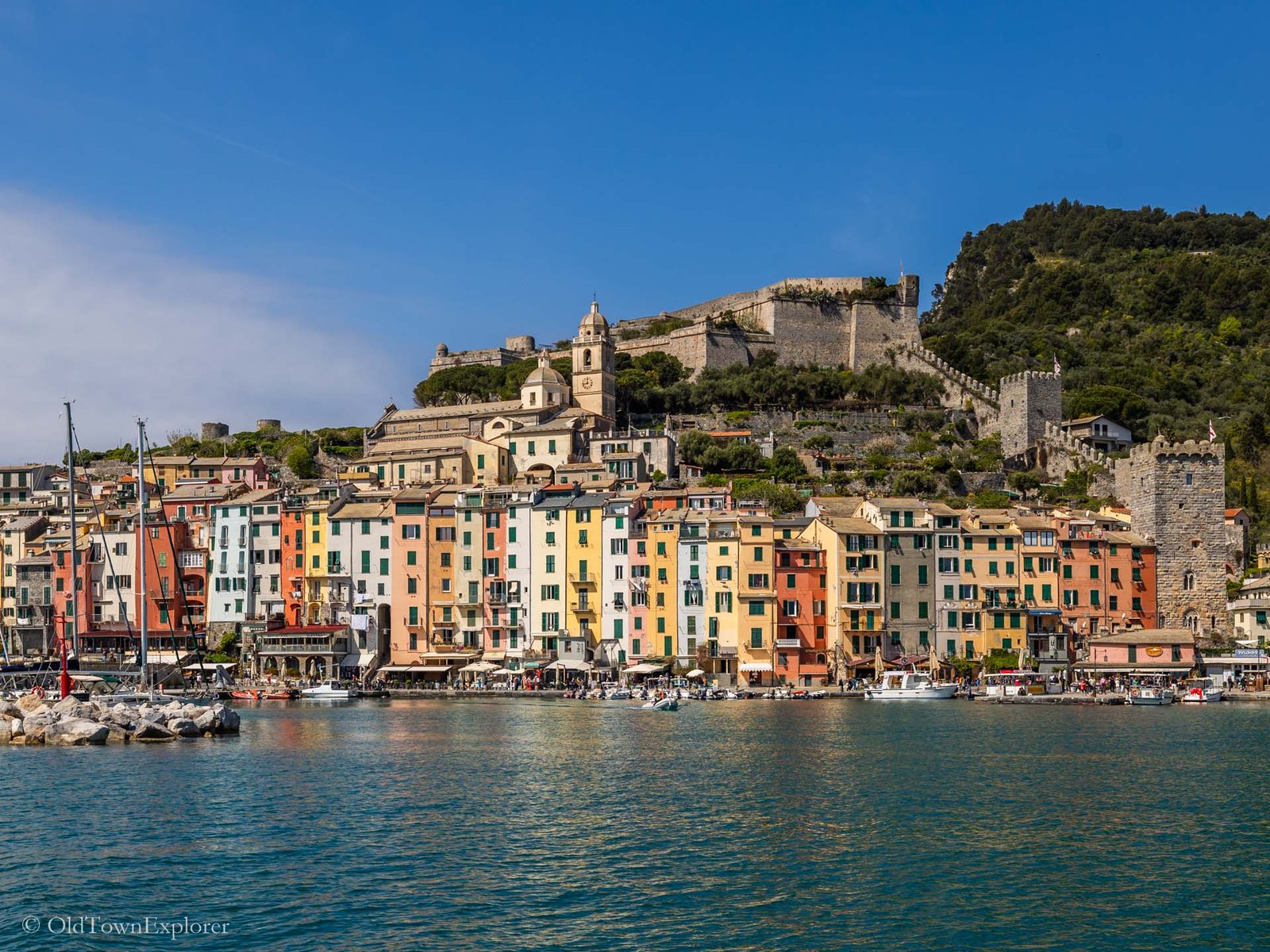
Porto Venere, Italy, sits at the western entrance to the Gulf of La Spezia, where a row of tall waterfront houses leads toward a church on a rocky headland. It makes a compact coastal day trip from Cinque Terre, with seasonal ferries connecting Riomaggiore to the town. La Spezia provides another starting point, with bus and seasonal ferry connections.
The walk leads from the harbor and fortified houses to churches and a castle above the town. Behind the waterfront, Via Giovanni Capellini runs through the medieval settlement; above it, San Lorenzo and Doria Castle occupy the hillside. San Pietro stands farther out on the headland, with two adjoining churches built in different periods.
We visited Porto Venere by ferry from Riomaggiore in Cinque Terre. Allow four to five hours in town for the main walk, selected interiors, and lunch, plus travel from your base. The castle climb involves stairs and sloping lanes; a wine tasting or crossing to Palmaria needs additional time.
This post contains affiliate links that may earn us a small commission at no additional cost to you.
Porto Venere at a Glance
Porto Venere combines a working harbor, medieval streets, hillside fortifications, and a church at the edge of the sea. Its compact center suits a day trip from Cinque Terre or La Spezia, with most of the walking concentrated between Piazza Bastreri, Doria Castle, and the San Pietro headland.
Keep these planning points in mind:
- Location: Western shore of the Gulf of La Spezia, Liguria
- Starting bases: Riomaggiore in Cinque Terre by seasonal ferry; La Spezia by bus or seasonal ferry
- Main sights: Palazzata a Mare, Porta del Borgo, San Lorenzo, Doria Castle, and San Pietro
- Time needed: Four to five hours for the town, selected interiors, and lunch, excluding transport
- Walking conditions: Short distances, uneven paving, and a sustained climb to the upper town
- Afternoon choice: A reserved wine tasting in town or a separate excursion to Palmaria
If the castle interior is a priority, check its opening day before choosing your travel date. Winter access is more limited than summer access.
History of Porto Venere
Porto Venere developed around a sheltered harbor and a defensible coastal position. The town's houses, churches, and castle reflect successive changes in maritime trade, military control, and religious life.
Roman Origins and the Coastal Harbor
Porto Venere's history extends to the Roman period, when the settlement served maritime traffic along the Ligurian coast. The harbor remains central to the town's layout: the waterfront faces the sheltered gulf, while the headland opens toward the sea.
Genoese Control in the Twelfth Century
Genoa took control in 1113 and developed Porto Venere as a fortified outpost. The medieval settlement acquired walls, a guarded entrance, churches, and tall houses along the harbor. The inscription above Porta del Borgo commemorates Genoa's arrival; its date should not be treated as the construction date of every surviving part of the gateway.
Church Building and Alterations from the Thirteenth to Sixteenth Centuries
The Gothic addition to San Pietro was built between 1256 and 1277 beside an older church. San Lorenzo also changed over time: fire damage in 1340 and attacks in 1494 led to repairs and alterations. Later changes to San Lorenzo included replacing supports and remodeling the interior, leaving several architectural periods within the present building.
Castle Expansion from the Fifteenth to Seventeenth Centuries
Doria Castle was enlarged and modified as defensive needs changed. Its substantial walls, bastions, and elevated position protected the town and its approaches. Looking down from the castle shows how the hillside defenses relate to the harbor-front houses and narrow streets below.
Restoration and UNESCO Recognition
Modern restoration helped preserve the churches and historic town. In 1997, Porto Venere became part of the UNESCO World Heritage property covering Portovenere, Cinque Terre, and the islands of Palmaria, Tino, and Tinetto. The designation connects the town with a wider coastal landscape shaped by settlements, terraces, and centuries of human activity.
Architecture of Porto Venere
Porto Venere's architecture is easiest to understand by walking from the harbor into the main street, climbing to the castle, and continuing to San Pietro. Each change in elevation reveals a different relationship between buildings, defenses, and the shoreline.
Tall Houses Along the Harbor
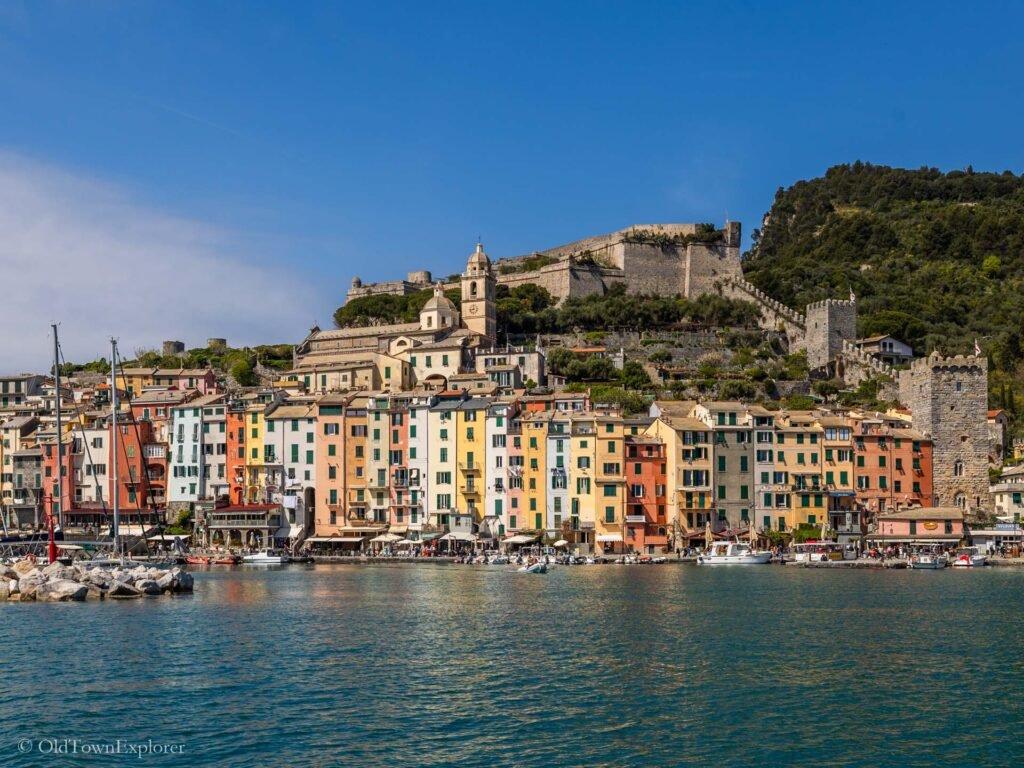
The Palazzata a Mare forms a closely packed line of tall houses facing the water. Their narrow fronts and shared boundaries create a continuous edge rather than a series of detached buildings. These waterfront houses also served a defensive purpose, helping shield the settlement behind them.
The Main Street Behind the Waterfront
Via Giovanni Capellini runs behind the harbor-front houses. The contrast is immediate: the open waterfront gives way to a narrow street enclosed by building fronts. Small passages connect the two, allowing the town to function around both the shore and its protected interior street.
Stairs Between the Lower and Upper Town
Porto Venere's steep ground produces short stairways and sloping lanes rather than a broad street grid. The climb toward San Lorenzo separates the commercial street from the upper religious and defensive sites. This is why a short route on a map can still require considerable effort.
The Gate, Tower, and Town Boundary
Porta del Borgo and Torre Capitolare mark the entrance from Piazza Bastreri. The gateway controls movement into the narrow main street, while the square tower rises above it. Together, they make the town's former boundary visible even though today's visitors move freely through the entrance.
Romanesque and Gothic Church Forms
San Pietro joins an older Romanesque church to a Gothic addition. Romanesque forms favor rounded arches and substantial masonry; Gothic details introduce pointed arches and different vaulting forms. At San Lorenzo, later alterations complicate the original Romanesque design, so the two churches reward attention to individual parts.
Stonework and Contrasting Bands
Exposed stone is prominent in the castle walls, while alternating light and dark bands distinguish parts of the churches. At San Pietro, the bands continue inside, linking the exterior treatment with the interior. Look at both the broad color pattern and the smaller details around arches and openings.
The Castle's Position on the Hillside
Doria Castle follows the high ground above the settlement. Its defensive perimeter combines masonry walls with the advantages of the slope. Inside, a hypostyle hall—a hall with a roof supported by columns or piers—provides a different experience from the open terraces and perimeter walls.
The Church at the End of the Headland
San Pietro occupies the end of the rocky promontory rather than a sheltered inland square. Its position makes the surrounding sea part of the experience of approaching the building. The exposed setting also matters practically: wind and wet paving can affect how comfortably visitors move around the exterior.
Architectural Attractions in Porto Venere
The main architectural stops fall into three areas: the harbor and main street, the upper town, and the San Pietro headland. The route connects all three, but the upper town requires the most climbing.
Harbor and Main Street
Palazzata a Mare
- Architect: Unknown; developed through multiple building phases
- Style: Medieval harbor-front tower houses with later alterations
- Built: Medieval development associated with the Genoese settlement
- Address: Waterfront along Calata Doria
The Palazzata a Mare is the line of tall houses facing Porto Venere's harbor. Their narrow fronts, varying heights, and close spacing create the town's most recognizable waterfront. They also formed a defensive barrier for the settlement behind them. View them first from the harbor, then pass into the main street to understand their depth.
Porta del Borgo and Torre Capitolare
- Architect: Unknown
- Style: Medieval Genoese defensive architecture
- Built: Medieval gateway; tower dated to the second half of the twelfth century
- Address: Piazza Bastreri, at the entrance to Via Giovanni Capellini
Porta del Borgo leads from Piazza Bastreri into the old town, with Torre Capitolare rising beside it. The tower's square form contrasts with the narrow opening below. An inscription above the gate records Genoa's arrival in 1113, while historic measures beside the entrance recall the regulation of trade. Treat this as an exterior stop; the tower is not a guaranteed public climbing attraction.
Via Giovanni Capellini
- Architect: Unknown; a street developed through successive building phases
- Style: Medieval main street, locally called the caruggio
- Built: Medieval street with later alterations to adjoining buildings
- Address: Between Porta del Borgo and the San Pietro approach
Via Giovanni Capellini is the main street behind the waterfront houses. Porto Venere's historic settlement grew around this compact arrangement of shore, houses, and protected street. Notice the narrow passages toward the harbor and the stairways climbing into the upper town. Walking the street in both directions also provides a practical connection between the headland and the transport area.
Casa dei D'Oria
- Architect: Unknown
- Style: Medieval palace remains
- Built: Twelfth to thirteenth centuries
- Address: Via Giovanni Capellini 171–173
The surviving Casa dei D'Oria adds a palace site to the main street's predominantly residential setting. The palace remains date to the twelfth and thirteenth centuries. Its location makes it a brief exterior stop on the walk toward or back from San Pietro. The property is privately owned, so plan to view it from the street.
Upper Town and Castle

Church of San Lorenzo
- Architect: Medieval construction associated with the Antelami master builders; later architects unknown
- Style: Romanesque origin with Gothic and later alterations
- Built: Begun in 1116; consecrated in 1130; subsequently altered
- Address: Piazza San Lorenzo
The Church of San Lorenzo stands above the main street on the route toward the castle. Its facade combines contrasting stone bands, three entrances, and a sculptural scene associated with the saint's martyrdom. The church is also the sanctuary of the Madonna Bianca. Compare its hillside setting and altered interior with San Pietro's more exposed position at the end of the promontory.

Doria Castle
- Architect: Unknown; expanded and modified over several centuries
- Style: Genoese fortress with later bastions
- Built: Around 1160; major alterations from the fifteenth to seventeenth centuries
- Address: Via Giuseppe Garibaldi 9, above San Lorenzo
Doria Castle occupies the high ground above Porto Venere. Its substantial stone walls and bastions explain how the town was defended from the hillside. Interior highlights include a vaulted hypostyle hall, while the outdoor areas provide views over the settlement and gulf. Allow additional time for the ascent and an interior visit rather than treating the castle as a quick waterfront detour.
I Mulini
- Architect: Unknown
- Style: Cylindrical stone structures used as windmills
- Built: Unknown
- Address: Rocky slope between Doria Castle and the San Pietro headland
The two former windmills known as I Mulini stand on the rocky ground near the castle. Their rounded forms contrast with the castle's angular walls and the narrow houses below. Pause beside them while descending toward the headland. From here, look back toward the fortress and out over the cliff and sea.
San Pietro Headland

Church of San Pietro
- Architect: Unknown
- Style: Adjoining Romanesque and Gothic churches
- Built: Older Romanesque church; Gothic addition built between 1256 and 1277
- Address: Piazzale San Pietro, at the end of the promontory
The Church of San Pietro stands at the tip of the headland, beyond the main street. It combines an older church with a Gothic addition rather than representing a single construction campaign. Contrasting stone bands, arches, and the adjoining spaces reward a closer look when the interior is accessible. Leave time for the exterior setting as well as the building, since the sea and rocky promontory define its position.
Arpaia Viewpoint and Byron's Grotto
- Architect: Unknown for the defensive masonry; the cove is a natural formation
- Style: Coastal defensive masonry beside a rocky cove
- Built: Defensive masonry dated from the twelfth century onward
- Address: Piazzale San Pietro, beside the San Pietro approach
The Arpaia cove, commonly associated with Byron's Grotto, lies below the approach to San Pietro. The defensive masonry beside the cove connects this coastal viewpoint with the town's fortifications. Look toward the rock face and water from the permitted public viewing area. Follow barriers and closure signs rather than assuming that access to the rocks or water is included in the visit.
Walking Tour in Porto Venere
This loop connects the waterfront, upper town, and San Pietro headland before returning through the main street. The sequence favors one main climb, followed by the coastal sights and a lower return route.
Starting Point and Walking Time
Start on Calata Doria near Piazza Bastreri, convenient for arriving from the bus terminus or harbor. Allow two to three hours for the route with exterior stops and short pauses. Castle admission, church visits, shopping, and lunch extend the visit to around four or five hours.
Suggested Walking Route
Begin at the harbor, climb through the upper town to San Lorenzo and Doria Castle, then descend toward the San Pietro headland. Return along Via Giovanni Capellini to finish near the waterfront and departure points.
- Calata Doria and the Palazzata a Mare: Begin beside the harbor and look across the tall waterfront houses before entering the old town.
- Porta del Borgo and Torre Capitolare: Cross Piazza Bastreri, examine the gateway and tower, and pass into Via Giovanni Capellini.
- Via Giovanni Capellini: Walk the opening stretch of the main street, then take the signed uphill route toward San Lorenzo.
- Church of San Lorenzo: Pause in the church square and visit the interior if access allows.
- Doria Castle: Continue uphill to the fortress, allowing extra time for admission and its interior spaces when open.
- I Mulini: Descend toward the former windmills and continue toward the San Pietro headland.
- Arpaia Viewpoint: Stop at the permitted viewing area above the cove associated with Byron's Grotto.
- Church of San Pietro: Continue to the church at the end of the promontory and explore its accessible interior and exterior areas.
- Casa dei D'Oria and the Main Street: Return along Via Giovanni Capellini, note the palace remains at numbers 171–173, and finish beside the harbor near Piazza Bastreri.
Back at the harbor, leave time for lunch or a waterfront break before your return journey. If you plan to enter the castle and both churches, allow longer than the two-to-three-hour exterior walk and choose your return departure accordingly.
Shorter Visits and Optional Extensions
With limited time or difficulty climbing, prioritize the waterfront, gate, main street, and San Pietro, omitting the castle ascent. This reduces the climb but does not guarantee a step-free walk. If you have a full day, add lunch and either a booked wine tasting in town or a separately planned Palmaria excursion.
How to Get to Porto Venere from Cinque Terre and La Spezia
From Riomaggiore, a seasonal ferry reaches Porto Venere without a transfer through La Spezia. From La Spezia, choose the bus or seasonal ferry. Porto Venere has no railway station, so train journeys require a connection to road or boat transport.
By Ferry from Cinque Terre
We traveled from Riomaggiore to Porto Venere by ferry. Navigazione Golfo dei Poeti's seasonal Cinque Terre service connects the two towns, arriving beside Porto Venere's harbor. Check the operator's service calendar and sailing timetable for your date before planning the day.
Confirm the return sailing as well as the outward departure, and allow enough time ashore for the town walk and lunch. From another Cinque Terre village, check its departures and stops individually. Services depend on the season and sea conditions.
If boats are not operating, take the train to La Spezia Centrale, then continue by bus from Via Chiodo. The same combination provides a return alternative: bus to La Spezia, followed by a train to Riomaggiore or another Cinque Terre village. Allow time for the transfer between the bus stop and railway station.
By Ferry from La Spezia
Seasonal boats operated by Navigazione Golfo dei Poeti connect La Spezia's Passeggiata Morin waterfront with Porto Venere. Check the operator's service calendar and dated sailing timetable before choosing this option. Regular services are seasonal, and any additional winter excursions may follow different arrangements.
The ferry arrives beside the harbor, making Calata Doria a convenient starting point. Choose the boat when its outward and return sailings give you enough time ashore. Keep a bus alternative available because weather can affect sailings.
By Bus from La Spezia
ATC's 11/P service connects La Spezia with Porto Venere. Board at Via Chiodo, at the porticoes, checking the ATC timetable for the departure you intend to take. Scheduled journeys from Via Chiodo commonly take about 35 minutes; allow additional time for traffic and waiting.
Use the timetable for your travel date and day of the week, and check ticket arrangements before boarding. The Porto Venere terminus puts you close to Piazza Bastreri and the old-town entrance. The bus is also the practical alternative when the ferry schedule or sea conditions do not suit your trip.
By Taxi from La Spezia
A taxi provides a direct road journey from your accommodation or La Spezia Centrale. Request a fare estimate and agree on the drop-off point before departure. If you need a taxi for the return, arrange it in advance rather than relying on immediate availability after the visit.
By Car from La Spezia
Driving gives you control over departure time, but parking and the walk from your chosen space still affect the day. Review the Porto Venere parking areas before setting out; spaces extend along the approach roads beyond the historic center. For a straightforward town visit from La Spezia, public transport avoids the need to find a space.
Making the Most of Your Day Trip to Porto Venere
Plan the day around the uphill sights first, the headland next, and a slower afternoon near the harbor. Castle opening times and your return transport should determine how much you add beyond the town walk.
Morning: Harbor, San Lorenzo, and Doria Castle
Begin with the waterfront houses and town gate, then climb from Via Giovanni Capellini to San Lorenzo and Doria Castle. Tackling the hill early leaves the lower streets and headland for later. If the castle is closed, retain the church stop and adjust the upper-town portion to accessible public paths.
Midday: San Pietro and Lunch
Continue past I Mulini to the Arpaia viewpoint and San Pietro. Return through the main street for lunch, keeping enough time to sit down rather than eating between transport connections. Mussels, locally called muscoli, are a useful starting point when choosing a seafood dish; the broader food of Liguria offers more context for local menus.
Afternoon: Wine Tasting or Palmaria
For an afternoon in town, the sommelier-led wine tasting at Grand Hotel Portovenere offers a bookable option near the harbor. Confirm the tasting, availability, and duration in advance. It fits more comfortably after the castle climb and lunch.
Alternatively, cross to Palmaria if the day's boat connections allow an adequate visit and return. Treat the island as your main afternoon activity, with time for the crossing and the walk you choose. Combining it with a tasting and every town interior makes the day harder to fit.
Late Afternoon: Harbor and Return Journey
Finish near Calata Doria and Piazza Bastreri so your final stop is close to departure transport. Check the return service before settling into a long waterfront break. Leave a buffer for boarding and for any onward train connection in La Spezia.
Tips for Visiting Porto Venere
Porto Venere's short distances make the town manageable in a day, but stairs, exposed coastal paths, and seasonal services influence the plan. A few decisions before departure will help you leave enough time for the castle, headland, and a relaxed lunch.
Start with the Uphill Sights
Arrive early enough to visit San Lorenzo and the castle before a long lunch. Completing the main climb first leaves a more flexible afternoon around the lower streets and harbor.
Wear Shoes with Good Grip
Expect stone paving, steps, and sloping lanes between the main street and castle. Choose shoes suited to walking, particularly if rain is forecast or you plan to spend time around the exposed headland.
Choose the Season Around Your Priorities
Spring and early autumn are useful choices for a walking-focused day, subject to weather. Summer suits a combined town and boat visit, but allow for heat during the uphill section. Winter requires closer attention to castle access and transport schedules.
Check the Castle's Opening Day
Doria Castle currently opens daily from April through October, with winter opening limited to weekends and public holidays. Recheck the castle's published access information before traveling. A winter weekday can still suit the town, but should not depend on entering the fortress.
Keep a Bus Alternative to the Ferry
Check both the outward and return boat services before leaving your base. If a sailing changes, the bus provides a route back to La Spezia, where you can connect to a train for Cinque Terre. Allow extra time for waiting, traffic, and the transfer to the station.
Take Care Around the Headland
San Pietro and the Arpaia viewpoint are exposed to coastal weather. Follow signs and barriers, and avoid assuming that a visible stairway or rocky shoreline is open for access.
Leave Time for Lunch and Water
Carry water for the uphill walk and plan lunch after the headland or on the return through the main street. Allowing a proper break makes it easier to decide whether you still want an afternoon extension.
Book Wine Tasting After the Main Walk
Reserve the tasting before your visit and place it after the castle ascent. Confirm its finishing time against your return transport, particularly if you need an onward train.
Give Palmaria Its Own Afternoon
Choose an island excursion instead of filling the same afternoon with additional town activities. Check crossings in both directions and match the island walk to the time available.
Protect Your Return Connection
If you are returning directly to Riomaggiore by ferry, reach the Porto Venere departure point with time to spare. If you are traveling via La Spezia, leave space before an onward train. A ferry arrival at Passeggiata Morin or bus arrival near Via Chiodo still requires a separate transfer to La Spezia Centrale.
FAQs About Porto Venere
Is Porto Venere Worth Visiting as a Day Trip?
Yes, especially if you want to combine coastal scenery with a compact architectural walk. The waterfront houses, town gate, hillside castle, and San Pietro headland provide several distinct stops without traveling between separate towns.
How Long Should I Spend in Porto Venere?
Allow four to five hours in town for the main route, selected interiors, and lunch, plus travel from Cinque Terre or La Spezia. A full day gives you room for either a wine tasting or a Palmaria excursion. Two to three hours suits a shorter visit focused on exterior stops.
Where Is Porto Venere, Italy?
Porto Venere is in Liguria, at the western entrance to the Gulf of La Spezia. It lies opposite Palmaria and southwest of La Spezia, which provides the practical train connection for visitors arriving from elsewhere.
Is Porto Venere Part of Cinque Terre?
Porto Venere is a separate town, outside the five Cinque Terre villages. It shares the same UNESCO World Heritage property with Cinque Terre and the islands of Palmaria, Tino, and Tinetto.
How Is Porto Venere Different from Riomaggiore or Vernazza?
Porto Venere combines a continuous harbor-front line of houses with an upper fortress and a church at the tip of a promontory. Riomaggiore and Vernazza offer different village layouts and direct railway access. Choose Porto Venere when the castle-and-headland walk appeals more than the convenience of moving between villages by train.
Is Porto Venere Walkable?
The historic center is compact and best explored on foot, but the castle route includes stairs and steep sections. A waterfront, main-street, and San Pietro visit avoids the main castle climb. It still includes uneven surfaces and should not be assumed to be step-free.
Can I Get to Porto Venere by Train?
There is no station in Porto Venere. Travel by train to La Spezia Centrale, then transfer to a bus or seasonal ferry. Allow time to reach Via Chiodo for the bus or Passeggiata Morin for the boat.
Can I Do Wine Tasting in Porto Venere Without a Car?
Yes. Grand Hotel Portovenere offers a bookable sommelier-led tasting in town, within reach of the harbor and old center. It is a tasting venue rather than a vineyard excursion; reserve ahead and check the finish time against your return service.
When Is the Best Time to Visit Porto Venere?
Spring or early autumn suits a day centered on walking. Summer works well if boat travel is a priority, with more attention needed for heat and busy arrival periods. For winter, choose your date around the castle's opening days and the transport services actually operating.
Can I Visit Porto Venere and Palmaria in One Day?
Yes, if you have a full day and suitable boat connections. Visit the main town sights first, then use Palmaria as the afternoon activity. A shorter town visit or a booked tasting leaves less time for the island, so decide which matters most before departure.
For nearby village comparisons, explore Cinque Terre. For more context on the buildings and a tasting stop, continue with Italian architecture and Liguria wine.
