
Discover La Spezia: History, Architecture & Must-See Attractions
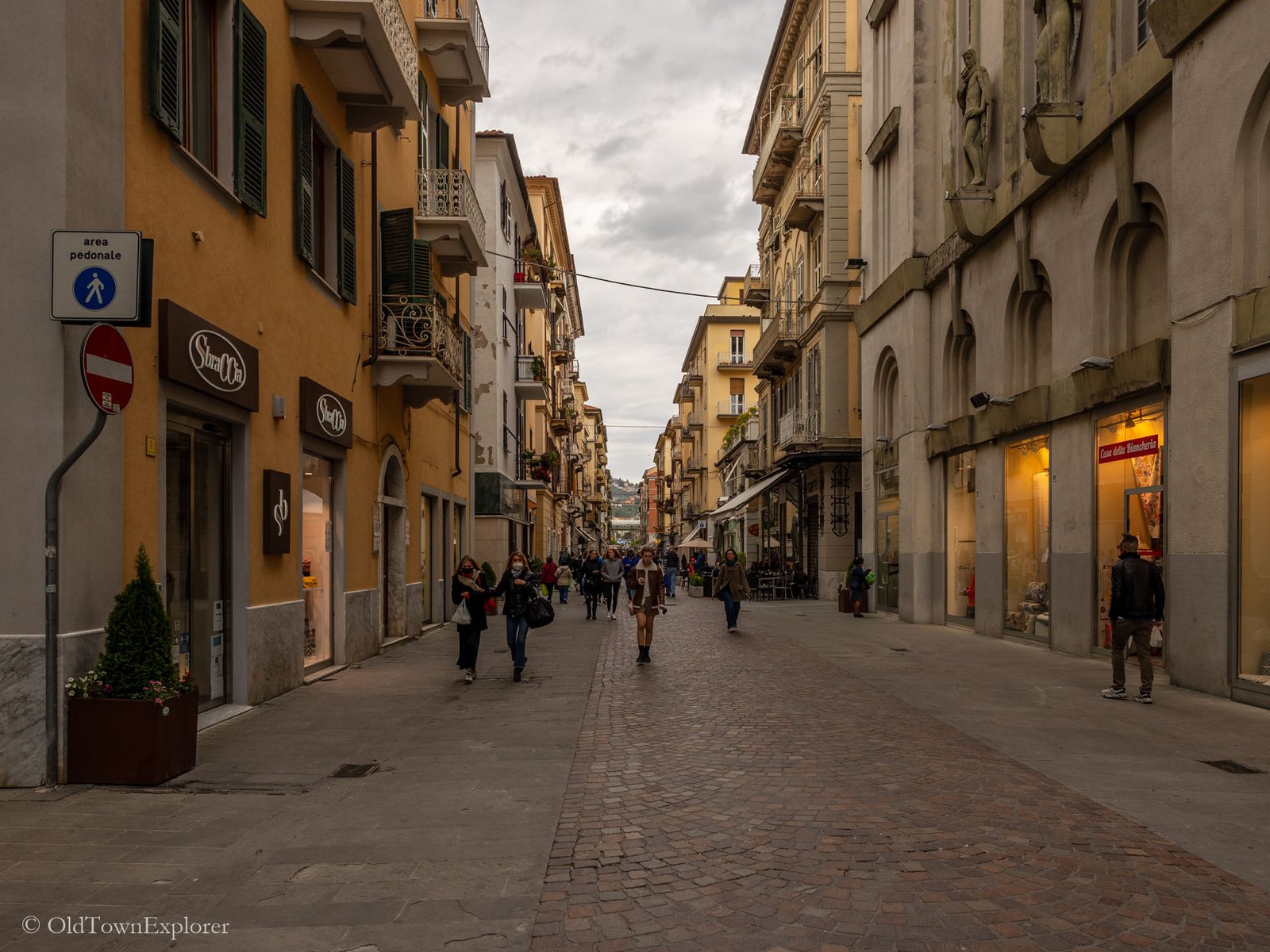
La Spezia, Italy, makes an easy day trip by train from Riomaggiore for a different view of the Ligurian coast. The city sits at the head of the Gulf of La Spezia, where a naval port, a commercial center, and hillside neighborhoods developed around an older settlement. Its pedestrian streets connect churches and museums with decorated apartment buildings, a hilltop castle, and a broad waterfront.
The architectural interest spans several periods. Castello San Giorgio overlooks the center, Liberty façades reflect the city’s expansion around 1900, and the post office and cathedral introduce twentieth-century design. A day here suits travelers who want a town walk and a museum visit between outings in the smaller villages of Cinque Terre.
We visited La Spezia as a day trip by train from Riomaggiore. With the short rail journey, you can allow time for the historic center, choose one museum, and finish along Passeggiata Morin before returning to the villages.
This post contains affiliate links that may earn us a small commission at no additional cost to you.
La Spezia at a Glance
La Spezia combines an older hillside settlement with the larger streets and civic buildings of a port city. Most day-trip sights lie between La Spezia Centrale, the historic center, and the waterfront, with uphill detours for the castle and cathedral.
Keep these points in mind when planning your visit:
- Starting base: Riomaggiore, with direct regional trains to La Spezia Centrale
- Main sights: Castello San Giorgio, Santa Maria Assunta, Palazzo delle Poste, and Cattedrale di Cristo Re
- Architectural character: Medieval defenses, Liberty decoration, 1930s civic buildings, and a modern circular cathedral
- Time to allow: Five to six hours for a town walk, one museum, lunch, and the waterfront
- Walking conditions: Mostly level lower streets, with steps and slopes toward the hillside landmarks
- Food break: Lunch in the center, with mesciùa or Ligurian focaccia as local options
The station and waterfront are at opposite ends of the central walk. Leave the promenade before your return train is imminent, rather than treating it as a stop beside the station.
History of La Spezia
La Spezia’s present layout reflects the growth of a coastal settlement into a major naval city. The castle marks the earlier hillside town, while later residential streets and public buildings spread across the lower ground.
Medieval Settlement and Genoese Defenses
The surviving parts of Castello San Giorgio begin in the fourteenth century. Subsequent additions strengthened its position above the town, with major defensive changes in the fifteenth, sixteenth, and early seventeenth centuries. The climb from the lower streets to the castle still reveals how closely the older settlement followed the hillside.
Religious Buildings in the Fifteenth and Seventeenth Centuries
Santa Maria Assunta developed as an important church in the lower town, with a parish dating to 1434. Construction of the San Francesco di Paola convent began in 1616 farther along today’s Via del Prione. That former religious complex now houses the Museo Amedeo Lia, placing an early seventeenth-century building within the modern pedestrian shopping street.
Naval Expansion in the Nineteenth Century
The naval arsenal, inaugurated in 1869, transformed La Spezia’s scale and economy. Expansion brought workers, new residential districts, and development beyond the medieval boundaries. The broader streets and apartment blocks around the central shopping area belong to a city that had grown well beyond its earlier castle-and-church core.
Liberty Houses and Civic Construction in the Early Twentieth Century
Growth continued around 1900, when Liberty decoration appeared on apartment buildings such as Palazzo Maggiani. Villa Marmori Ceretti followed in the 1920s, while the post office and the rebuilding of Teatro Civico date to 1933. These buildings offer several different responses to the needs and tastes of the expanding city.
Wartime Damage and Postwar Architecture
Bombing during the Second World War damaged La Spezia, including Santa Maria Assunta, which was rebuilt afterward. The later Cattedrale di Cristo Re brought a markedly different religious form to the city: a circular church completed in 1975. Looking at both churches makes the contrast between reconstruction of an older landmark and a new modern design especially clear.
Architecture of La Spezia
La Spezia’s architecture changes as you move from the lower pedestrian streets to the hillside and waterfront. Pay attention to the size of the blocks, the treatment of façades, and the way public buildings occupy squares or elevated sites.
The Castle Above the Lower Town
Castello San Giorgio occupies the hillside above the historic center. Its walls and projecting defenses contrast with the domestic streets below. The change in elevation explains both its defensive position and the extra effort needed to include it in a walking visit.
Pedestrian Streets and Larger City Blocks
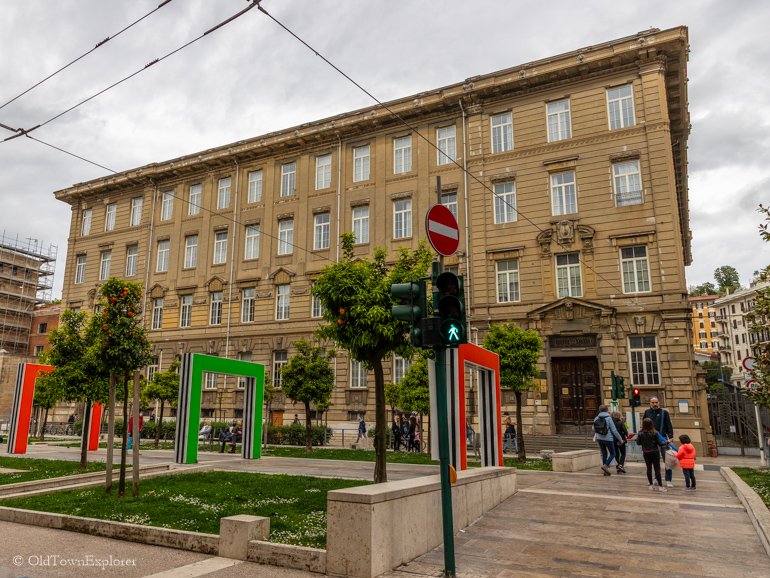
Via del Prione provides a convenient walking spine through the center. Corso Cavour and the streets toward Piazza Verdi show the larger scale of the expanded city. Side lanes and stairways interrupt the lower street pattern where the ground begins to rise.
Liberty Decoration on Residential Façades
Liberty is the Italian expression of Art Nouveau, often recognizable through flowing plant forms and decorative ironwork. Palazzo Maggiani uses floral and figurative ornament across its front, while Villa Marmori Ceretti offers a villa-scale example. Look above the shopfronts to see the decoration around windows and balconies.
Brick, Marble, and the 1930s Post Office
Palazzo delle Poste combines brick and marble in a substantial civic building facing Piazza Verdi. Its strong volumes differ from the lighter ornamental treatment of the Liberty houses. The tower also contains Futurist mosaics, although seeing them requires access beyond an ordinary exterior stop.
A Theater Facing a Public Square
Teatro Civico opens toward Piazza Mentana through a façade with three large arches. Its 1933 rebuilding belongs to the same period as the post office, but its purpose called for a different interior arrangement. The square gives you enough space to stand back and compare the theater front with the surrounding streets.
A Circular Cathedral Above Piazza Europa
Cattedrale di Cristo Re replaces the familiar long church plan with a circular form beneath a broad roof. Twelve pillars support the structure. The elevated position above Piazza Europa makes the building a distinct eastern landmark, while the approach adds steps to an otherwise largely level lower-city walk.
Gardens, Promenade, and a Contemporary Bridge
The public gardens separate central streets from Passeggiata Morin and the water. Beyond them, Ponte Thaon di Revel connects the city waterfront with Porto Mirabello. Its steel structure and cable supports introduce a contemporary maritime form after the masonry buildings of the center.
Architectural Attractions in La Spezia
These ten stops cover the main architectural changes visible during a day in the center. The groups follow the station quarter and Via del Prione, the older town and castle hillside, and the eastern center and waterfront. Most can be appreciated from outside; reserve additional time for whichever interior interests you most.
The Station Quarter and Via del Prione
Palazzo Maggiani
- Architect: Unknown
- Style: Liberty, the Italian form of Art Nouveau
- Built: 1900–1902
- Address: Corso Cavour 400, La Spezia, Italy
Palazzo Maggiani is a decorated residential building on Corso Cavour, a short detour from the station approach. Floral ornament, figures, and peacock motifs distinguish its façade from plainer neighboring fronts. Look upward to compare the treatment of successive floors. Plan an exterior stop here rather than an interior visit.
Former San Francesco di Paola Convent and Museo Amedeo Lia
- Architect: Unknown
- Style: Early seventeenth-century convent adapted as a museum
- Built: From 1616; restored for museum use in the 1990s
- Address: Via del Prione 234, La Spezia, Italy
The former San Francesco di Paola convent houses the Museo Amedeo Lia, which opened in 1996. Its religious origins distinguish it from the surrounding commercial buildings on Via del Prione. The art collection makes this a useful choice for the day’s main interior visit. If you choose the museum, shorten the later walk rather than trying to fit several collections into the same afternoon.
Santa Maria Assunta
- Architect: Unknown
- Style: Gothic origins with later alterations and postwar reconstruction
- Built: Parish established in 1434; rebuilt after Second World War damage
- Address: Piazza Giulio Beverini 4, La Spezia, Italy
Santa Maria Assunta stands beside Via del Prione on Piazza Giulio Beverini. Its history includes extensive wartime damage and rebuilding, so the present church combines earlier origins with later work. The façade and square make an easy stop on the lower-town walk. Enter only when the church is open to visitors and services permit.
The Older Center and Castle Hillside
Palazzo Oldoini, Now Palazzo De Nobili
- Architect: Unknown
- Style: Historic aristocratic palazzo
- Built: Unknown
- Address: Piazza Sant’Agostino 59, La Spezia, Italy
Palazzo Oldoini, now known as Palazzo De Nobili, is a historic private residence on Piazza Sant’Agostino. Virginia Oldoini, the Countess of Castiglione, lived here in the nineteenth century. Its setting adds a residential landmark to a walk otherwise dominated by churches and civic buildings. View it from the square before continuing toward nearby Piazza Mentana.
Teatro Civico
- Architect: Ippolito Cremona for the original theater; Franco Oliva for the 1933 rebuilding
- Style: Art Deco and twentieth-century theater architecture
- Built: 1840–1846; rebuilt in 1933
- Address: Piazza Mentana 1, La Spezia, Italy
The Teatro Civico faces Piazza Mentana with three prominent entrance arches. Its present design comes from the 1933 rebuilding of the nineteenth-century theater. Inside, a zodiac-themed ceiling includes an opening mechanism, an unusual feature of the auditorium. Interior access depends on performances or arranged visits, so treat the façade as the reliable walking stop.
Castello San Giorgio
- Architect: Unknown; developed through several defensive phases
- Style: Medieval fortress with Renaissance and early seventeenth-century additions
- Built: Surviving structures from the fourteenth century; expanded in 1443, 1554, and 1607
- Address: Via XXVII Marzo 36, La Spezia, Italy
Castello San Giorgio stands above the old center and houses the city’s archaeological museum. Its layered defenses reflect successive efforts to strengthen the hillside position. The climb provides a change of perspective after walking the lower streets. Choose the museum and terraces as a main visit if archaeology and elevated views appeal more than an art collection.
The Eastern Center and Waterfront
Villa Marmori Ceretti
- Architect: Franco Oliva
- Style: Liberty and eclectic villa architecture
- Built: From 1923
- Address: Via XX Settembre 34, La Spezia, Italy
Villa Marmori Ceretti now houses the Conservatorio Giacomo Puccini on Via XX Settembre. Its decorative design includes work by ironworker Alessandro Mazzucotelli and stained-glass artist Giovanni Beltrami. The villa offers a smaller-scale counterpart to the city’s decorated apartment buildings. Because it is an active conservatory, plan to appreciate the exterior unless a public event or authorized visit provides access.
Palazzo delle Poste
- Architect: Angiolo Mazzoni
- Style: Rationalist civic architecture with Futurist decoration
- Built: 1933
- Address: Piazza Giuseppe Verdi 12, La Spezia, Italy
Palazzo delle Poste is one of La Spezia’s most distinctive twentieth-century civic buildings. Brick, marble, and the tower give its Piazza Verdi frontage a different character from the Liberty residences. Futurist artists Enrico Prampolini and Fillia created mosaics inside the tower. Those mosaics require specific access arrangements and should not be expected during a routine visit to the postal counters.
Cattedrale di Cristo Re
- Architect: Adalberto Libera; completed by Cesare Galeazzi
- Style: Modernist religious architecture
- Built: 1969–1975, following Libera’s earlier design
- Address: Piazzale Papa Giovanni XXIII, La Spezia, Italy
Cattedrale di Cristo Re stands above Piazza Europa beneath a broad circular roof. Its twelve supporting pillars and rounded plan distinguish it immediately from Santa Maria Assunta. The elevated approach offers a useful view of how the cathedral relates to the civic square below. Allow for the steps, and keep an interior visit subject to church opening and worship.
Ponte Thaon di Revel
- Architect / engineer: EXA Engineering
- Style: Contemporary cable-supported pedestrian bridge
- Built: Completed in July 2013
- Address: Banchina Thaon de Revel, La Spezia, Italy
Ponte Thaon di Revel connects the city promenade with Porto Mirabello. Its masts and cables echo the forms of the surrounding marina, while an opening central section allows boats to pass. The bridge supplies a contemporary architectural stop after the historic center and public gardens. Cross when pedestrian access is available, or appreciate the structure from the waterfront.
Walking Tour in La Spezia
A walk from La Spezia Centrale can connect the decorated residential streets, the older center, the castle hillside, and the waterfront. The route below treats buildings as exterior stops, with time added for one chosen museum or other interior.
Starting Point and Time to Allow
Start and finish at La Spezia Centrale. Allow roughly two hours of walking for the full circuit, then add time for looking at buildings, a museum, lunch, and breaks. Five to six hours in the city is a comfortable planning allowance; a museum-heavy visit will need longer or fewer outdoor stops.
The lower center is largely level, but the castle, Via XX Settembre, and cathedral approaches introduce slopes and steps. Comfortable shoes matter more here than the short train journey might suggest.
Suggested Walking Route
Begin with the station-side detour, follow Via del Prione through the older center, and climb once before continuing east. Finish at the waterfront and return through the central streets:
- Leave La Spezia Centrale and make a short detour to Palazzo Maggiani on Corso Cavour, then head toward Piazza Garibaldi.
- Follow Via del Prione to the former San Francesco di Paola convent and Museo Amedeo Lia, stopping inside if this is your chosen museum.
- Continue down Via del Prione to Santa Maria Assunta and Piazza Giulio Beverini.
- Walk to Piazza Sant’Agostino for Palazzo Oldoini, then visit nearby Piazza Mentana to see Teatro Civico.
- Return toward Piazza Sant’Agostino and climb the Scalinata Poggio toward Castello San Giorgio on Via XXVII Marzo.
- Descend toward Via XX Settembre and continue to Villa Marmori Ceretti at number 34.
- Continue east toward Cattedrale di Cristo Re and Piazza Europa, allowing time for the elevated church approach.
- Return west to Piazza Verdi for Palazzo delle Poste, then continue toward Via Chiodo and the public gardens.
- Walk through the gardens to Passeggiata Morin and Ponte Thaon di Revel, crossing toward Porto Mirabello if access and time permit.
- Return through the center to Via del Prione, Piazza Garibaldi, and La Spezia Centrale for the train to Riomaggiore.
The full circuit gives the hillside and eastern landmarks their own part of the day before the waterfront break. If a museum takes longer than expected, shorten the later detours rather than rushing the return walk to the station.
Shorter Walks and Museum Choices
For a shorter visit, stay with Via del Prione, Santa Maria Assunta, Piazza Sant’Agostino, Teatro Civico, and the waterfront. Add either the castle climb or Piazza Verdi according to your remaining time. Skipping Palazzo Maggiani, Villa Marmori Ceretti, and the cathedral reduces the distance and elevation changes.
Choose Museo Amedeo Lia for art or the castle museum for archaeology and the fortress setting. For maritime history, the Museo Tecnico Navale at Viale Giovanni Amendola 1 is an alternative near the western end of the waterfront. Substitute it for another museum and adjust the walk, rather than adding all three interiors to a short day.
How to Get to La Spezia from Riomaggiore
The train is the simplest way to make this day trip from Riomaggiore. It delivers you to the station at the northern end of the central walk and makes a return after the waterfront straightforward.
By Train
Direct regional trains connect Riomaggiore with La Spezia Centrale, with many journeys taking about ten minutes. Check the departure you intend to use in the Trenitalia journey planner, since stopping patterns, frequency, and fares vary by date and service. Use La Spezia Centrale as your destination, even when the train itself continues to La Spezia Migliarina or beyond.
From Centrale, walk toward Piazza Garibaldi and Via del Prione to reach the pedestrian center. You do not need a taxi for the main lower-town sights if you are comfortable walking. The castle and cathedral require additional uphill approaches.
If you already have a Cinque Terre Treno MS Card, check its validity and included rail travel before buying another ticket. For a single return outing, compare ordinary tickets with the card’s wider benefits rather than assuming a day pass will be cheaper. Allow time at the station to follow the instructions for your chosen ticket type.
By Seasonal Ferry
A ferry can provide a scenic alternative during the operating season, but it is less straightforward than the short train ride. Navigazione Golfo dei Poeti publishes seasonal service information for La Spezia and Riomaggiore. Check the timetable for your date, including the direction of travel and any intermediate stops, before building the day around a sailing.
Boat services depend on operating schedules and sea conditions. Arrival at the waterfront also reverses the station-based walking approach. The train remains the practical choice when sightseeing time, a predictable return, or uncertain weather matters most.
Making the Most of Your Day Trip to La Spezia
Give the day one main interior visit and enough time to appreciate the city between stops. This sequence works from a morning train arrival, with adjustments depending on whether you choose art, archaeology, or naval history.
Morning: The Station Quarter and Via del Prione
Begin with Palazzo Maggiani if Liberty architecture is a priority, then join the pedestrian streets around Piazza Garibaldi. Continue along Via del Prione to the Museo Amedeo Lia. Choose an interior visit here if you prefer art; otherwise keep moving toward Santa Maria Assunta and the lower historic squares.
Midday: Historic Squares and Lunch
See Santa Maria Assunta, Palazzo Oldoini, and Teatro Civico before taking a lunch break in the center. Mesciùa, a local soup of legumes and grains, offers a specifically Spezzino option when it is on the menu. Focaccia works for a quicker meal if you want to preserve more time for the castle or a museum.
Afternoon: The Castle and Twentieth-Century Landmarks
Climb to Castello San Giorgio if the fortress setting or archaeological collection is your main interest. Continue toward Villa Marmori Ceretti, the cathedral, and Palazzo delle Poste if you still have time for the full architectural walk. If you spent the morning in Museo Amedeo Lia, consider a shorter castle stop or omit the eastern detour.
For a naval-history afternoon, head instead to Museo Tecnico Navale near the waterfront. This alternative avoids trying to combine two substantial museum visits with every hillside and eastern stop.
Late Afternoon: Gardens, Waterfront, and the Return Train
Finish through the public gardens and along Passeggiata Morin. Ponte Thaon di Revel provides a final architectural contrast with the older center. Check your return departure before settling into a long waterfront break, and leave time to walk back through town to Centrale.
If a glass of wine appeals, a central stop such as Enoteca dei Bardi at Via San Martino della Battaglia 16 can fit before the station walk when opening hours allow. Ask about the day’s wines by the glass rather than assuming a particular Ligurian label will be available.
Tips for Visiting La Spezia
La Spezia is easy to reach from Riomaggiore, but the city walk takes more time than the train journey. These practical choices help you balance the lower center, hillside sights, a museum, and the waterfront without making the day feel hurried.
Start with a Morning Train
A morning arrival gives you more room for a museum visit and a lunch break. Begin near the station rather than crossing straight to the waterfront and retracing the entire center later.
Wear Shoes Suitable for Steps
The main pedestrian streets are manageable, but the castle climb and cathedral approach change the effort involved. Wear shoes with good grip, particularly if you plan to use hillside stairways.
Choose Spring or Autumn for a Long Walk
Spring and autumn generally make a longer outdoor circuit more comfortable than the hottest summer days. The city also works outside the ferry season because the visit can be based on rail travel and central museums.
Check Your Chosen Museum Before Leaving
Confirm opening days, admission arrangements, and any temporary restrictions directly with the museum you want to enter. A closed museum should change the day’s sequence before you leave Riomaggiore, especially if it is your main reason for going.
Keep the Full Route Optional
The central squares and waterfront can fill a shorter visit without every detour. Choose the castle for an uphill landmark or the post office and cathedral for twentieth-century architecture, then adjust the rest around that priority.
Use Lunch as a Break Between Walking Sections
A meal in the lower center provides a useful pause before the castle climb. Ask whether mesciùa is available if you want a local dish, or choose a quicker focaccia stop when your main museum visit still lies ahead.
Watch the Weather on the Hillside and Waterfront
Rain makes the stairways less comfortable, while heat and sun can make the promenade tiring. In poor weather, shorten the outdoor circuit and give more time to one museum. Treat any ferry journey as a separate weather-dependent decision.
Allow for Busy Trains
The rail line also serves visitors traveling between the Cinque Terre villages. Leave time to reach the platform and avoid choosing a return that requires a rushed walk from the waterfront.
Return to Centrale with a Time Buffer
La Spezia Centrale is the station for this central walking visit. Give yourself roughly half an hour for the walk back from the promenade, with additional time if you stop en route or walk slowly. Check the station name on the return journey rather than heading toward Migliarina.
FAQs About La Spezia
Is La Spezia Worth Visiting as a Day Trip?
Yes, if you want museums, urban architecture, and a waterfront walk alongside your Cinque Terre stay. The short train journey from Riomaggiore makes it easy to devote a day to the castle, Liberty buildings, and twentieth-century landmarks.
How Long Should I Spend in La Spezia?
Allow five to six hours for the center, one museum, lunch, and the waterfront. Three to four hours can work for a shorter exterior walk. Visiting several museums or spending a long time inside the castle requires a longer day and fewer other stops.
How Is La Spezia Different from Cinque Terre and Porto Venere?
La Spezia is a larger working port city with broader streets, civic buildings, and several museums. Cinque Terre offers smaller coastal villages and walking trails, while Porto Venere concentrates its appeal around the harbor, old-town lanes, and headland churches. Choose La Spezia when a city walk and museum time are your priorities.
Is La Spezia Walkable?
The central day-trip sights are walkable from La Spezia Centrale. The lower streets and waterfront are mostly level, but the castle and cathedral add climbing. A reduced route through Via del Prione, the historic squares, and Passeggiata Morin avoids much of that uphill walking.
Can I Do Wine Tasting Without a Car?
You can sample wine by the glass at central venues without driving to a winery. Enoteca dei Bardi is one option within the town walk. A wine-bar stop is the simpler choice for this day trip; a vineyard visit needs separate planning and transport.
When Is the Best Time to Visit La Spezia?
Spring or autumn is a good choice for a longer walking circuit. Summer visits work better with an earlier start, shade breaks, and time indoors. Winter can suit a museum-focused day, provided you check the attractions’ opening days and keep the train as your transport plan.
Which Station Should I Use from Riomaggiore?
Use La Spezia Centrale for the historic center and the walking route. Some trains continue to La Spezia Migliarina, but you should leave the train at Centrale for this visit.
Which Museum Should I Choose for a Short Visit?
Choose Museo Amedeo Lia for art, Castello San Giorgio for archaeology and the fortress setting, or Museo Tecnico Navale for maritime history. Pick one according to your interests and check its opening arrangements before setting out.
Can I Combine La Spezia with Porto Venere on the Same Day?
You can divide a day between them, but that leaves less time for La Spezia’s museums and architectural detours. For a first visit focused on the city, keep La Spezia as the main destination. Give Porto Venere its own outing if you want time for the headland, churches, and harbor.
For planning time in the five villages, continue with Explore Cinque Terre. For the buildings you encounter elsewhere in the country, explore Italy architecture.
