
Discover Phlegraean Fields: History, Architecture & Must-See Attractions
The Phlegraean Fields, Italy, bring together Greek settlements, Roman arenas, thermal baths, and coastal fortifications west of Naples. Known locally as the Campi Flegrei, the area stretches across several towns, including Pozzuoli and Bacoli. It makes a rewarding archaeological day trip when you choose a manageable combination of sites.
The principal attractions are the Museo Archeologico dei Campi Flegrei in Baia’s castle, Parco Archeologico di Baia, Anfiteatro Flavio in Pozzuoli, and Parco Archeologico di Cuma. Together, they connect a Greek acropolis with Roman public buildings and seaside residences. The volcanic landscape helps explain the thermal baths and the ancient structures now below sea level.
We visited the Phlegraean Fields by train from Naples. Rail is a useful starting point, but visiting several archaeological areas also requires local walking and, for Cuma, an onward connection. For one day, focus on Pozzuoli and Baia or choose Cuma with one other area; allow another day if you want unhurried visits to all four principal sites.
This post contains affiliate links that may earn us a small commission at no additional cost to you.
Phlegraean Fields at a Glance
The Phlegraean Fields suit travelers who want archaeology spread across a coastal landscape, with different sites showing different parts of ancient life.
Key day-trip points:
- Base city: Naples
- Main sights: Baia’s archaeological museum and baths, Pozzuoli’s Flavian Amphitheatre, and Cuma’s acropolis
- Time needed: Plan a full day for two areas; two days give more time for all four principal sites
- Transport: Cumana railway for Pozzuoli and Baia, with local buses or taxis for additional connections
- Walking difficulty: Urban slopes, archaeological steps, uneven ground, and a substantial climb at Cuma
- Main trade-off: More sites mean more transfers and less time inside each archaeological area
Baia’s land-based archaeological park, castle museum, and underwater park are separate attractions. Choose the land sites for the route below; a boat, snorkeling, or diving visit needs its own booking and time allowance.
History of Phlegraean Fields
The surviving sites reflect several settlements with different roles. Cuma developed around its fortified hill, Pozzuoli around commerce and public life, and Baia around seaside residences and thermal bathing.
Greek Cuma in the Eighth Century BC
Greek settlers established Cuma in the second half of the eighth century BC. Its acropolis occupied a defensible hill overlooking the coast. The archaeological park preserves later remains on this elevated site, while the museum at Baia provides context for the settlement’s earlier history.
Samnite and Roman Transformation
Later Samnite and Roman occupation changed Cuma’s defenses and religious buildings. The rock-cut passage traditionally called the Antro della Sibilla belongs to this changing fortified landscape. Its association with the oracle is famous, but the surviving tunnel is interpreted archaeologically as a military gallery.
Roman Ports, Arenas, and Thermal Resorts
Under Roman rule, Puteoli—modern Pozzuoli—became an important port with monumental public buildings. Baia developed extensive residences and bathing complexes that used the area’s natural heat. The amphitheatre, market, and terraced baths reveal contrasting public and private uses of architecture.
Late Antique and Byzantine Reuse
Cuma’s temples were adapted for Christian worship, and its acropolis gained renewed defensive importance during the sixth-century wars between Goths and Byzantines. The Byzantine Tower and altered temple terraces show how earlier buildings continued to serve new purposes.
Coastal Fortification from the Fifteenth Century
Construction of Baia’s Aragonese castle began in 1495, adding a fortified landmark above the bay. Its later military spaces now house the archaeological museum. Visiting the castle connects the ancient collections with a much later phase of coastal defense.
Excavation and the Changing Ground
Excavation brought monuments such as Pozzuoli’s Macellum back into view, while archaeological research continues across the region. Bradyseism—the slow rise and fall of the ground—has altered the relationship between buildings and sea level. Submerged remains at Baia and marine traces on the Macellum’s columns make this movement visible in the archaeological record.
Architecture of Phlegraean Fields
The main architectural interest lies in how builders worked with volcanic rock, slopes, water, and the coastline. Look for changes in level and construction as you move between the sites.
Rock-Cut Passages and Tuff Masonry
Tuff is a stone formed from volcanic material. At Cuma, it appears both as building blocks and as the rock through which galleries were cut. Compare the excavated passage walls with the masonry of the fortifications above.
Terraces Above the Bay
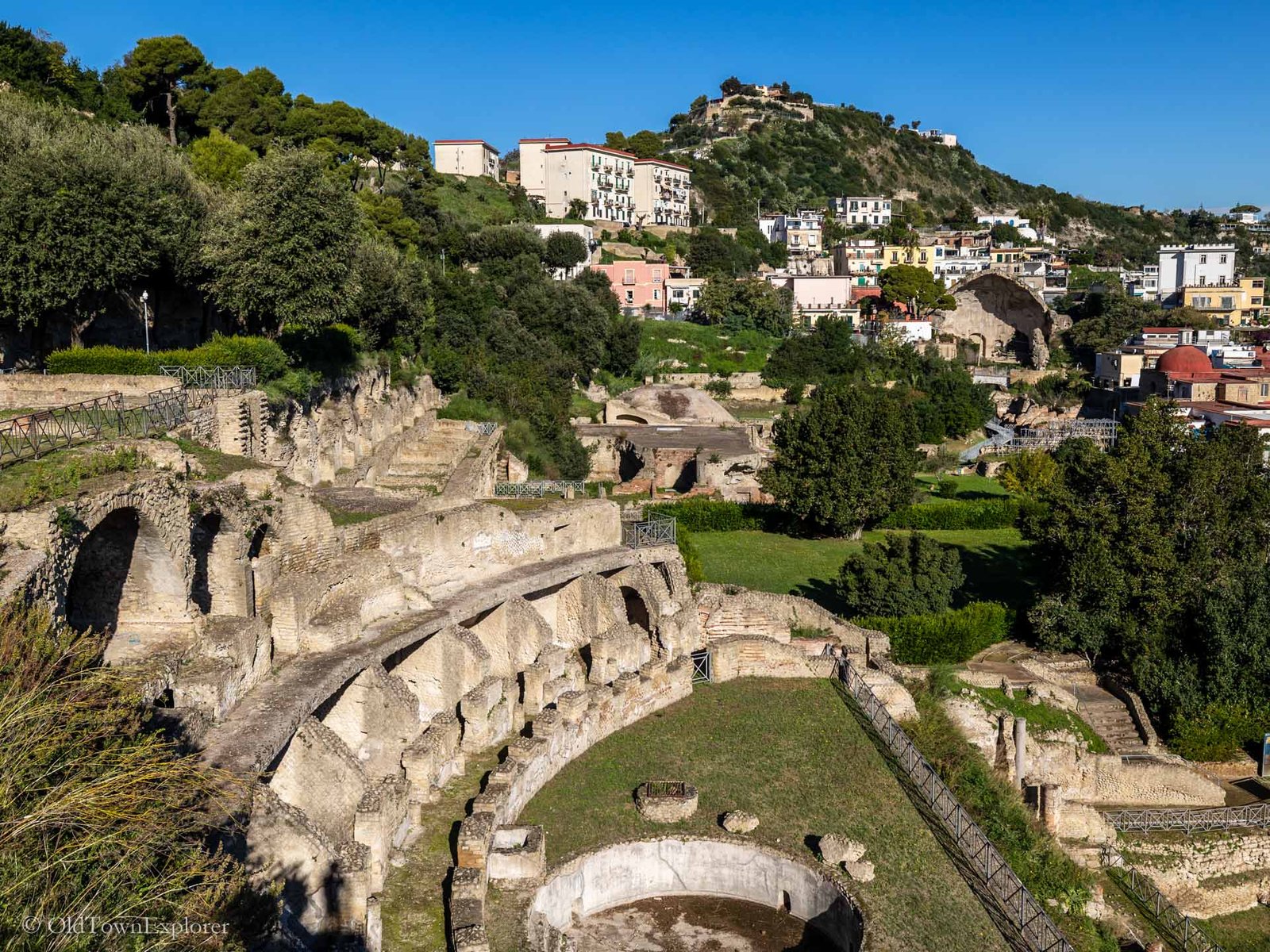
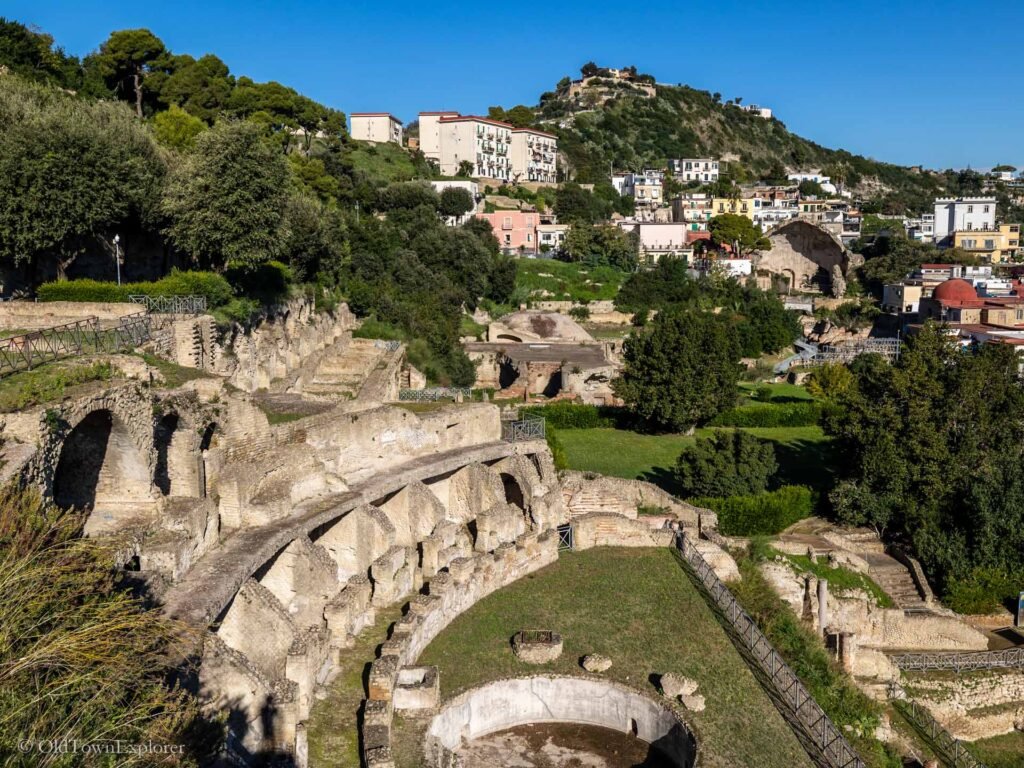
Baia’s baths and residences occupy successive terraces on a hillside. Stairs and ramps connect rooms at different elevations, with views opening toward the water. The slope is part of the architectural design and also shapes the visitor’s walk.
Domes and Large Bathing Halls
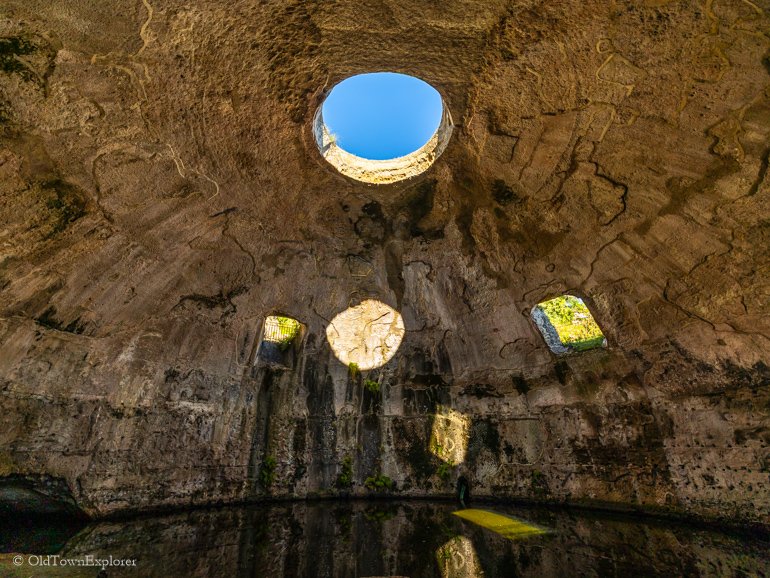
The circular halls at Baia show Roman experimentation with vaulted spaces. Several are traditionally called temples, although their architecture belongs to bathing complexes. The so-called Temple of Mercury within the park is a useful place to examine the relationship between a circular room and its dome.
Arena Seating and Underground Infrastructure
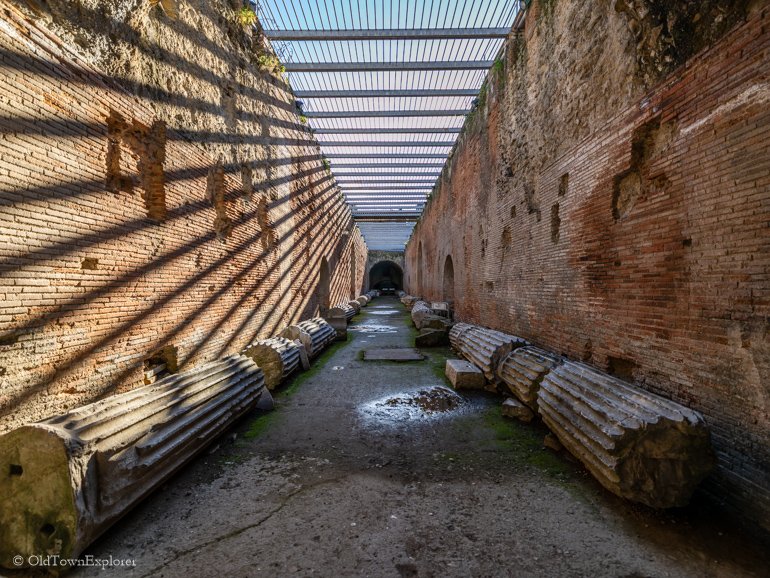
Pozzuoli’s amphitheatre combines an elliptical arena with tiered seating and circulation passages. Its underground structure supported the staging of spectacles. When lower areas are accessible, compare their working spaces with the public arena above.
Water Storage and Distribution
Piscina Mirabilis demonstrates the scale of Roman water infrastructure. Rows of piers support a vaulted reservoir whose interior resembles a large pillared hall. Its enclosed space provides a different architectural experience from the open ruins at Baia and Cuma.
Fortified Heights and Coastal Views
Cuma’s acropolis and Baia’s castle both use elevated positions, although they belong to different periods. Their walls, approaches, and outlooks help explain why these locations mattered. Allow extra walking time for the climbs that make those relationships apparent.
Architectural Attractions in Phlegraean Fields
Start with the four principal sites, then add nearby monuments according to the areas you choose. The additional domed halls, market, and reservoir offer different ways to extend the day.
Baia: Castle Museum, Terraced Baths, and Domed Halls
Museo Archeologico dei Campi Flegrei
- Architect: Unknown for the original castle; altered in later phases
- Style: Aragonese coastal fortress adapted as an archaeological museum
- Built: Castle begun in 1495, with subsequent alterations
- Address: Via Castello 39, Bacoli
The Museo Archeologico dei Campi Flegrei brings together finds from Cuma, Puteoli, Baiae, Misenum, and Liternum. Sculpture, inscriptions, and reconstructed architectural settings connect objects with the regional sites. The former military rooms and coastal outlook add interest beyond the collections. Check available galleries and entry arrangements before making the climb to the castle.
Parco Archeologico di Baia
- Architect: Unknown; multiple building campaigns
- Style: Roman thermal and residential architecture
- Built: Late Republican and imperial periods, with later alterations
- Address: Via Sella di Baia 22, Bacoli
The Parco Archeologico di Baia, officially the Parco Archeologico delle Terme di Baia, preserves a hillside of bathing and residential complexes. Terraces, stairways, pools, and vaulted rooms reveal how the buildings used the slope. Look for the domed hall traditionally called the Temple of Mercury within the park. This is the land-based excavation; the underwater park requires a separate visit.
Tempio di Diana
- Architect: Unknown
- Style: Roman domed hall, probably associated with thermal bathing
- Built: Roman imperial period
- Address: Piazzetta Alcide De Gasperi, Baia, Bacoli
The so-called Tempio di Diana preserves part of a large domed room. Its circular interior sits within an octagonal outer form, and the broken dome exposes its construction. The traditional name does not establish that the building was a temple to Diana. Plan an exterior view near the Baia cluster.
Tempio di Venere
- Architect: Unknown
- Style: Roman imperial bathing hall
- Built: Second century AD, probably during Hadrian’s reign
- Address: Via Lucullo, Baia, Bacoli
The Tempio di Venere stands between the modern coastal road and harbor. Its circular interior, octagonal exterior, and surviving dome structure show the ambition of Roman bath architecture. The name is traditional, while the remains are interpreted as part of a thermal complex. Interior access is by request, so include it as an exterior stop unless admission has been arranged.
Temple of Mercury
- Style: Ancient Roman thermal architecture
- Address: Parco Archeologico delle Terme di Baia, Via Sella di Baia, 80070 Bacoli, Italy
Despite its name, the Temple of Mercury was a domed thermal bathing hall rather than a temple. Its circular plan and surviving dome make it one of the most striking structures in the Baia archaeological park. Look at how the curved walls and vault enclose the bathing space, contrasting with the open terraces of the neighboring villas.

Villa dell’Ambulatio
- Style: Ancient Roman residential architecture
- Address: Parco Archeologico delle Terme di Baia, Via Sella di Baia, 80070 Bacoli, Italy
Villa dell’Ambulatio spreads across six terraces on the hillside overlooking Baia. Its name comes from the covered walking portico beneath the upper residential level, where bedrooms and living rooms surrounded a large central hall. Within the Baia archaeological park, look for the connections between terraces and the arrangement of rooms facing the bay.
Pozzuoli: Roman Entertainment and Commerce
Anfiteatro Flavio
- Architect: Unknown
- Style: Roman imperial amphitheatre
- Built: First century AD
- Address: Corso Nicola Terracciano 75, Pozzuoli
The Anfiteatro Flavio preserves the arena and circulation spaces of a major Roman entertainment building. Its underground passages are an important part of the structure, but access to them can vary. Examine the relationship between the arena, seating, and entrances along the available visitor route. Confirm which areas your visit includes before booking specifically for the underground spaces.
Macellum, or Tempio di Serapide
- Architect: Unknown
- Style: Roman public market with a porticoed courtyard
- Built: Roman imperial period, with subsequent alterations
- Address: Via Serapide 13, Pozzuoli
The Macellum was the food market of Roman Puteoli. Its familiar name, Temple of Serapis, arose from a statue found during excavation. The courtyard and tall surviving columns distinguish it from the amphitheatre, while traces left by marine organisms connect the site with changes in ground level. The interior is temporarily closed, so plan a view from the surrounding streets.
Cuma: Acropolis, Fortifications, and Temple Terraces
Parco Archeologico di Cuma
- Architect: Unknown; multiple Greek, Samnite, Roman, and later builders
- Style: Ancient acropolis with rock-cut galleries, fortifications, and temple remains
- Built: Settlement founded in the eighth century BC; surviving structures from multiple later periods
- Address: Via Monte di Cuma 1, Pozzuoli
The Parco Archeologico di Cuma combines the Antro della Sibilla with an uphill route past fortifications and temple terraces. The traditionally named Cave of the Sibyl is a rock-cut gallery whose archaeological interpretation differs from its literary reputation. Higher paths lead toward the Byzantine Tower and the terraces known as the temples of Apollo and Jupiter. The lower city opens only on special occasions, so base an ordinary visit on the acropolis.
Bacoli: An Optional Roman Waterworks Visit
Piscina Mirabilis
- Architect: Unknown
- Style: Roman vaulted water reservoir
- Built: Augustan period, with later additions
- Address: Via Piscina Mirabile 27, Bacoli
The Piscina Mirabilis stored water associated with the naval base at Misenum. Its rows of massive piers and high vaults create a striking underground interior. The reservoir belongs to the regional water supply system rather than Baia’s bathing complexes. Arrange a visit through the current booking service and allow time for the separate journey into Bacoli.
Walking Tour in Phlegraean Fields
The most practical rail-based sightseeing route combines local walks in Pozzuoli and Baia with a train between them. Cuma works better as an alternative cluster or a separate day, particularly when you want time for the full acropolis climb.
Starting Point and Time to Allow
Begin at the Anfiteatro Flavio in Pozzuoli, allowing for the approach from your arrival station. Plan a full day—roughly seven to nine hours including travel from Naples, lunch, and transfers—for the Pozzuoli and Baia combination. Shorten it to one area if you prefer longer museum visits or need to limit hills and steps.
Suggested Walking Route
The following sequence covers the amphitheatre and Baia’s two principal land sites, with optional exterior monuments. Use the Cumana between Pozzuoli and Baia, and consider a local bus or taxi for the castle approach if the longer walk does not suit you.
- Anfiteatro Flavio: Start with the available arena route and visit the underground areas if access is offered.
- Macellum: Walk toward the harbor for an exterior view of the Roman market, then return to the Cumana station for the journey to Baia.
- Tempio di Diana: After arriving in Baia, include an exterior look at the domed remains near Piazzetta Alcide De Gasperi.
- Parco Archeologico di Baia: Enter the hillside excavation and follow the open route through its terraces and bathing complexes.
- Tempio di Venere: Return toward the waterfront for an exterior view of the separate bathing hall on Via Lucullo.
- Museo Archeologico dei Campi Flegrei: Continue to the castle by your chosen local connection, leaving enough time for the museum before returning to the railway.
This sequence keeps the Pozzuoli walk together and groups the Baia monuments around the baths and castle. The two exterior domed monuments are optional; drop them first if transfers or museum visits take longer. Finish by returning to a suitable Cumana station for Naples, with the return connection checked before leaving the castle.
A Cuma Alternative
For a day centered on Cuma, arrange the onward journey first and visit the acropolis while you have energy for the climb. Follow the open path from the Antro della Sibilla toward the tower, viewpoints, and temple terraces, then descend to the entrance. Pair this with either Baia or Pozzuoli according to the transport connections you can confirm.
How to Get to Phlegraean Fields from Naples
Choose your arrival point according to the first archaeological area you intend to visit. The Phlegraean Fields have several railway stations, but there is no single stop serving all four principal sites.
By Train
The Cumana railway runs from Napoli Montesanto toward Torregaveta, serving Pozzuoli, Lucrino, Baia, and Fusaro. Check that your chosen train continues to the stop you need; some services terminate earlier. Baia station is useful for the land-based baths and waterfront monuments.
Pozzuoli’s Cumana station is on Via Nicola Fasano, so plan your walking approach from that location. Pozzuoli Solfatara, served by Trenitalia, is a different station; compare any alternative journey through the Trenitalia planner and check service notices before choosing it.
For Cuma, plan a railway journey followed by a local bus or taxi. EAV’s regular Circumflegrea timetable runs to Licola; do not assume a direct train to the archaeological park. Confirm the onward stop, final walk, and return connection before committing to the journey.
By Bus
EAV’s bus timetables include the Naples–Monte di Procida service and local routes around Bacoli, Baia, and Cuma. Local line 144 links Miseno, Cuma, and Baia, but its usefulness depends on the day’s departures and stops. Check both directions and any diversions, rather than planning around the route number alone.
By Car or Taxi
A car or prearranged transfer gives more control when combining Cuma with the coastal sites. Use each attraction’s entrance address and allow for separate parking and uphill approaches. Four substantial visits still make a long day, even when transfers are direct.
Train plus a local taxi can be a practical compromise for Cuma or the castle museum. Arrange the return pickup as well as the outward journey, and agree on the fare before setting off.
Getting Around Phlegraean Fields
Travel between clusters, then walk within them. The main planning challenge is fitting local connections around site visits and climbs.
Walking Within Pozzuoli and Baia
Pozzuoli’s amphitheatre and harbor monuments form an urban walk with changes in elevation. Baia’s baths occupy a stepped hillside, while the castle requires a separate approach. Save maps of the actual entrances and assess the roadside stretches before choosing to walk every connection.
Connecting Cuma and Bacoli
Cuma and Piscina Mirabilis extend the trip beyond the simplest railway stops. Use local buses where the timetable fits, or book a taxi for the missing connection. An arranged pickup is particularly useful when finishing at a site away from a railway station.
Steps and Accessible Routes
Cuma’s acropolis, Baia’s terraces, and underground monuments present different access constraints. Ask each site about the specific areas available if you need to avoid stairs or uneven ground. A railway arrival does not remove the need to assess the final approach and internal route.
Making the Most of Your Day Trip to Phlegraean Fields
For a first visit by train, Pozzuoli and Baia offer a varied day with fewer transfer decisions than a four-site circuit. Choose Cuma instead of one cluster when the Greek acropolis is your main priority.
Morning: Pozzuoli’s Roman Monuments
Start with the Anfiteatro Flavio, then walk toward the Macellum and harbor. This puts the principal Pozzuoli visit before lunch and leaves the afternoon for Baia. Check underground access in advance if it is your main reason for choosing the amphitheatre.
Midday: Transfer and Lunch
Take the Cumana toward Baia and leave room for lunch before the hillside visit. Keep the meal near your sightseeing route so that a restaurant detour does not consume the transfer buffer. A glass of local wine can fit lunch more easily than a separate winery appointment.
Afternoon: Baths and Castle Museum
Explore the terraced baths, then continue to the castle museum. Reverse their order if an entry reservation or hot weather makes an indoor visit more convenient earlier. Add Diana and Venere as short exterior stops only when time allows.
Late Afternoon: Return Connection
Leave the castle with enough time to reach your chosen railway station. Check the return train before adding another waterfront stop. If you want Cuma as well, an additional day gives its climb and archaeological remains more attention.
Tips for Visiting Phlegraean Fields
Good planning here means choosing compatible sites and checking the connections between them. These tips help keep the archaeological visits, walking, and journey back to Naples manageable.
Choose Two Areas for a First Day
Pozzuoli and Baia work well for a varied rail-based visit. If Cuma is essential, pair it with one other cluster and arrange the onward transport before departure.
Start Early for Outdoor Sites
Use the morning for the amphitheatre, Baia’s terraces, or Cuma’s climb. An early start leaves more flexibility for connections and the museum later.
Check Different Weekly Closing Days
The Baia museum and baths normally close on Monday, while Cuma and the amphitheatre normally close on Tuesday. Wednesday through Sunday generally offers the simplest overlap, subject to special openings and temporary restrictions.
Check Access Before Buying the Circuit Ticket
The CircuitoFlegreo ticket covers the four principal sites and is valid for three consecutive days. Check the current ticket and entry arrangements, including any unavailable galleries or underground areas, before choosing your visits.
Keep a Payment Card and Ticket Available
Tickets are available through Musei Italiani and card-payment machines at the principal sites. Buy ahead when possible and save the ticket on your phone so that an unreliable connection does not delay entry.
Wear Shoes for Steps and Ruins
Choose shoes with grip for the terraces at Baia and the uneven acropolis paths at Cuma. Wet stone and changes in level make these visits more demanding than a waterfront stroll.
Allow for Sun, Wind, and Seasonal Hours
Mild spring and autumn days suit the outdoor sites. Carry water and sun protection in summer, and check seasonal last-entry times before leaving an exposed climb until late afternoon.
Check Park and Transport Notices
Seismic activity and ground movement can lead to inspections, access changes, or transport disruption. Check the park and railway notices close to departure and follow any local restrictions.
Book Separate Experiences Separately
Piscina Mirabilis and the underwater park have their own visitor arrangements. A winery visit also needs a confirmed appointment and transport; substitute one of these experiences for a main archaeological stop when time is limited.
Protect the Return Buffer
Choose the return station and connection before extending the afternoon. Allow time for the castle descent or Cuma pickup, rather than using the final available entry slot as the end of the day.
FAQs About Phlegraean Fields, Italy
Are the Phlegraean Fields Worth Visiting as a Day Trip?
Yes, particularly for travelers interested in Greek and Roman archaeology. The contrast between Cuma’s hilltop, Baia’s baths, and Pozzuoli’s amphitheatre makes the area rewarding when you choose a realistic combination.
How Long Should I Spend in the Phlegraean Fields?
Plan a full day for two areas, including travel from Naples. Two days give more time for the four principal sites, especially when relying on public transport.
Can I Visit All Four Principal Sites in One Day?
It can be possible with an early start, direct transfers, and compatible opening arrangements, but it makes a demanding day. By train and local transport, selecting two or three principal visits is more forgiving.
Are the Phlegraean Fields Walkable?
Individual clusters are walkable, with hills and steps, but the full archaeological circuit needs transport. Plan local walks in Pozzuoli, Baia, and Cuma rather than one continuous walking loop.
Do I Need a Car?
No, especially for Pozzuoli and Baia. The Cumana provides the main coastal connection, while Cuma and Bacoli require additional planning by bus or taxi.
Are Baia’s Baths and Underwater Park the Same Site?
No. The land-based park preserves hillside baths and residences; the underwater park contains submerged remains visited through separately arranged experiences. The castle museum is another distinct attraction.
Can I Always Visit the Amphitheatre’s Underground Areas?
No. Access can vary, so confirm the available route before booking a visit specifically for the underground structure. The arena and other open areas provide a different experience when lower passages are unavailable.
How Do the Phlegraean Fields Compare with Pompeii?
Pompeii suits a day spent exploring one extensive excavated town. The Phlegraean Fields offer several separate sites with contrasting architecture and coastal settings, but require more transfer planning.
Can I Do Wine Tasting Without a Car?
A glass of local wine with lunch is the simplest option. For a winery tasting, confirm an appointment and a workable bus or taxi connection, and shorten the archaeological itinerary to make room for it.
When Is the Best Time to Visit?
Choose a mild, dry day with confirmed site access. Spring and autumn are comfortable for the outdoor remains; in summer, an early start and an indoor museum break help with the heat.
Use our Naples guide to plan your base and our Naples architecture guide for sightseeing within the city. The Naples food guide helps with meals before or after your archaeological day trip.
For broader context on the ancient structures and later fortifications, continue to our Italy architecture guide.
