
Albania Wine
Explore Albania Wine: Wine Regions & Grape Varieties
Albania wine is shaped by the Adriatic and Ionian coast, inland hills, lake areas, and mountain valleys. The main grapes to recognize are Kallmet, Shesh i Zi, Vlosh, Serinë, Pulës, Shesh i Bardhë, and Debinë, with styles ranging from dry whites and light-bodied reds to structured reds, rosé, and small-production sparkling wines.
Berat is the clearest starting point for Pulës, Shesh, central hills, and winery visits. Shkodër introduces Kallmet, northern Albania, and the Lake Shkodër area, while Vlora and Saranda connect Albanian wine with the southern coast.
We have spent extended time in Albania, including month-long stays in Berat, Saranda, Shkodër, and Vlora. Those stays shape the regional comparisons, grape notes, tasting-base decisions, and food-pairing notes for Albanian wine.
Albania Wine at a Glance
Albania wine is easiest to understand by matching grape names with geography. Coastal plains, central hills, eastern sub-mountainous areas, and highland vineyards produce different styles, and most first trips work better from city bases than from remote vineyard areas.
Key wine points:
- Best starting points: Berat for Pulës, Shesh, central hills, and winery visits; Shkodër for Kallmet and northern red wine; Vlora for Vlosh and southern wine-country access; Saranda for coastal wine bars and food pairings.
- Core wine identity: Native and regional grapes carry much of the interest, while altitude and coastal influence change the wine style quickly.
- Main wine regions: Coastal plains, central hills, eastern sub-mountainous areas, and smaller highland vineyards.
- Main grapes: Kallmet, Shesh i Zi, Vlosh, Serinë, Pulës, Shesh i Bardhë, and Debinë.
- Key wine styles: Dry whites, light-bodied reds, structured reds, rosé, oak-aged reds from selected producers, and small-production sparkling wines.
- Tasting notes: City wine bars are easier without a car, while rural winery visits usually require more advance planning.
For a first tasting sequence, start with Pulës or Shesh i Bardhë for white wine, then compare Kallmet, Shesh i Zi, and Vlosh for red wine.
Wine Regions in Albania
The Balkan Wines Albania overview groups Albanian wine around four main winegrowing areas based on altitude: coastal, central hilly, eastern sub-mountainous, and mountainous areas. That structure is practical for travelers because it explains why the same country produces coastal reds, central-hill whites, lake-area Kallmet, and higher-acid inland wines.
Coastal Plains Wine
The coastal plains include lowland vineyard areas around Durrës, Shkodër, Lezhë, Fier, Vlora, Kavajë, Lushnje, Delvinë, and nearby districts. Mild winters and maritime influence make this area better for accessible reds, dry whites, coastal food pairings, and warm-climate grapes than the cooler inland zones.
- Key grapes: Vlosh, Shesh i Zi, Shesh i Bardhë, Kallmet, and selected international grapes.
- Key styles: Coastal reds, dry whites, rosé, and wines suited to seafood or grilled meat.
- Tasting base: Vlora Wine is the strongest coastal link for Vlosh and southern Albanian wine, while Saranda Wine works better when wine is part of a seafood and southern-coast route.
Choose the coastal plains when wine is part of a broader Adriatic-Ionian route rather than the only reason for the trip.
Central Hilly Region Wine
The central hills include Berat, Elbasan, Krujë, Gramsh, Përmet, Librazhd, and nearby inland areas. This is one of the most useful wine regions for travelers because it combines old-town stays, native grapes, inland food, and easier winery access than the more remote highland areas.
- Key grapes: Pulës, Shesh i Bardhë, Shesh i Zi, Kallmet, and other local or regional cultivars.
- Key styles: Dry whites, medium-bodied reds, structured reds, and selected oak-aged wines.
- Tasting base: Berat Wine is the clearest next step for Pulës, Shesh, winery visits, and central-hill tasting.
Choose the central hills when wine should sit alongside old-town architecture, inland food, and a slower base.
Eastern Sub-Mountainous Wine
The eastern sub-mountainous areas include Korçë, Pogradec, Leskovik, Peshkopi, and nearby valleys. Cooler nights and higher elevations favor wines with firmer acidity, including dry whites, structured reds, and grapes that hold freshness better than they would on the coast.
- Key grapes: Debinë, Serinë, Shesh, and other local or regional grapes.
- Key styles: Higher-acid whites, firmer reds, and wines shaped by elevation rather than coastal warmth.
- Tasting base: These areas are better for planned wine routes than for casual drop-in tasting on a first trip.
Choose this region when the route extends into eastern or southeastern Albania and wine is part of a broader inland itinerary.
Highland Wine Areas
Highland vineyards are smaller, less standardized for visitors, and more dependent on producer access. They help explain Albania’s range, but they require more planning than Berat, Shkodër, Vlora, or Saranda.
- Key grapes: Local cultivars and site-specific plantings that vary by producer.
- Key styles: Lower-yield reds, firmer whites, and small-production wines from higher-elevation sites.
- Tasting base: Remote vineyard areas are best added after the main city and coastal wine bases are already clear.
Most first Albania wine trips should start with Berat, Shkodër, Vlora, or Saranda before adding remote vineyard areas.
Grape Varieties in Albania
Albania grows native, regional, and international grapes, but the most useful first step is learning the local names that appear on labels, wine lists, and producer tastings. A 2021 Wine Sector Study Report lists Sheshi i Zi, Sheshi i Bardhë, Vlosh, Kallmet, Cerruja, and Pulsi among commonly used domestic wine cultivars.
White Grapes
White grapes are the easiest entry point for travelers starting in Berat, central Albania, or seafood-focused coastal routes.
- Pulës: A white grape strongly associated with Berat and central Albania. It usually makes dry white wine with floral notes, firm acidity, and a clean finish.
- Shesh i Bardhë: A central and western Albanian white grape used for dry, medium-bodied whites with citrus, yellow fruit, and a softer profile than Debinë.
- Debinë: A higher-acid grape associated with inland areas such as Përmet and other eastern or southern valleys. It is useful for dry whites and sparkling-wine experiments.
For a first white-wine tasting, compare Pulës from Berat with Shesh i Bardhë from central Albania, then add Debinë when the route reaches eastern or southern inland areas.
Red Grapes
Albania’s red grapes are useful for understanding northern wine, central-hill reds, and the southern coast.
- Kallmet: A red grape closely associated with northern Albania and the Lake Shkodër area. It usually makes dry red wines with bright acidity, moderate tannin, red fruit, and enough structure for oak aging in selected bottles.
- Shesh i Zi: One of Albania’s main red grapes in central and western areas. It often produces darker, fuller reds than Kallmet, with firmer tannins and black-fruit notes.
- Vlosh: A red grape tied to the Vlora and Narta Lagoon area. It can make medium-bodied reds with savory notes, red fruit, and herbal edges, especially when tasted near the southern coast.
- Serinë: A red grape associated with eastern Albania, especially around Korçë County. It is usually poured as a firmer red with peppery spice, darker fruit, and more grip than the easiest coastal styles.
For a first red-wine tasting, start with Kallmet in Shkodër, then compare Shesh i Zi from central or western Albania with Vlosh around Vlora.
International and Other Important Grapes
International varieties appear in Albania, but they are not the best first lens for understanding the country’s wine identity.
- Merlot and Cabernet Sauvignon: Common international red grapes used by some Albanian producers for varietal wines or blends.
- Chardonnay and Riesling: International white grapes that appear in some plantings and producer ranges.
- Vranac and other regional grapes: Useful to recognize, especially when bottles connect Albania with wider Balkan wine patterns.
International grapes can be useful for comparison, but native and regional grapes give the clearest first route into Albanian wine.
Wine Styles in Albania
Albania wine styles are easier to understand by drinking decision than by a single national style. Start with dry whites and reds from native grapes, then add rosé, oak-aged reds, sparkling wines, and international-variety blends where they appear.
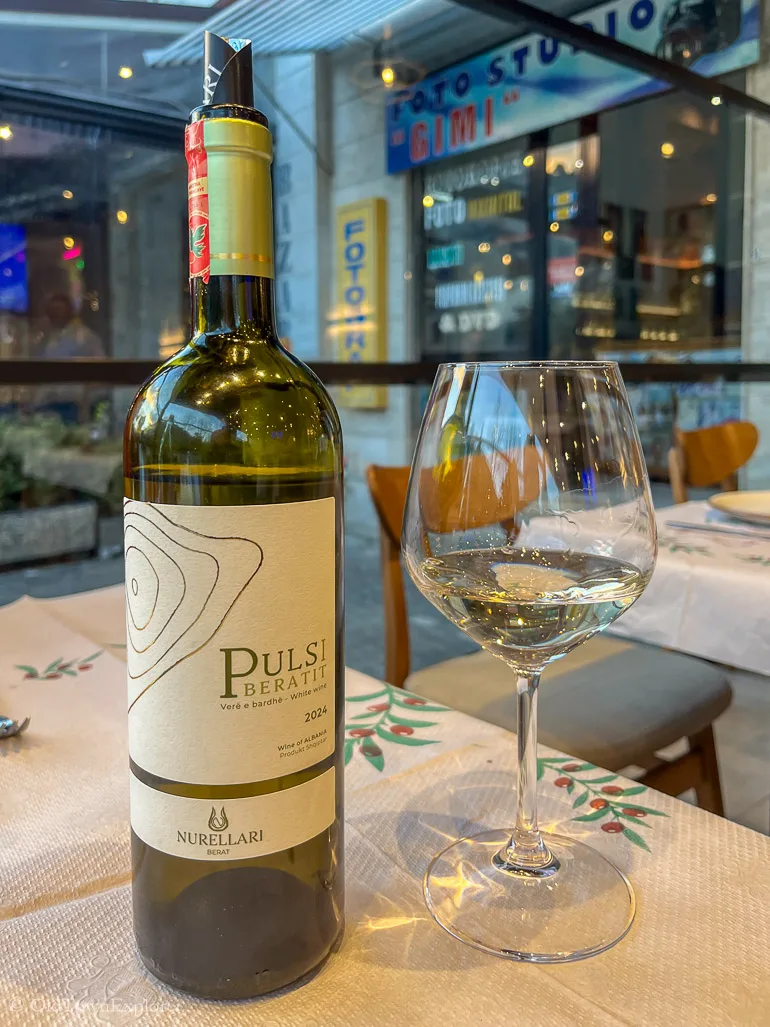
Dry White Wines
Dry whites are the simplest first step for visitors who want Albanian wine with food, especially around Berat, central Albania, and the coast.
- Pulës whites: Usually dry, floral, and fresh, with enough acidity for grilled fish, byrek, fresh cheese, and vegetable dishes.
- Shesh i Bardhë whites: Often dry and medium-bodied, with citrus or yellow-fruit notes and a softer profile than higher-acid inland whites.
- Debinë whites: Higher-acid whites connected with inland and eastern areas, useful when the route moves away from the coast and central hills.
Dry whites are the best first choice when Albanian wine is paired with fish, seafood, cheese, pies, salads, or vegetable dishes.
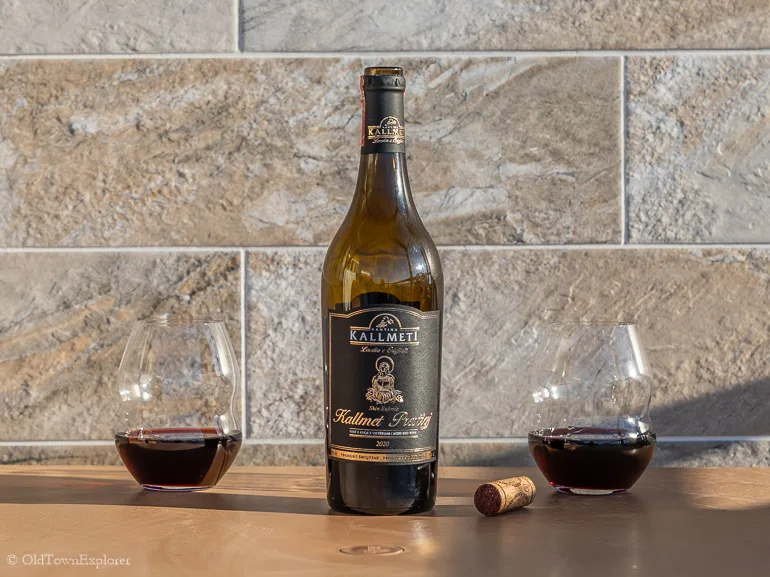
Red Wines
Albania’s reds range from lighter, higher-acid wines to fuller, more structured bottles from native and regional grapes.
- Kallmet reds: Usually dry, fresh, and moderately tannic, with enough structure for grilled meat, lamb, and aged cheese.
- Shesh i Zi reds: Often fuller and darker than Kallmet, with firmer tannins that work with grilled meats, qofte, tavë dishes, and roasted peppers.
- Vlosh reds: Coastal or southern reds with savory, herbal, and red-fruit notes, especially relevant around Vlora.
- Serinë reds: Firmer eastern reds with darker fruit, spice, and more grip.
For red wine, compare Kallmet from the north with Shesh i Zi from central or western Albania and Vlosh from the southern coast.
Rosé, Sparkling, and Specialty Wines
Rosé, sparkling wine, and specialty bottles exist in Albania, but they are secondary to dry whites and reds for most first tastings.
- Rosé: Usually easiest to place in warm-weather coastal routes and producer-specific tastings.
- Sparkling wine: Made by selected producers rather than defining the whole national wine identity.
- Oak-aged reds: Most relevant when producers use Kallmet, Shesh i Zi, Vlosh, or international grapes for more structured bottles.
- Skin-contact or experimental wines: Worth noticing when producer lists include them, but not necessary for a first Albania wine route.
These styles are best treated as producer-specific additions after tasting the main dry white and red grapes.
Everyday and Restaurant Wines
Restaurant wine lists in Berat, Shkodër, Saranda, and Vlora are often the easiest way to start tasting Albanian wine without arranging a winery visit.
- House and table wines: Useful for casual meals, especially when the goal is pairing rather than formal tasting.
- Native-grape bottles: The best next step after house wine, especially Pulës, Kallmet, Shesh i Zi, Shesh i Bardhë, and Vlosh.
- International-variety bottles: Useful for comparison but less distinctive than local grapes on a first trip.
The practical first sequence is dry white with fish or vegetables, native red with grilled meat or lamb, then producer-specific sparkling, rosé, or oak-aged wines when available.
How to Choose and Taste Albania Wine
Choosing Albania wine is usually less about protected appellation names and more about grape, producer, region, and where the bottle is poured. A strong first tasting compares Pulës or Shesh i Bardhë with Kallmet, Shesh i Zi, or Vlosh, then matches the bottle with local fish, byrek, lamb, grilled meat, or tavë dishes.
Wine Labels, Classifications, and Appellations in Albania
Albania wine labels are most practical for visitors when read by grape, producer, and region. A 2021 Wine Sector Study Report prepared for IPARD III planning reported that no Albanian winery had applied for Protected Designation of Origin or Protected Geographical Indication quality schemes at that time.
For casual tasting, start with the grape name and place: Kallmet for northern Albania, Pulës for Berat, Vlosh for Vlora, Shesh for central and western areas, and Debinë or Serinë for inland or eastern contexts.
Wine Tasting in Albania
Wine tasting in Albania is easiest from city bases rather than remote vineyard areas. Berat Wine is the strongest base for a wine-focused stay, Shkodër Wine is the best starting point for Kallmet, Vlora Wine connects the southern coast with Vlosh, and Saranda Wine is strongest when wine is part of coastal dining.
Plan rural winery visits with more care than city wine bars. Many producers are outside old-town cores, public transport can be limited, and reservations are safer than assuming a cellar door is open for casual tasting.
Food Pairings with Albania Wine
Albania wine is easiest to match with local food. Pulës and Shesh i Bardhë fit grilled fish, byrek, fresh cheese, and vegetable dishes, while Kallmet, Shesh i Zi, Vlosh, and Serinë fit grilled meat, lamb, tavë dishes, and roasted peppers.
Our Albania Food page gives more detail on the dishes, products, and regional food traditions behind these pairings.
FAQs About Albania Wine
What wine is Albania known for?
Albania is known for native and regional grapes such as Kallmet, Shesh i Zi, Vlosh, Serinë, Pulës, Shesh i Bardhë, and Debinë. Kallmet and Pulës are especially strong starting points because they connect clearly to northern Albania and Berat.
What are the main Albania wine regions?
The main Albania wine regions for travelers are coastal plains, central hills, eastern sub-mountainous areas, and highland vineyards. Berat and the central hills are the clearest first wine base, Shkodër is strongest for Kallmet, and Vlora and Saranda connect wine with the southern coast.
What Albanian red wine should I try first?
Try Kallmet first if you want a northern red with freshness, moderate tannin, and food flexibility. Then compare Shesh i Zi for a fuller central or western red and Vlosh for a southern coastal red tied to the Vlora area.
What Albanian white wine should I try first?
Try Pulës first if the route includes Berat, then compare it with Shesh i Bardhë from central or western Albania. Debinë is the next useful white grape when the route moves toward eastern or southern inland areas.
What wine styles is Albania known for?
Albania is strongest for dry whites, light-bodied to structured reds, and native-grape bottles from local or regional cultivars. Rosé, sparkling wine, oak-aged reds, and international-variety blends appear, but they are usually producer-specific additions rather than the main first tasting route.
How do I read an Albanian wine label?
Read Albanian wine labels first by grape, producer, and region. Grape names such as Kallmet, Pulës, Shesh i Zi, Shesh i Bardhë, Vlosh, Serinë, and Debinë are more useful for visitors than expecting a dense protected-appellation system.
Where should I taste wine in Albania without a car?
Without a car, start with city wine bars and restaurants in Berat, Shkodër, Saranda, or Vlora. Rural wineries are easier with a car, driver, or arranged visit because many producers sit outside the easiest walking areas.
Do I need reservations for winery visits in Albania?
Reservations are safer for winery visits in Albania, especially outside the main city bases. City wine bars and restaurants are easier for casual tasting, while producer visits need more planning around location, timing, and transport.
What food pairs with Albania wine?
Dry whites such as Pulës and Shesh i Bardhë pair well with fish, byrek, fresh cheese, and vegetables. Reds such as Kallmet, Shesh i Zi, Vlosh, and Serinë fit grilled meat, lamb, tavë dishes, and roasted peppers.
For city-level tasting, compare Berat Wine, Shkodër Wine, Saranda Wine, and Vlora Wine. For food pairings, continue to Albania Food.