
Vlora Architecture
Explore Vlora Architecture: Mosques, Monuments & More
Vlora architecture reflects a coastal city shaped by ancient Aulona, Ottoman rule, Albanian independence, socialist-era monuments, and recent waterfront redevelopment. The historic core is small, but the city has enough buildings, streets, monuments, ruins, and viewpoints to reward a focused architecture walk.
The main architectural layers are around Justin Godard Street, Muradie Mosque, Flag Square, the waterfront promenade, Kuzum Baba, and Kanina Castle above the city. Vlora is not a dense old-town destination like Berat or Gjirokastra; its architecture is more dispersed and tied to civic memory, religious buildings, and the bay.
We spent a month in Vlora looking at historic streets, religious buildings, monuments, waterfront design, and nearby ruins. The main decisions are where to start, which buildings to prioritize, what to view from outside, and whether to add Kanina Castle or Kuzum Baba for wider city views.
This page contains affiliate links. We may earn a small commission at no extra cost to you.
Vlora Architecture at a Glance
Vlora architecture is easiest to understand as a sequence of small but distinct layers: restored historic-center streets, Ottoman religious buildings, independence monuments, modern waterfront design, and hilltop ruins.
Key architecture points:
- Core identity: Vlora combines a compact historic center with civic monuments, Ottoman-era religious architecture, socialist-era public sculpture, and a long contemporary waterfront.
- First buildings to notice: Start with Muradie Mosque, Justin Godard Street, the Ethnographic Museum / Club Labëria building, and the Independence Monument around Flag Square.
- Strongest starting area: The historic center around Justin Godard Street and Muradie Mosque is the best first architecture area because several key sites sit close together.
- Key features: Look for restored façades, mosque domes and minarets, Ottoman residential forms, civic monumentality, promenade materials, and hilltop defensive remains.
- Main trade-off: Vlora’s architecture is not concentrated in one large old town, so the best visit combines a short historic-center walk with separate stops at the promenade, Kuzum Baba, or Kanina Castle.
Choose Vlora for architecture if you want a coastal city with visible historic layers rather than a single preserved old-town circuit.
What to See in Vlora
Vlora’s architecture is organized around a few compact areas rather than one continuous historic district. The easiest first cluster is the historic center around Justin Godard Street, Muradie Mosque, the Ethnographic Museum building, and Flag Square.
After that, the architecture spreads outward. The promenade explains the modern waterfront city, Kuzum Baba gives a hilltop religious and viewpoint layer, and Kanina Castle adds the defensive landscape above the bay.
Historic Center, Religious Buildings, and Civic Memory
The historic center gives Vlora its most walkable architecture cluster. Muradie Mosque, Justin Godard Street, the Ethnographic Museum / Club Labëria building, the House of Eqerem Bey, and the Independence Monument show how religious, residential, and civic history sit close together near the city core.
Waterfront, Viewpoints, and Fortifications
The waterfront and hill sites explain a different side of Vlora. The Lungomare is a contemporary public-space project along the bay, while Kuzum Baba and Kanina Castle show how religion, landscape, and defense shape views back over the city.
The main architecture groups are:
- Historic center streets and houses: Justin Godard Street, Club Labëria, and the House of Eqerem Bey show the city’s restored street fabric and older residential forms.
- Religious buildings: Muradie Mosque, Neshat Pasha Mosque, the Catholic church, and Bektashi sites show Vlora’s religious architecture across several traditions.
- Civic monuments and public spaces: The Independence Monument and waterfront promenade explain the city’s national memory and modern coastal planning.
- Ruins and fortifications: Aulona’s wall remains and Kanina Castle connect central Vlora with older settlement and hilltop defense.
With those patterns in mind, start in the historic center if time is short, add the promenade for modern urban design, and save Kanina Castle or Kuzum Baba for a longer architecture-focused day.
Historic Center Streets and Houses in Vlora
The historic center is the most practical place to start reading Vlora’s architecture. These streets and houses show the city’s restored façades, older urban fabric, and civic buildings tied to the independence period.
Justin Godar Museum Street
- Architect: Not applicable
- Style: Historic urban ensemble; Ottoman, Balkan, and early 20th-century façades
- Built: Mainly 19th and early 20th centuries
- Address: Rruga Justin Godar, Vlorë, Albania
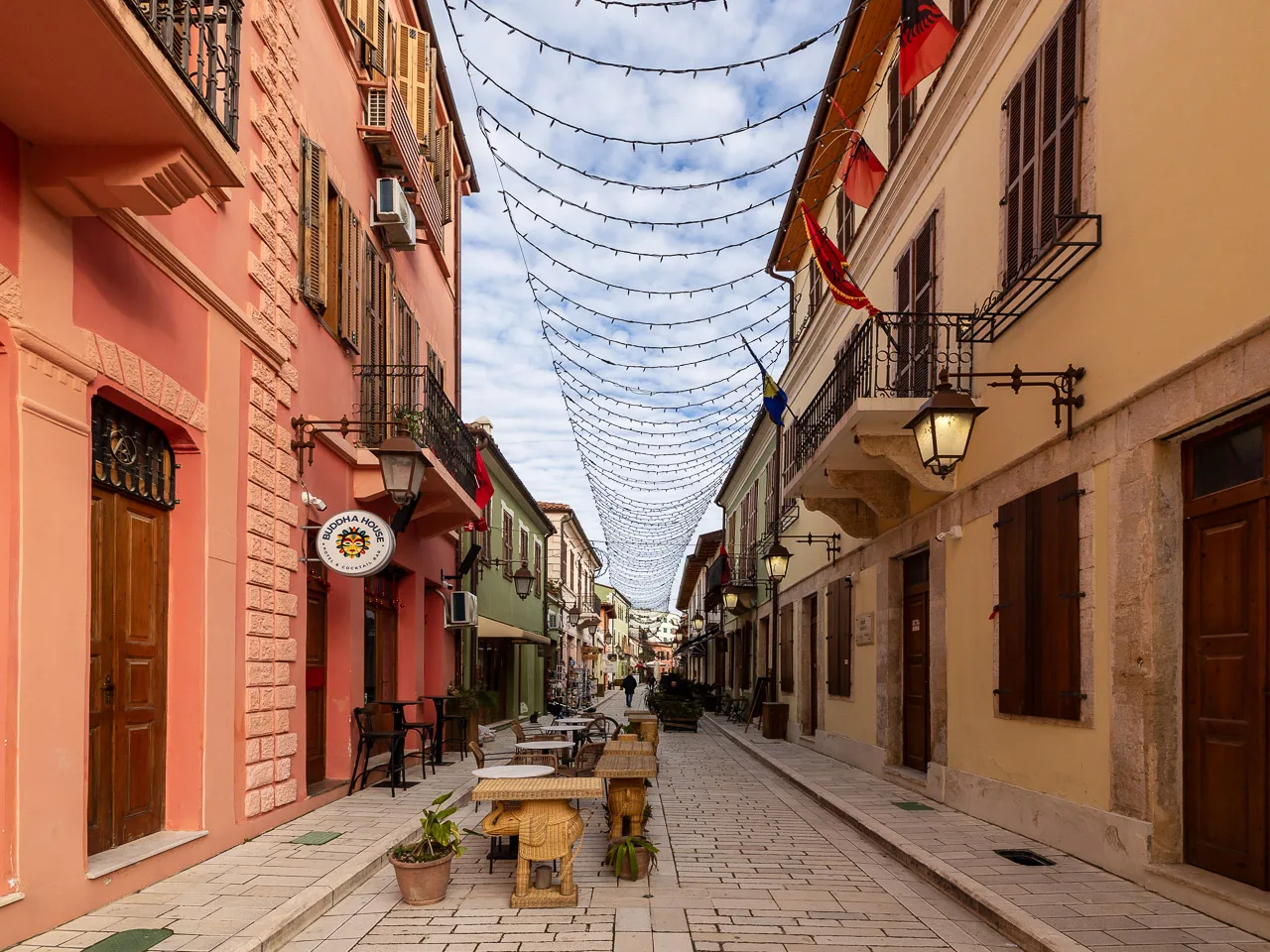
Justin Godar Street is one of the clearest places to see Vlora’s restored historic-center fabric. Atelier4’s historic-center project identifies Justin Godard Street and Jewish Street as streets of high cultural and architectural importance inside the old city-center restoration area.
Look for the scale of the street, façade colors, balconies, window rhythm, and how small buildings sit around the Muradie Mosque area. This is a better architecture starting point than the newer waterfront if you want to understand Vlora’s older street pattern first.
Patriotic Club Labëria
- Architect: Unknown
- Style: Mid-19th-century urban house; Ottoman and Balkan influence
- Built: Mid-19th century
- Address: FFCR+VMW, Rruga Justin Godar, Vlorë, Albania
Patriotic Club Labëria, now associated with the Ethnographic Museum, sits on Justin Godard Street in a mid-19th-century building. Discover Vlora identifies the building as a cultural monument and notes that the patriotic club “Labëria” was formed here in 1908.
The building belongs on an architecture walk because it shows the scale and materials of older Vlora houses, not only the museum function inside. Its position near Justin Godard Street makes it part of the historic-center cluster rather than a standalone museum stop.
House of Eqerem Bey
- Architect: Unknown
- Style: Ottoman residential architecture
- Built: Late 19th century
- Address: FF9R+X93, Bulevardi Ismail Qemali, Vlorë, Albania
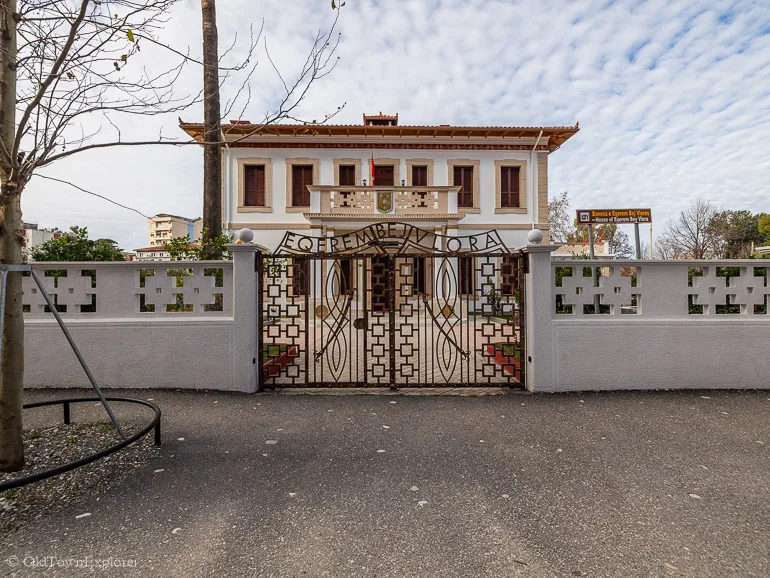
The House of Eqerem Bey Vlora is a surviving residence associated with the Vlora family near the city center. Its architecture helps show the residential layer behind the city’s independence-era public monuments.
Look for the two-story massing, the relationship between solid lower walls and lighter upper residential space, and the way the house sits close to civic landmarks. Even when viewed from outside, it adds a domestic counterpoint to the monuments and public squares nearby.
Religious Buildings in Vlora
Religious architecture is one of the strongest building categories in Vlora. The city’s mosques, Catholic church, and Bektashi sites show different scales of worship architecture, from compact Ottoman forms to hilltop spiritual sites.
Muradie Mosque
- Architect: Architect Sinani
- Style: Ottoman mosque
- Built: 1542
- Address: FF9R+J9M, Rruga Justin Godar, Vlorë, Albania
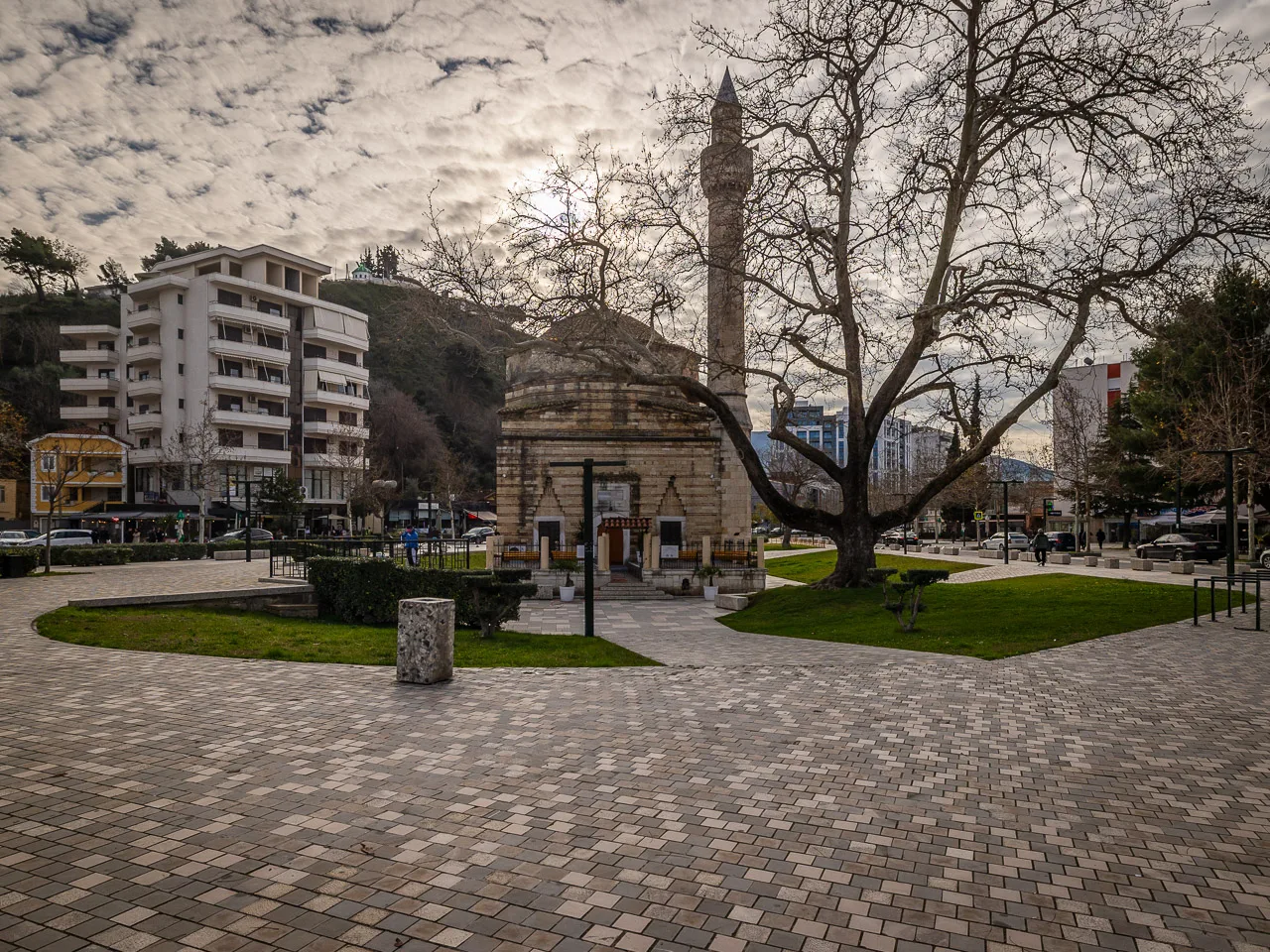
Muradie Mosque is Vlora’s main Ottoman religious landmark. Albania’s official tourism site dates the mosque to 1542 and attributes it to Architect Sinani, the royal Ottoman architect better known internationally as Mimar Sinan.
The mosque is compact, with a simple domed form and a minaret that gives the historic center its clearest religious marker. Look at how the mosque sits beside the restored street fabric rather than treating it only as a single isolated monument.
Xhamia e Neshat Pashait
- Architect: Unknown
- Style: Ottoman mosque
- Built: not confirmed
- Address: FFCV+J4P, Vlorë, Albania
Xhamia e Neshat Pashait, also known as Xhamia e Kuqe, adds a second mosque layer to Vlora’s religious architecture. The building is a supporting stop rather than the city’s main mosque landmark, but its exterior color, minaret, and placement near the central area make it worth noticing.
Keep the visit exterior-focused unless current access is confirmed. The architectural value is in seeing how another mosque sits within Vlora’s urban fabric beyond the better-known Muradie Mosque.
Church of St. Aloysius Gonzaga and St. Mary
- Architect: Unknown
- Style: Catholic church; neoclassical influence
- Built: early 20th century
- Address: Lagjja “28 Nëntori”, 13 Rruga “Kristoforidhi”, Vlorë 9400, Albania
The Church of St. Aloysius Gonzaga and St. Mary is Vlora’s central Catholic church. Its façade, pale exterior, and simple church form contrast with the mosque architecture and civic monuments nearby.
Look at the building as part of Vlora’s religious mix rather than as a large cathedral-style landmark. It works best as a short exterior stop on a broader central architecture walk.
Tempulli Bektashian
- Architect: Unknown
- Style: Bektashi tekke
- Built: around 1600
- Address: FF8V+VVV, Vlorë, Albania
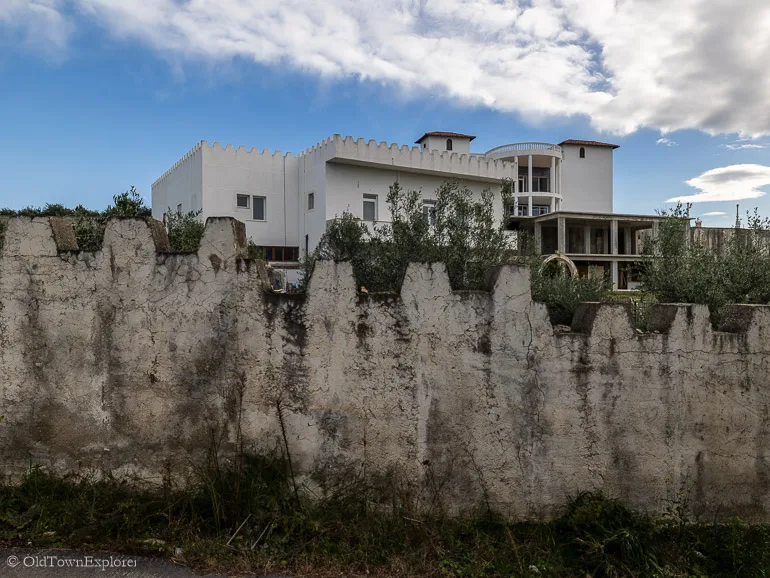
Tempulli Bektashian sits on the Kuzum Baba hilltop area and represents Vlora’s Bektashi religious architecture. Visit Albania describes the hill as a Bektashi religious center and says a Bektashi temple was built there around 1600.
The architecture is tied to the hill as much as to the building itself. The site connects spiritual use, terrace-like topography, and views over the bay, so treat it as a religious-viewpoint stop rather than a dense building complex.
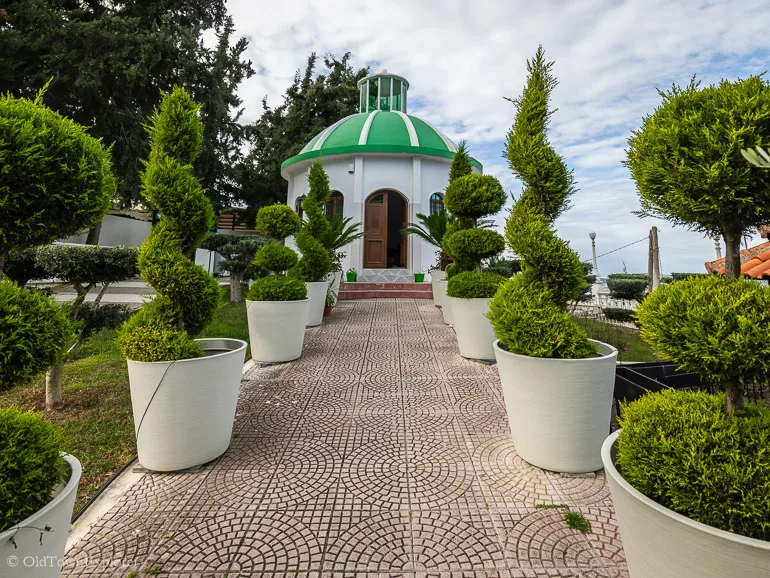
Kuzum Baba
- Architect: Not applicable
- Style: Bektashi hilltop shrine and viewpoint
- Built: not confirmed
- Address: FF9V+574, Vlorë, Albania
Kuzum Baba is a hilltop religious and landscape site above Vlora. Visit Albania identifies it as a natural terrace connected with Sejjid Ali Sulltan, known as Father Kuzum, and with the Bektashi community.
The architectural value comes from the relationship between shrine, hill, city, and bay. It is one of the clearest places to understand how Vlora’s religious sites and viewpoints work together.
Ruins and Fortifications Near Vlora
Vlora’s ruins and fortifications are more dispersed than the historic-center buildings. They add the older defensive and archaeological layer that is harder to read from the city streets alone.
Ruins of the old city of Aulona (Vlora)
- Architect: Unknown
- Style: Late antique and Byzantine wall remains
- Built: 5th–6th centuries
- Address: FFCR+45W, near Flag Square, Vlorë, Albania
The ruins of old Aulona sit near Flag Square and add an archaeological layer to central Vlora. The remains are modest, but they help connect the civic square and independence monuments with the city’s much older settlement history.
Do not expect a large archaeological park. The value is in recognizing that Vlora’s historic center overlays earlier urban remains, with visible wall fragments close to the modern civic core.
Kanina Castle
- Architect: Unknown
- Style: Hilltop fortification
- Built: origins in the Illyrian period; rebuilt in Roman, Byzantine, medieval, and Ottoman phases
- Address: Kaninë, Albania
Kanina Castle sits on a hill south of Vlora with wide views over the Bay of Vlora and the Adriatic Sea. Albania’s official tourism site describes it as a cultural heritage monument with Illyrian origins and later Roman, Byzantine, and Ottoman rebuilding phases.
Kanina Castle changes the architecture visit because it moves the focus from streets and monuments to landscape defense. Add it when you want to understand Vlora from above and see how the bay, hills, and fortified sites relate to the city below.
Other Attractions in Vlora
These sites are not traditional buildings in the same way as houses or mosques, but they shape how the city presents independence, public space, and the bay.
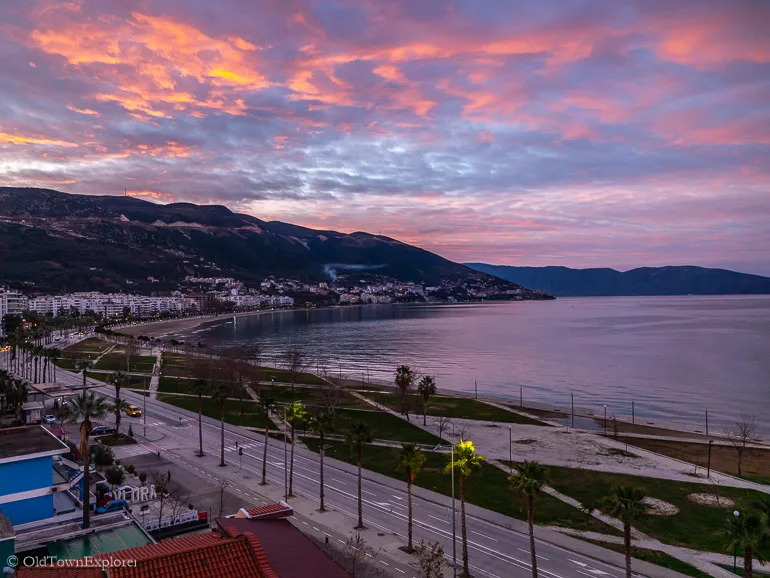
Vlora Waterfront Promenade (Lungomare)
- Architect: Xaveer De Geyter Architects
- Style: Contemporary waterfront urban design
- Built: 2017
- Address: Vlora waterfront, Vlorë, Albania
Vlora Waterfront Promenade, often called the Lungomare, is a contemporary public-space project along the bay. EUmies identifies it as a 2017 urban-planning project by Xaveer De Geyter Architects and describes a continuous public footpath of about 3.8 km.
The promenade explains modern Vlora better than the historic center does. Look for the long coastal line, public plazas, sports areas, planted edges, paving, and the way the design reconnects the city with the water.
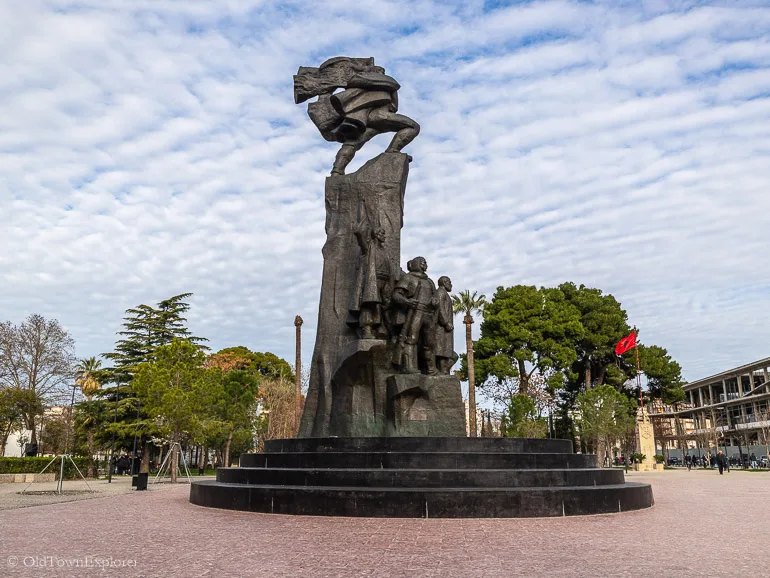
Independence Monument
- Artists: Kristaq Rama, Muntaz Dhrami, and Shaban Hadëri
- Style: Socialist-era public monument
- Built: 1972
- Address: Sheshi i Flamurit, Vlorë 9401, Albania
The Independence Monument stands in Flag Square and is dedicated to Albania’s Declaration of Independence. The monument belongs in an architecture walk because its scale, bronze figures, vertical composition, and public-square setting show Vlora’s national civic identity in built form.
Look at the monument with the square around it, not only as a sculptural object. Its placement near older walls, civic buildings, and the historic center makes Flag Square one of the city’s main architecture-orientation points.
Things to Know Before You Go
Start in the Historic Center
The best first architecture area is around Justin Godard Street, Muradie Mosque, the Ethnographic Museum building, and Flag Square. This cluster gives you the most architecture in the shortest walking distance.
Expect a Small Old Town
Vlora does not have a large continuous old town. The architecture is more fragmented, so the visit works better when you combine a compact historic-center walk with separate stops at the waterfront, Kuzum Baba, or Kanina Castle.
Wear Shoes for Uneven Surfaces
Central streets are manageable, but older surfaces, restored paving, hill approaches, and castle terrain can be uneven. Comfortable walking shoes matter more than formal hiking gear.
Plan Exterior Viewing First
Many architecture stops in Vlora can be understood from outside. Religious interiors, museums, and site access can vary, so treat exterior viewing as the baseline and check current details only when an interior visit is important.
Use Morning or Late Afternoon Light
Morning and late afternoon light work better for façades, the mosque area, Flag Square, and waterfront views. Midday sun can make the promenade and hilltop stops feel exposed, especially outside winter.
Add Kuzum Baba for Orientation
Kuzum Baba gives a quick sense of how the city, bay, waterfront, and hills fit together. It is especially useful after seeing the historic center because the view turns scattered architecture stops into a clearer city layout.
Save Kanina Castle for a Longer Visit
Kanina Castle is outside the central walking cluster, so it should not be forced into a short architecture walk. Add it when you have time for a separate hilltop stop and want to connect Vlora’s architecture with defensive geography.
Two Hours Covers the Core
With two hours, focus on Justin Godard Street, Muradie Mosque, the Ethnographic Museum / Club Labëria building, Flag Square, and the Independence Monument. This is the strongest short architecture plan because it keeps the route compact.
A Half Day Adds the Waterfront
With a half day, add the Lungomare after the historic center. The contrast between restored old streets and contemporary waterfront design explains more of modern Vlora than either area alone.
A Full Day Adds the Hill Sites
With a full day, combine the historic center, promenade, Kuzum Baba, and Kanina Castle. This gives you the city’s main architecture layers: old streets, religious buildings, civic monuments, waterfront design, and hilltop fortification.
Where to Stay for Architecture Walks
For architecture walks, stay where the historic center, promenade, and central services are easy to reach. Vlora’s architecture is spread out, so the best base depends on whether you want short central walks, waterfront access, or easier road access for Kanina Castle.
- Historic center and Flag Square area: Best for Muradie Mosque, Justin Godard Street, the Ethnographic Museum building, the Independence Monument, and older civic streets.
- Promenade and Boulevard Ismail Qemali: Best for waterfront walks, restaurants, cafés, and contemporary urban design, with easier evening routines.
- Central side streets: Useful if you want to balance the historic center and promenade without staying directly on the waterfront.
- Outer areas or beach zones: Better for views, parking, or beach access, but less convenient for repeated architecture walks in the historic core.
Choose the historic center or Flag Square area if architecture is the main priority. Choose the promenade when you want easier evening walks, waterfront access, and restaurants after sightseeing.
Hotels and Apartments in Vlora
Use the interactive map below to compare hotels and apartments near Vlora’s historic center, Flag Square, the promenade, Boulevard Ismail Qemali, and other practical areas for architecture-focused stays.
FAQs About Vlora Architecture
What architecture is Vlora known for?
Vlora is known for a small but varied mix of Ottoman religious buildings, restored historic-center streets, independence monuments, waterfront public space, and nearby hilltop fortifications. Muradie Mosque, Justin Godard Street, Flag Square, the Lungomare, Kuzum Baba, and Kanina Castle are the main architecture anchors.
Is Vlora architecture easy to see with limited time?
Yes, the core architecture is easy to see if you focus on the historic center. Start with Justin Godard Street, Muradie Mosque, the Ethnographic Museum / Club Labëria building, Flag Square, and the Independence Monument.
Which buildings should I see first in Vlora?
See Muradie Mosque first, then walk Justin Godard Street and the nearby historic-center façades. After that, add the Ethnographic Museum / Club Labëria building and the Independence Monument in Flag Square.
Are the key sites inside Vlora Old Town?
Some key sites are in or near the historic center, but not all of them. Muradie Mosque, Justin Godard Street, and Flag Square are central, while the promenade, Kuzum Baba, and Kanina Castle require separate movement beyond the compact old-town cluster.
What styles will I see in Vlora?
You will see Ottoman mosque architecture, Balkan and Ottoman-influenced houses, socialist-era public monument design, contemporary waterfront urban design, and hilltop fortification remains. Vlora’s architecture is mixed rather than defined by one dominant preserved style.
Can I understand Vlora architecture from the outside?
Yes, much of Vlora’s architecture can be understood from outside. Façades, mosques, public monuments, the waterfront, ruins, and viewpoints are the main visual experience, while museums and religious interiors require separate access planning.
What is the best viewpoint for Vlora architecture?
Kuzum Baba is the easiest viewpoint for understanding central Vlora, the waterfront, and the bay. Kanina Castle gives a wider defensive and landscape view from outside the city center.
How much time do I need for Vlora architecture?
Two hours is enough for the historic-center cluster around Muradie Mosque and Flag Square. A half day lets you add the waterfront, while a full day can include Kuzum Baba or Kanina Castle.
Where should I stay for architecture walks in Vlora?
Stay near the historic center, Flag Square, the promenade, or Boulevard Ismail Qemali. These areas reduce the need for taxis during central walks and keep the main architecture clusters within a more practical daily routine.
Is Kanina Castle part of Vlora architecture?
Yes, Kanina Castle belongs in a Vlora architecture plan when you have time for a hilltop fortification outside the center. It adds defensive architecture, older settlement context, and bay views that the central streets cannot provide.
For broader destination planning, start with Vlora. For meals before or after architecture walks, use Vlora Food. For local bottles, wine bars, shops, and nearby wineries, use Vlora Wine.