

Discover the Best Things to See in Dubrovnik: Architectural Attractions, Walking Tours & Travel Tips
The best things to see in Dubrovnik are concentrated inside and around the walled Old City, where gates, churches, monasteries, palaces, fountains, fortresses, harbor views, and limestone streets form one of Croatia’s strongest historic sightseeing cores.
We spent a full month in Dubrovnik and focused this list on the sights that define a first visit: Stradun, the city walls, Pile Gate, Rector’s Palace, Sponza Palace, Dubrovnik Cathedral, the Old Port, Lovrijenac Fortress, and the main religious and civic landmarks inside the walls.
Most of these sights can be combined on foot. The walking-tour and map sections below explain how the Old City sights group together and which stops require more time than a quick exterior view.
This website contains affiliate links that may earn us a small commission at no additional cost to you.
Best Things to See in Dubrovnik at a Glance
Dubrovnik’s main sights are concentrated in and around the Old City, so the best approach is to start with the gates, walls, Stradun, civic palaces, churches, monasteries, and harbor before adding Fort Lovrijenac or the city walls as longer stops.
Key sightseeing points:
- See first: Stradun, Pile Gate, the city walls, Rector’s Palace, Sponza Palace, Dubrovnik Cathedral, and the Old Port
- Best starting area: Pile Gate works well because it leads directly to Large Onofrio’s Fountain, Stradun, the Franciscan Monastery, and the western side of the Old City
- Main sight pattern: Fortified gates, limestone streets, Baroque churches, Gothic-Renaissance palaces, monasteries, fountains, and harbor defenses
- Quick exterior stops: Stradun, Pile Gate, Ploče Gate, Large Onofrio’s Fountain, Jesuit Stairs, Bell Tower, and the Old Port
- Sights needing more time: City walls, Rector’s Palace, Franciscan Monastery, Dominican Monastery, Dubrovnik Cathedral, and Lovrijenac Fortress
- Walking logic: The main Old City sights are compact, but the walls, Fort Lovrijenac, and viewpoint routes need extra time and energy
For most first-time visitors, the best plan is to walk the Old City core first, then decide whether to add the walls, a museum interior, Lovrijenac Fortress, or a slower harbor-side stop.
Best Things to See in Dubrovnik
Dubrovnik’s strongest sights are not spread across a large city. They sit in a compact sequence inside the Old City, with Fort Lovrijenac just outside the western walls and the Old Port anchoring the eastern side. The list below prioritizes the landmarks that best explain Dubrovnik’s fortified urban setting, civic history, religious architecture, and Adriatic-facing views.

Stradun
The limestone-paved Placa aka Stradun is the main street through Old Town. It is the epicenter of sightseeing and a popular location for an evening stroll in Dubrovnik.

Walls of Dubrovnik
The Walls of Dubrovnik have been made famous by the HBO series Game of Thrones. The fortifications include:
- Fort Puncjela
- Fort Bokar
- Tower of St. Maria
- Fort St. Peter
- Fort St. Margaret
- Fort St. Stephen
- Tower of Saint Saviour
- Fortress of St. John
- Port Tower
- Ploce Gate
- Revelin Fortress
- Asimon Fortress
- Saint Luke's Tower
- Saint Barbara Tower
- Buza Gate
- Minceta Fortress
- St. Francis Tower
Entrance to the City Walls is included in the Dubrovnik Pass.
There are a couple of bars on the wall that you need a ticket to gain access to and enjoy. If you would like to take a break on the wall, sit, have a glass of wine, and enjoy the views, you might want to consider your timing since your wall ticket is for only one entrance.

Old Port
The Old Port harbor is protected by Porporela, a pier and breakwater in front of St. John’s fortress, and Kaše, a breakwater going perpendicular across the bay. Ferries to the Island of Lokrum as well as many sunset cruises, leave from this port. It is also home to the Maritime Museum, which is included in the Dubrovnik Pass.
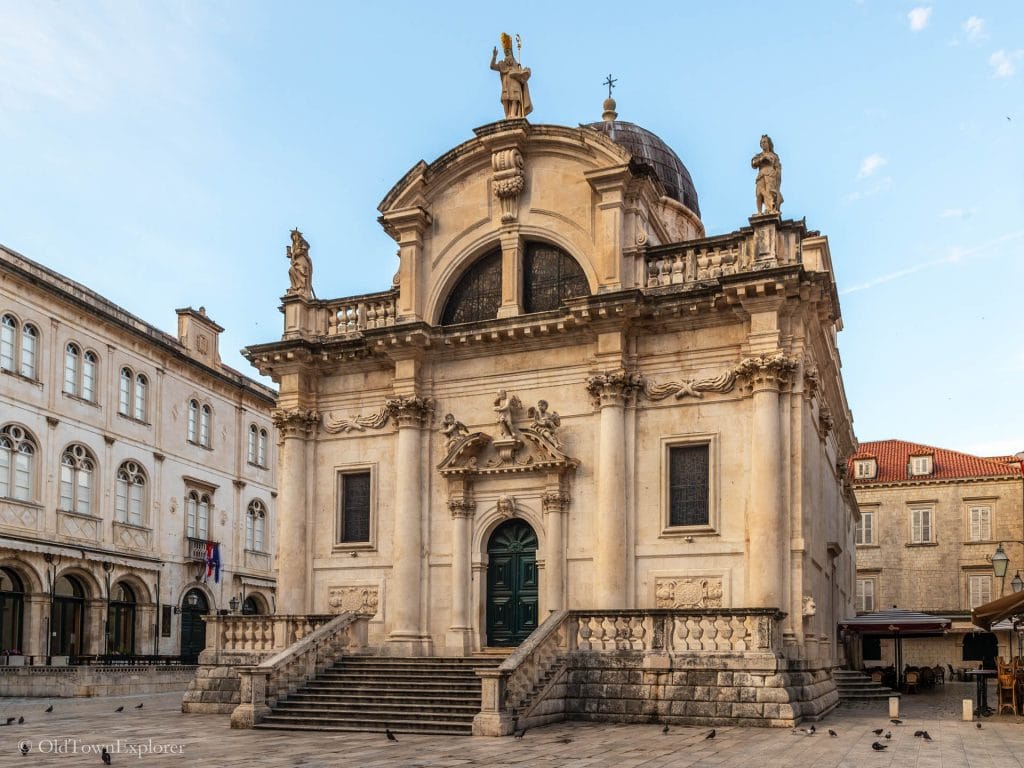
Church of St. Blaise
The Church of St. Blaise is dedicated to Dubrovnik’s patron saint. The beautiful baroque church is one of the architectural highlights in the Old Town.

Rector's Palace
Rector's Palace is home to the Cultural History Museum. This is a must-see attraction for everyone visiting Dubrovnik.
Entrance to the Rector's Palace is included in the Dubrovnik Pass.

Dubrovnik Cathedral
The Cathedral of the Assumption of the Virgin Mary aka Dubrovnik Cathedral was reconstructed in the current style after the 1667 earthquake largely destroyed the original 12th-century Romanesque-style cathedral. The reconstruction project took three decades to finish.
The Treasury of the Cathedral contains 182 relics and many paintings.
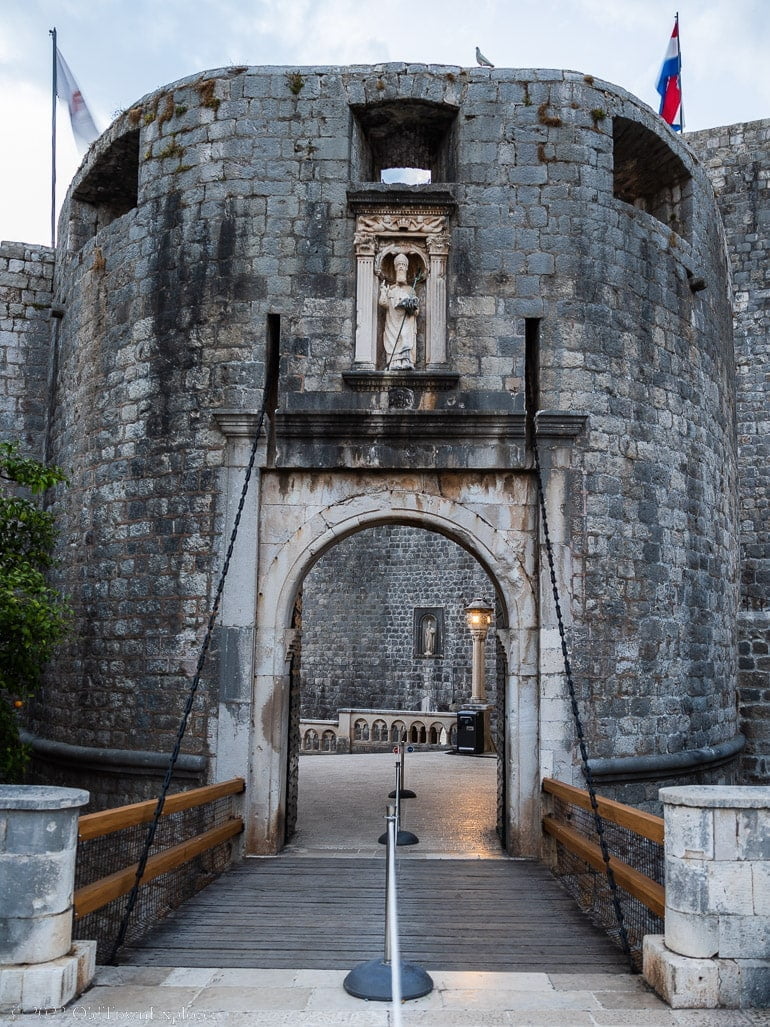
Pile Gate
The Pile Gate is the main entrance to Dubrovnik's Old Town. It is a well-fortified complex, including a stone bridge over a former moat, a wooden drawbridge, and multiple doors separated by stairs and a ramp.

Dominican Monastery
The Monastery was founded in 1225. It is the location of the Dominican Monastery Museum which contains 15th and 16th-century artwork, jewelry, and manuscripts.

Saint Dominic’s Church
Saint Dominic’s Church and monastery is one of the largest Gothic-style buildings on the Croatian coast.

Large Onofrio's Fountain
Built-in the 15th century and is one of the first things you will see after entering the city from the Pile Gate. It is a functioning fountain where you can fill your water bottles with fresh, cold water.

Church of St. Saviour
The Church of St. Saviour was built in appreciation for the city being spared from destruction by an earthquake.
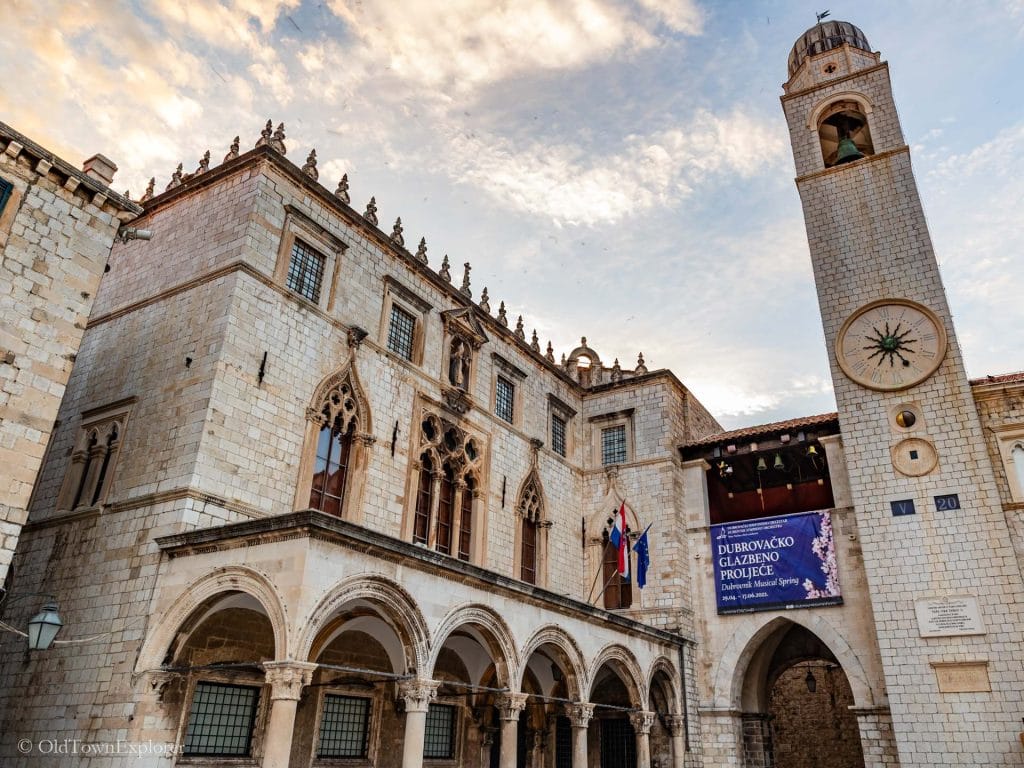
Sponza Palace
The Sponza Palace (aka Customs Palace Divona) is a Renaissance and Gothic-style building and was one of the few buildings to survive the earthquake of 1667. The Sponza Palace has provided different functions for the city over the years. Today, it houses the Dubrovnik Archives.

Bell Tower
The Bell Tower stands near the Customs Gate at the east end of the Stradun in Luža Square.
The Bell Tower was damaged in the earthquake of 1667. To prevent collapse, the old Bell Tower was rebuilt in 1929. Also, the original Zelenci, the two famous figures who strike the hours with their hammers, were replaced by copies. The originals are on display in the Rector`s Palace.

Jesuit Stairs
Beautiful Baroque-style stairs that a Game of Thrones fan will recognize as the filming location for the famous "Walk of Shame" scene.

Church of St. Ignatius
The Church of St. Ignatius is a Baroque-style church. Construction was completed in 1725.

Franciscan Monastery
The Franciscan Monastery is a complex of buildings that includes a friary, a church, a library, and a pharmacy.
Entrance to the Monastery is included in the Dubrovnik Pass.

Serbian Orthodox Church of the Holy Annunciation
The Serbian Orthodox Church was originally constructed in 1877 but suffered damage in the 1991 to 1992 Siege of Dubrovnik. It has been restored and is the home to a museum.
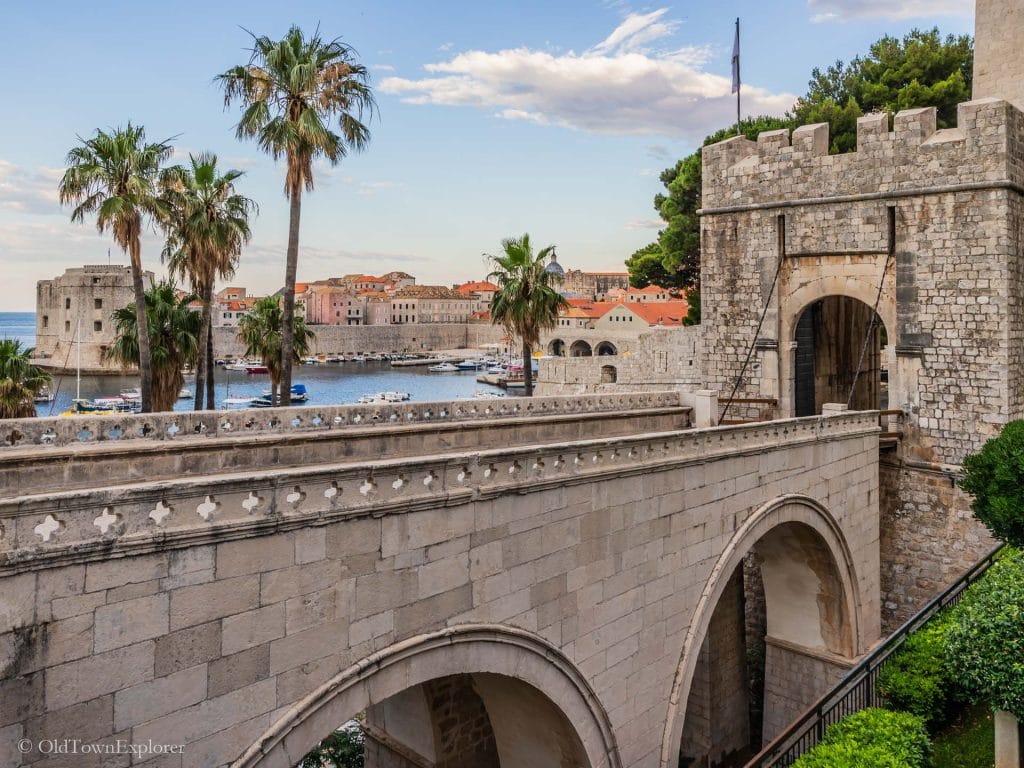
Ploce Gate
The Ploče Gate is the second major entrance to the Old Town.
This fortified entrance consists of inner and outer gates with stone bridges. The outer section also includes a wooden drawbridge that was pulled up every evening.

Lovrijenac Fortress
Fort Lovrijenac was originally constructed on a 37-meter high sea cliff to protect the western sea access to the City.
The fort reached its current form in the 16th century.
Fort Lovrijenac doubles as the Red Keep in King's Landing, the capital of the Seven Kingdoms, and home of the Iron Throne.
If you're still on the fence about visiting Dubrovnik, check out "Is Dubrovnik Worth Visiting." We review a long list of factors you should consider before reserving a room and booking your flight.
Self-Guided Walking Route to See the Best Things in Dubrovnik
Dubrovnik Old Town is very small and easily walkable. If you have limited time, we suggest visiting the recommended sites in the following order:
- Lovrijenac Fortress
- Pile Gate
- Walls of Dubrovnik
- Church of St. Saviour
- Franciscan Monastery
- Large Onofrio’s Fountain
- Serbian Orthodox Church of the Holy Annunciation
- Jesuit Stairs
- Church of St. Ignatius
- Dubrovnik Cathedral
- Rector’s Palace
- Church of St. Blaise
- Bell Tower
- Sponza Palace
- Stradun
- Old Port
- Dominican Monastery
- Saint Dominic’s Church
- Ploce Gate
Following the suggested route, you will pass every one of the best things to see in Dubrovnik on the list above. Additionally, you’ll go past the start of the Walls of Dubrovnik tour. The wall tour is approximately 2 miles long and takes about 1hr 30min.
It will take less than 3 hours to complete our proposed Old Town walking tour and the Dubrovnik City Walls tour. That’s time (and 30€ for the wall tour) well spent to see all the essential sights in Old Town Dubrovnik.
Map of Things to See on a Walking Tour of Dubrovnik
Our suggested Dubrovnik Walking Tour starts at the Lovrijenac Fortress outside the western walls of the Old Town, enters the Pile Gate, passes all the points of interest, and ends at the Ploce Gate on the eastern side of the city.
City Tours in Dubrovnik
Dubrovnik is easy to walk independently, but a guided tour can add value if you want historical context for the city walls, the Republic of Ragusa, the 1667 earthquake, the Old Port, religious buildings, civic palaces, or Game of Thrones filming locations.
A tour is most useful for first-time visitors who want interpretation rather than just a route. Independent walking is enough if your priority is photography, exterior architecture, or moving through the Old City at your own pace.
Book a highly rated Dubrovnik walking tour below if you want a guide to connect the Old City’s main sights with the city’s history.
Dubrovnik Information and Travel Tips
These tips focus only on seeing Dubrovnik’s main sights. For broader destination planning, use the main Dubrovnik guide.
Start at Lovrijenac Fortress or Pile Gate
Lovrijenac Fortress and Pile Gate work well as the beginning of a sightseeing route because they sit just outside the western entrance to the Old City. Starting here lets you see the fortress, enter through the main gate, and continue naturally toward Stradun and the civic core.
Prioritize the Old City Core First
If you have limited time, focus first on Pile Gate, Large Onofrio’s Fountain, the Franciscan Monastery, Stradun, Sponza Palace, the Bell Tower, Church of St. Blaise, Rector’s Palace, Dubrovnik Cathedral, the Old Port, and Ploče Gate. These sights explain the main shape and identity of Dubrovnik’s historic center.
Decide Early Whether to Walk the City Walls
The city walls are one of Dubrovnik’s defining sights, but they require more time and energy than a quick exterior stop. Decide early whether the walls are part of your day so you can avoid overloading the rest of your Old City route.
Use Interiors Selectively on a Short Visit
Rector’s Palace, the Franciscan Monastery, the Dominican Monastery, Dubrovnik Cathedral, and Lovrijenac Fortress deserve more time than exterior stops. With one day, choose one or two interiors rather than trying to visit everything.
Separate Quick Exterior Stops from Longer Sightseeing Stops
Stradun, Pile Gate, Ploče Gate, Large Onofrio’s Fountain, the Jesuit Stairs, Sponza Palace, Church of St. Blaise, and the Old Port work well as quick exterior stops. The walls, monasteries, palaces, cathedral, and fortress require more deliberate planning.
Plan Around Heat and Crowds
Dubrovnik’s Old City is compact, exposed, and heavily visited. Sightseeing is easier early in the morning or later in the day, especially if you plan to walk the walls, photograph Stradun, or spend time in open squares.
Use the Map to Avoid Backtracking
The accompanying map corresponds to the self-guided walking tour, so use it to follow the sights in order rather than moving randomly across the Old City. This is especially helpful because several key sights are close together but easy to overshoot in the narrow streets.
Add Mount Srđ, Lokrum, or Beaches Separately
Mount Srđ, Lokrum, and Dubrovnik’s beaches are worthwhile additions, but they are not part of the compact Old City sightseeing loop. Treat them as separate extensions once you have seen the main gates, palaces, churches, monasteries, harbor, and walls.
Where to Stay to See the Best Things in Dubrovnik
Hotels in Dubrovnik
If your main goal is to see Dubrovnik's top attractions, the best place to stay is inside or within a short walk of the Old Town. Staying close to Pile Gate or Ploče Gate puts the city walls, Stradun, churches, monasteries, palaces, museums, the Old Port, and most of the attractions in this guide within easy walking distance.
Staying near the Old Town also makes it easier to begin sightseeing early in the morning or continue exploring later in the evening when the busiest daytime crowds have eased. If you plan to follow the self-guided walking tour on this page, you'll be able to reach nearly every stop without relying on public transportation or taxis.
If you're planning a longer Dubrovnik stay and want advice on neighborhoods, transportation, or choosing the best base for different travel styles, see the main Dubrovnik guide.
Use the interactive map below to compare hotels and apartments in Dubrovnik. Staying in or near the Old Town is the most convenient choice for visiting the city's best attractions on foot.
FAQs About Best Things to See in Dubrovnik
What are the best things to see in Dubrovnik?
The best things to see in Dubrovnik are Stradun, the city walls, Pile Gate, Large Onofrio’s Fountain, Franciscan Monastery, Sponza Palace, Bell Tower, Church of St. Blaise, Rector’s Palace, Dubrovnik Cathedral, the Old Port, Dominican Monastery, Ploče Gate, and Lovrijenac Fortress.
What should I see first in Dubrovnik?
Start at Pile Gate, then see Large Onofrio’s Fountain, the Franciscan Monastery, and Stradun before moving toward Sponza Palace, the Bell Tower, Church of St. Blaise, Rector’s Palace, and Dubrovnik Cathedral.
Can you see the main sights in Dubrovnik on foot?
Yes, the main sights in Dubrovnik’s Old City are easy to see on foot. The Old City is compact and pedestrian-focused, but the city walls, Lovrijenac Fortress, and routes outside the walls involve more stairs and elevation.
Is one day enough to see Dubrovnik’s main sights?
One day is enough to see the main Old City sights from the outside and walk a focused route through the historic core. Add more time if you want to walk the city walls, visit museums, tour monasteries, climb viewpoints, or take photos at a slower pace.
Which Dubrovnik sights need more time?
The city walls, Rector’s Palace, Franciscan Monastery, Dominican Monastery, Dubrovnik Cathedral, and Lovrijenac Fortress need more time than quick exterior stops because they involve interiors, collections, climbs, or wider views.
Which Dubrovnik sights are quick exterior stops?
Stradun, Pile Gate, Ploče Gate, Large Onofrio’s Fountain, Jesuit Stairs, Bell Tower, Sponza Palace, Church of St. Blaise, and the Old Port can work as quick exterior stops on a short walk.
What is the best viewpoint in Dubrovnik?
The city walls give the best close-up views over the Old City, rooftops, fortifications, and Adriatic. Lovrijenac Fortress gives a strong outside-the-walls view back toward the city and western harbor.
Are Dubrovnik’s main sights inside the Old City?
Most of Dubrovnik’s main sights are inside the Old City walls. Lovrijenac Fortress sits just outside the western walls, while Mount Srđ, Lokrum, and beaches require a separate extension beyond the core sightseeing route.
Do you need tickets for the best things to see in Dubrovnik?
Many Dubrovnik sights can be seen from outside without a ticket, including Stradun, the gates, fountains, squares, harbor, and several church exteriors. Tickets matter most for the city walls, museums, monasteries, and some interiors.
What should I skip with limited time in Dubrovnik?
With limited time, focus on the Old City core and skip deeper interiors unless one museum, monastery, or palace is a priority. The city walls and Lovrijenac Fortress are worth adding only if you have enough time and energy for a longer visit.
The best things to see in Dubrovnik are strongest when you understand them as a compact fortified cityscape rather than a scattered list of attractions. Pile Gate, Stradun, the city walls, civic palaces, churches, monasteries, the Old Port, and Lovrijenac Fortress work together to explain why Dubrovnik is one of Croatia’s most memorable historic destinations.
For broader planning, start with the main Dubrovnik guide. For deeper building detail, use Dubrovnik Architecture. If you are still deciding whether Dubrovnik belongs on your route, read Is Dubrovnik Worth Visiting?.
